It’s not easy to communicate what makes our tech products so great – lots of tech messaging falls flat because it’s too dry, complicated and long-winded. But you can avoid this trap with human messaging that connects the dots between your technology and your customer’s life. In this session, messaging expert Emma Stratton will share 3 practical techniques to help you write better messaging about your innovative technology. Whether you’re a founder, marketer or product builder, you’ll learn how to convey the awesomeness of your technology in a way that clicks with your audience.
Key takeaways:
Learn the most common pitfalls of product messaging – and how to spot them
Get practical techniques to write more effective product messaging
See real-life examples of messaging techniques in action
1 / 44 Use ← → to navigate
Auto-generated transcript - may contain errors.
Tap a timestamp to jump the video.
It's TuringFest. I mean, it is so cool to have so many people from different perspectives, cool people in the tech industry all in one place in an awesome city. I've never been to anything like it, So I hope you're all having an awesome time.
I've got to be honest with you all. I accidentally got into tech. I didn't plan on it. It was never something I meant to do. About fifteen years ago, I was actually living in the UK working in consumer branding, actually with Colin Burns, believe it or not.
And it was my job to write messaging and copy that got shoppers to make an emotional connection with products that you would see on the retail shelf. It was cool. I got to write messaging and copy for popular brands like Andrex toilet paper.
I did toothpaste, Axe deodorant, lots of sausage brands. I even got to write messaging for Anne Summers' complete line of ******. I bet you didn't know that was the thing. I got to do it. It was fun. Like, was so fun I would probably still be doing it if I hadn't decided to move my family back to the United States.
The US is a big country, and I was like, I just need a job with a short commute. So I accepted a job, somewhat naively, at a b to b marketing agency because I figured marketing business to business has got to be basically like marketing business to consumer.
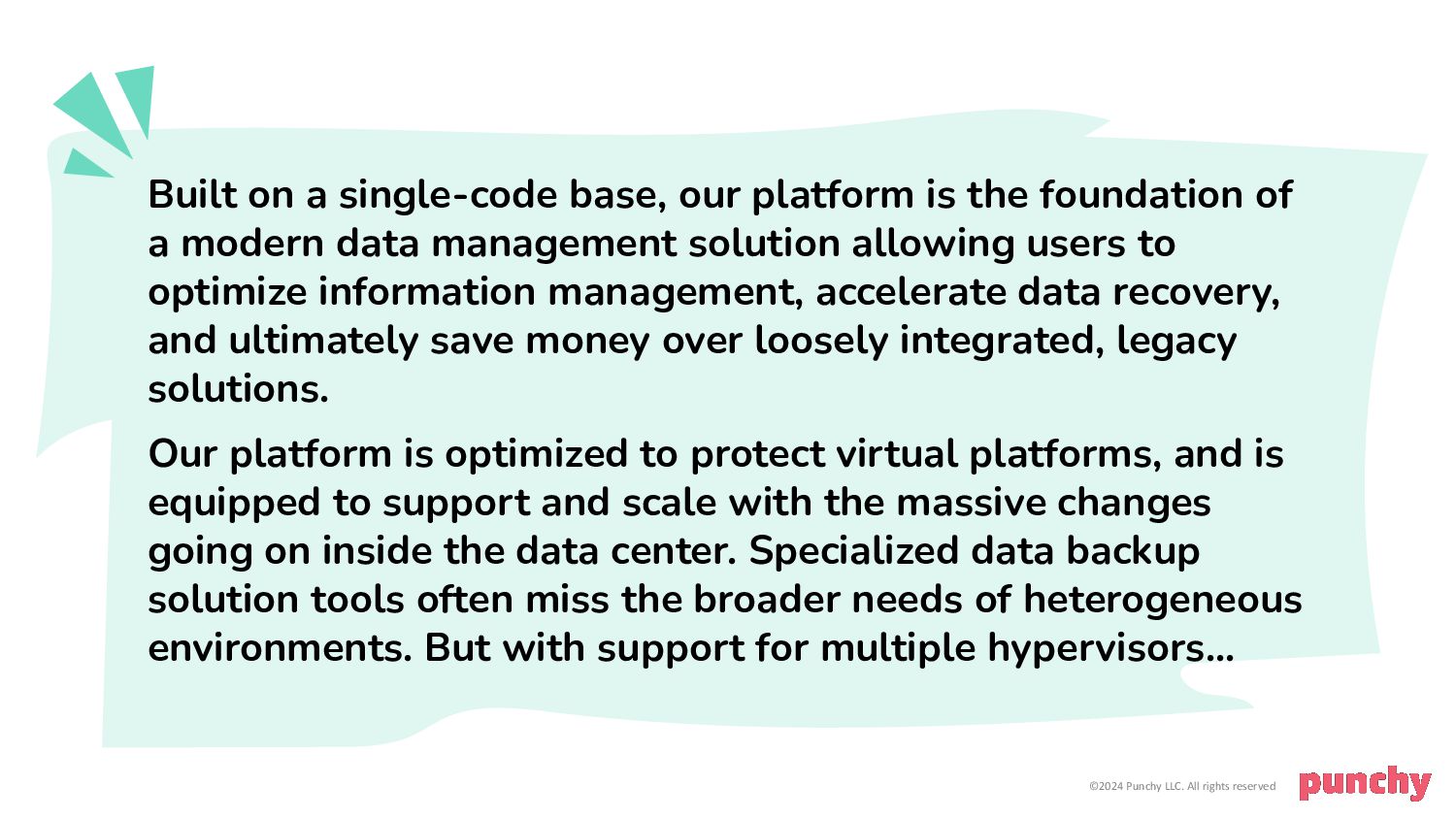
Right? I mean, we're just selling products to people. How different can it be? So you can imagine my shock when I went from happily writing about ****** to suddenly having to write about enterprise data management. Okay? That was my first client, and I was madly getting up to speed reading their messaging to try and understand what the heck it was they did, and this is actually an excerpt of that original messaging.
At this point, I had never read messaging for a tech company in my entire life. I was a total noob. I read this and I was like, oh my god. I don't know if you can, in the back, read this, but it's like, built on a single database.
Our platform is the foundation of a modern data management solution allowing users to optimize information, manage it, etcetera, etcetera, etcetera. And I remember two things when I read this. I had two thoughts. My first thought was, oh, ****. I'm too stupid to write like this. You know?
Followed by a second thought, which was, Wow, okay, I was wrong. Business to business buyers are apparently extremely different from business to consumer buyers because if they love this stuff, they might be a completely different species of human, they might actually be robots.
So I had a mini existential crisis for about two weeks until I finally got to meet the CMO of this company. And he's like, Emma, no. Messaging is our number one problem. I'm like, okay, good. And he's like, yeah, no. He's like, we've got this amazing platform built on a single codebase, true technical differentiation, no one does it like we do it.
Okay? Gartner loves us, we're visionaries, but we can't explain any of that to prospects. We don't know how to say that to anyone. We're confusing people. I'm not convinced our salespeople fully understand what we're selling. Our marketing campaigns are a mess. Our sales cycle is dragging. Yeah. We have some trouble.
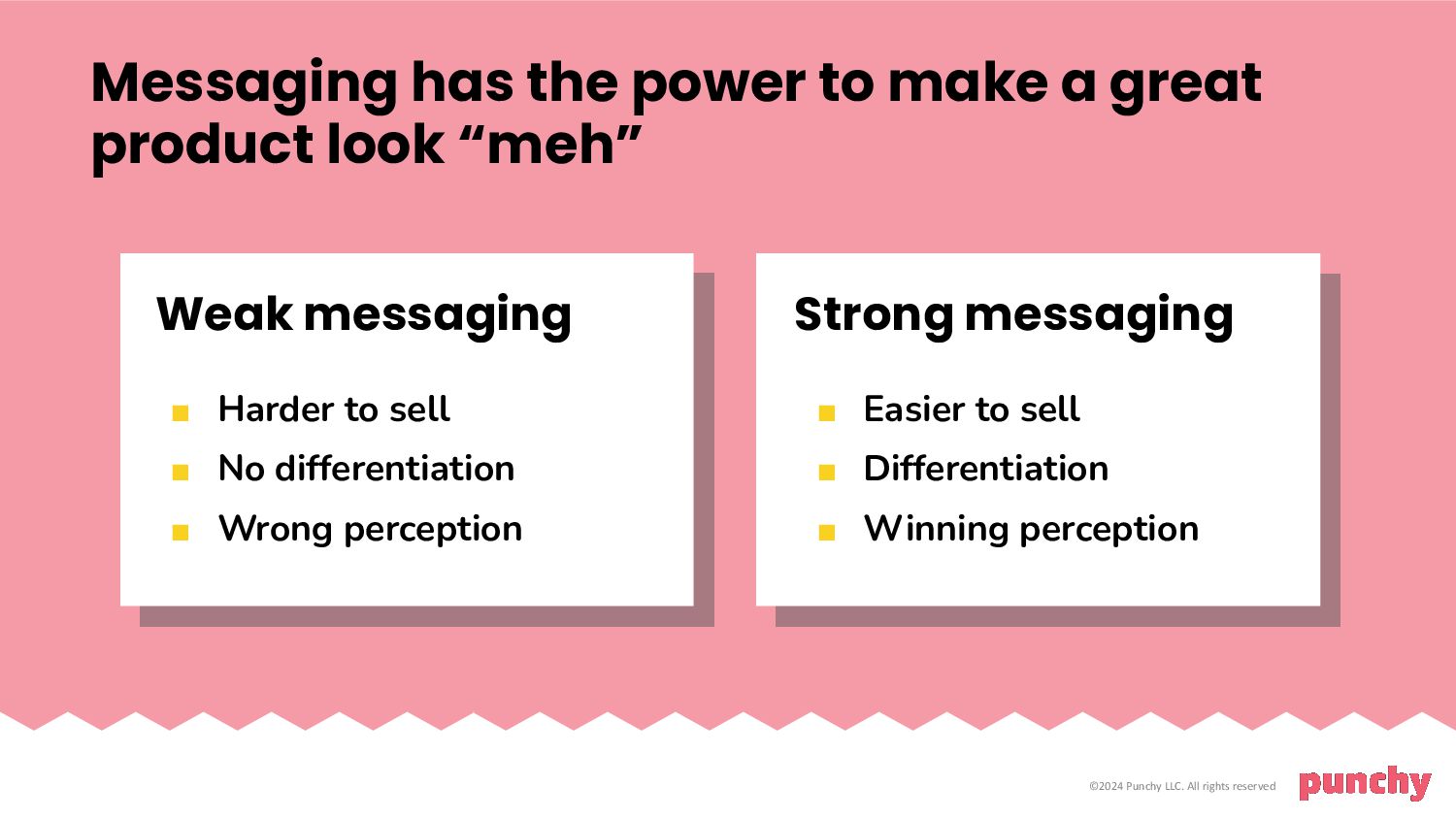
Is there any way you can help? So that client taught me a huge lesson very early on that I've never let go of, and that is that messaging is really important when it comes to marketing a technology solution, and it is so powerful that it can, in fact, make a really awesome product look really meh.
Right? So let me just back it up for a second in case some of you aren't quite sure what messaging is, like, what is messaging, Emma? So messaging is how you bring your positioning strategy to life. It's about articulating the unique value that your product offers a specific buyer in a handful of tight, well crafted sentences.
Those sentences or messages then go on to inform and shape your marketing and sales messages and activities, so that everything your company is putting out is telling a consistent story, it's bringing that positioning to life, and over time, if you're doing it well, it's building a really good perception for your product in the market.
Messaging is one of those things though that I have found in my experience that it's either helping your growth efforts or it's slowing it down. So in the case of this poor data management solution, they had weak messaging. They couldn't articulate what it was that made their technology so great, and so sales had a really hard time selling.
Right? They had like one or two hot shots that were able to do it, but overall, it was a tough sell. They weren't able to convince people that they were different from everyone else, even though they were. So they kind of looked like every other solution, and then their messaging was so complex that people assumed it was a really complex, hard to use solution.
They'd read that messaging and they're like, oh, that looks like a little bit more than we need. Let's go try and find a simpler solution. So that's what happens when you have weak messaging. It's a tide you have to swim against. Now on the flip side, if you have strong messaging, it makes your products look good, even if, quite frankly, it's not that amazing.
Right? If you have strong messaging, it's going to look good, you're going to be very clear about the value, it's going to make it easy to sell, you're going to show people how you're different, so people know why you versus someone else, and you're going to build a perception that's positive, that your competitors are going have a hard time working against.
I can't tell you how many founders, CEOs, heads of marketing I've chatted to over the years, who have lamented to me, Emma, we have this startup. They're always coming up in calls, they're winning deals from us. Their product is inferior, but they tell a better story than us.
They're winning on messaging. So that's the thing. Messaging is powerful when it comes to selling your tech. But, it is hard. It is hard to do messaging. It is hard to articulate what makes your technology different, unique, special, in a simple way that everyone can understand.
Raise your hand if you've ever struggled to explain what your company does, what your product does, what makes it special. Come on. Let's honestly. Right? I do too. It's just natural. Everyone struggles with this. So if you're struggling with it right now, just know you are not alone.
It is not just you, it is everyone. It is hard to do messaging. Here's why it's hard. It's about more than words, really. It's about connecting the dots between a cold, unliving feeling thing, a technology, and a warm living human being that is like living a different life happily without your product.
They don't care, they're doing their own thing. We're so close to our products that we think everyone's thinking about it like we are, but they're not. There's a huge gap, and it's messaging's job to connect the dots between the technology and the person to show the relevance.
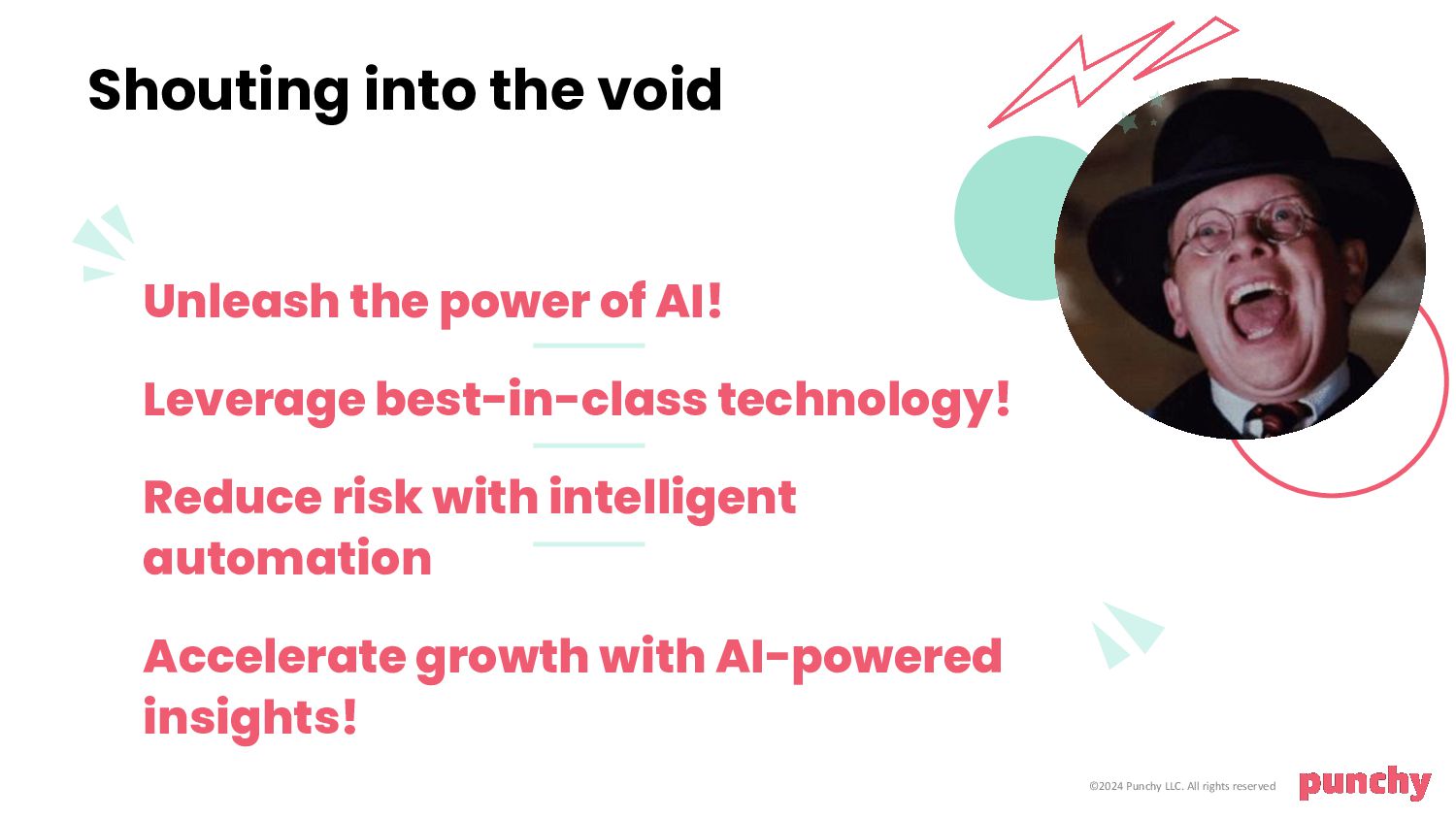
But, maybe you've noticed a lot of tech companies aren't quite getting across that gap. Their messaging is falling into the void. It's never landing on someone because it's too focused on articulating, you know, our features, our innovation, our newness, our power, our market leadingness.
Right? This type of language we see everywhere. And I will tell you right now, we are in a moment with AI. And you've probably noticed this as well, every company is like shouting from the rooftop that they're the AI company or the AI platform for x, AI powered, etcetera.
And I'm telling you, it's it's not landing. It's not connecting with people. But what I learned in consumer branding and writing about toilet paper and ****** and the like, is that if you can make someone feel a connection to a product on the shelf, like a toilet paper for example, there's a really good chance they're gonna buy that toilet paper over the other toilet paper sitting next to it.
So I thought, imagine if I apply some of those ideas to a truly valuable piece of software that could is capable of bringing so much value to a large organization of people. So I was like, let's give it a go. So I said to the CMO, let's do it.
And so we started really focusing on creating messaging that connected that dots between their product and their prospect, humanizing it, helping people understand what it was, and it worked. Like, it simplified the perception of the product, marketing campaigns started doing better, sales went better, sales cycle slowed down, they were doing great and I was hooked.
And from that day forward, it became my mission to make messaging more human in tech. So, I'm all about human messaging. So, human messaging is about going beyond just talking about the features, the innovation, the newness, the robustness, and connecting with that human that you're trying to mark to.
And that is really how you convey the true awesomeness of any technology, through connecting with that person. The goal is to make your customer feel seen and heard and understood. So they read your messaging and they're like, ah, they're talking to me, that's for me.
So, I have created human messaging over the past thirteen years for hundreds of b to b tech companies, early stage startups doing really cool new stuff, sexy unicorns that we all respect, household names, more mature enterprises across all industries and categories. And human messaging just works. I've seen it.
So, I'm super excited to share three some three of my favorite techniques that will really help you connect that gap between your tech and your audience to really sell the awesomeness of your technology. And I'm going to get into the first one, which is about translating your technology so that people get it.
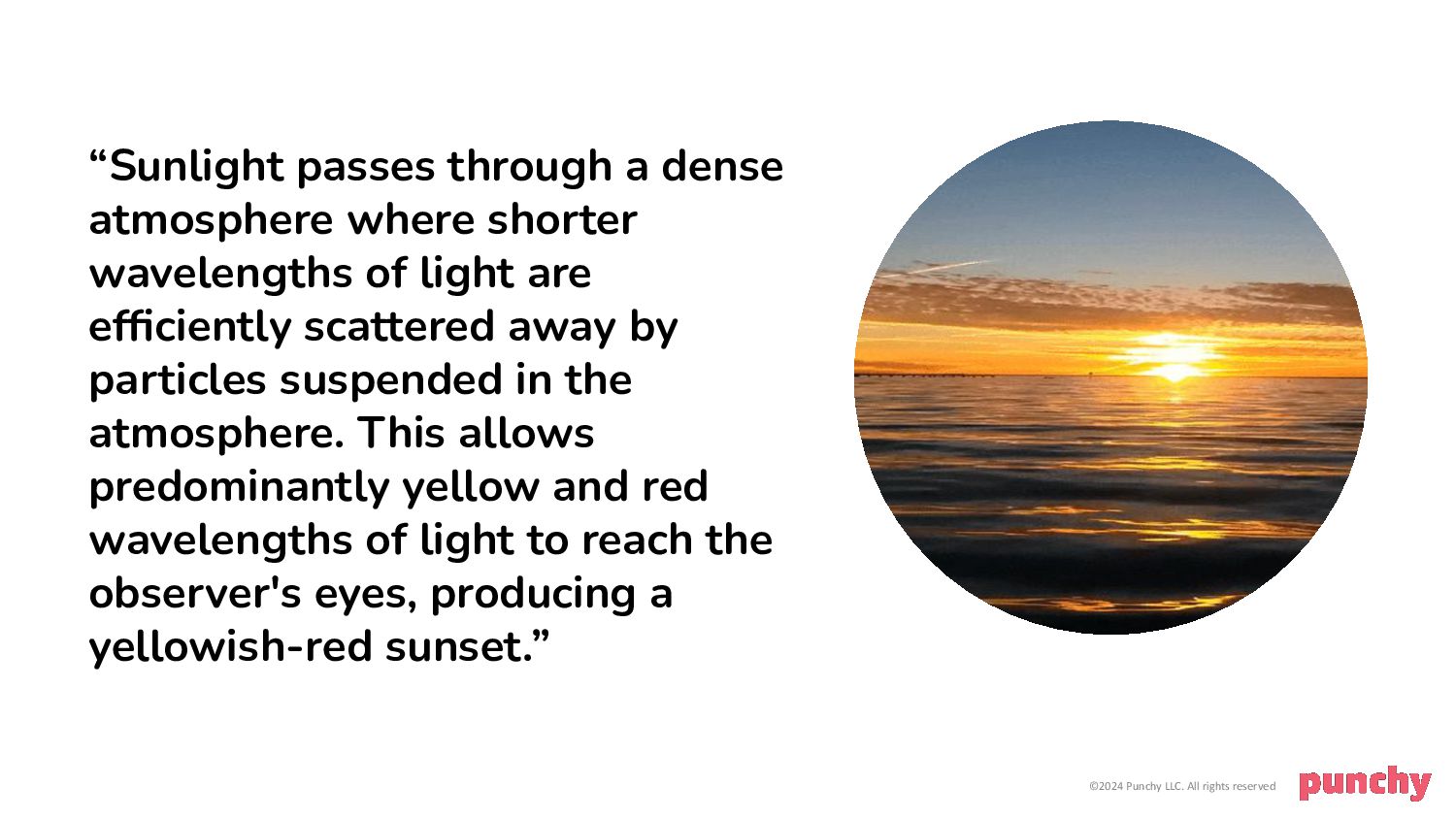
Okay. Imagine you're at this party, and you meet a slightly odd person, you get to talking, and you find out that they have never seen a sunset in their entire life. In fact, they don't even really know what it is. And you're like, oh my god, this is so sad.
Sunsets are so magical and amazing. This poor person has never seen one, they've got to see one. So you want to inspire this person to see a sunset, because you know how amazing it is. So you're like, let me explain what makes a sunset so magical.
And you're like, okay, the sunlight goes through the dense atmosphere, and the shorter wavelengths are scattered by the particles, and then, you know, these red and yellow wavelengths, you know, reach the eye, creating this phenomena. And do you think that would get them excited about seeing a sunset?
No. They probably would have tuned you out after the third word. Right? This would not get them to see a sunset. They'd probably, like, step away from you, and they still wouldn't even really know what a sunset is. Now, that's my silly analogy for what I see happening all the time in tech.
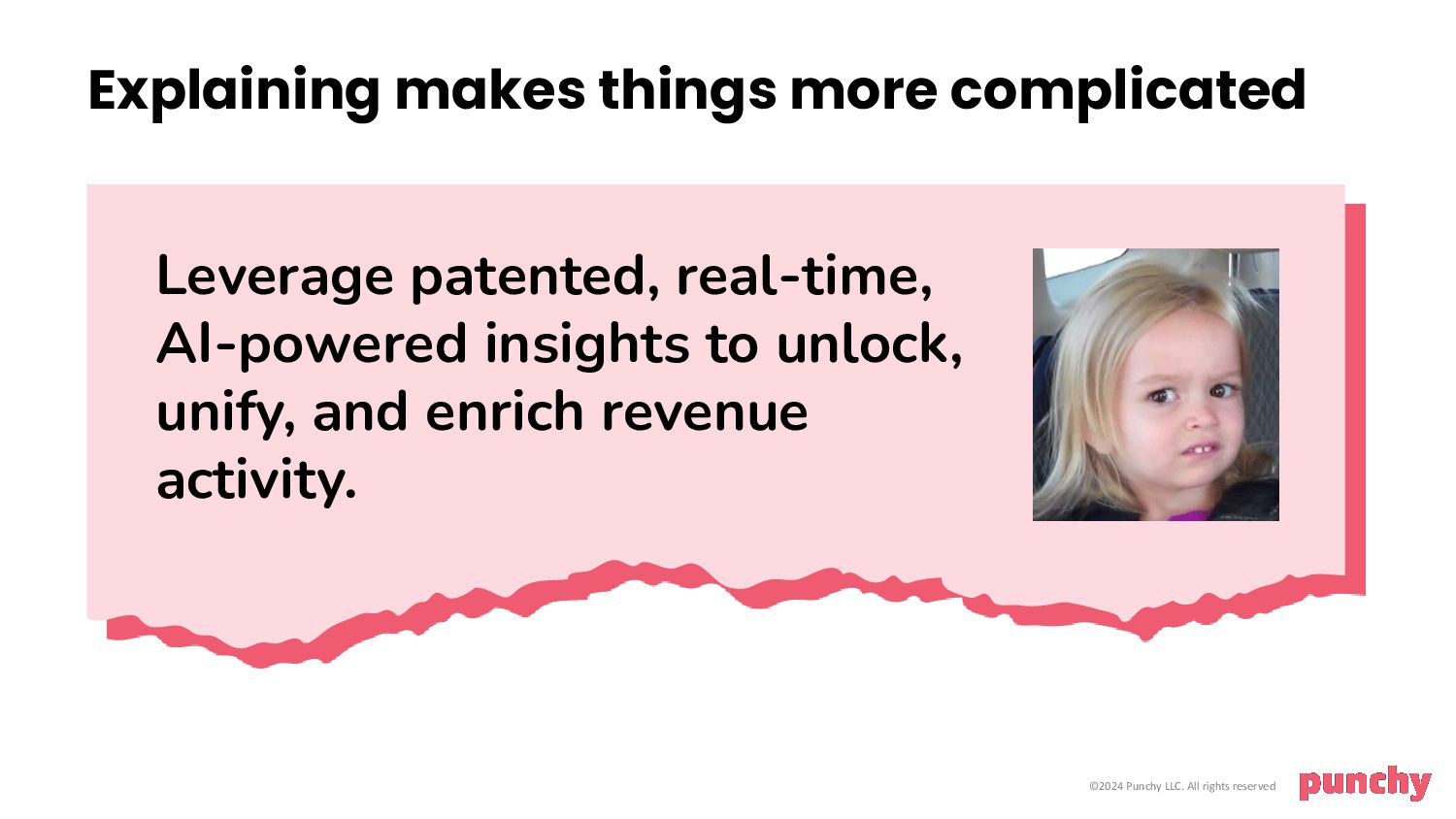
It's like as builders, as marketers, as founder CEOs, we know what makes our tech so freaking amazing. And so when we try to tell someone about it, we end up explaining it. How it works, here's what's in it. You're like, let me tell you about the algorithm, like Sky AI.
Right? We explain, and we lose all the magic, and our buyer just doesn't get it. And it's a natural human reaction to try to explain complicated things, so that's where it comes from. But next time you're kind of thinking about how do I talk about my tech, rather than explaining it to someone, think about how can I translate it for them?
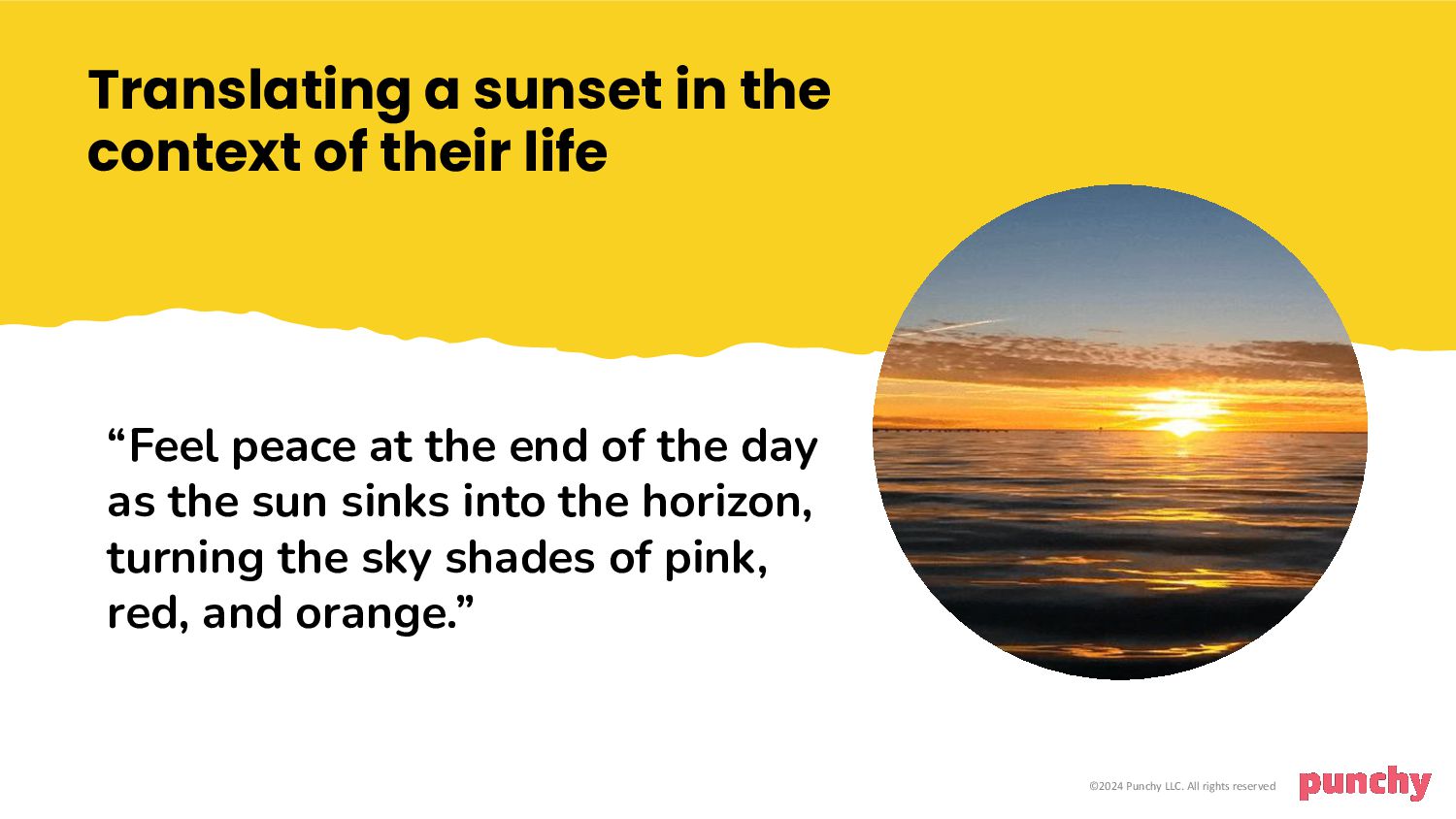
How can I translate it in a way that they'll understand? So back to that poor person who's never seen a sunset before. If you think, okay, I want to translate a sunset in terms they can understand, you know, through their frame of reference.
So you might say something like this, like, hey, you get this cool, peaceful sense at the end of the day when the sun sinks into the horizon, turning the sky shades of pink, red and orange. They'd probably hear that and be like, sounds pretty cool.
You know, I might just go check out a sunset this evening. And that's really all we're trying to do with our messaging. I think a lot of times we put pressure on ourselves, like, oh, this has got to blow people away, this has got to be front page of the news, you know, we've got to excite people.
No. You really are just trying to help someone just get it. Just be like, yeah, cool, that light bulb moment. I wanna find out a bit more. Because messaging is how we open the door to our product and invite people to take the next step.
It is not our one shot to say it all about everything. So let's take this idea of translation and put it in a tech example. So what you want to do is translate what your technology means to your buyer. What does it look like in their day to day life, in their context?
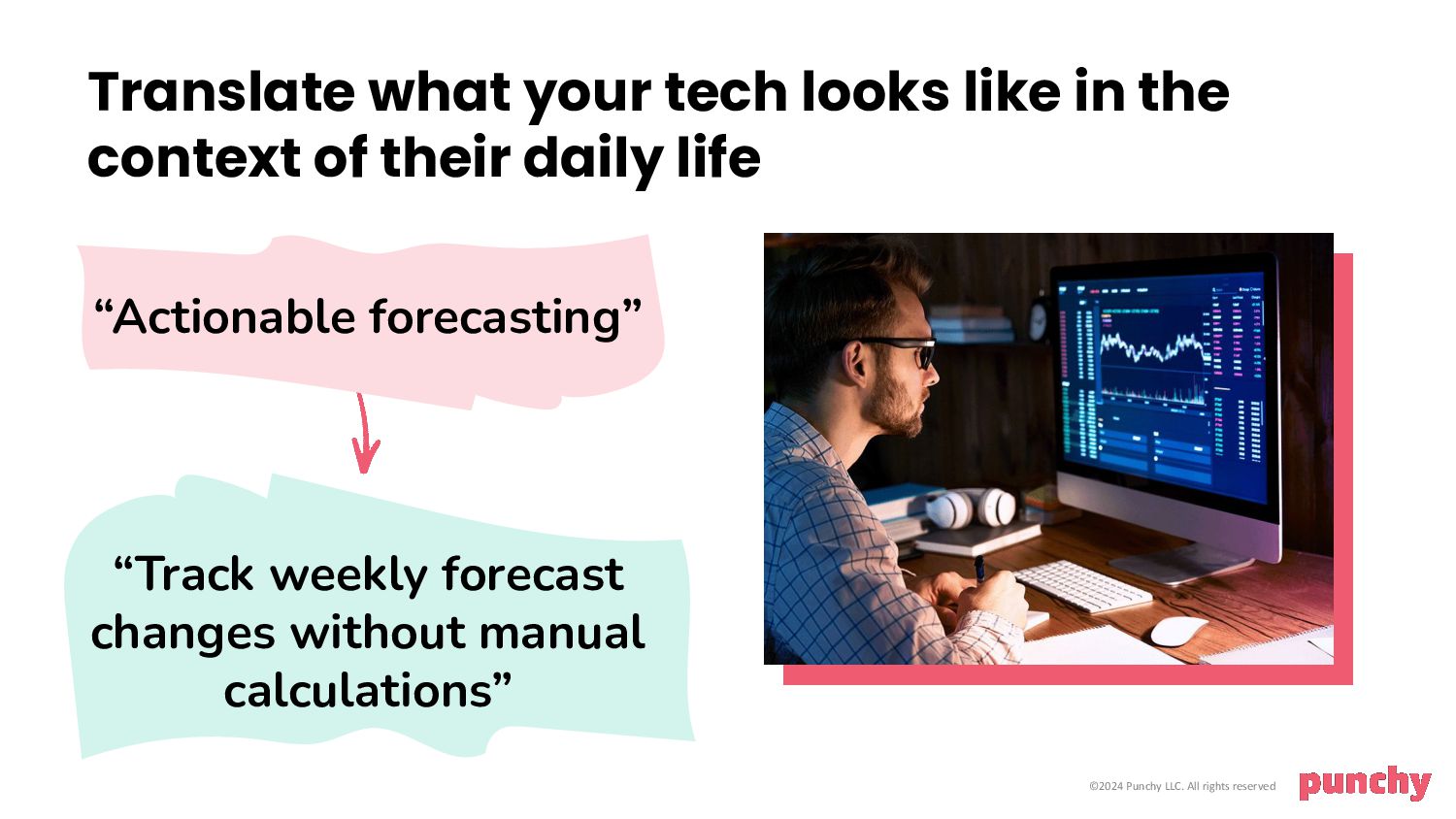
So, say we're selling a financial platform to a director of finance, and if I wanted to start explaining, I'd be like, it's got actionable forecasting. We always say stuff like this in tech, actionable this or that. That's me explaining it. Right? And I know all about the feature, but, you know, the buyer is like, I don't I don't really know what that is.
So if we think, okay, how do I translate actionable forecasting? What does that look like to my buyer through their eyes? And to them, it's like, do you know what that means? It means you're gonna be able to track your weekly forecast changes without manual calculations.
That's the translation of actionable forecasting. And they'd hear that and they'd go, cool. I might just wanna find out a little bit more. So, when you're thinking about translating your technology, you wanna try and see it through your buyers' eyes. What does it look like to them, not what does it look like to you as the marketer or the builder.
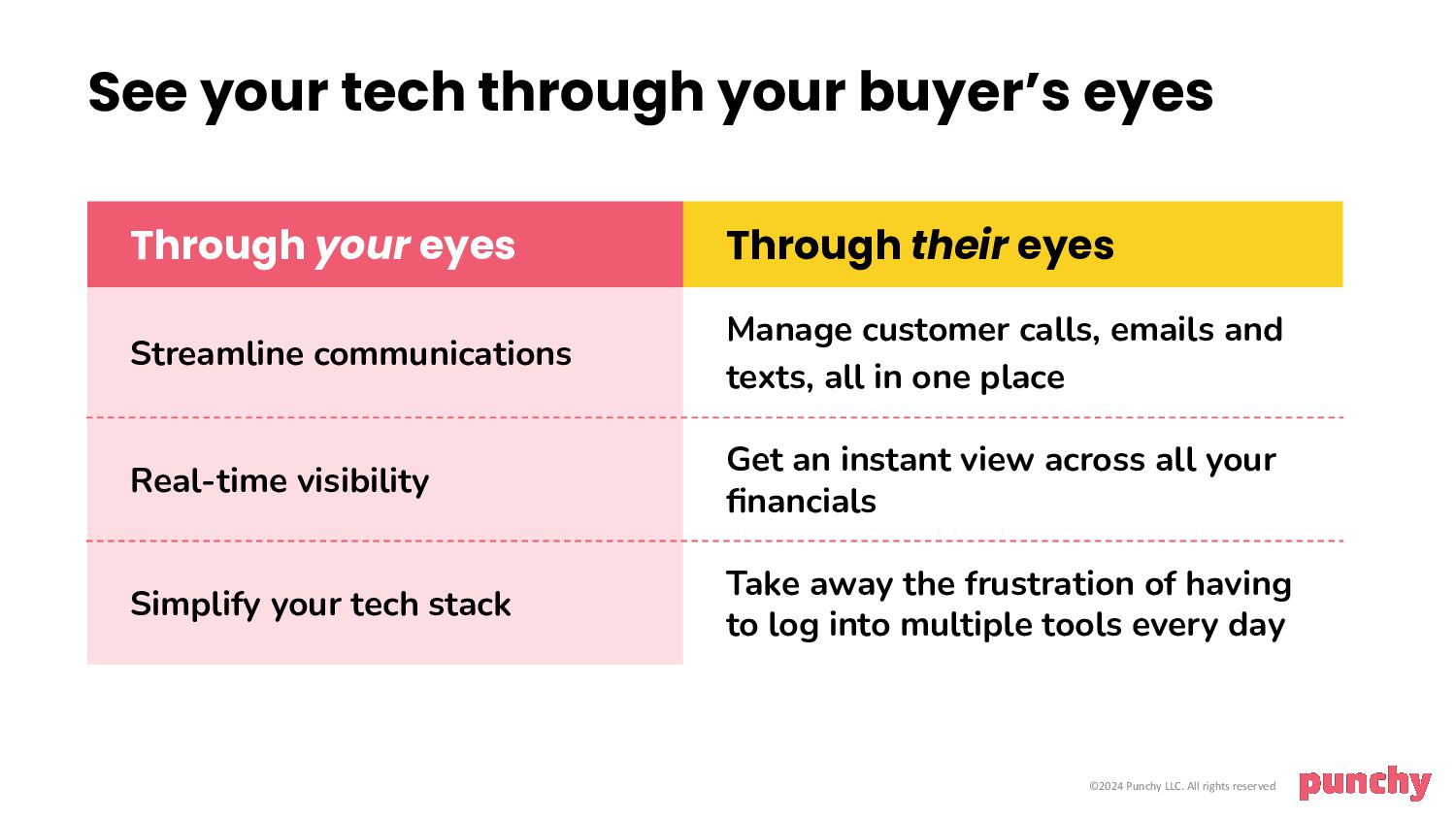
So, here are some examples of what it looks like through your eyes versus their eyes. And, let's look at the top one, streamlined communications. You know, we've probably all typed that out at some point. Right? That's a classic way that we sort of explain a benefit.
Right? Streamlined communications. But to a buyer, they're like, you know, what does that even really mean? So if I think, what does streamlined communications look like through a person's eyes, it's like, you're going to be able to manage your calls, texts and emails in one place.
So you can see the difference between your eyes and their eyes, which is more clear, which is more compelling, which is more interesting. Now, this idea of translation is really important in two scenarios, if you're in one of these two scenarios. So, one, if you are marketing to a not super sophisticated tech buyer, you know, not super techy, you definitely want to lean on translation because this helps people understand really complex technology quickly.
The other scenario is if you are marketing a new or emerging technology that the world hasn't heard about and doesn't know about, that's another time when you really want to translate. So a quick technique to how to translate it is a quick before and after.
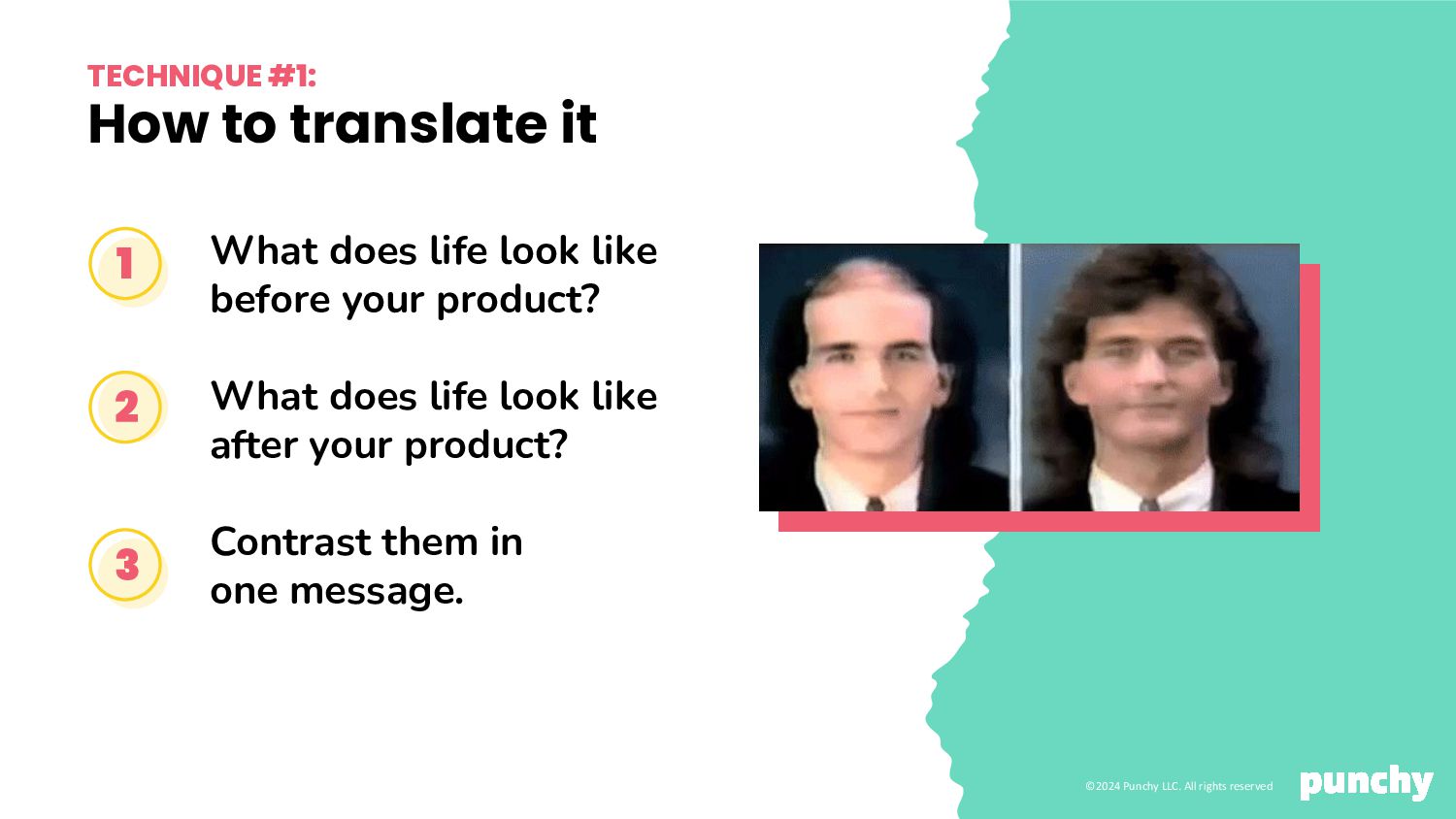
So you want to come up with some concrete examples of what life looks like for your buyer before your product, then you want to do the same for what life looks like after your product, and then contrast the two in a message, and that will help translate it for people.
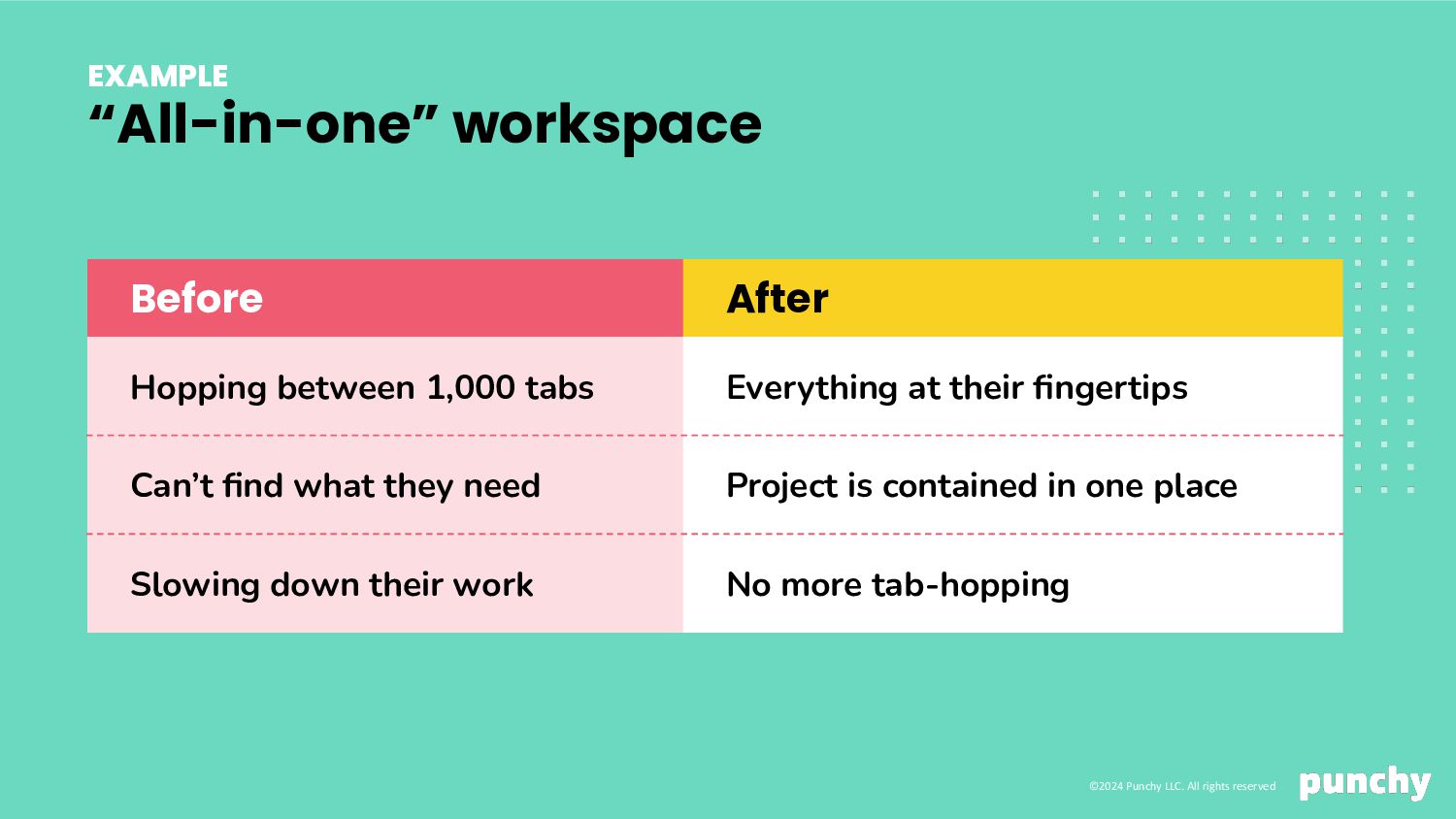
So here's an example of me doing it for an all in one workspace for legal teams, and I'm poking fun at all in one, that's another way that we're trying to explain something to people, but it doesn't totally land. So before the all in one workspace, legal teams are hopping around between tabs, they can't find what they need, slowing stuff down, and afterwards, everything's at their fingertips, projects are all in one place, no more tab hopping.
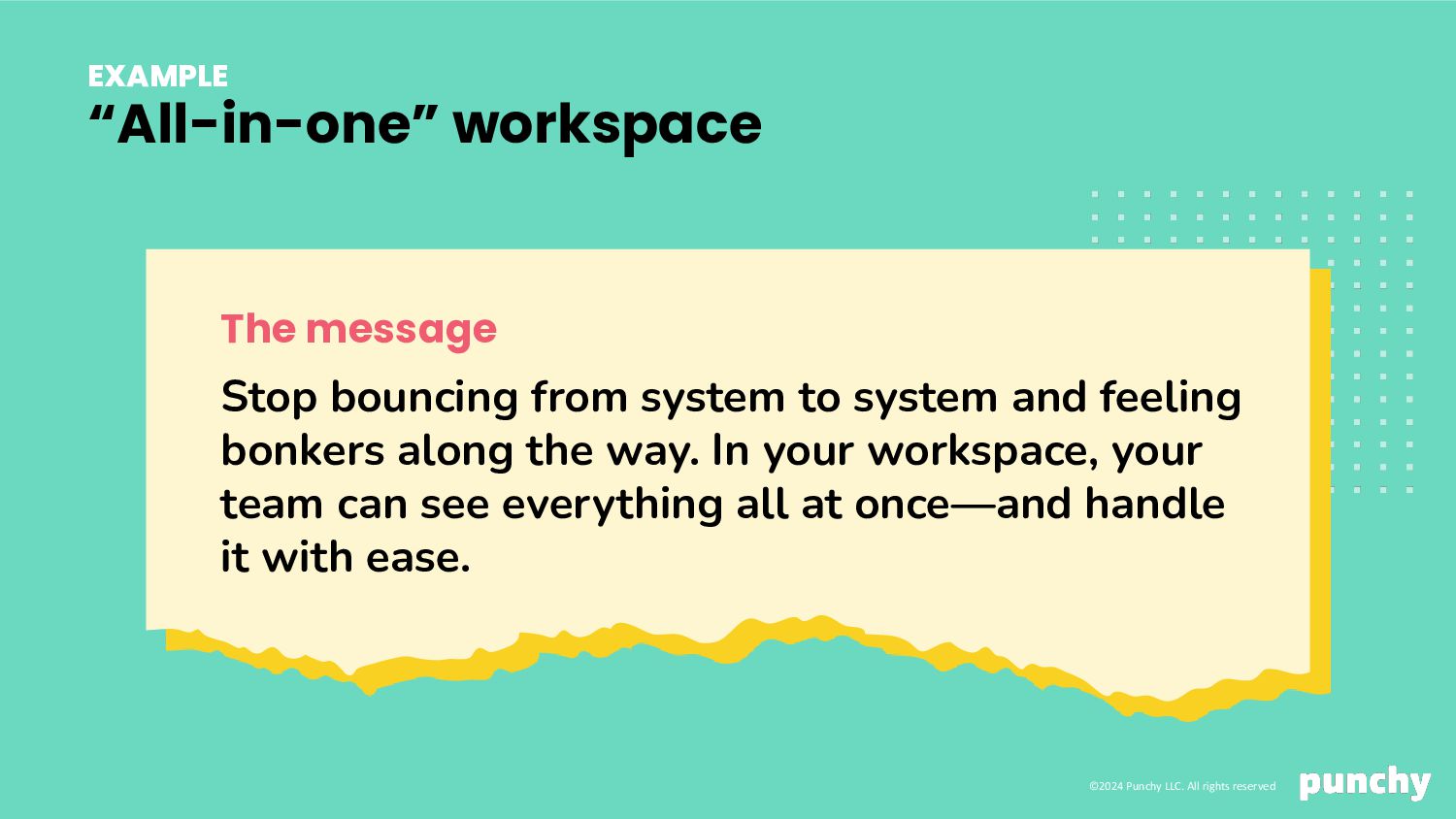
So then I bring those two ideas together in a message. Right? No more bouncing from system to system. In your workspace, your team sees everything at once and handles it with ease. Now, lawyers understand what the heck an all in one workspace is and why they might want one.
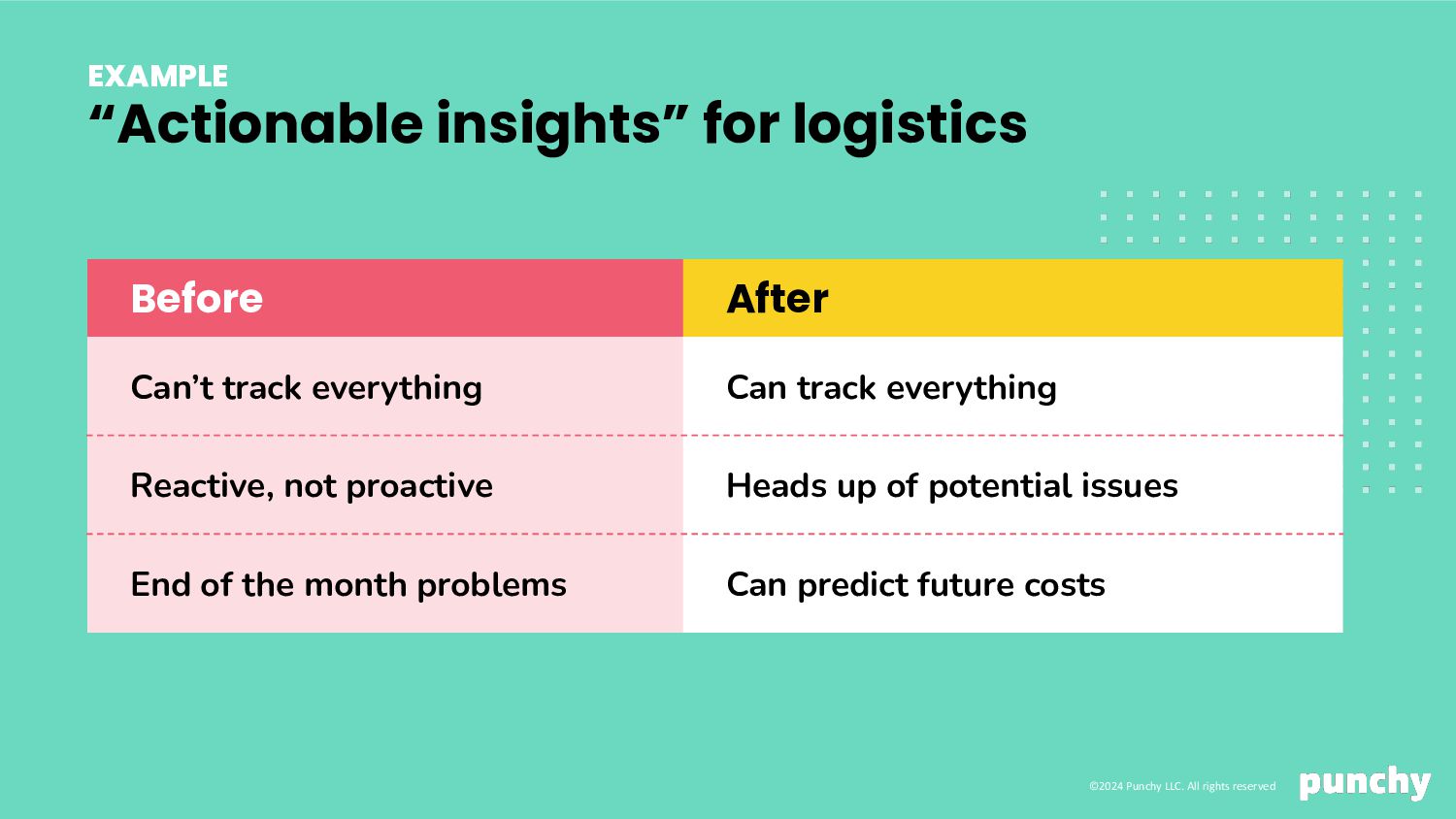
Let's do another example for actionable insights for logistics companies. So insights. Okay. If you're marketing insights, please translate them for people. So before these insights, companies can't track stuff, they're being reactive, they're having nasty surprises at the end of the month, afterwards, can track stuff, they're getting heads up of potential issues, and they can predict their costs.
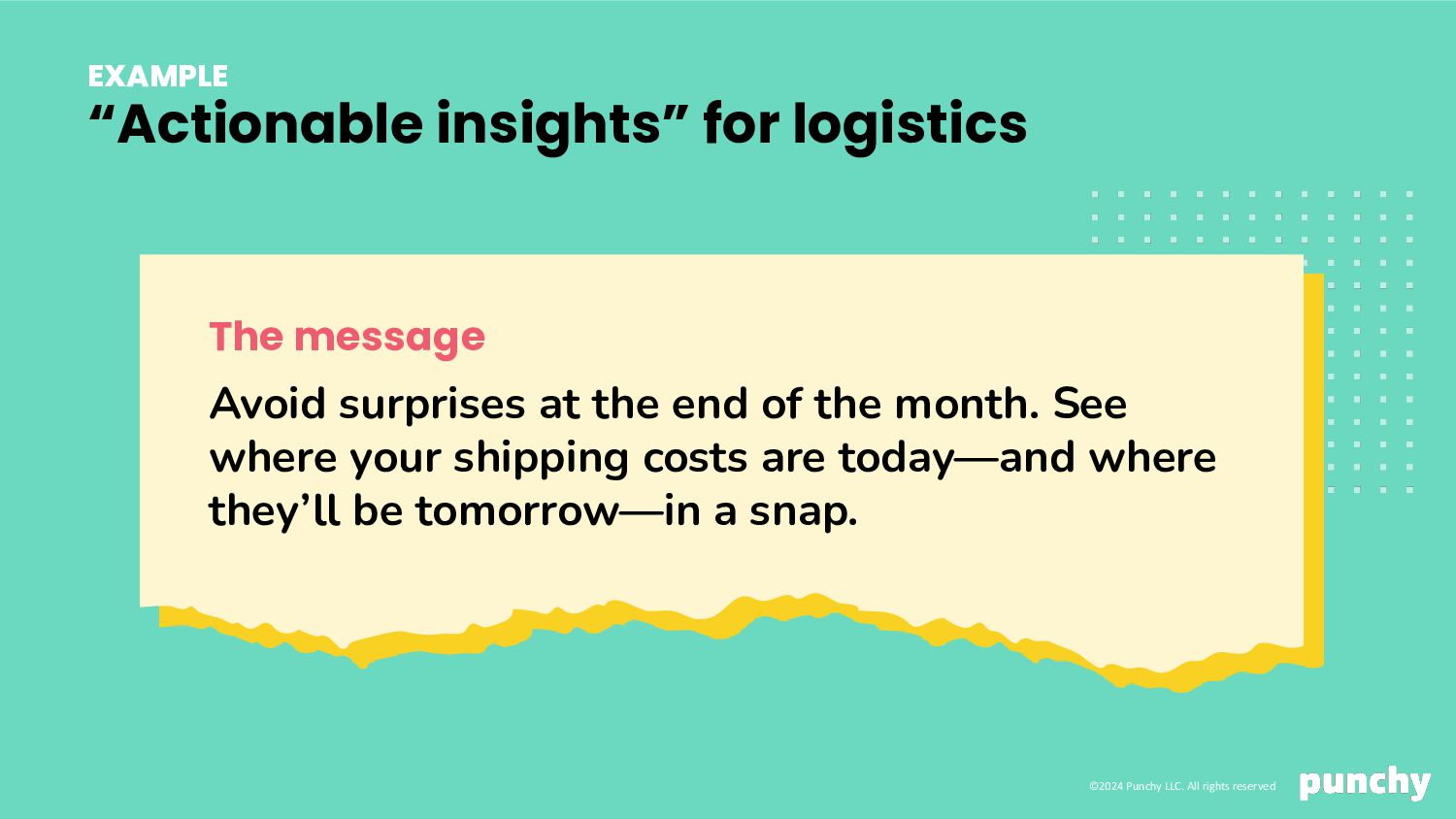
We pull them together in a message, avoid surprises at the end of the month, see where shipping costs are today and where they'll be tomorrow in a snap. So, again, someone working in logistics, I'm not super techy, but I understand why I might want these insights.
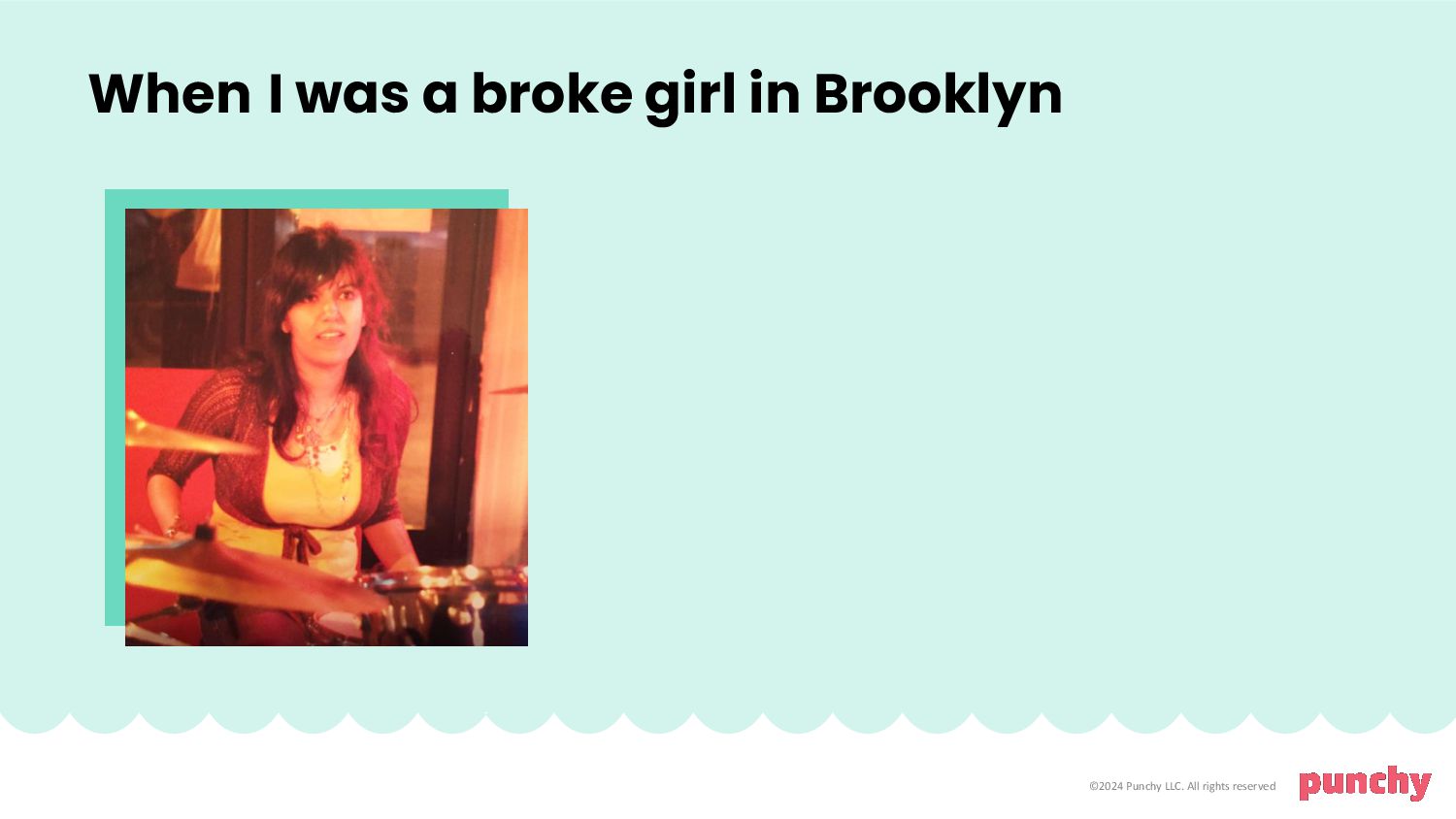
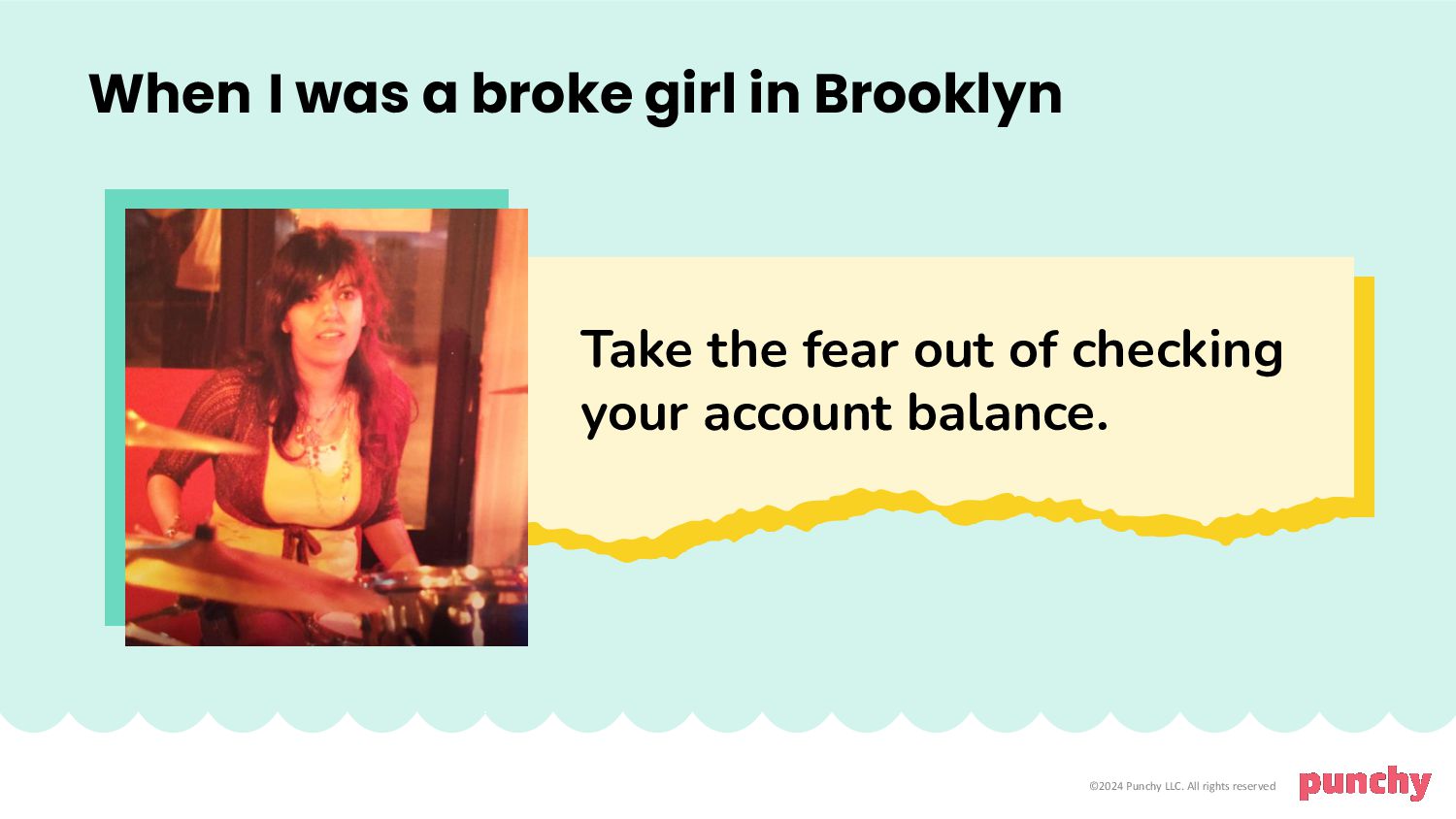
Okay. So, the next idea is keeping it real. So people feel something. Here's an embarrassing photo of me in my twenties playing the drums badly. I had just graduated college with an English degree, which everyone told me meant I would get a low paying job afterwards, and they were right.
I was broke. I had no money. I had so little money that I was terrified of checking my account balance. I never went in there, because it was so depressing. I would have, like, two bucks in there, or maybe negative five dollars. I would never check how much money I had, and it would give me all sorts of problems with my personal finances.
And I lived this way for many years. And one day, I saw this message from a startup, an online bank, and it stopped me dead in my tracks. I was like, oh my god, this company is talking to me. I was like looking around.
Has this online bank been in my brain? I am afraid of checking my account balance. And so I went to their website, I started reading more, and I read deeper and deeper. They even made loving jokes about how English majors were bad with money, and I was like, this is my bank.
And I signed up for a trial, and I became a loyal customer until the end, until they, you know, got acquired and went away. And that, you know, being a customer started with a message that just got real with me and got my attention.
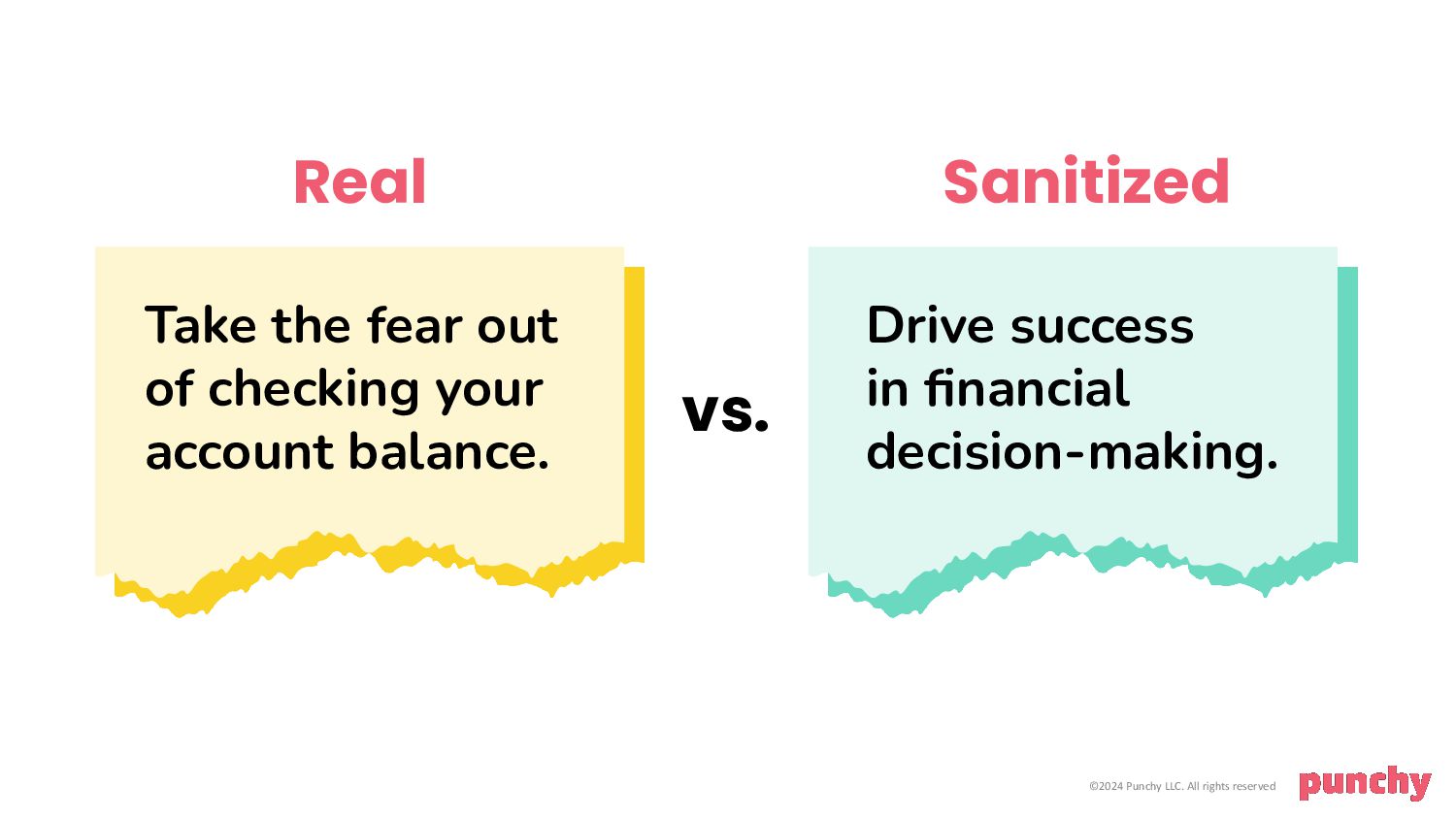
Now, if that online bank had taken the typical b to b enterprise, you know, tack at the message, they would have said something more like, drive success in your financial decision making. And I would have just walked right past that. Like, I I wouldn't have even read that, because I'm like, that's not what I care about.
Right? And I really feel like this is a thing in b to b and in tech. It is so sanitized. The problems we say we solve, you know, the goals we say we help people achieve are sanitized and dry. They really lack realness and authenticity.
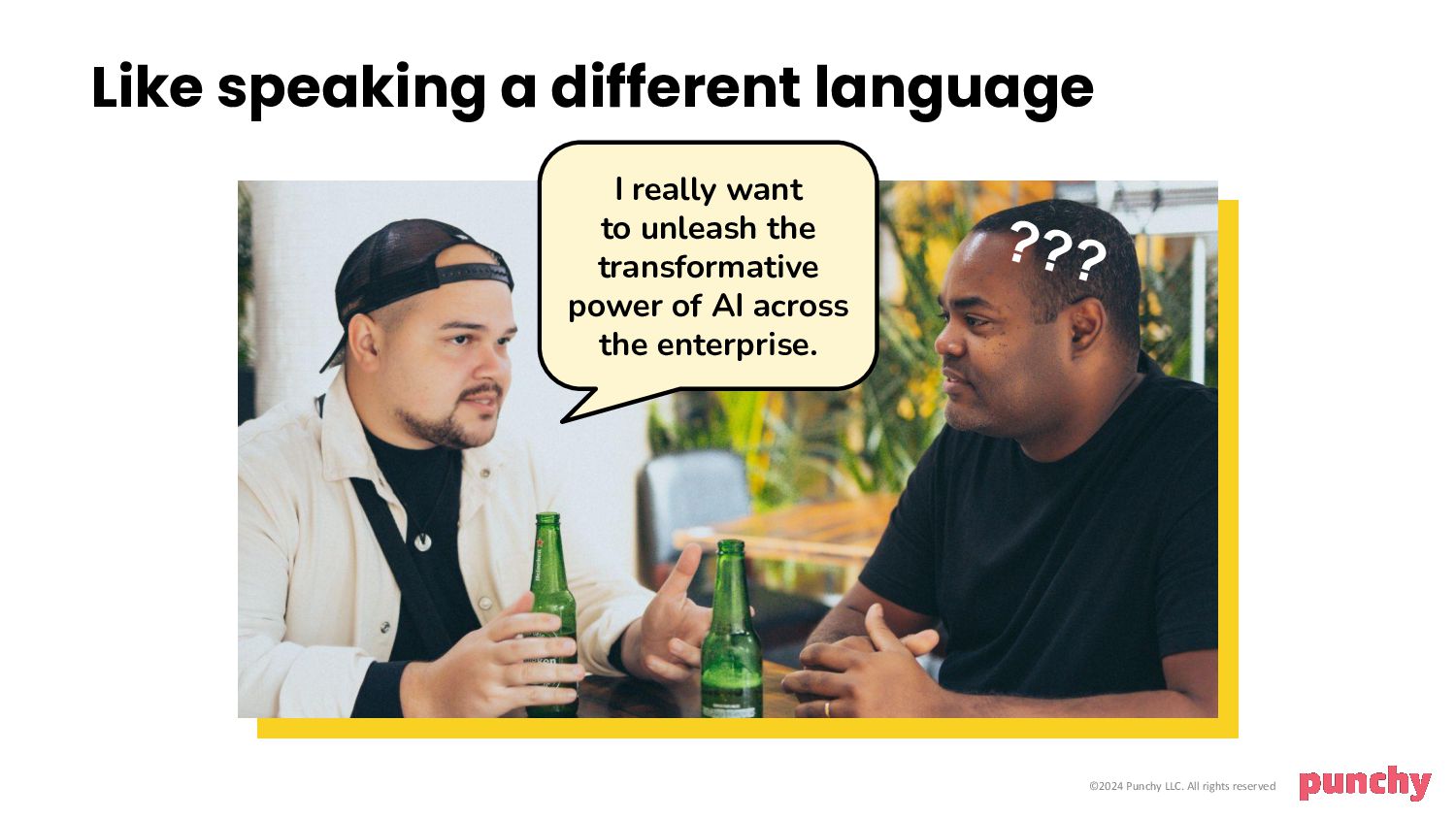
And I don't know why we do it. Because we're all humans, and humans are not sanitized. We are messy, we make mistakes, we have emotions. No one sits around with a friend, even if you're the CEO, and says, hey, you know, Bob, I really want to unleash the transformative power AI across my enterprise.
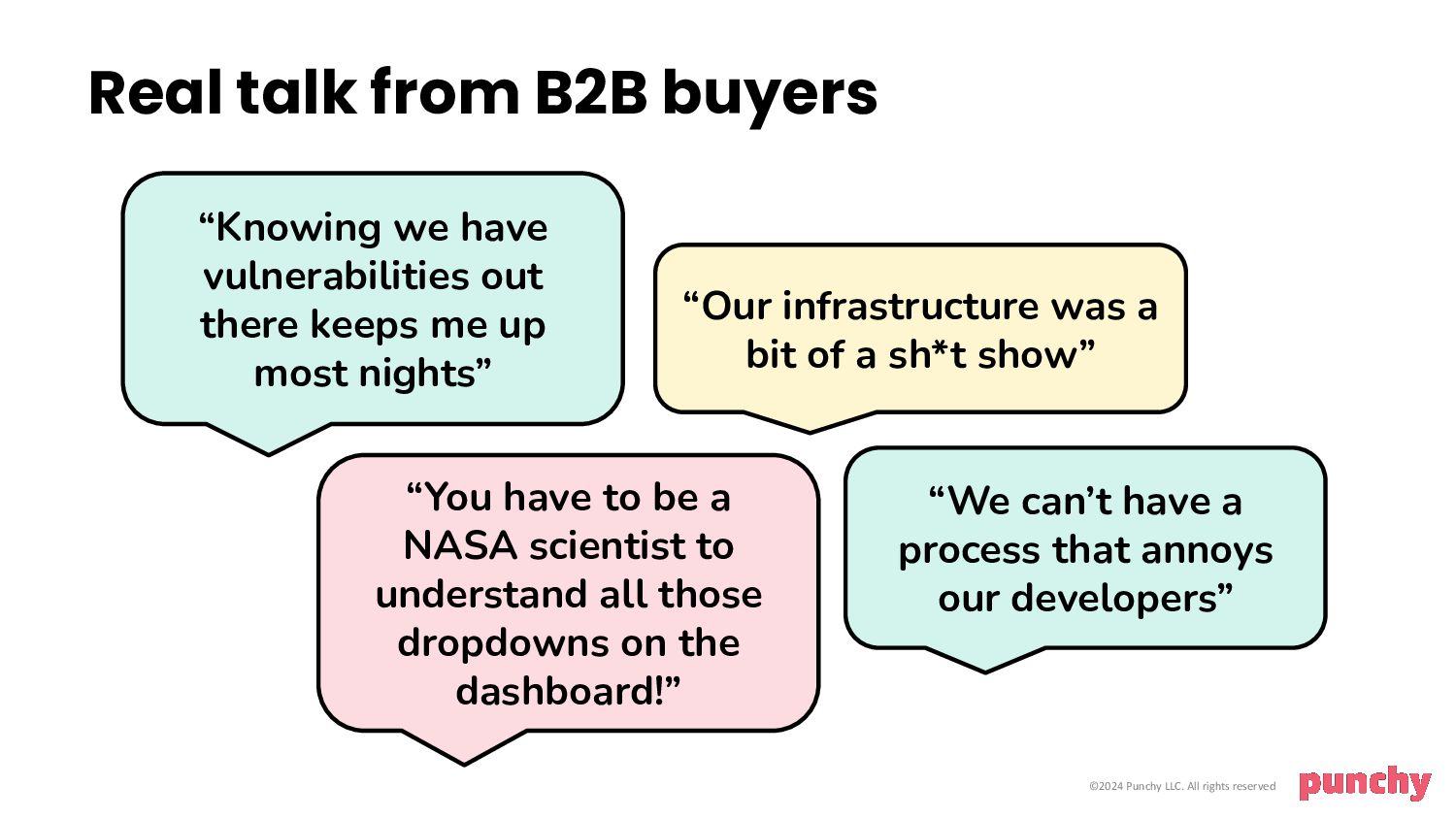
No one says that, no one thinks that, and yet everyone that was a headline, you know, I'm sure that's multiple headlines right now. This is not really how people think, and I know this because in my work as a messaging strategist, I've run customer interviews with over a thousand tech buyers across every, you know, super techy ones, not as techy ones, you know, c suite directors, and they talk just like you and me.
You know, they curse sometimes, they complain, they want their nights and weekends back, they wish solutions were simpler. Right? These are all direct quotes, like, great quotes from people that I've had over the years. They're stressed. Right? They're like us. So, you know, if you can infuse any of this into your messaging, you are going to stand out.
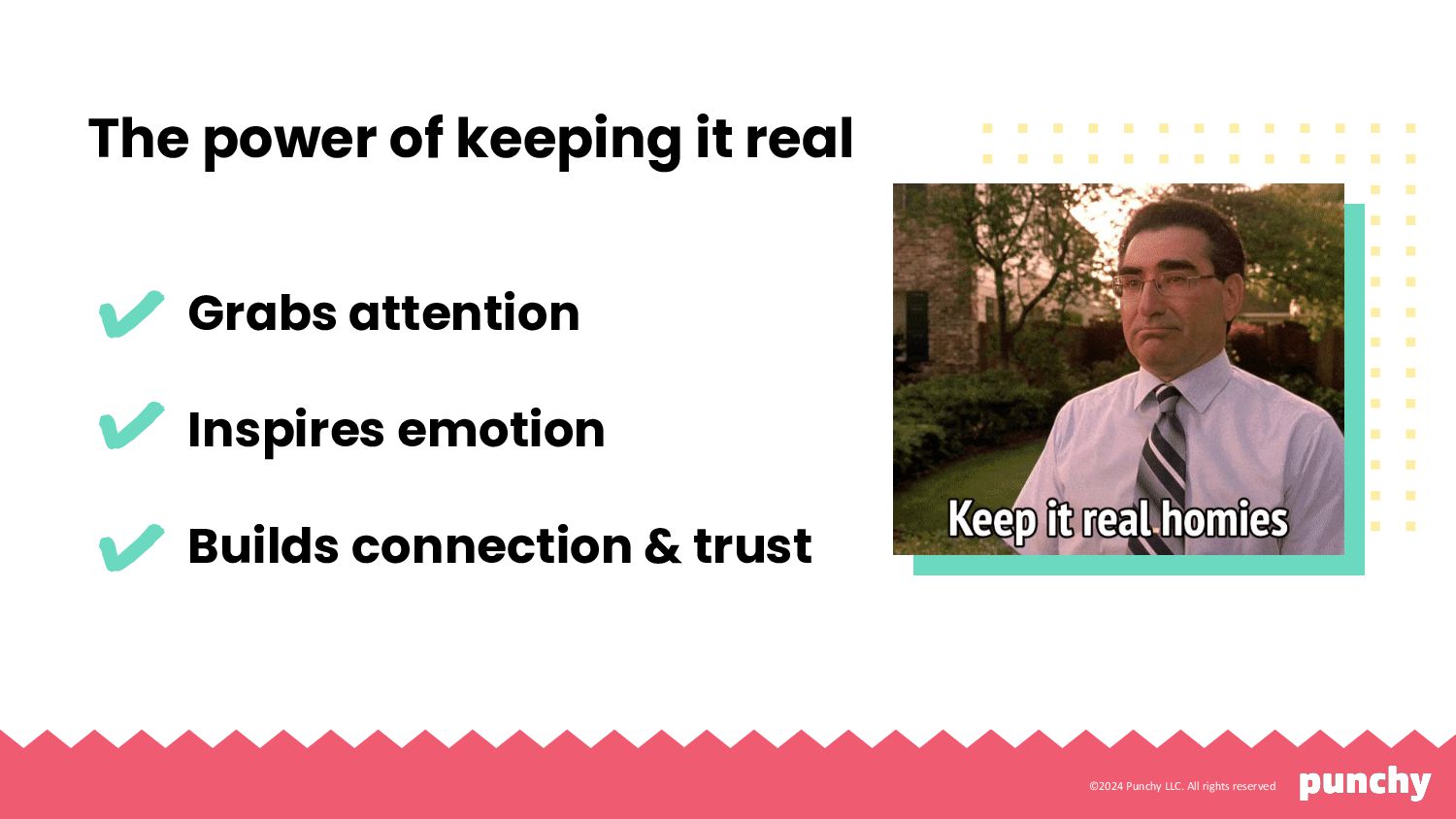
Right? The power of keeping it real, which I have found, is you stand out from everyone else who's going to sanitize dry, right dry roots, and you make people feel something. So when I saw that message about being afraid of looking into your bank account, I went straight back to that memory, that moment, and that feeling of like, you know, I'm scared.
And by feeling that emotion, it kind of fanned the flames of my desire to do something about it. So when you kind of remind people of a real problem that they're actually thinking about, it puts them right there and they're like, yeah, I gotta solve that.
You know, that's the power of emotion really, and it builds connection and trust. You know, when that bank started making that joke about English majors being not good with money, I'm like, they get me. I kind of trust them. So, when you're real with people through messaging, you subconsciously start building trust and a bit of affinity with them without even having a conversation with anyone.
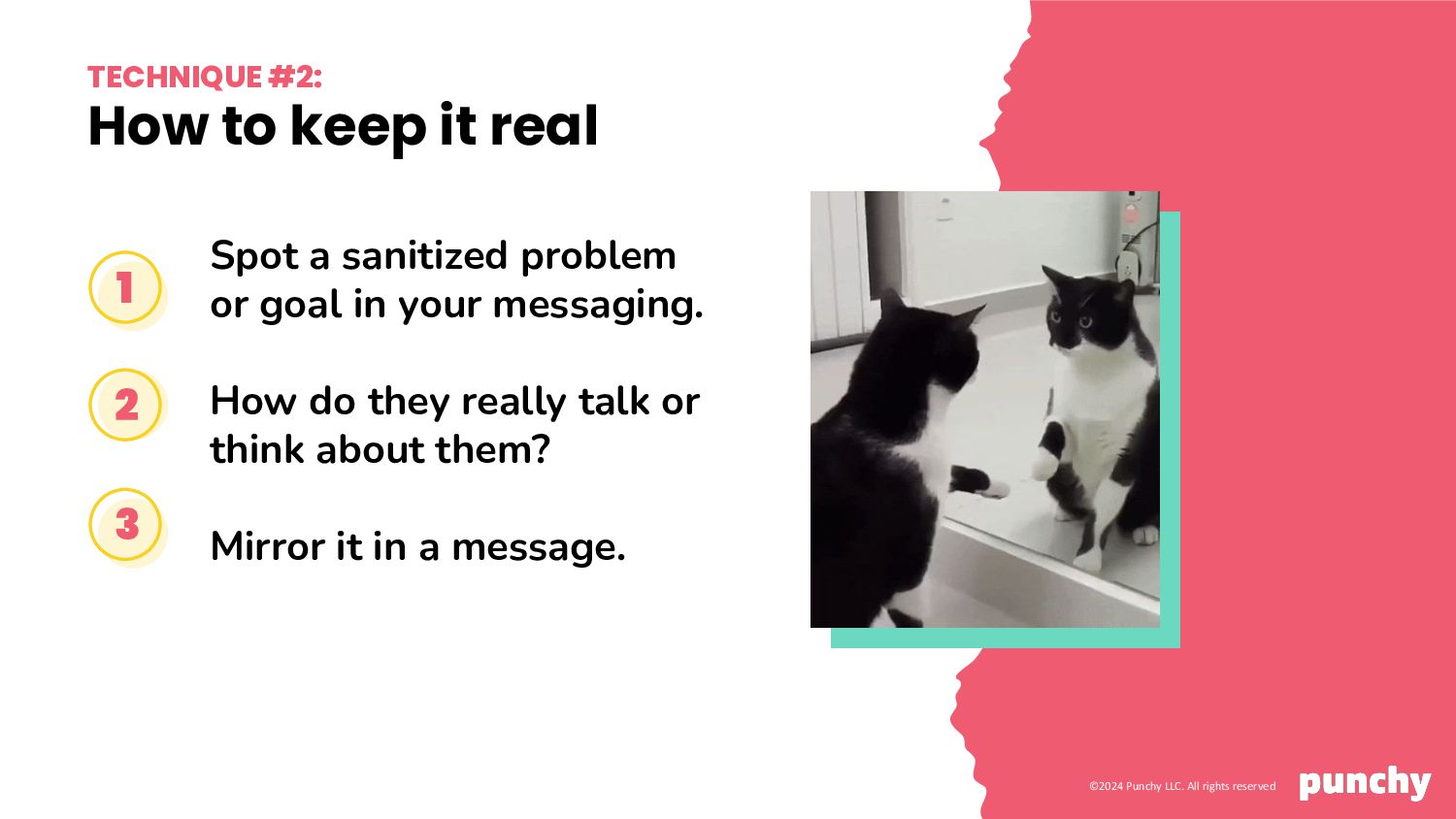
So, if you want to try and keep it real, here's an exercise you can do. Go into your existing messaging or, you know, your website, anything, and just see if you can spot something that's maybe a bit sanitized, you know, drive operational efficiencies, you know, something that's just like a bit dry and then just say, okay, how does my buyer actually think about this?
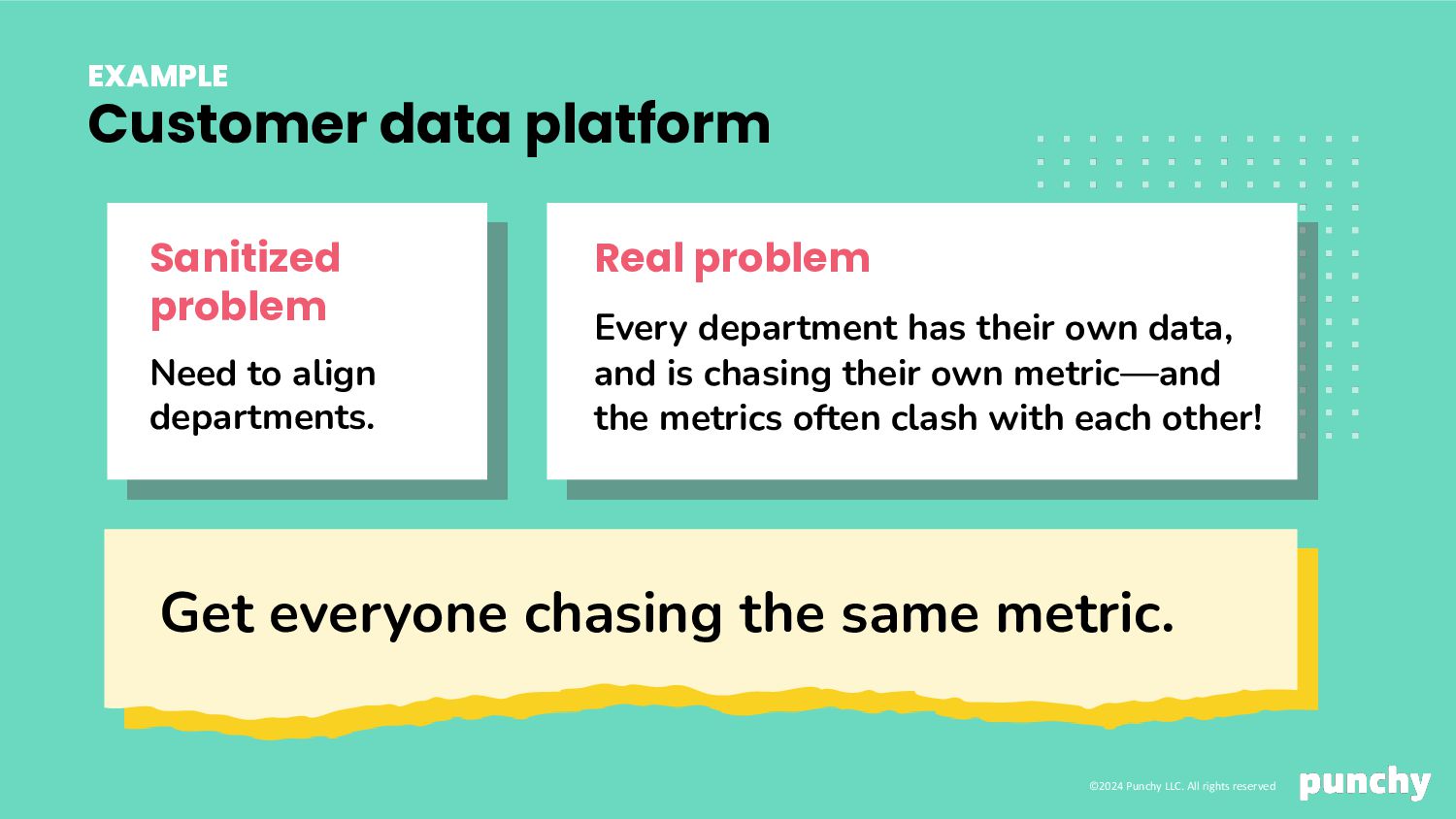
How might they talk about this? And can you get any of that into the message? Okay. So, this is an example for a company, I trained marketing teams how to do messaging, and this company, it was a customer data platform, and their buyer was head of customer experience.
And, they were like, oh, yeah, they need to align departments. And, I was like, alright, come on. Can you what do you mean by that? Like, how do they talk? How does this, you know, head of customer experience really talk about this need to align departments?
Why? And the product marketer was like, well, you know, they're covering all these different departments, everyone's got their own data, it's siloed, and they're chasing their own different metrics, and they don't add up. And so, makes, you know, customer experiences life harder, because they're clashing.
And I was like, great. Can you bring that into a headline? And they came up with this really great headline, get everyone chasing the same metric. So, when we're getting real, you don't have to, like, get, like, crazy or, like, get really personal, it's just talk real to people about how they're thinking about the problem.
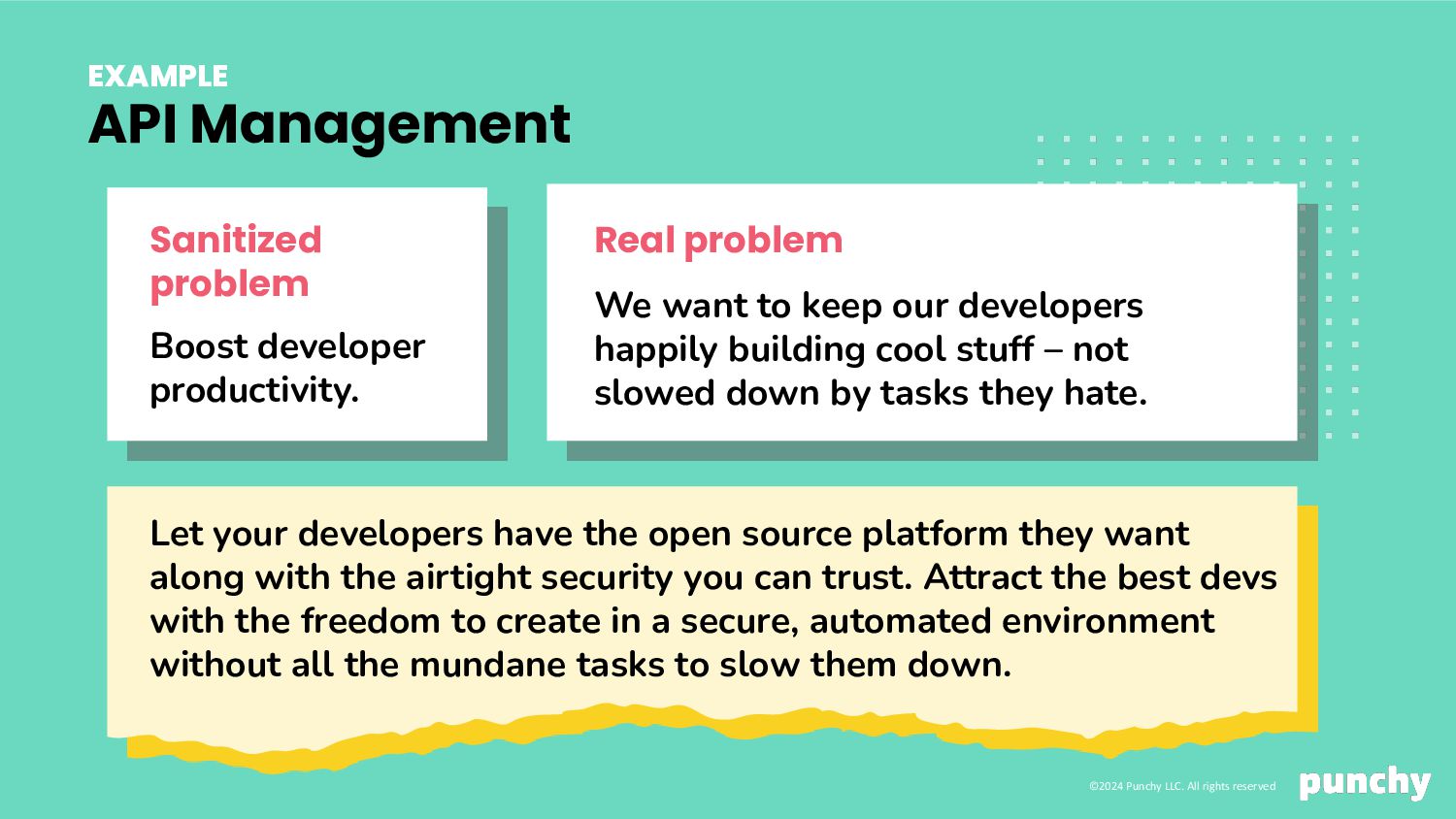
I worked with another company, kind of a well known API management platform, and they were talking about the somewhat sanitized problem of, like, oh, they need to kind of boost developer productivity, and we help them with that. I was like, come on, tell me more about this boosting developer productivity, like, what's the real story?
And they're like, oh, god, you know, they hate being forced to use, like, systems they don't like, they hate the manual stuff, they just wanna be free to build cool ****, and we help them do that. And I was like, that's so much more interesting, you know, and so we pulled that into a message where we talked about, you know, you can attract these great devs with this not having to do all these manual tasks.
So, sometimes when you get real, you actually get a new angle on the message, which is sometimes better than what you originally had. So, my last technique is about clarity, and I want you to raise your hand if you hate marketing fluff, and you hate the jargon and the buzzwords.
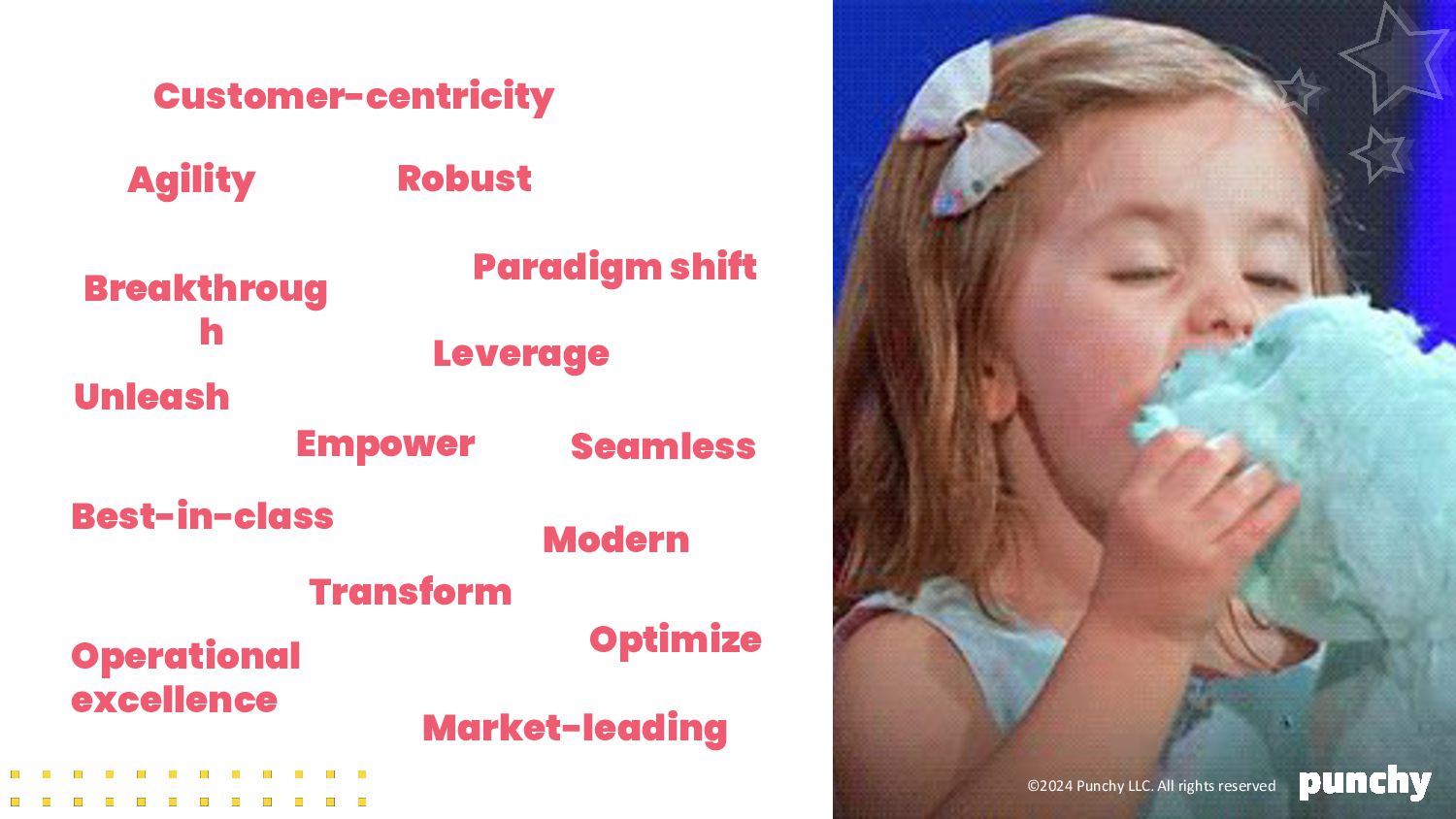
Yes. Now, keep your hand raised if you still sometimes use it, here and there. We should all have our hands raised, cause we all do it. So jargon and fluff in this industry is like refined sugar. Okay? It's secretly and absolutely everything, even if you think it's not there, go back and read it closely, you will see it's in there.
Kinda feels good to use it sometimes, like, I've I use supercharge in a headline here and there, like, it does feel good at first, but you can get addicted to it, and it bloats your messaging. It's empty calories, it's not saying anything. Right?
So you're wasting word count, you're not saying anything, and you're making it unclear. I often wonder, why do we do this in tech? Other industries don't do this. It's like this is just this is a tech thing. And I think it started with a desire to sound like a serious solution that's intelligent and smart and exciting and innovative, but now, I think it's just become a thing that everyone's doing it, so we feel like we have to.
Like, they're doing it, so I'm going to do it, it must be the right thing. Well, I'm here, you've heard it today, it's not the right thing. And if you can actually break that habit, and rather than rely on these kind of buzzwords as a crutch to kind of convey something, if you can focus more on being clear, it'll be more effective than these words, and you'll stand out.
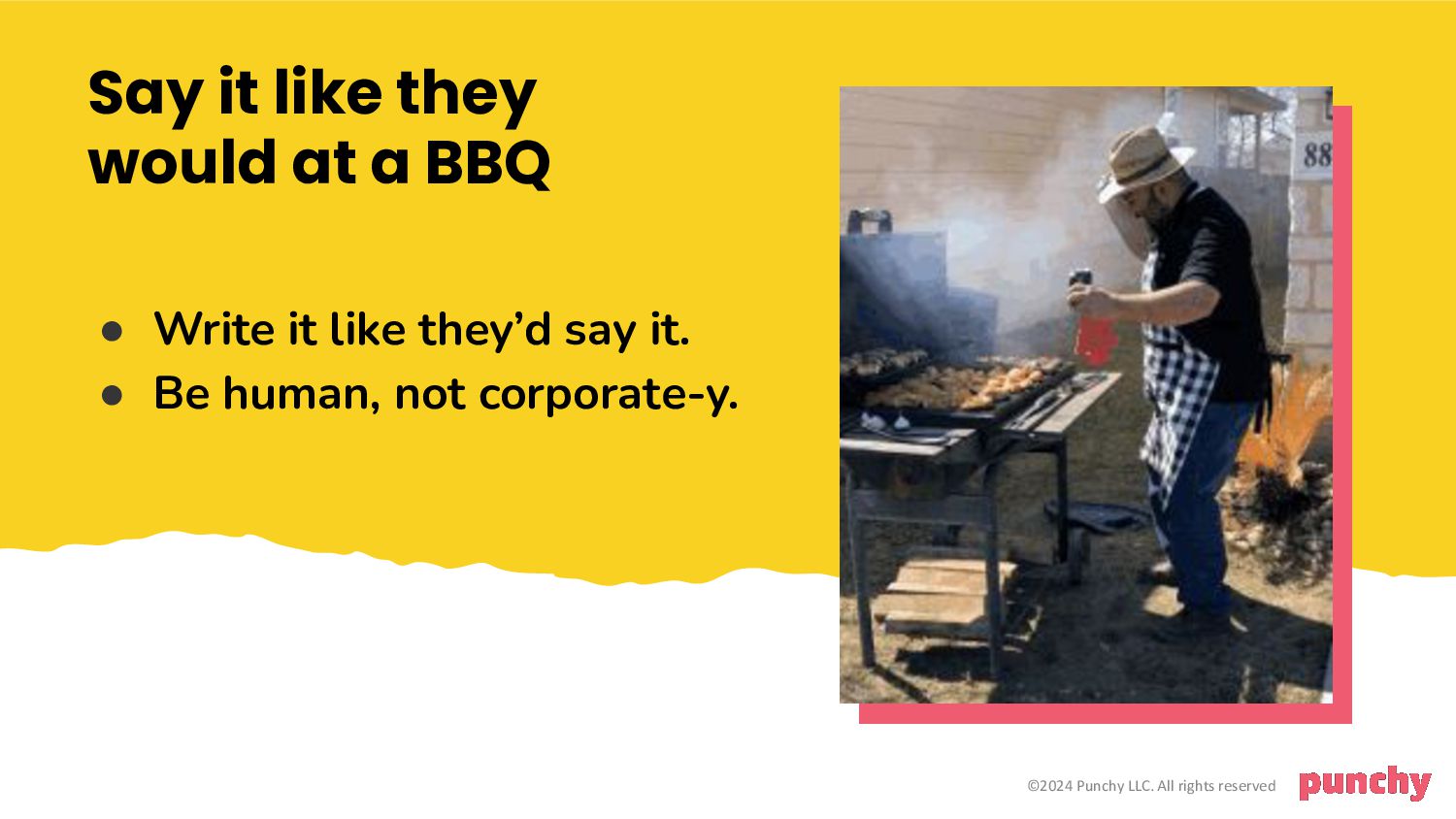
And it's really easy to do. You can use my favorite exercise, which is write your messaging like your buyer might say it at a barbecue. This is a fast track to writing real, writing clear, writing simply, and to be more human. Now, I'm not saying write it for your great grandmother at the barbecue, she doesn't need to buy the platform.
We're talking about how is your buyer talking in a relaxed fashion with their friends about their problems, about the things that they want to solve and write it that way. So, this is a favorite exercise in my training program and it seems deceptively simple.
But there was a company I worked with here in the UK and they loved this exercise. So after they did the training, they went and they updated all of their running campaigns with Say It Like You Would at the barbecue, and everything lifted in performance, just like that.
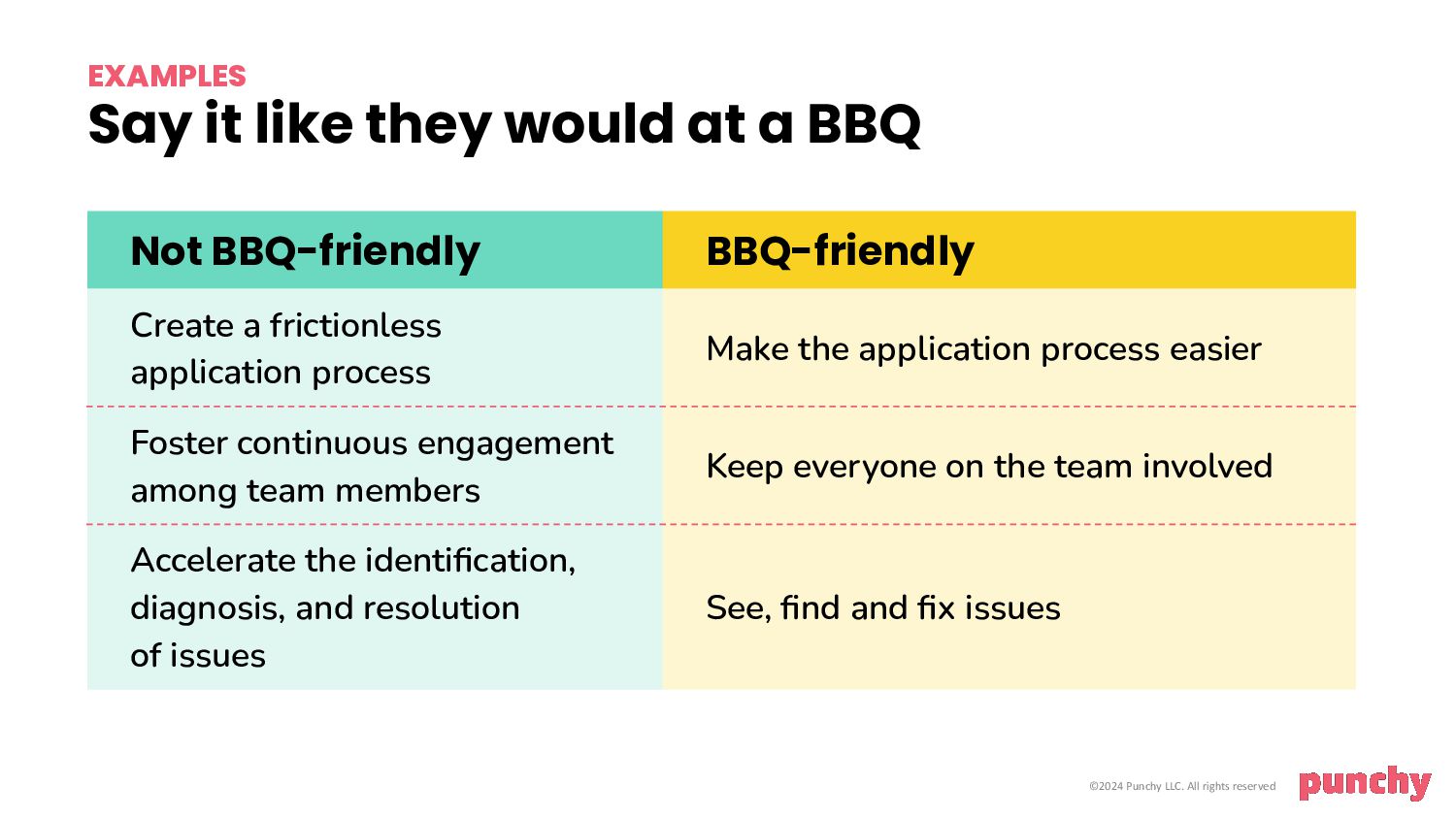
Like, it was really easy. So, there might be some low hanging fruit right now that you could adjust, let's say it like you would at the barbecue. So, on the left, we've got some of that jargony stuff that, I don't know, in b to b tech, we just kind of we write without thinking about it.
Like that middle one, foster continuous engagement among team members. Said no one ever. Like, no one ever says that, but we will happily write it in messaging. So if you think, alright, how would I say that in a barbecue? Oh, just keep everyone on the team involved.
Right? So, really, it's permission to write more like you naturally speak. You actually, in your head, already likely have the smartest clearest way to say something. You don't need to kind of make it sound more serious or professional by using all that language.
I guarantee you already know how to say it really well. So, some of you might be thinking, Emma, I got a really technical audience and they like their jargon. Are you telling me that I should spell out API? It's like, no. I'm not saying that you get rid of every technical jargon because some people do need their jargon.
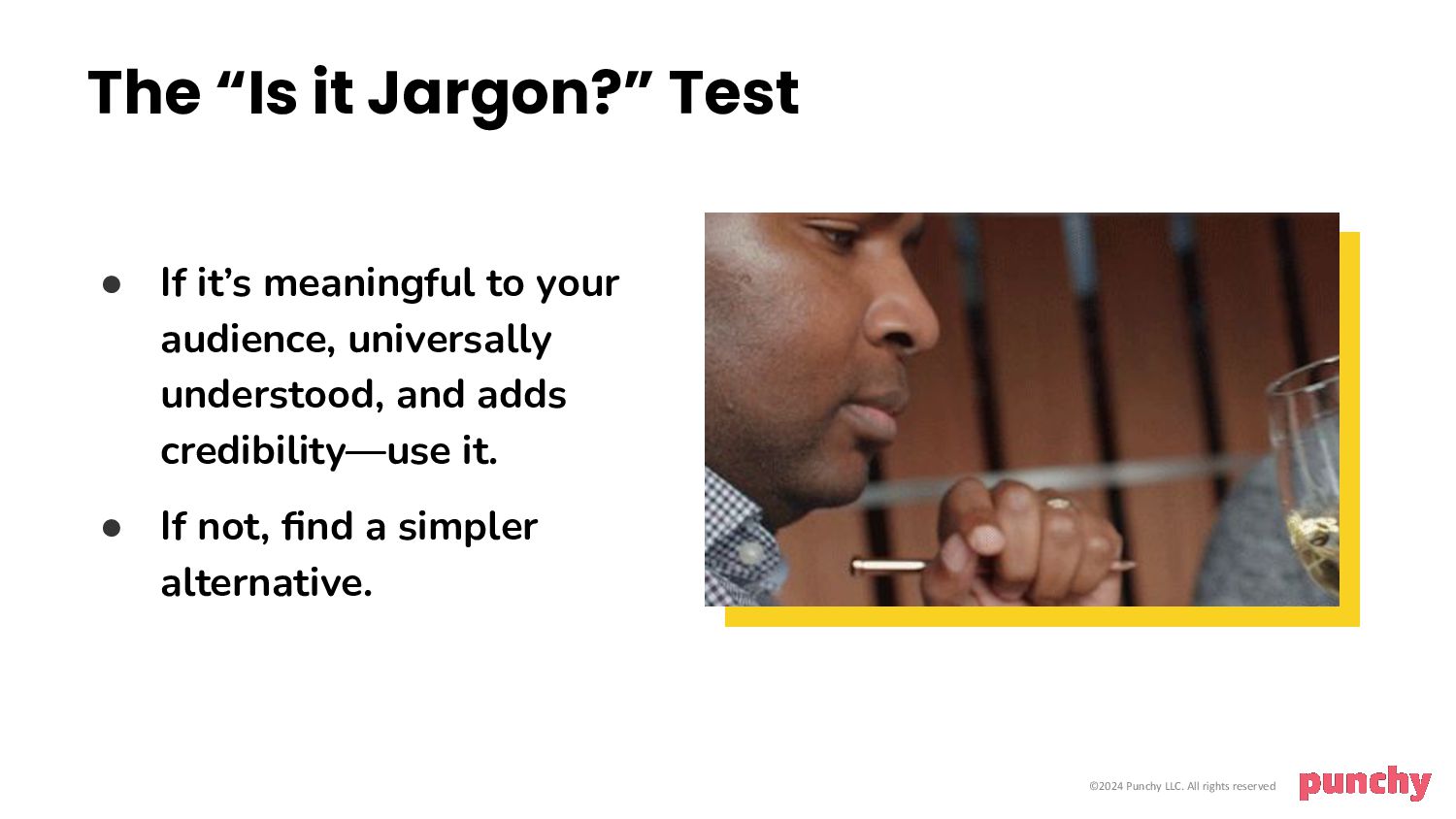
So it really depends on your product and who you're marketing to. So do my favorite, is it jargon test. If you're not sure, ask yourself, okay, is this going to be meaningful to my audience? Is this phrase going to be pretty much universally understood by everyone I'm trying to talk to?
And does it prove that I get them? Does it show that we have credibility? If the answer is yes, go ahead, use it. But, if the answer to any of those is no or even, meh, you know, try the barbecue exercise, see if there's a more clear alternative and and decide for yourself.
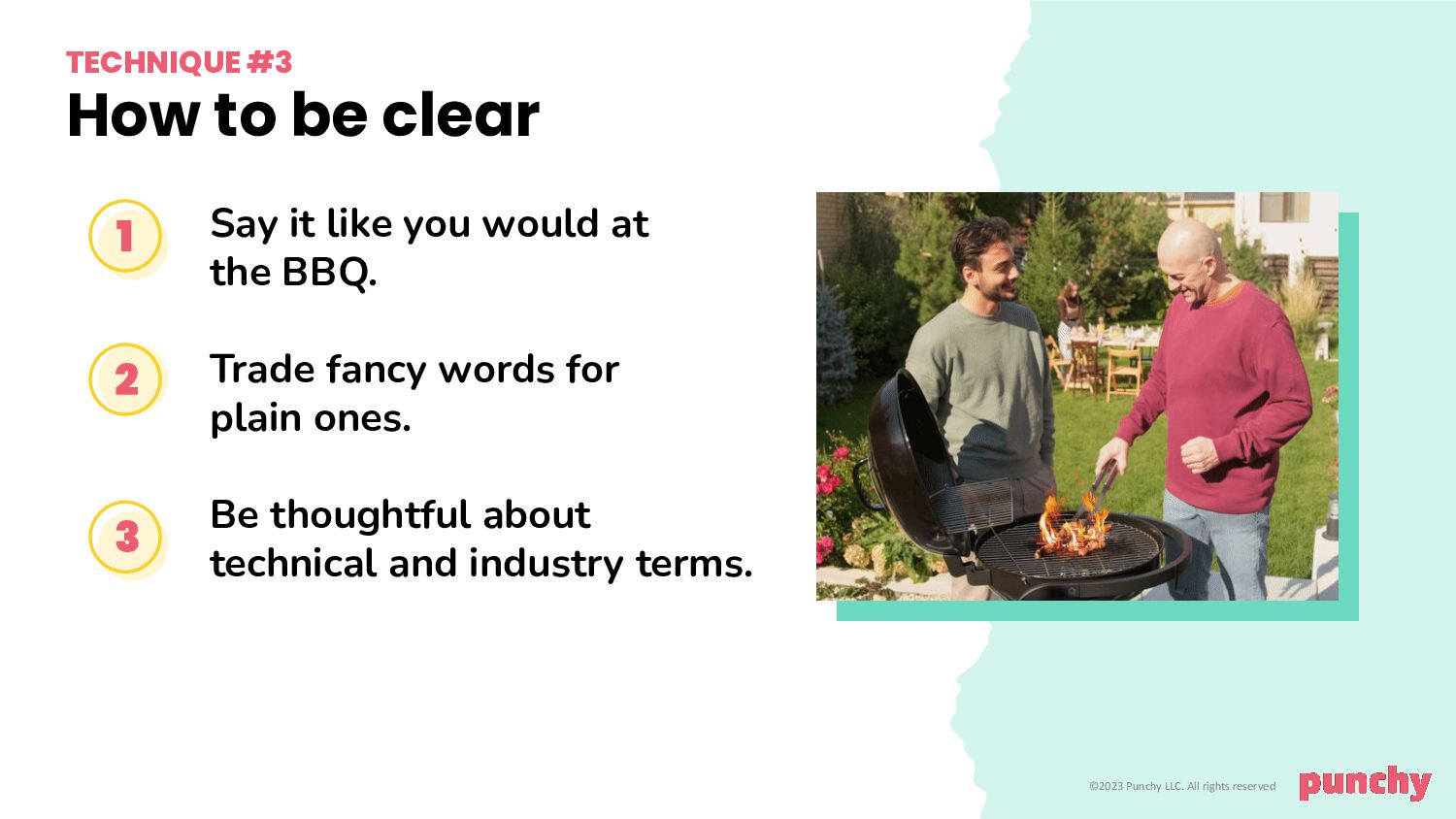
In many cases, the barbecue version is gonna be more clear. So, if you wanna be more clear and you're looking at something that maybe you think is a bit complicated, say it like you would at the barbecue. Trade out some of those big words for just the shortest simplest one, and just be really thoughtful and purposeful about any industry or technical terms you do use.
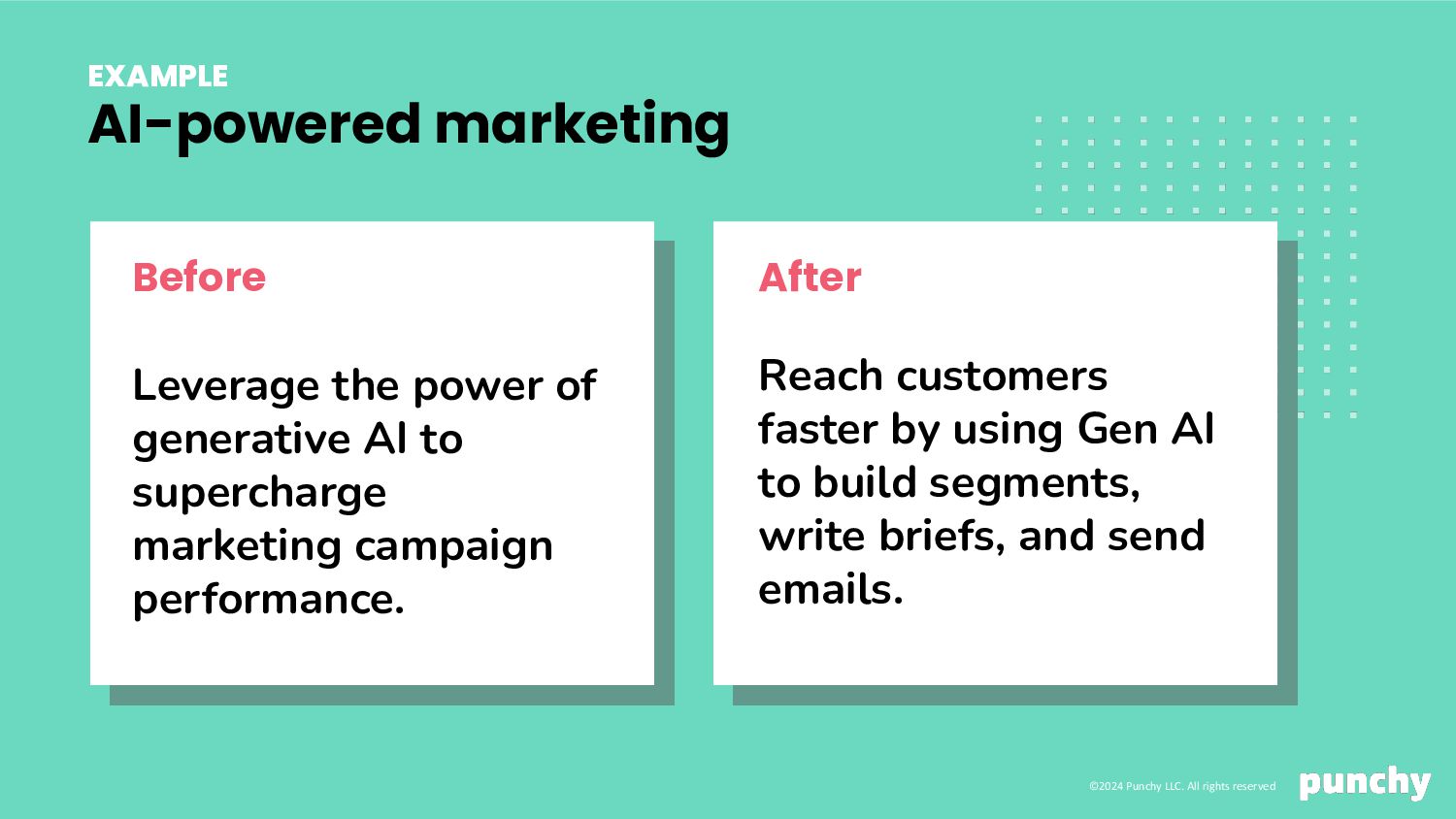
Okay. A before and after. I gotta poke some fun at AI. Sorry if you haven't it's okay if you've been writing this stuff. Everyone is writing like this. But, you know, I'm trying to hype in the before, like, leverage the power and supercharge this, and I'm seeing a lot of this right now, and that's not really saying anything.
If I don't know what AI could really do for me, that's not helping me. In fact, it's kind of scaring me. I'm thinking, oh, I I don't know if I'm, like, can do this. So, if I focus on being clear, say it like you would at the barbecue, you know, what are you going to get with it?
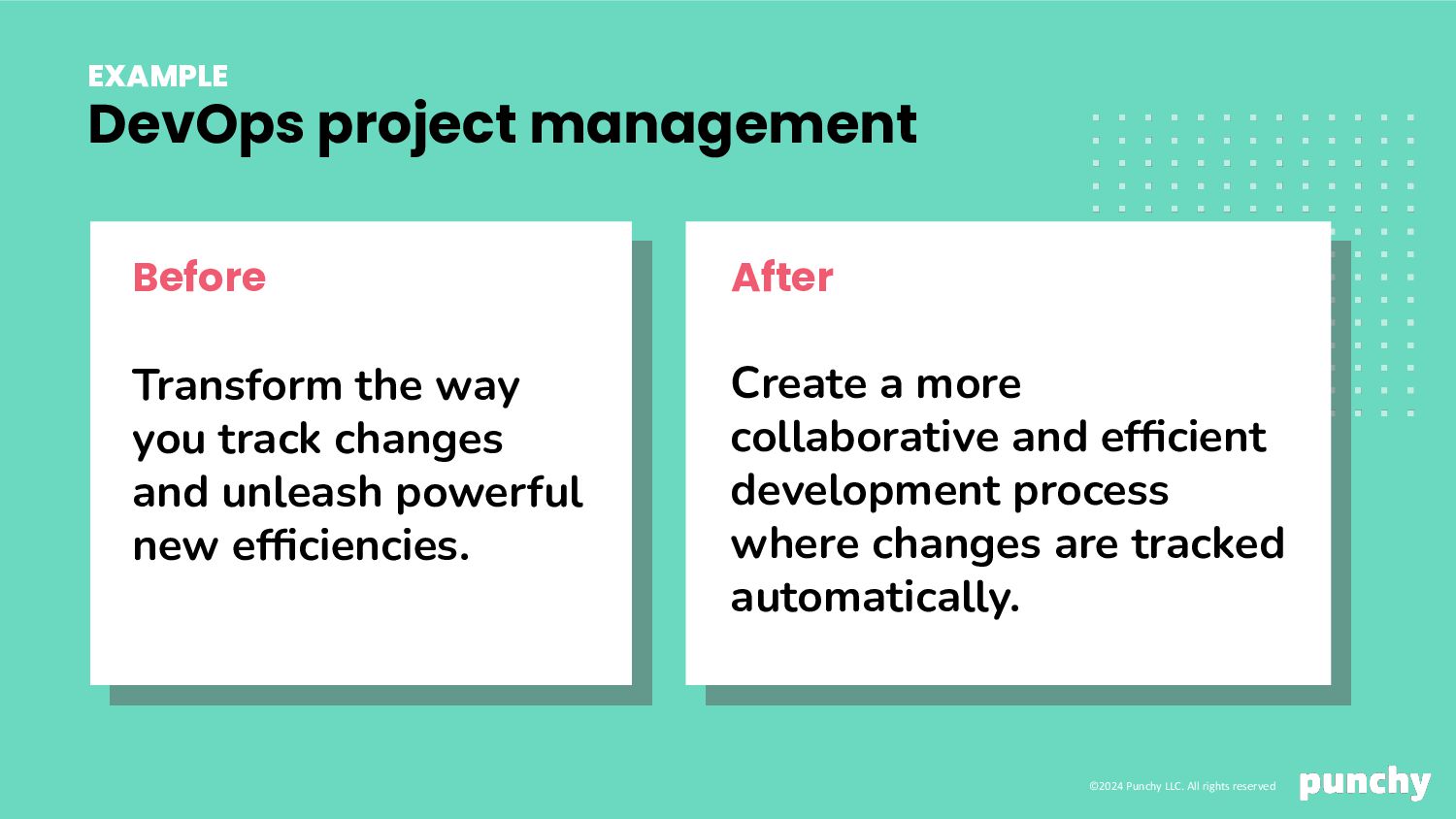
Hey, you're going to reach customers faster by letting the AI just build your segments and write your briefs and send your emails for you. And I'm like, cool, I may just check out this AI thing. Here's another one for a DevOps project management tool, and I'm going to poke at this, transform the way you track changes.
So this phrase, transform the way you insert whatever it is your product does. I see this a lot in tech because it's how we try and say, hey, this is something really new and innovative that I want you to try. But I just want to remind you that as builders, as tech marketers, founders, products folks, we are living ten years in the future.
And our buyers are often five years behind, depending on your audience, they could be ten years behind, there could be a two decade gap between where your brains are, and they don't know what a transformed version of their process, or their situation, or their company looks like.
And, we're actually putting the onus on them to figure it out when we tell someone to transform the way they're doing something. So, rather than do that, describe really simply like you're at a barbecue, what that transformation is gonna look like. In this case, you're just gonna have a more collaborative and efficient dev process where your changes are tracked automatically for you.
May not have the razzle dazzle of transform the way you track changes, but it's clear. And someone would hear that and be like, cool. I might just go check out this product. And that's what we want. So remember, you know, if you are really trying to connect with a buyer, you just want to think about that gap that's existing between you and bring it closer.
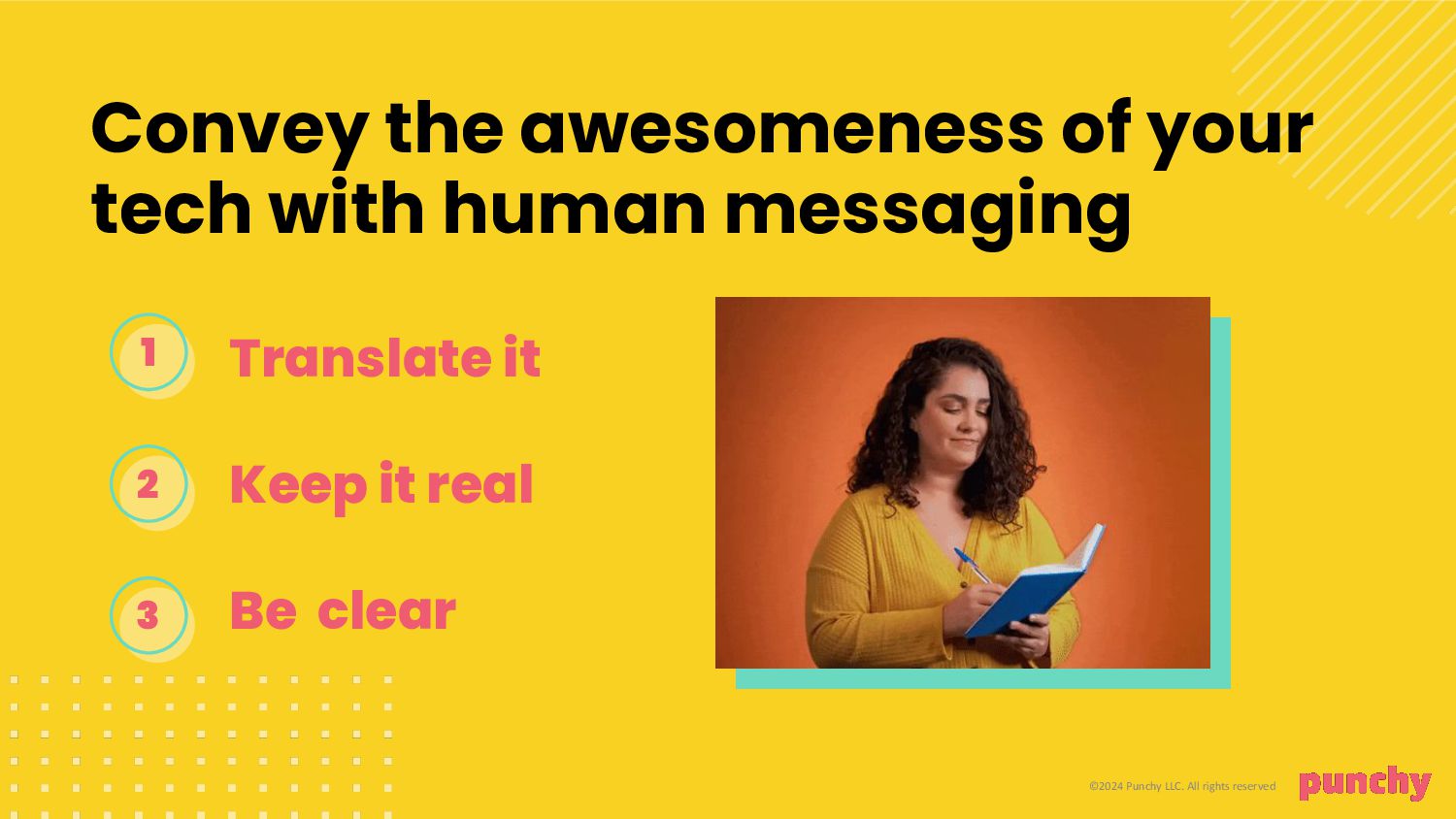
So translate your products in a way that they can get it. Right? See it through their eyes, not yours. Keep it real. See if you can make them actually feel something and drop the jargon, say like you would at the barbecue and just be more clear.
And you will start to really help people see how truly awesome your tech is. So, if you've enjoyed my nerdy rants about messaging, I've got a book coming out in September that is my whole process, start to finish, about how you can write simple human messaging that'll help you win hearts, minds and markets.
Pre order starts next month, so you get on the wait list and I'll shoot you an email when it's ready. And thank you so much for listening. It's been really fun. Thank you.