
You want to grow your business. The challenge: there are more channels and ways to grow than ever, VC funding is drying up without a path to profitability, and the macroeconomic headwinds are an ever changing minefield. How do you evaluate it all and know where to invest? Emily will walk you through thoughtful growth frameworks from first principles (no growth hacks here) that you can apply to drive meaningful business growth.
← All talks 












Grow Turing Fest 2023
How to Grow: Practical Growth Frameworks for Businesses (Startup, Enterprise, and everything in between)
Auto-generated transcript - may contain errors. Tap a timestamp to jump the video.
Fabulous. Well, I have been to the Internet, and I have seen some things. I don't know if you've been to the Internet, but it's not all cat GIFs. There are a lot of opinions there. And feels like every few weeks, there's a new opinion about how you should grow your business.
And actually, that opinion is the opinion. It is the only way to grow your business. Tons of people have lots of opinions about it. In fact, why are you not doing podcasting? What's your chat GPT strategy? It's getting really aggressive. All of a sudden, your VC is calling you and saying, hey.
Have you heard about this thing? Are you doing product led growth? What's happening? And it's exhausting. And I think, gosh. You really don't need this right now. You have a lot on your plate already. You've got the whole macroeconomic, unprecedented everything. And on top of that, now you need to worry about some kind of growth tactics FOMO.
And I get it. I understand why we're in this place. I feel in the room a sense of desperation. Things are tough right now. And when things get tough, we get desperate. We look for hacks. We look for that quick win, for that case study that says somebody two hundred and seventy five percent growth year on year, and we look for those quick wins.
We hope that we'll take that pill, and overnight, we'll lose the weight. We'll be amongst the stars. We wanna copy paste a solution that we find on the Internet and bring it to our company and make it work. And I wish I could tell you I have tons of those to give to you today that are absolutely foolproof solutions that will definitely work.
But that's not the growth I know. And I'm sorry to start this with a Debbie Downer moment, but the growth I know is business strategy. It's focused. It's planned work. It's analytical, and it's modeling. And, yes, it's also creative, but it's not reactionary.
It's not panicked. It's introspective, and it's intentional. And so today, I want to talk to you about the growth I know, which means going back to basics. And then I want you to think analytically and creatively about the business that you've brought here today that you are hoping to grow.
And I hope that I can inspire you through basics to think about how you're gonna grow your business. Now we're gonna talk about basics. And for some of you, this may feel very basic. And actually, would love that to be the case. I would love for our discourse to move back into basics and for us to spend more time talking about fundamentals.
And if what you leave with today is a sense that actually you know everything that you need to grow your business, I will be incredibly happy. So I hope you're ready to talk about growth. But first, let's define that. What does growth mean?
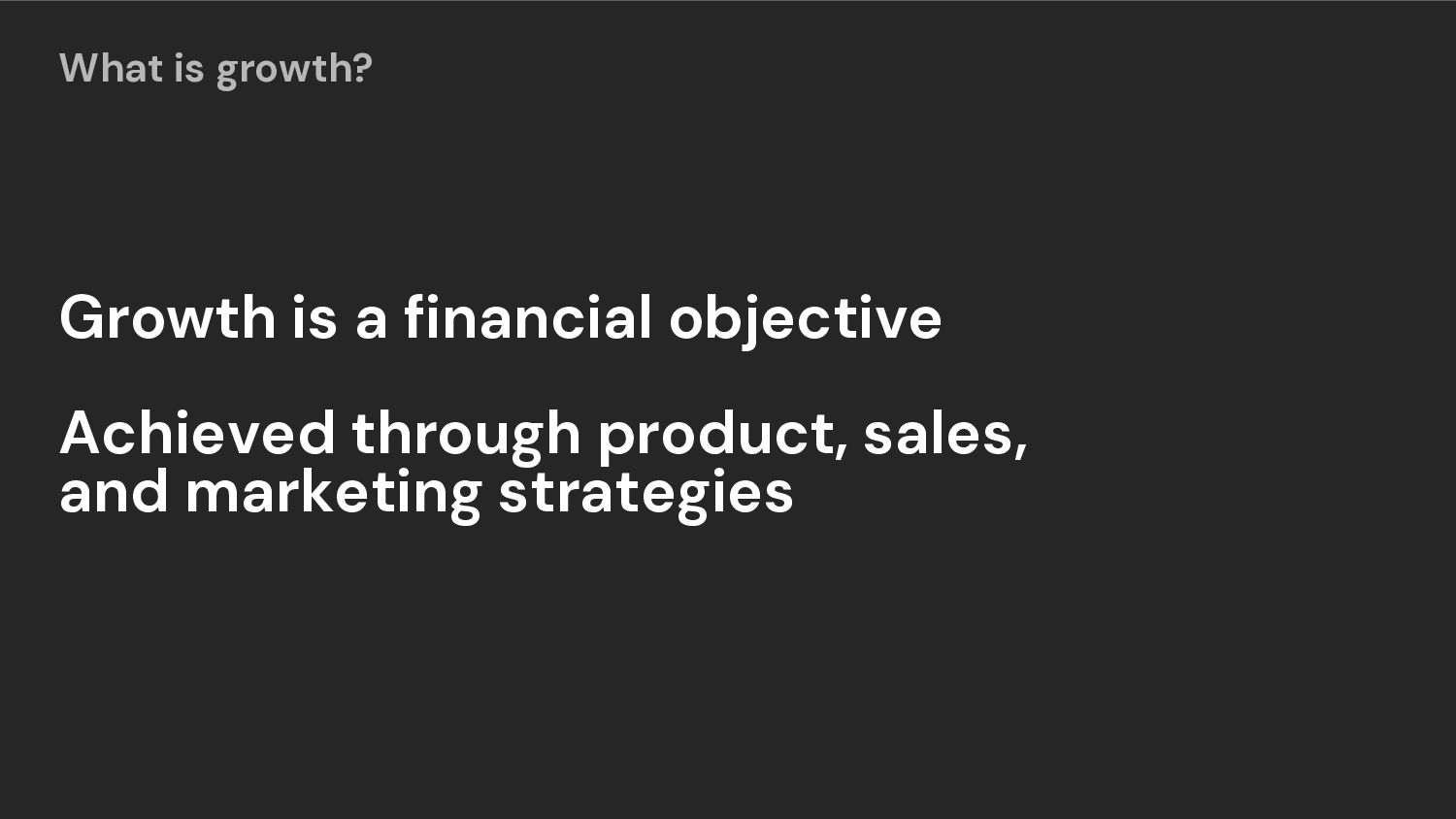
And for me, it's really important that we anchor growth on what I think it is for every business. It's a financial objective. There's a lot of conversation around who owns growth, what team owns growth, should it be growth products, should it be growth marketing, should it be growth sales, who is going to lead the ship on this thing.
And and it's okay if it's all of us or none of us because ultimately, it is a financial objective. And that's what ties together most growth professionals today. It's why Luke at Shopify calls this whatever it takes to move the needle. And the needle is financial.
And we need to anchor back to that financial objective to do a good job here. But the other thing that this tells us is that although different companies may achieve growth by different mechanisms and different teams and different models, ultimately, the way that we should think about growth has some underlying key principles.
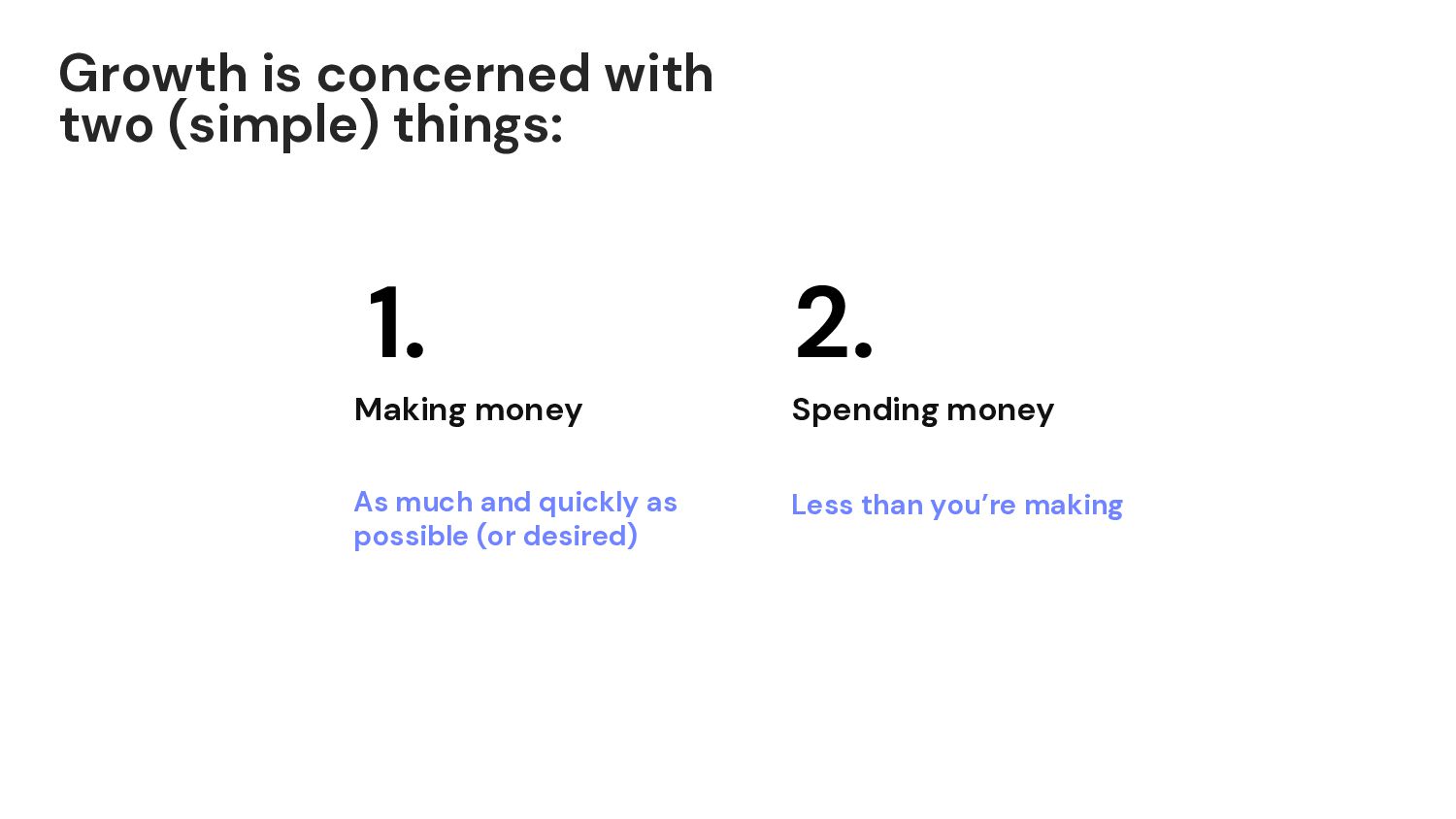
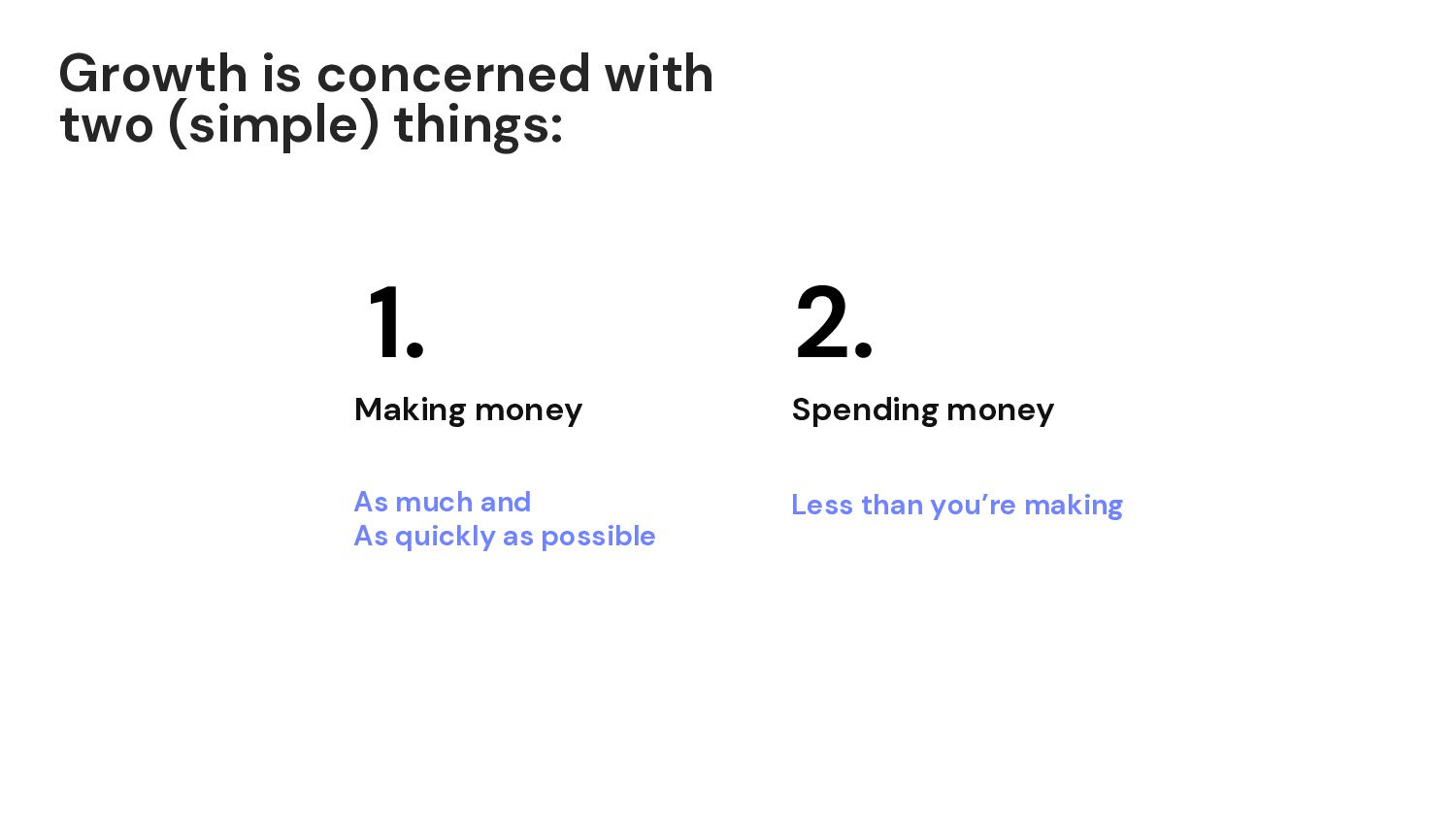
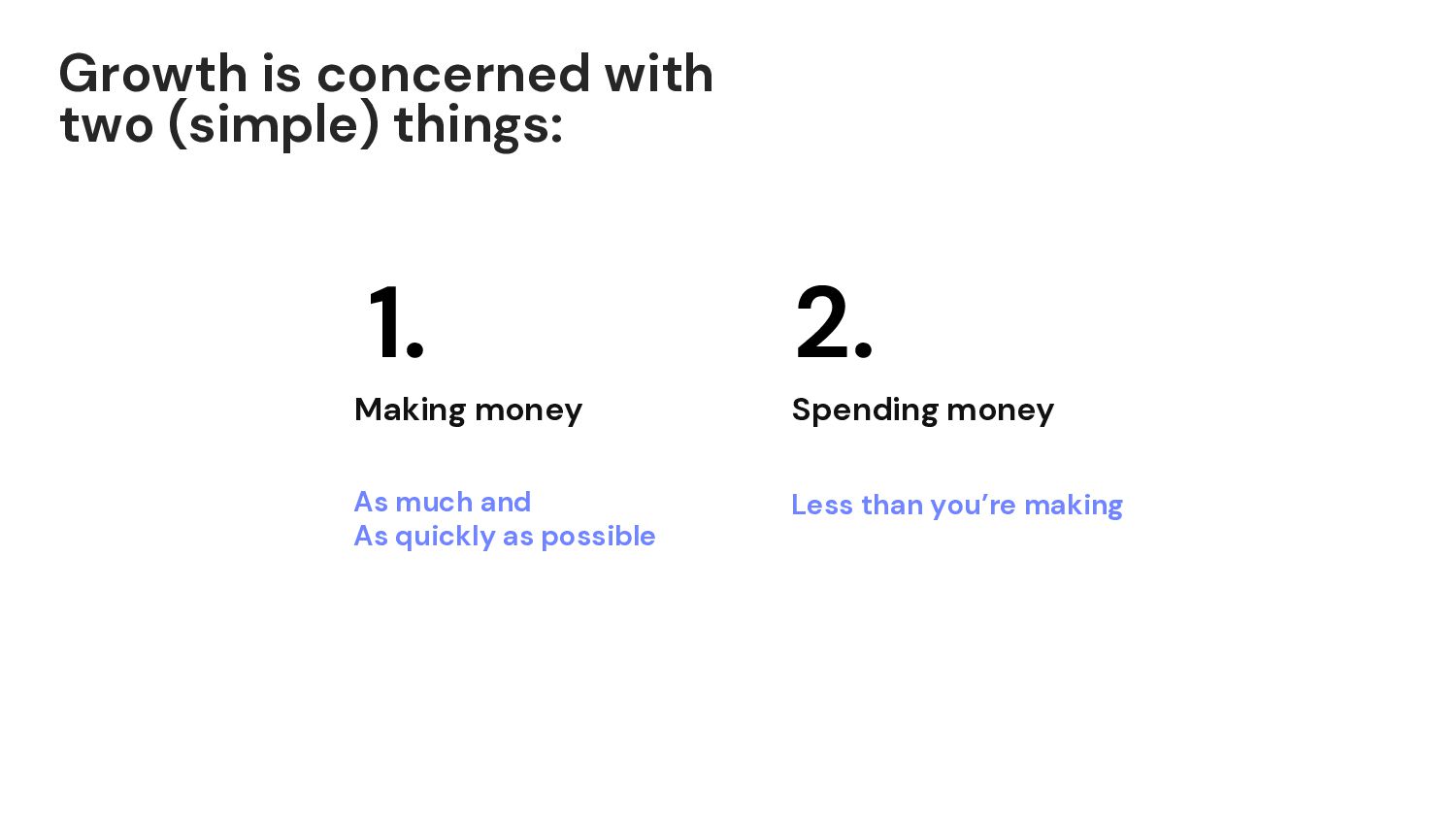
And those are really, really simply just making money and managing how we spend money. We wanna make as much and as quickly as possible or desired. There are definitely businesses out there who avoid the idea of growing as quickly as possible and would prefer to make money in a more steady pace, and that's okay.
But also, you have to manage what you spend. And you have to manage what you spend so that you don't end up in a place where you can't pay it back. Now, every business has a different way of looking at what makes them money.
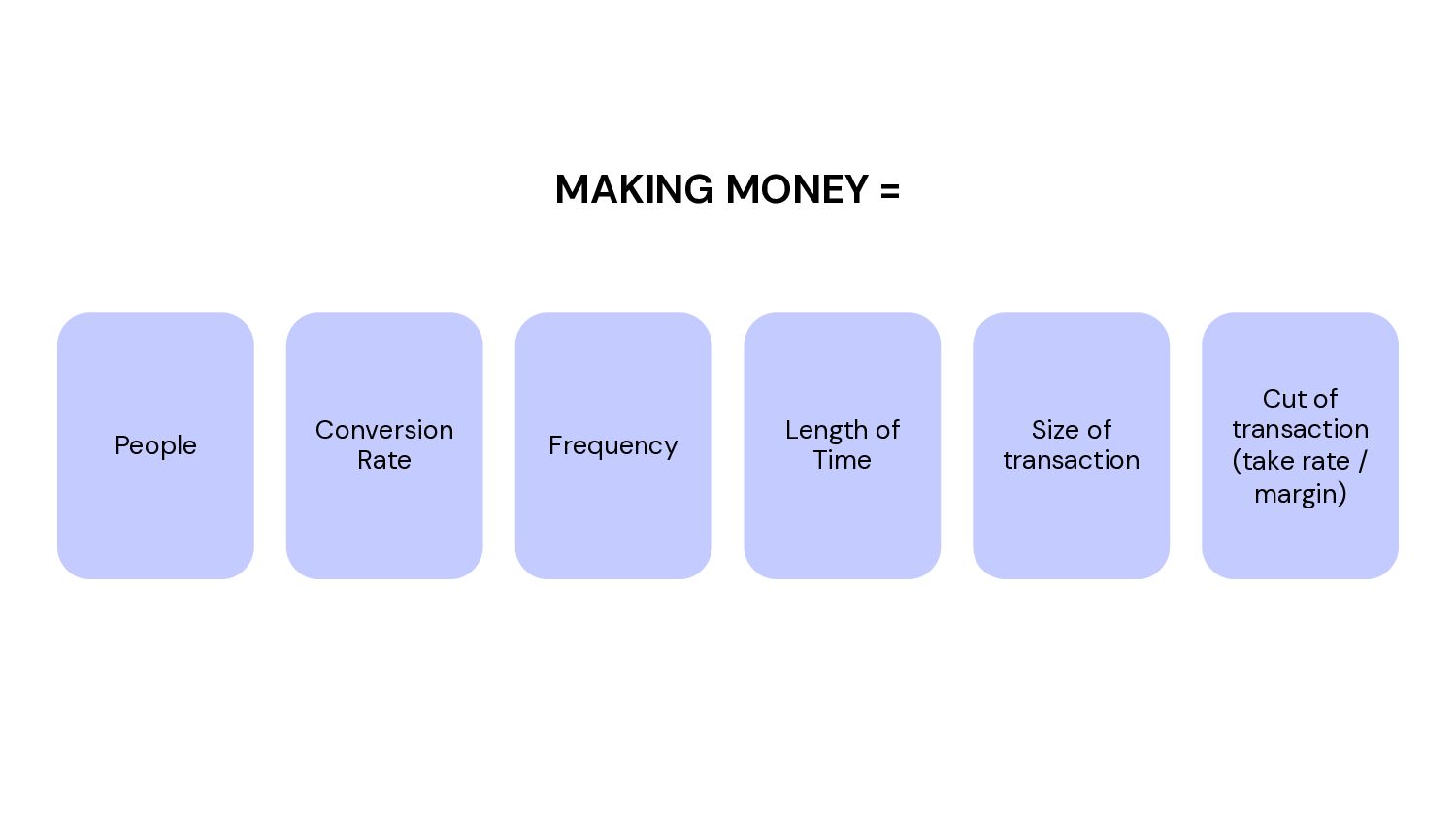
You might have a very robust revenue driver tree that you've dissected, and if so, that's fantastic. This is the most simple generic, I guess, oversimplified model that I can come up with that I think describes most businesses of all sorts of different scales.
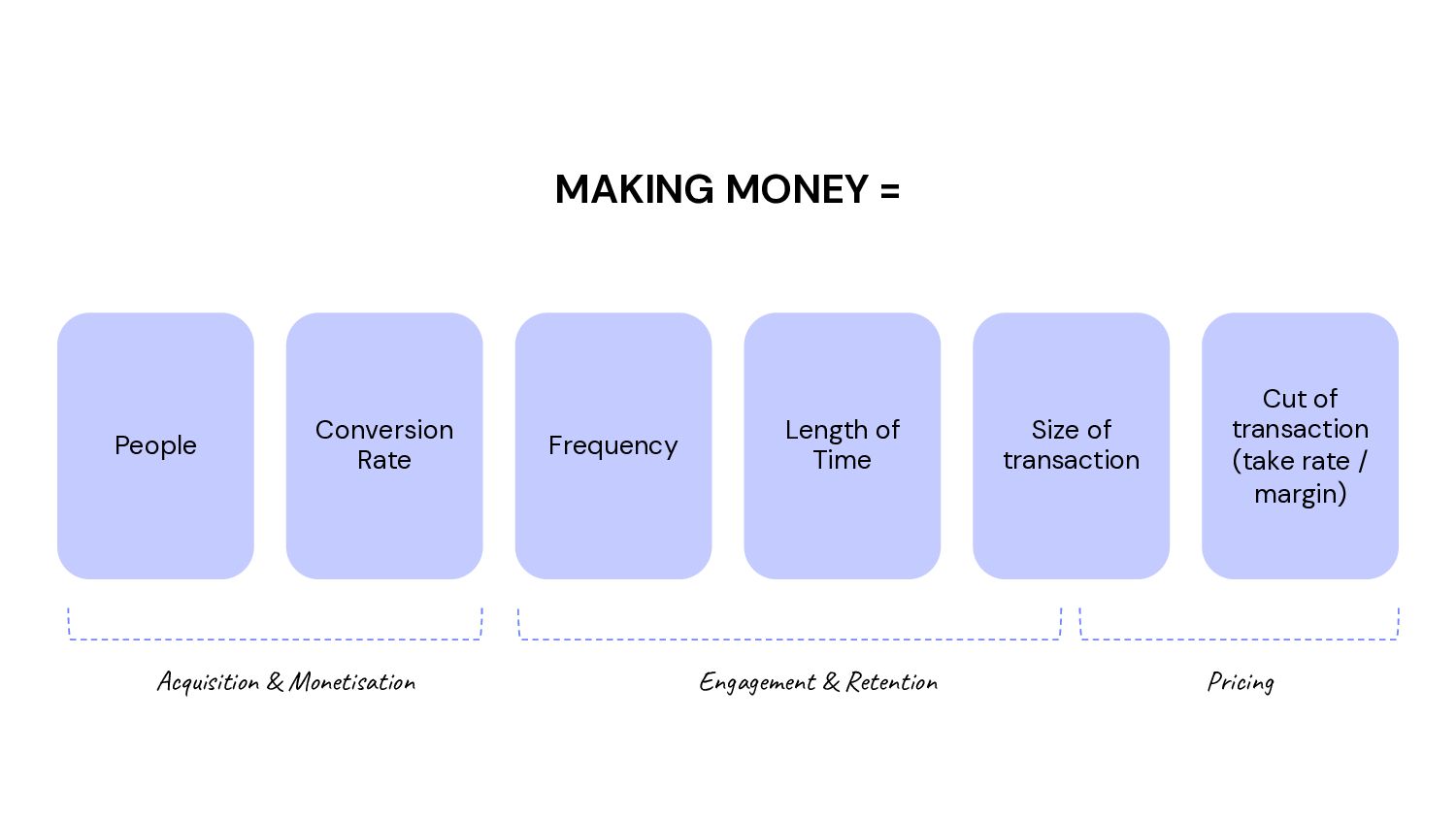
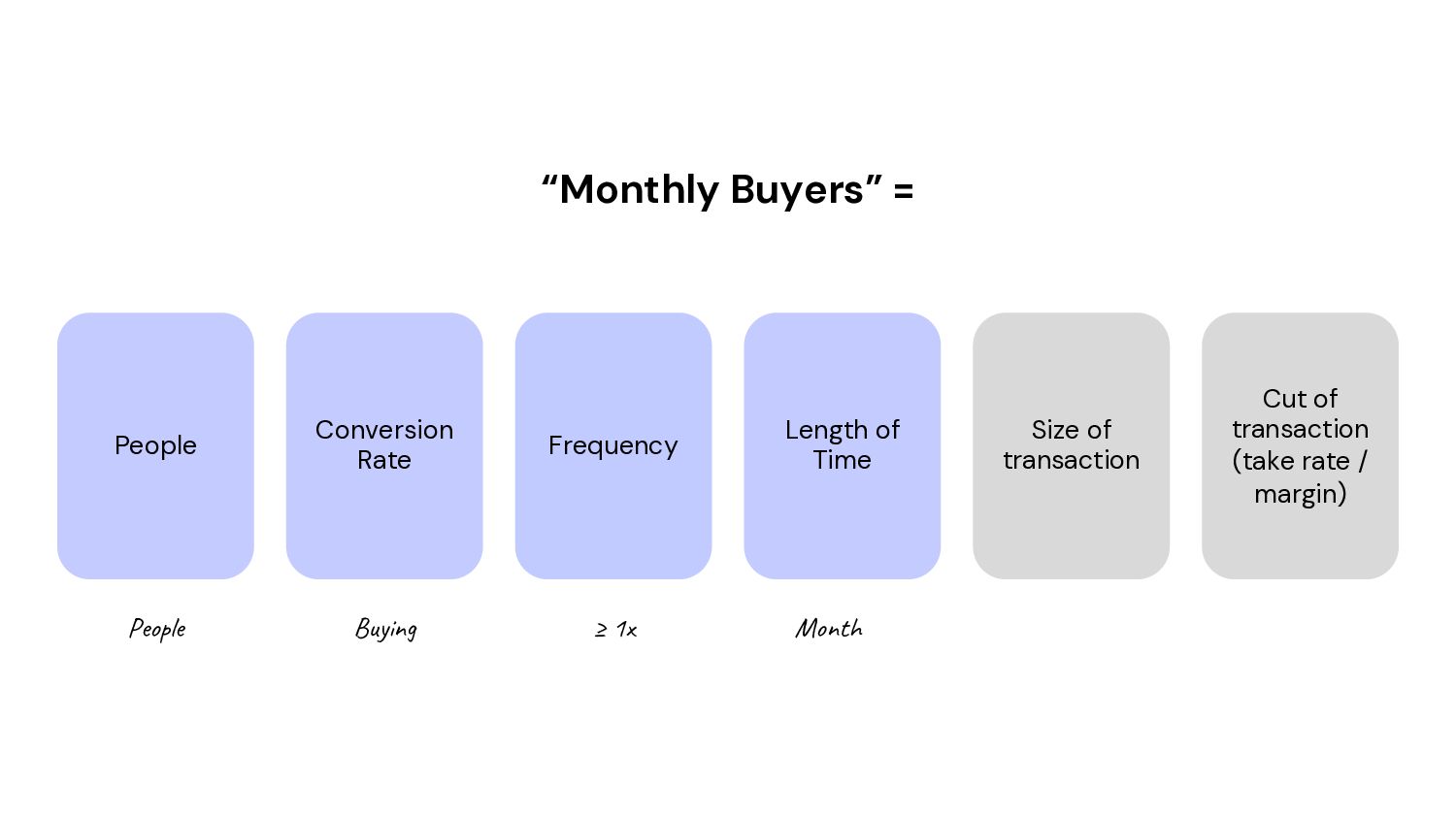
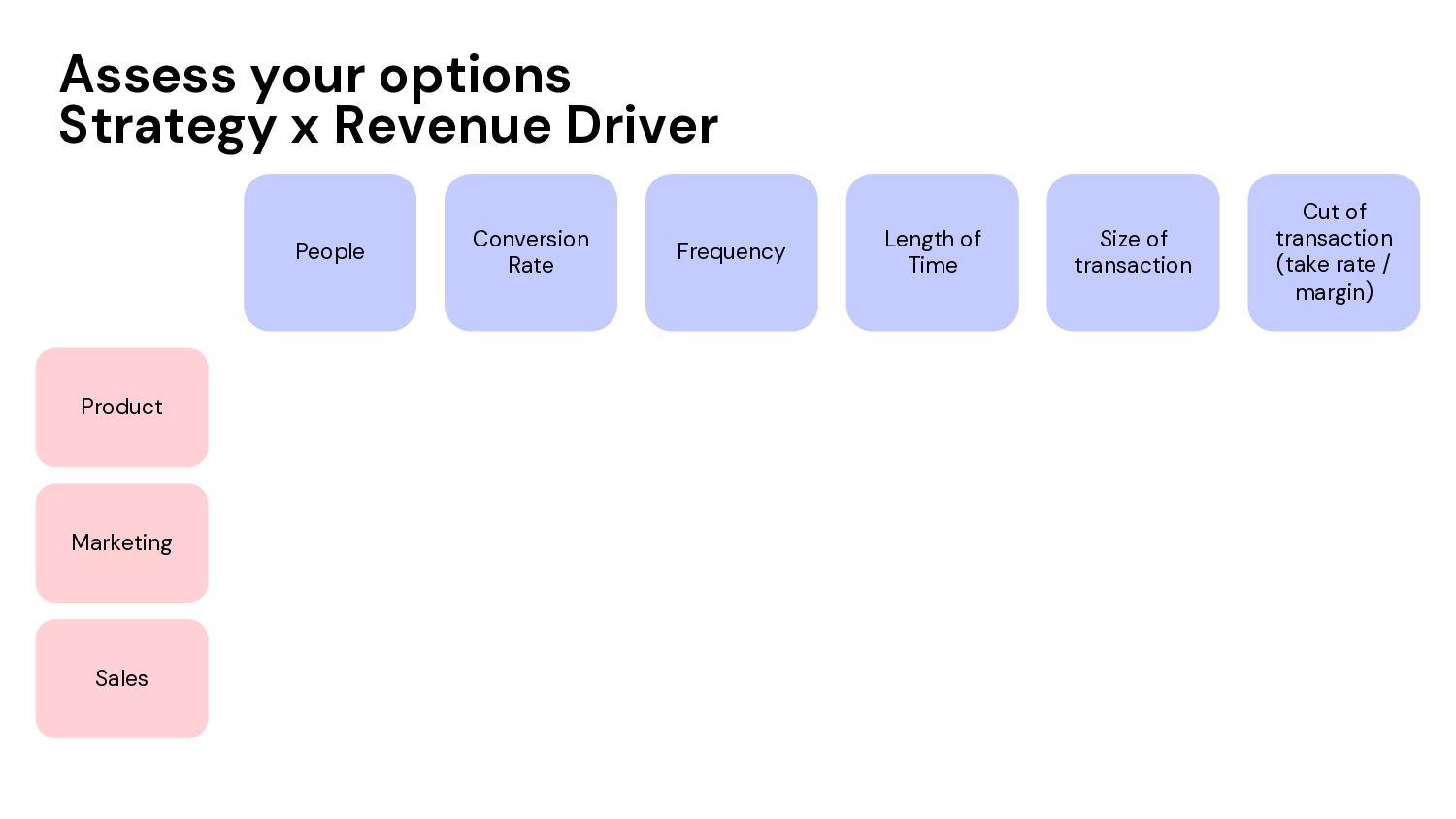
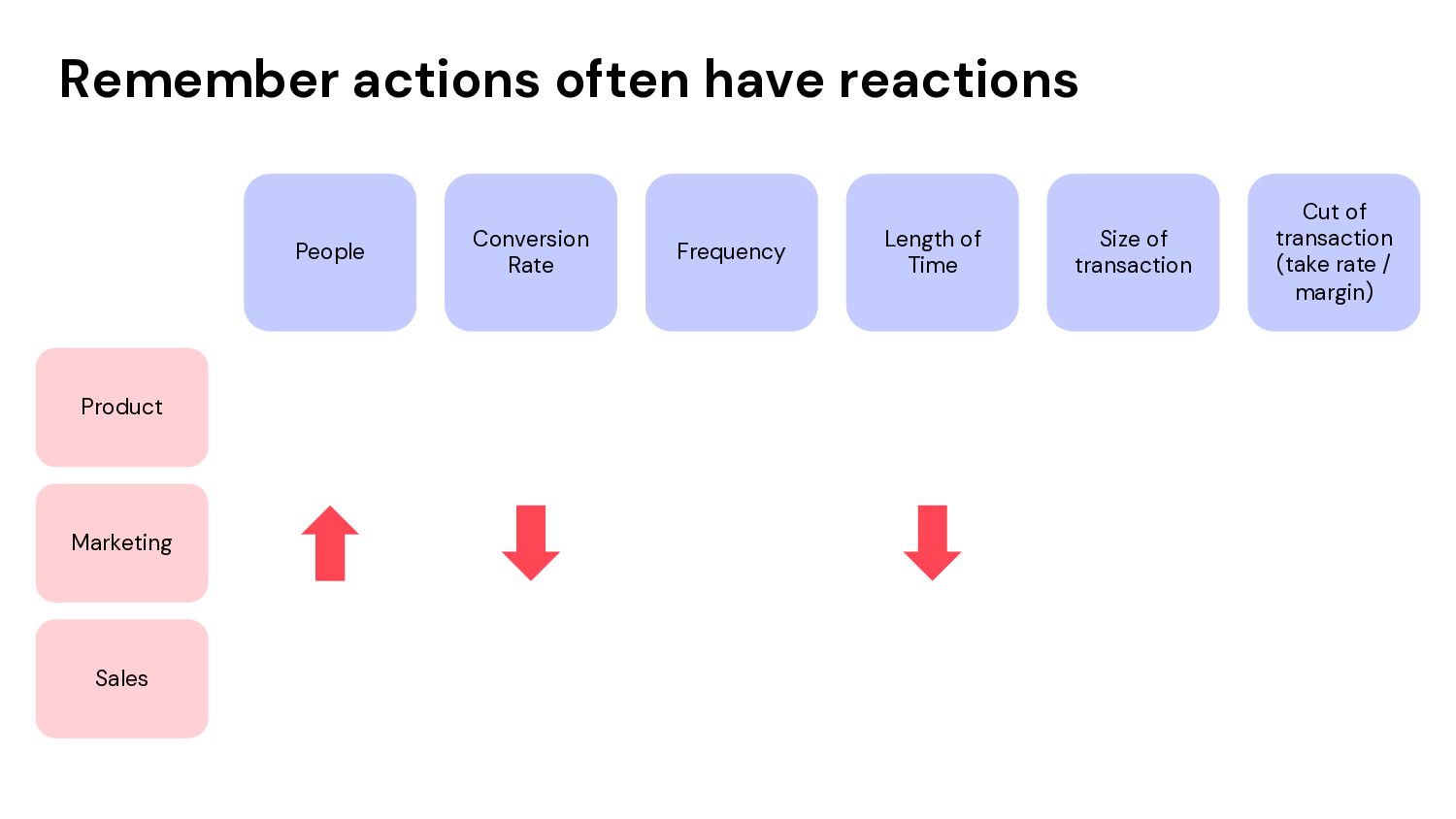
And when we talk about making money, primarily what we are looking at are the number of people we can reach, at what rate we can convert them into a transaction, at what frequency are they making that transaction, over what length of time are we measuring that, the size of that transaction that they're making, and in some cases, if we're taking a cut of that transaction, how much is our cut.
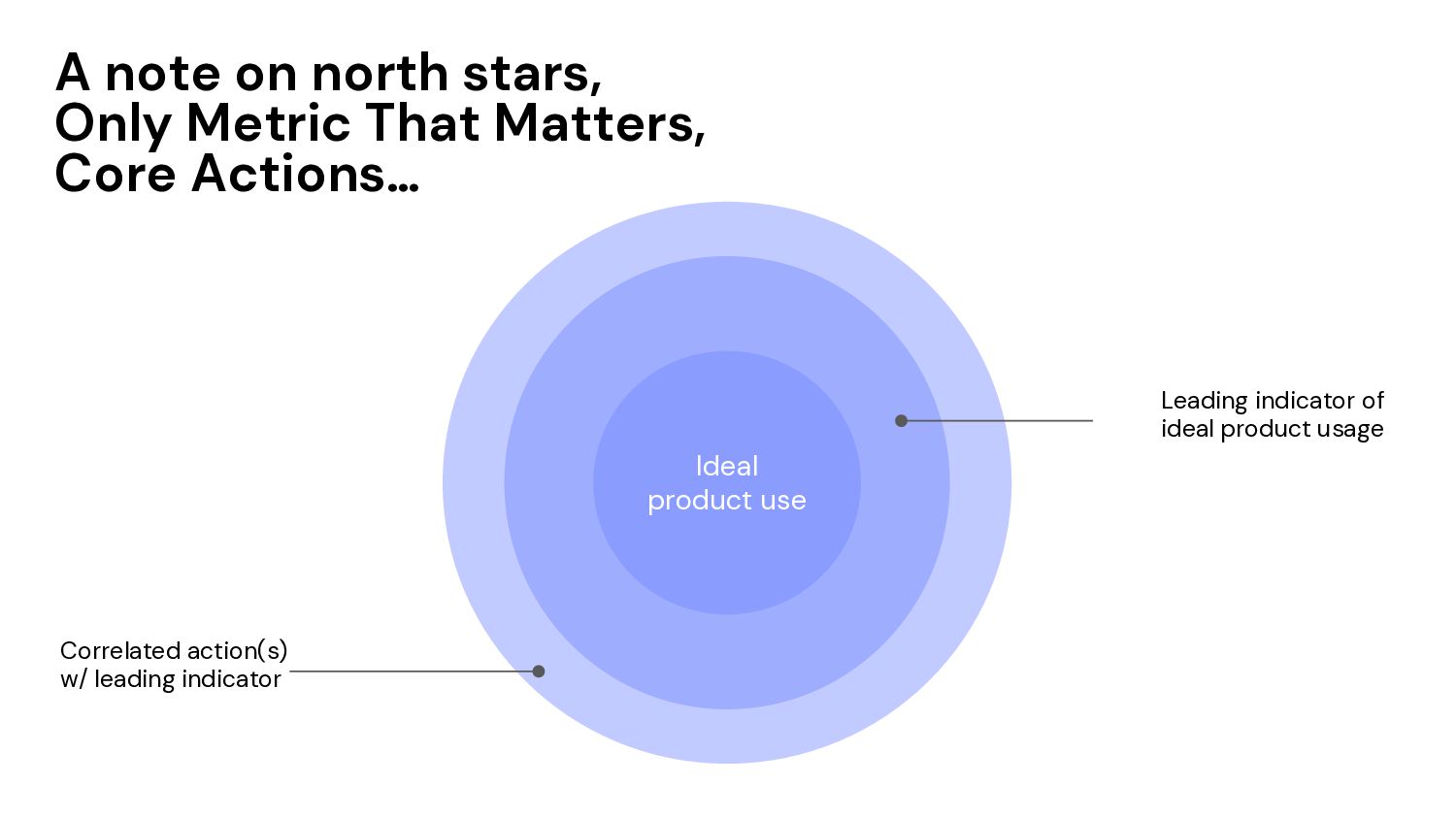
And you can see why a lot of really popular growth frameworks or marketing frameworks or product frameworks end up breaking things down into categories that more or less describe clusters of these things, acquisition and monetization, engagement and retention, and pricing. But I always hear someone say, okay, but I have some special super important metric in my company that is not revenue, and that thing is a North Star.
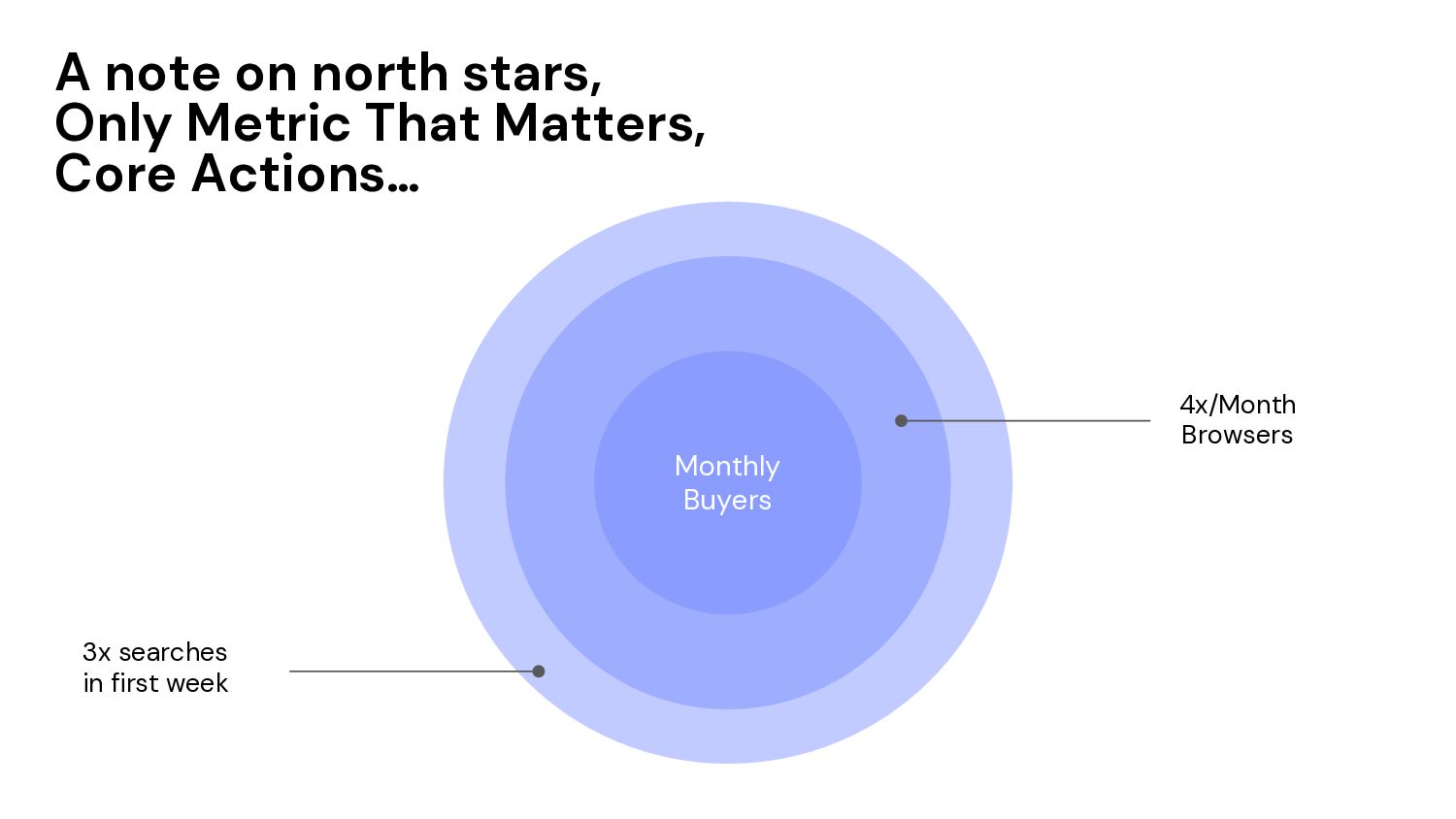
It is a core action. It is an only metric that matters. There are so many different names for these things, and this is totally okay. In fact, a lot of organizations spend a lot of time really building out a metric that corresponds to their product solution and helps them understand whether or not they're meeting their ideal product use case, and then helps them back into leading indicators of that particular metric growing.
And you can see, you know, things emerging from the market like a monthly buyers metric that can help you sort of back into some of the leading indicators for that. And this is totally fine. I I do think that often these metrics are either highly correlated with or basically composites of other revenue drivers, which is what makes them successful as alternatives to you being able to grow something using your internal product metric, but also be able to tie that to revenue growth.
The thing that this does do is occasionally provide focus. So if you have an only metric that matters, if you have a North Star, reflect on the revenue levers that that metric is excluding. If you are looking to grow something like monthly buyers, that means your business is not asking you to think about the size transaction.
They're not asking you to think about the take rate on that buying transaction. They're asking you to focus on the people converting to purchase once or more a month. The only thing you can really do wrong here is if you decide that you want to measure your growth based on a metric that really isn't correlated to that financial objective.
And this is sometimes the case when we try and copy paste solutions from other businesses that don't look like ours. The big red flag here is often if you look at like a daily active users metric or a monthly active users metric, and you're not in the business of buying or selling attention, that's a real red flag because probably usage is not something that you're monetizing.
If it is, probably it works for you. But if it isn't, really, really think about how you can tie your metrics into something that's gonna drive actual financial objectives. So back to our two simple things that we care about for growth. First, making money, but also spending money.
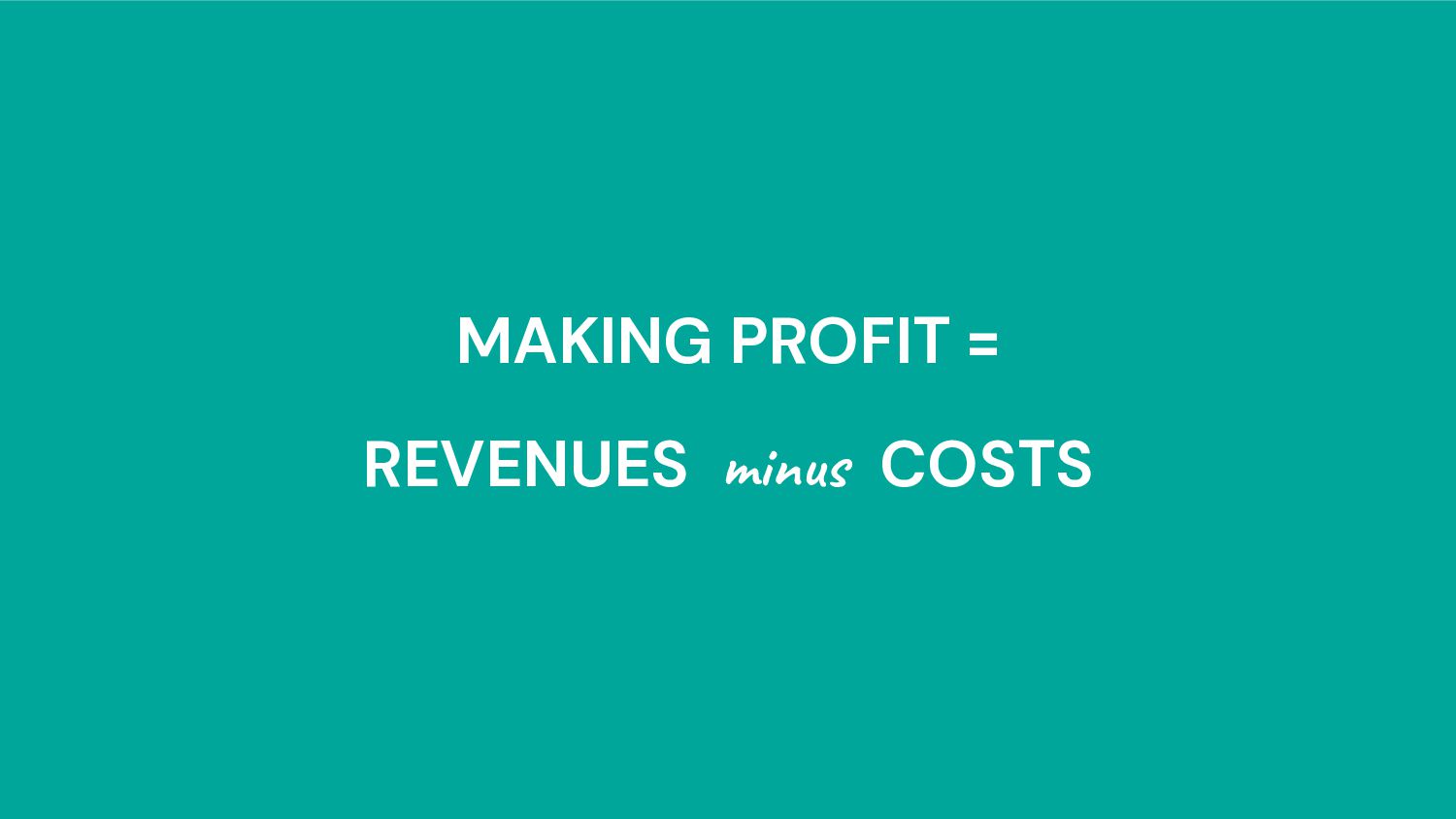
And if we were in finance one zero one, we would be talking about looking at profit, revenues minus costs, but of course that's not where we are today and I'm not going to be captain obvious. What we are going to talk about is an important part of spending particularly for growth practitioners, particularly for marketing practitioners, and particularly when we look at acquisition because often what we're trying to do is make an investment with a future return.
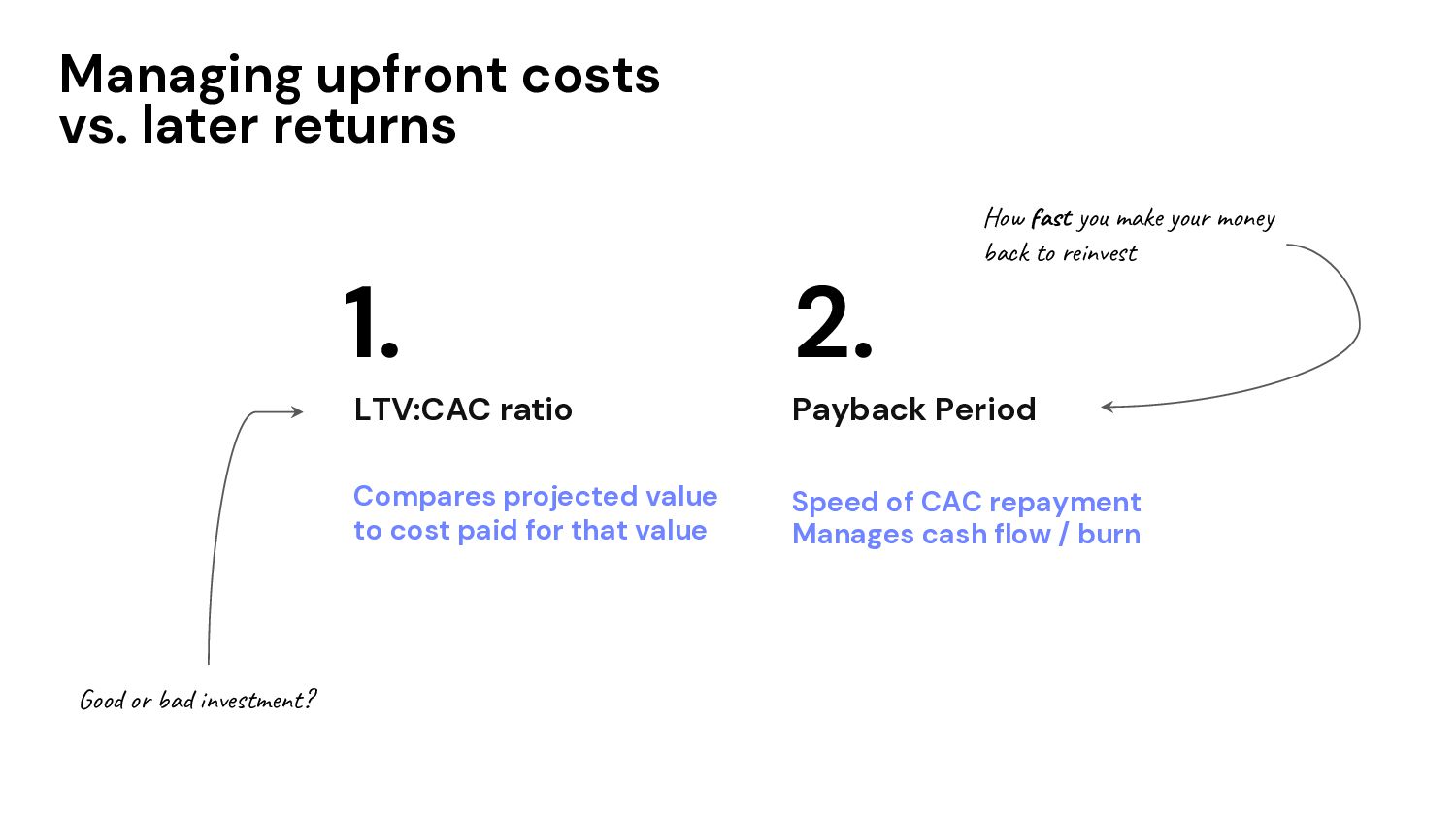
And so when we talk about managing our costs, we're trying to manage our costs versus future return, not necessarily immediate return. And there are two key ways that people tend to do this. You've probably heard of these before. The very famous classic LTV to cap ratio, which helps us understand if we've made a good or bad investment.
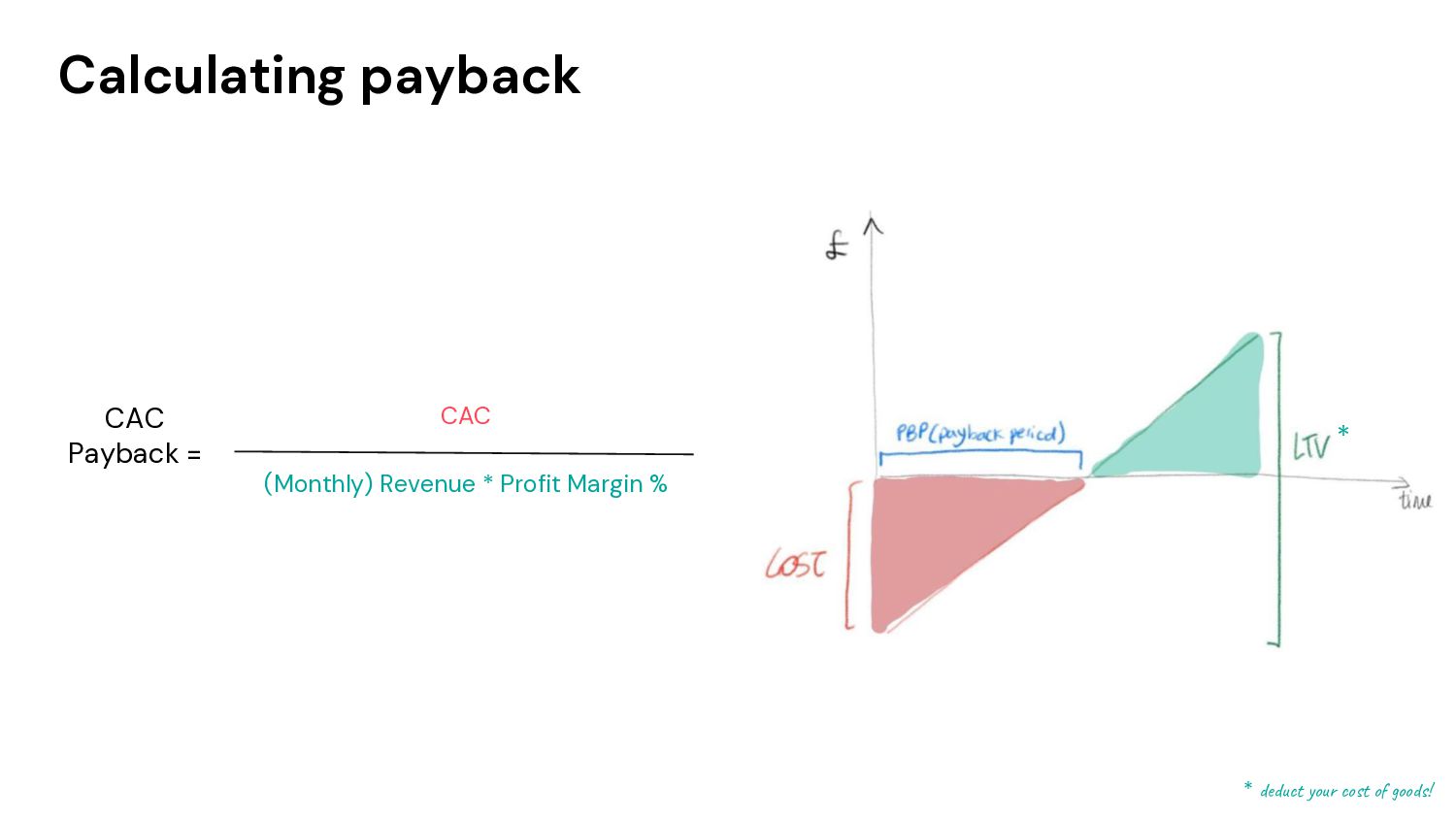
Ideally, you want the long term return of value to your business to be more than the amount of money that you spent on acquiring it. But obviously, it doesn't stop there. And one of the things that performance marketers have known for a really long time and it's something that they're brought up in, and also I would say a lot of sales executives and sales professionals know, is that you also have to understand the speed of your CAC repayment.
And that means the speed at which you are bringing back money to the business that pays for that acquisition cost. And that's like, I mean, I tried to visualize this with like a terrible drawing. I'm so sorry. But but that's really what this is.
It's I'm bringing profit back into the business that not only covers that cost of acquisition but then starts to give you money back into the bank that you can use for future investments. And that speed is really important because it allows you to make more and more future investments.
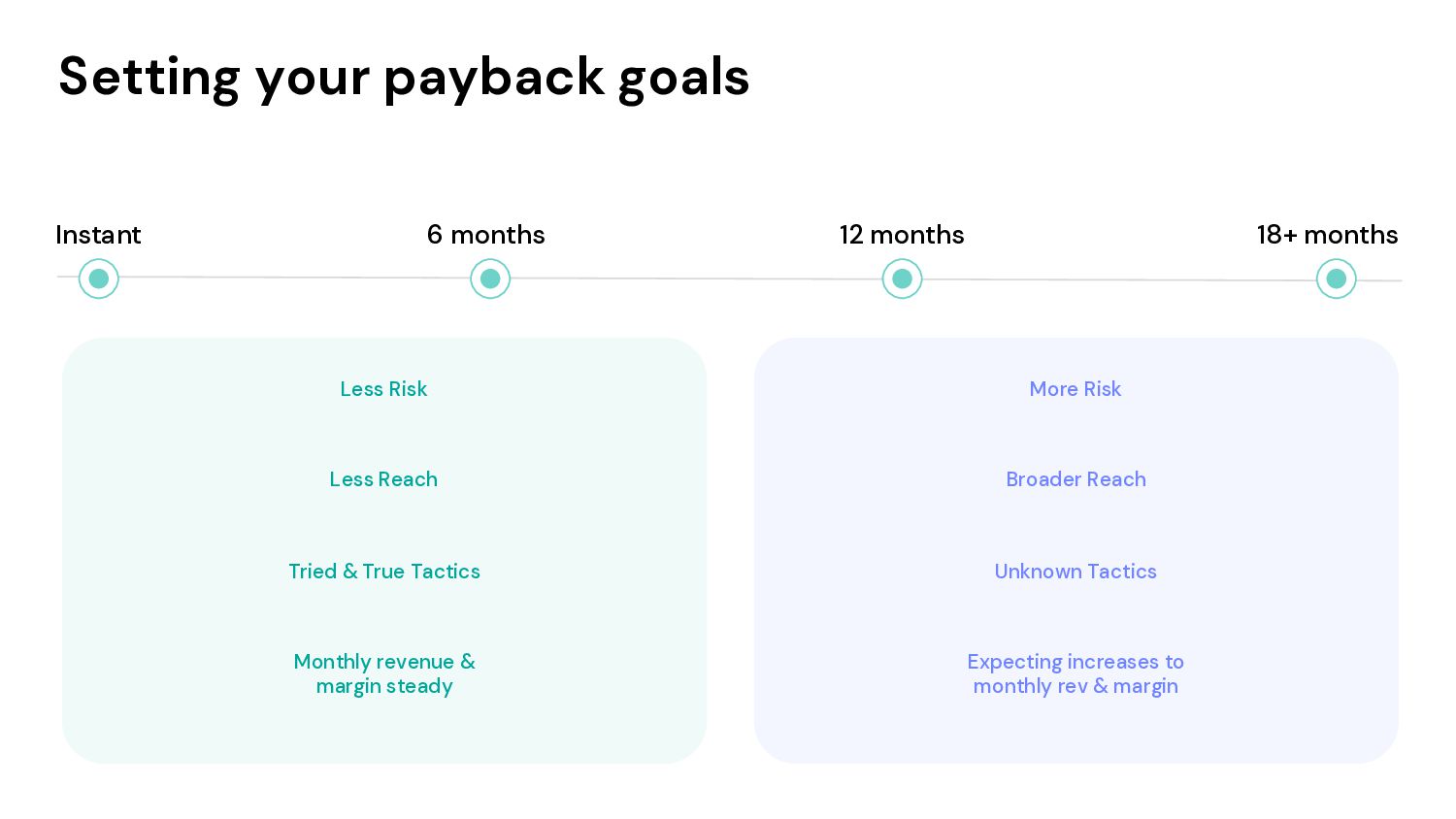
So it's not just looking for a good investment, it's looking for a good investment with a fast return. Now when we talk about paybacks, especially if this is not an area that you are close to or familiar with, there's a whole spectrum of payback periods that can be acceptable to different businesses.
And again, there's no one size fits all approach. Don't let anybody tell you that one is absolutely the right way or the wrong way. If you're a B2C business, if you're a B2B business, your answer may vary. But also the way that you decide to slide on this scale may depend on what you're looking to do, how confident you are in your metrics, and also how confident you are in your predictions.
For example, if I believe that my prediction is very, very accurate, I might not want to slide all the way to eighteen months because that means that I'm going to wait eighteen months for that return on investment to start to go back into the green.
But if, for example, I believe that my prediction might be incorrect, and I think I'm going to actually accelerate my profit over time, and I think that that's going to actually probably in real life bring that down, I might be willing to be more risky.
Now the reality is if you are more risky, you are introducing a huge amount of time between when you've made a prediction on when you're going to hit that payback and when that payback may actually happen. And as we all know, unprecedented times, anything can happen in that period.
So it is a big risk, and it's one that often CFOs don't love to take. But the better you get at showing this, the better you get at setting guardrails for your acquisition activity, the better you will be at coming up with a holistic growth strategy.
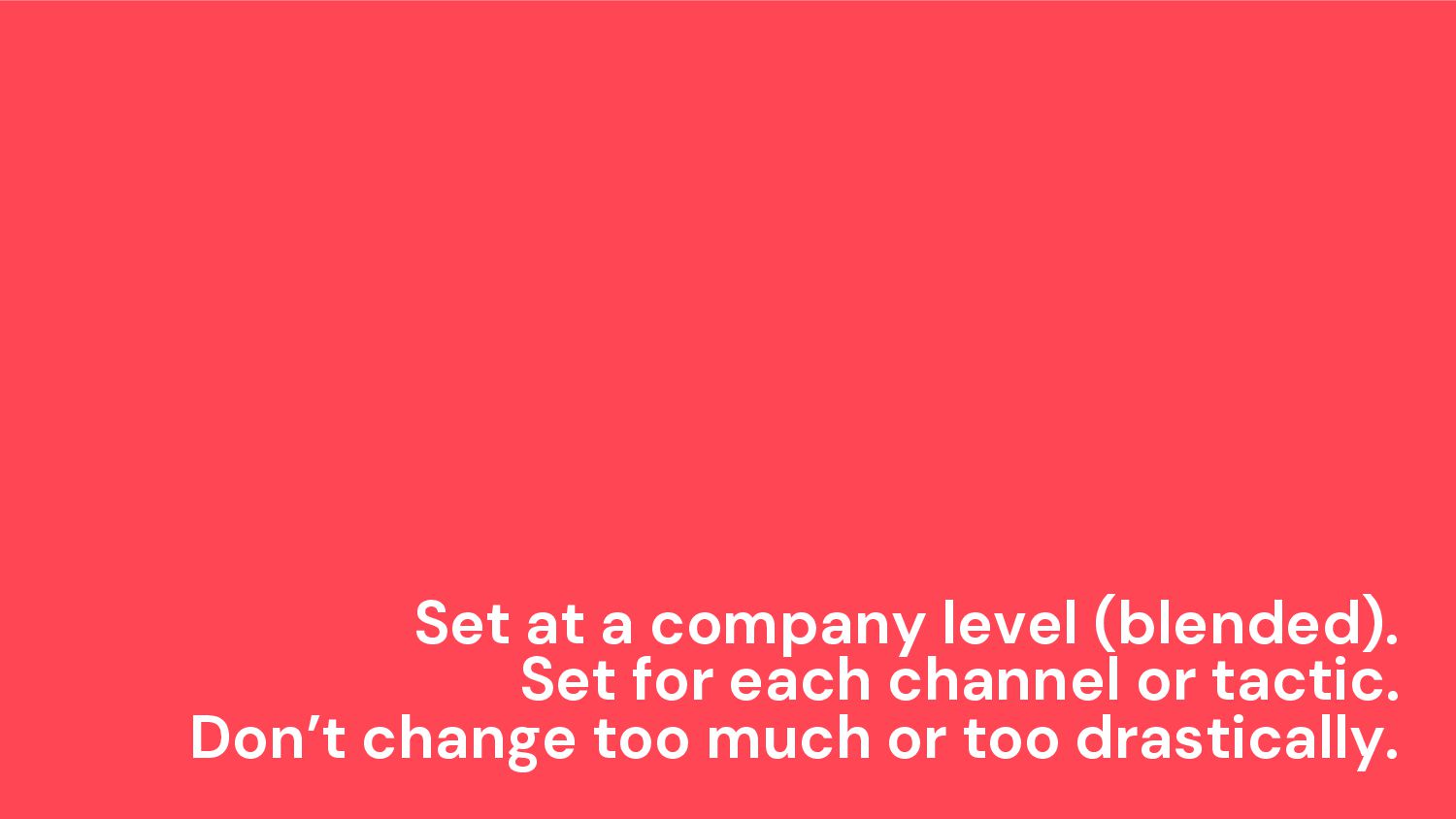
So I recommend that you set guardrails at a company level. It's really important to understand your cash flow at a company level and it's really important to understand what you're expecting on aggregate across all of your acquisition channels. But it's also important to set nuanced guardrails for different channels because you have some that are probably very mature and you want to actually make sure that they are in a mature state that is bringing you in that profit that is taking you out of the red and pushing you into the green.
But also you might then use that to pay for some other channels that you want to test and try and you might want to test and try them without the same kind of strict expectations on their return because you might not know how to operate them so well yet.
The last note is just not to change too much or super drastically. If you swing wildly between I want a one month payback and I want an eighteen month payback, very bad things can happen particularly in things like performance marketing because you're going to spike spend, going to spike scale.
All sorts of performance marketers will scream at night from going into the relearning phase bad things happen. So just be careful about changing too frequently. And my last note on prioritizing profitability is just to have a hard think about how important this is also to your top line growth.
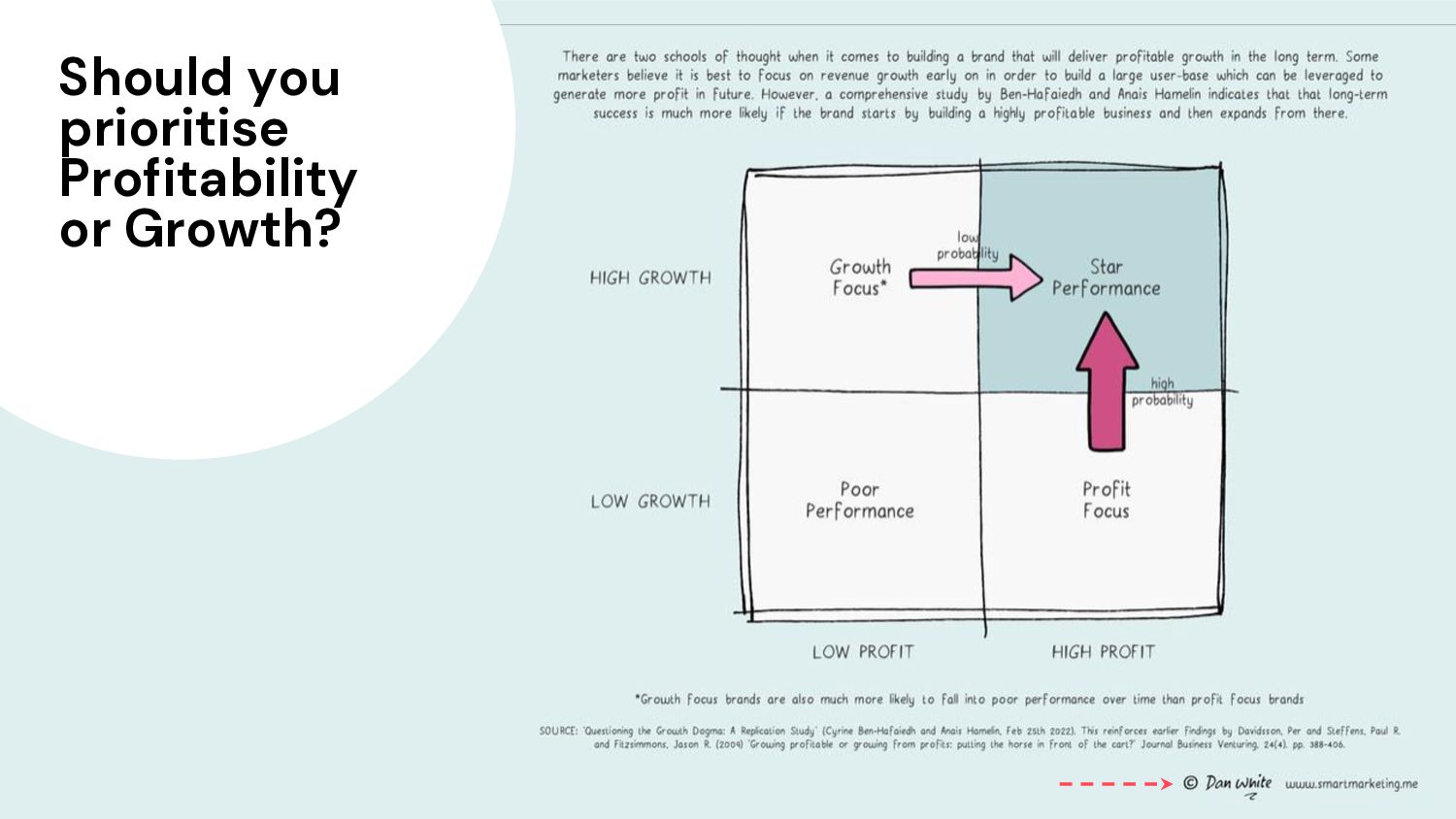
So one of the things that I think are I don't want to blame this on VCs, but one of the things that I would say like our industry has done exceptionally well is create this illusion that the best way to grow is to scale your sort of top line revenue and and to really, really push for that scale and then worry about profitability later.
Like, we'll figure that out another time. And that idea was that we could start in, you know, this sort of poor performance category, move up into this high growth focus category, and then scooch our way into star performance. And what we're now seeing if you read the room, but also if you read the study that's linked here on Dan's very beautiful drawing, is that that's actually not probably the most common way to get there.
In fact, most businesses that are successful in getting into star performance have a higher probability of getting there by going through a profit focused way first. So question your mindset on this and really really think about the best way for you to get into that high performance category when it comes to acquisition.
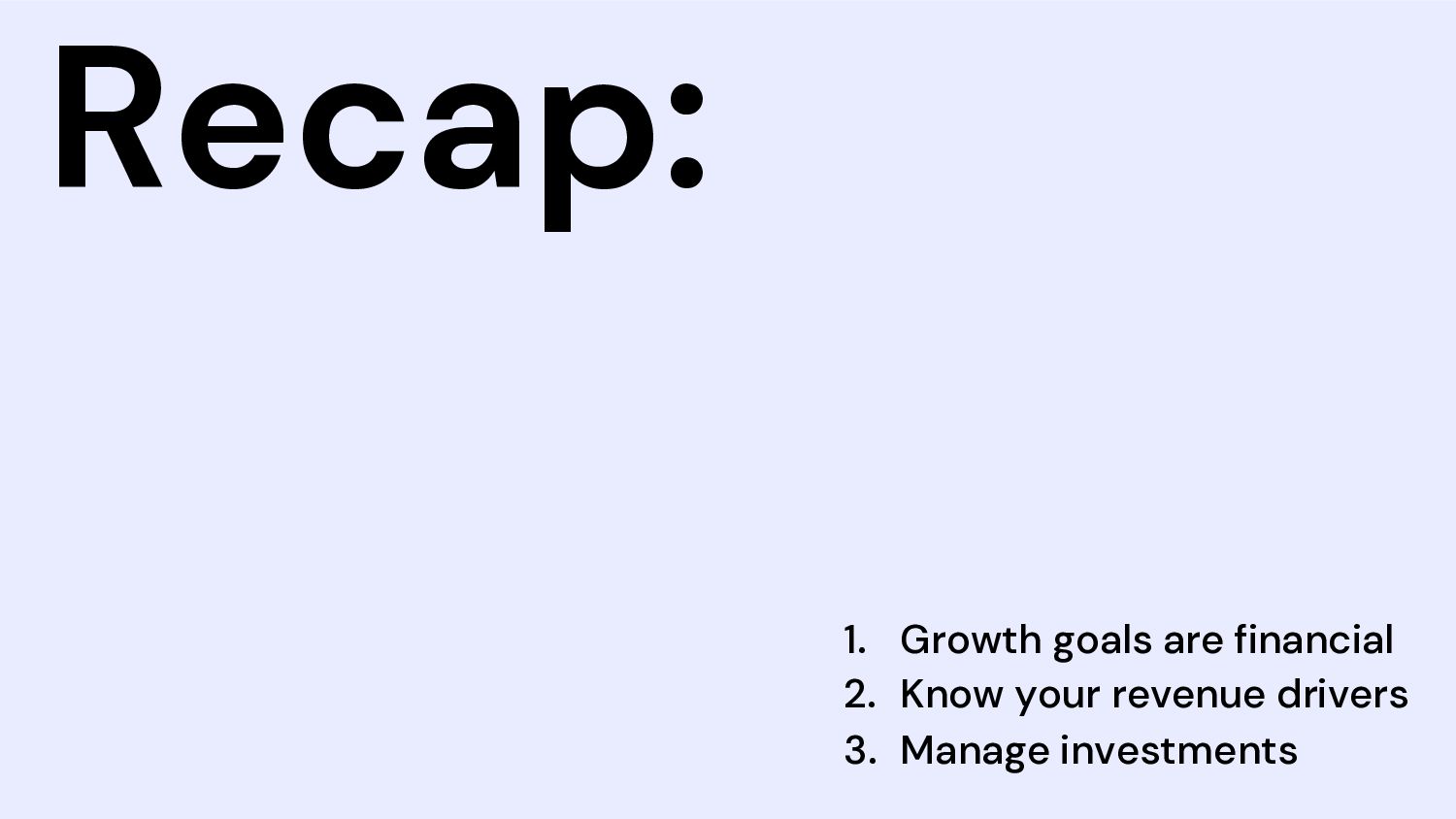
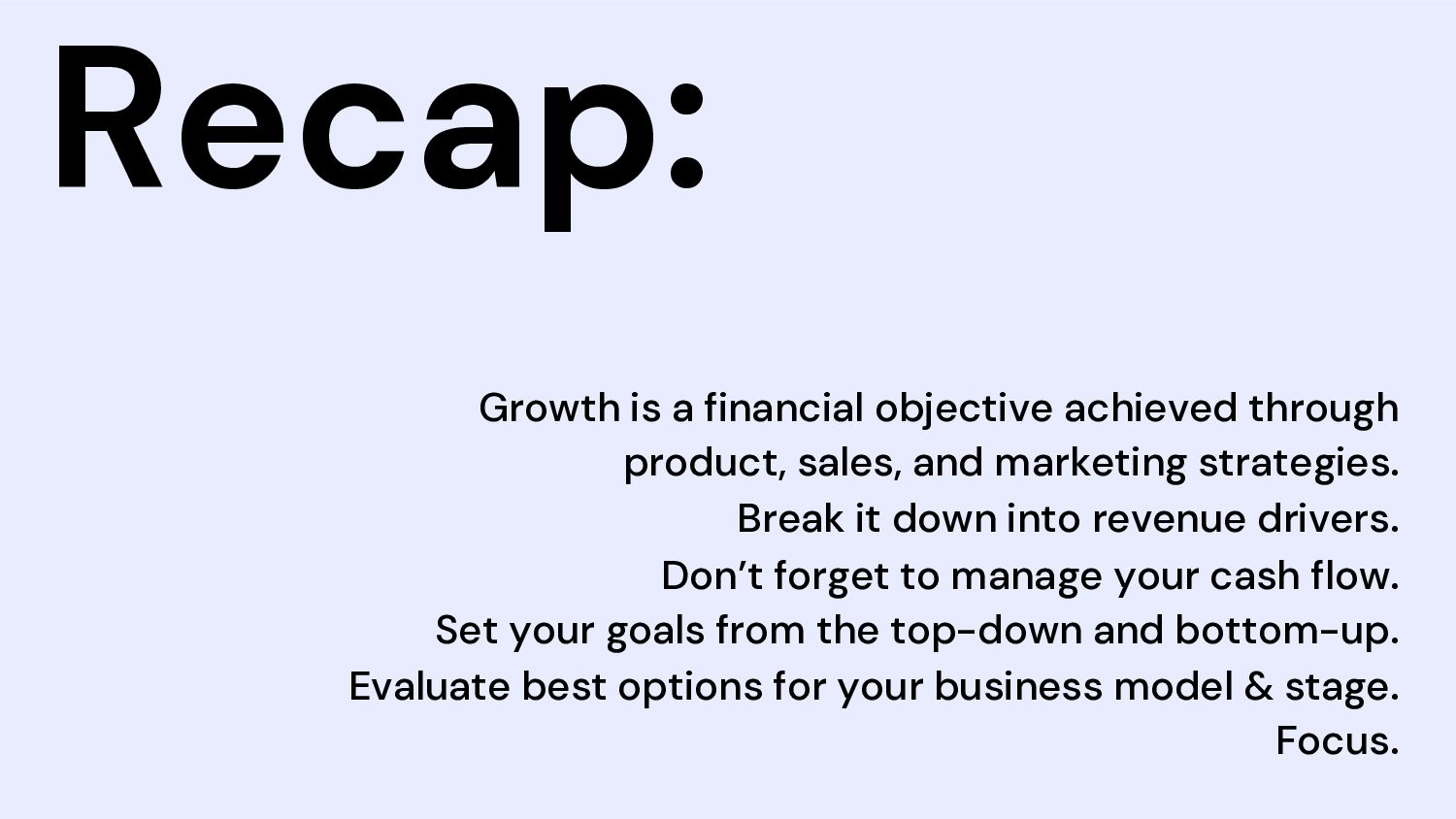
So really, really quick recap. Growth goals are financial. Know your revenue drivers and manage your investments. But we haven't talked at all about your business and how you're gonna grow your business. And the best way that I know how to do this is usually through a one to one coaching conversation.
This is when I talk to founders or growth practitioners and we talk about their problems and we try and sort them out. I love a really classic coaching conversation model, which is the grow framework. You talk about goals, you assess the reality, you look at your options, and then you decide what your way forward or or what you will do next.
And I'm gonna try and do a coaching conversation with all of you today. And so I am gonna ask you to think introspectively about your business as we go through this next section. But I'm also gonna cheat a little bit, and I'm gonna start with reality.
So as I get you to think about your business, I want you to think back at this morning's talk when April talked to you about market categories and positioning. And I want you to think about your product or your service or your business, And I also want you to think about the category that that business is in.
And I want you to reflect that your business, your category, it might be unique or it might be one of a subset of unique businesses. And just like plants, every business needs something slightly specialized to grow. What my indoor houseplant needs is gonna be very different than my mom's backyard lemon tree is gonna be very different than my best friend's terrace plant.
It it is a different beast and that's okay. And in instead of trying to reject that and copy paste solutions from other businesses, I'm gonna ask you to think about your business and the unique the uniqueness of your business and what it means to grow that business.
Are you in fashion? People love talking about fashion. People love talking about what they're wearing. It's a creative energy. There's something special about that that will be completely different to some sort of collaborative tech tool. That would be totally different to somebody's coffee machine that they're distributing to hospitality businesses.
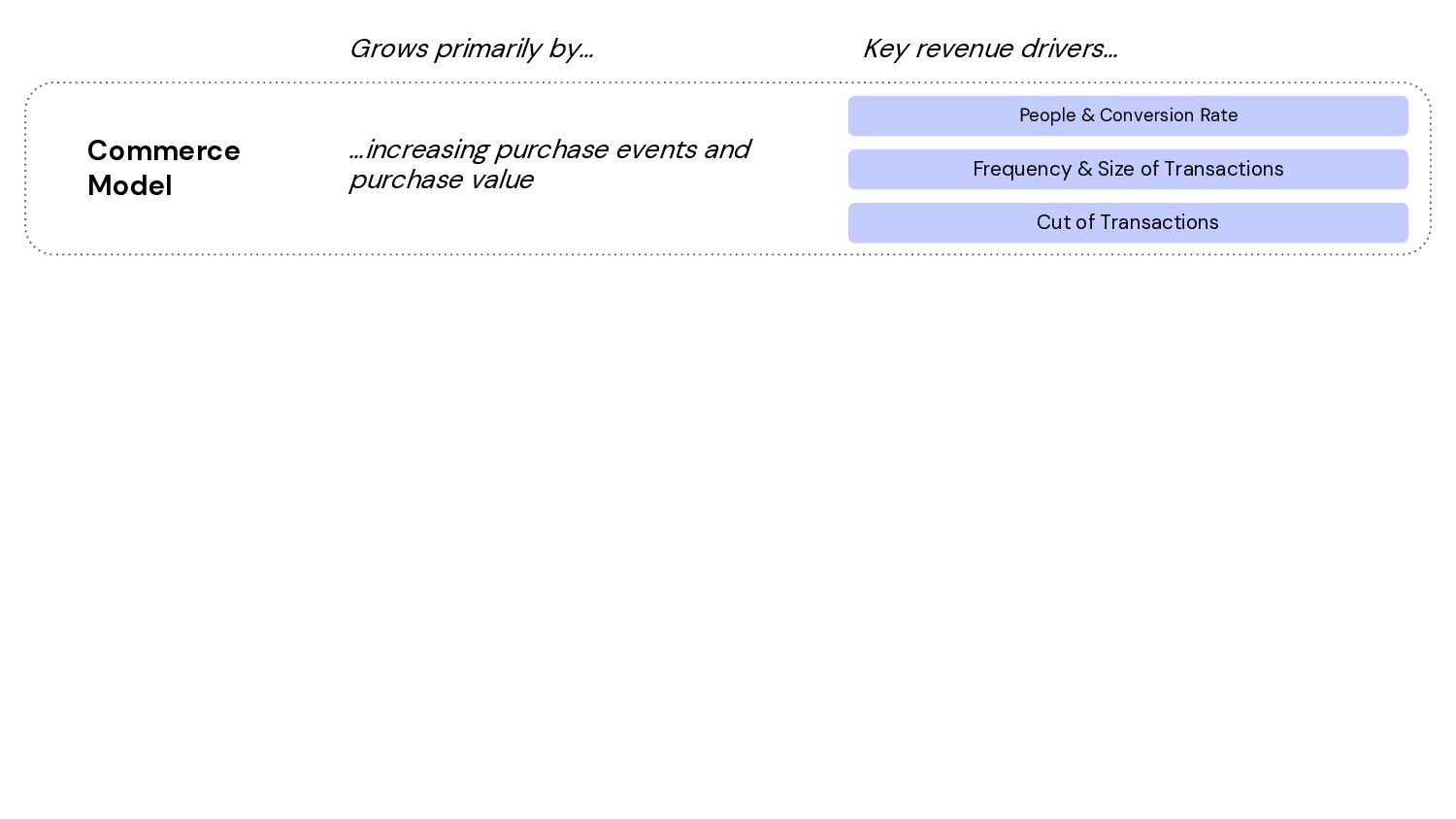
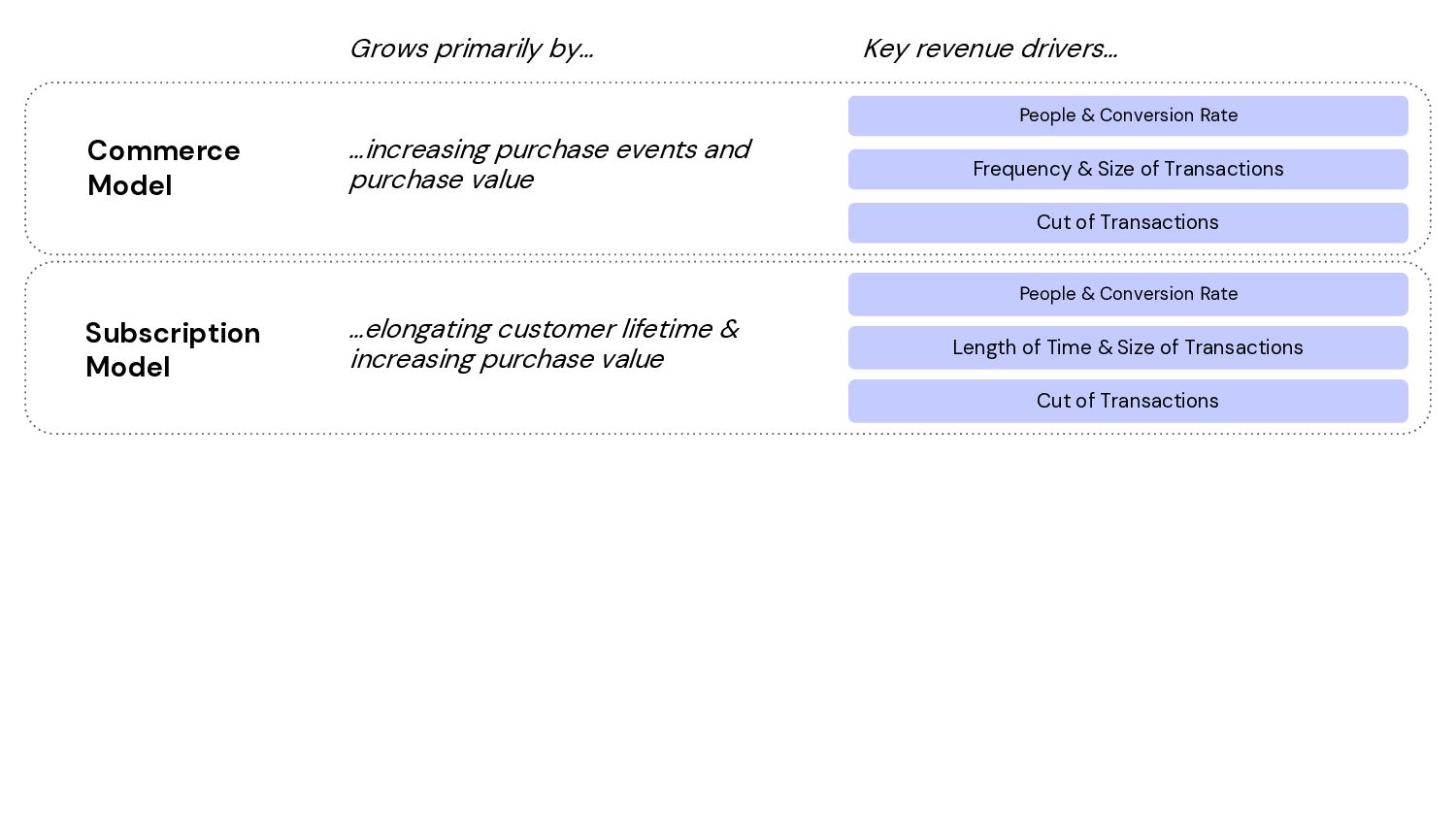
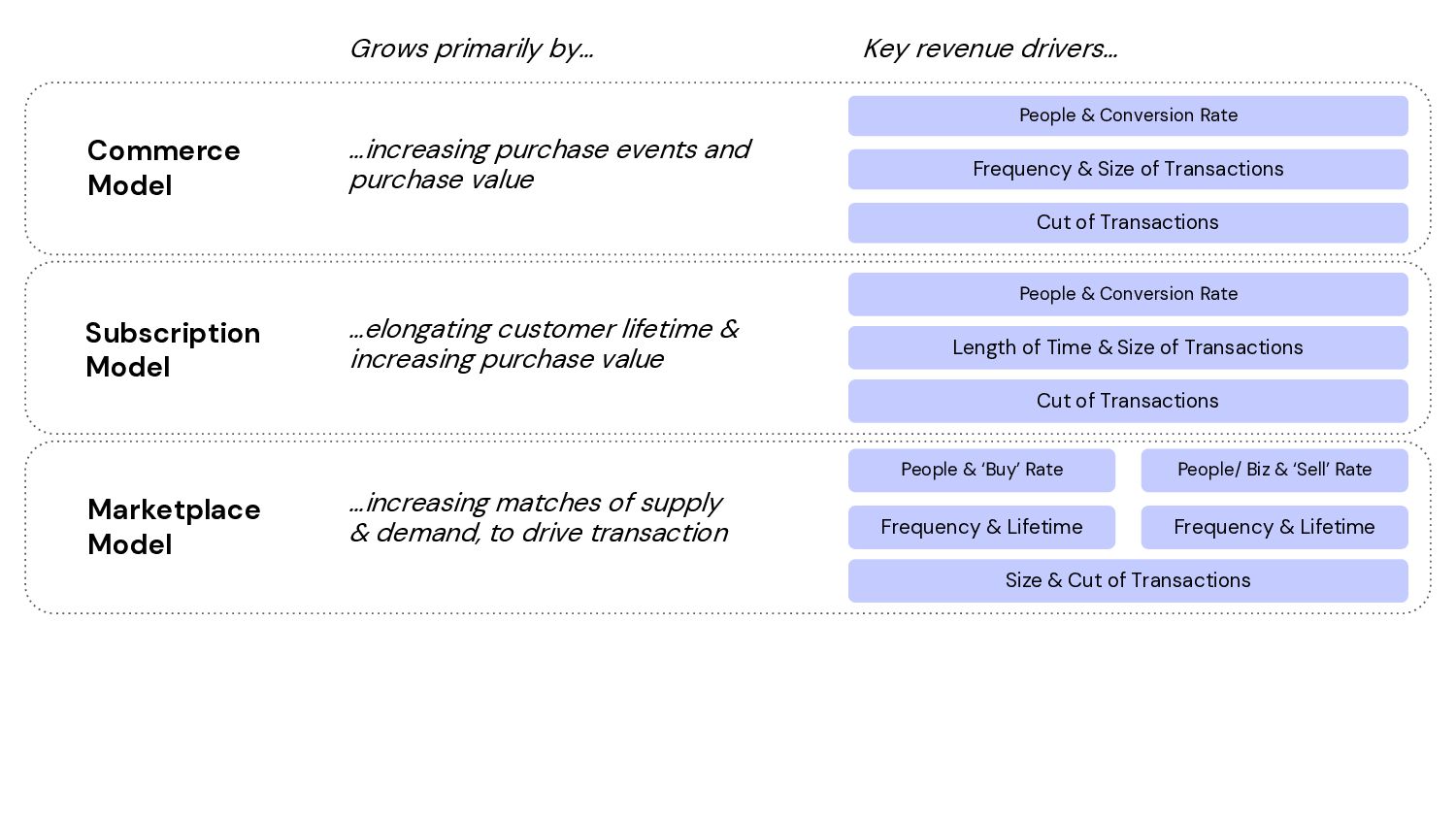
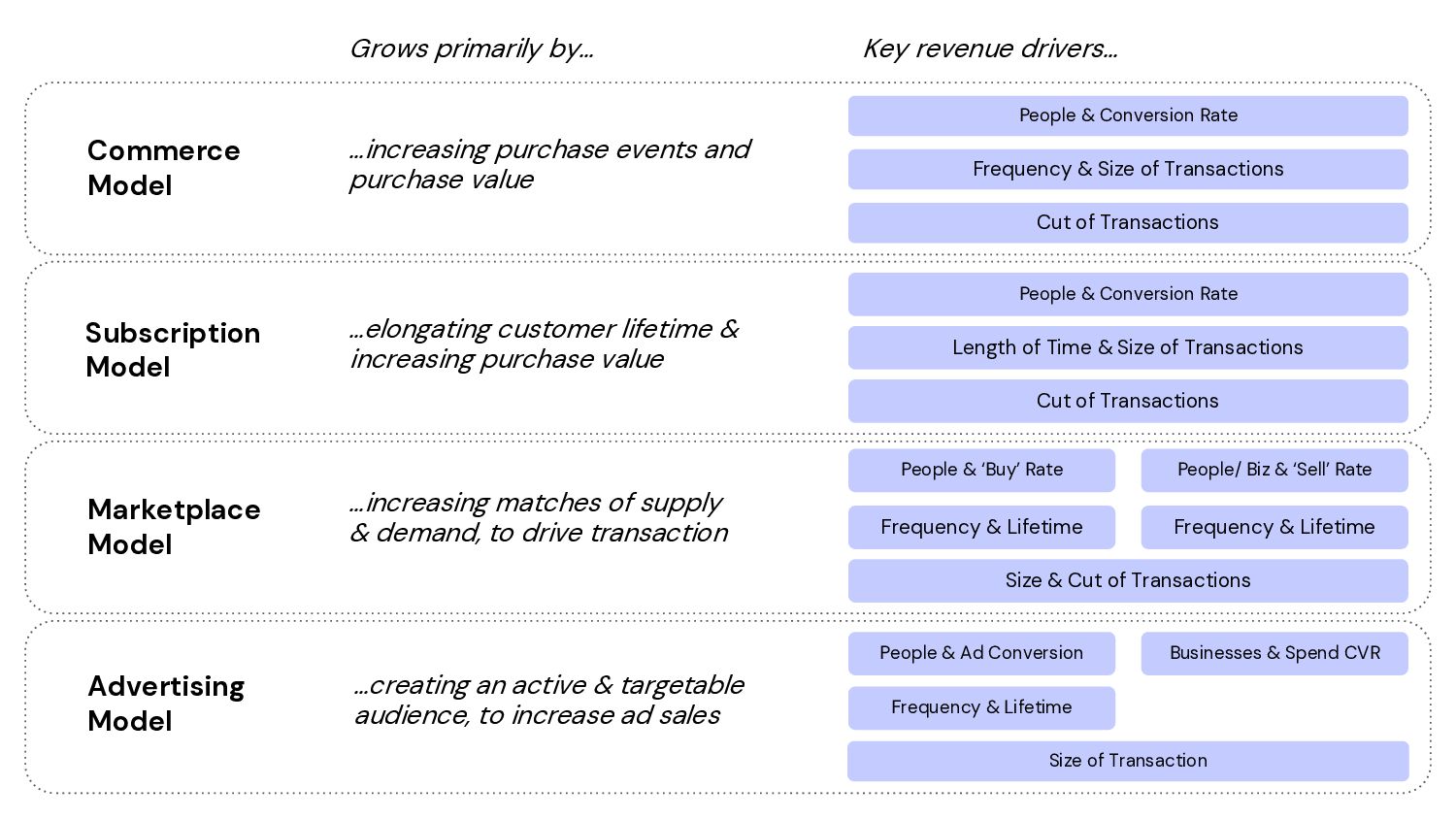
Think about your business. And also think about your business model. I'm just gonna flip through a few of these. There are tons more than these and of course there are combinations of these. But maybe you're in a commerce model. And this is where you're looking at increasing purchase events and purchase value.
So every purchase matters. But maybe also you're looking at a subscription model. So you you're trying to sort of control for that usage frequency by putting in a regular cadence of those transactions. But now you're looking at how can I cross sell or upsell people into different packages?
And also, how can I increase the lifetime of that customer? Or maybe you're in a marketplace model, which is one of my favorites. It's incredibly tricky when you start because essentially, you're building two business models with two value propositions that you have to validate.
But the beauty is that when you actually find a way for them to come together and match, they actually can create their own organic growth, their own flywheel. Or maybe you've been looking at an advertising model, which is kind of a version of a marketplace model, but your marketplace is in matching a targetable audience with businesses that want to advertise to them.
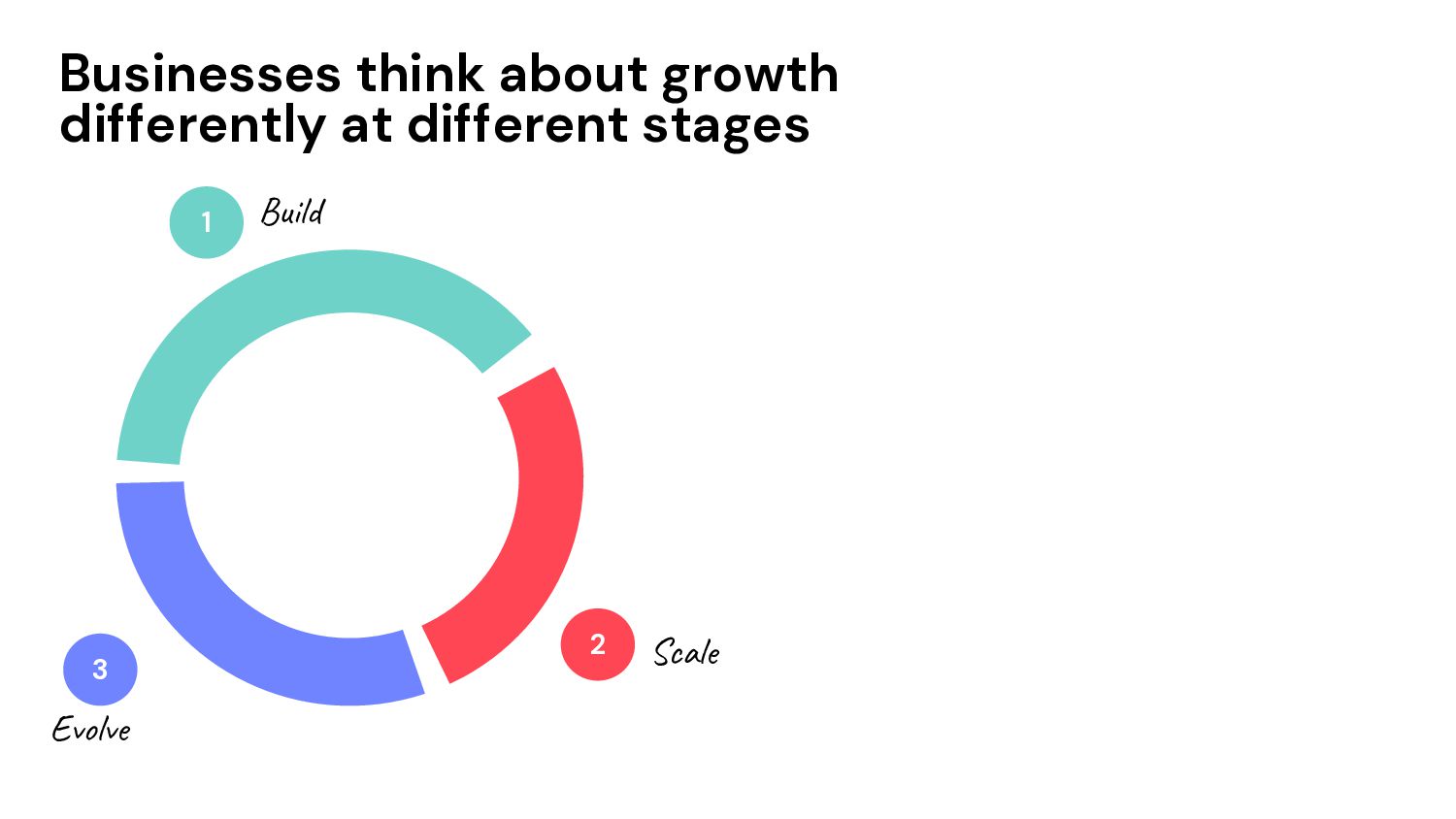
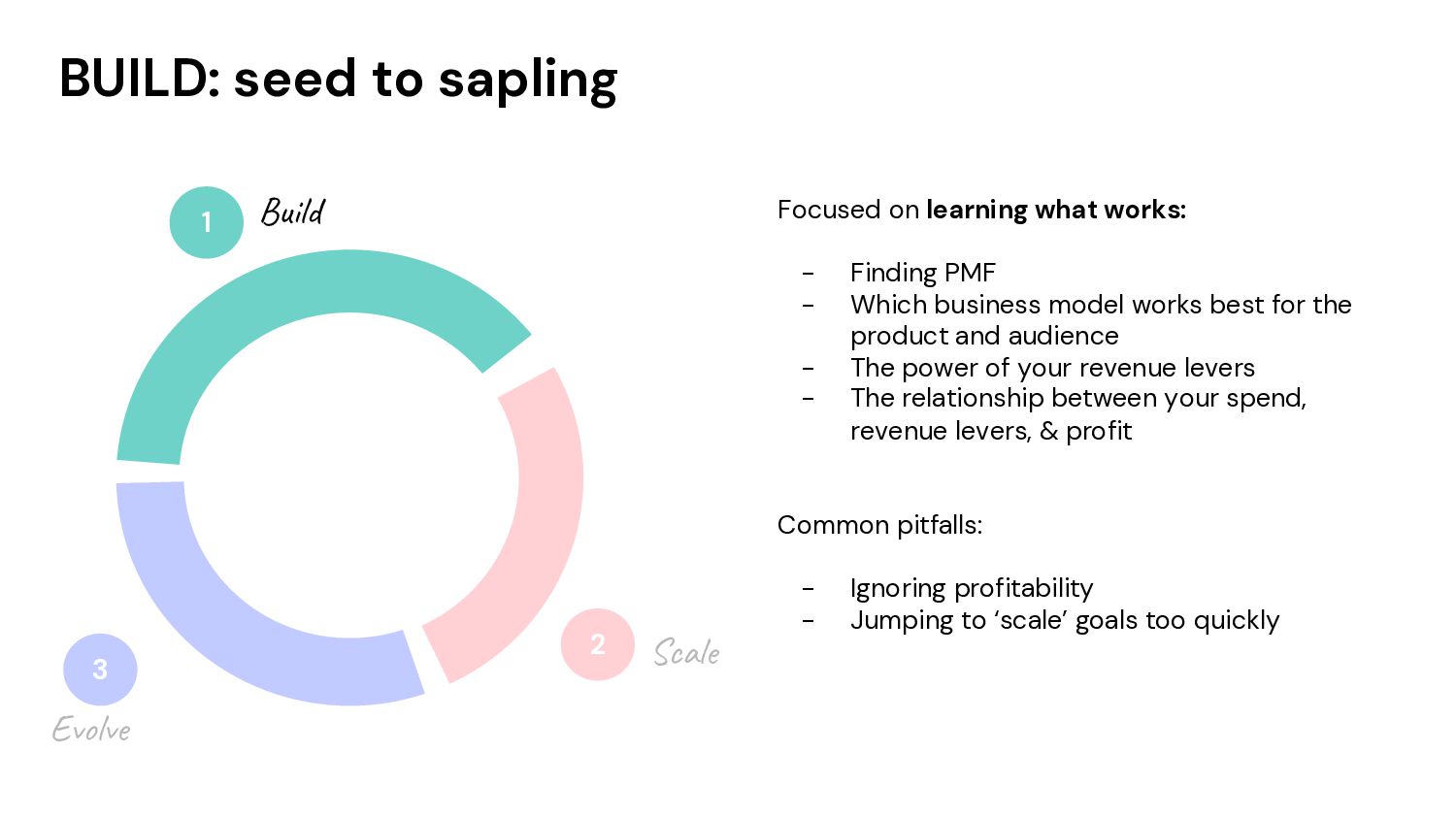
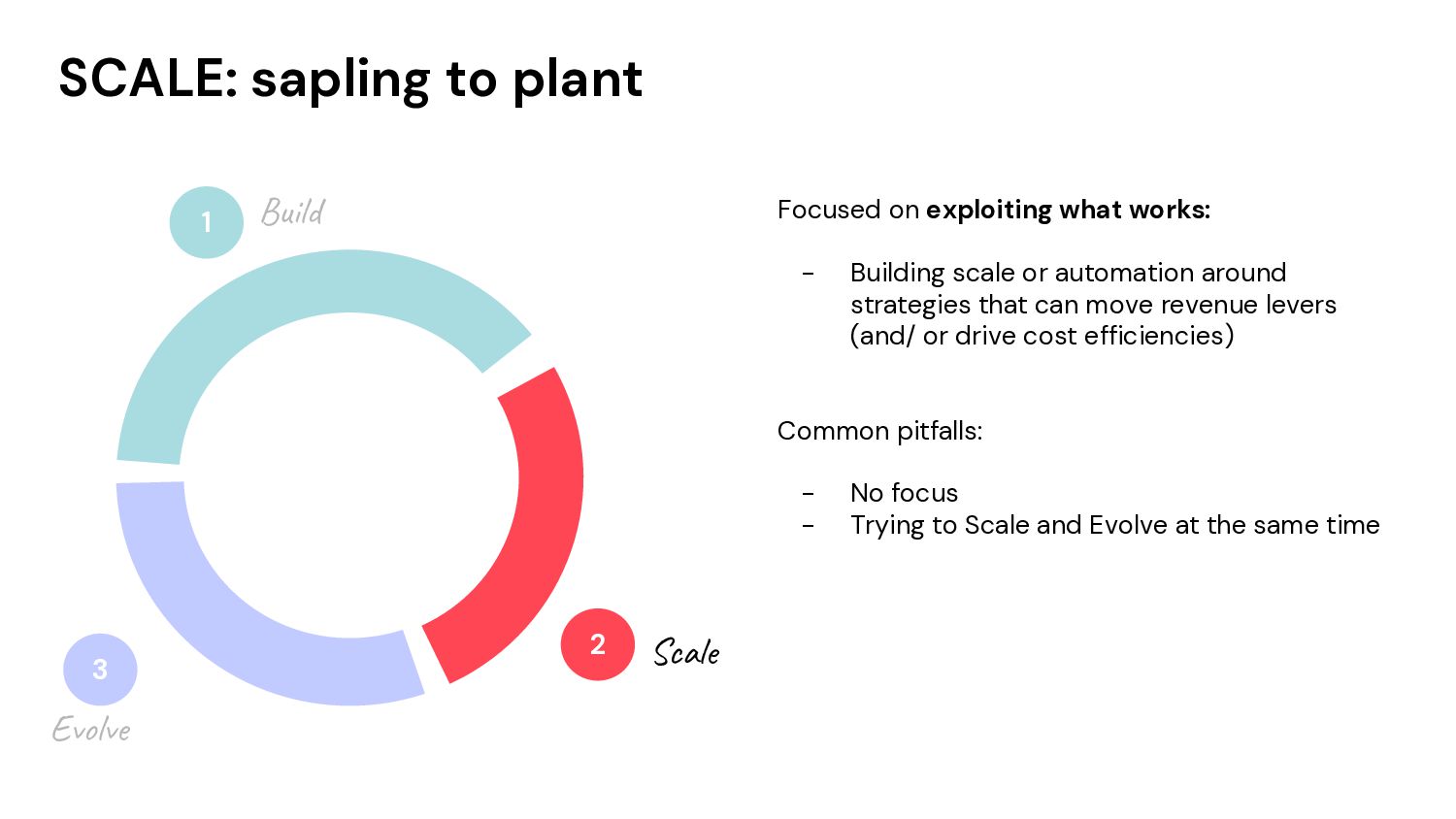
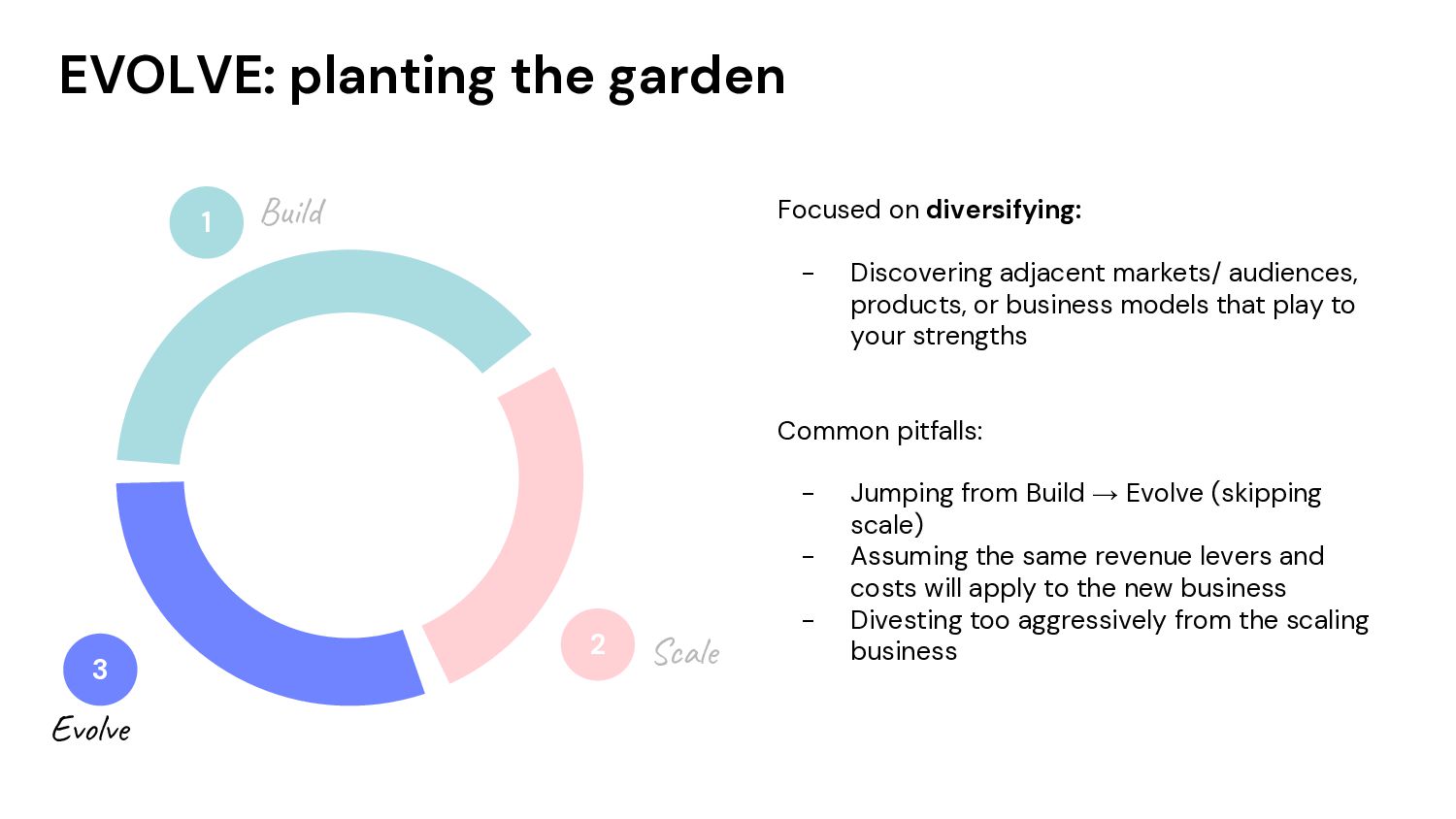
The other thing you'll need to think about when reflecting on your business and what's going to drive growth for you is what stage you're in. And I I have affectionately named these build, scale, evolve. You can think of them in different ways. The build stage is really when you've planted that seed of your business.
And this is you trying to figure out what does it need to sprout. What is it going to really take to move the needle? And one of the great pieces of advice that I've learned from Matt Lerner is that at this stage, most important question you could be asking is, what is the fastest way that I can prove or disprove my hypothesis?
So as you have ideas of what's going to help you grow here, your focus is on learning and speed to learning and trying to really understand as you move and pull different levers, what is the impact on my overall business model? You're also trying to probably figure out what that business model is if I just flipped through a whole bunch of them and you're like, oh, I don't know.
We're experimenting with a bunch of them. This is the time to do that. But you want to make sure that you figure this out because when you get to a scale stage, what you're really going to try and do is exploit what you've learned from that insight.
You're going to take the fact that you know your plant likes three hours of sunlight in the morning, and you're going to create the automated sun lamp that you put in your apartment that's giving the precise amount of sun that that plant needs to grow and thrive.
And so if you don't know what your business needs to grow, you need to figure that out before you start exploiting those tactics. Otherwise, you're gonna be pushing things that may not actually be moving the needle, which is a waste of your time, your energy, and your resources.
And then finally, when you're in a place where things are really gelling and moving, you might be thinking, well, I've got this great heat lamp. And maybe my apartment or my terrace or my garden is going to benefit from a whole host of other plants that I could use that same infrastructure to benefit.
Or maybe actually the fact that I plant another plant near this plant is going to be complementary and help both grow even better and stronger. And so this is the stage where you start to discover new supplementary products or audiences, sort of neighboring business models that can help you evolve this business and make it stronger in return.
So in summary, growth strategies should adjust to suit your business model and not the other way around. And to go back to my earlier point, I it hurts me inside when I see businesses get a sort of think piece and scramble to think about like how can I bolt this on to my business?
Like, oh, I can can I make like a multiplayer mode for this particular thing? And if if that doesn't work for your product or for your business, you don't have to do that. That's okay. I absolve you of the need to do that today.
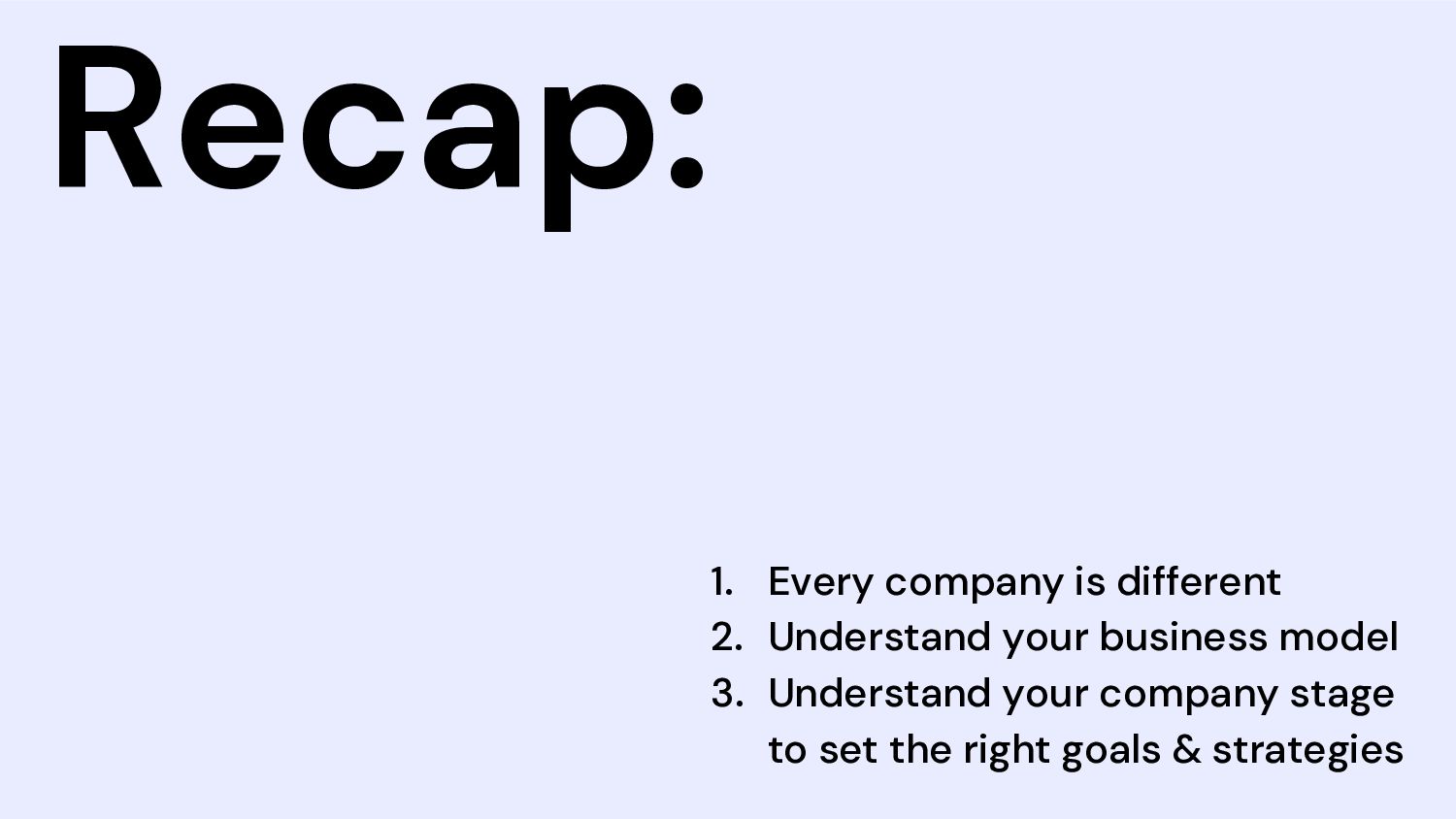
Lean into what makes your business work and strengthen that rather than trying to force something in just because it's the flavor of the month. And so every company is different. Although we have the same fundamental growth principles, we are going to grow in different ways, understand your business model, understand your company stage in order to set the right strategies and goals.
And speaking of goals, we're gonna reflect on goal setting now. So we've covered the fact that your goals need to cover off your ability to make money and also manage how you spend it. But what we haven't talked about is how you go about setting your goal.
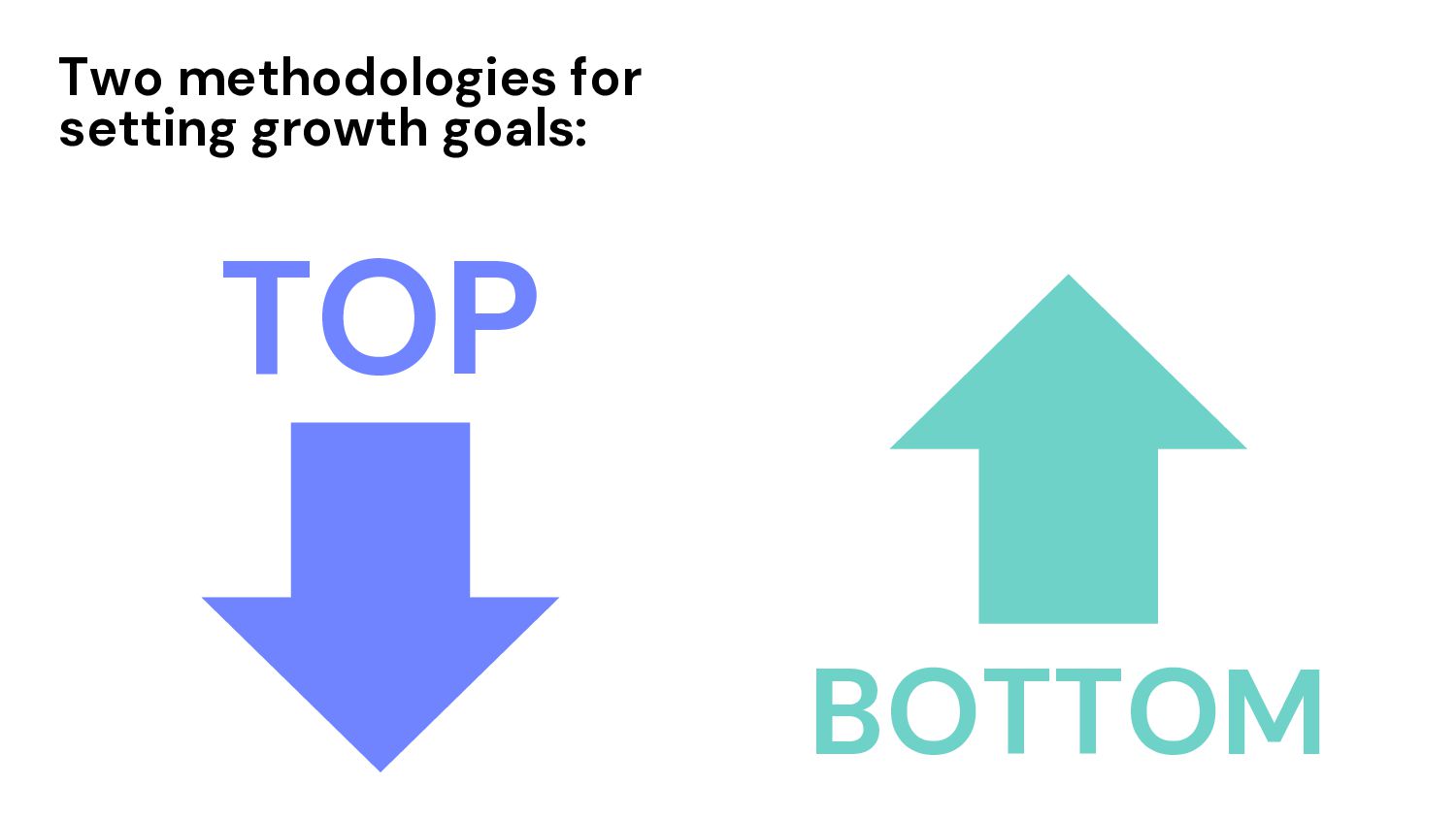
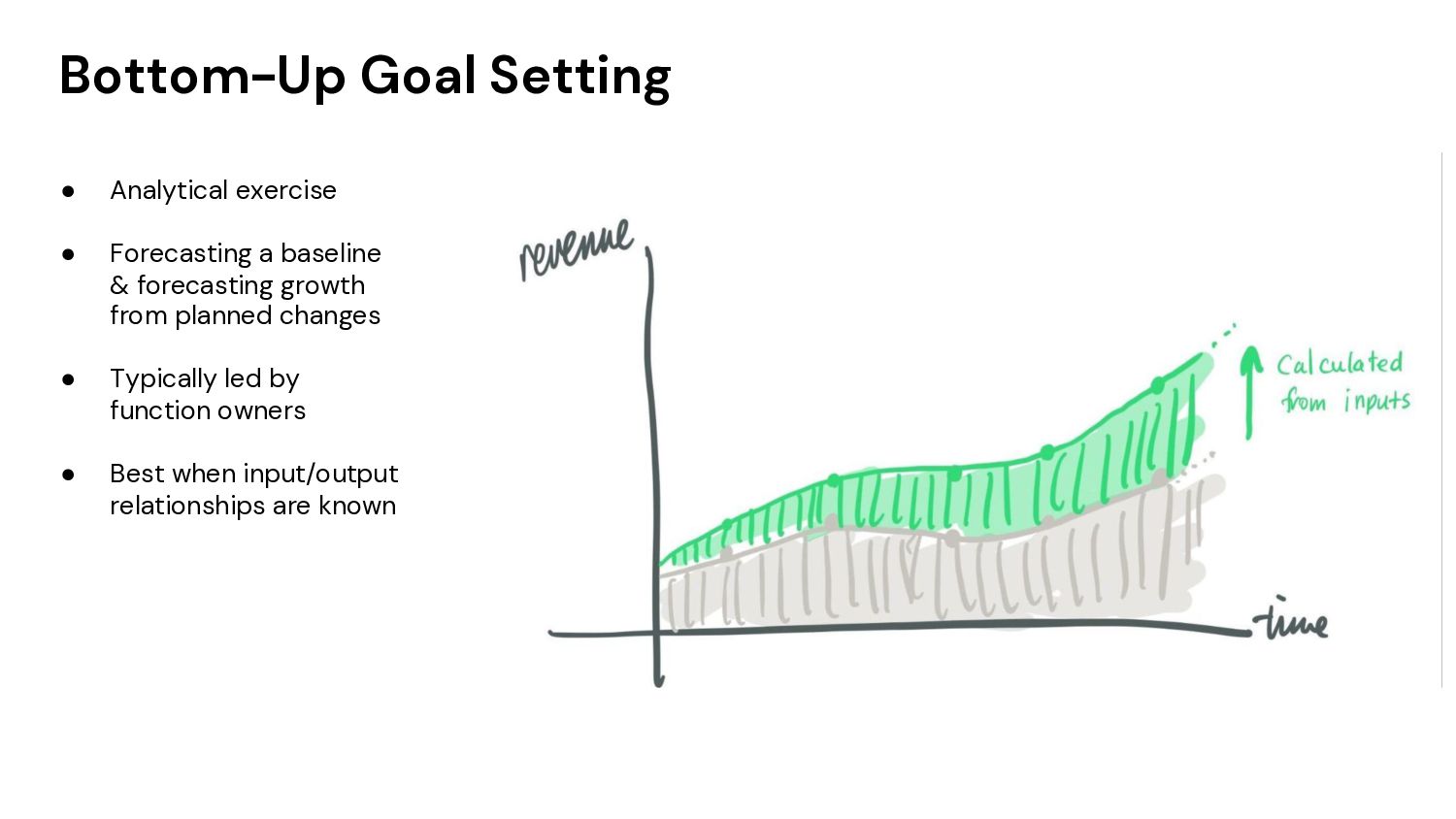
And I like to look at this in two methodologies. There's a top down methodology and a bottom up methodology for growth setting or goal setting for growth. The bottoms up methodology is pretty simple. So you've probably done this before, particularly if you grew up within a discipline and you were disciplined owner within your business, you were probably given some kind of baseline of your performance over the past however long and then you've conducted an analytical exercise where maybe you applied some assumptions to that model and you saw how it
evolved and grew over time. And this is great. There's nothing wrong with this. It's it's something that I think we all learn. But it it it's really input output driven. It does require that you have some data that you can use to forecast both from that baseline and incremental uplift perspective.
And it is really about looking at incremental growth on top of something you already do. So if you're sitting here and you're thinking I'm in that build stage, I don't know. Or maybe you're in the evolve stage and you're thinking about new auxiliary businesses or adjacent audiences that you can go into, you might be like, I don't really know how to do this with what I've got.
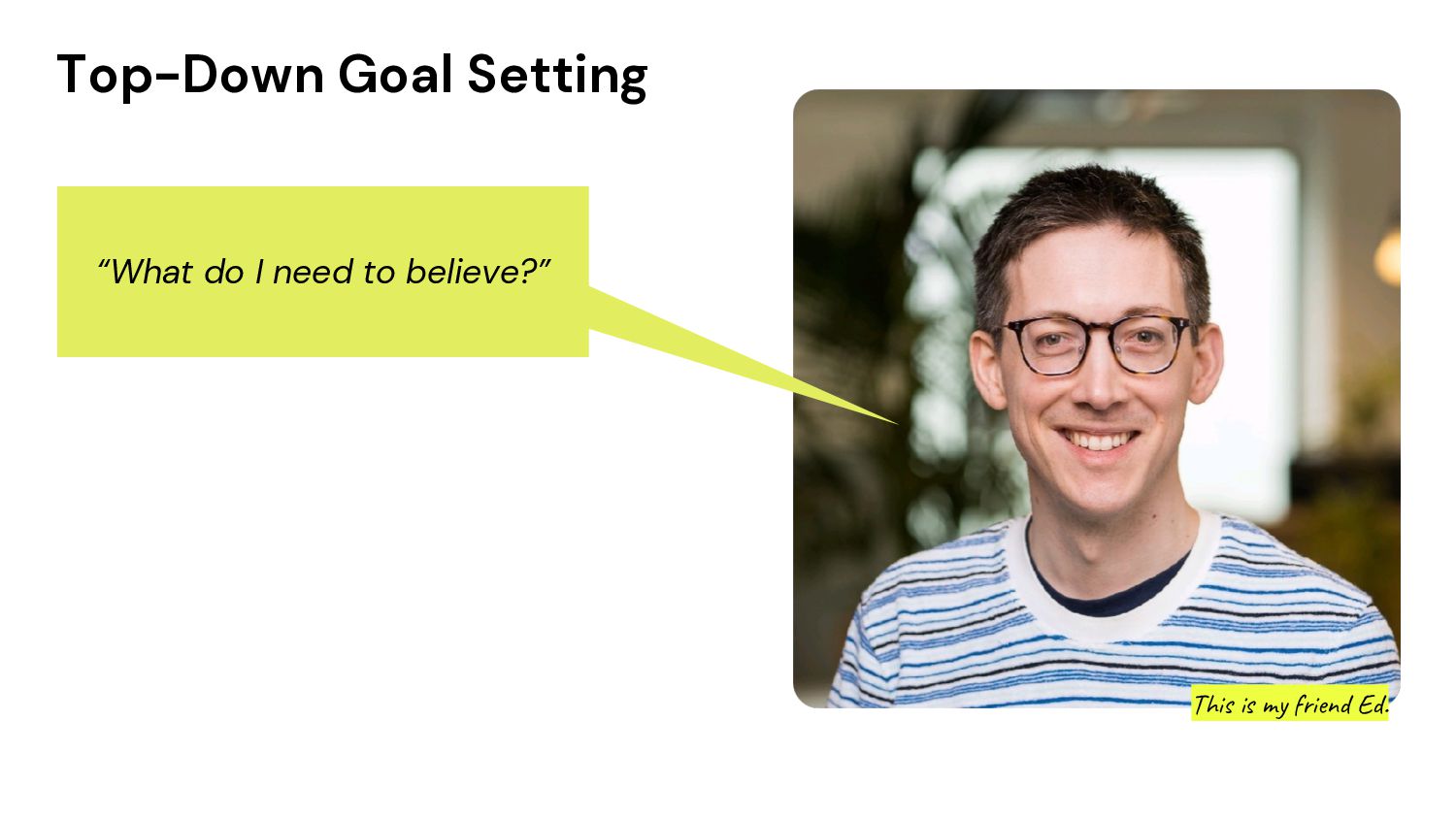
And that's where top down goal setting comes in. And to introduce us to this, I want to introduce you to my friend Ed, who doesn't know that I've put his picture up extremely enormously on this slide. But if Ed were here, he would tell you that top down goal setting is all about asking the question, what do I need to believe?
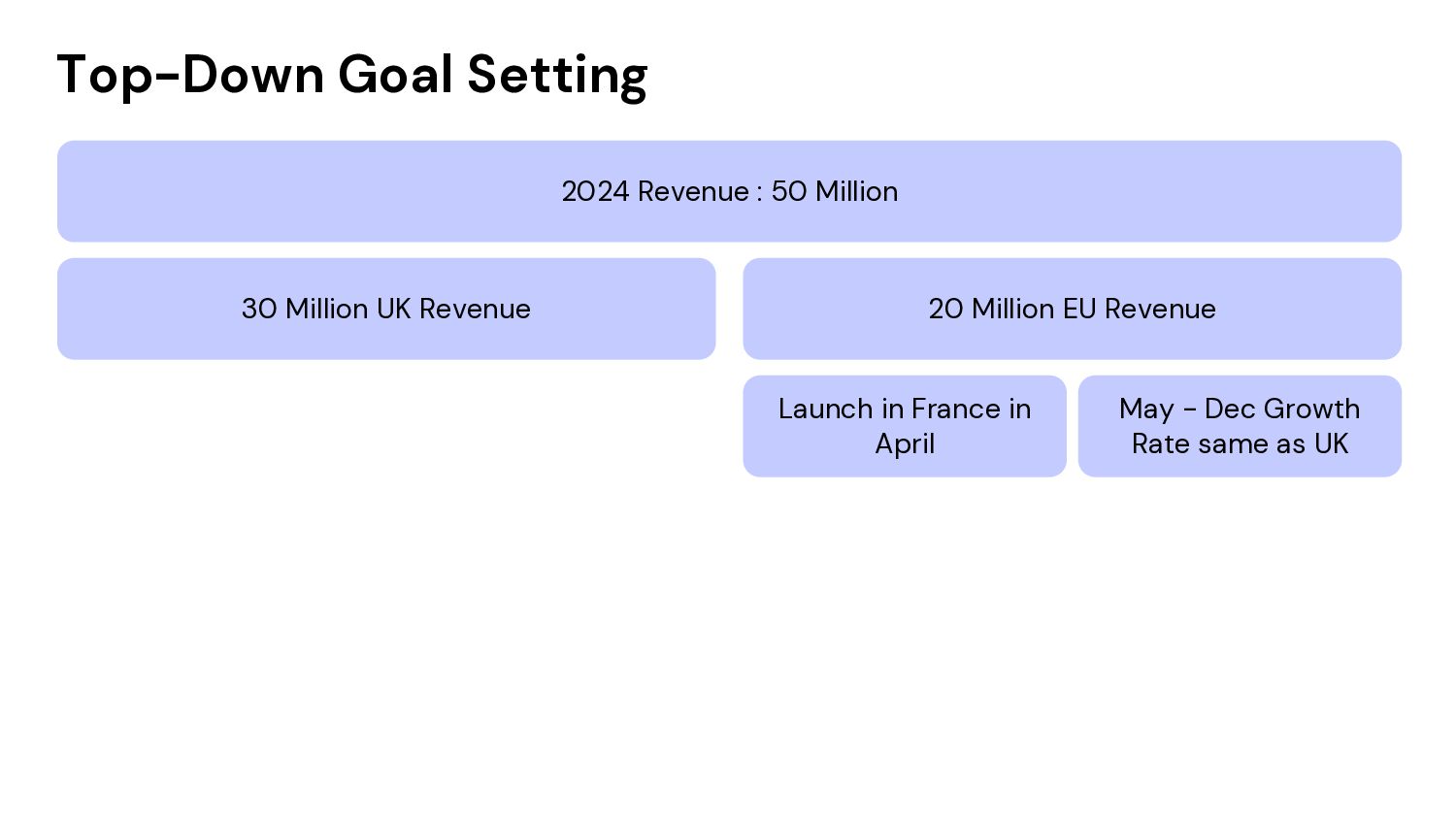
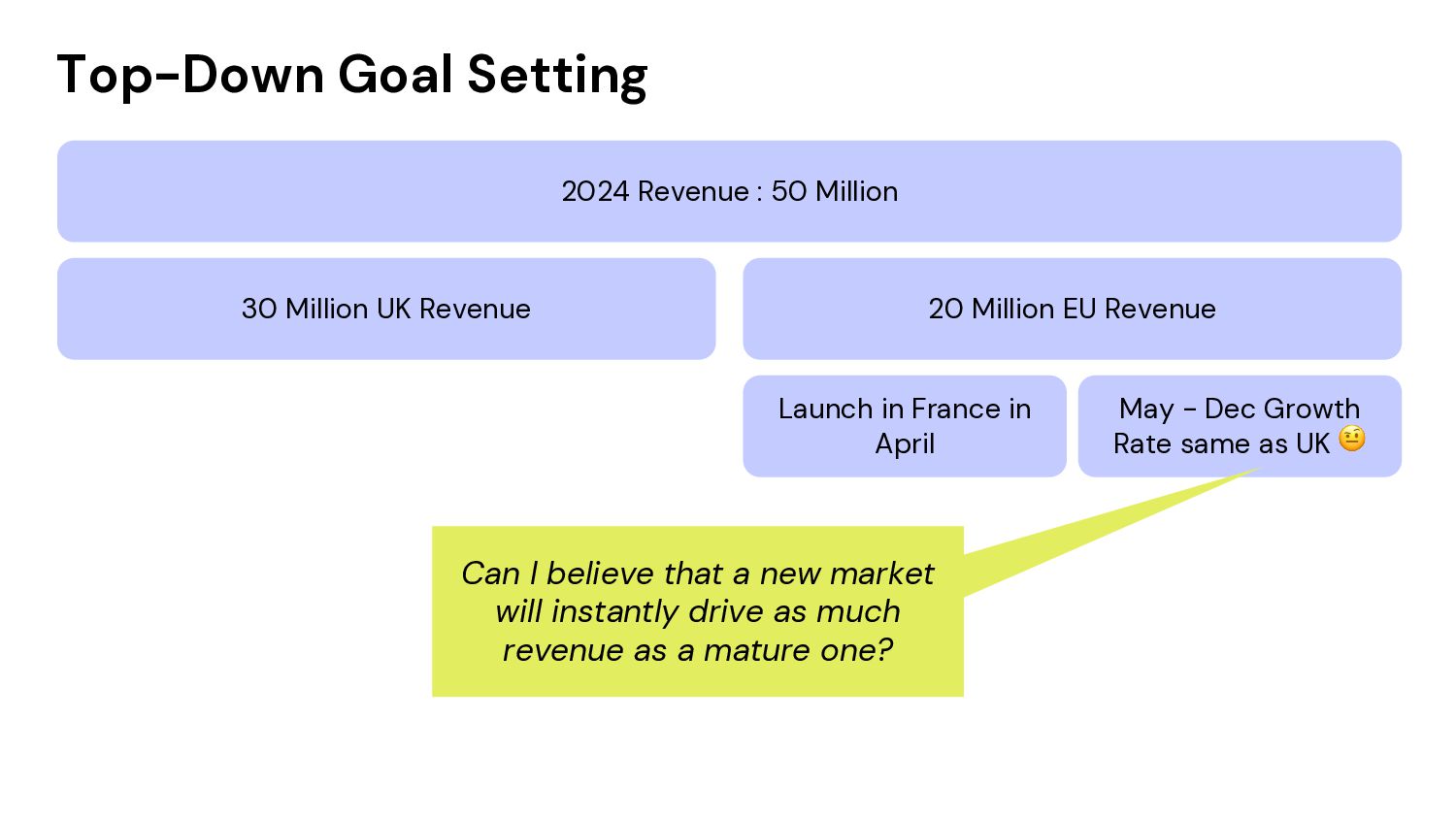
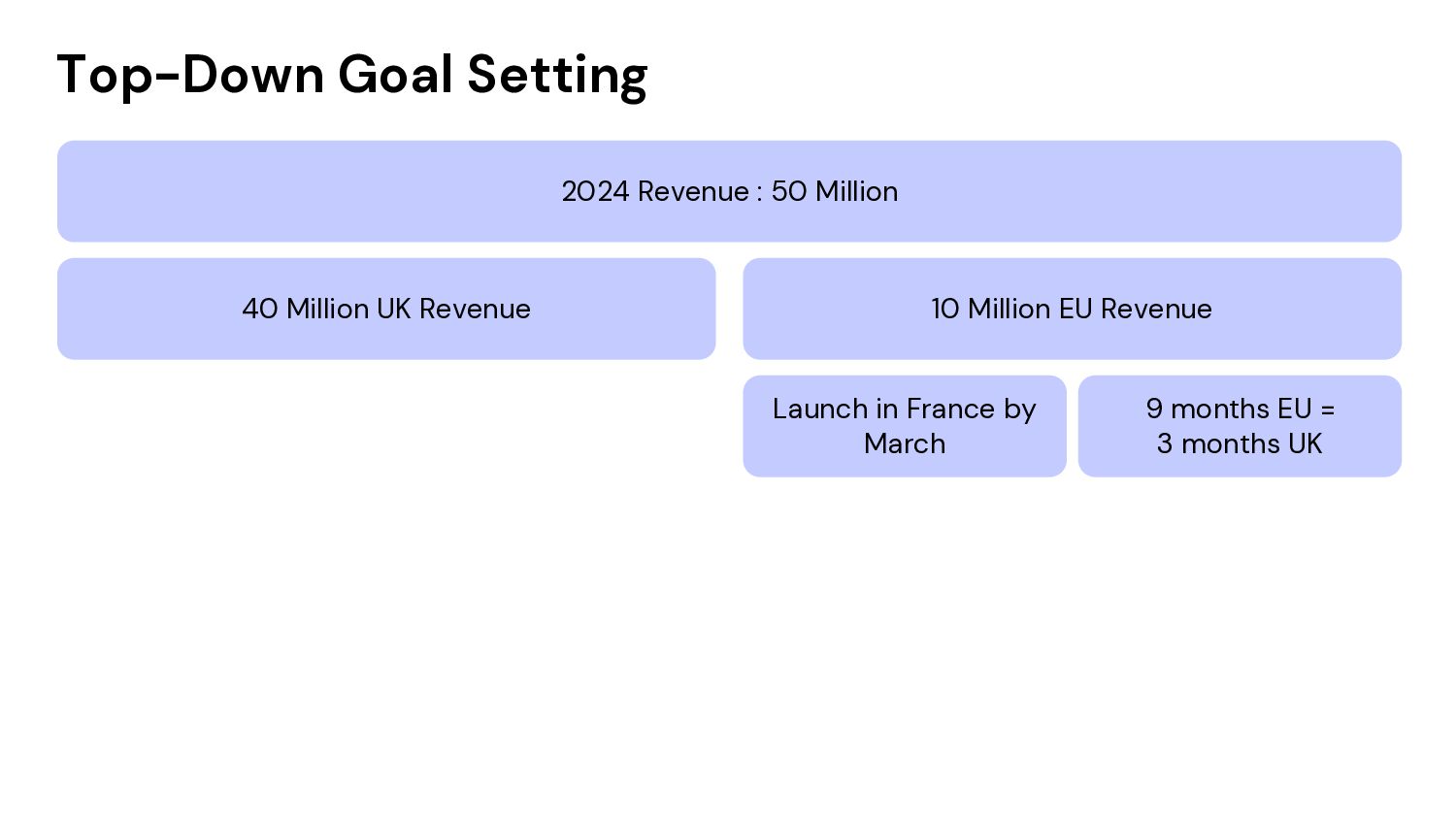
And I spent many sleepless nights with Ed in actually the Skyskinner London office doing exactly this, asking this question repeatedly until we got from a top down goal into business objectives. So what does this look like? You might set a top down goal of, I don't know, it would be really great if next year we could hit fifty million in revenue.
And then you might say, look. I have an existing UK business. Let's see if I can do thirty million with that. And, you know, I don't have an EU business just yet, but I think I can go into France, and I think I can do twenty million there.
So then you ask yourself, what would I need to believe to be true to hit twenty million in France? Well, I would need to probably launch in April and then that would mean that my May to December growth rate would be the same as my UK growth rate, which if you've ever done international expansion is like a real big red flag.
Right? You're probably like, oh, probably can't do that. I don't think I can believe that a new market is gonna instantly drive as much revenue as a mature one. And you don't really have to know international expansion to know that. You just know that that sounds really unreasonable.
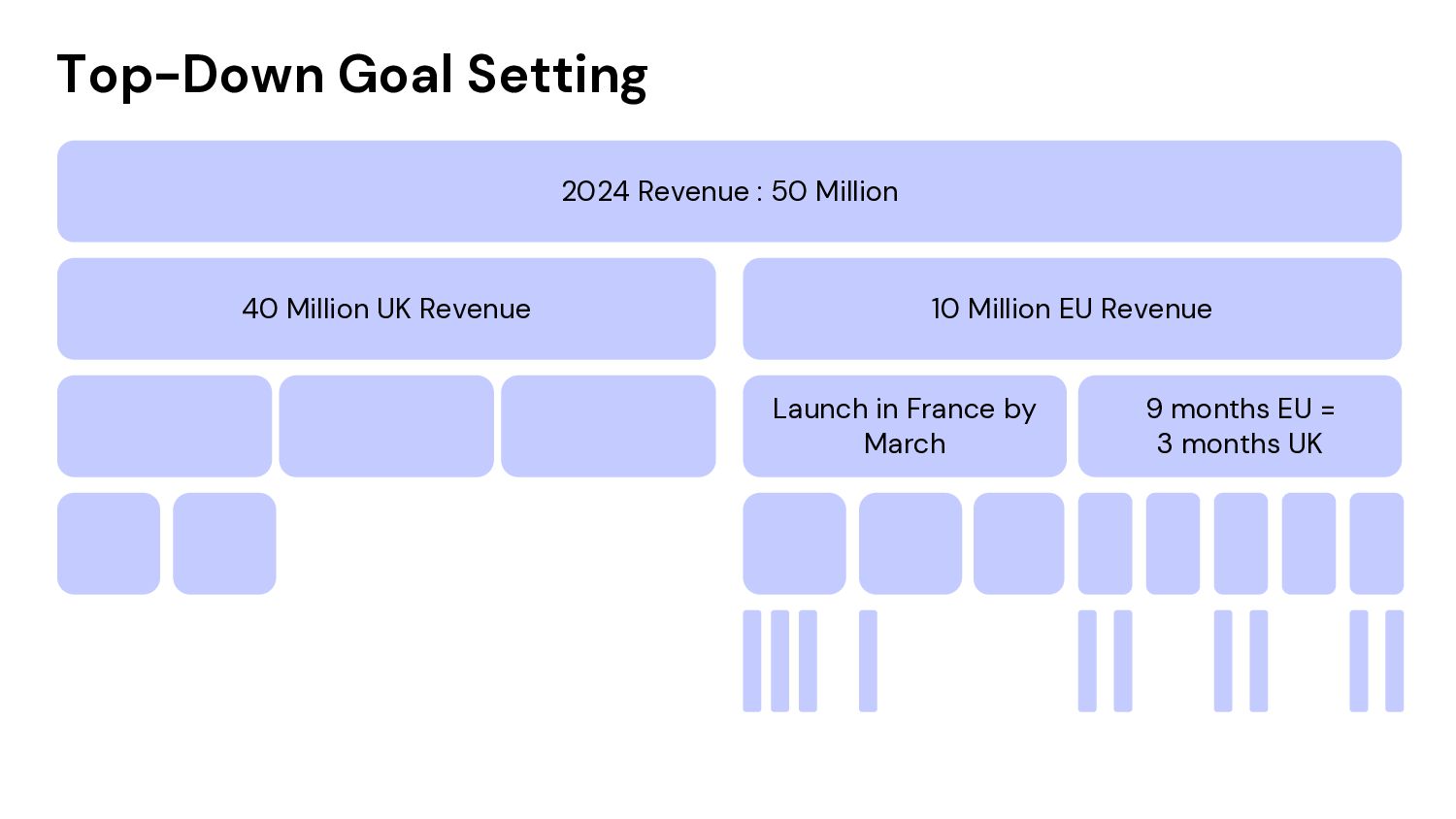
And so what you do is you work your way back up, you change some numbers, you tweak your way down, and then you say, okay. Now can I play that out to its logical conclusion on both sides? And this works no matter how you break it down.
In fact, the the sort of UK revenue, you might break that down into, okay, you know what, I think I need to go and look after reaching a larger audience base. How am I gonna do that? What would it take to do that?
If you think you're gonna do it on TikTok, how many people do you think you can reasonably reach on TikTok? And what's a reasonable conversion rate that you can assume? And can you get to a place where it's actually gonna drive what you need to do?
And through this methodology, you can start to draw conclusions about what your options are. I encourage businesses to do both of these two things. It's helpful to have validation from actual on the ground practitioners who can do a bottom up model to help you understand, okay, what's realistically achievable and also to help you understand the nuances of anything that's come up in the past year, things like seasonality that might impact how you think about things.
But also do the top down modeling and understand how they come together to create new options, which brings us to options. So as we've gone through this coaching conversation so far, I hope you've already started to reflect on some options. I hope you've thought about your product and your market positioning.
I hope you've thought about what are some of the ways that that product could grow or that competitive alternatives to that product grow today that I could replicate. I hope you've thought about what are some of the options that came out of my goal setting exercise?
What are some of the options that come from my top down goal setting exercise that I might want to explore. And by this point, you might be wondering, is there anything else that I've missed? And so if we go back to our core principles of what are your revenue drivers and we think about those and we think about them across all of the areas of our business that could employ strategies to grow those inputs into the overall revenue of our business, we can start to think really creatively about what's going
to have a seat at the table before we make an ultimate prioritization decision. But I already see some people in this audience who might be like, okay, I'm gonna fill in every single box. I'm gonna complete this. I'm gonna yell bingo. I'm gonna get a gold star.
Thank you very much. And I see you, I'm a type a person also. But that's not the point of this. This is not a worksheet. It's meant to inspire thoughts and help you getting out of your own box. So if you currently work in a position where you run a small product team in your company and your product team is in charge of acquisition, you can think in that box but you can also think beyond that box.
What are some of the other strategies that you could play with? Because some of the best growth strategies that I know actually hit on multiple levers. They don't just play in one box and sometimes they also hit on multiple teams and multiple departments.
One of the things that that we did at Depop that I really, really loved was based on an observation that our discounted items had a higher buyer conversion rate than other items. And so we leaned on that and we said, let's build in more seller mechanics and better seller journeys to get people to discount items, but then let's build on top of that with a marketing journey.
Let's make sure we send push notifications to people who have looked at those items before they were discounted when they've hit a certain price threshold for discounting so that they know that those items have been discounted. And then we said, actually, we can take that even one step further.
We can even, at times, incentivize sellers to discount their items by sacrificing a part of our take rate. And if we do that, we can incentivize them to to discount them at the lever or at the rate that's gonna trigger that push notification.
And all of a sudden, we can start to stimulate trading within our own control. And that was something that didn't come from one box. That was multiple teams working together. That was multiple strategies. That was multiple growth drivers. And something I just hit on there too was this idea of sometimes you have to sacrifice a revenue driver or a profit driver in order to get leverage from others.
And this is this is very normal. So in that build stage of your company, it's often important that you understand the interdependencies of your drivers. So by going for a wider audience reach, you might actually be bringing your conversion rate down, and you might also be increasing the churn or shortening the lifetime of your customers.
And while that might be expected, it's important that you model that out and that you understand what the impact of that decision would be in a long term context. So we've gone through a lot. I have like a minute and forty nine seconds left.
And I'm gonna now ask you what you will do based on this. It's not rocket science. But it's also not a quick growth hack. It's not something that I can give you and it's a worksheet that you can turn around tomorrow and it's got the answer for your entire business.
You will have to put in work to do this and it is a practice like cultivating your garden. And the only piece of advice I'll add at the end of this is it takes a lot of ruthless filtering. I hope you felt inspired.
I hope you've reflected on your business and what could add value to it and what could help both your top line and your bottom line. But I also hope you realize that you probably can't do everything that you want to do all at once, and it's gonna take some really brutal decisions to get down to what you will do tomorrow.
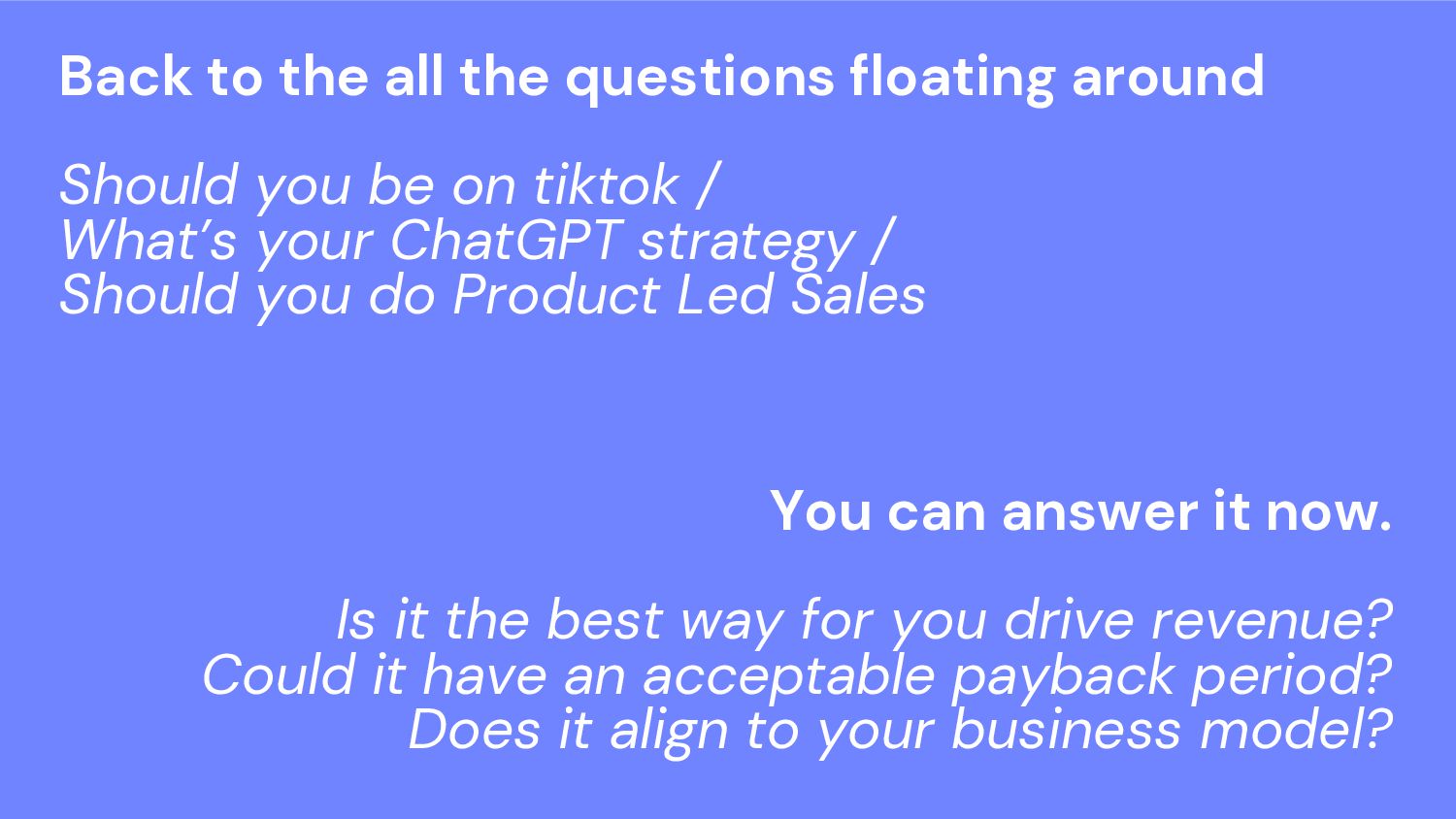
So back to the questions floating around. Should you be on TikTok? What's your chat GPT strategy? Should you do products led sales? I hope you feel empowered to answer these now from a position of power, from a position of knowing that you're going to answer it with, well, is that the best way for me to drive revenue for my business?
Could it be within an acceptable payback period? And does it align to my business model? So it's time to go back to basics. I've been Emily Grossman. And if you'd like to work with us at Jojo, we talk about this stuff all the time.
Please check out Jojo dot careers, and I'll see you all at the roundtable. Thank you.