Procrastination can be a real buzzkill. It's that nagging sense of putting things off until later, and it's holding us back from reaching our full potential. You probably want to tackle procrastination because you're tired of feeling overwhelmed and stressed out. You're sick of missing deadlines and feeling like you're not living up to your own expectations. Tackling procrastination leads to guilt-free time and increased potential, and we'll even reveal the benefits of purposeful procrastination. This talk will cover:
The common triggers for procrastination
Strategies to get you moving and producing
The two essential questions that you need to ask yourself to assess whether procrastination is problematic or purposeful
1 / 22 Use ← → to navigate
Auto-generated transcript - may contain errors.
Tap a timestamp to jump the video.
Hello, and welcome, and thank you very much for that kind introduction. It is really a pleasure to be back with you. As Brian mentioned, I couldn't make it last last year as I had just given birth to my son. And although there were creche facilities, I don't think anyone was quite prepared for a three week old.
And I certainly wouldn't have been ready to be up on stage at that point in time. So today we are here to talk about procrastination. And I have to say, everybody I've spoken to when I've mentioned the topic has excitedly said, Oh, I need to be there for this topic.
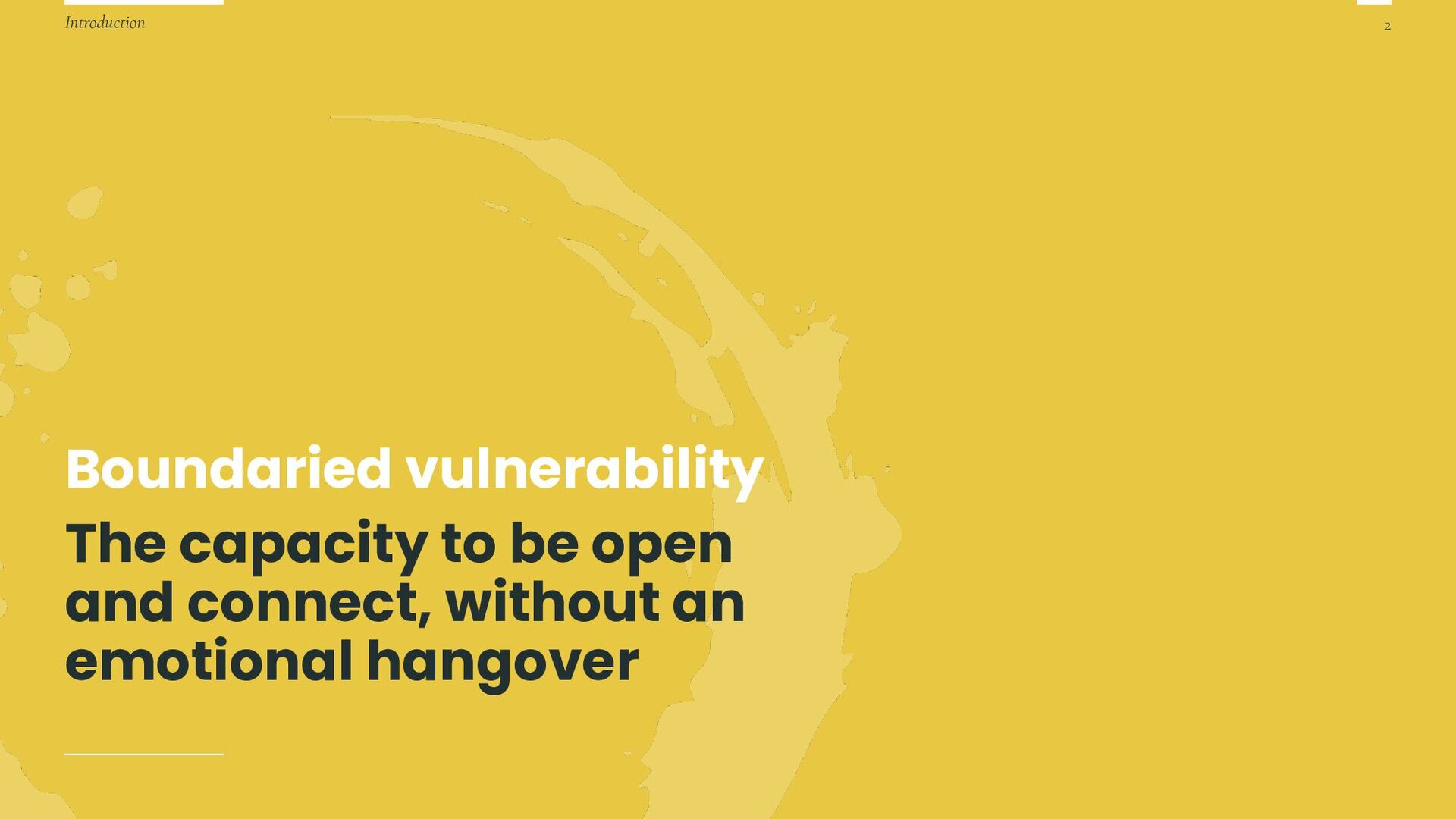
Right? So I do think there is something very universal about this. As we go through, hopefully you'll find some of the answers to your own procrastination. But before we get into it, I want to introduce this topic of boundaried vulnerability. This is something that psychologists use to refer to the idea about being emotionally open and available, first and foremost with yourself, so that you can connect to others without an emotional hangover.
And so the way that I often describe this in practice, in a moment, I'm going to ask you to turn to the person next to you and to share something that you've been procrastinating about. But if we were putting it on a scale, and number one was, do you know what?
I don't know what kind of socks to wear when I get up out of bed in morning. That's number one. All the way through to number ten, I don't know whether to leave my marriage. Maybe go for a solid seven. Okay? Especially if you're sat next to your husband or wife, just as a heads up.
Because essentially, we want you to lean into the discomfort, but not so much that you have to avoid eye contact for the rest of the conference with the person next to you. So before we do that, though, I do want to introduce a definition that I really like about procrastination.
So if you look at the traditional definitions, they will often refer to a postponement or a delay of something that you know should be done. Okay, that's fair enough. But I think there's a lot that's assumed in there. Often they're assuming that it's a conscious decision, and what you're going find out today is there's a lot of unconscious things happening below the surface.
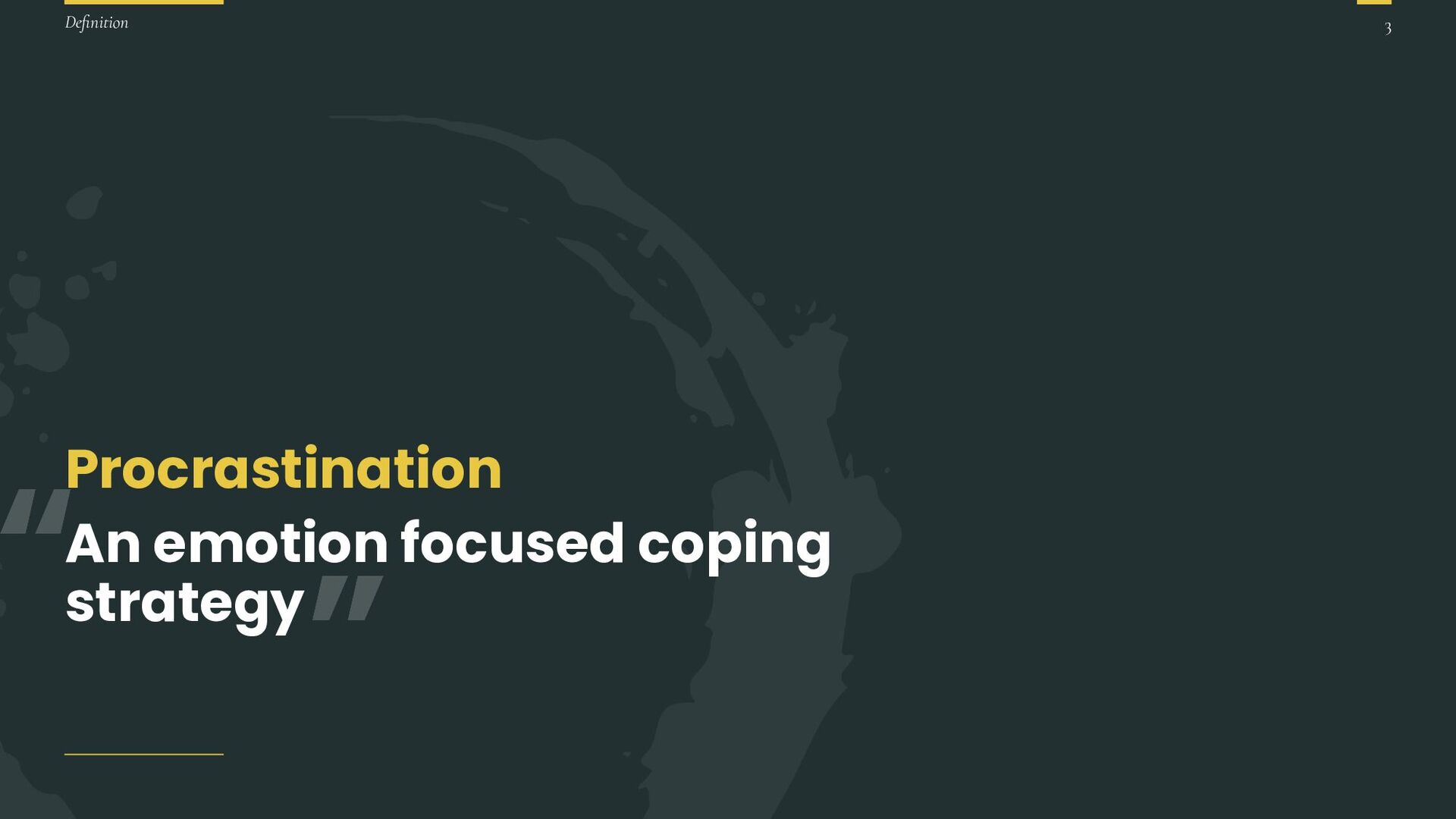
So I like this by Doctor. Timothy Pikel, who says, It's an emotion focused coping strategy, or put more simply, the desire to feel good right now. Okay? So often the thing that we're procrastinating about, we know we need to get done, but there's so much alternatives that are available that feel better in the immediate right here, right now, that that's what we tend to do.
So we're going to dive into our emotional fitness push up. You just heard me say what you're going to talk about. So turn to the person next to you and share with them what's your weapon of procrastination. I'm going to bring you back.
It's hard because that's the juicy bit. Right? Like, you get to learn about one another. You deepen the connection. And just incidentally, you may have thought this was going to be really awkward because we tend to overe overestimate how awkward it's going to be to reveal something to somebody else about ourselves.
And actually, we then tend to come away feeling much more connected, and people are often more interested in you than you realize. So well done for giving it a go. There's going to be various points where you are going to continue to build on what you've shared.
Because on the surface of it, when you think of procrastination, it doesn't make sense. That's what we tend to think about. And then we tend to apply these labels and judgments like, Oh, I'm just lazy. Right? Or, If I just tried harder, like so and so, I'd be able to get this done.
But we are meaning making creatures, and what I mean by that is we like to make sense of who we are, who we are in relation to other people, and what we can expect from the world. And we like to have a coherent sense of ourselves across time, space, and place.
So on the surface, it kind of doesn't make sense. Right? We set ourselves a task. We know that often we do want to do the thing, but then we find ourselves doing something completely opposite. And the reason for that is, well, we are human, and so welcome to the human condition.
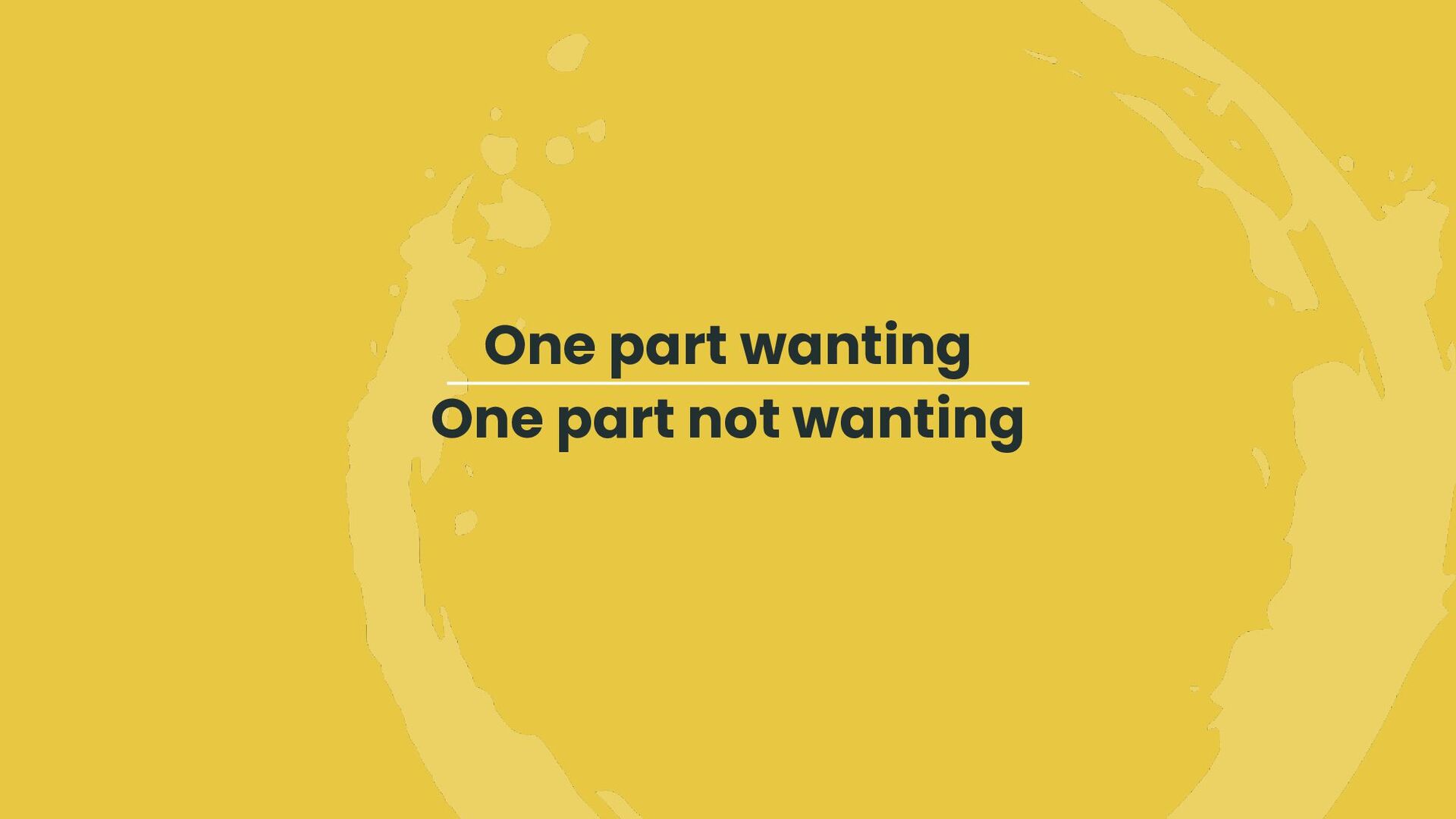
There is often one part of us wanting and one part of us not wanting. But it is so difficult to sit in that tension of opposites and polarity. So what we tend to do is fall down on one side of them. So we tend to go to, Well, she's all good, and he's all bad.
Right? That person's innocent, that person's guilty. As opposed to being able to see that the light and the dark exist within us both, and when we are able to sit with that tension, we become more of a whole human being. So what we're going to do is I'm going to take you through the five most common reasons that I see in the therapy room, and this spans from people from the general population all the way through to elite world Olympians.
Right? They are not immune to this. They struggle with this just as much as the mere mortals, the rest of us. But I want you to think about what you shared with the person next to you, and as we go through, see if any of these resonate for you.
Okay. So the first one is fear. And fear is a really powerful motivator in the short term. But anybody who knows and has experienced sort of burnout as a result of the chronic stress of fear knows that the motivation will run out, and obviously what comes with it is a lot of ill health and disease.
But we are, I guess, essentially procrastinating when it comes to something that we fear, when it comes down to something that might jeopardize our sense of self. One of the biggest things that we actually procrastinate on is our physical health. So you find a lump, or you've had this persistent ailment, you know you should call the doctor, and what do you do?
You don't, right? Absolutely. You put it off. Or like a woman who recently told me at a workshop I was running, I know I should write my will, and yet I'm finding a million and one reasons to not do it. One of the other things that we see in the health world when it comes to medical issues is noncompliance of medication.
So you will literally give somebody a pill and say, Take this pill. It will stop you from having a heart attack or a stroke, and they don't take it. Right? Like, it blows my mind. Although, if you start to lift that up and you start to see what's really driving that is a fear.
Right? You're actually asking people to confront something like they're aging, they're not invincible, right? We're not immune to getting ill, and ultimately, their mortality. You'll also see people afraid and procrastinate when it comes to their sense of belonging. So let's take an example, and we'll pick Sally, who maybe gets along with all of her colleagues, is doing really well in her team, and then the opportunity for promotion arises, and yet she doesn't go for it.
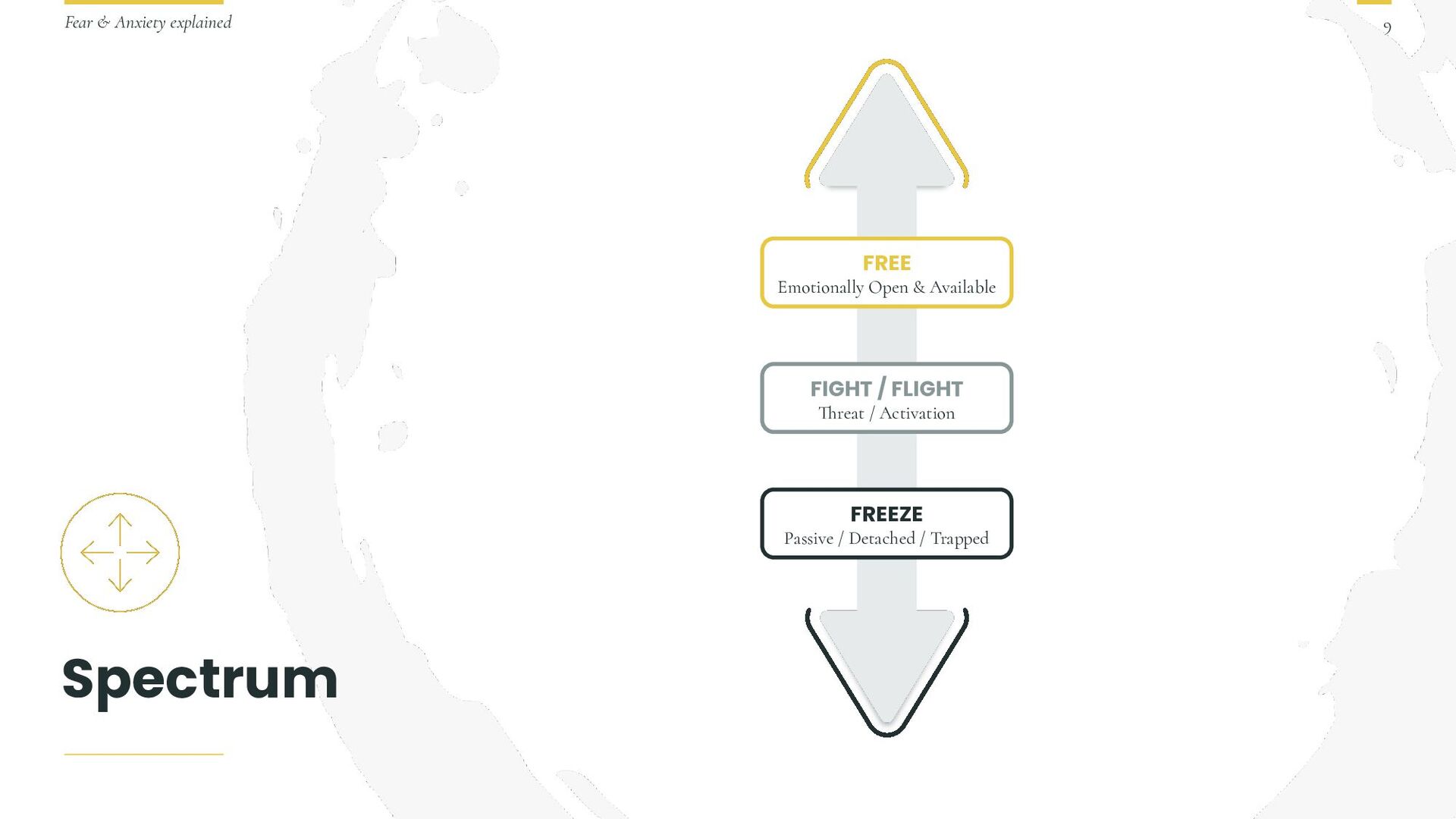
She procrastinates about it and eventually doesn't do it. What she's scared of is the change of dynamic in the relationship, and that that's going to shift things. So she just stays where she is. Now, if any of you attended Mark's session yesterday, which was wonderful, you will see that he also made reference to this fight flight freeze response.
I add in free at the top because I believe that once we're able to regulate our nervous system, we can show up in a way where we are open and available. But you can think about procrastination then, really, as the fight flight freeze.
The fight and flight can often be what we turn to as a distraction. Yeah, the alternative, maybe the kind of really big thing that you're avoiding, you instead do all the small things on your to do list. All the way down to freeze, where you are paralyzed.
You feel literally numb and detached, unable to complete the task. Okay. So some of you might be thinking, Hold on, we've just spoken about that. Right? Like, how is fear and anxiety any different? They are different. So for me, this is one of the biggest misunderstandings that we see.
Anxiety has the same physiological response in your body as fear, but the stimulus is different. So where fear is something outside of you that can cause you harm, anxiety is about feelings, thoughts, memories inside of you that feel threatening. And we can all struggle with this.
So let's go back to our example with Sally. Maybe she also needs to get in touch with some competition to go for this job. And competition involves having healthy access to anger. Anger is a really useful, important emotion. If you're blocking your access to that, you actually can't go for what it is that you want.
You don't have the drive. You don't have the capacity to really overcome the challenges and the blocks that will inevitably get in your way. You need access to healthy anger to be able to power through that. But if Sally grew up in an environment where anger wasn't encouraged or even punished, she's going to feel anxious about that when that feeling comes up inside of her.
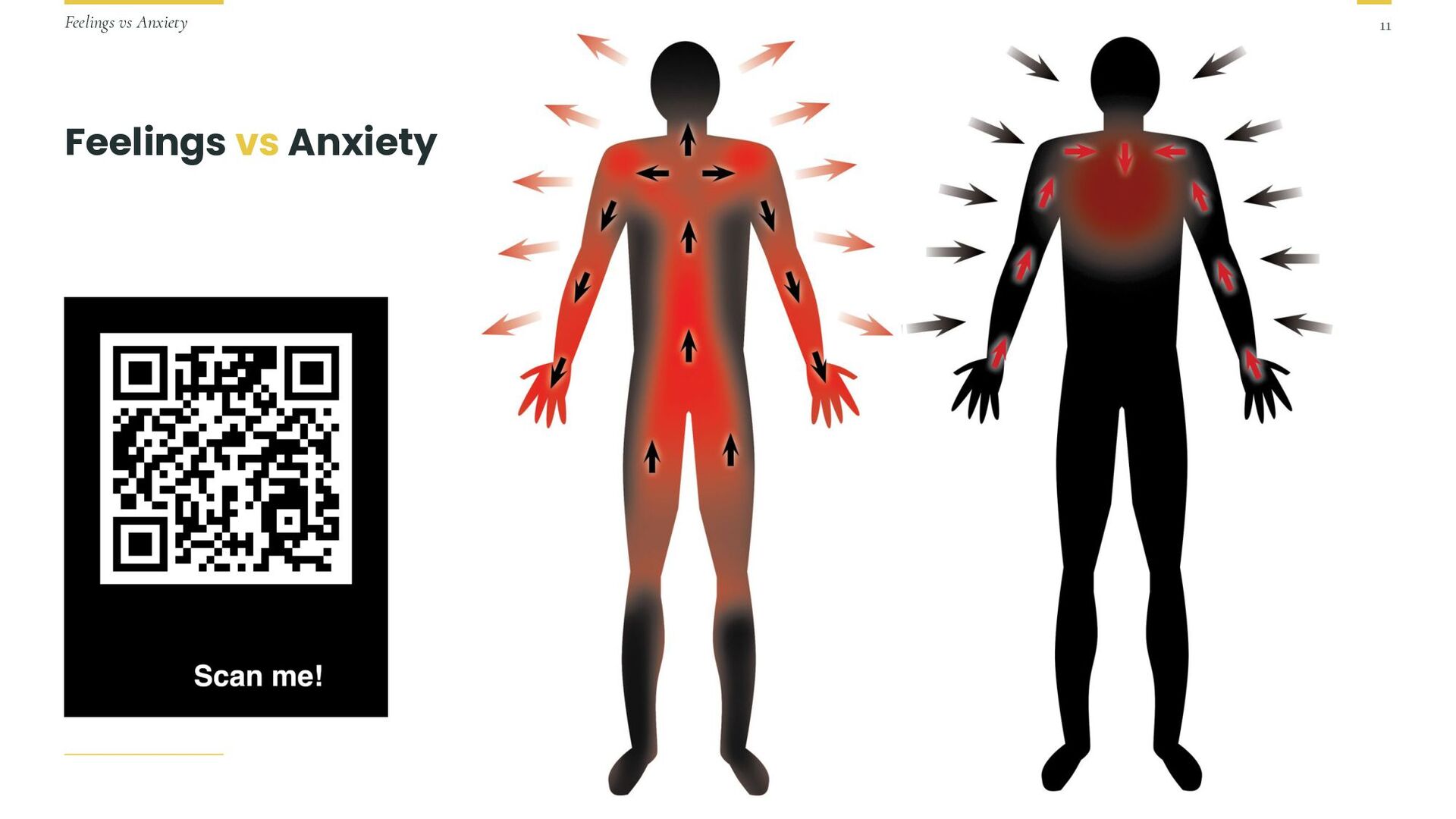
So, here's what I can do to help you with really kind of disentangling anxiety and feelings and fear. I encourage you to take out your phone now. On there, will find two downloads. One is a wonderful infographic from my colleagues in Hungary, who put together the three different types of anxiety pathways that we experience that actually happen unconsciously outside of our awareness.
The second then is a red amber green checklist that I've put together for you, so you can have a look at your particular flavor of anxiety. Now, often, we will go through all three stages, certainly, you know, at any point throughout the day.
But you can begin to recognize how that's showing up for you, because if you don't know it's happening, then you can't begin to change it. And the way that I often describe the difference between feelings and anxiety because I will say to people, How do you feel?
And they'll say, Oh, I feel really tight here. And they'll say, Well, that's your anxiety. That's not a feeling. Right? Actually covering up the feeling underneath. Feelings evoke motion. They bring with it energy. It's information telling you what you need to do and often where you need to move.
Anxiety, on the other hand, is restrictive. Okay, it's inhibitory. You get tight, you get tense, it closes you down. So that's a quick and dirty way to be able to begin to tell the difference. But I really encourage you to visit and download those tools.
Okay. So Doctor Timothy Pykell would completely disagree with this, and he would say, Look, procrastination is never in the service of your health. He would instead say, Well, there's a difference between delay. And I do think there's an important learning in this, that if we paint a really broad brushstroke and say that everything is procrastination, I think we're doing ourselves a disservice.
Sometimes there are just inevitable delays. If my flight here had been cancelled and I couldn't have got here, inevitably, we would have delayed the talk. Or sometimes there's purposeful delay. So maybe now is not the best time to do the talk. Maybe it's better to do it next week.
And then there's emotional reasons for why we delay. So Doctor. Timothy Pikel gives the example of in grief, right? You tend to stop doing the things, the tasks that are building up that are still coming into your inbox because in grief, the idea of that is that you stop, you pause, you turn inwards so that you can mourn what is lost and what isn't returning.
Nobody really turns around and says, Well, you're a really big procrastinator because they understand that you're in grief. Right? They wouldn't expect you to be doing that. So I want to give you an example of a man that I worked with who actually did come to me to talk about ending his marriage.
That was the example I gave at the beginning, and it is something that I do see in the therapy room. Now, the reason I say that was really in service of his health is because it was a very bright move on his part.
He really wanted to understand, is it him that is having the difficulties with emotional availability and openness, and is he projecting all of that onto his wife and the relationship? Or is it that they have just truly grown apart and it would be better to separate?
And so through the course of that work together, he did come to the decision to end the marriage, but he was able to do so with a clear conscience. And even when it got quite tricky, his wife encountered some quite severe health problems.
He was still able to separate in a very kind and compassionate way, rather than just immediately acting. And actually, that is the opposite of procrastination, which is precrastination. So if you're the kind of person that something lands in your inbox and it evokes so much anxiety or fear in you that you immediately have to do it just to get it out of the way, then that's called procrastination, but that can be just as harmful as procrastination.
Right? Sometimes we need that time to do our best work. So I mentioned to Brian I don't know if he's already left at this point, so hopefully he'll see this when he watches it back. But sometimes procrastination can be in the service of creative incubation.
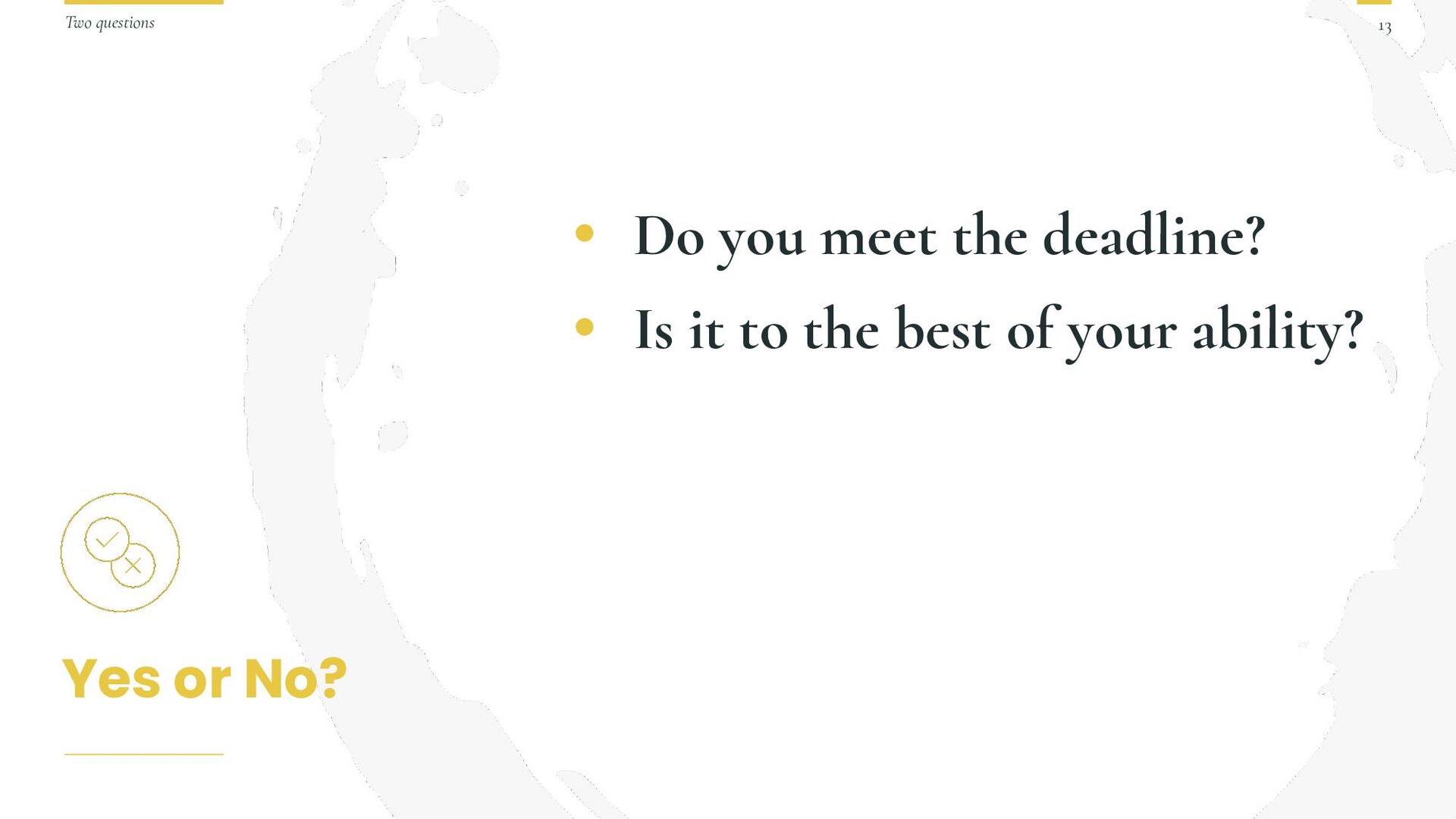
Right? Some really high achieving, successful people have gone on record to say that they procrastinate. It's how they do their best work. Now, there's two questions you want to ask yourself about this if you're wanting to be really honest about it. Do you meet the deadline?
And is it to the best of your ability? So I'm going to invite you to turn to the person next to you and answer the two questions. When you procrastinate, do you meet the deadline? And is it to the best of your ability?
Hopefully hopefully, we are starting to walk around procrastination together and start to lift it up and peek underneath a little more. But if you answered yes to both of those questions, then you might just need to stop beating yourself with the stick that says you're bad or you're lazy for procrastinating.
Right? If you truly are able to meet the deadline, and it is to the best of your ability, this might be part of your process. Now, if you're like the majority of people that I speak to when I ask this question, they say kind of no and yes or yes to no.
And actually, it's not. Right? They tell themselves that I just work better under pressure. I mean, Hans, I know I've said that, right? Like, I've definitely said that. When actually, that's not true. I mean, the law of diminishing returns shows us that very quickly we don't produce our best work.
We make more errors. Okay? So it's just something to be mindful of, and it's also a question that you can ask yourself and your teams if they are struggling with procrastination. So let's move on to the juiciest of them all, probably, self sabotage.
So there's a lot of places I could go with this. What I'm going to do is bring it to life in a couple of examples from the therapy room. So I once worked with this man who was incredibly bright, very capable. And as we were looking back over his history, he was telling me about these different ways that he had self sabotaged.
And we got to his university years, and he was saying, Despite being very capable, I did terribly. And so we started to unpack this. And keeping in mind, this is all unconscious. This is outside of his awareness. He's not walking around thinking about this on a day to day basis, but it is what's driving some of the stuff and some of his actions.
What we got down to was, actually, he never wanted to go to university to study the particular type of course he chose. It was actually his father's request. So he had complied with his father, got to university, and then the only way that he could express his own autonomy, his own free will, was through defiance.
So if you are somebody that finds that you comply a lot, I guarantee you defiance will show up somewhere in your world. And that was the way that he was then sabotaging, but also trying to express his own individuality. So he procrastinated on essays, he procrastinated revising, he'd go out partying instead.
And again, this then became much more clearer as to what was driving his behaviors. Now, you can take a lady that I was able to see, and actually, she was describing how she wanted to lose weight. Whenever she would be successful at this, and she would start to lose weight, and people would start compliment her, well, then she would sabotage it, and she would go on a massive binge.
And again, we could start to understand and unpack some of this. She grew up in an environment where her mother had quite a particular idea about the size that her daughter should be, the idealized version of her daughter, not able to see the daughter in front of her, but really relating to an image in her mind.
And so she was very strict about the types of food that the girl should eat. And of course, as children, we don't have much choice. Although I say that I have two children, they will constantly try and express their own individuality and choice.
And if you have children, you know what I mean. But actually, we don't really have a lot of choice as children. So again, she complied. But when she was old enough to make her own decisions, well, she derailed. She defied. But in doing so, she punished herself because that isn't what she wanted, that was sabotaging her own goal, as a way to punish the mother.
So these are very interconnected, interrelated. And then, often because we feel so terrible about having these mixed feelings towards the people that we love, we feel that we need to punish ourselves for those as well, for just having feelings in the first place.
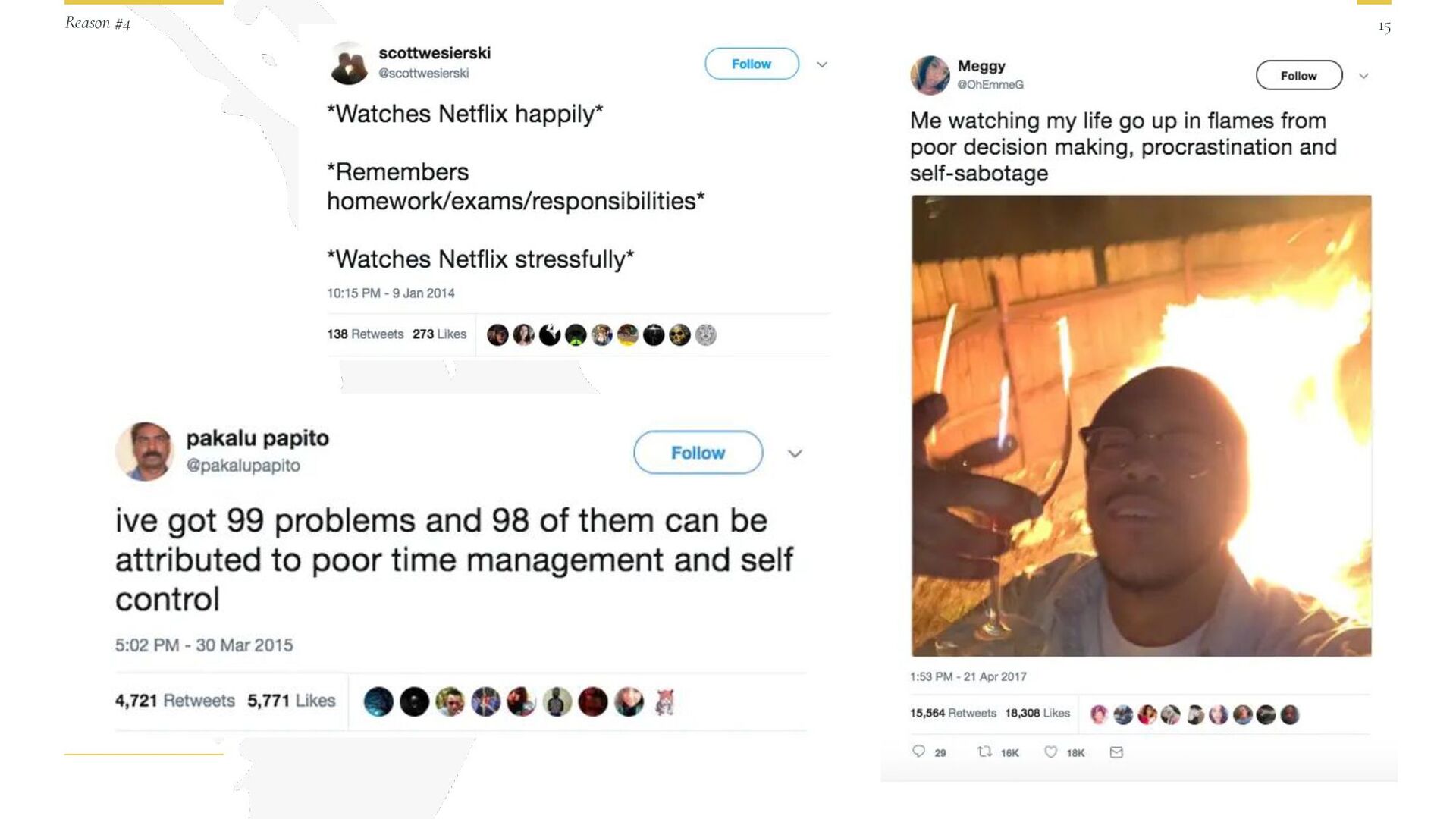
So I realize that can sound all very heavy, and so what I wanted to do was share with you just how viral this is. Right? And I really find that anything that goes viral in the collective really speaks to our common humanity. My favorite is the guy with the fire. I mean, yeah.
Because I do think we can all relate to this in micro or macro ways. We find ways to sab sabotage what it is that we want. But hopefully, you can begin to see that this is not about you being bad or wrong, that there will be some undercurrent driving this.
Okay. We're up to our number five, which is secondary gain. So two weeks ago, I ran a workshop linked to procrastination, but we were able to do a lot of experiential activities to really bring it to life. So I was working with sixty managers, and during the course of that, I got them to do an activity that essentially assesses how able they are to ask for help.
So it's an embodied thing. It's not kind of theoretical. And two thirds of these very high functioning, very highly capable people, successful people, were unable to ask for help across the course of a ten minute activity. Okay. So when I think about procrastination, I also think about the secondary gain.
I think about what is it that it's communicating. And sometimes it communicates that I need help. Right? I can't do this alone. I actually do need somebody to come in and help. But if I've got a problem with dependency, which I think our culture promotes, it really promotes that you should be absolutely self sufficient, that you should never ask for help, that in some way that's a weakness, or it diminishes your success in some way, then actually it's going to be incredibly hard to put your
hand up and ask for help. It can also go the other way. So I've worked with people when they've actually been unable to say no. Maybe they're a chronic people pleaser, and they're feeling swamped at work, and their boss is saying, Can you do another thing?
And they say, Then they procrastinate because it's their way of saying, Do you know what? I don't want to do the damn thing anyway. Right? So I would really encourage you to think about the thing that you're procrastinating on. Is it because somebody outside of you has set you that?
And actually, you don't want to do the thing, but you're finding it hard to say no. I don't just want to leave you with those insights into procrastination. I do want to think about how we can start to tackle it. That said, I do want to add the caveat that although I'm going to give you some tools, unless you do the first part of the work, which is turning inward, understanding what's driving this, you likely won't use the tools anyway.
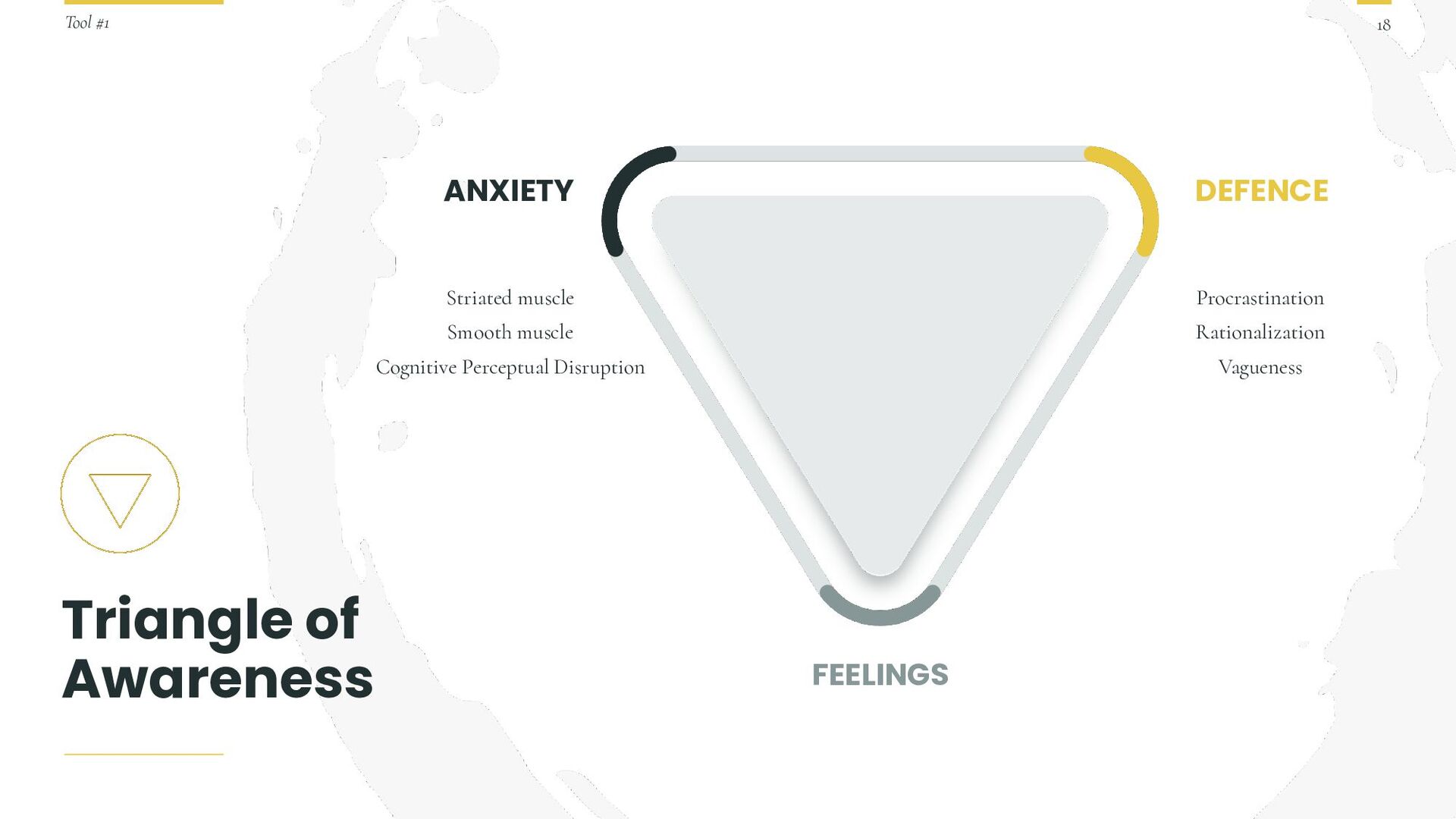
You'll have access to them, and it'll be another reason that you can punish yourself for not using the tools that Suzanne gave me. We're amazing creatures. Okay. So, if I had one tool that I could share with the world, this is it. This completely transformed the way that I understand people, I understand my own psychology, and it's led me to being a psycho therapist, which is derived from some of these important concepts on this triangle.
You'll see that procrastination actually falls under the defence pole of the triangle. I've mentioned some of the other examples here, the rationalisation: Maybe I'll feel like doing this thing tomorrow. I don't want to do it today. You won't feel like doing it tomorrow.
Maybe I'll do it at some point, and I'll be really vague about it so I don't have to pin it down. Vagueness is a defense. And then all the other things that we find to do as a distraction, whether that's picking up our phone, learning the new TikTok dance meme that's gone viral, finding ourselves in a black hole of cat memes, whatever it is that you turn to when you procrastinate, that's firmly on the defence pole.
Okay? So if we can kind of agree with that, then we can start to move our way around the triangle. And we can think, Well, I'm turning to a defence because I feel really anxious, and maybe I'm over my threshold, and I'm wanting to feel good right now, if you go back to that original definition.
So what is it that I need to do to attend to my anxiety to bring it down? And that's where those tools that I gave you earlier on will be really essential. But that's not the end point, and so often we stop there in our culture and in our society.
I have anxiety. Well, heads up, you all have anxiety, right? Again, you wouldn't survive without it. But people stop there as if that's the end of the sentence. It's not. You should be seeing it as a signal to ask, What feeling is underneath this anxiety that is giving rise to this anxiety?
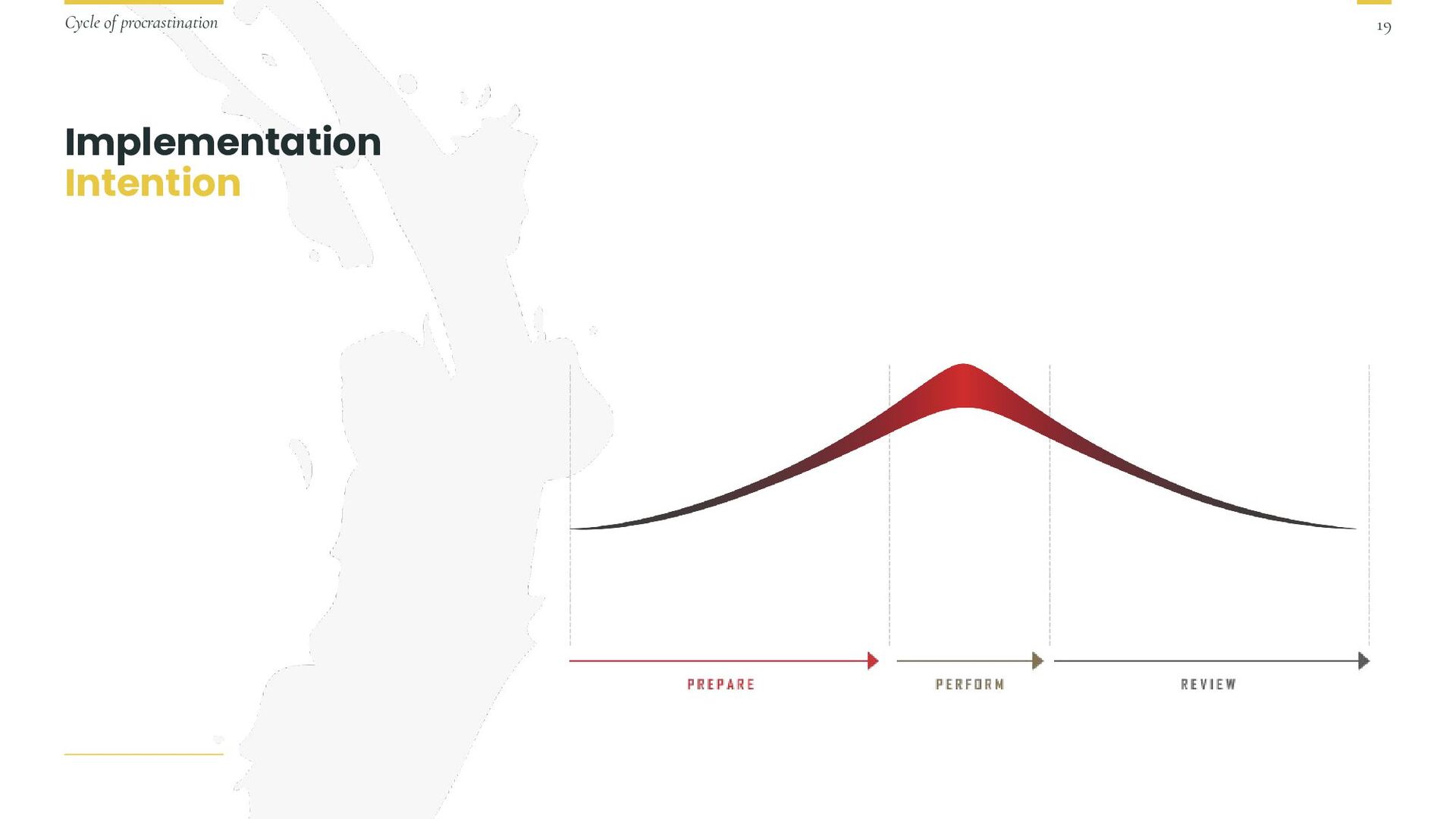
And then you're in a place that you can start to really transform this. The next tool then is called implementation intention. So I'm going to invite you in a moment to turn to one another again and share, when do you start to procrastinate?
If we think about this as a cycle of procrastination, is it in the preparation phase? Say you've been saying, I want to write a book, so you get yourself the coffee, the laptop set up on the desk, you get the conditions perfectly right.
I'm clearly describing myself here, for any of you that are looking, She sounds like she knows what she's talking about. And then you find something else to do. Or is it during the thing that you've finally sat down to do, your buddy calls and says, Hey, do you want go for a round of golf?
Yeah, sure, let's go. And you just ditch the thing that you know you should be really doing. Or is it maybe that you actually procrastinate about reviewing your performance? You know there's a lot that you could be learning from your mistakes, but you avoid it.
You put it off. So turn to one another now, and don't be surprised if you go, I'm all the way across the board. I procrastinate at all different stages. That's a common response. But share with the person next to you, when do you tend to procrastinate?
Okay. Okay. Again, in the interest of time, I'm going to have to move us on, but hopefully you can continue these conversations throughout the rest of today. But in implementation intention, the easier word to say is mantra: If X, then Y. So now that you've pinpointed where you tend to start procrastinating, the implementation intention is, if I notice that I start to say, I'm going to want to do this tomorrow, then I must immediately sit down and do ten minutes on it right now.
Okay, so these will all be unique to you. You need to find your own mantra, your own implementation intention, because again, what the research says is that once we get started, we actually rate the task more enjoyable, and we spend longer on it than we initially thought we would.
So we know that actually once we actually get started, it's kind of like it's not the Nike slogan, Just do it. It's Just get started. We tend to get a bit of momentum and keep going. The final thing to think about when it comes to procrastination, at least for now, is your particular flavour of perfectionism.
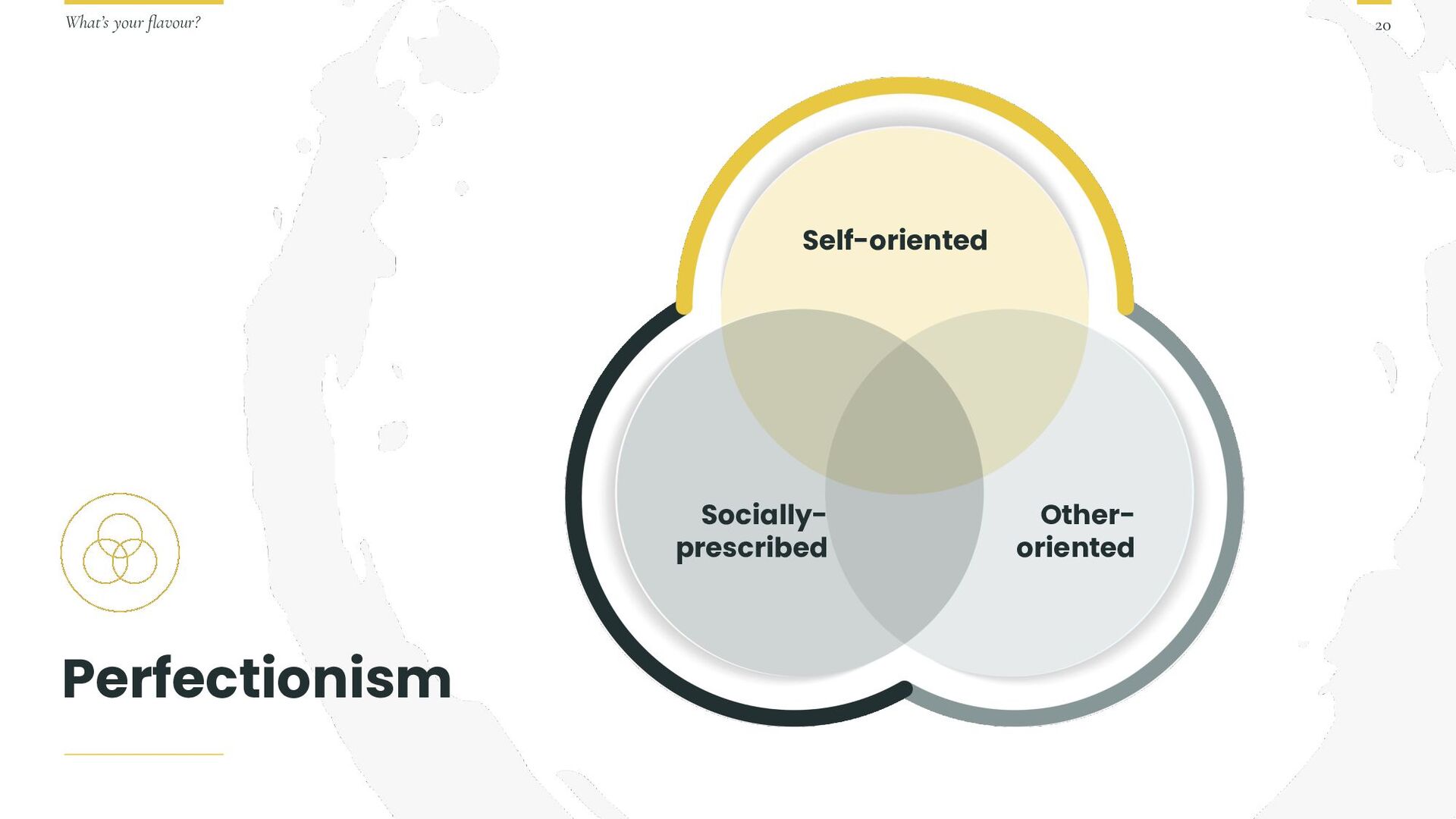
Randy Frost is a psychologist that did some research about forty years ago now, where he was able to derive these three types of perfectionistic traits in people. I have to say, working with humans, we're not as discrete and neat in terms of these categories.
We're complex, we're messy. You'll probably find you have a bit of everything. But a very quick whiz round then: self oriented perfectionism is that inner voice, the inner persecutor, the inner judge, the slave driver I've heard it called a lot of things over the years that essentially says you should be happier, healthier, fitter, richer, more successful, more socially able.
All the things that the self help books are directed at that try to hook you in to take your vice and turn it into a virtue. That's this. Right? So this is the kind of voice that berates you for having the extra slice of cake or staying up and binge watching Netflix when you know you should be doing the presentation.
That's that flavor. Socially prescribed is the one that is most correlated to procrastination. This is if you anticipate judgment, criticism from others, this is where you are likely to procrastinate. So if you are expecting a harsh response, some retaliation, essentially you're going to be found wanting in the eyes of the other.
This is where you're going to be crippled and unable to do the thing that you need to do. And again, it makes sense, right? As much as our culture would like to promote the idea that we are self sufficient, we absolutely need to be seen, heard and understood and reflected in the gaze of the other.
So it matters. We do care what other people think. And the final one then is other oriented. So I see this most commonly with parents at the side of the pitch shouting at their eleven year old children playing football, or perhaps the parents that admonishes their child for getting nine A Stars instead of the ten.
This is where we start to project all of the stuff that is often about our own kind of vulnerabilities onto others. We're kind of back in that splitting kind of experience where I talked about the one part wanting, one part not wanting. We take all of the things that we don't like in ourselves, we put it out in somebody else, we project it into them, and then we don't like that in them.
But it's important to know that socially prescribed is more likely linked to procrastination. What then is the answer and the antidote to that? I know this can sound a bit woo woo and a bit flimsy, but it is self compassion. If you think about it, I know certainly I would not want to go into an internal environment that is hostile any time I try and sit down and do a task.
So why on earth would you expect you to want to if what you're going to be met with is criticism and attack. Okay? Now, I won't go into self compassion because that would be its own workshop, but there are many ways that we can begin to nurture that and cultivate that.
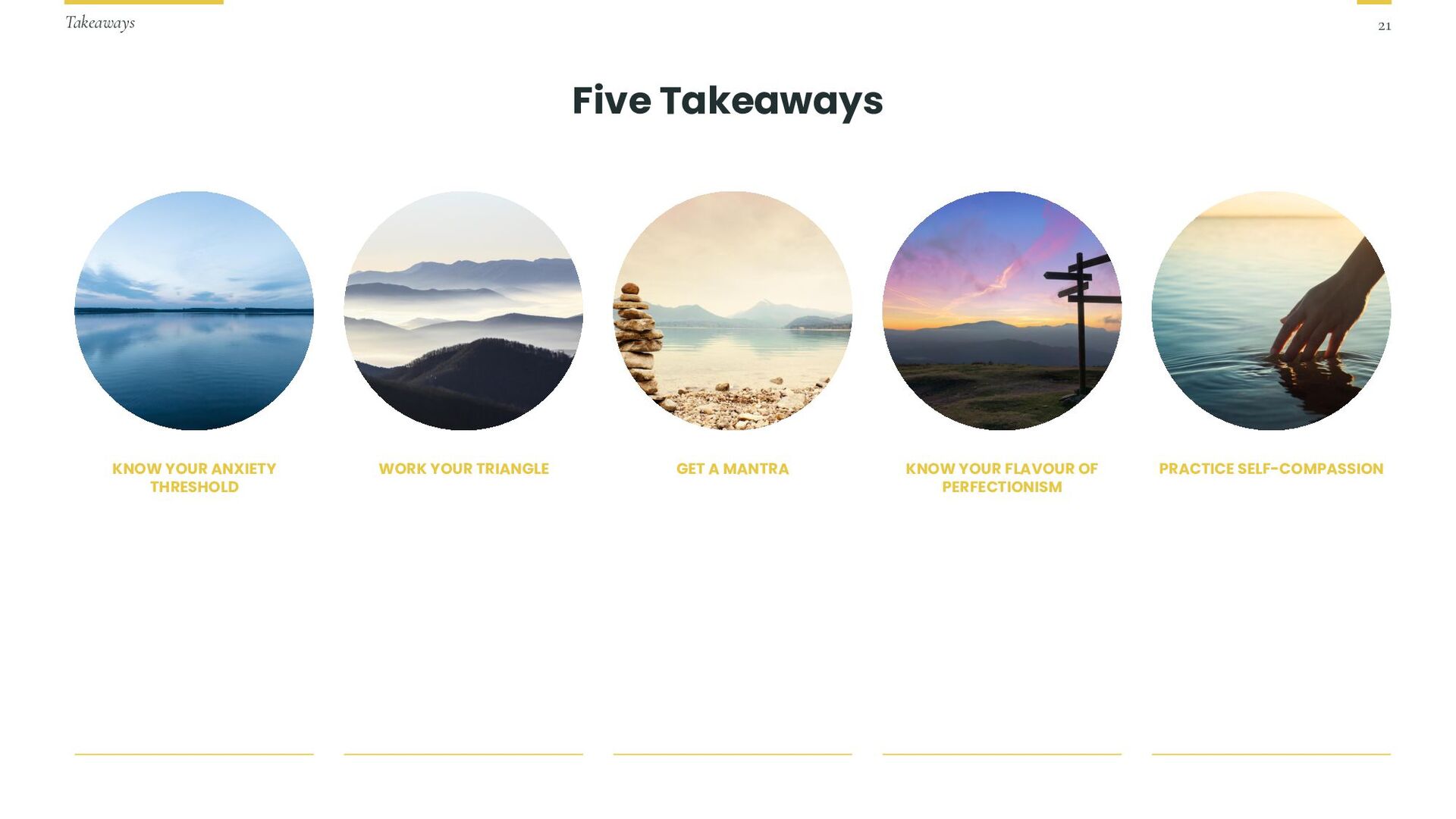
So here's a few takeaways from the session, starting with being able to know your anxiety threshold. You can't know what you need to do in terms of regulating yourself if you're not aware that you're even anxious, and most people aren't aware of how anxious they are.
They've just become accustomed to this is the way I am. Okay? Secondly, work your triangle. Spend time really jotting it out after you've had an experience with somebody. It doesn't just have to be on procrastination. I use this tool for everything. Get a mantra. Right?
Know your if X, then Y and use it as a prompt. Every time you find yourself doing the thing, you've got to sit down and start the task. Know your flavor of perfectionism. And finally, find a way to cultivate the self compassion inside of you.
Thank you so much. I really enjoy hearing from people. I'm not just saying that. My digital door is always open, so you can find me at Twitter, or there's my email address. But please reach out and get in touch. Thank you so much.