
Des shares the wins, losses, successes and failures he’s experienced working across product, growth, marketing, and support at one of the fastest-growing startups out there. This talk will cover the decisions that can make or break a product, including the product’s pricing, packaging, positioning and placement. Anyone working in marketing, growth, or product will learn the impact of these early product decisions on a business’ trajectory and how the right decision can lead to maximum growth.
← All talks 


















Lead Keynote Turing Fest 2018
What We’ve Learned Scaling From 0-25k+ Paying Customers
Auto-generated transcript - may contain errors. Tap a timestamp to jump the video.
You very much for such a warm welcome to such a beautiful city. I don't get here anywhere near enough despite it being only an hour away. Unfortunately, I spend a lot of time in San Francisco, which is eleven hours away and they don't even have a castle.
So, I was kind of when Brian was talking about what would be useful to speak about, the word the common phrase you hear a lot instead of just some version of lessons learned, which is usually code speak for, like, tell us about all the things you made a mistake of or made made an absolute balls of.
In general, I think it's hard to, like, to learn from the the you know, it's you can't build a strategy on not making mistakes. You build a strategy on actually the things that we think we got right in a sense. So as Brian just said, Intercom started in two thousand eleven in Dublin and, it started life inside actually a different product.
We had a consultancy and out of that consultancy, we built a little side product called Exceptional. Actually, any Exceptional customers here? I'm going way back a couple. It's funny. These things live on. We had with Exceptional, we had a lot of users, but being based in Dublin, Ireland, we had no connection to them whatsoever.
We I think there was a street in San Francisco where we had more customers than we did in all of Ireland to give you a sense and that's like not even a joke. So we struggled to talk to them. In two thousand eleven, there was no Stripe, there was no cool communications tools.
There was certainly no intercom. There was no easy way to sort of find out who was paying for your product and how would you talk to them. You had to do all sorts of, like, exports from your database, import it into Mailchimp or Campaign Monitor, send out emails, deal with all all inside your inbox.
It was basically a bit of a nightmare. And we had this problem because we wanted to ask our customers, hey. How's it going? What should we be doing? This was actually exceptional from way back if some of you might remember it. And we wanted to talk to our customers.
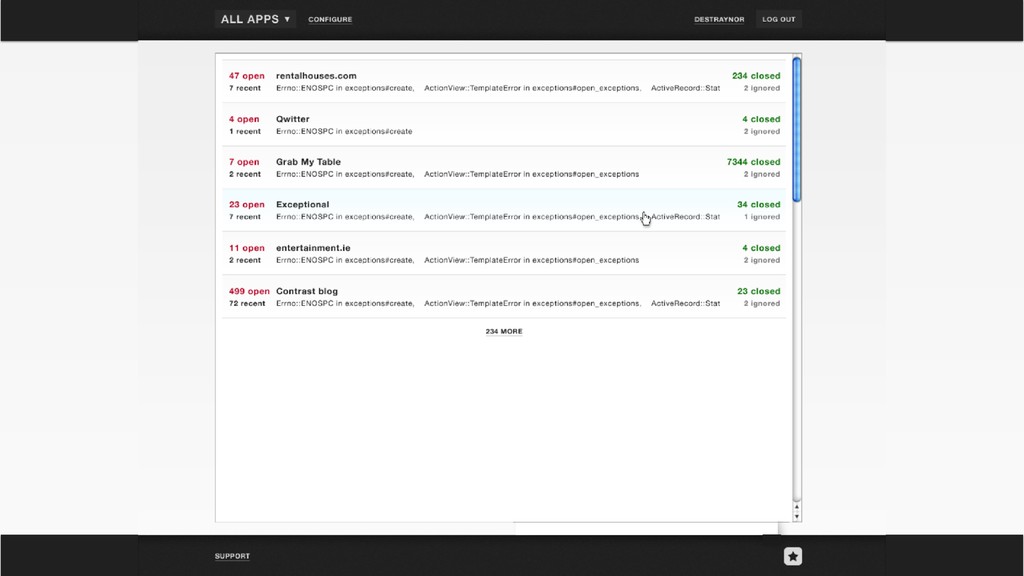
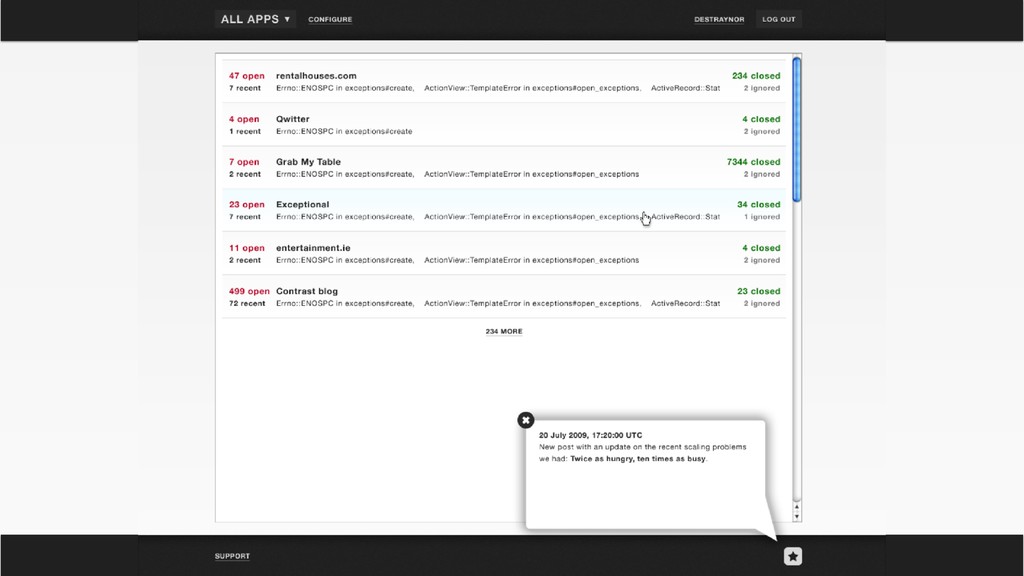
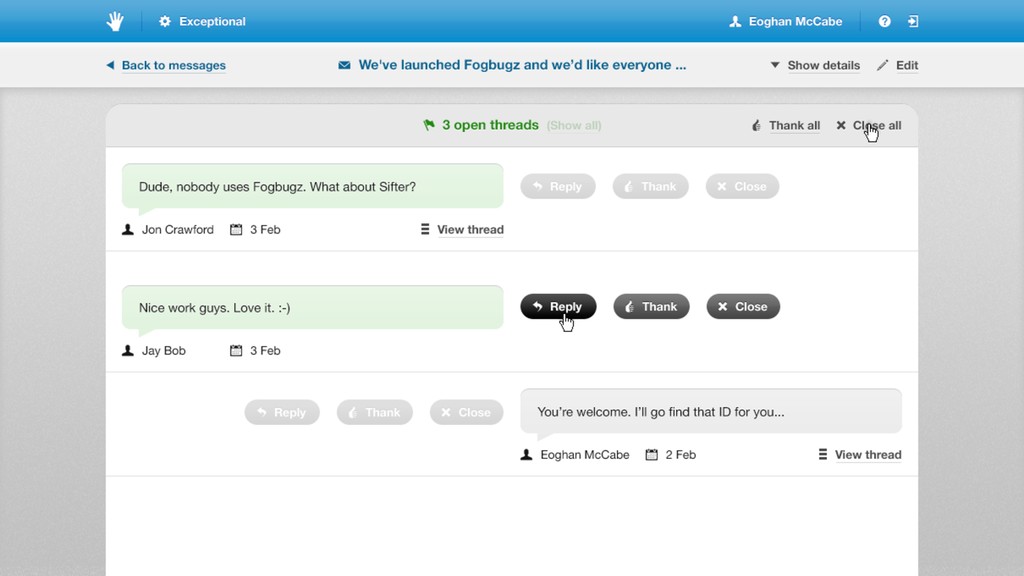
Exceptional was a error tracking tool and that's why none of you understand what's on the screen. And one day, magically, we're like, what if we talk to them inside the product? And pop, here is the first intercom message ever seen in the wild, believe it or not.
And it was kind of the the sort of the baby acorn from which, everything kind of grew. Here is early back end stuff of what intercom looked like way back when. This was cool design in two thousand eleven. You'll have to take my word for it.
But what we had built was this way to actually talk to customers who were actually inside your product and have good conversations with them. And the number one bit of feedback we got for exceptional was some version of, I actually don't really like this product, but this little feedback thing you're doing, that's kinda cool.
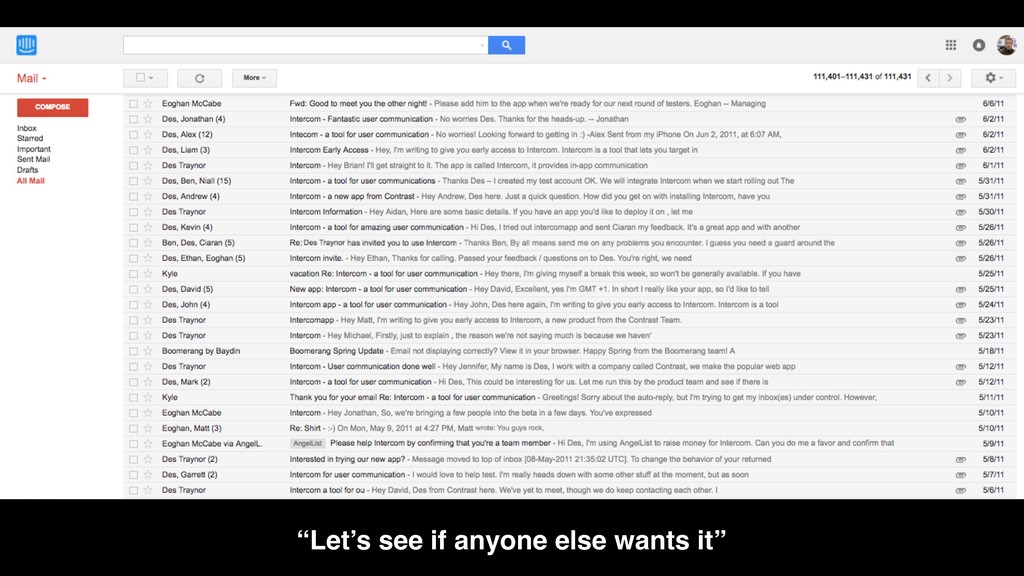
Which obviously was a bit damning of our actual product. But we're like, Jesus, everyone seems to lose this bit of feedback. So we started to mail other people. This is like page one of my intercom email. You can see the dates being twenty eleven or so.
And the general idea was, I wonder would anyone else like this? And it turns out everyone did like it. Or at least most people we mailed and showed them, hey, would you wanna try intercom? They're like, shit. That thing looks cool. Because we weren't unique in this problem.
Most people who have web businesses has no good connection to their, to their actual customers. So starting on the streets of Dublin, off we went. We're like, we had just tried to bootstrap a business from, like, the north side of Dublin, four people and had not really gotten too far in comparison.
So we thought, let's go for the other extreme. Let's go and raise a shitload of money in San Francisco and see what happens then. And, and so you fast forward, I guess, a couple of months of, like, basically being told no, being told you're taking on too much, being told we've never heard of you guys, being told I'm not a venture capitalist, why are you emailing me, and all sorts of stuff like that.
And we signed the incorporation papers, August fifteenth. So actually, we're two weeks shy of Intercom's seventh birthday. And, and we incorporated. And we started in twenty eleven and we were basically just four people, and we had a valuation which was super ambitious at the time of six million dollars.
And we figured where will we go from here? Well, today, if we skip a few steps, we're over five hundred people, five offices, thirty thousand customers, and a company is worth over a billion dollars by last round. So clearly, some shit happened in between.
And so I'm gonna talk about, as I said, the things that I think we got right. I say I think because we'll never know the alternate roads we could have gone. Does maybe a version of reality work to be worth more? Does maybe a version work to be worth less?
Who absolutely knows? So please don't take any of any of this as certainty. This is just kind of my rough interpretation of what happened. In the beginning, it's just you and your product and not like and for you know, if if, if you don't get out of this stage effectively, it may well always be just you and your product, and not even a customer insight.
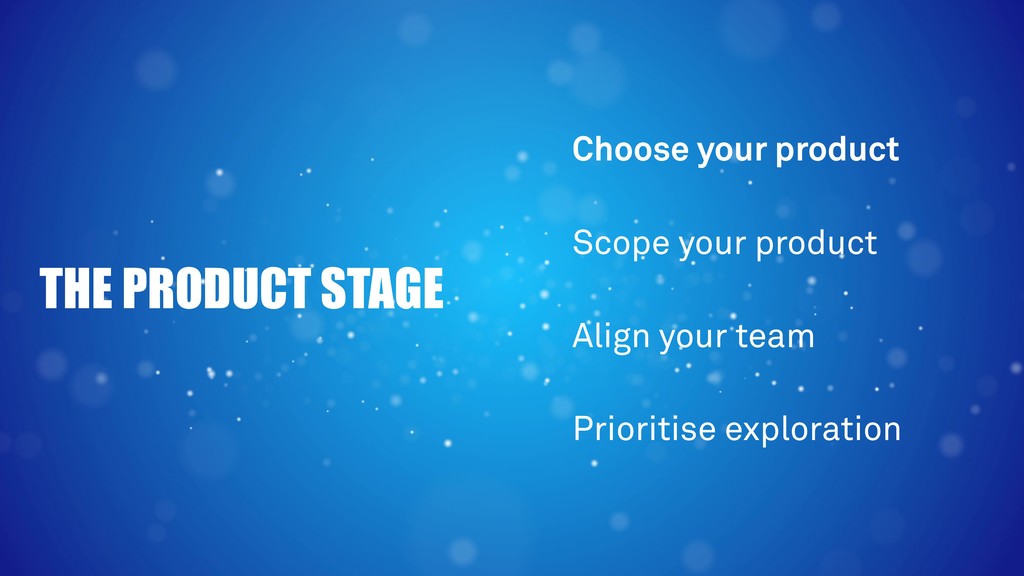
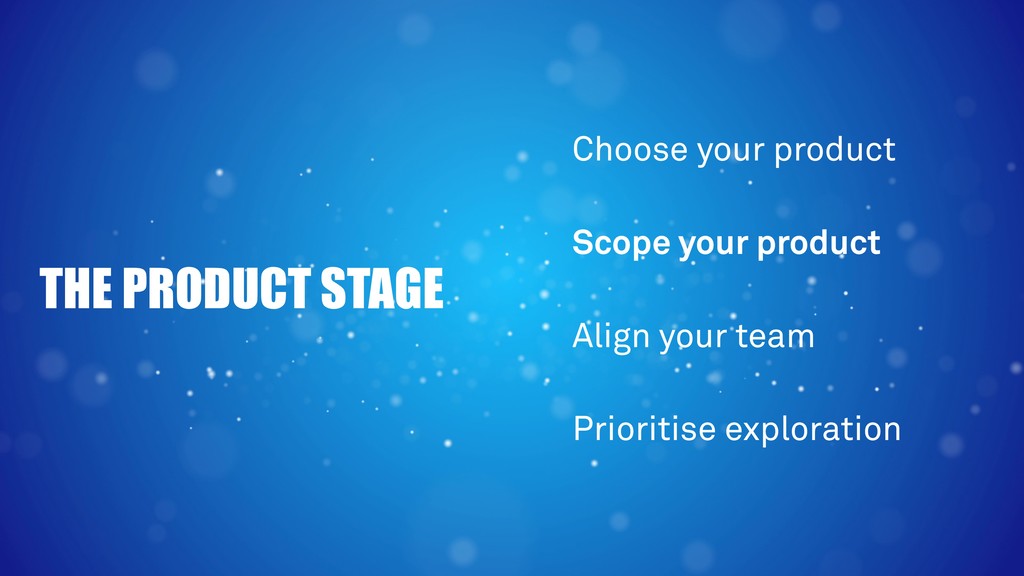
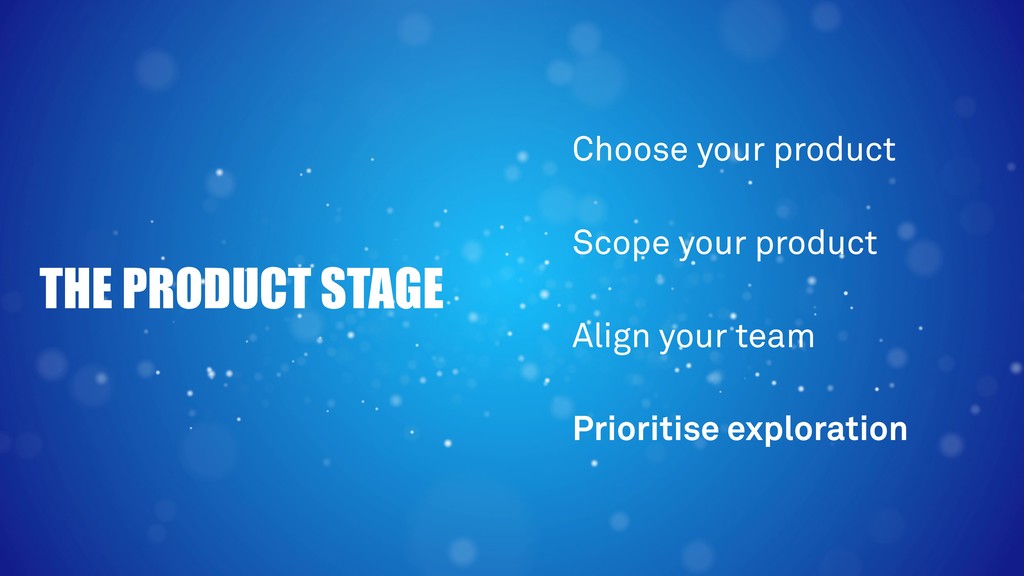
But, the product stage for us, I think, you know, there's a lot of things I could argue we did wrong and as I said, avoiding those mistakes won't guarantee you any sort of outcome. But a few things I think we did get right, were these four.
I think we picked the product space reasonably well. I think we scoped down reasonably well despite the kind of inherent size of intercom. I think we aligned our team pretty well and I think we always prioritized for exploration. And I'll just talk about these topics briefly.
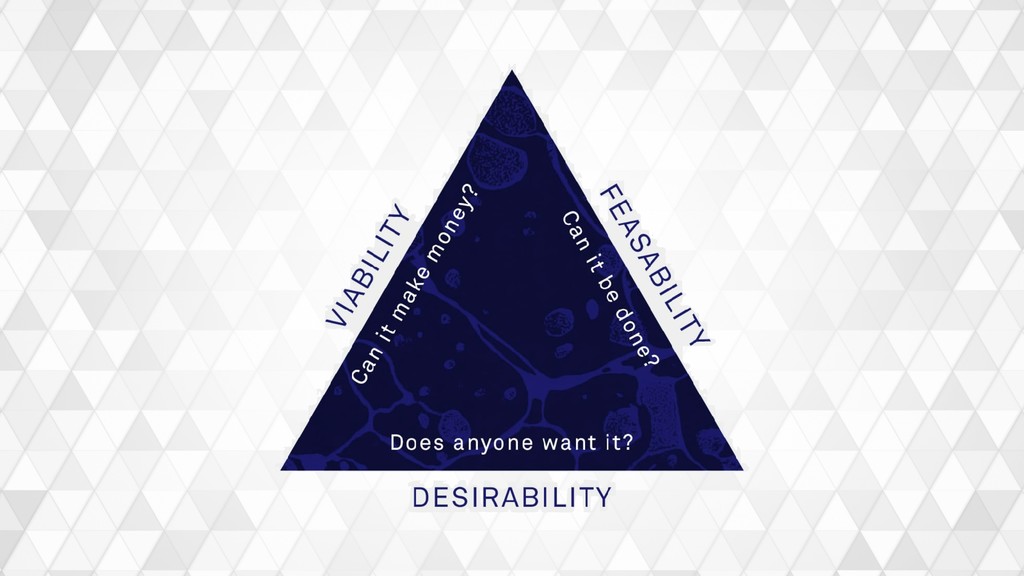
The most common advice I give young startups whether I'm investing in them or advising them or they're just asking me or they show up at my house for some reason is some version of when you're picking your product area, your product area has to be, viable, feasible, and desirable.
And that basically means it has to make money, people have to want it, and it has to be technically possible. Now, no two of these is sufficient. Everyone can want something and it can definitely be worth a lot of money. But as Cerritos found out, for example, if it's not actually possible, it doesn't matter.
Similarly, there can be cool things that people want and are possible to build but they're just not gonna make any money. And we have dozens of those in San Francisco if anyone's interested. And I could go on but the point being, you need to have all three of these ingredients.
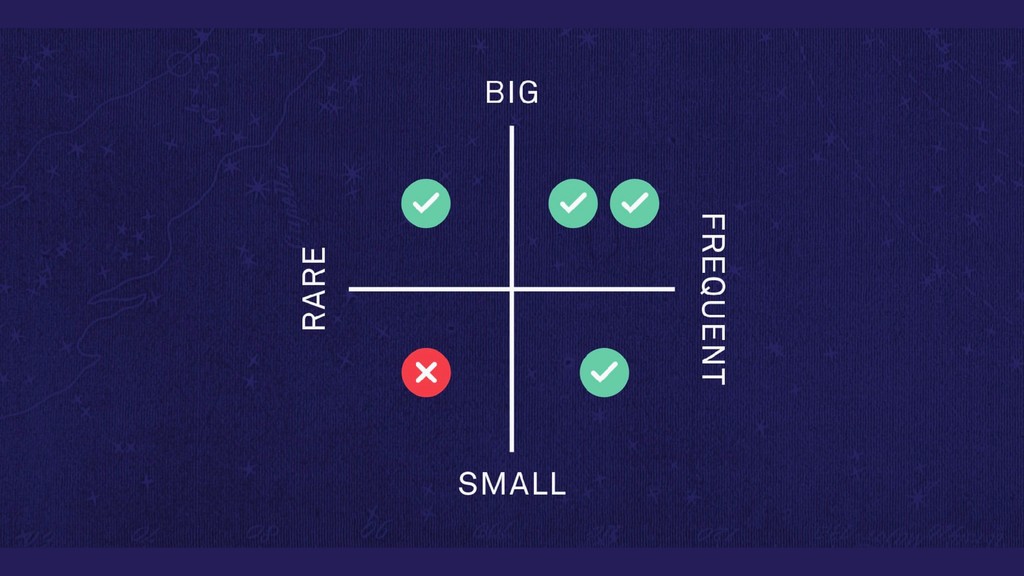
And money's a start up that's failed because they only have one or two and they lied to themselves about the rest. Another piece of advice I generally give is always try to find something that's a frequent large problem in people's lives. So problems are generally big or small and they're generally common or rare.
And the worst product, sort of ideas come from people trying to solve rare small problems. Assuming that's an inconvenience that occurs a few times a year. It's not a big enough problem so should you throw money on it to make it go away.
It doesn't happen often enough such that you can like, you know, put ads in it or something like that where you might be able to recoup some revenue. Any of the other three are great but when I look at the top right, I think like, you know, charging your customers is a recurring problem that's quite important.
So Stripe is a big company. Talking to your teammates is something you do quite often and it is pretty important that you do it and that's why Slack is a big company. And I would argue talking to your customers is an important thing to do and you should do it often and that's why I believe Intercom has gone on to to have whatever limited success we've had so far.
I do I really believe, like, you can explain a lot of start ups that have never really broken out or crossed chasms or gone from good to great or whatever your favorite book metaphor is. It usually falls down on one of these areas.
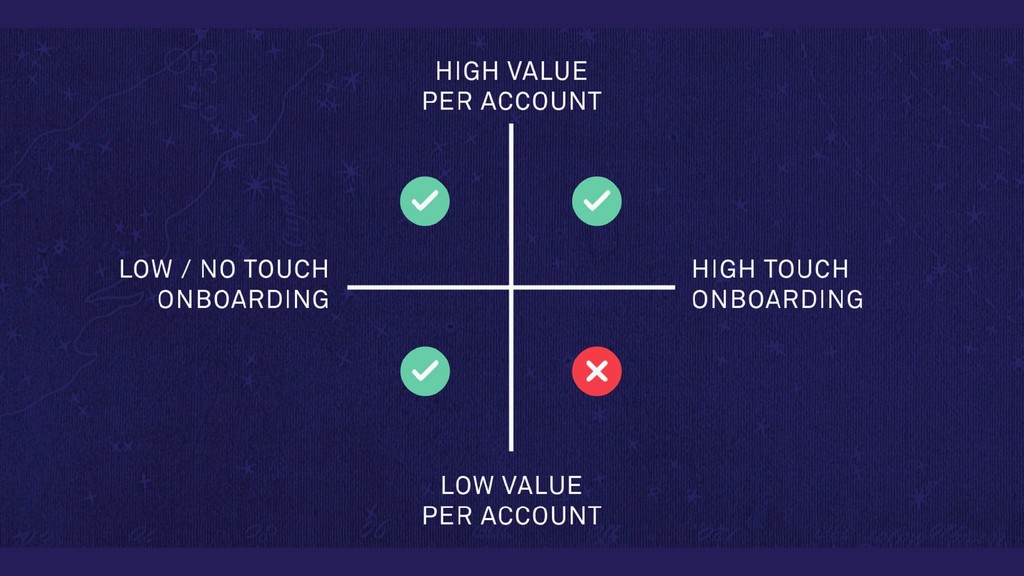
Similarly, for those of you who are consultants who are trying to turn yourselves into a product shop, this is probably the area that bites you most which is you try to build something where you're charging twenty nine bucks a month but you're spending half a day onboarding every client, and that will never ever work.
You can charge a lot of money, and you then you can afford to send out people, like, I don't know, with tool belts and shit to install your software and bring PCs along and stuff or you can charge basically the no, you can do no onboarding and you can charge them a little amount of money.
The worst world is when you're not making a lot and yet you still pay a high cost of setting people up. So the other question is just if anyone's interested, I usually try to touch on with, like, early stage founders who are pitching me on their product or, or anything like that is it's the kind of the basics of hygiene.
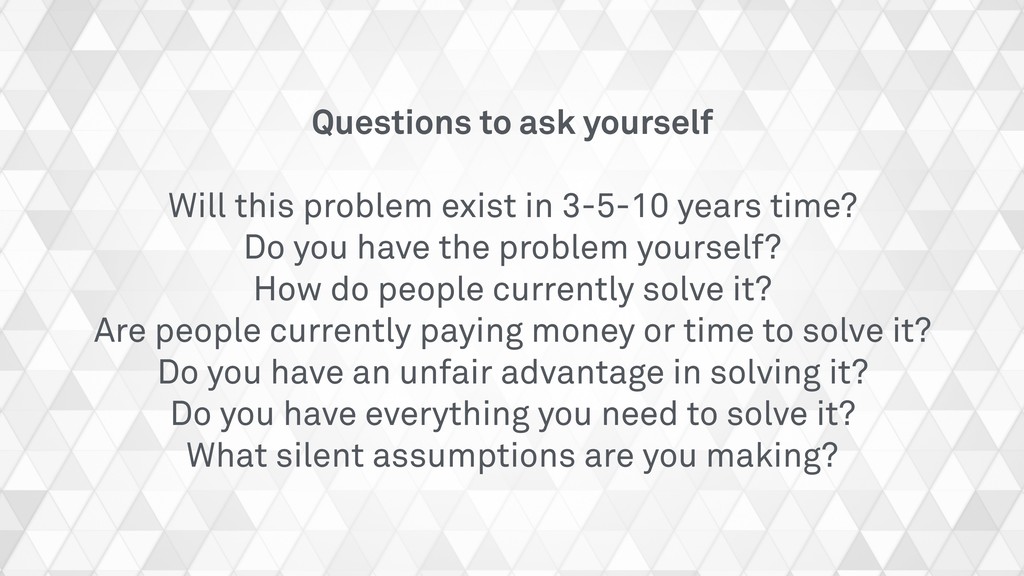
It's like, you know, will this problem actually last? So, like, I I don't know how many GDPR startups I've talked in the last year but, like, I get the impression there's not a long runway ahead of them. We've already stopped talking about it mostly except for all the effing dialogues.
But other stuff like, you know, do do you experience this problem yourself or are you just trying to be hyperemapathetic? And if you don't experience it yourself, you're gonna pay such a tax on customer research. It's it's extreme. How do people currently solve it?
Are they currently paying money for it? Do you have some sort of unfair advantage? Is there something you know or something that you believe or something you have access to that everyone else doesn't? If the answer is no and a lot of these are really worried about the actual founder market fit if you like.
It doesn't seem like it's a great one for you. So that's kind of like the the sort of the first pace piece which is just what product you pick and why you pick it. The next one is when you've actually chosen a space, how do you not end up deciding that you wanna take on every rough edge of it, every piece of it?
How do you keep the scope some way small? And we bump into this all the time because, you know, obviously, we we wanna do all the conversations between all customers and all Internet businesses. That's a lot of software to build. But in any given workflow, we see this sort of problem all the time.
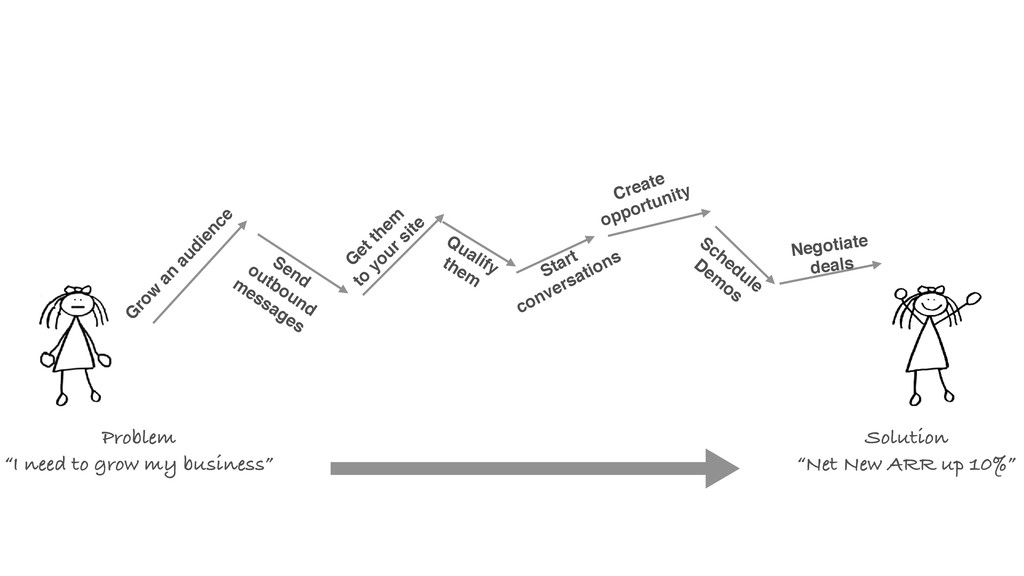
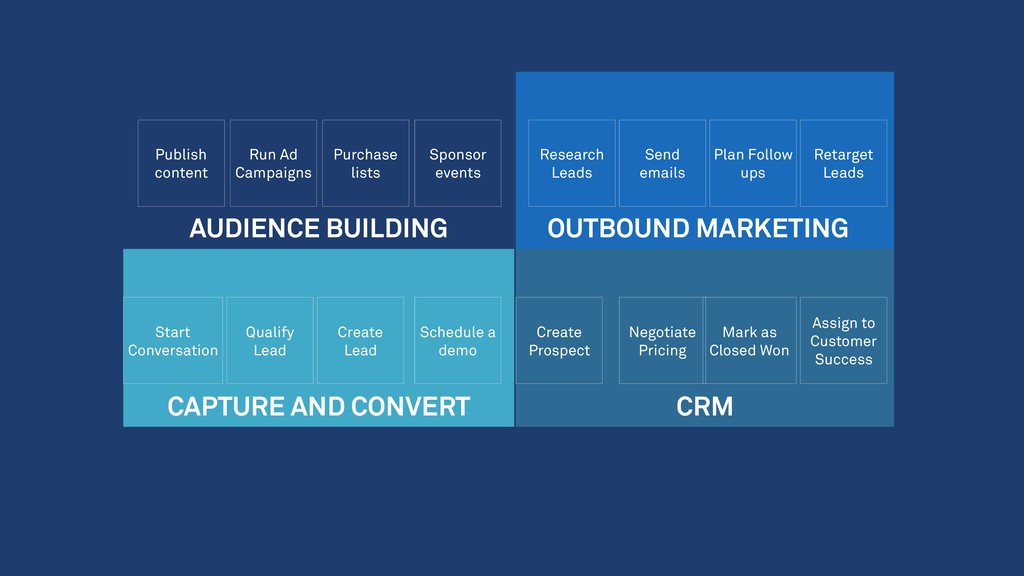
Like, here's all the steps involved in someone going from, I want to grow my business, true to my business has now grown a little bit. And we could say to ourselves, well, we need to build all of this shit. Right? So let's get to work.
We go and spec it out and that could be like two years worth of work, which is a founding team of four people with, like, half a million dollars in a bank is just not possible. So scoping, the first principle that I would say is knowing where your product starts and stops, is is just a key thing for me.
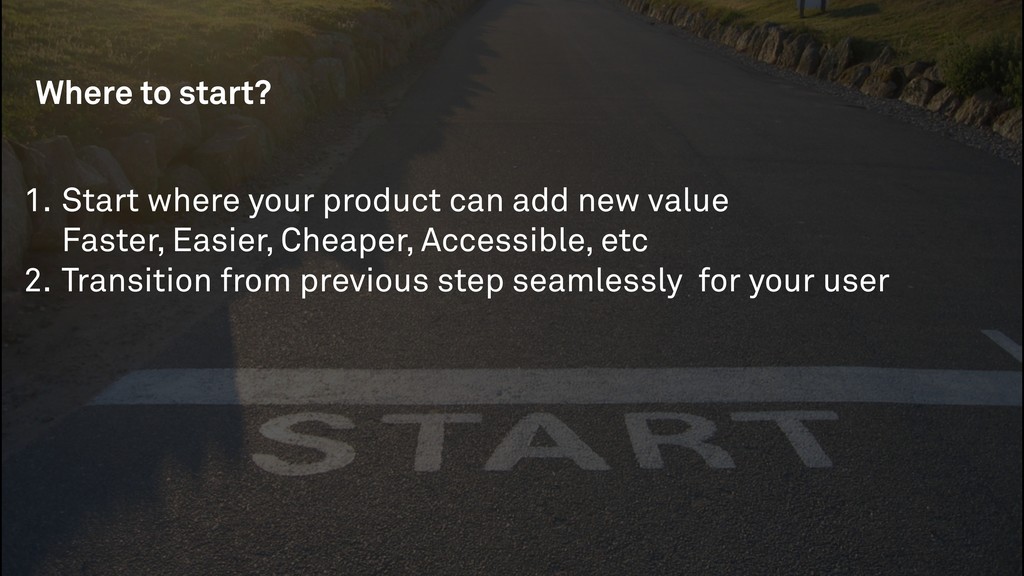
And that's true whether you're, like, a conference ticketing app or whether you're a, you know, an email client. Know the bit where you come into play and the bit where you're like, alright. That's not me anymore. That's some other product. So I generally say you should start where you can add the first piece of unique value.
And unique value usually looks like I can do it faster, I can do it easier, I can do it cheaper, I can do it on mobile, I can do it in more places, I can make it automatic. What's in what's the unique thing you're bringing to the party here?
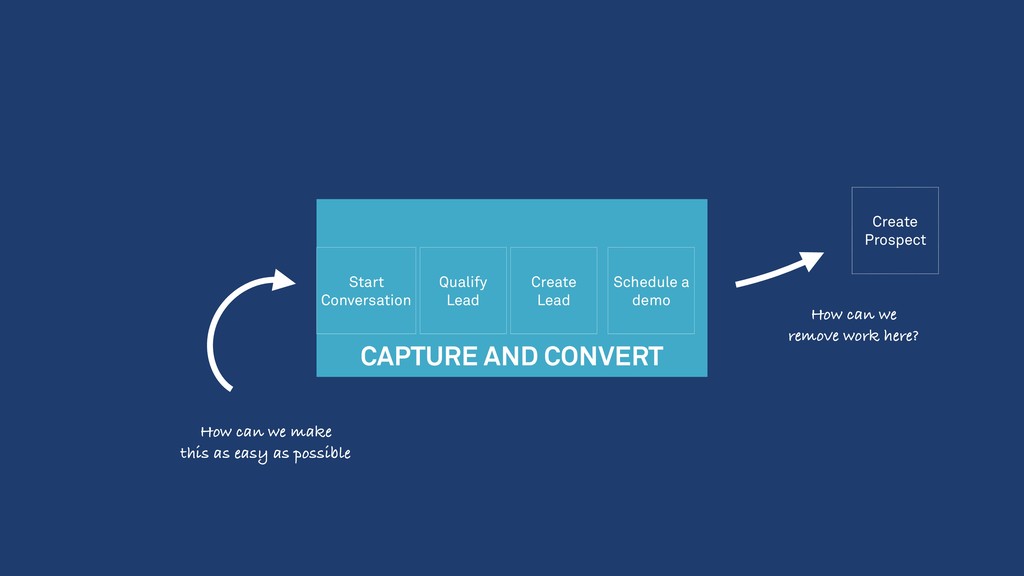
And then transition from whatever the previous step was. So knowing that the last thing they did right before was finish configuring their website, maybe we should build a Squarespace integration so it can be single click. How can we make it as easy as possible for them to move into this step?
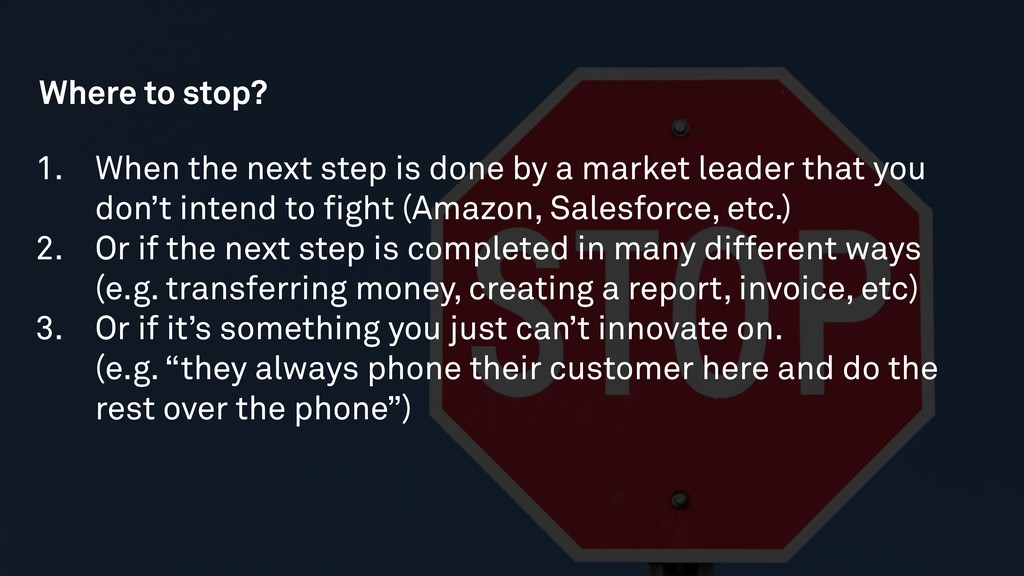
And similarly, you face the same problem on the far side. Where do you stop your product? How do you not keep building? Well, when the next step is bumping into a market leader, so let's say the next step is process a credit card, maybe you don't need to go and become a payment platform too.
Maybe you can stop there. But there's also more subtle if the next step is like send an email marketing campaign, maybe you don't need to take on Mailchimp or or Intercom or whoever. Maybe you can just integrate at that point and make it really easy for people to move seamlessly across your product.
Or similarly, if it the next step is very divergent. You'll see a lot of this, if your product involves, like, say, payroll processing or taxes or anything that's got to do with specifics of a country. It's done you know, there's about a hundred and ninety six countries in the world and there's about a hundred and ninety six different ways to do payroll.
So if you wanna build all hundred and ninety six of them, great. But guess what? Your customers are already somehow managing to pay. So, you you they'll they'll work it out themselves. So you could just integrate with your existing solution. It might be a lot easier.
And lastly, if it's just an area you can't innovate on, I've seen startups be like, so normally, here's the sweet thing this. At this point, they normally ring the customer. So we're gonna build VOIP. I'm like, you could just let them ring the customer?
Like, it doesn't that's not necessarily a a must have feature? What this usually looks like, in practice is if we take the previous example where you sort of we can step out every single thing that happens here and we can conclude, well, this is the scope of our product.
To which I'd say wrong. Actually, that's the scope of four products and we wanna pick one product. We wanna pick the subset where we can uniquely add value. And we wanna work out how do we get them into the first step as easy as possible and how do we integrate with the last step?
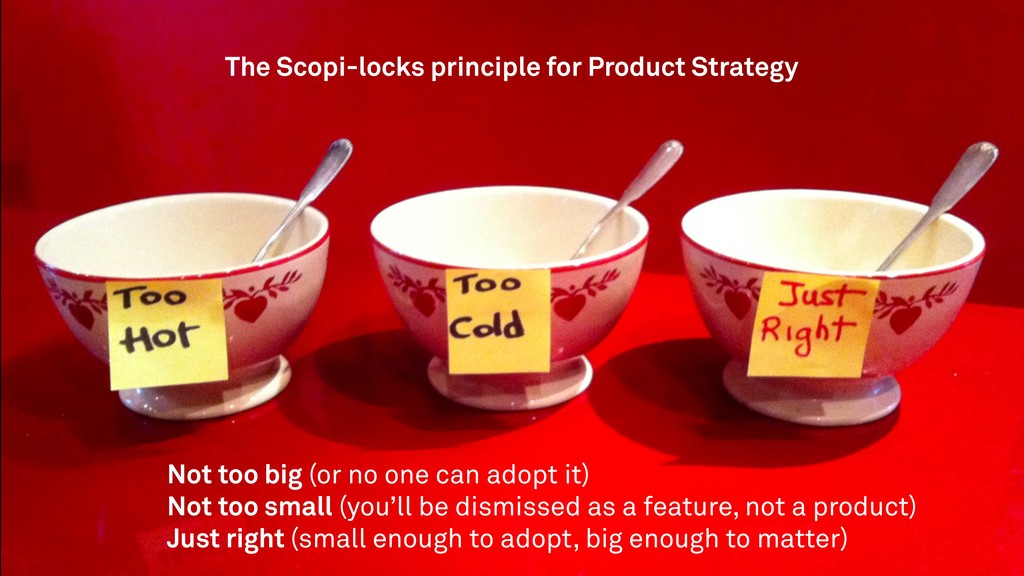
How do we integrate out of the last step as easy as possible? That's how you pick a scope for a product. That's how you don't spend three, four, five years just adding on yet one more feature for one more fictitious customer. And, and when you're doing this, the other thing that's really important is to obey what I've called for ages the, the scopey locks principle if you like.
Pick no scope too big because then no one can adopt it. You're trying to do everything for them and they just really want one little thing. No scope too small because then you're just not worth adopting. That's like, why would I add yet another piece of tech to my stack?
If you find a scope that's just right, it's the right amount of software that fits the reasonably decent sized problem that they actually have. And then when you're actually in in the build, the other principle connected to Scopi locks and porridge is cupcakes.
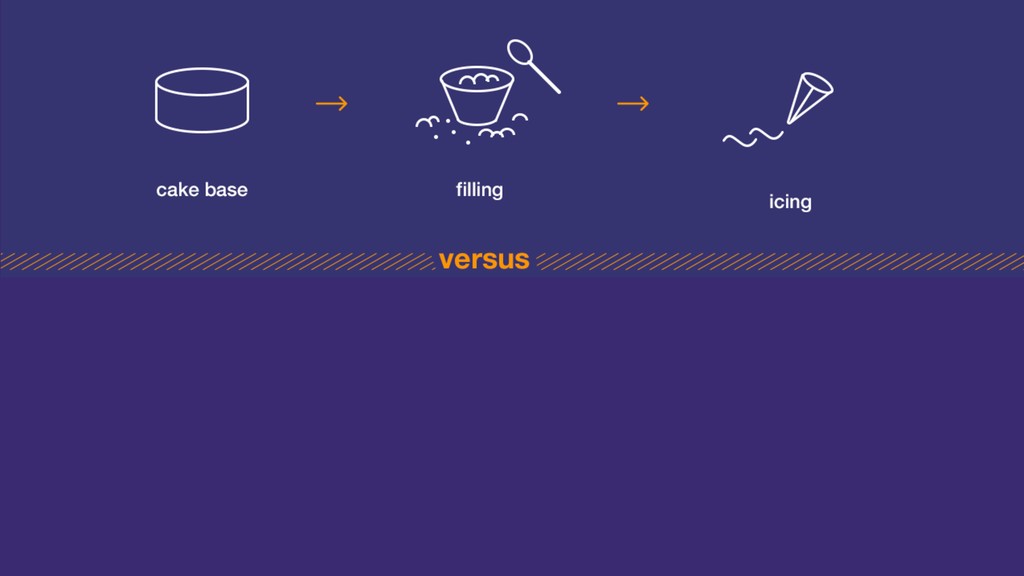
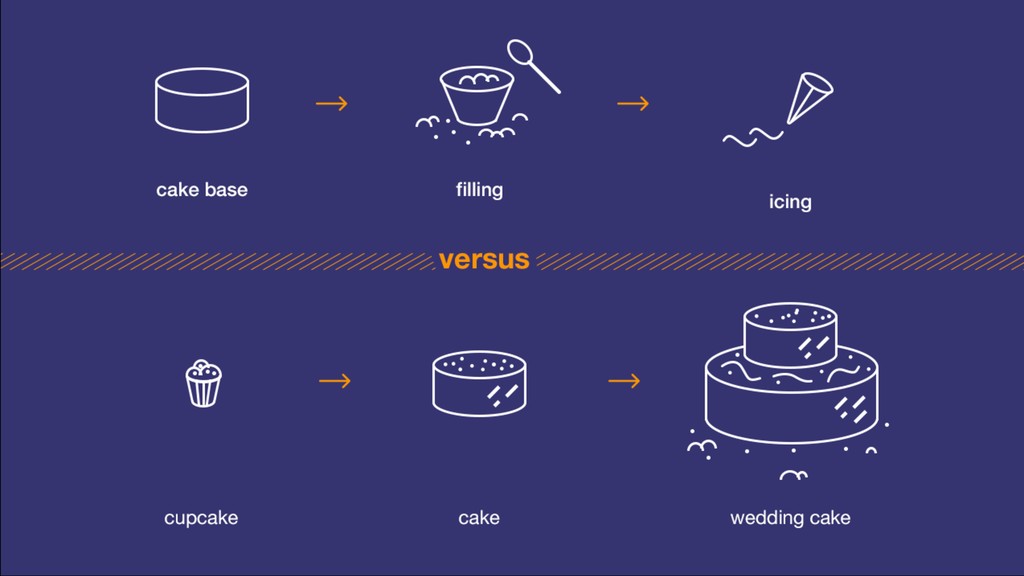
I am always telling people follow the cupcake principle. And that basically says two things. There's two ways to make a wedding cake. One way is you can make a cake base and you can work away on that for quite a while, then you can make your icing.
And lastly, you can do your filling and you put it all together and you're just about to get married and you taste it and you're like, Jesus, chocolate, carrot, and vinegar is not a good flavor. Or like the oven doesn't work or something like that. Right?
And, and I guess what you've done there is you've put a massive amount of investment with zero feedback. Right? Another way to do this would be to try to build a cupcake. And that's a great time to find out the chocolate and carrot and vinegar doesn't work or that the oven is broken or you don't actually have the ingredients.
But when you get that right, you can build a birthday cake maybe. And lastly, you can go and take on the wedding cake. So when you have scoped, I always encourage people to find that spike, that sort of single piece, that single thread that kinda connects all your assumptions together and make sure that you're not about to bump into something that's absolutely a show stopper.
And that's basically what you need to do to scope. That's something that we've always like, as I said, Intercom is a large amount of software but we've always tried to find these, like, single, sort of little cupcakes of value that we can throw out into the market, see if they get eaten.
And if they do, then we're like, right. Now we can plan something big way based off of this. A third piece is as you add people to your product team, and arguably this is one we got as wrong as much as we got right, it's so important to keep folks aligned on basically what it is you're trying to do.
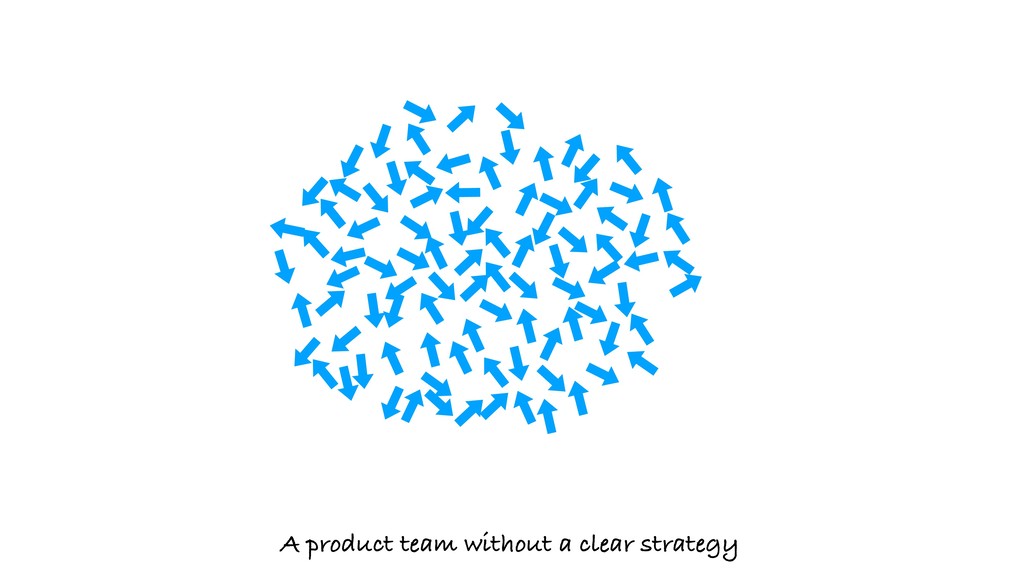
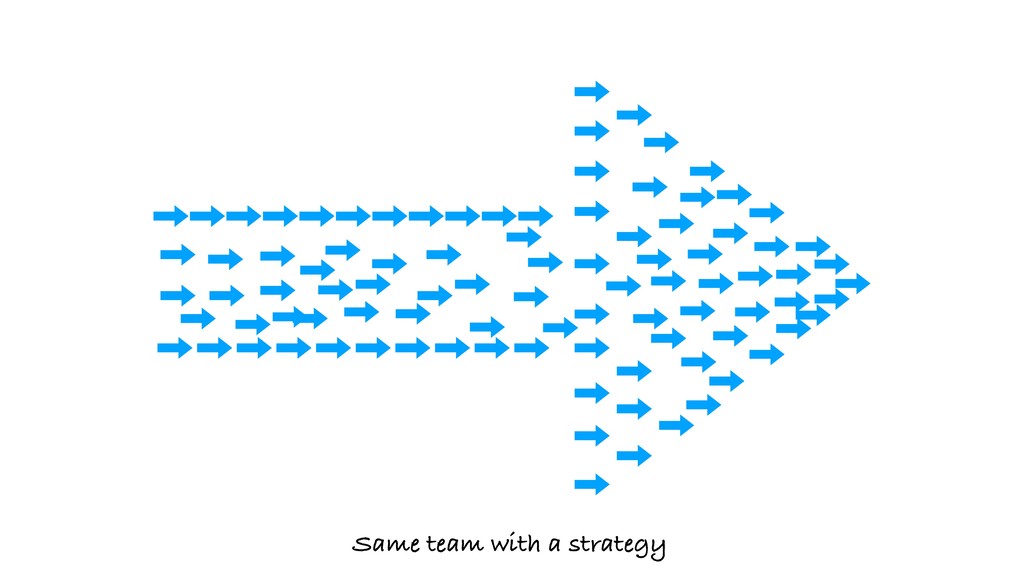
If you ever wanna see what a company that doesn't really know what it's doing looks like, it's basically this. Every one of these arrows is somebody probably doing good work just when you add it all together, it nets out at about zero. And what I've always encouraged people to do is get everyone on the same page so you can actually get this effect.
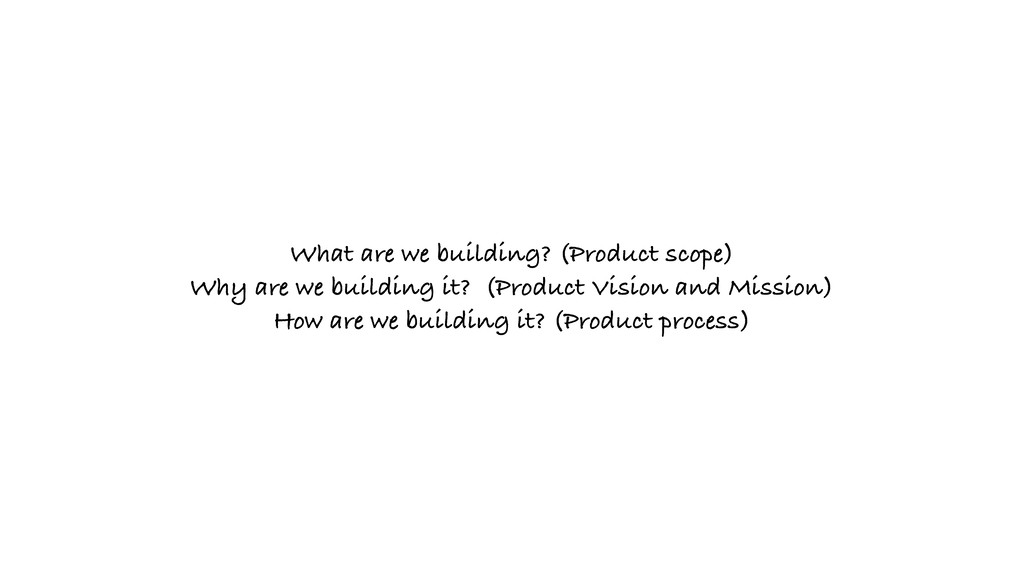
You can get everyone kind of pushing in one direction. And what that alignment usually looks like is having everyone have very clear answers to three questions, have very clear answers. This is true across your entire company. I'm talking here in the context of product but it's true across the entire company.
Three questions from here. What is it we're actually building? What is the product scope? What are the walls? What are the boundaries? Why are we doing it? What is our vision for the future and what is the mission for this company? What do we actually believe?
And what like, you know, visionary companies have a vision but they also make it happen. So what is it we actually believe? And then lastly, how are we gonna go gonna go about doing it? What's our process? How do we work? What's our attitude towards all the basics of work hygiene from, like, are we a work from home remote company or do we show up at our desk at nine AM and do scrum on agile?
But you need everyone to be aligned around those three ideas. Otherwise, you will not get the sum of all the people you employ and it's such an important concept. But I see so many companies when they move like, your founders generally tend to be naturally sort of aligned because that's what brought them together.
Oftentimes, they'll fall out, you know, that usually take takes care of itself. But after you hire a few people, it's the first time at which you kind of, you're likely to just, Hey, well, we showed him where his desk was so we presume he knows what he's doing.
Or like, Hey, she showed up and like, I told her to do marketing and we'll see what happens or whatever. Or like, Hey, I hired this whole team of engineers and then the manager of the engineering team, she came to me and she said, Hey, we wanna build an analytics product.
And you're like, Well, we're not an analytics company. This sort of stuff happens and it's so easy to kinda make these concessions early on but it it all comes down to the fact that you probably did a really shitty job bringing people into your company.
It's not their fault, it's yours. Right? And so you need to actually align people so that when they start, you this is so much more important than showing them where their desk is. Tell them what the hell they're doing, why they're doing it and how you're gonna go about doing it.
And the last piece in product is I think this is an important one in kind of life in general but, it's this idea of prioritizing exploration. So most, processes that I see in in software but also in life, they tend to make some grounding assumptions because you need to.
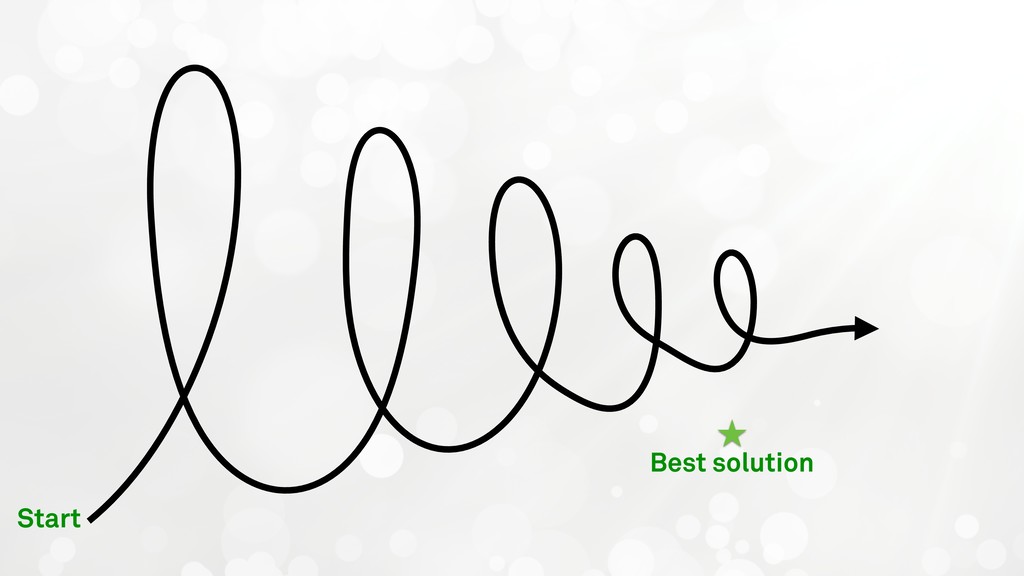
Like, let's assume x, y, and zed and then we we have a sort of stab at our first solution and then we say, well, we're gonna iterate from there. And we iterate and that's what iteration generally looks like. Alright? We we kind of repeat, rinse, re wash, go again.
And the problem is you're always carrying the exact same assumptions you made at the start. They have incredibly biased you about whatever your first sort of stop was and like it's really, really hard to unlock or to like iterate from what's fundamentally the wrong idea onto a great solution or whatever.
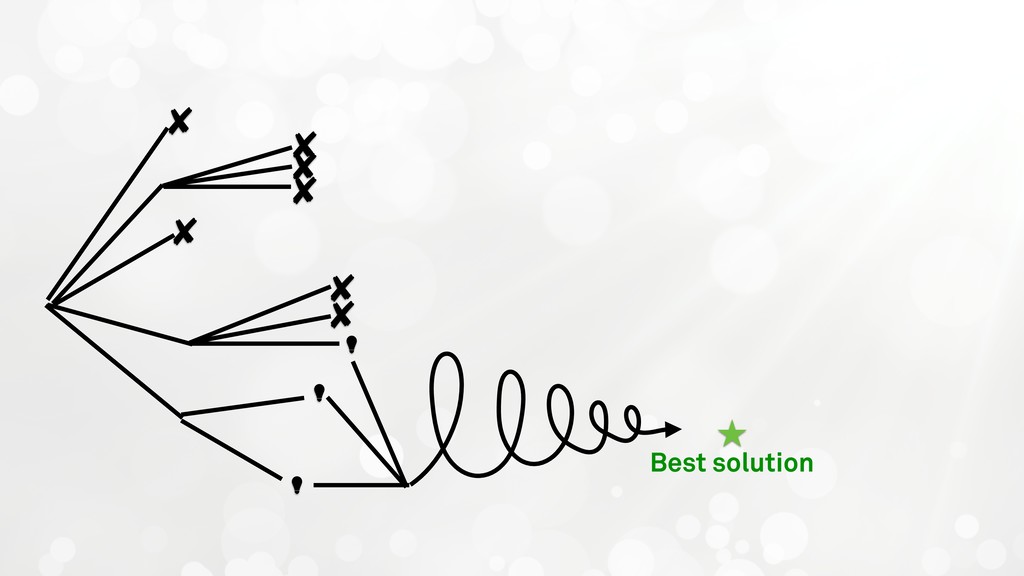
You can actually you can go really wrong and you can piss away a lot of time, money and people's careers doing so. What I encourage people to do and we've always tried to push for an intercom is exploration. And exploration looks like, well, we'll try a few different directions at this point and we'll find out, well, that didn't work, this doesn't work, this doesn't work.
This is all good stuff. This is all learning. Right? You're trying ideas. Some of them are working, some of them are producing maybe a a sniff of value. You're like, oh, well, we can probably take that into a solution. And eventually, like, you get smarter every step of the way and then you find your area and then you're like, right, now we know a little bit about what's out there, let's iterate from this point.
And I think it's such a stronger way to actually explore the solution space. You've picked your problem. You scoped it well. But I think it's it's really important to kind of understand this. This mindset, I think, is is kind of has to flow through your company especially early on.
Otherwise, you can get one thing wrong and it can bury you for like years because you just aren't willing to question it in some sense. So we've done a shitload of things in product. I'm only really talking about the things that I think I would do again.
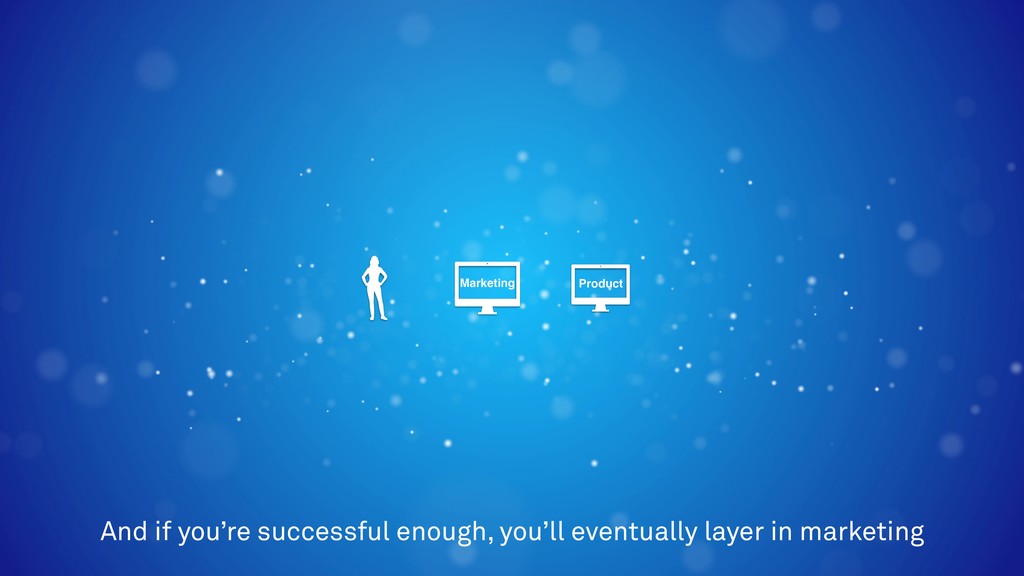
Right? There's been loads of mistakes along the way and if I get drunk enough, we can talk about them later. But, the sort of the next big phase of Intercom where, again, I'd say I'd argue we got plenty of things wrong, is once the folks in marketing show up.
Anyone here in marketing? Some of my best friends are marketers. So so, I say all that but as Brian said, I actually did end up, running marketing for two years in intercom so the mistakes are all mine and I give all the credit to the team for anything we did get right.
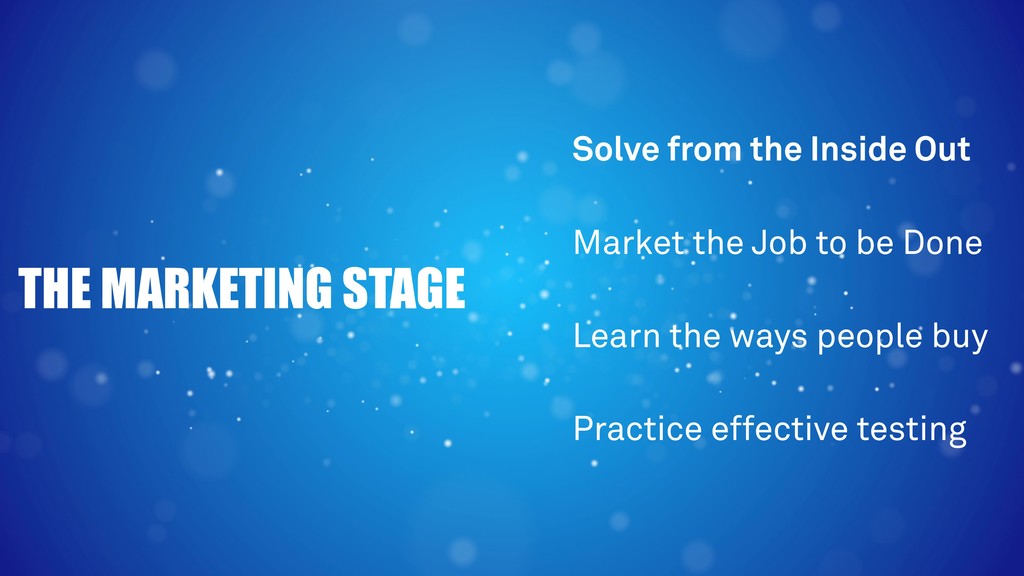
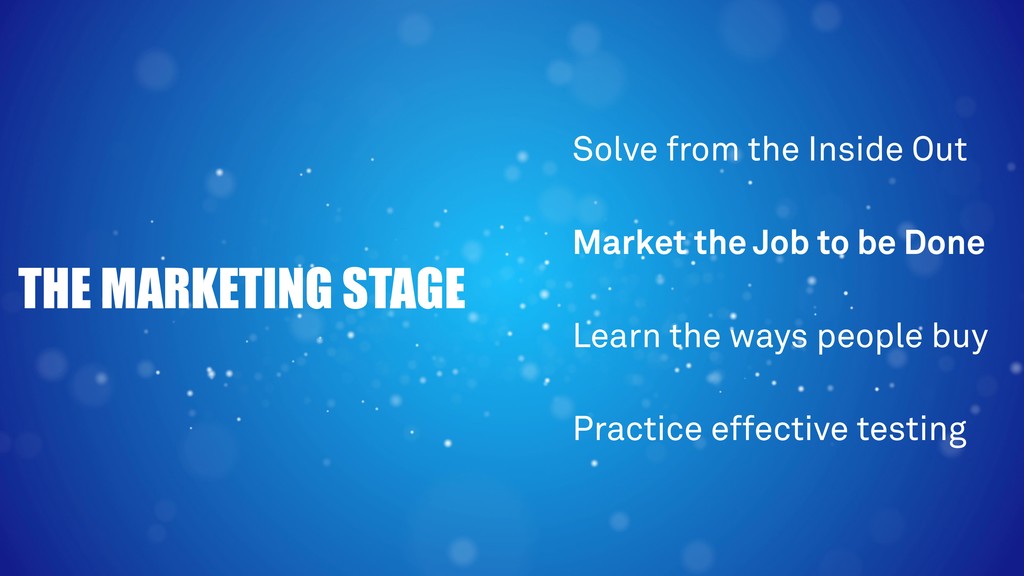
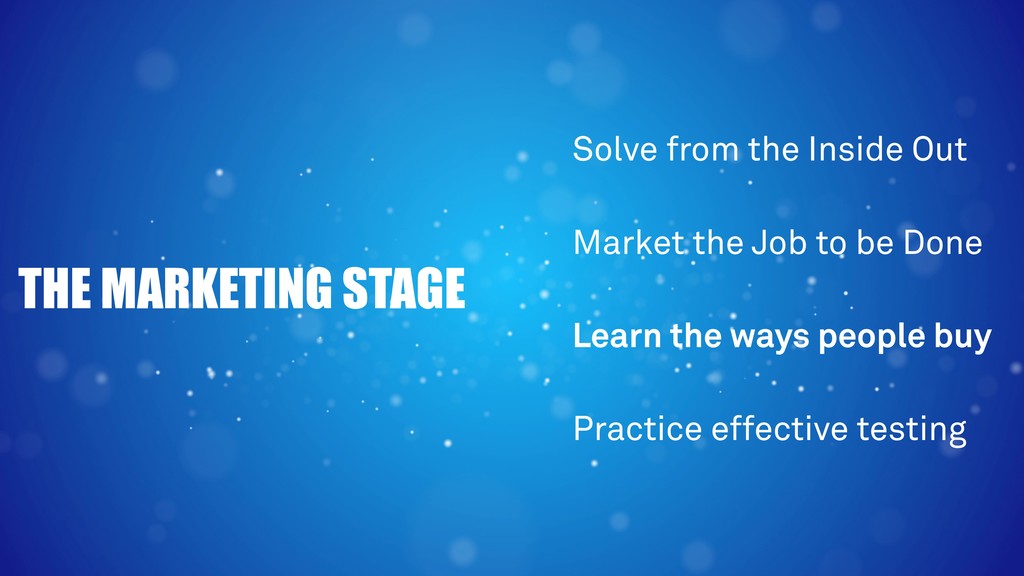
The, the marketing stage of intercom, I think the stuff we learned to get right eventually, is these core ideas. First and kind of quite importantly, starting from the inside out. Secondly, marketing around the jobs we're doing and I'll talk about what that means in a bit.
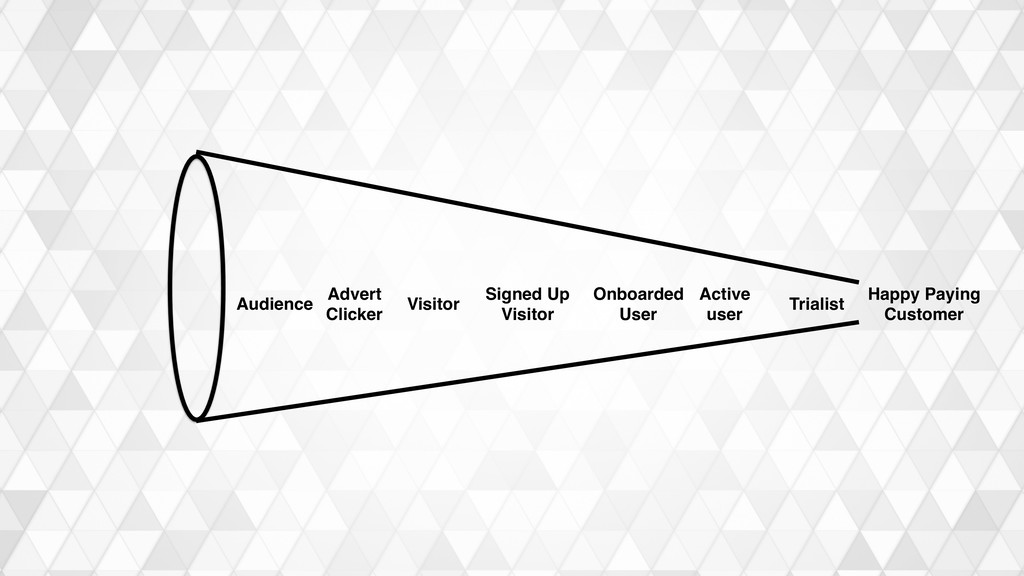
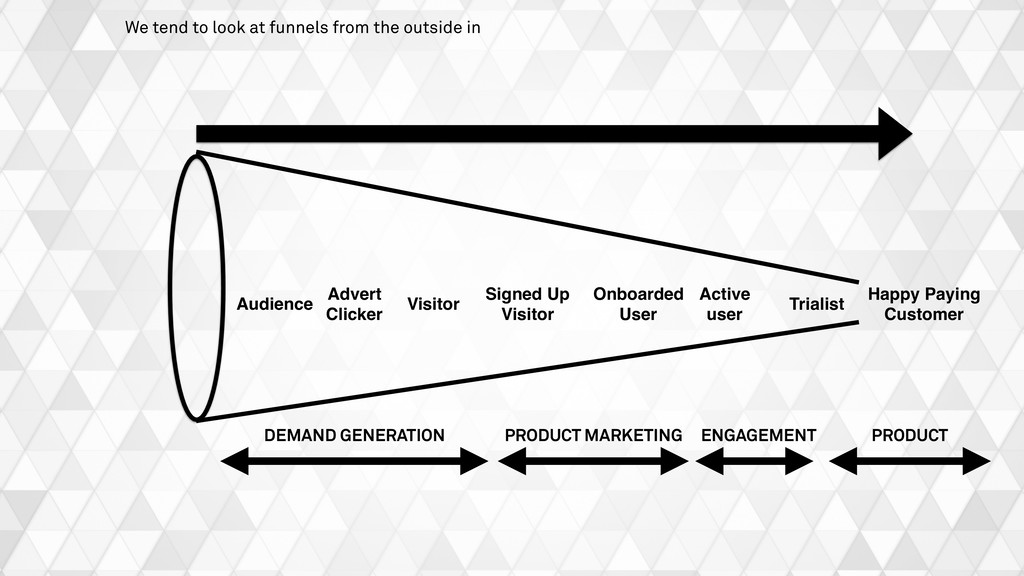
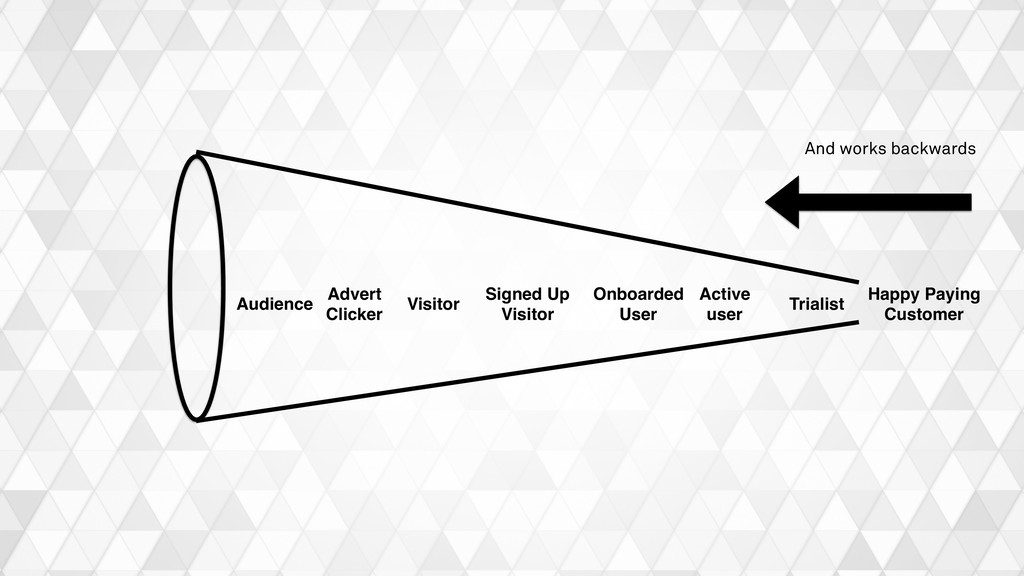
Learning the ways that people actually buy your product has really unlocked a lot of growth for us. And then, practicing effective testing and we'll talk about each of these. So first of all, here's like ye olde funnel. Right? You've got like somebody who's never heard of your product then they click an ad, then they visit your website, then they sign up, then they get onboarded, then they become an active user, start a trial and then eventually, if you've done your job right on the other side, pop,
a paying customer. Hopefully, they're paying more than nine dollars a month. But, most people look at this ye old funnel and they wanna attack it from the left to the right. Okay? We tend to look at funnels from the outside in, so which means we move from demand gen through to product marketing, through to customer engagement, finally into product.
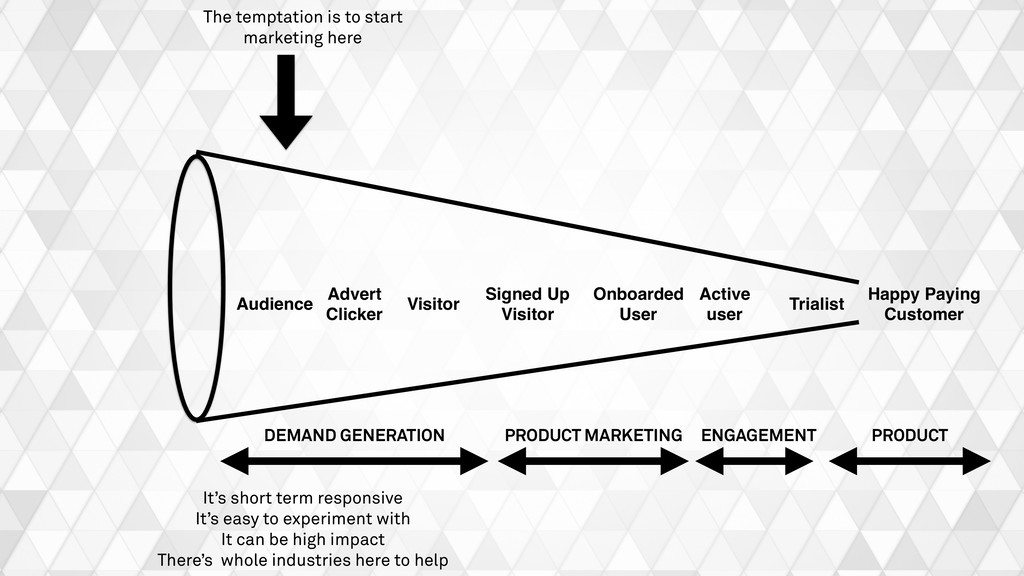
And there's lots of reasons why we tend to do this but first and foremost, I think it's because it's very short term responsive. You if within a few clicks, you can have a Google AdWords campaign live and then you can stress over like, well, one ad says free and the other one says now.
And if we change the free to it now, we might get twice the conversion or whatever. And, like, it's easy to kinda you feel like you're doing work. You're you that actually does feel like progress in a sense. It's very responsive. You'll get data within days and actually it's very high impact in that if you're doing this right, it is a big lever like being able to drive an awful lot of traffic to your site assuming everything's good and everything's set up well.
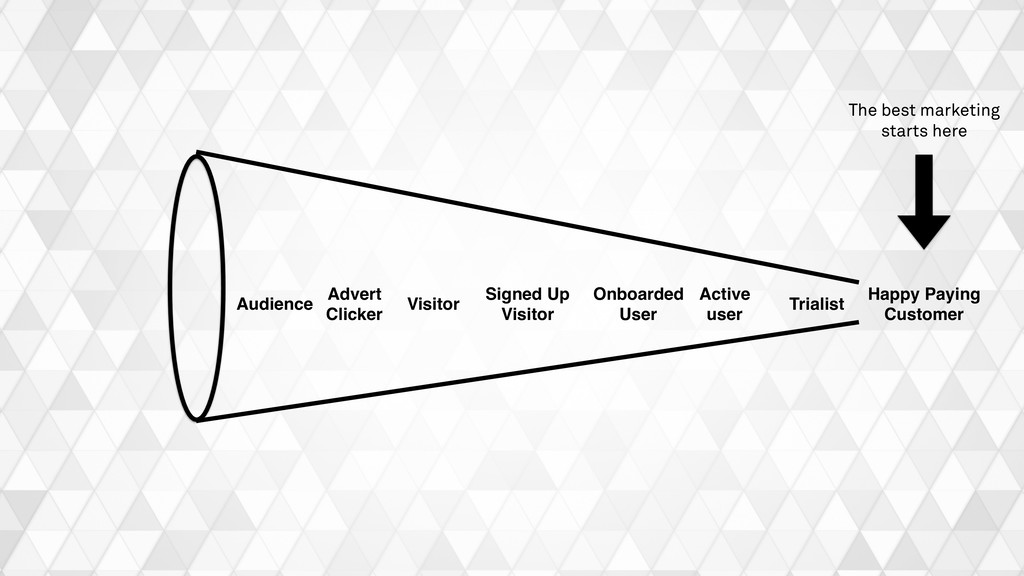
This whole industry is here to help and there's a lot of, like, snake oil being sold of like, we're gonna double your traffic. You know, all of that junk will be thrown at you. What I'd say is that the best marketing, I think, starts over here and works backwards.
And that means you look at things like, are your happy customers genuinely happy? And if they're not happy, what's the point in filling up? Like, you you don't want more customers when your product is pissing people off. You're actually just getting bad evangelists.
And it'd be like having a restaurant where the floor is covered in dog shit but it'd be like, hey. But there's like six hundred people coming in. You're like, get them out of here. You know, it's not a good idea. Similarly, like, if your trialists aren't actually buying your product, you don't want more trialists right now.
There's something wrong with your business model. Either they're not hitting your usage limit or they don't they only need it for ten days and you're putting them on a fourteen day trial or something. Similarly, if active users aren't starting a trial, that's the exact same problem back a step.
If onboarded users aren't becoming active or if your sign ups aren't getting onboarded or if your website visitors aren't actually even trying to sign up, these are all problems. The thing is it's a lot cheaper to start it from this side and work backwards.
It just takes more time but that should be okay. It should be okay because actually, if you like, there are very rare is the product where everyone absolutely loves it and the only problem is they just couldn't work out and tell everyone. It's actually, you know, everyone loves to believe that they have that problem.
It's usually not the case. So I think we obsessed a lot. What this looked like for us primarily was product marketing. It was actually this idea of taking a visitor through to being an onboarded customer and, and I think we we put a lot of time into that, frankly, to the expense of learning how to do demand generating activities beyond, say, content marketing or the few bits and pieces we were known for.
But we were never very good at running advertising campaigns or anything like that and, hopefully, we will get good at them. But I think we obsessed in an area that was very ROI positive, albeit with a sort of longer feedback time than say running an AdWords campaign.
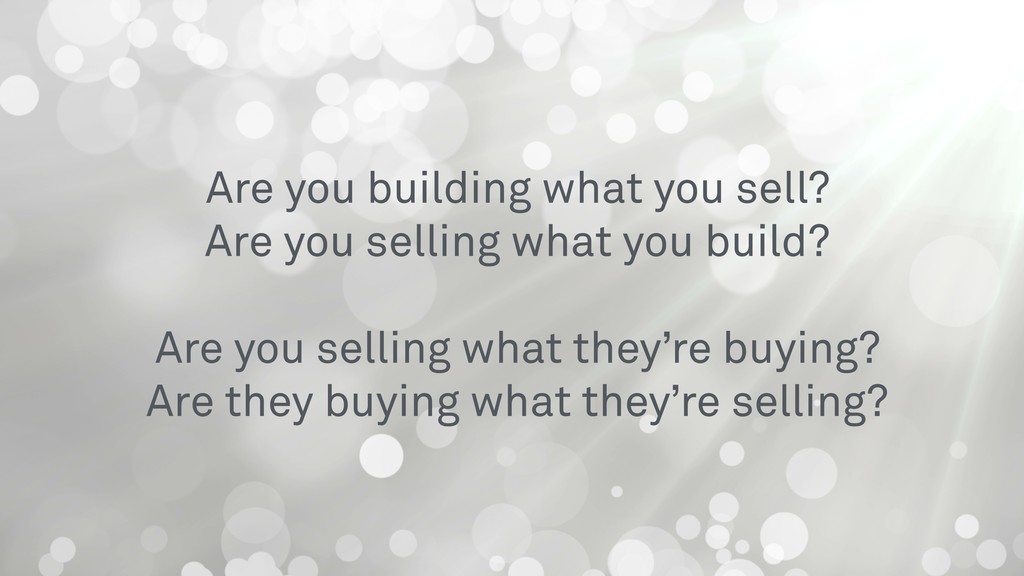
I think what the product marketing investment looked like for us was marketing the job to be done and I often ask customers or, sorry, clients these, couple of questions which is like, are you building the thing that you sell and are you selling the thing that you build?
And that's usually a good measure of to what degree are your product team connected to your sales team and or your just customers in general. Like our COO, Karen, always says, build what you sell and sell what you build. And if if the two one of those is out of the loop with the other, you're adopting this world of pain inside your company.
Similarly, are you trying to sell the thing that they're buying and are they trying to buy the thing that you're selling? It's basically the same question but customer facing versus inward facing. And the key point of that is, like, Theodore Levitt has a great quote which is, the customer rarely buys what the company thinks it sells them.
And I think there's, like, there's wonderful depth to that because oftentimes people lose themselves in saying, Well, we're selling enterprise solution grade blah blah blah. And it's like, that's actually not what people are shopping for when they pick up your product. So to try and understand this, we had a shitload of customer conversations.
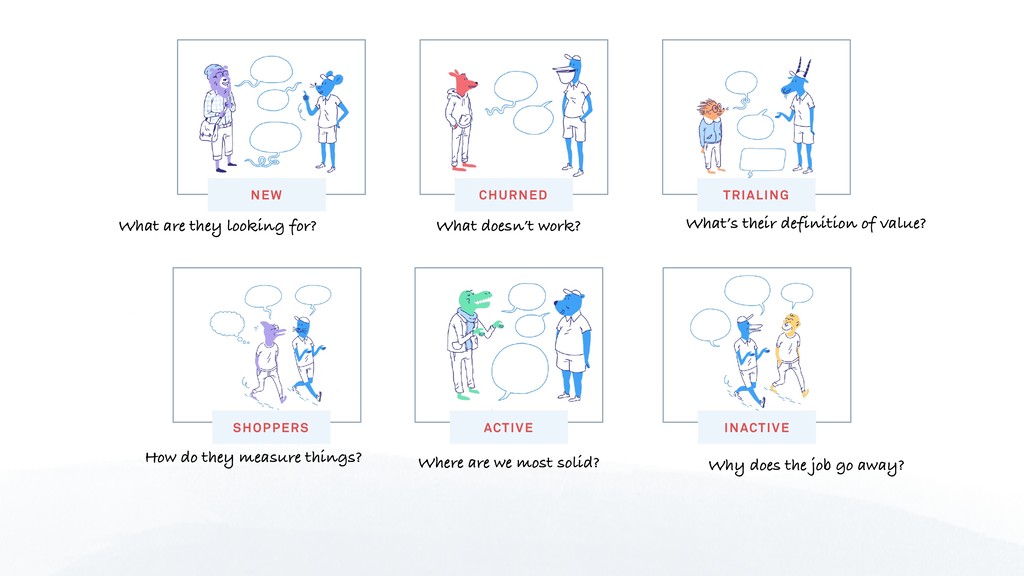
And we've done this every two years. We're on our fourth batch right now of of basically a kind of start to finish, let's talk to people in our user base. Let's talk to specifically six types of people, and let's ask them the right questions.
So we talk to new customers, people who have recently signed up for Intercom. We talk to trialists. We talk to, people who've recently quit. We talk to people who are shopping around but didn't choose to buy us. And we talk to people who are active and happy.
We talk to people who've yet to quit but have turned inactive. And all we wanna know is what the hell were you looking for when you started to try intercom? When you're trying it, how do you compare it with everything else? If you're using it, what are you using it for?
If you stopped using it, what happened in your life such that you stopped using it? But we need to know all of these things so that we can build the thing that they wanna buy, so that they can buy the thing that we wanna build.
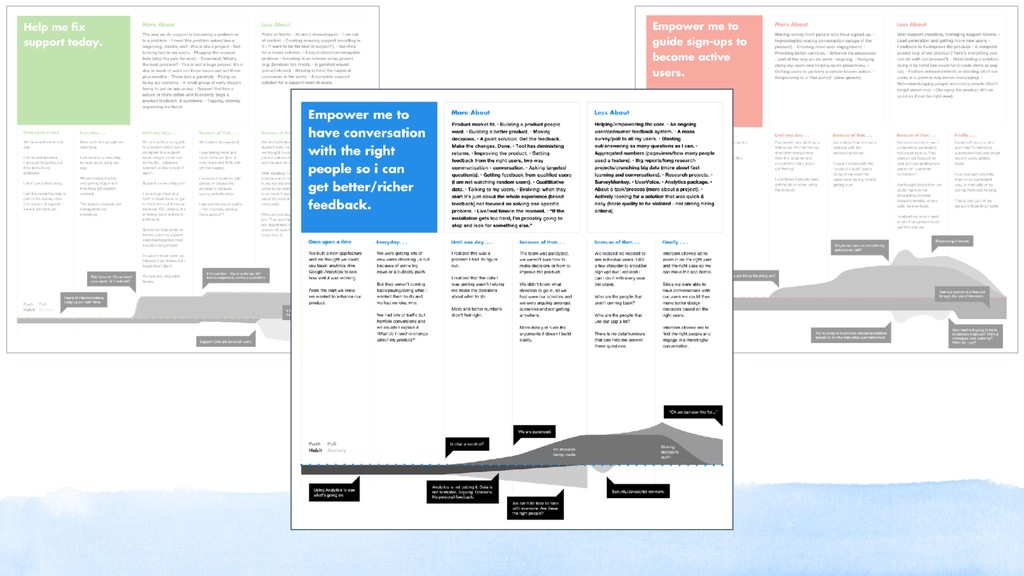
We have to understand this. And, out of the what pops out of these are what we call job boards and these kind of these kind of try to cover everything that we know about a particular reason somebody will buy intercom. It includes, like, kind of, like, our internal language for the job.
It includes a section where it's like, this is more about this but less about that. It includes what we call the average buyer journey. And this by the way, we do these for people who quit as well as people who who, like, stick around.
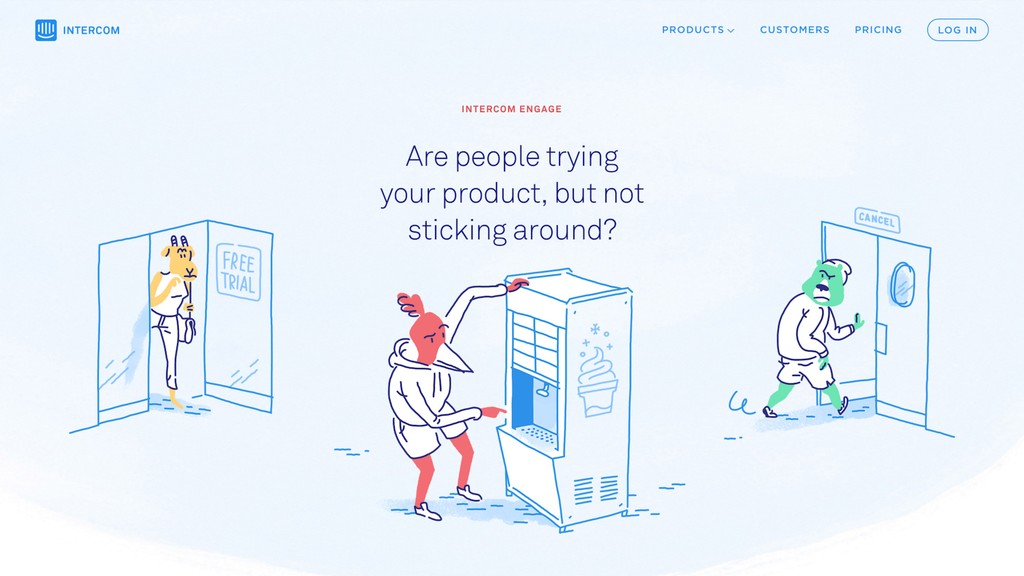
And we have this four forces diagram which I'll talk about in a little bit which kind of explains how we, how we understand the journey. And this all goes in and this Like, sites like our engaged product here are people buying your product but not sticking around.
That was like the exact language we heard from so many people. Like and I'm guessing just quick poll. Who here has a problem that people sign up for their app but they don't stick around? Right. Plenty of people. It's it is like genuinely like the Internet problem in a sense.
Right? So that All of this research let us kind of get that language really, really good which obviously changed our conversion rates but generally, it changed, the sort of the way people speak about intercom. Because before, it used to be things like, oh, it's this cool thing you put on your site and it's in your app and stuff like that.
Whereas now, they're like, no. It's the tool that turns, like, people who signed up into active users. And you're like, oh, that sounds more valuable than this thing. So, what I'd say is like, you know, so some of this is blue sky and some of this is then like, sometimes you will end up competing with people.
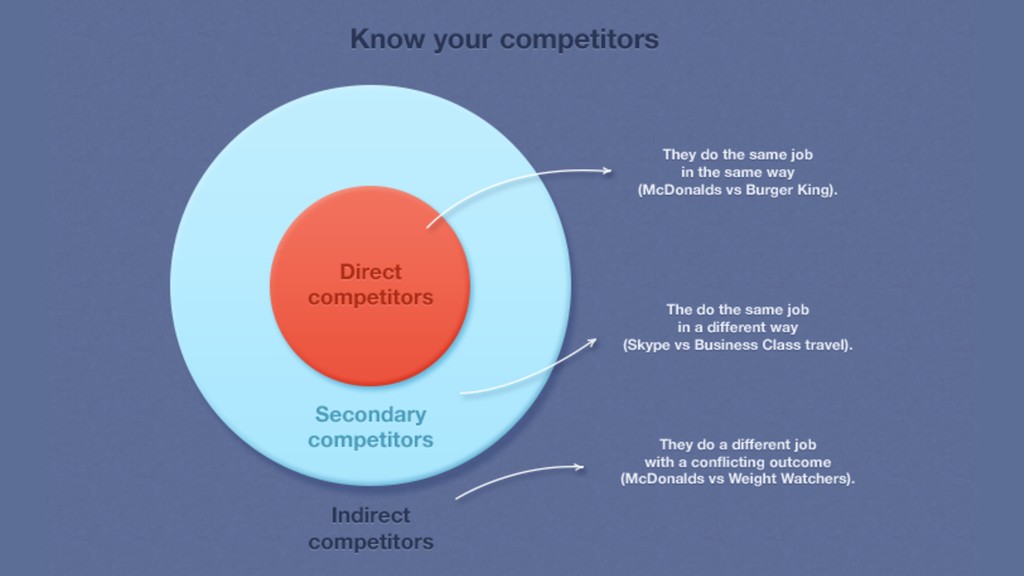
And intercom, because of the breadth of the product, we compete with a lot of different products. One thing I always point out to people is this idea of, like, you have direct, indirect, and then third party competition. And it's it's important to think about them that way.
It's easy for us to look and say we compete with other chat, messenger y type things, but actually we also compete with email and actually we also compete with the idea that you shouldn't have any of this stuff on your site or you you know, so if we wanted to take a message like we'll increase your conversion rates to market, we're actually up against consultants, SEO agencies, Optimizely, none of which we directly compete with.
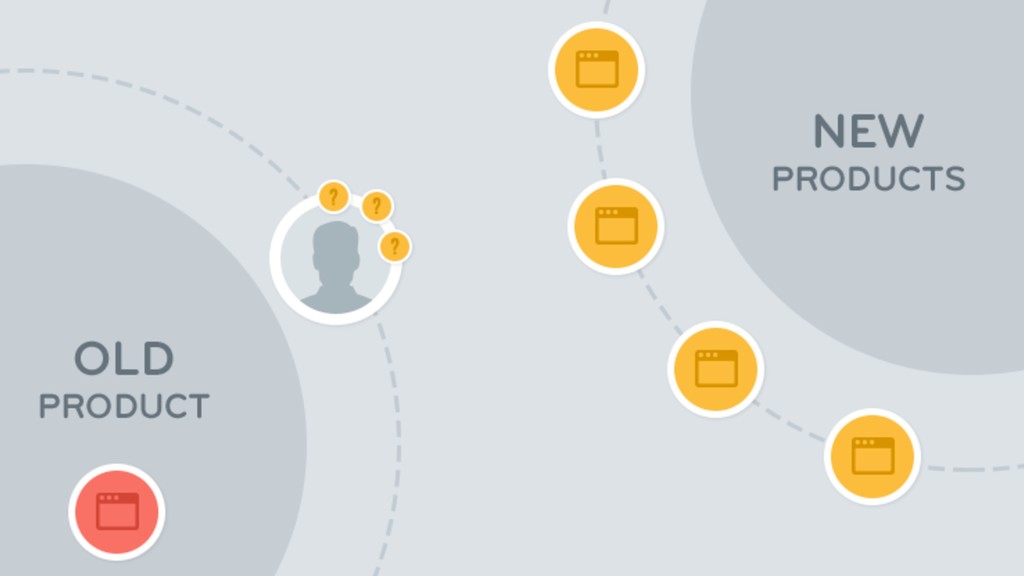
So it's just it's always worth understanding that you have direct and indirect competition and you need the different messaging for each of them. We obsess a bit over, like, what makes people switch to intercom. People switch to intercom all the time and we try to understand through these interviews that we do, what is it that actually pushed them over the edge and made them switch?
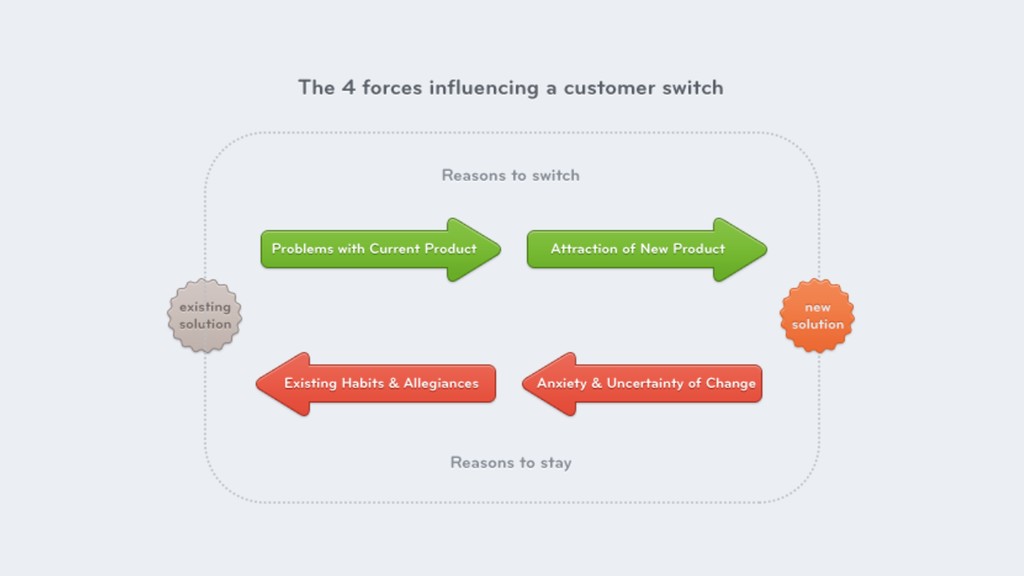
And similarly, when when it goes the other direction, when they leave intercom, what happened in our life, in our journey so such that they decided one day to cancel and move somewhere else? And to do this, we do this thing analysis called four forces.
And the four forces analysis basically says, there are two reasons that are working in your favor when somebody starts using your product. What is pushing them away from their current solution? What is wrong with their current setup of Zendesk or Marketo or whatever it is? What what what's curting them there?
And we love that for us. That helps us. Right? It's pushing them away from their existing solution. But then also, what's attractive to them about intercom? How can we dial that up? What what what what is it that why do they pick us? Right?
Like, what's so special about me? But then the two forces that are working against us just as bad is what is unknown about us? Why are they worried? Where is the anxiety? Where is the uncertainty? Why haven't they already done it if we're so great?
And, and lastly, what's the hesitation? What's keeping them in their current setup? And you'll see this like people I I have a friend who badly wants to switch to, like, say, iPhone, but, like, the anxiety or sorry, the the existing habits is all of his charging cables.
And he's just like, well, you know and, like, it's a real thing. I'm like, I get it. Like, you know but similarly, that could be like, oh, our Slack integration and the way our sales team is trained or whatever. We all so we try to categorize all of these problems.
Our job is to maximize the green forces above the line and get them stronger than the red forces below the line and that's basically what happens when somebody switches to intercom. And it's a big change. It can't just be like fifty one forty nine sort of thing.
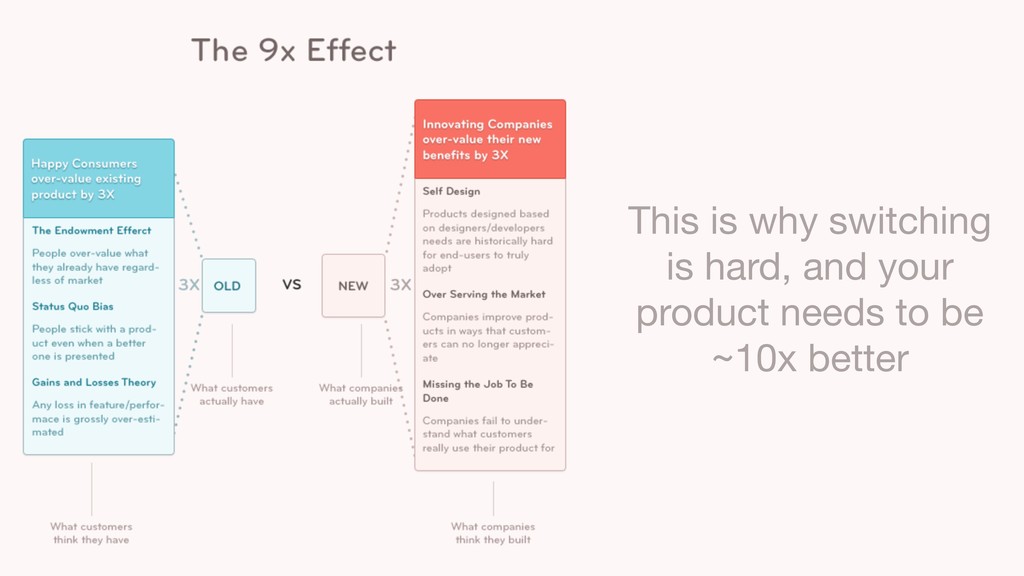
There's this effect called the nine x effect which is people generally over overestimate the value of what they have in a sense and people generally like, companies generally overestimate the value of what they've built. So this, you know, if you ever heard the phrase your product needs to be ten x better than the solution, I like to think it's somewhat connected to this idea.
For someone who needs a switch, generally, we think our solution is probably like, you know, at least three times better than it actually is. Everyone thinks that in some sense. And generally, customers think that their product is roughly three times, more valuable just because of the, like, the inertia than it actually is, which means that, you know, getting someone to switch software is a crazy thing.
Why on earth would you uproot your customer support, staff and be like, hey, we're gonna move to a different tool. It's a nightmare. Right? So like, this is the very real sort of, challenges that we face, but we have to understand this as well as we can.
A key peep part of this is also understanding how people buy and this has been something that did unlock a lot of growth for us. We, you know, some people when they do their marketing site, they'll, you know, they'll say we're a project management tool.
And other people say we're a collaboration tool. And other people say we make your team work together better. And again, even more broader is like we'll decrease the time and cost it takes to build software. And they could all be selling the same product.
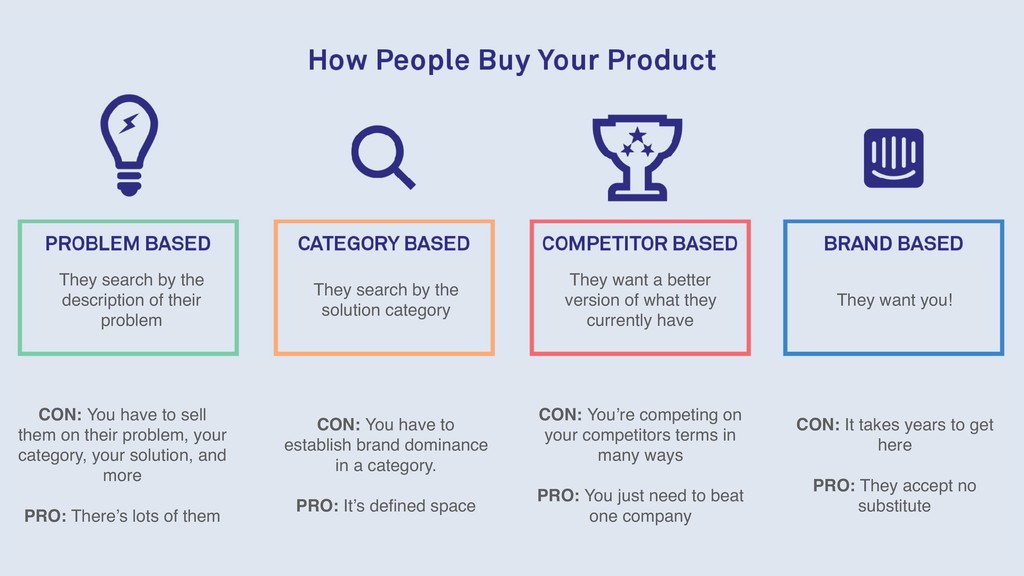
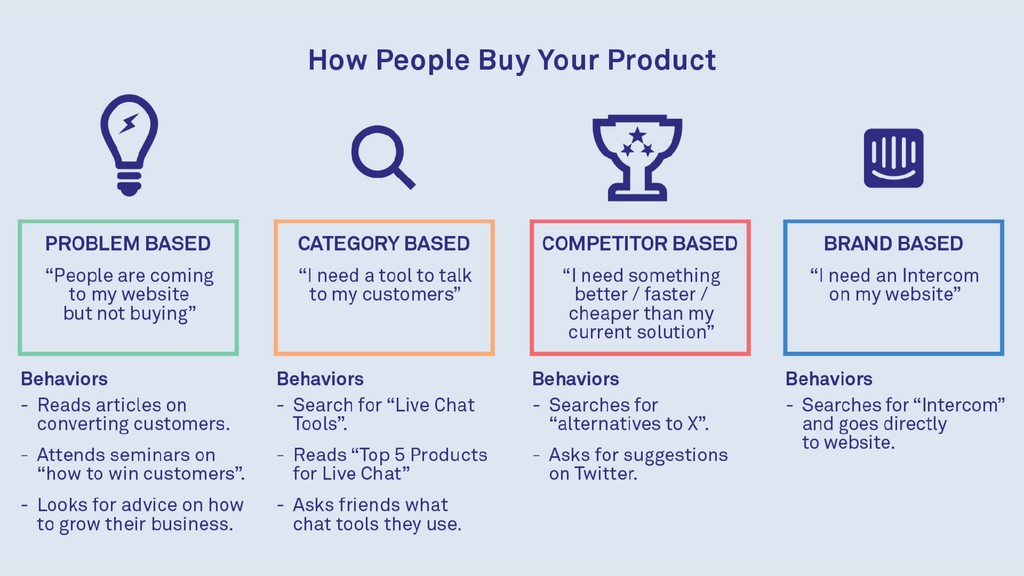
But you have to realize there's different ways people shop. Right? People can shop based on the problem that they have, not having an opinion about the category. People can shop in the category, we need a new project management tool. Or people can say, you know what? Asana sucks.
Let's get a better Asana. Or people can say, I actually want Basecamp. And there are four different ways you can shop. Right? And, and this is true for all of you. Right? You know, there's a lot of, like, there's a lot to like and hate about each of these.
You want like, you'd love to be over here where people say, I just want your product. I accept no substitute. Like, this is like, give me a biro, pass me a Kleenex, where's the Hoover, etcetera. Like, this is like when your brand becomes synonymous with the solution.
On the other side, you can basically say say things like, we will, like, we'll increase your homepage conversion or we'll decrease your cost to serve your customers. But you're such a broad pitch that you've got so many different competitors that you need to teach them that problem is associated with this category which is associated with this product.
You have to walk them all the way down the road to get them to your product. So just as an example, like, this is one of our products, our capturing product. These are literally four different ways people look for inter, for intercom. And the nice thing over here in the green box, problem based, there are, like, millions of customers.
Unfortunately, in the blue box where they're like, I want intercom, there are maybe only like hundreds of thousands or tens of thousands of people who are like, I want an intercom. So if we wanna expand our our sort of customer base, we need to go for the problem, the problem shoppers first and the category shoppers and the competitive shoppers as well, not just the people who already want us in a sense.
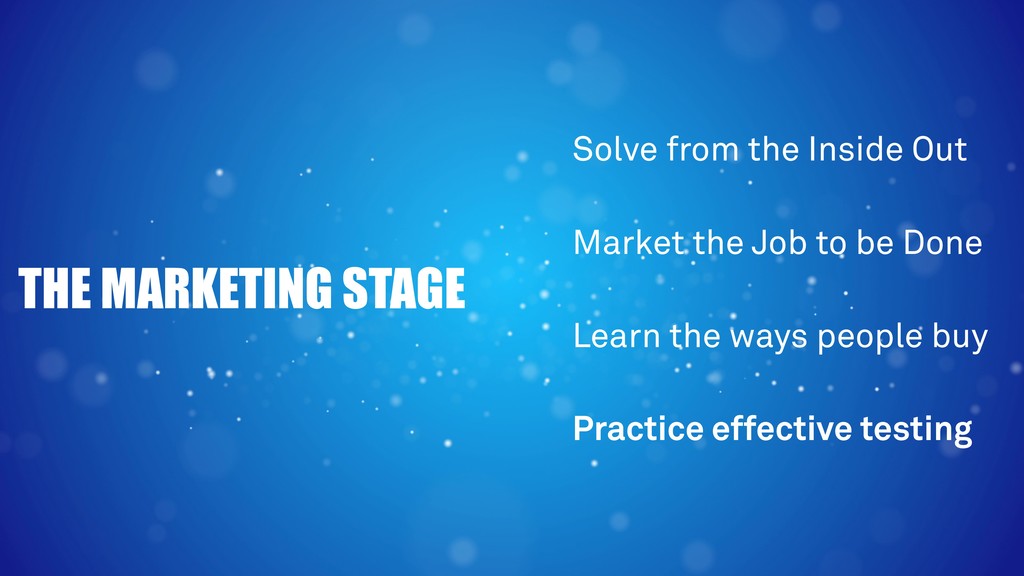
And I think that getting that right and having different marketing messages speaking to different areas has really helped us here. And, lastly, I'd say just a word on testing. For whatever reason, we've fallen in love with this idea of, of testing. So, guess which one of these buttons performs better?
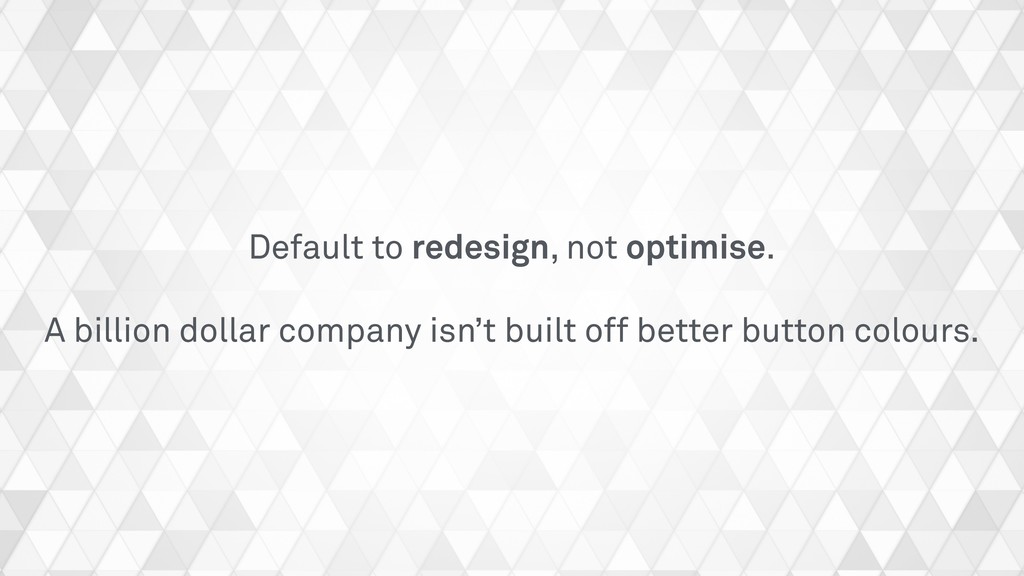
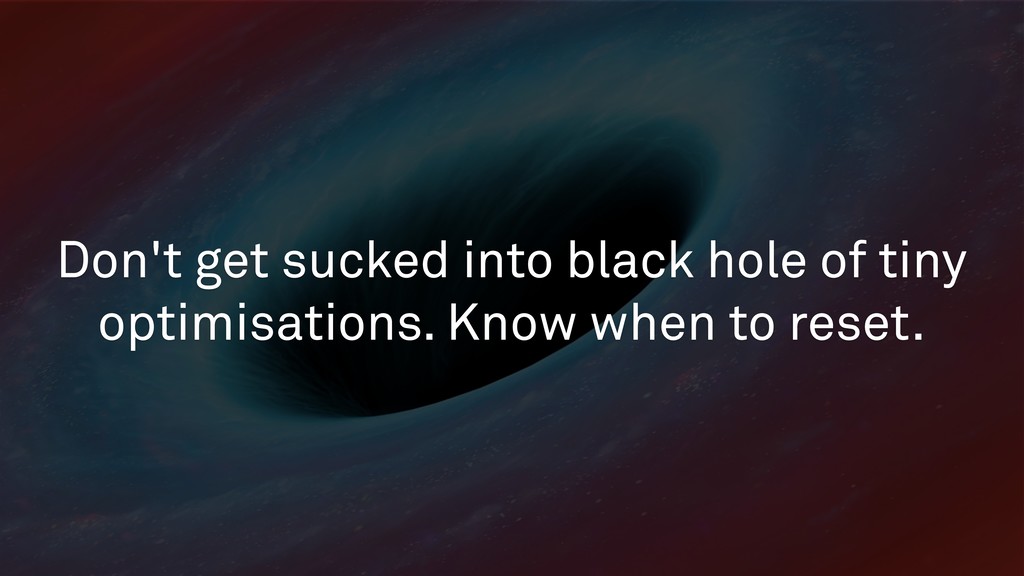
Guess which one of these buttons performs better? Guess which one of these buttons performs better? We know which fucking button performs better. Can we just quit it? Right? So this is what I call like the black hole of optimizations. Right? You can piss away so long learning that like actually a slightly bigger, slightly redder button that performs whatever.
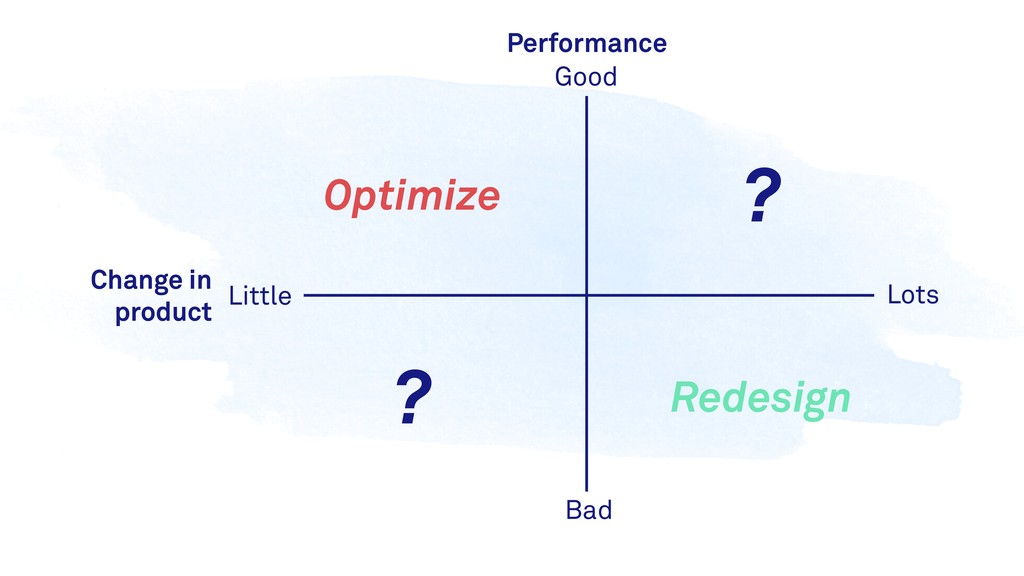
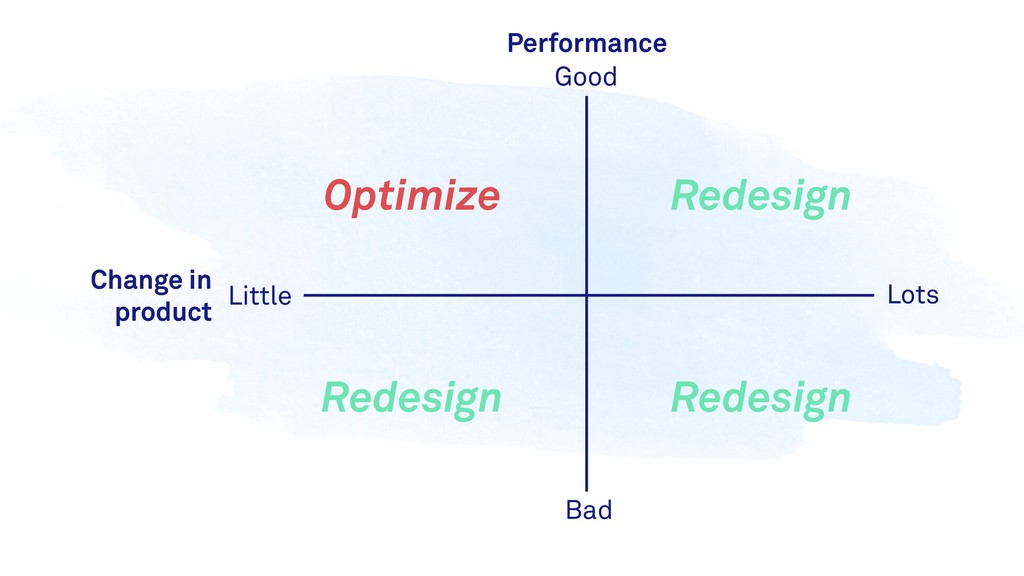
Right? And the the things I'd say on this very quickly is like, when you're faced with like, I wanna make my marketing better, the thing you need to ask yourself is, should I redo it or should I optimize it? And I would argue more often than not, you should redo it.
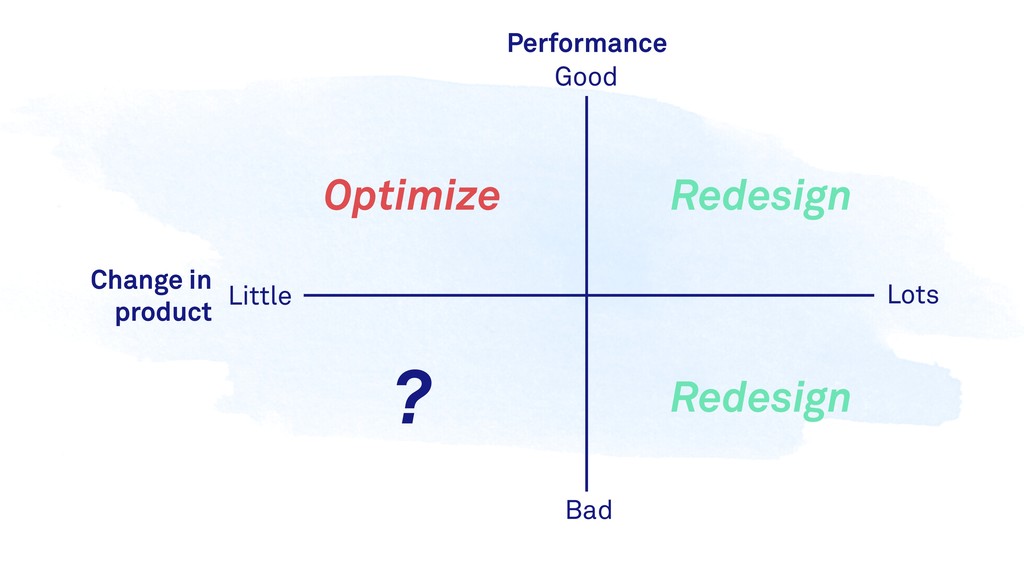
It's good to be current and it's good to reassess your assumptions. So I ask, what's changed in your product? And by the way, does your current marketing work well or not? And obviously, if nothing's changed and you like where you're currently at, that's a great time to optimize.
That's when it's great to find the slightly greener button. That's it's a perfect time. Tweak the thing you got when you're really happy with it. However, if lots has changed and your stuff doesn't work all well anyway, of course, you should redo it.
Similarly, what should you do in these areas? Well, I would argue, if lots has changed and your performance was good, there's probably still an opportunity to make it better. And obviously in the other category, if your stuff isn't working, make it better anyway.
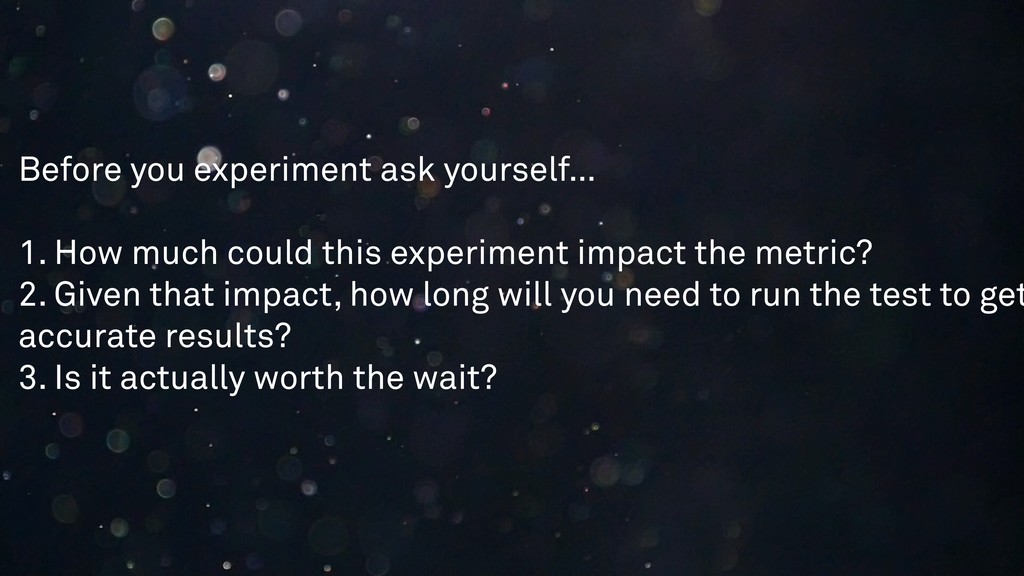
So that's a roundabout way of saying most of the time you should consider redesigning or at least try bigger ideas. So before you experiment, just always ask yourself like, when you're looking at like the the button test that they're trying to tell you we need to put live, how much could this actually impact realistically?
Do you think that there's, like, nine times more people who will click it because it's red? Probably not. There's maybe, like, point one percent or whatever. And then if based on that impact, like, how how long would you need to run this to get to, like, a statistically significant sample?
Right? If it's if you're looking for a point zero zero one percent improvement, you're gonna run that test for a long, long time unless you've got, like, epic traffic. Unless you're Facebook. You're not Facebook. And, and lastly, is it damn worth the wait?
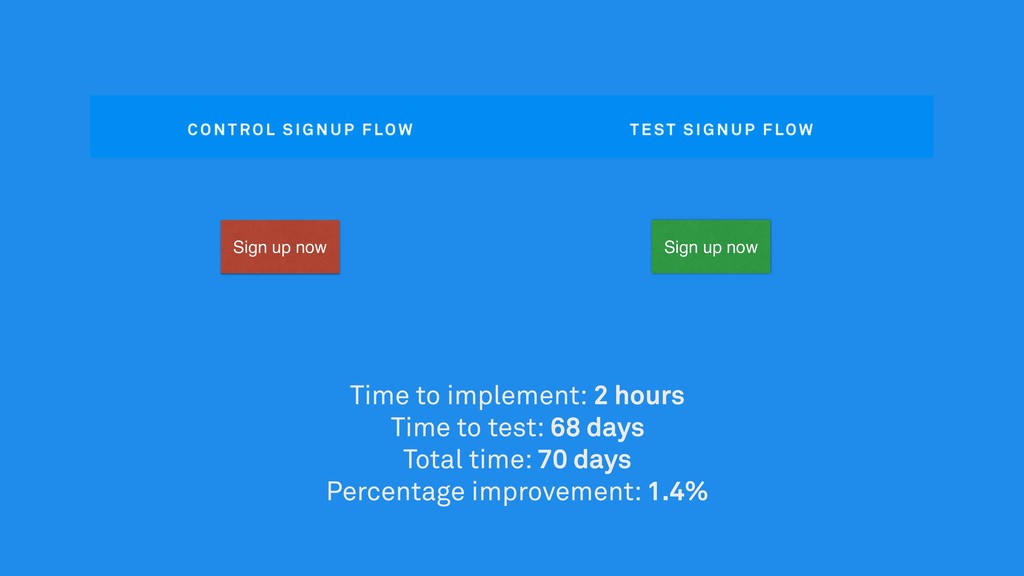
So the point, what this looks like is like, here's the, you know, here's what we're gonna test. It might only take me two hours to do that test but it might take me sixty eight days to find out which one of these is actually better.
So the way to think about that is over seventy days, we could get a one point four percent improvement. Okay. That that's the full cost here. We often think it's just the two errors, but it's actually the seventy days. Because you can't do anything else in that period. Right?
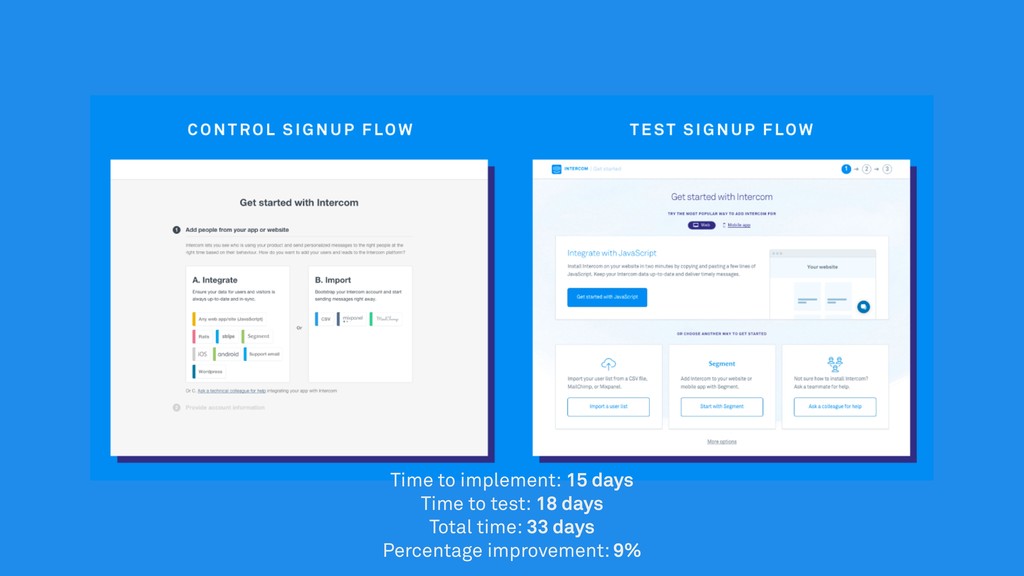
Because otherwise, you're fucking with your own test. So you have to, like, keep keep stationary. Right? Another thing you could do is say, well, here's two fundamentally different ideas. It took takes us fifteen days to build this out, but only eighteen days to test.
So in thirty thirty three days I don't know why I put in thirty three. That's the one thing Irish people should never put on the slide. In thirty three days, you get a nine percent improvement. And like those two, it's always worth asking that question.
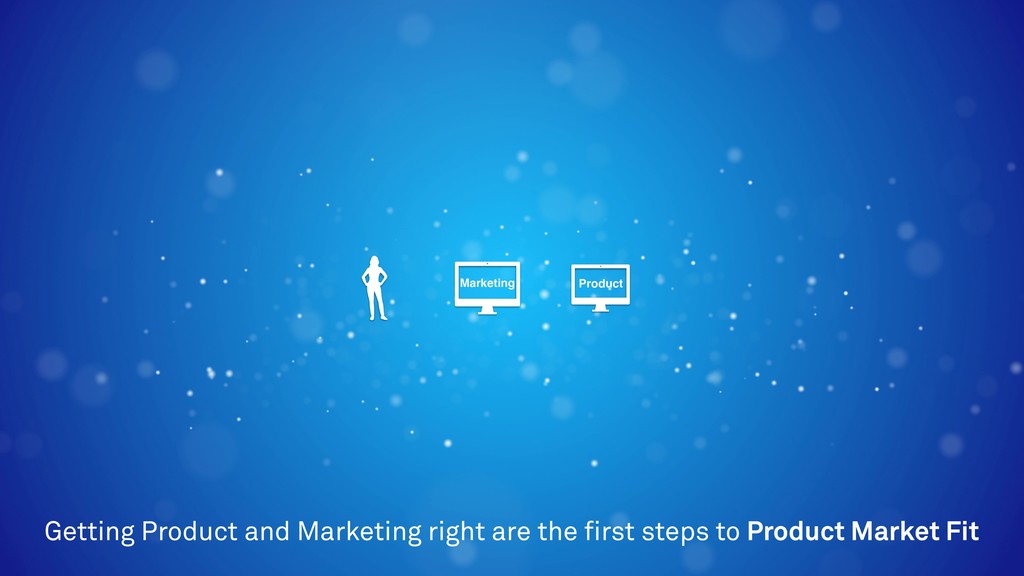
Alright? Which one of these is worth doing? And, I genuinely like always ask yourself that when you're running. That's what I mean when I talk about effective testing. Now, if you can get product right and you can get marketing right, they're generally the first steps towards product market fit.
And I know this is being covered quite a bit earlier on so I won't spend a long time on product market fit. What I will say is if you get anything like that and you get any you start to raise money and people start handing you checks with with like six zeros on them and shit like that, you're like, woah.
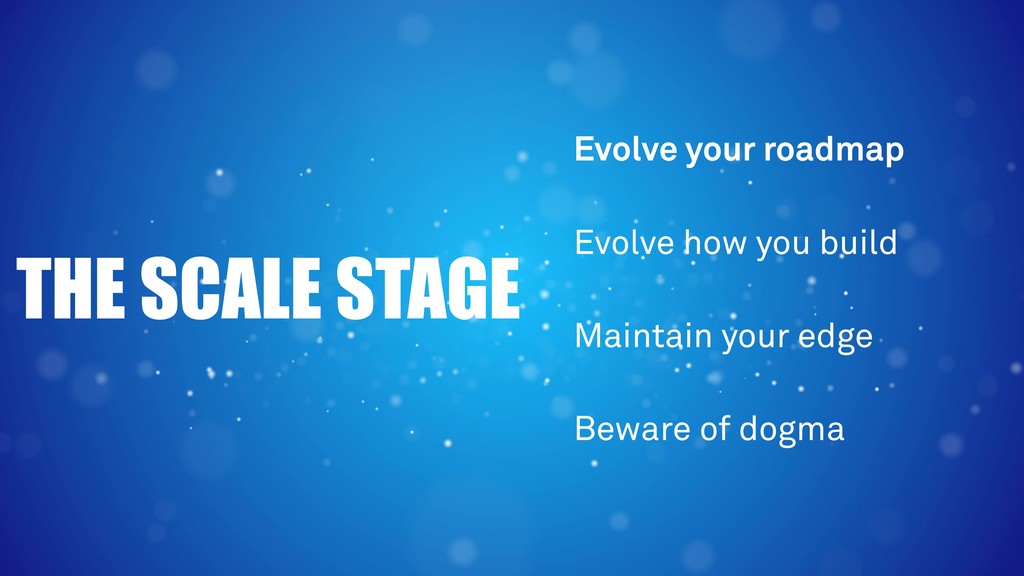
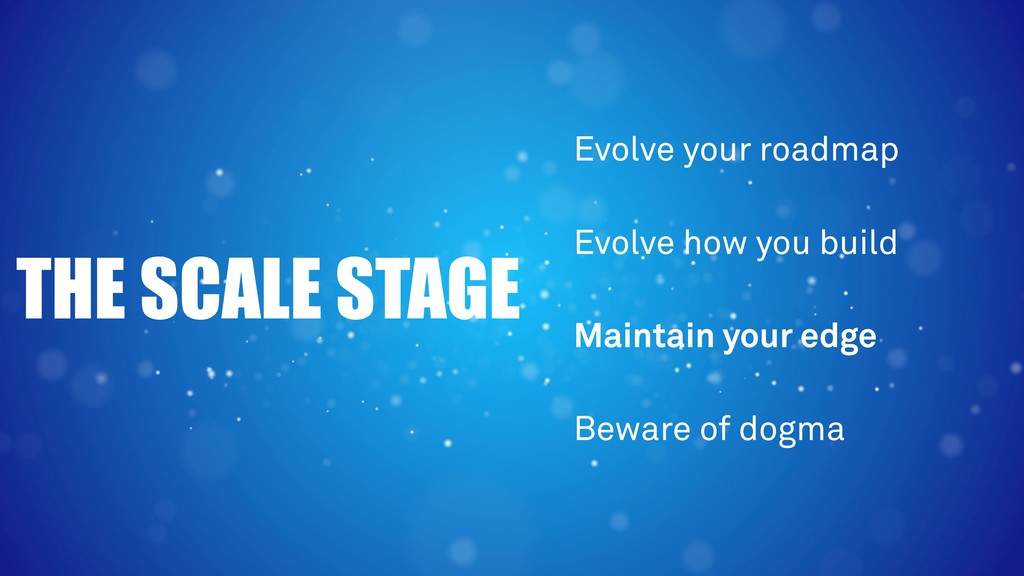
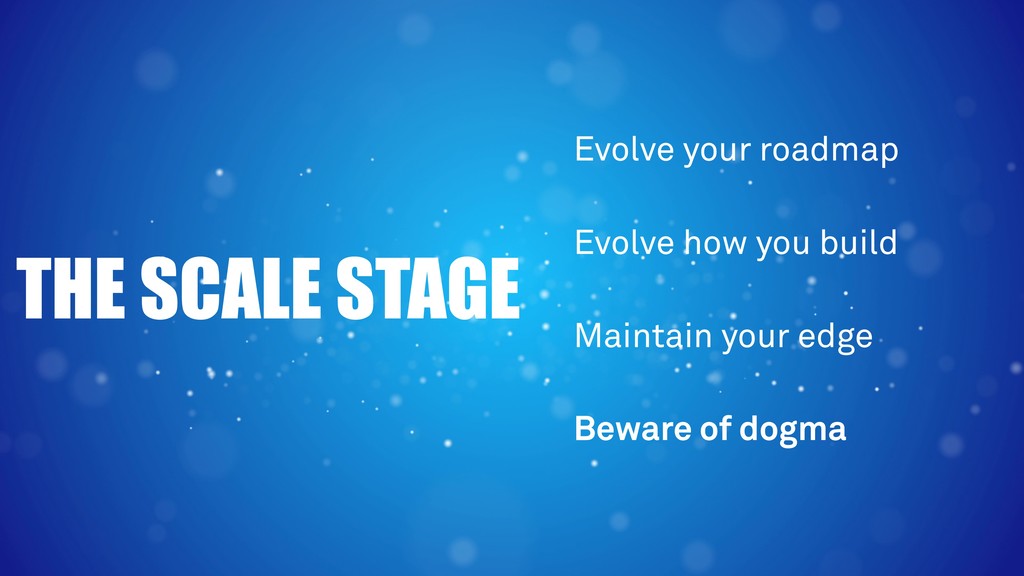
And then everyone else shows up. And, and and this is generally what I would call like the scale stage and this is kind of the last piece I'll I'll sort of finish on. The scale stage, is where you have to change a lot about why you work.
You hit this world where what I'd say is, you know, one way to think about it is like what got you here won't get you there to quote that famous book. Right? I think early product companies like for a good reason, they work off gut intuition, ideation, like, you know, just I have a good feeling about this and we should try it.
But that won't scale when your product team is twenty, thirty, forty, fifty people. It won't scale. And even if it did scale, it's not actually a good thing to scale because you get progressively further and further are we all doing this? Because you get progressively further and further away from, from your customers.
So you actually are robbed of the tacit knowledge and the insight that you were earlier getting in your career. We used to run a product where we couldn't talk to our users. Now we're doing a very different thing. So the idea that we're gonna be the perfect people to have the ideas is not true anymore.
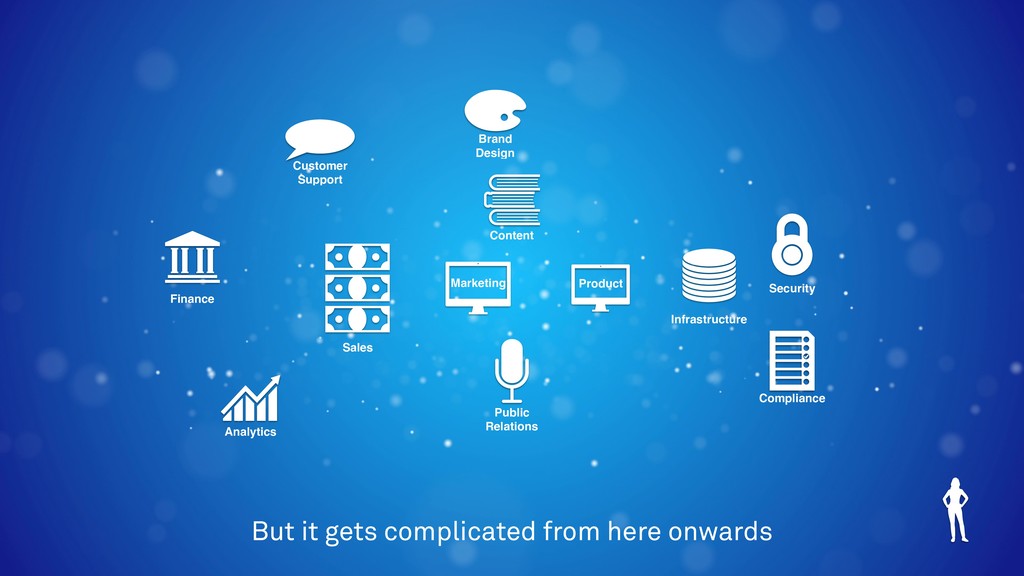
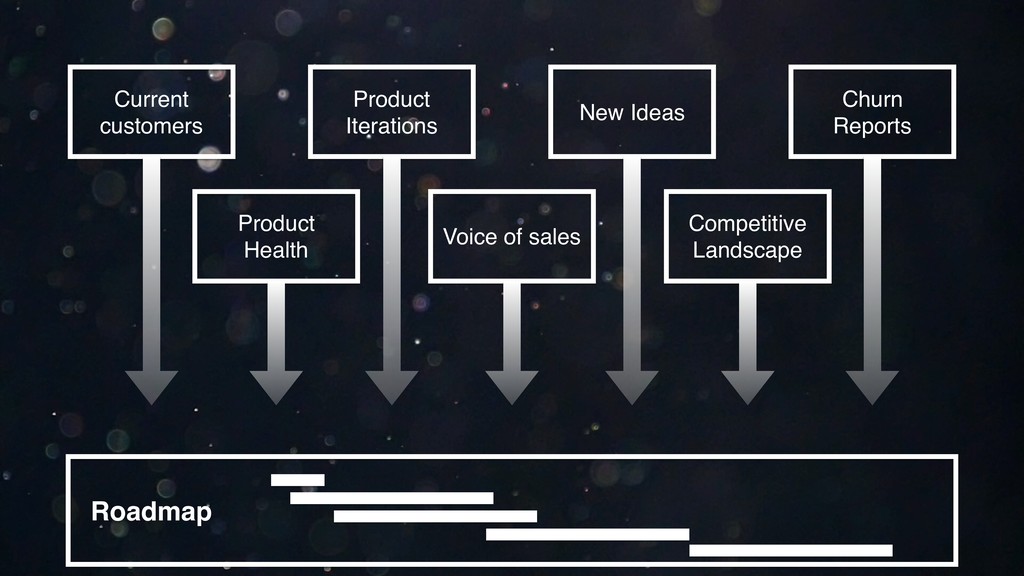
Our roadmap today looks a lot more like this. It's not just ideas that we came up with. It's loads of shit we have to think about. Right? Loads of things. What do sales need to close deals? What do the infrastructure team want to make sure that we actually stay alive?
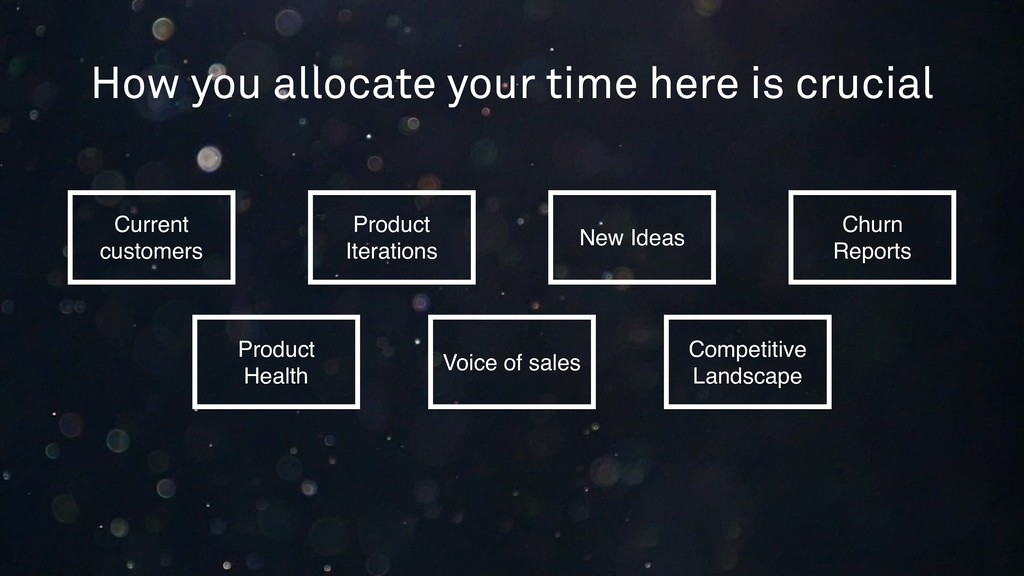
What does security need us to lock down? What does the GDPR want for requirements? All that shit has to make its way into your roadmap. And actually, how you divide your time across these boxes and by the way, these are just our boxes.
Your boxes may vary. But how you divide your time across these is actually it becomes the core strategic question in your company. Are we building a bigger product or are we building a better product? Are we dumping shit out there to see what sticks, from a marketing reason or are we trying to just go deeper for our current customers because we like them?
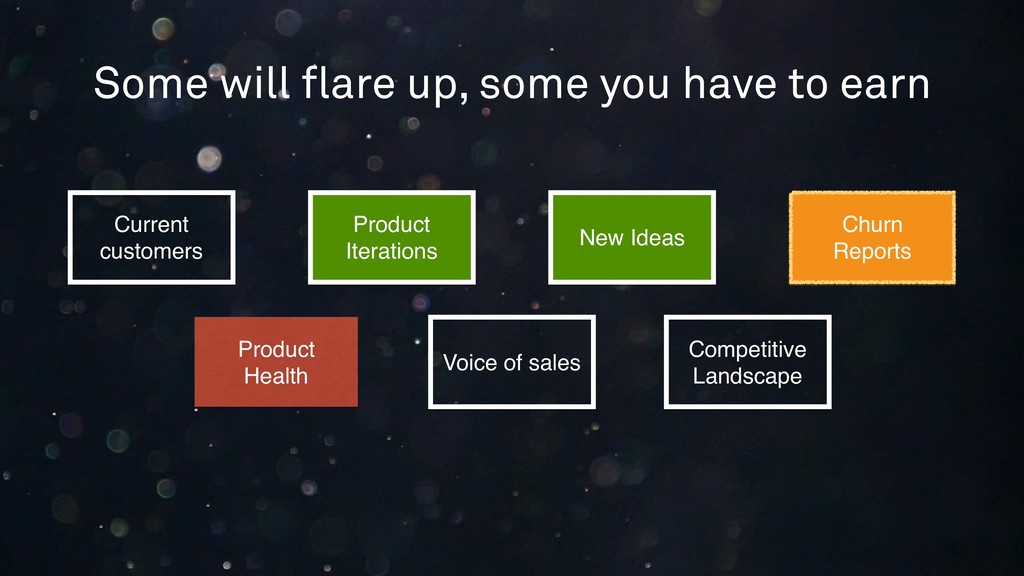
And, and you don't always get to make that choice yourself. Sometimes things can flare up. We had an incident two years ago where availability was a problem. We had to throw out the whole roadmap and say we're gonna fix availability. That happens. Right? Similarly, churn can flare up.
Like, churn can be like, hey. Well, a lot of people quit this month. Why? Oh, because this one thing. Okay. Well, your opinions and intuitions about the market are no longer relevant. Look after your business and your business will look after you. And similarly, what that means when when it comes to new ideas, you actually need to have a relatively level playing field.
You need to feel like you're in good condition before you can try anything particularly cool and wacky. So I think, you know, understand that you're as you hit this scaling point and as you start to measure revenue into, like, hundreds, thousands, or millions, all of this starts to become quite relevant.
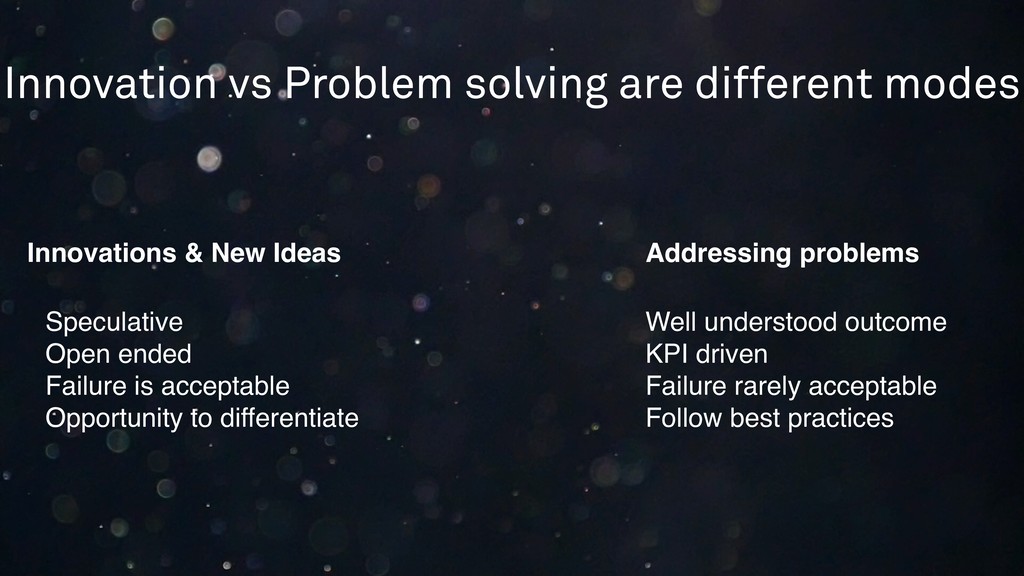
The, the scale stage also requires you to change how you build. You need different modes of working because you're not just working off ideas anymore. Innovation, versus problem solving, they look like two different styles of work. Right? Innovation, you need permission to fail.
It has to be okay to go off to the forest and come back with an idea and build it and ship it and say, didn't work. Throw it out. That has to be okay. However, if you're directly attacking a problem that your sales team has registered as a reason why you can't close a certain deal with a certain type of company, you don't really get permission to fail because the problem's really well defined.
It's usually like something like we need enterprise permissions or some shit like that. Right? It's like it's a well understood thing. You can talk to the customer who has the problem. You can learn about the problem. You the idea that you'd fundamentally miss the mark isn't like, it's not really acceptable.
But, obviously, you can't then have the same road map process for two very different things. So you need to have this ability to say, are we open ended? Are we looking for the best solution? Or are we willing to, like, is is this much closer to being do the thing that, like, that basically solves the the the sales blocker and do it quick and don't try to reinvent how people do check boxes for permissions.
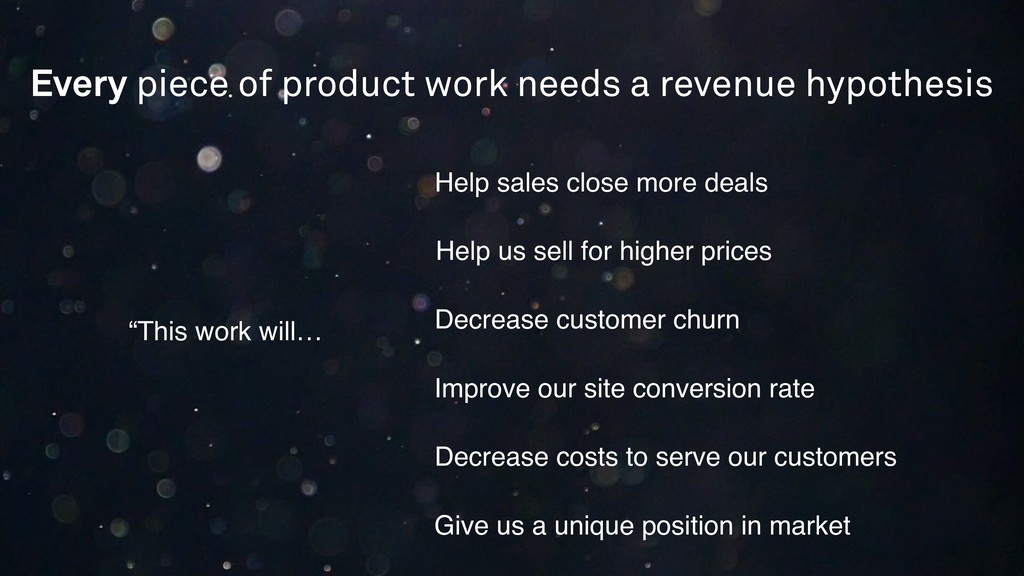
It's not interesting. You know, it won't be an ROI positive change. And connected to that, I would always encourage people when they, again, when they cross that point of revenue that you need to get to a mindset where like all your product work, unless it's like net new innovation, you should have a revenue hypothesis.
You should be able to answer, where will this show up? You know, the job of a company in some blunt horrible capitalist term is to turn cash into code and code into cash. Right? Where will I see this money back if I employ a load of people to build these features?
Will it increase ARPA or will it will it, like, you know, decrease churn or will it increase our customer conversion rates or will it give us a unique market position? That's what you need to be obsessing over in some sense because otherwise, you're just gonna make a big messy thing that doesn't pay for itself and lord knows the world doesn't need more of them.
So adding features just to close deals, by the way, is is easy but it leads to a horrendous product. So you need to actually have a decent philosophy of why you're adding things. So as in if your product road map becomes exactly what the last customer asked for, you're gonna end up in a bad world.
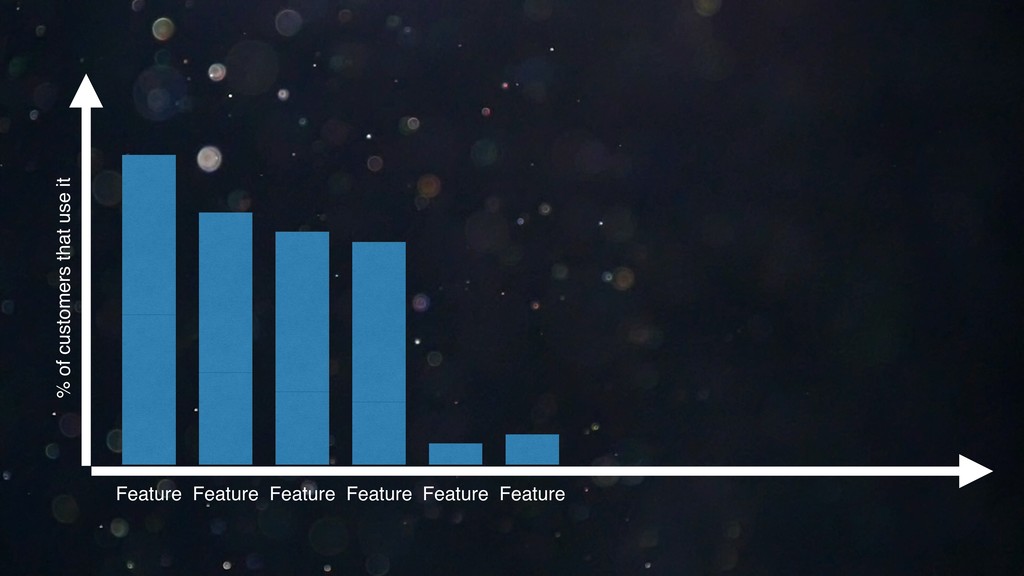
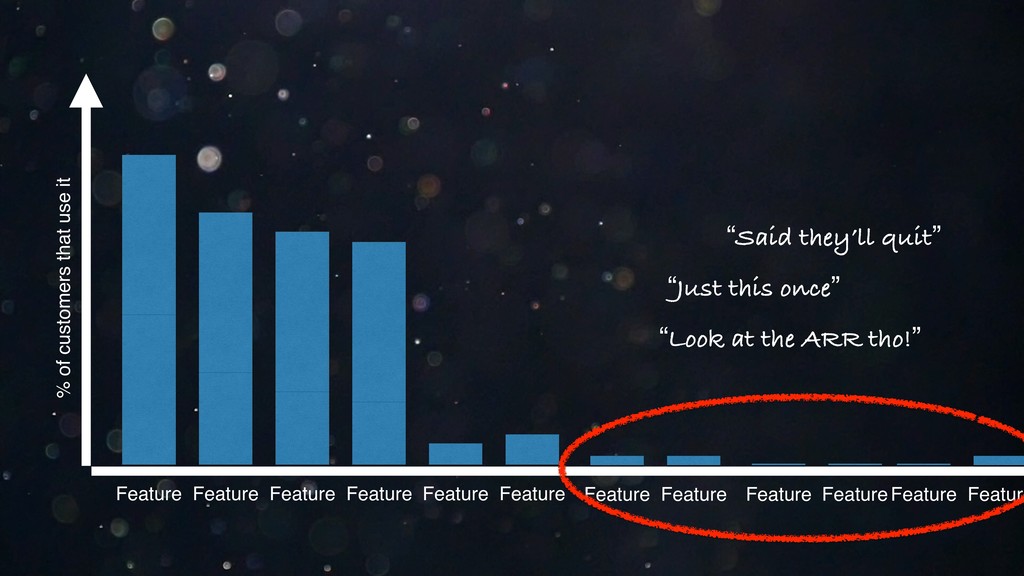
What that world will usually look like is you'll have all these features that most of your customers use and then you'll try open your roadmap to be like, alright. We'll build anything for anyone. And you'll get all these features that nearly no one uses and you'll justify it saying, well, this person said it quit.
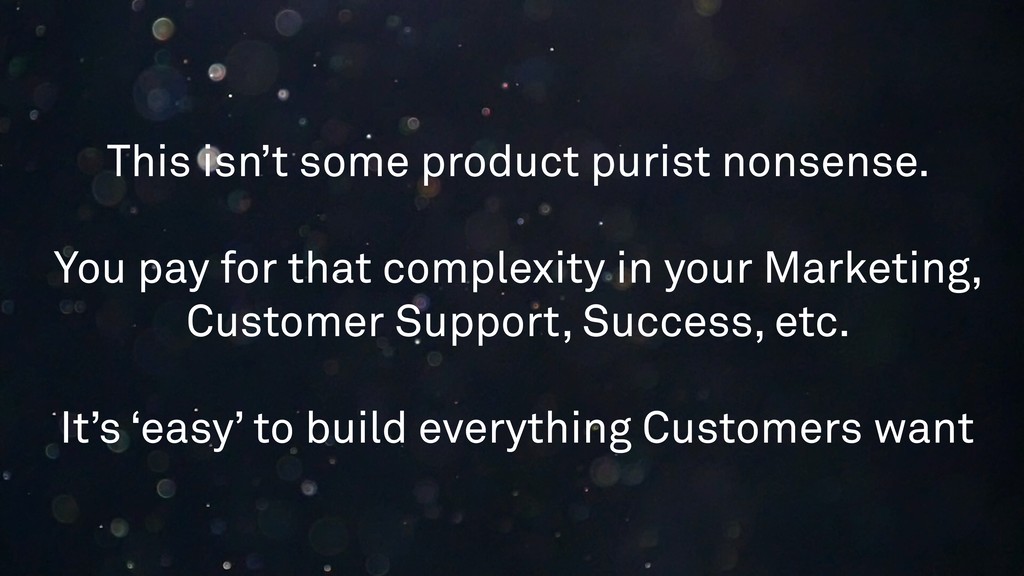
That's why I had to build that or look how much money they're paying us. You need to, like, not let that happen. This is not some product purest bullshit. It's just that you're gonna pay for that complexity. You're gonna have a bigger product, more surface area, harder to market, harder to support for your team, hard for customer success to set any customer up.
It's easy to build everything customers want but like everything is a danger there. You become the sum of all requests which is not a great place to be. One thing I'll talk quickly about is as, you know, as you kind of become in any way successful, it's hard to maintain your edge for a very simple reason.
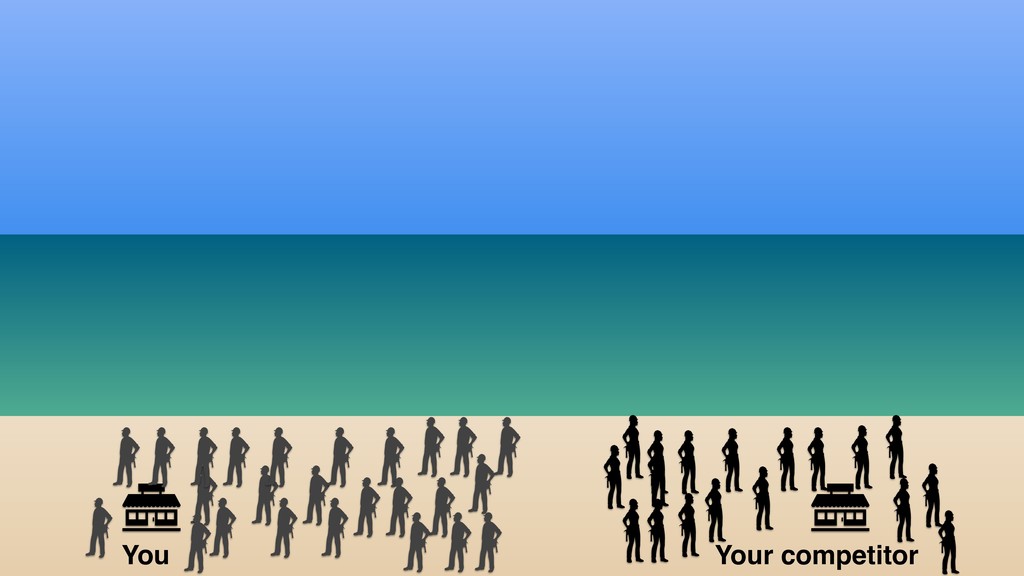
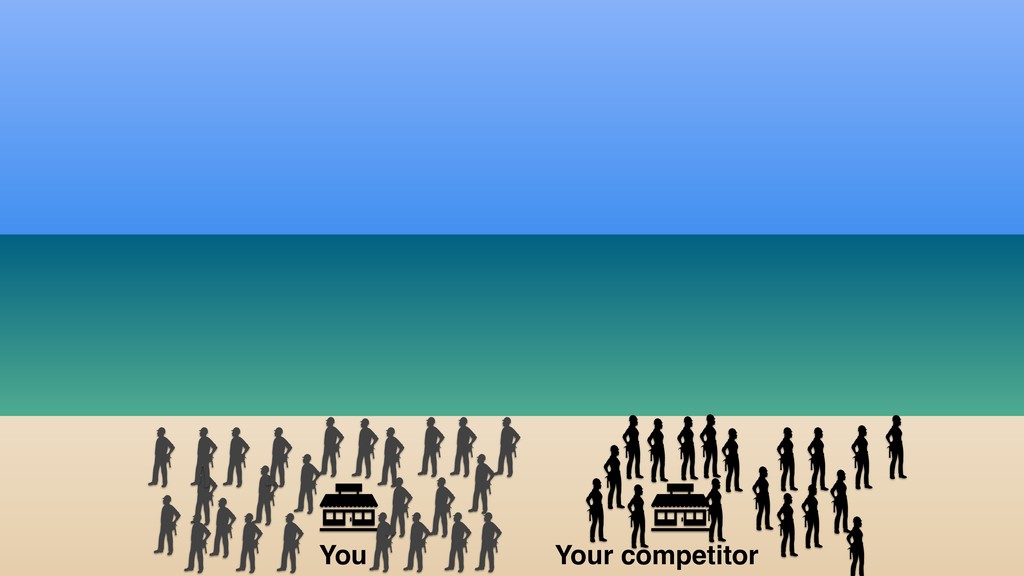
Has anyone ever heard of Hotelling's Law? So Hotelling's Law is a really interesting phenomena. I'll tell it through the analogy of a beach because that's how it's most commonly referred to. Let's say, the beach was your market and you were selling ice creams.
Here's you and here's your customers and you have a bit of success and the ice and like they just keep coming and you're doing really, really well. And, and of of course, this does not go unnoticed. So at some point, somebody else shows up and eventually, they start to steal some of your customers or they they just manage to get their own customers.
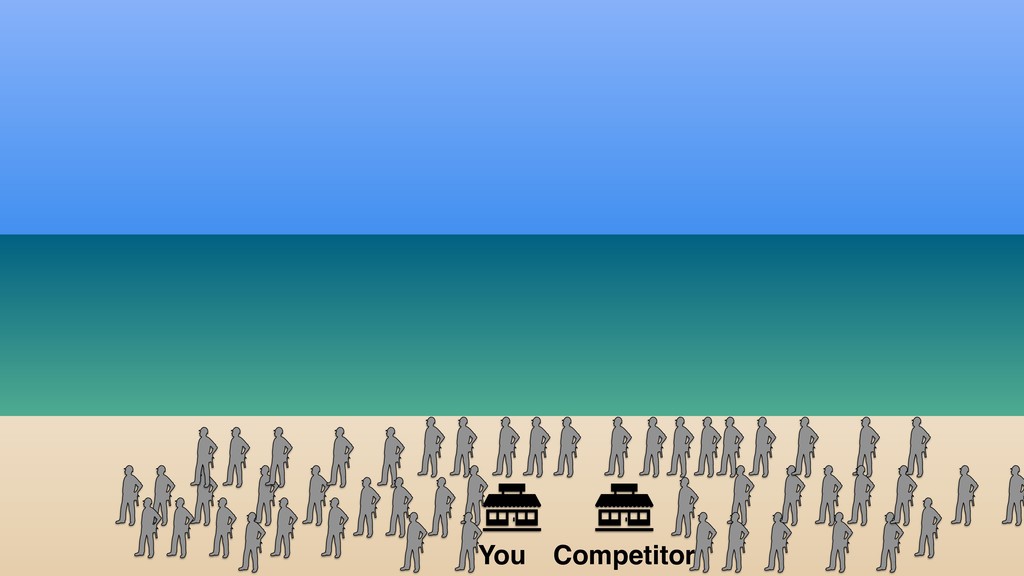
Maybe they're not yours but all of a sudden there's somebody else on the beach. Right? So what do you do? Well, what most of us are tempted to do is to just be like, well, if we just nudge down there a little bit, we can get some of them.
But what's your competitor do? Well, they're like, well, we can do the same thing as well. And you can keep doing this until you end up looking exactly like your competitor in the same place doing the same things, selling the same shit with the same language and your edge erodes to hell which is not a great place to be.
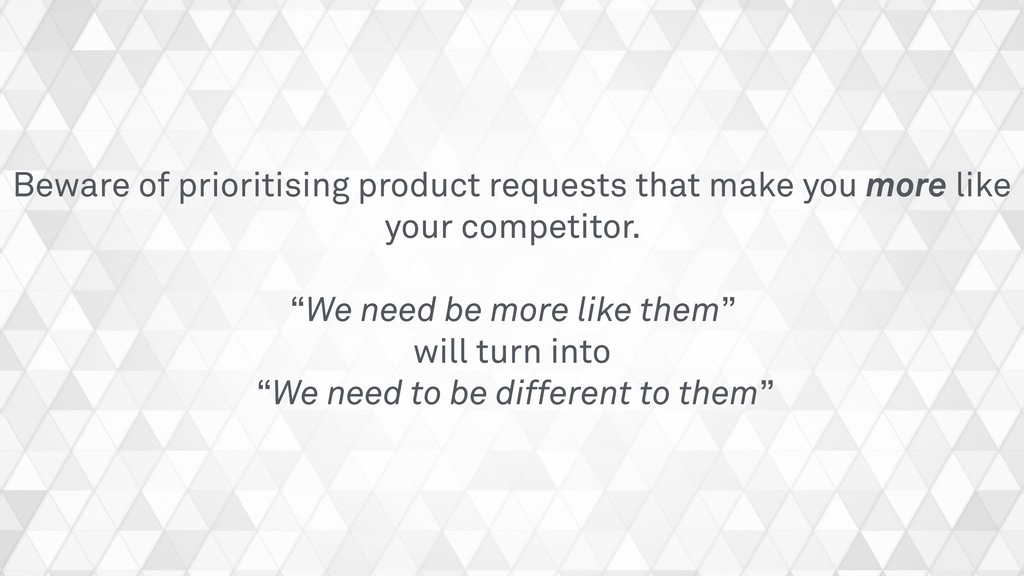
So I just say be wary of prioritizing feature requests that make you look more and more and more like your competitor whether that's the incumbent monster you went after in the first place, or whether that's like somebody who came along trying to copy your shit afterwards.
Maintain your edge because we need stuff that makes us work like them will eventually turn into we need something that stuff that makes us different to them and that's what Hotelling's law says basically. Maintain your edge. Lastly, I just say beware of dogma.
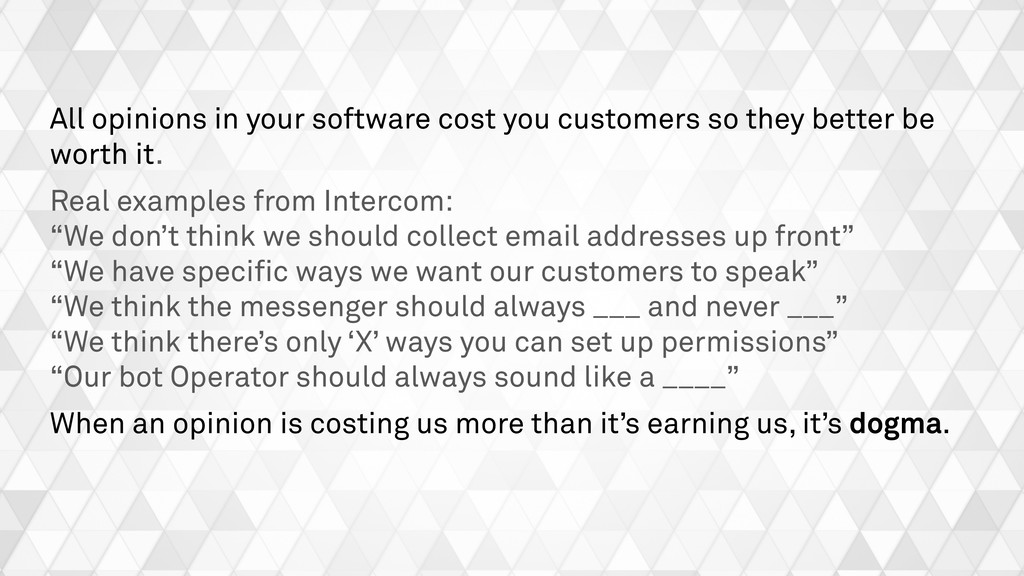
I've had to say this a lot, over the last couple years but every opinion you have in your software, will cost you money. Every opinion that you codify into your software will cost you money. And real examples from Intercom, we don't think that we should collect email addresses upfront.
We think they should start the chat upfront. That was our opinion for quite a while. That cost us a lot of customers. We think there's only a few different ways you can set up permissions. Turns out we were wrong. Turns out there's loads and that opinion costs us money.
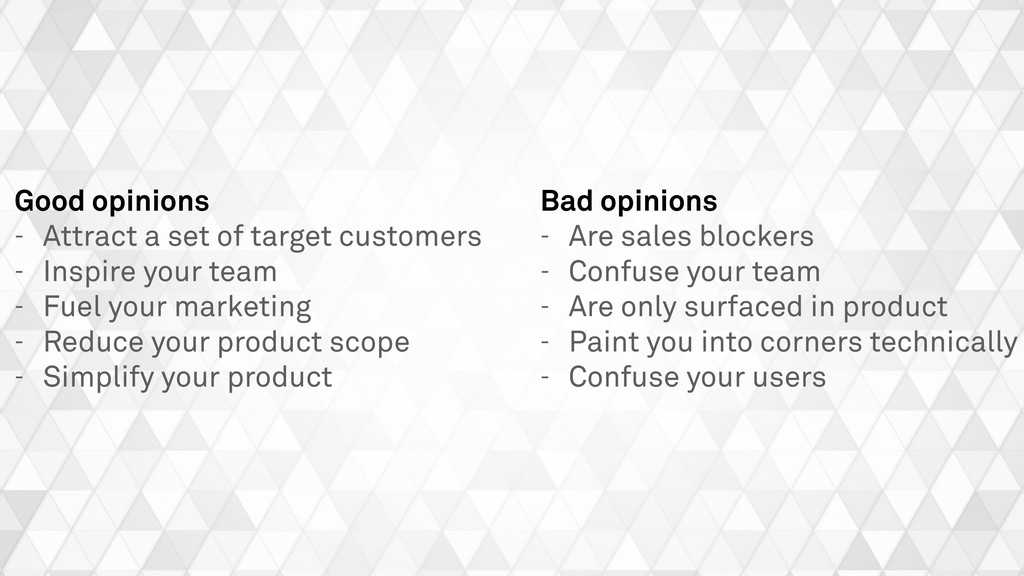
Opinions cost you money so they better be worth it. If they're not worth it, it's some dogmatic bullshit. Good opinions earn you customers. Good opinions inspire a team. They fuel your marketing. They reduce complexity. They make things obvious. Bad opinions are like, why don't you do this thing or you do everything else?
And I go, we have one weird opinion about that exact thing. Bad opinions will cost you and you should only really build a product based on your good opinions, the ones that actually simplify your product, simplify your marketing, and make things obvious for your customers.
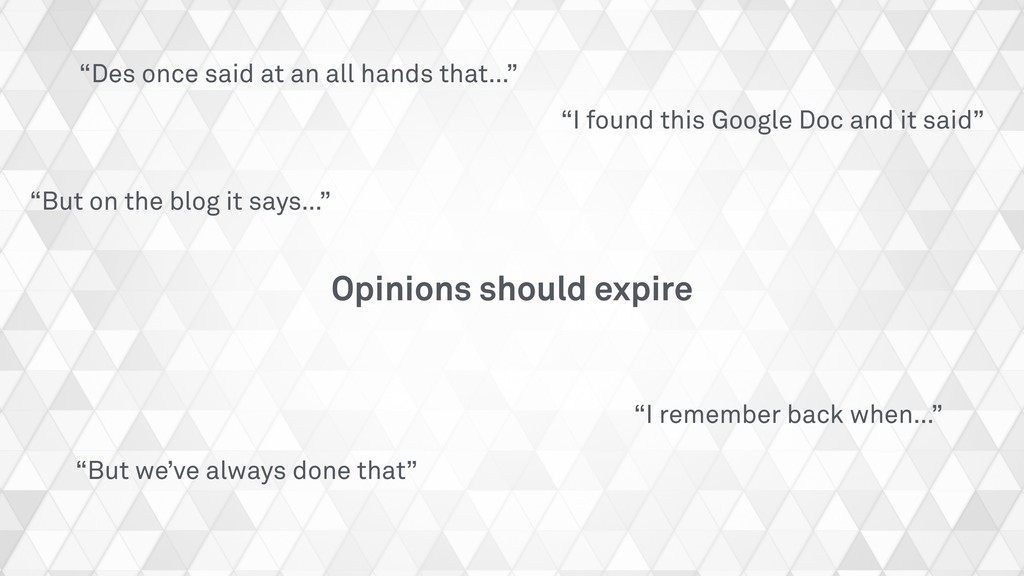
And, along with that, I'd say your opinions should expire. We have a large blog with a lot of advice on it. Some of it was relevant at a six person company but not relevant at a six hundred person company. Unfortunately, a lot of people read the six person company stuff and think it's still true today.
And as a result, we hear things like, but Des said one, stat, blah. And I'm like, yeah, Des isn't saying that anymore. I'm the same Des and now the advice is different. Right? I think you just, you know, refresh or or just, you know, reassess the dogmatic opinions that you have, lest they actually come back to kill you.
I think like And the way I'm saying this is a foolish consistency, I think is the hobgoblin of a small mind. Don't feel be a slave to shit you've said in the past. If you're if you're smarter now than you were then, it's okay to change your mind.
That's what good people do. Another way of phrasing it is, either you kill your dogma or your dogma will kill you. And it's been seven years, maybe I'll come back in a few more and tell you what else I've learned but that's everything I've got for now.
Thank you so much for your time. Wow. I think