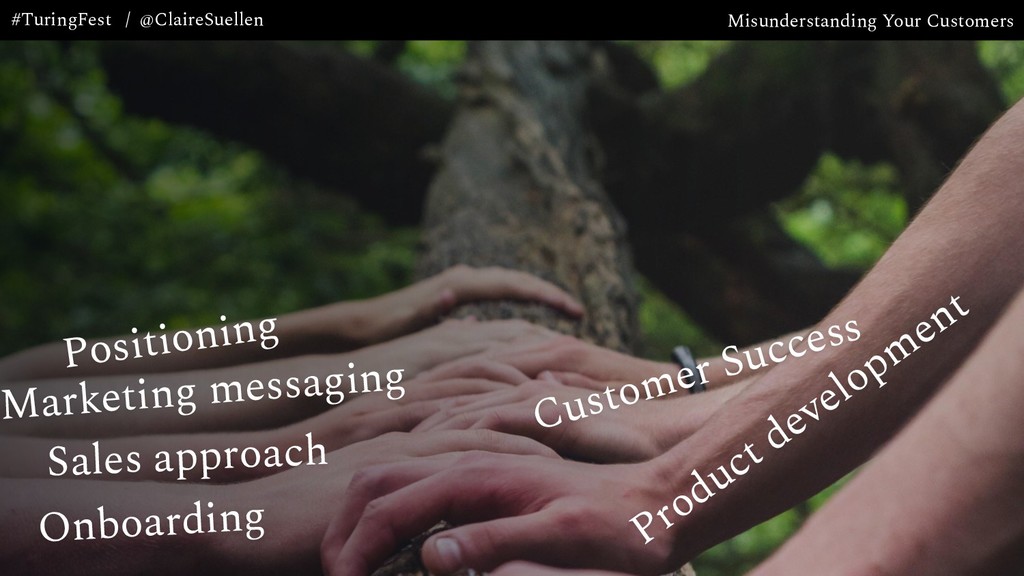
Your team's working hard as they can across the board: marketing, sales, product and customer success. But if you're seeing inconsistent - or even flat-lining - revenue growth, chances are high that beneath everyone's hard work, there's a mismatch between your team's focus, and what customers actually need.
During this talk, you'll learn why companies unknowingly fall out of alignment with their customers - and how it can happen to your team, if it hasn't already. You'll walk away with a practical exercise you can run back at the office, to centralize your departments around customers' needs and get everyone working toward the same goals. The result? More new signups, a stickier product - and ultimately, a healthier MoM growth rate.
1 / 59 Use ← → to navigate
Auto-generated transcript - may contain errors.
Tap a timestamp to jump the video.
Hi, everyone. First of all, thank you so much for being here. It's super exciting to get to be on this giant pink stage, and to be part of such a really impressive event, which brings me to why we're all here. Ultimately, or foundationally, we're here because we wanna grow successful companies.
And every company is different, so, of course, there's infinite paths we could take to success in that. But across every type of company, and I mean business model, industry, market you're trying to serve, it's been shown time and again that one of the biggest blockers to the growth of a business is an internal misunderstanding of the target customer who's being served.
So my business partner and I, as was mentioned, work with SaaS companies to help them essentially kind of figure out what levers to pull to unlock more growth and get to their next major, financial milestone. And we've worked with dozens of brands over the years.
And at at in our experience, what we see frequently is that the missing puzzle piece that's preventing further growth at a certain stage of a company is either a, a lack of understanding of what triggers customers to seek out this solution, and eventually make their purchase.
Or b, if the team does have that understanding internally, it's often not well documented and it's not operationalized to be well used in any way. So let's talk a bit about the the larger trends around understanding that that customer need and how it impacts, the potential of a business.
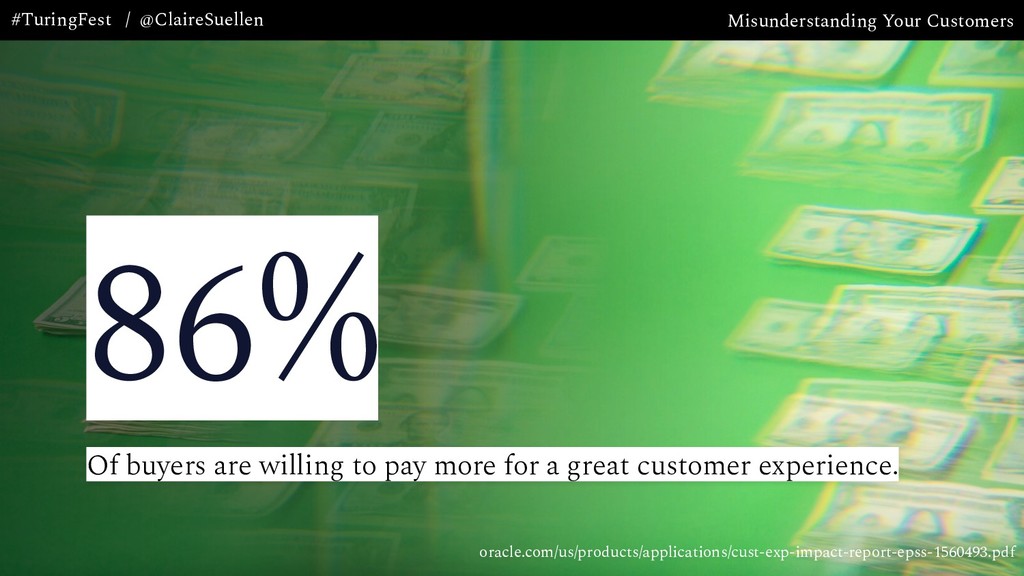
So in two thousand eleven, Oracle did a study on customer customer experience and how it impacts the buying process. And what they found was that in markets that have several similar solutions, the core product is is pretty much the same. Eighty six percent of buyers will pay more for the option that has the best customer experience, which is interesting because really, in a market that's that that competitive, they could be getting basically the same product for cheaper.
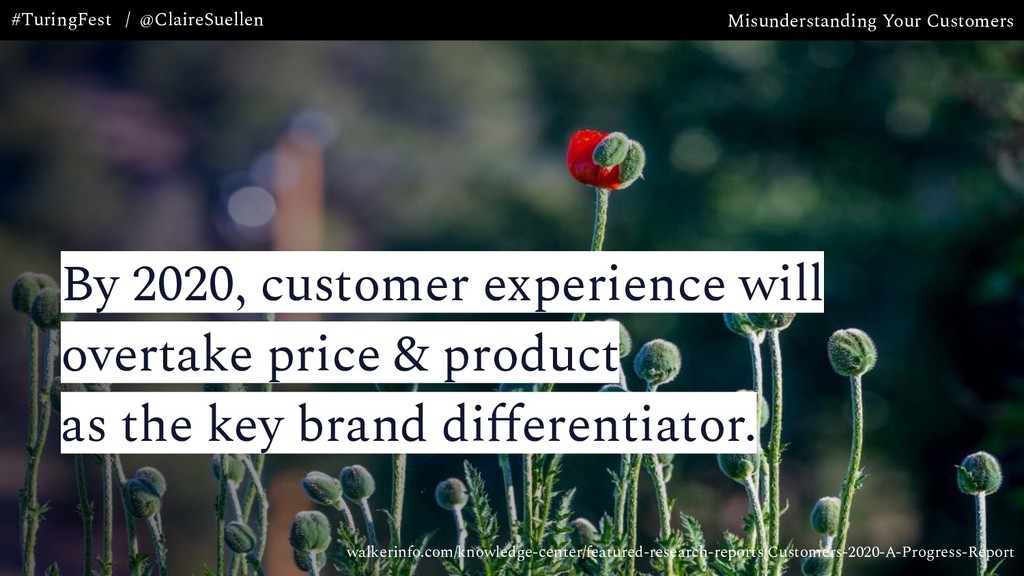
Now two thousand eleven was a while ago in terms of how quickly, technology evolves and the space continues to grow. But this need to match your customers' expectations with the right experience is only getting more urgent. So more recently, in two thousand seventeen, Walker, the company that studies b to b customer experience trends, found that by twenty twenty, the customer experience will overtake pricing and core product as the main brand differentiator when a, when someone is making a purchase decision.
And of course, as we all know, twenty twenty is only about three, four months away, so we have basically arrived. Now I I wanna pause for a moment and acknowledge that this idea of misunderstanding your customer or not knowing who they are might sound a little bit silly or or basic, because we all work hard to understand who it is we serve.
Who here has ever developed something like a a buyer persona or an ideal customer profile? Okay. So essentially everyone in the room. If we ran into each other in the hall after this talk and I asked, you know, who you sell to, who you market to, who'd be able to tell me the the basic demographics of who they serve?
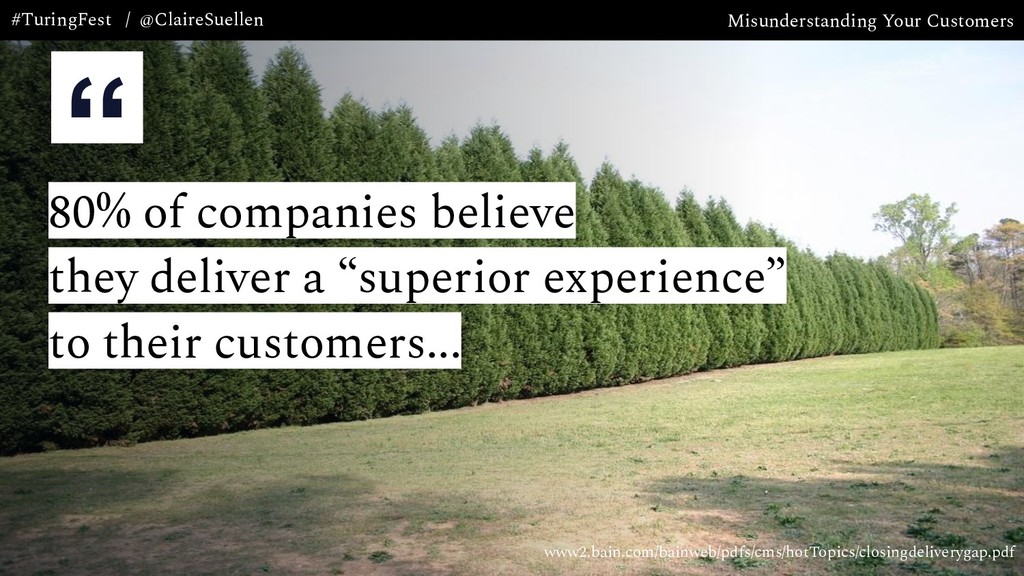
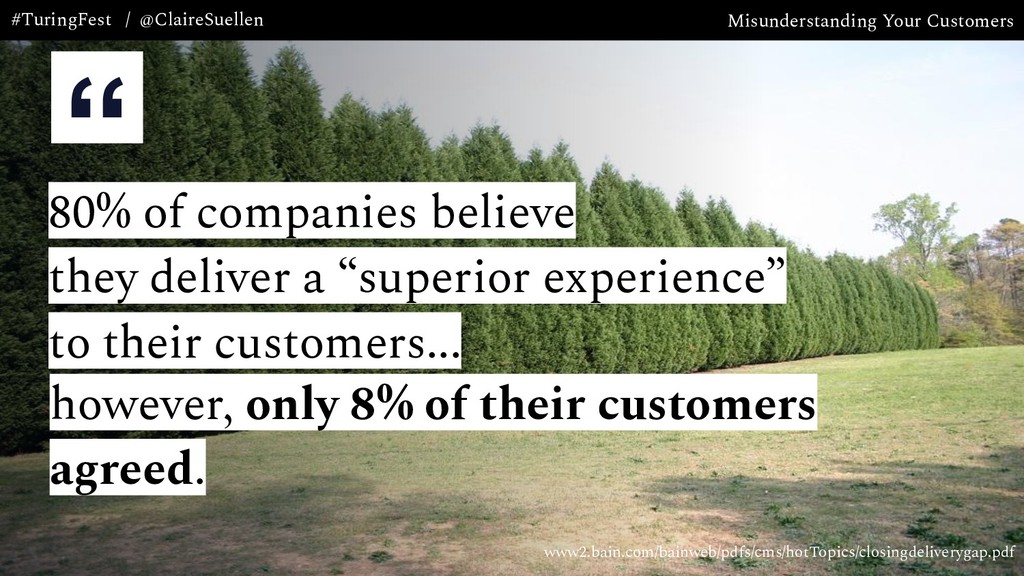
Ideally, yeah, most people here. So we've all put the work in, and and we all understand that this idea of customer experience is fundamental. But I do have one more study that I wanna share, and you might not love the results. So when Bain and Company did a study a a study on internal company perceptions versus customer perceptions, they found that eighty percent of companies believed, they were providing a superior experience to their customers, yet only a very depressing eight percent of customers agreed with this.
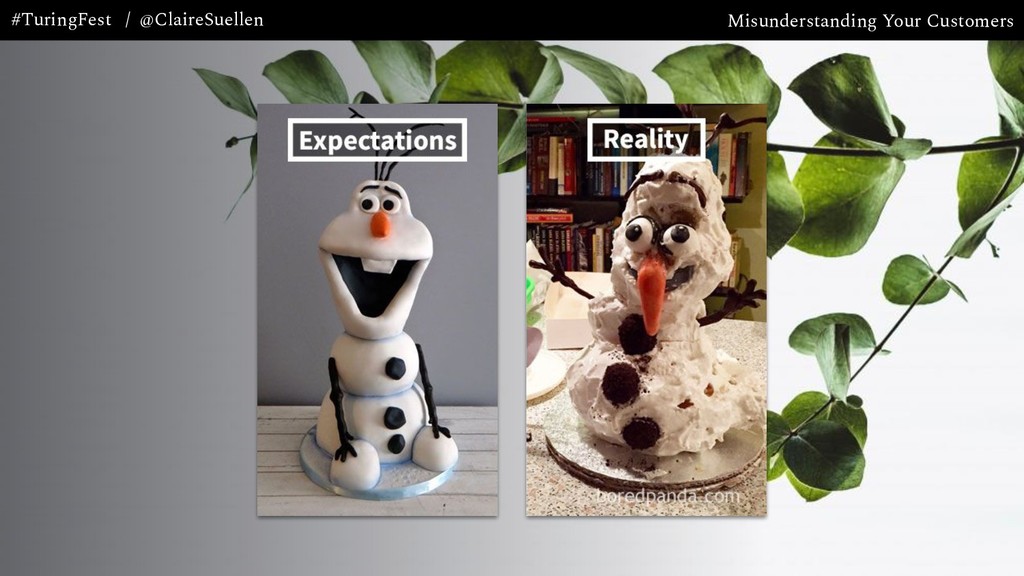
So eighty percent versus eight percent is a massive gap. Ultimately, I think everyone knows where this is going. What we think about who our customers are and and what they what they're going through, what they need, what they think of us is totally out of touch with reality.
This is my this is my favorite, like nailed it Pinterest reference ever. And the real question to me is where does this gap come from? Because this is not a room of unintelligent people. We all know the importance of our our customers and providing a great experience because without our customers, our companies wouldn't exist.
So where does this where does this problem start? From what I've seen, it's something that that when it begins is so small, you really don't notice it, and then it becomes crippling over time as your company grows because it grows along with you.
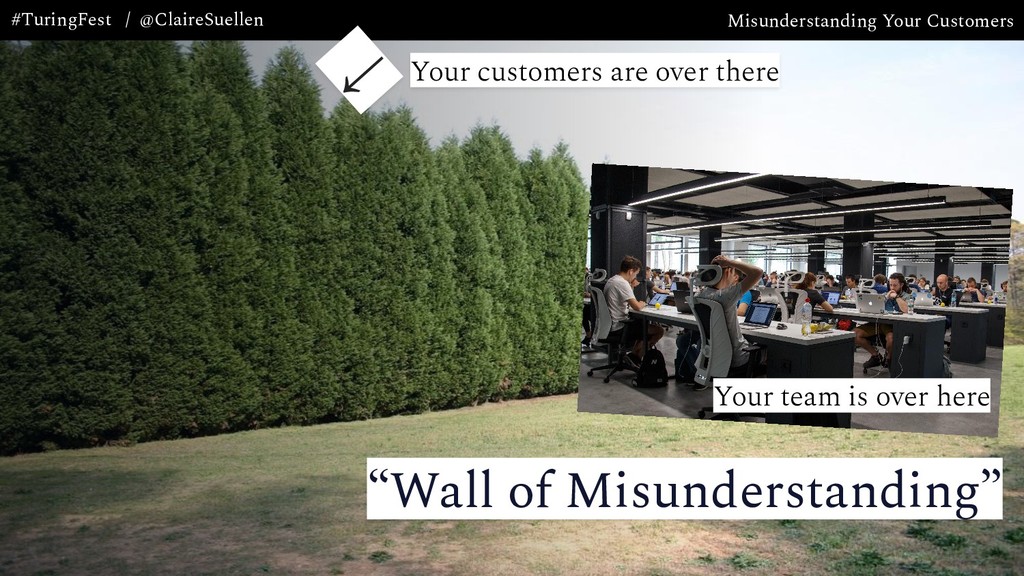
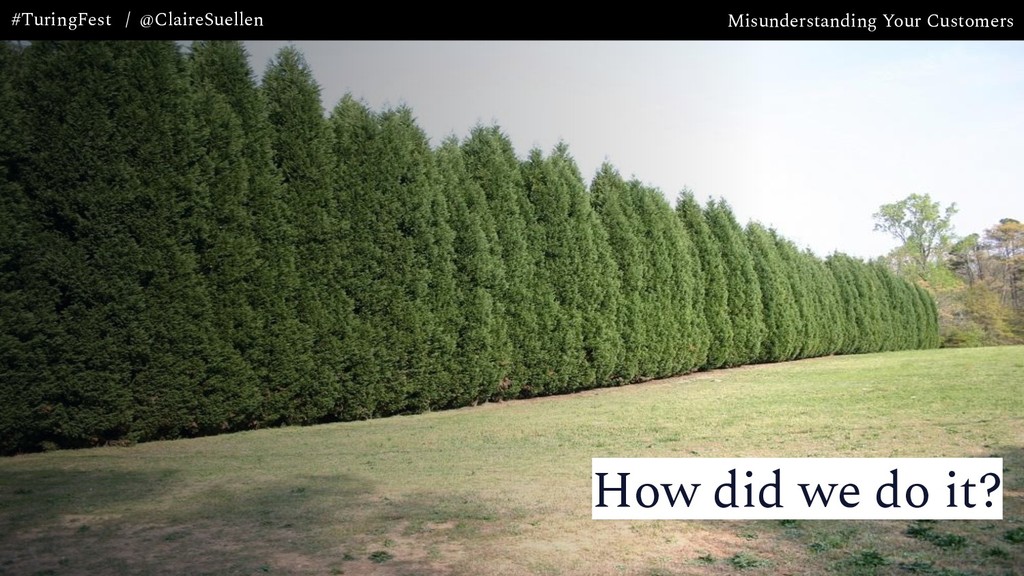
So I refer to it as the wall of misunderstanding. Gonna there's going to be a lot of plant references over the next couple slides. Because the the taller this wall grows, so to speak, as your organization grows, the fewer the fewer opportunities your team has to interact with the people who are actually purchasing from you.
And when you can't interact with someone, it's really hard to empathize with them and and meet them where they are and meet their expectations. So when a team is small, it's it's just the founders or it's the founders and the first few hires, that that wall is much less threatening.
You can think of it more like a weed that is annoying, but, it's it's really not causing any damage. Because at that stage, when you're really young in the company, you have to maintain closest to your customers or you'll fail. So you're probably hand holding people through, demos even if you're trying to sell something, much lower touch.
You might be answering every support ticket lovingly. You you probably are able to name a lot of your customers on a first name basis. But over time and with scale, maintaining that level of personal connection is just very difficult and in many cases near impossible.
And so at some point, you look at your team and and their their priorities and the internal politics they're managing and your customers are over here, totally out of touch. So how do you know if this is an issue within your team or within your company?
There's a couple of symptoms that I often see. And and usually when I work with a team, they, first perceive these to be isolated issues. And then it becomes an under and then we realize later on that they're all related to this deeper foundational problem.
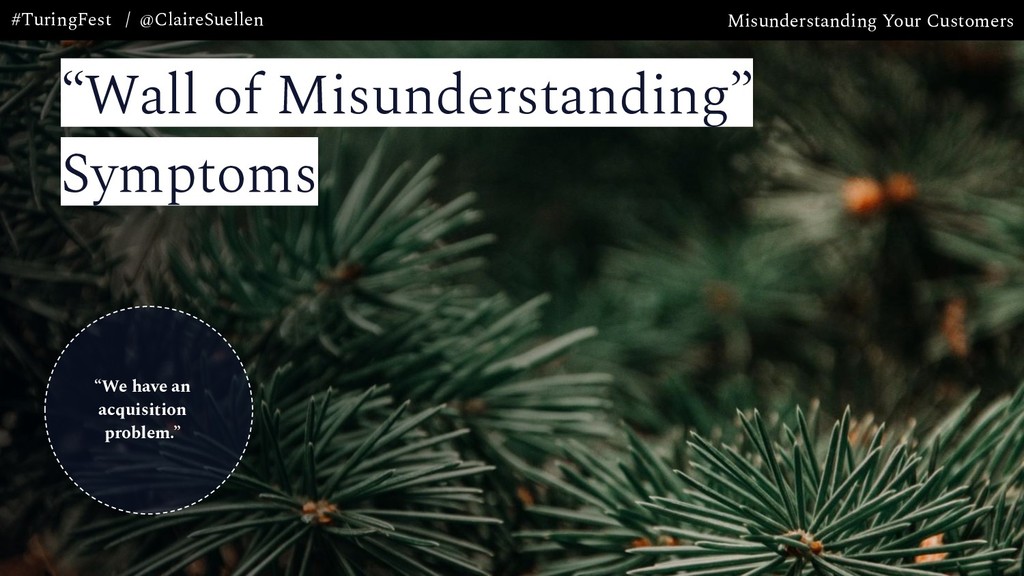
So the first is typically a realization that we have an acquisition problem. Right? So you're you're spending money on you've got marketing budget, but you're just unable to drive the the leads or the sign ups that you need month over month. We have a churn problem.
So maybe acquisition is is humming along fine, but it's not enough to make up for the number of customers you're losing monthly or quarterly or or annually. Deals take forever to close, and then they become really ****** customers. So if you've got a sales team, if that's your org style, maybe you're noticing that your, your sales reps that you have to drag prospects through that process.
And then when prospects convert, they become really needy and demand a lot of the customer success or support team's time, more than they should. The final one is you're shipping new features, but adoption isn't improving. So engagement remains about the same, churn remains about the same.
And these are all very important, critical actually, issues to solve. But because they all stem from a deeper foundational issue, you have to fix this by starting at the root of the problem. And I've seen two really common roots, so to speak, that lead to this, misalignment with customers.
And let's walk through those. So the first one is that decision makers within your team could be adopting popular knowledge or, frameworks or tactics without really thinking about how those apply to your customers specifically. So around this time last year, I spoke with the CEO of a company who, or that had done really well in its startup and its early growth phase.
And now the team was making a shift upmarket. And to support that shift, they brought on a new VP sales and a new VP marketing. And these new VPs were deeply experienced in the enterprise SaaS space, so they were well poised to help the team make the shift up market.
But what ended up happening was that this new VP these new VPs essentially put in place sales and marketing systems that they'd seen work really well at other companies, but that they didn't really stop to think or analyze whether or not those systems would work for this particular market being served, this particular type of customer.
And so what ended up happening was that tons of time and resources were spent on revamping these two departments and the entire sales and marketing process to be more enterprise. But the target audience being, the target audience they were going after didn't respond well to this style of being sold at all, didn't meet their expectations or their needs.
It actually did major damage to the reputation of the company within the community they they lived in. And ultimately, in order to in order to make up for the the huge amount of burn, the two VPs had to be let go. So when I spoke with the CEO, all that was left of sales and marketing was a skeleton team of just a couple of individual contributors at the junior or mid level.
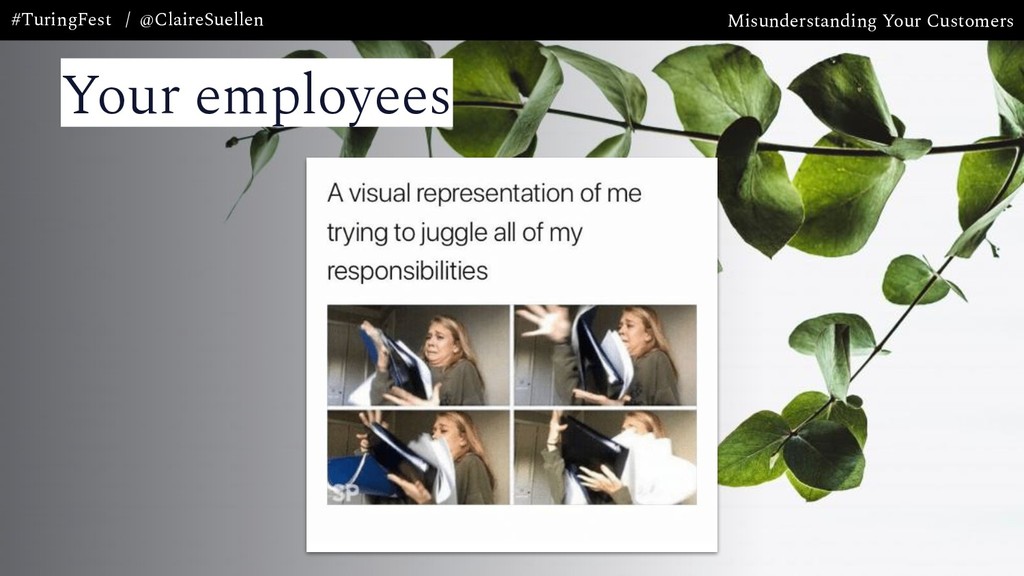
Which brings me to the next piece of this problem. If you have less experienced team members in senior roles, they are very likely, drowning in the weight of their responsibilities. I'm I'm speaking about, you know, when you take on you've got teams team members who are in their their first or their second management role and you're trying to scale rapidly.
People in those situations are desperate for some kind of silver bullet that will help them hit whatever KPI they're responsible for this month or this quarter. And this is not necessarily because you have bad employees, It's simply because they don't have the they may not have the experience or have been in the space long enough to really know what it is that they can do that contributes to the customer's success.
And so what they're thinking about is is well, on the marketing side, which is where I which is where my background is, this is where you start to see, like, spammy, like hacky tactics employed. So that might be things like using pop ups at a time when it doesn't make sense within within the customer's journey or within the product.
I have definitely seen this before in real life. Intentionally making it really difficult for a customer to cancel their account when they choose to do so. Like removing the cancel button and requiring someone to reach out to customer support. Ridiculous things like that.
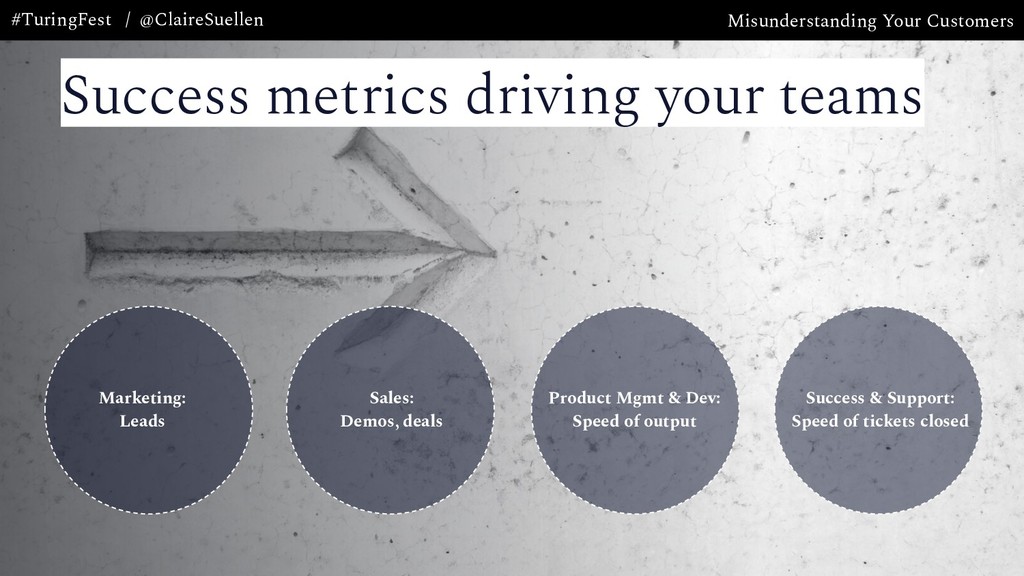
And the other wall of misunderstanding root, so to speak, that I see a lot is departments being incentivized by metrics that don't actually match what your customers need, don't match customer success. So what do I mean by that? This slide shows some pretty standard KPIs that you might see across a company, very common in SaaS and then outside of SaaS as well.
So marketing might be responsible for leads and all of the sub metrics below that. Sales could be accountable for demos held or deals closed. Again, if you've got a sales team within your organization, your product management or your, engineering team could be responsible for things like, speed of output of new releases or uptime.
And then the success and the support teams are often responsible for things like NPS scores, speed of tickets closed. And there's nothing inherently wrong with measuring the success of your departments by these metrics. Like these are very neutral. But what I often see happen is that metrics like these were put in place very early in the life of a business and then never reevaluated through the lens of what kind of behaviors do these incentivize.
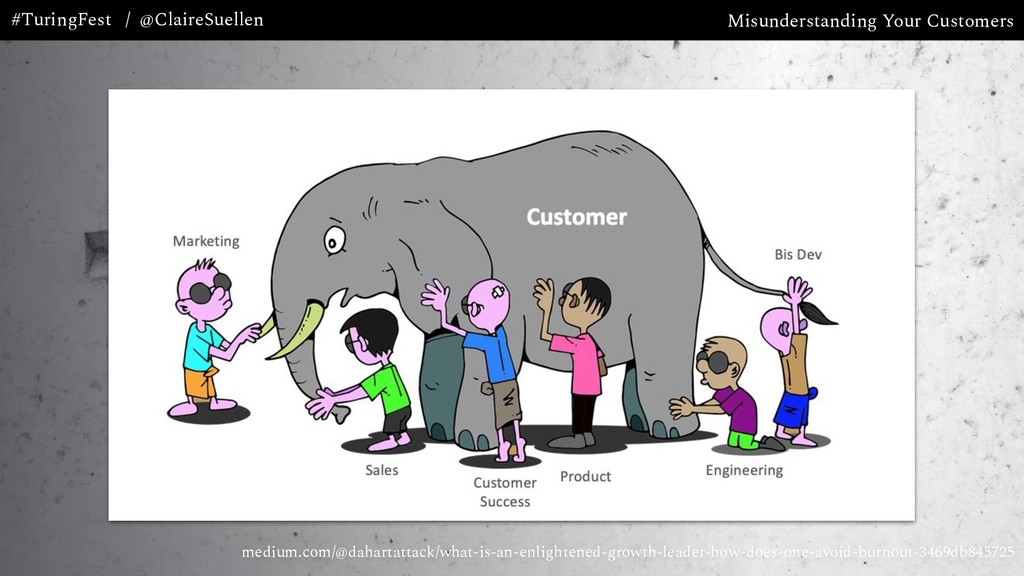
So when metrics are left in place without that without that lens applied to them, it can often create this kind of siloed culture or negative behaviors, within your within your departments. A friend of mine, her name's Denny Hart, and she's also in the SaaS growth space.
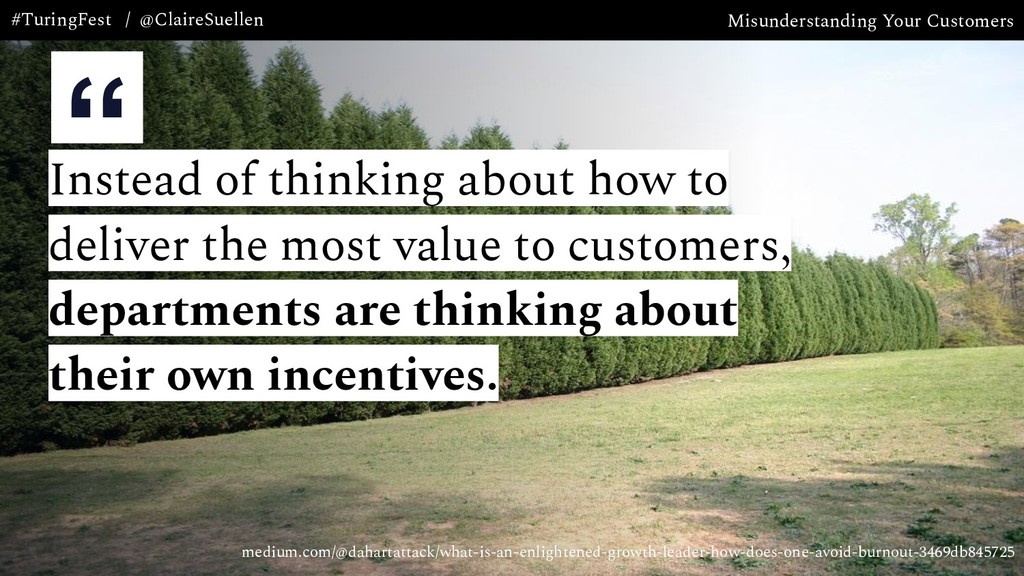
She recently wrote a great article about this phenomenon. And I think she summed it up really well when she said, instead of thinking how to deliver instead of thinking about how to deliver the greatest value to customers, departments can end up thinking about their own incentives.
A long time ago, I knew a sales manager at a company within a building, an unoffice building where I worked, who was a lovely person, was promoted to his role from individual contributor on the sales team to running the outbound sales department. And so he was responsible for making sure that a certain number of reps generated a certain number of demos held every month.
And this particular sales manager was not well trained being promoted from individual contributor up to manager, didn't really receive any mentoring or coaching, and so didn't know how to scale his knowledge and teach his team how to increase their demo count. So what he ended up doing to cover for that, was marketing would receive inbound demo requests, of course, with their job was to drive those.
And when a sales rep would hold one of those marketing generated demos, the sales manager would would count that as a sales source demo. So essentially he was cooking the books every month, to make him and himself and his team look good. And again, not out of, any kind of malice but because this this is what his KPI incentivized him to do and he just wasn't experienced enough to see the bigger picture of how disastrous that is when you're making quarterly and annual company projections and
you don't actually know and you actually think that you're generating twice as many new, prospects as you really are. So let's, shift in a little bit of a more positive direction. Now that I've talked about all the ways that this can cause harm, what does good look like?
Like, what would it look like or how much more effectively can a company grow if you take down this wall of misunderstanding between your customers and your team? So earlier this year, I worked with a company called Autobooks, and our goals in working together were to increase new sign ups to the product and, also new user activation.
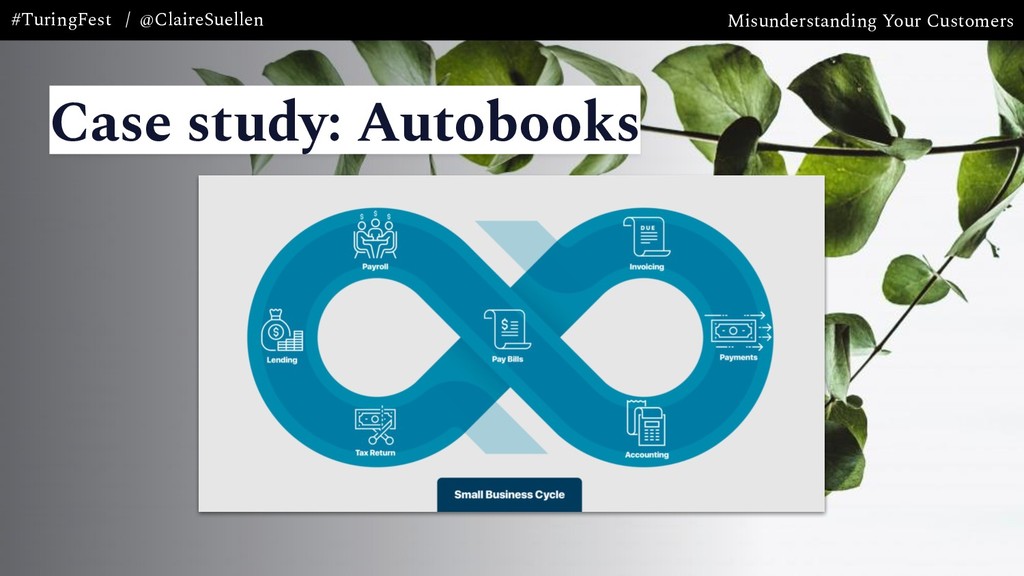
So users who signed up and reached the the core value moment within the product, and went on to stay as long term customers. And Autobooks is a suite of financial tools for small, like, brick and mortar or small local businesses. So it's a b to b to c model.
So Autobooks sells all of its tools, and you can do a lot. As a business owner, you can manage payroll, bill pay, accounting and taxes. You can actually manage lending through Autobooks. You can send electronic invoices, and, you can accept credit card payments straight into your bank account all with this tool.
So Autobooks will sell to a bank, and the bank will essentially integrate or embed Autobooks within its online, banking experience. So a small business customer of a bank can then sign into their bank account and do all these really cool things right inside their bank.
So Autobooks had a really powerful platform, but they had an acquisition problem and they had an activation or adoption problem. So they would partner with a new banking client and they would do a marketing campaign announcing auto books to this this banking client's, small business customers, and they'd see a trickle of people sign up and a smaller trickle of people of those sign ups actually stick around and use the product, but they weren't near the numbers that they needed to hit their annual goals.
And so we decided to do some research on the very best small business customers using Autobooks to figure out, alright, what's different about these people? Like, why do they love it so much? And how do we go find more people like this? So here's what we found.
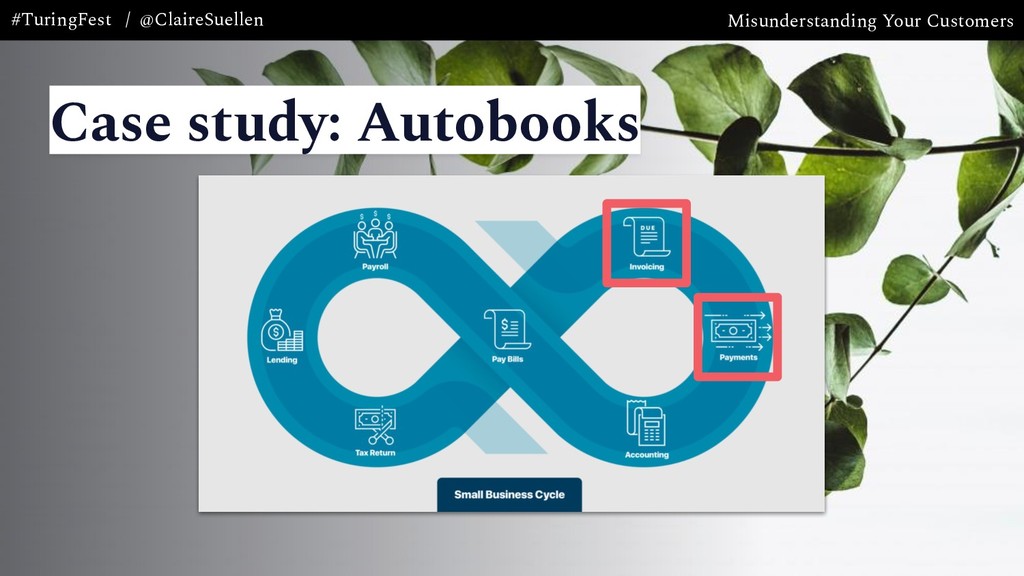
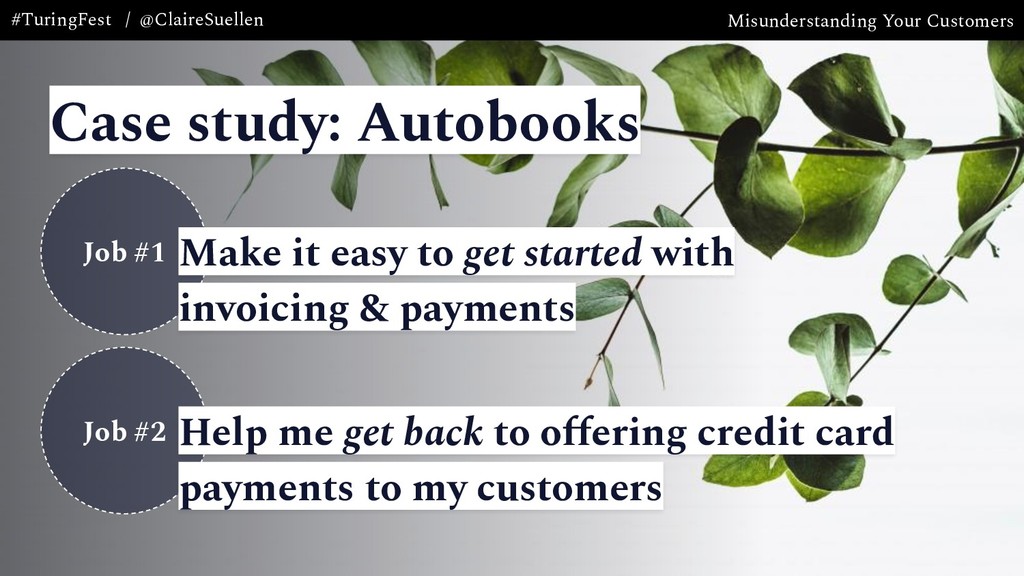
The first thing we found was that Autobooks' best small business customers really loved two features in particular. They loved the ability to take credit card payments from their customers and have those sent straight into their bank account. And they loved the electronic invoicing thing.
And the rest of the set of features they didn't really get excited about. I mean it was fine if they use them, but these were clear indicators that or I'm sorry. These were the features that when they found out about Autobooks originally made them go, oh yeah, I want that.
I want this thing. Which leads me to the second thing we found out. We learned we found a couple of patterns in why people picked AutoBooks with of as opposed to using any other tool to manage all of these thing all of these, different tasks or to not do anything at all.
So the first the first reason we learned that people found auto books really attractive, was if they were in a situation where they were opening up a new business for the first time. So they were figuring out all of their business processes for the first time.
They're very overwhelmed and they're looking for ways to simplify that I just opened a business overwhelm. And when I say I just opened a business, this is regularly, someone running a bakery or someone running a fitness studio. So a lot of these folks were interfacing with various software solutions for the first time.
And the easier their life could be, the better. So they really loved that they could send invoices and take credit card payments all right within their bank account rather than having to have my bank account over here, my invoicing software over there, I've got PayPal over here, or Square to take payments.
They loved this all in one thing. So the other situation that led a lot of people to fall in love with Autobooks, was if they had previously previously used a different payment processor. Oftentimes we saw it was PayPal, and they had a bad experience.
So they had received a large payment from one of their customers and for some reason it got locked up in PayPal and they would have to fight with whoever their provider was for months to get their payment into their own account. And when you're running a very small operation with pretty low margins, this is a terrifying situation.
And so a lot of these folks would go through that experience, they'd stop taking credit card payments at all, they would only take cash, And eventually that became detrimental to their business. To the point at which they were like, okay, I gotta get back on board with this credit card thing.
What can I find that's less frustrating than like the biggest players out there? And they loved auto books for that reason. So having this information, this this knowledge of what features were being used and why changed everything about the company. Everything. So most crucial to the work that I did with the team, it changed the North Star metric that we monitored for, in in considering new users successful.
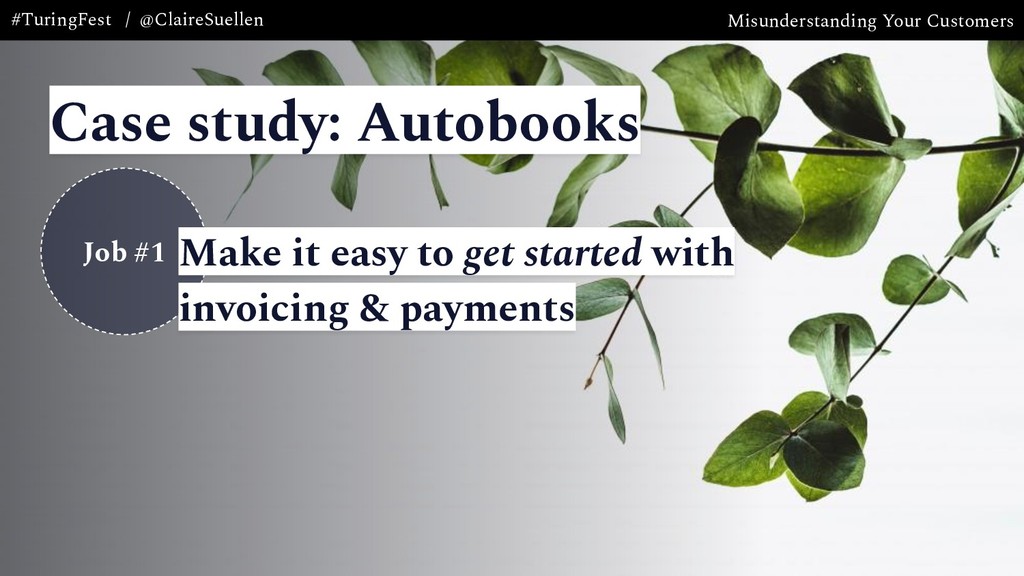
So we learned through this that if a new user when when a new user received their first credit card payment from one of their customers, that was this magic moment at which they understood the value of the product. And and so the shorter we could make the journey from finding out about auto books to getting paid for the first time, the more successful we'd be.
So we we revised everything about the customer experience, especially leading up to that point. So the messages we used in our marketing totally changed. We were no longer talking about auto books as this robust suite of tools for small businesses. We talked about how it made getting paid really, really easy.
And also you can send invoices electronically. You don't have to make them in Word, print them off, and mail them because who does that? It also changed the product roadmap. So we ended up developing and launching a feature that made that getting paid process, like getting paid by credit card, even easier.
It was relatively easy when I when I started working with the team, but, a new release or I'm sorry. We set aside some other features in order to prioritize increasing the ease of that getting paid aspect. And then naturally, the onboarding experience from us from a user signing up to actually reaching this getting paid moment totally changed.
So rather than a new user signing in and us saying, okay, here's billing, and there's accounting, and there's payroll, and there's invoices, and and so on. We took them straight to the invoicing and the credit card payment areas of the product, and we saved all the other stuff for later after they felt this getting paid for the first time level of success.
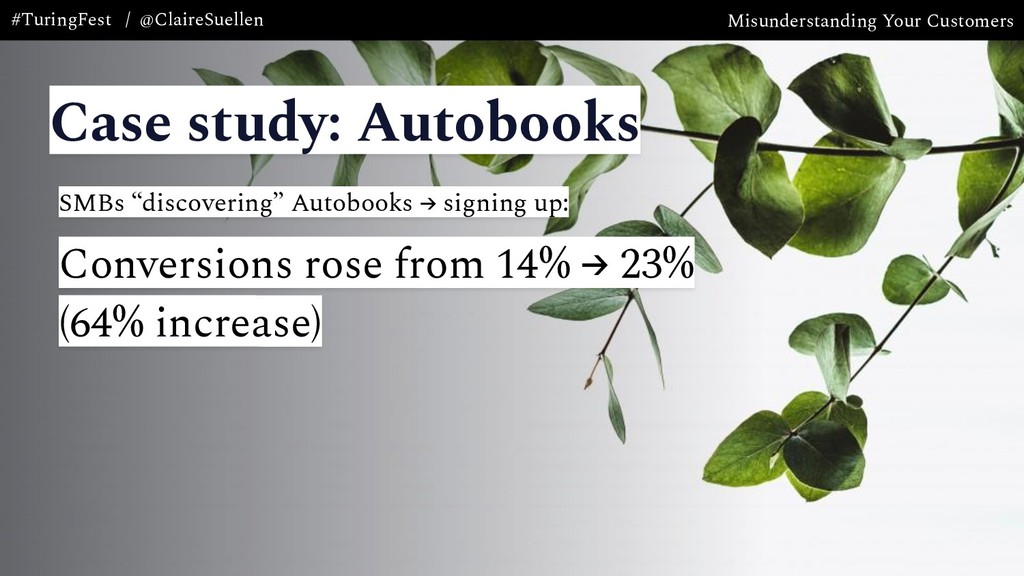
And we tracked our we tracked our progress using, two metrics. One was the the, percentage of SMBs discovering auto books to signing up for the first time. So we just we described discovering auto books as they opened our email for the first time, they visited our web property for the first time, and so on.
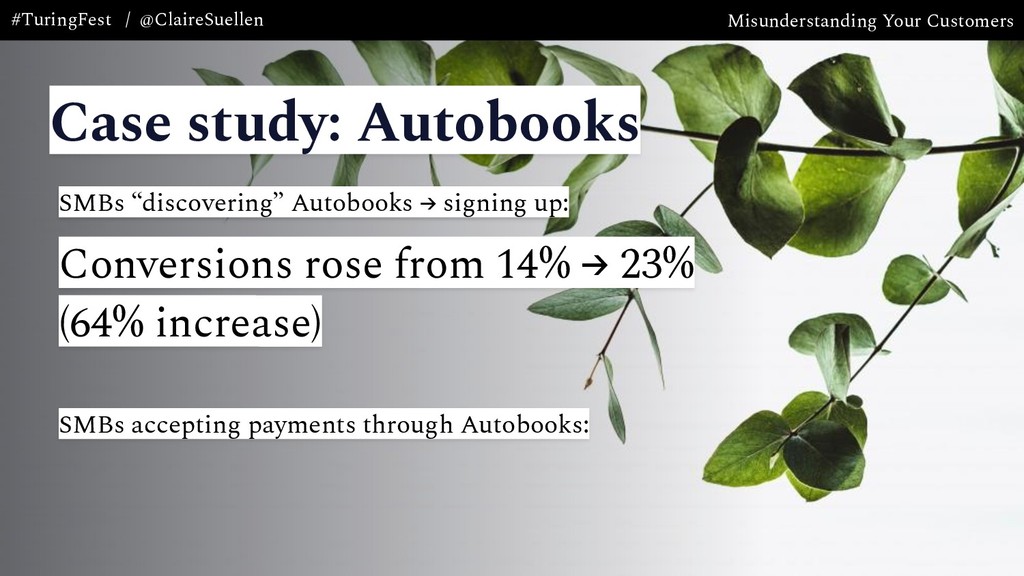
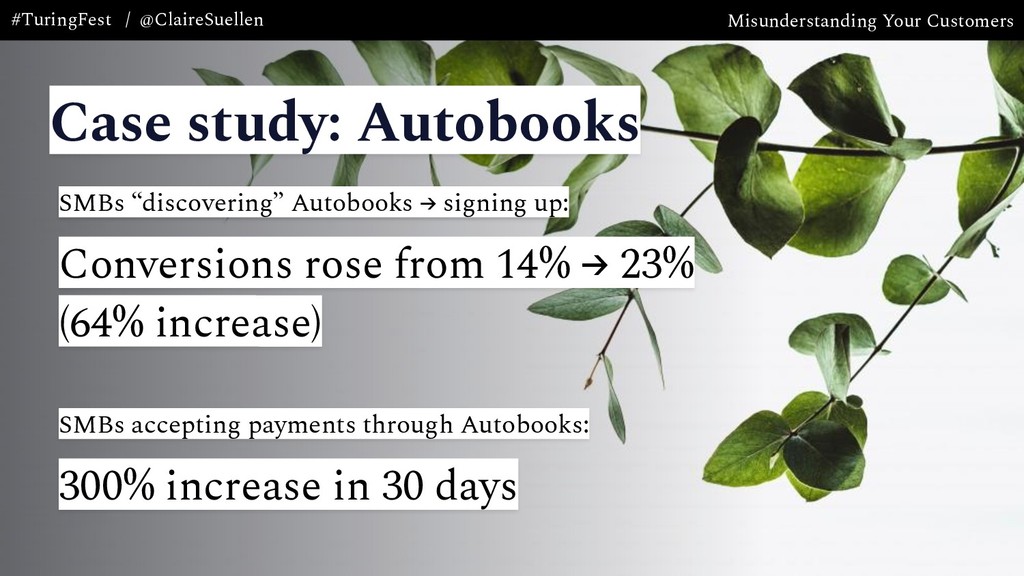
So generally becoming aware of us to actually wanting to use us. And with all of these changes across the customer experience, we saw the monthly rate of new users discovering Autobooks to signing up increased by sixty four percent. So the other way that we track success was by the by counting the total number of small businesses accepting credit card payments through auto books because that was crucial to our business model.
So auto books takes a tiny percentage of each transaction and and that's like that's the general model. And within thirty days of launching that particular feature that made getting paid by credit card easier, we saw the overall number of SMBs using auto books to get paid increased by three hundred percent.
So how do you do this? What does that actually look like? I could go into all the complexities. I mean, when we're talking about organizational change, it's kind of a beast. But the gist is if you can if you can uncover what your customer's story was, so what happened in their life that led them to seek a new solution, how they make their decision and why they choose you, and then reposition everything around that.
That's all you gotta do. It's not that hard. I'm very kidding. It's actually it's actually pretty enormous, because we're talking about new positioning and messaging, potentially new sales and customer success approaches, new marketing channels to explore, a new roadmap potentially of your of features you've got coming up.
So it is a big mountain to climb. But getting started actually does not have to be that hard. I have found that the the first step can often be completed in a quarter and usually less than even a quarter if you have the right people and the bandwidth that you need.
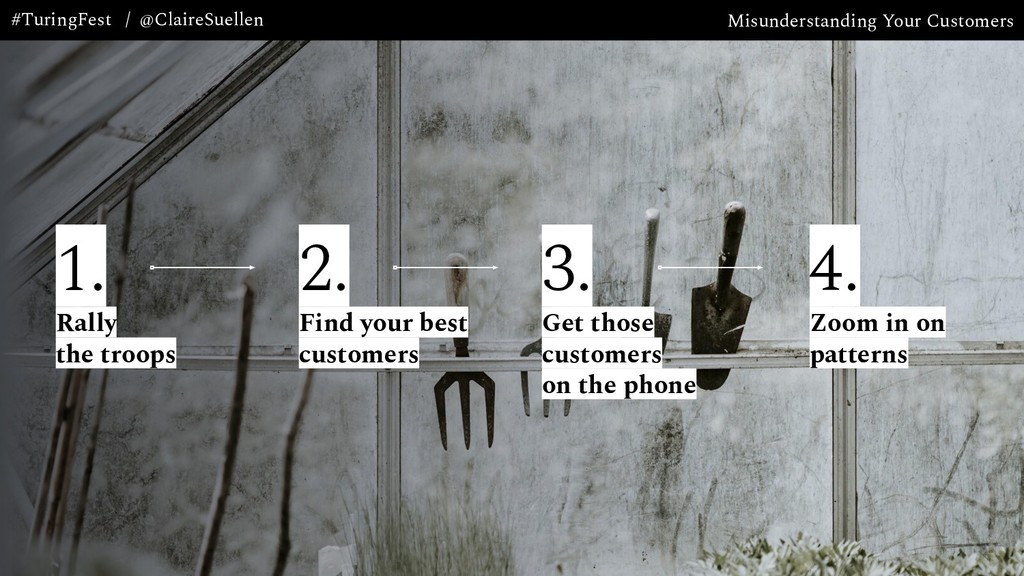
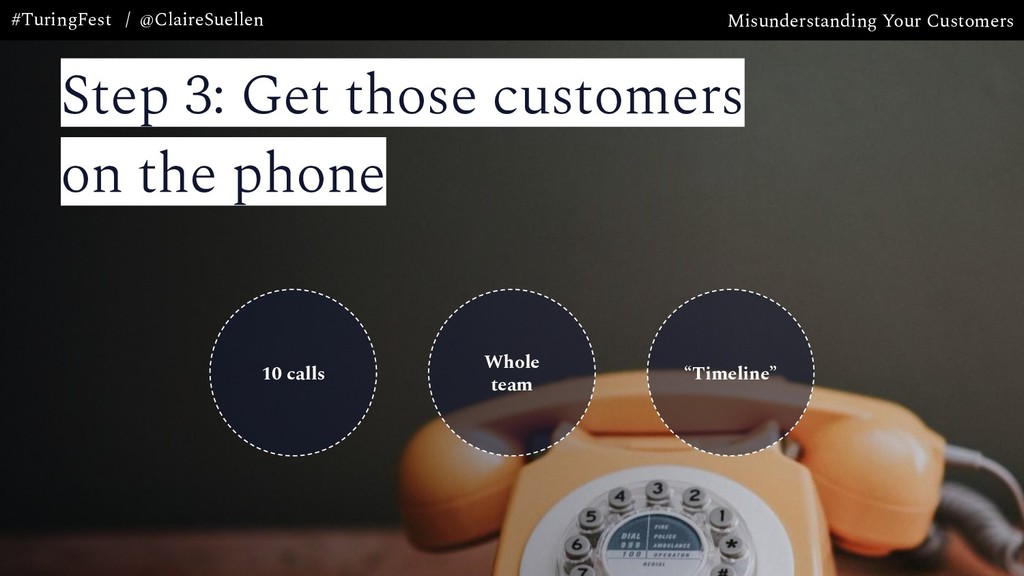
So the first step is just talking to ten of your best customers at its simplest. It's just talking to customers. And to put some guidelines around that because I know that's quite vague, I'll walk through the the four steps to this. So the first steps is rallying the troops.
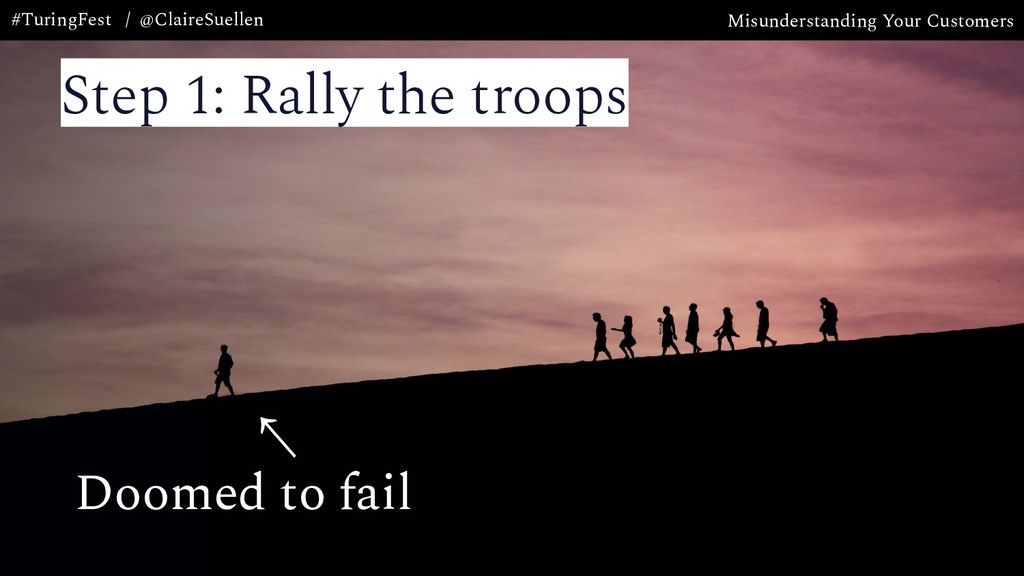
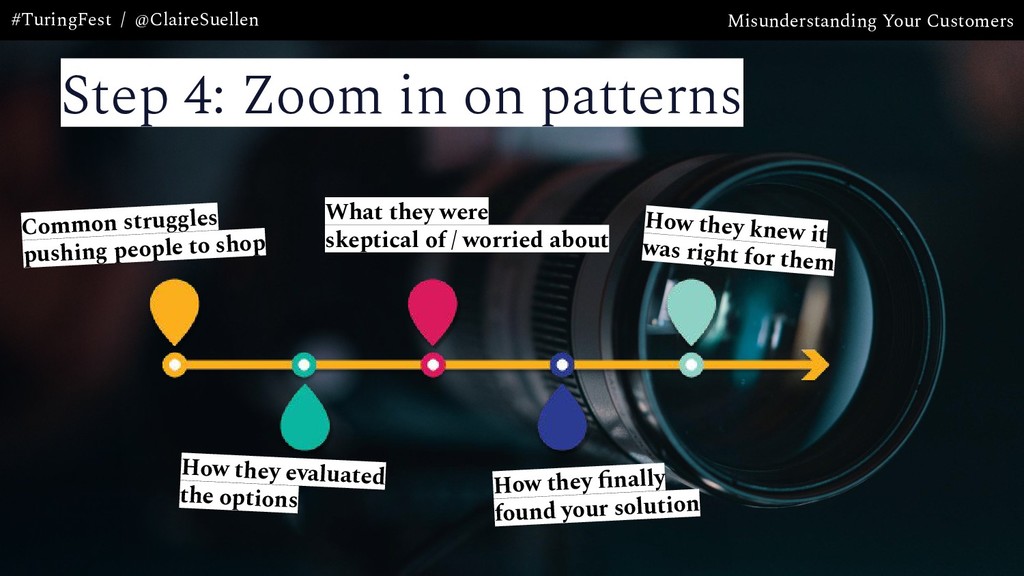
The second is finding those customers. The third is getting them on the phone. And then the fourth is what are the what are the patterns in the information you you find? So when I say rally the troops, this is not an exercise that can be a top down solution or something that one rogue employee goes off and does all by themselves.
Because then all you have is one person who's really jazzed about better understanding your customers and everyone else who's like, okay, but I'm over here doing my work, so see you later. So to stay in any kind of fighting chance, you've got to get a couple of team members on board with this idea.
If you can if you can recruit from each department someone who already is pretty customer oriented or high empathy, you've got a good you've got a good chance of the that you've got a decent, like, customer squad. So then you need to find who you're going to speak with.
And I recommend like whittling this down, by looking at who's got the highest LTV, who's the most engaged with what you sell. Right? They didn't start paying you six months ago and forgot about you, and they're just paying you because they don't check their credit card statement.
Look for people who are really into your product and get value from it every day. And the ones who are the lowest burden on support, or or the rest of your team. Right? So the people who just get it, look for those folks and get ten of them on the phone.
So I've already mentioned the ten. You don't need to overwhelm yourself with twenty or thirty or fifty. We can talk at at a different time about segmentation and how that applies here. Probably a it's probably a q and a type of discussion. But start with ten.
Ten calls with your best customers and make sure that this whole customer squad you've assembled, your whole, team of customer champions is in the room together. You obviously kind of want to have everyone be quiet because as a customer it's it's weird to be speaking to a room of ten people.
But have everyone listen in to the story that your customer is telling. It is a transformational moment. People learn things about who you're selling to that I swear to you they've never heard before. And it's really important that it's a team activity. Which takes me to what are you trying to learn exactly?
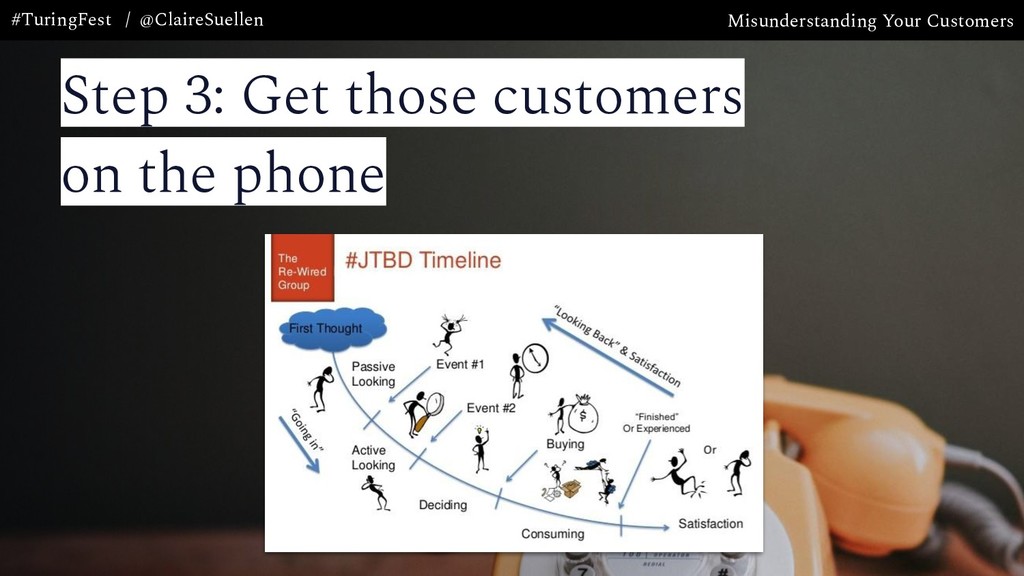
What are you doing on these calls? And I I want you to think of them more like a timeline than the type of call you might use to get feedback on what you sell or to get, feedback on a future idea or to get an a testimonial for your website.
This is really more about understanding the journey that your customer went on in their life that eventually led them to you. And you can do that with questions like, what was happening in your world that led you to realize something wasn't working? And then when you realize that, what happened next? Right?
Like where did you go seeking solutions? And then what happened? It's it's really more of a storyline conversation than why do you like our product? I do have a list of interview questions that I use to guide these calls and I'm happy to share them with anyone who wants those.
You can just reach me by email and, I'm claire at hayelevate dot com. It's just a Google Doc link that I'll send. But once you've gotten these customers on the phone, you get to the fun part, which is figuring out what the patterns are.
So across your customer base, these people who really love you, what were the common patterns? What were the struggles happening in their lives that led them to not like or be unhappy with whatever they were previously using? And then how did they pick? How'd they pick the next thing?
Across your across, again, these best customers, are there patterns in what they were skeptical of or worried about? Eventually, when they found you, what was so special? Right? So for auto books, it was the invoicing and the credit card payments. And the other stuff was it was fine.
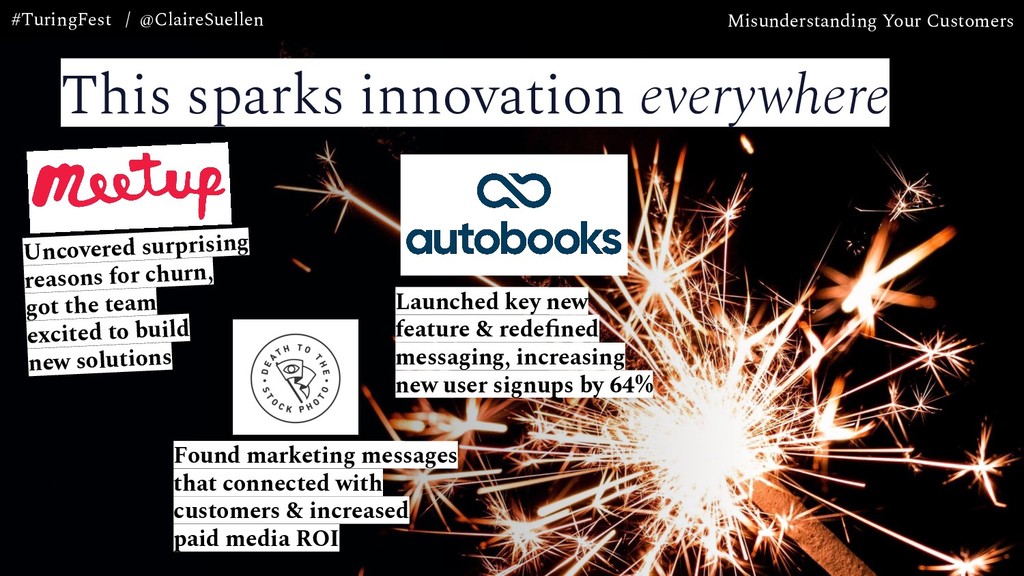
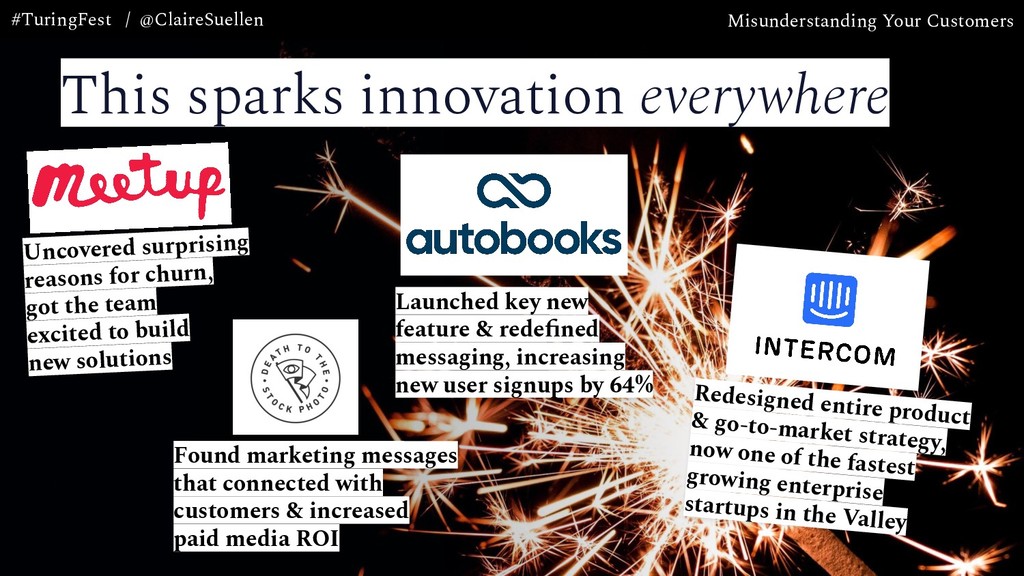
But these two features were super exciting. What are those for you? What do your customers super love? This really does spark innovation across your customer journey and across your organization. So this this particular framework of getting on the phone as a team and interviewing your customers has been used in a lot of companies to great success.
One story I love, you can find the reference to this in a book called, When Coffee and Kale Compete. It's about how consumers like make choices. In that book there's a story about Meetup, the platform you can use to find people in your area with common interests and you can meet up with them and hang out, form friendships.
They they went through this process and they found some really fascinating reasons that they had not known before about why customers churned, which then allowed them to iterate on and reduce that churn. So a company I worked with a while ago called, Death to the Stock Photo, we ran through this interview process and we found really interesting marketing messages that we could use to essentially improve the conversion rates on their paid media spend.
Autobooks, we've already discussed. This led to organizational change and closest to the work I did with them, led to a major new user sign up increase month over month. And then Intercom is pretty well represented here. I know there's a couple of folks from Intercom speaking, maybe folks are attending.
But Intercom has spoken widely about their use of this customer interview process. They really focus in on the the fact that it's under the jobs to be done framework, but they've used this to redo their entire product and go to market strategy. So it is a really big mountain to climb affecting this kind of change, but the getting started piece is really not that hard.
It's ten phone calls. It's something you can do in definitely less than three months if you have the right people on board. And then you're starting to tear down that wall, and you're starting to unlock the next phase of growth. So again, if you do want those questions, I've got that link up here one more time.
If you just wanna chat about this topic, I love I love talking about customer experience, and I'd be happy to chat in the hall, or later on after the conference. Thank you.