
Chris will tell the story of what led him to use $17.3M in debt to buy out his own company and what happened next.
← All talks 

Lead Turing Fest 2023
Buying Out Your Own Company
Auto-generated transcript - may contain errors. Tap a timestamp to jump the video.
Thank you. Well, hello. How are we? We're good? Great. Great. Well, look, I'm excited to be here with all of you. I'm gonna be talking about buying out your own company. This is not something that people do every day, but it's something that I did.
So it's my story. And I'm here to share it. So we'll get into what that means, what happened, why you might ever think about buying out your own company, the lessons from this that I think apply to any business, any project. And that's the plan.
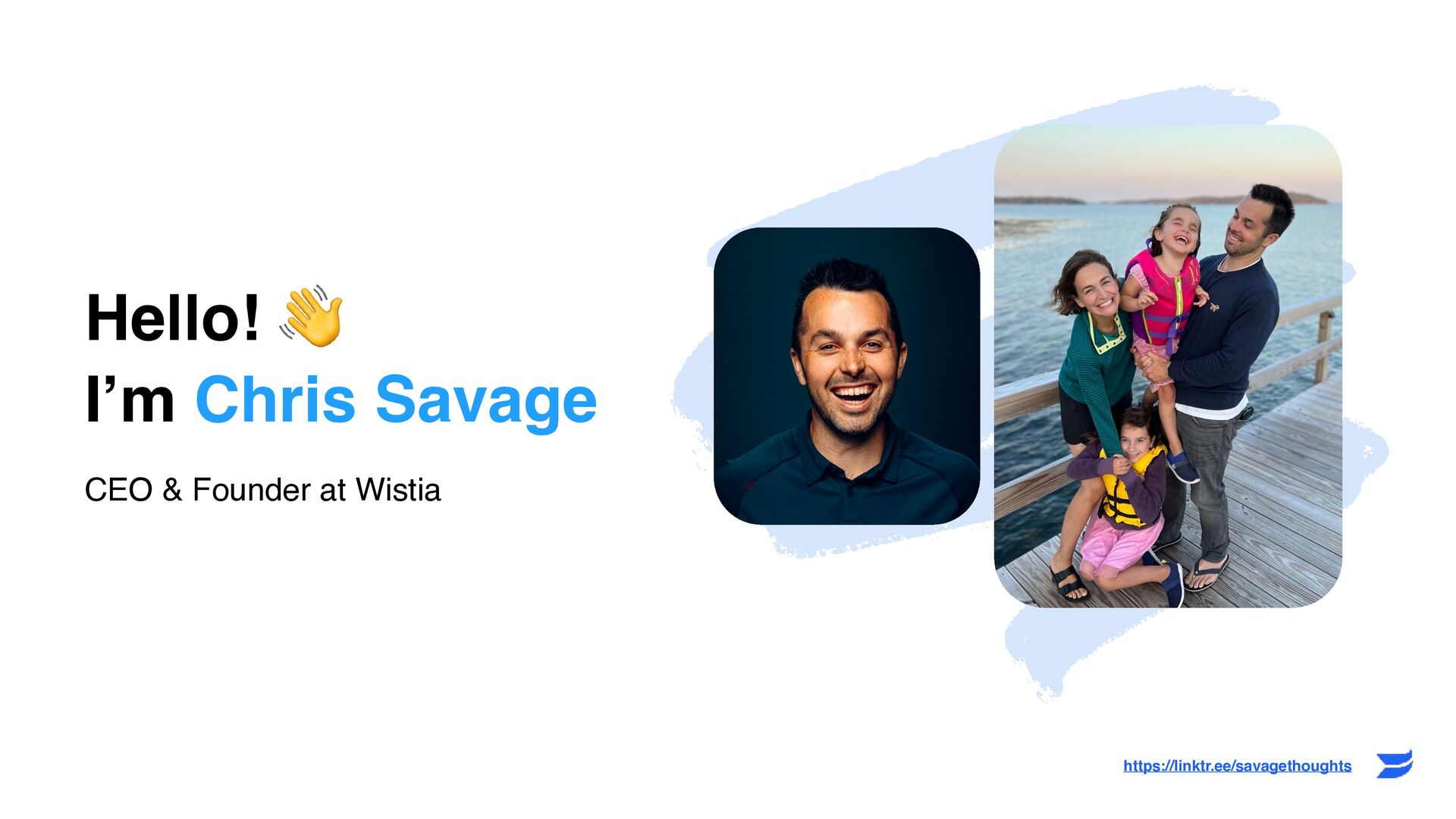
So I'm the co founder and CEO of Wistia, but more importantly, this is my family. That's my wife, Alexandra. I'm holding my five year old, Olympia, and Zoe, who is my seven year old, is cowering down on the ground for some reason. But I live in Rhode Island, in the good old US of A, smallest state out there.
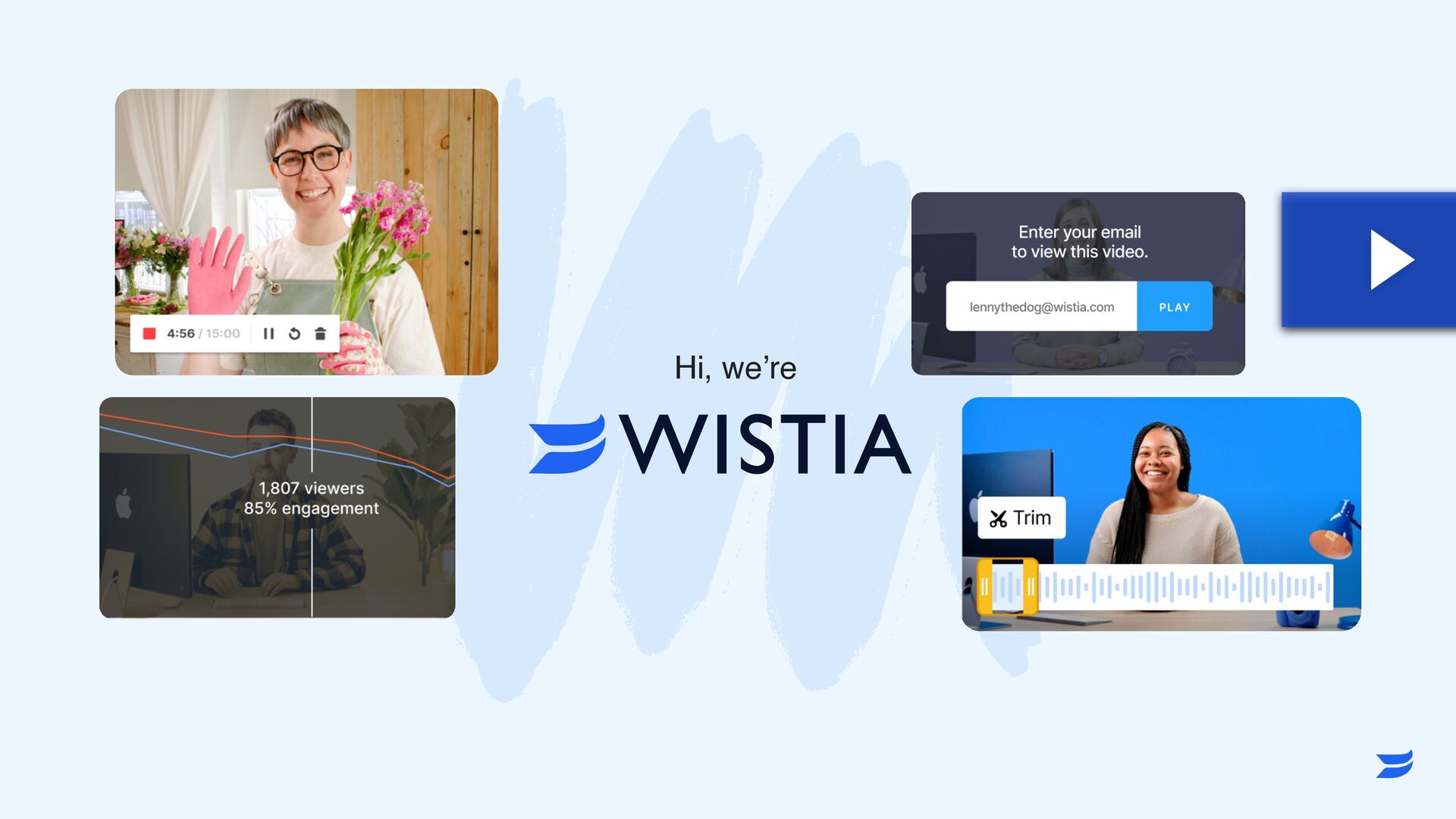
Pretty cool place to be. If I don't say so myself, we call it the Ocean State, because there's so much ocean around us, things you didn't expect to say on stage, but here we are. I run a company called Wistia. Wistia is a complete video marketing platform, makes it easy to create videos, to edit videos, to repurpose videos, to host videos, to analyze videos, all that kind of stuff.
And we are about one hundred and ninety people and pretty remote. About seventy percent of the business is remote today, which for us is pretty different than where we were pre COVID. Pre COVID, were about ten percent remote. But why are we here?
Well, in twenty seventeen, we raised seventeen point three million dollars in debt to do a leveraged buyout of our own company. So we're gonna talk today about how did we get here, and then what happened next. So how did we get here? We have to start at the beginning.
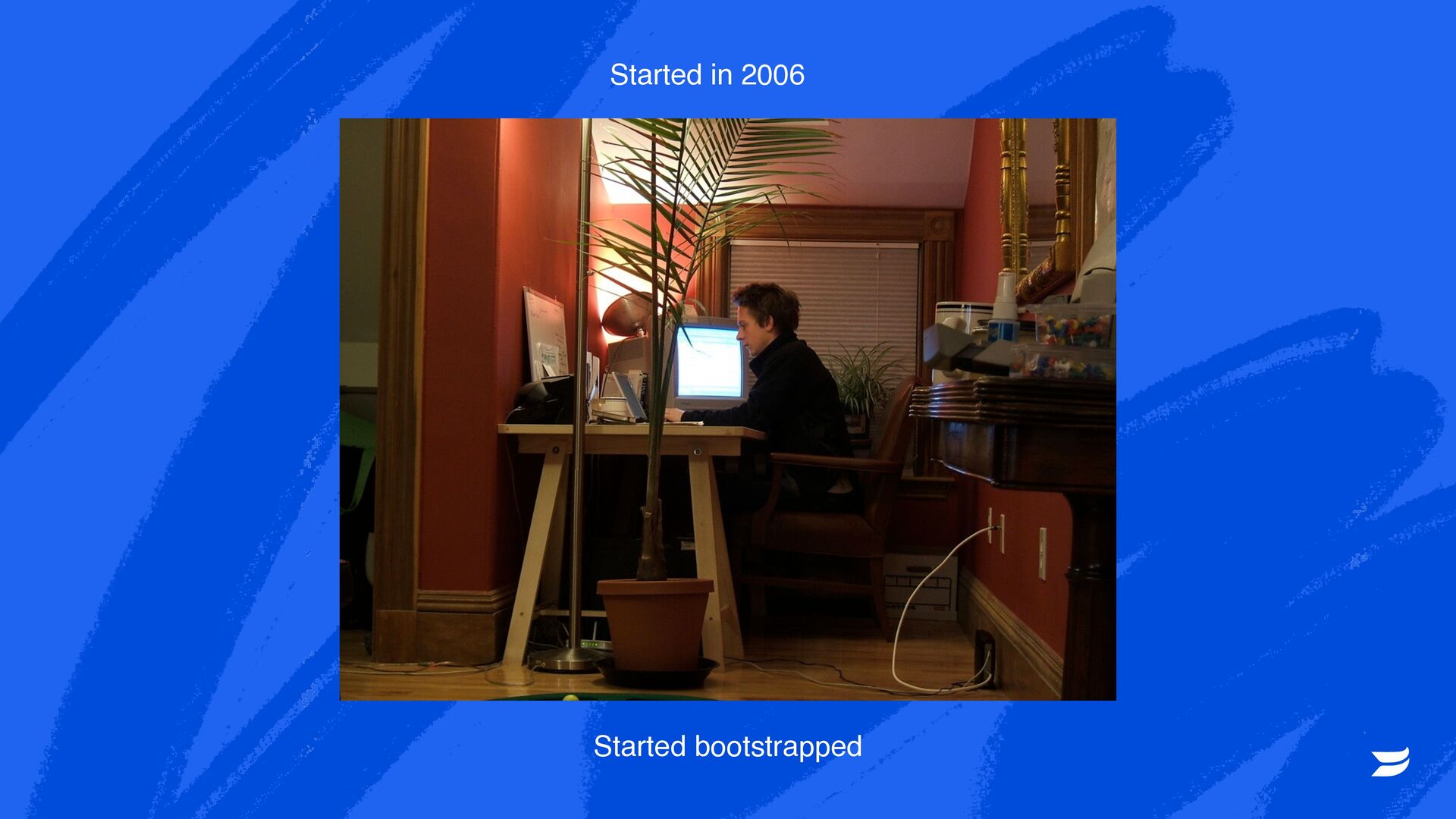
So Wistia is seventeen years old. That's right. Just an ornery teenager trying to figure out their way in the world. You can drive a car, but I wouldn't really trust them with much else. That joke landed. We started in two thousand and six, this is our first office, since my co founder Brendan, and we were bootstrapped.
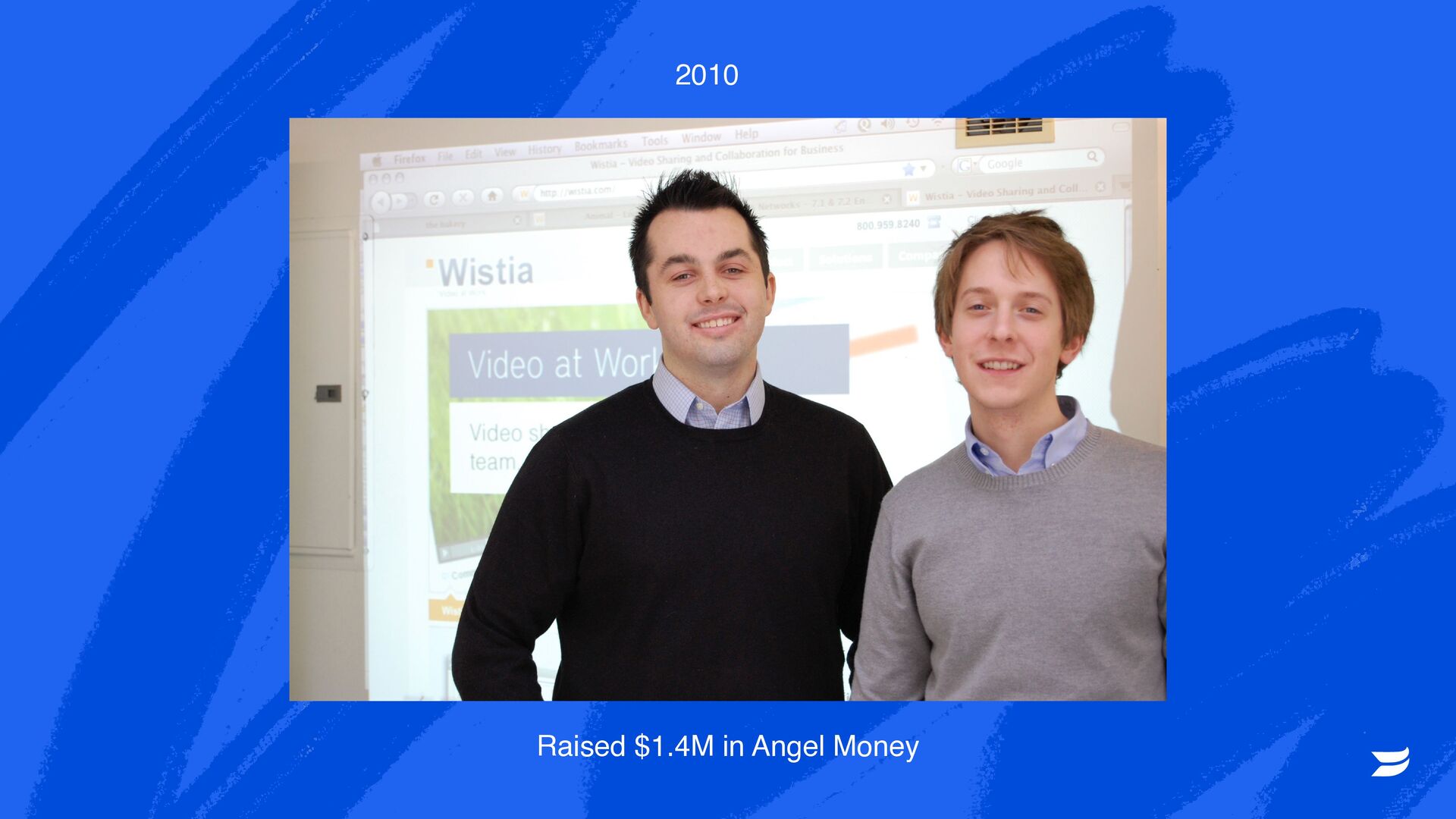
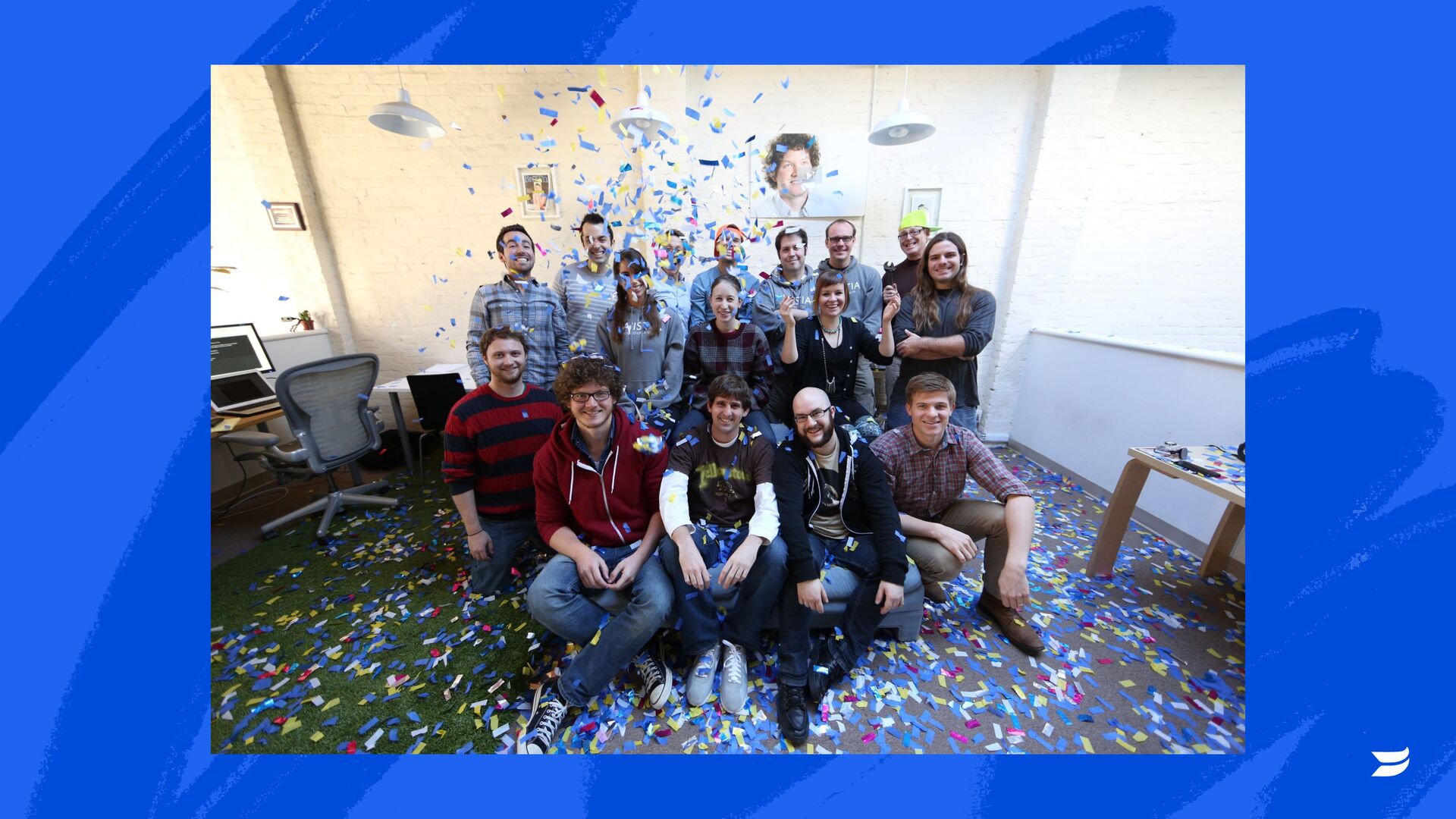
We never raised money, we just did it our own way. And then over the course of the next few years, we ended up raising one point four million in angel money. And this is the glory shot to celebrate that. Yeah, put it together for that. Come on. Look at those guys.
Look at that logo, if you know Wistia. Look at that logo. But we were four years into building the business, and we were actually only four people. This is not what we thought was going to happen. I thought I was going to start a company, and then just like a good old tech company, we do it for six months.
Six months later, we would sell the business. Or if we failed, we would just tell no one that we tried. That was literally the plan. So it was a surprise to be doing it four years later, and it was a surprise to be enjoying it, and it was a surprise to only be four people.
But you'll see how this thread makes its way through the company. And we raised this second angel round, so we did one in two thousand and eight, and we did the second one in twenty ten. I remember telling our angel investors, hey, I don't think we're ever gonna need to raise money again.
I think we're gonna get profitable on this money. And they're like, we don't believe you. That's BS. But you are getting a lot of customer growth, so maybe. Like, let's see. But Brendan and I really, really wanted to get profitable. We felt that it would give us independence, and we felt that once that could happen, we could focus on doing long term things.
We'd made some mistakes in the early years. We raised our first round. We started doing board meetings, for example, with our angel investors who had no right to have a board meeting, but we thought we were kind of playing business, and so we thought that's what you're supposed to do.
It's like, hey, let's have a board meeting. Let's discuss stuff. And I'll never forget the feeling of sitting there in a conference room with my co founder and two angel investors, then the two other guys we worked with were, like, outside the conference room.
And I looked at them, I'm like, this doesn't seem right. This seems like backwards. Shouldn't we be building the thing? And so we started to realize, hey, this is our business. We need to build it. We need to do the things the way we wanna do them.
And after we became profitable, which took another maybe couple years, we started to do a lot of the things that I think are the things that most people If you know Wistia, you've heard of Wistia, it's because of the things we figured out in this era, once we started to become profitable.
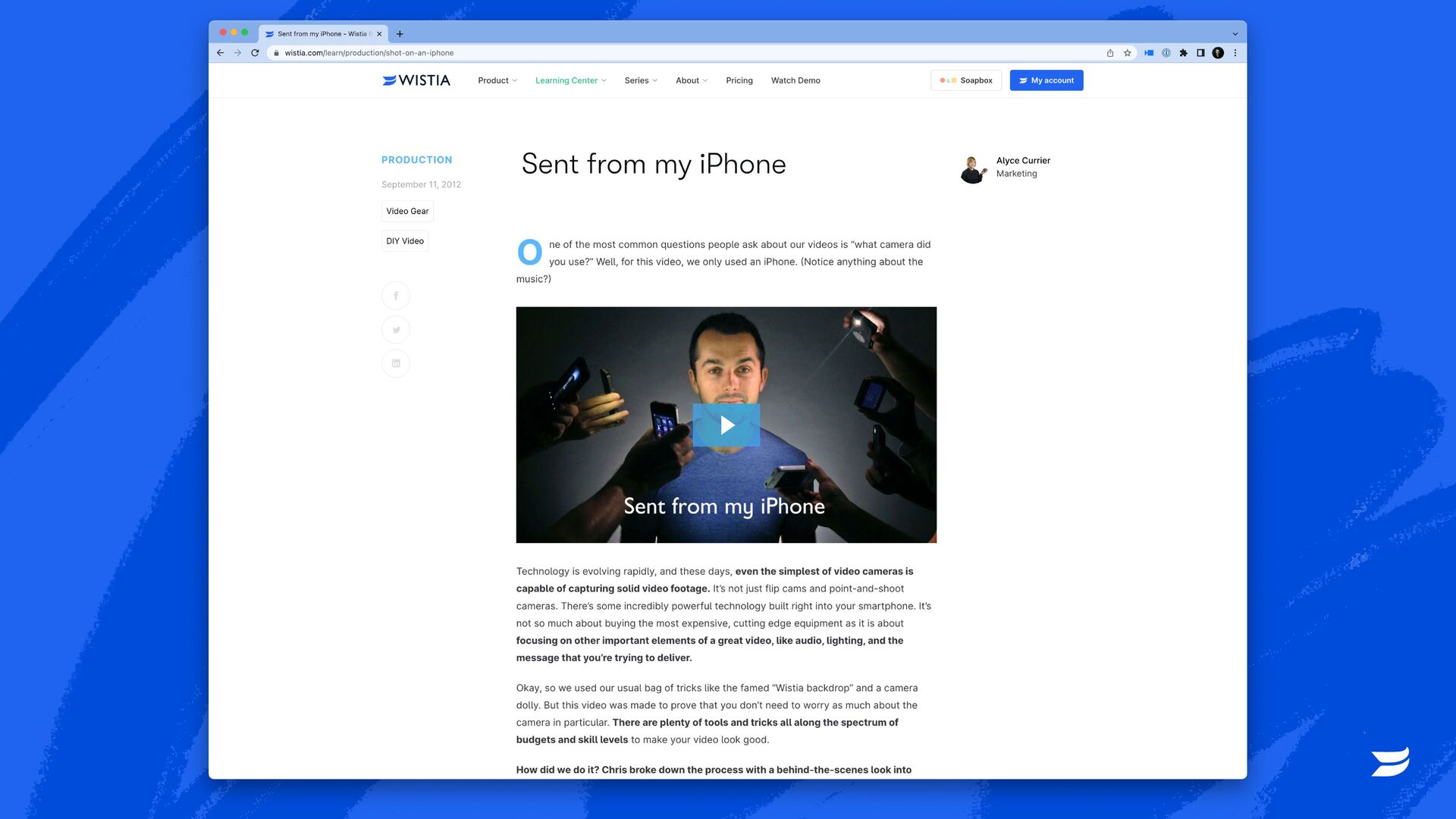
This is an early content marketing video we did called Sent for My iPhone. And we had made some videos, they were really fun, we were really excited about them, they had done well. We'd used our product, so that was really good. And all the comments were like, what camera did you use?
What lights are you using? And we're like, this is so stupid. It's not about that, it's about the concept. And so we made this video, which was literally shot with an iPhone, lit with an iPhone, we recorded the audio with an iPhone, and this at the time was the first video I'd ever seen that was made with an iPhone and produced professionally.
And it really took off, and it got people really excited, and they asked us to do more of this. And there was a lot of fun moments in this video, and we found ways of like, hey, we could go a little crazier. So the next product launch we did was like it was a simple feature in the product that was about replacing an existing video that was already embedded on your website.
So you'd upload a video to Wistia, you put it your website, there's a problem, you need to fix it. And for some reason, someone on the team thought it would be funny to have a confetti cannon and fire it off as a crescendo to the end of this video.
And we did that, and it was chaos, and people loved it, and we loved it, and we were energized by it, and all of these risks just compounded and gave us more confidence that we should keep taking more risks. We should keep doing more creative things.
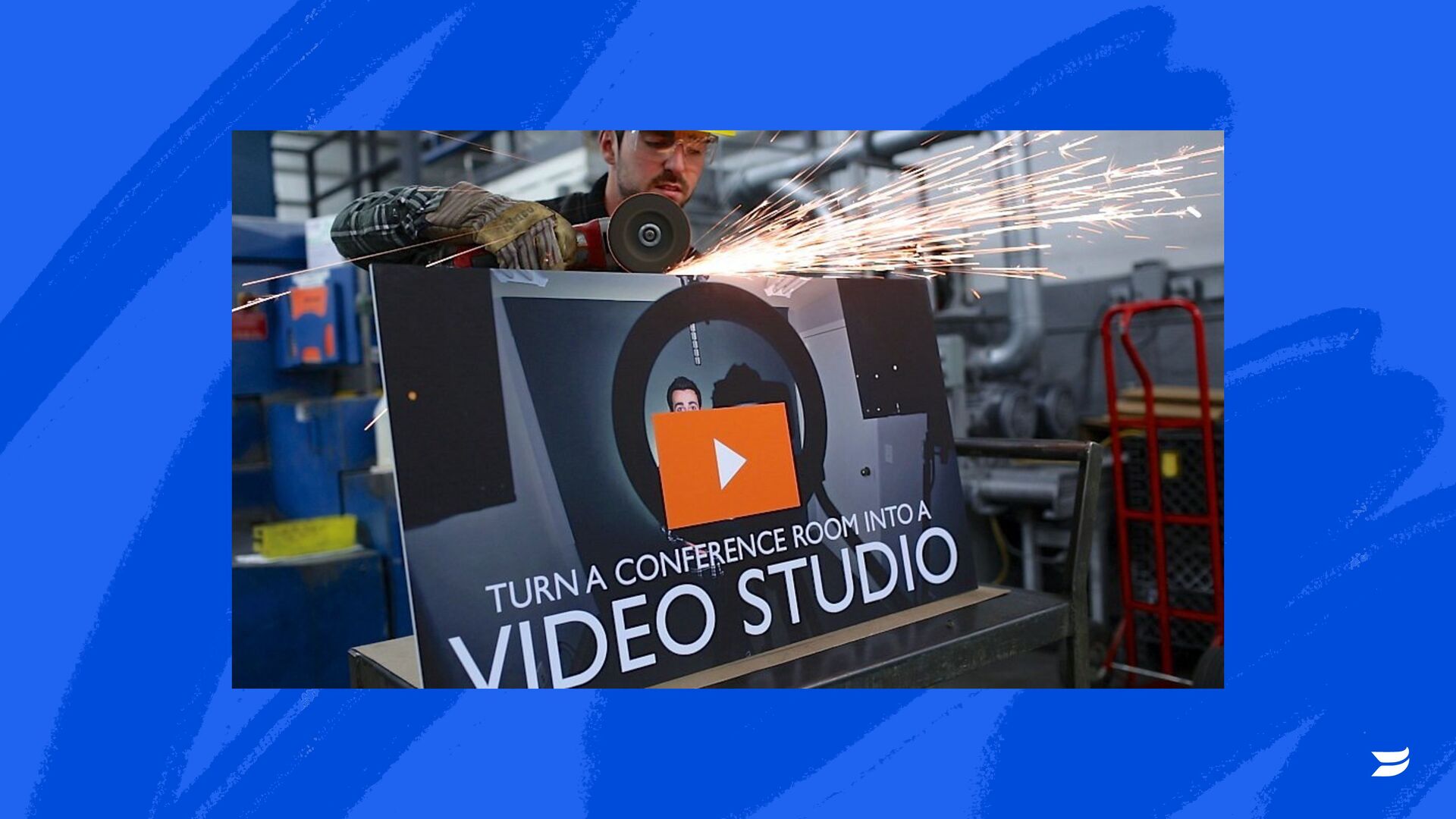
And this whole time, we're profitable, we're growing, and it just continues and continues and continues. This is when we launched something called the Learning Center. We thought it'd be fun to go into this guy's family, who has like metal welding shops and all this stuff, and we're like, hey, we're making software, but let's pretend it's like a real world physical thing.
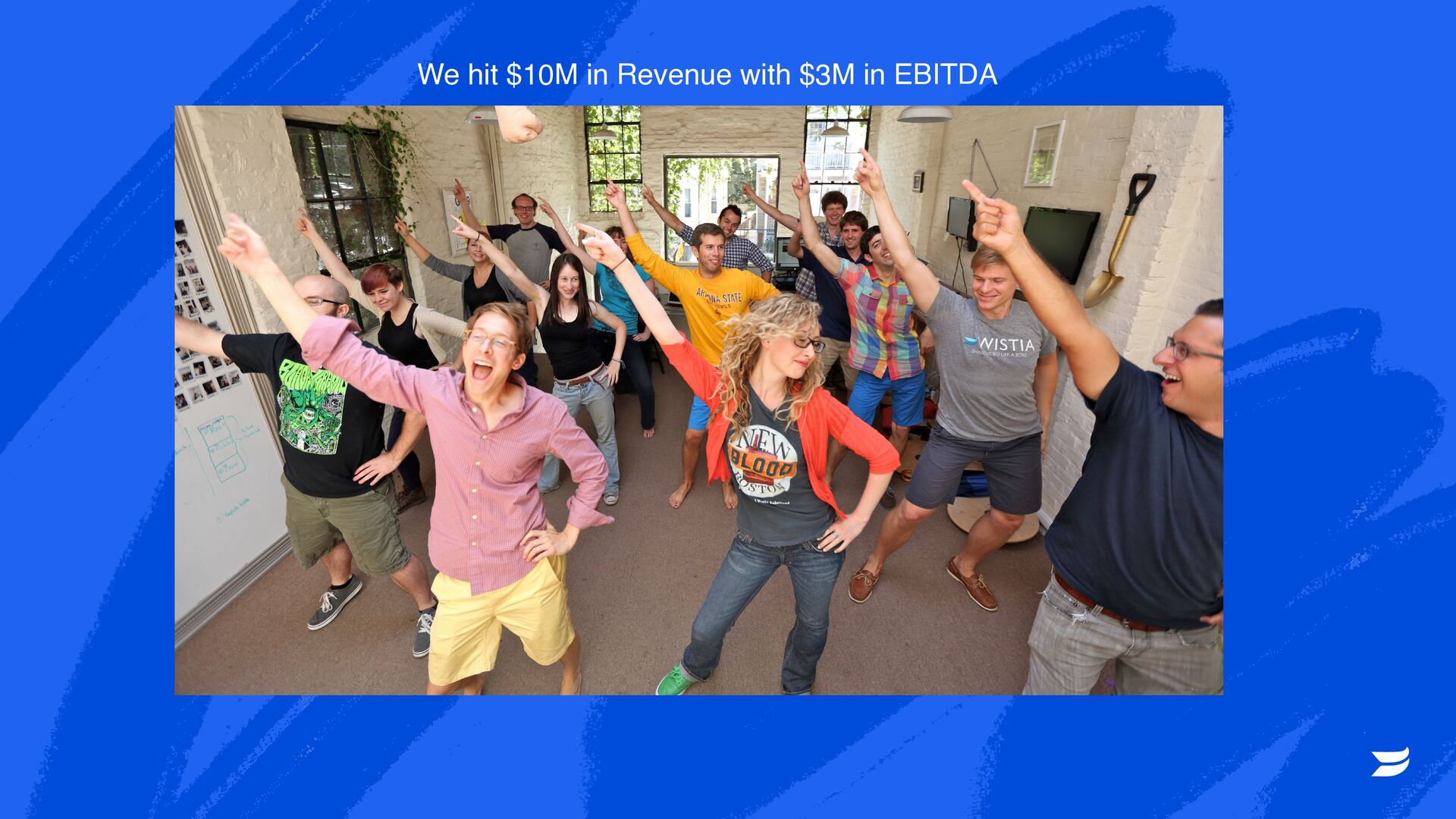
And so the more we did this, the more we worked. And the short story is we got to ten million in revenue with three million in EBITDA, or profit. And I was very proud of this. I was like, wow, we did it. Look at this. This is so sick.
Like, look at us. We're profitable. We're growing fast. It feels good. We're taking creative risks. But it was at this moment that something funny kind of happens. You could call it impostor syndrome, or you could call it just listening to your peers. Talk to every entrepreneur I talk to, every investor I talk to is like, man, dollars ten million in revenue, we're doubling revenue, three million in profit.
They're like, hey, you probably could be growing faster. If you weren't so profitable, if you're investing more, like, you could probably be growing way faster. And the way tech companies are valued is just purely revenue growth. Like, the profit doesn't matter. This is a funny thing to hear when you're running a business that you own and you're excited about, because like, don't you want profit?
Seems like a good idea. But one person says this to you, and you think, I've got my own way of doing it, seems like the normal way. But a second person says it to you, a third person says it to you. You go to conferences, everybody says it to you, and eventually you start questioning yourself.
And that is what Brendan and I did, is we started questioning the most fundamental things of how we were running this business. So we thought, hey, maybe we shouldn't be so profitable. Maybe we're sacrificing growth. Maybe we're making some big boo boos here.
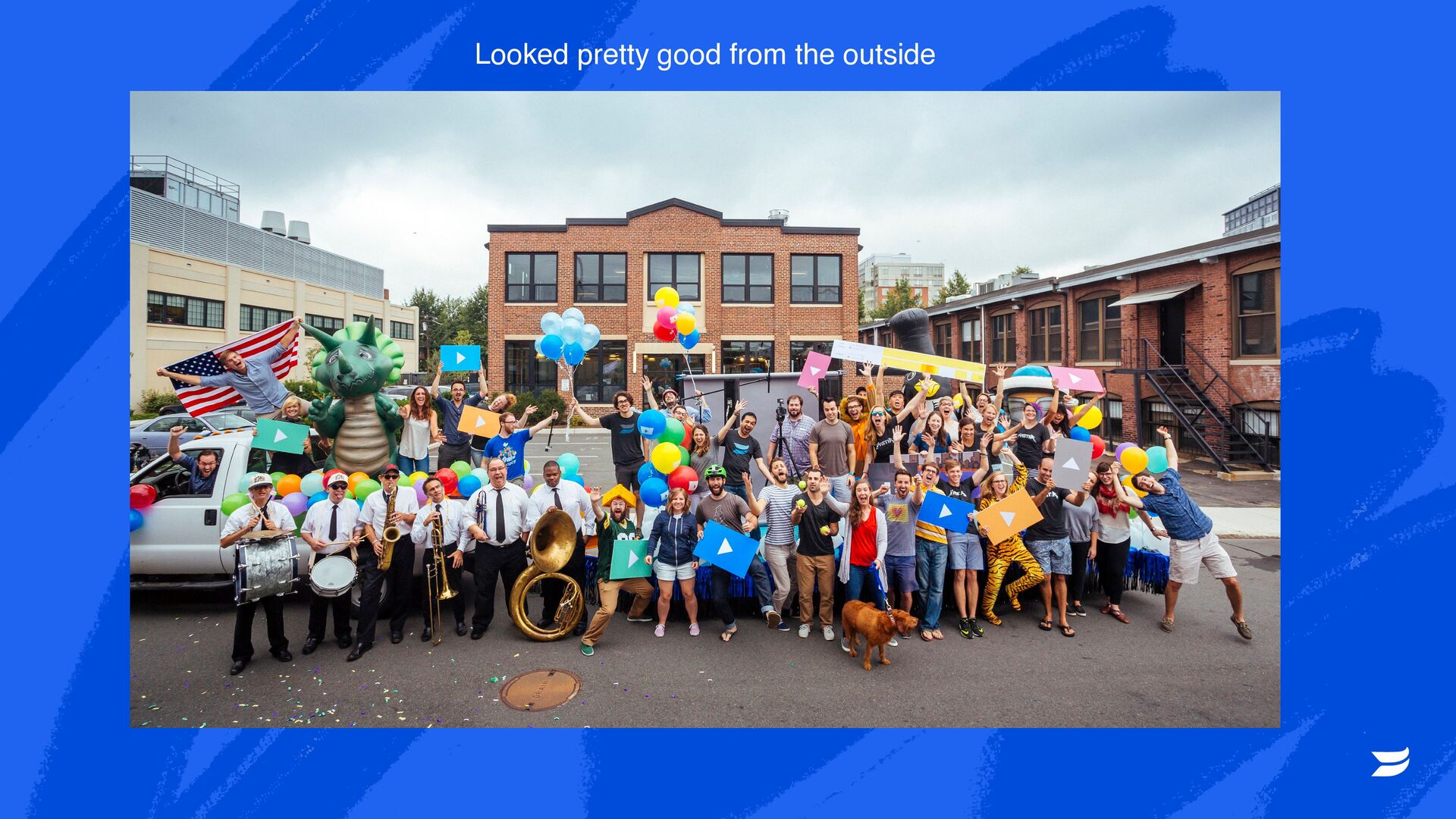
And so we started running at a loss. We basically started saying yes to everything, and we started green lighting more projects, more things, more crazy stuff. And from the outside, I would say it looked pretty good. This is a shot from a video that we did to launch a pricing plan.
Okay? A pricing plan. We hired a band, an inflatable dinosaur, as you do. We have this trailer going through the streets of Cambridge, Massachusetts. We're really excited. We're trying to lose money. That's what we're trying to do. And we're trying lean into this and really grow and do more stuff.
We started doing stuff because we saw other companies doing it that we admired, and we're like, Hey, if that company we admired is doing this, it must work. That's not how it works, everybody. You gotta figure this stuff out for your own business, but I did not understand that yet.
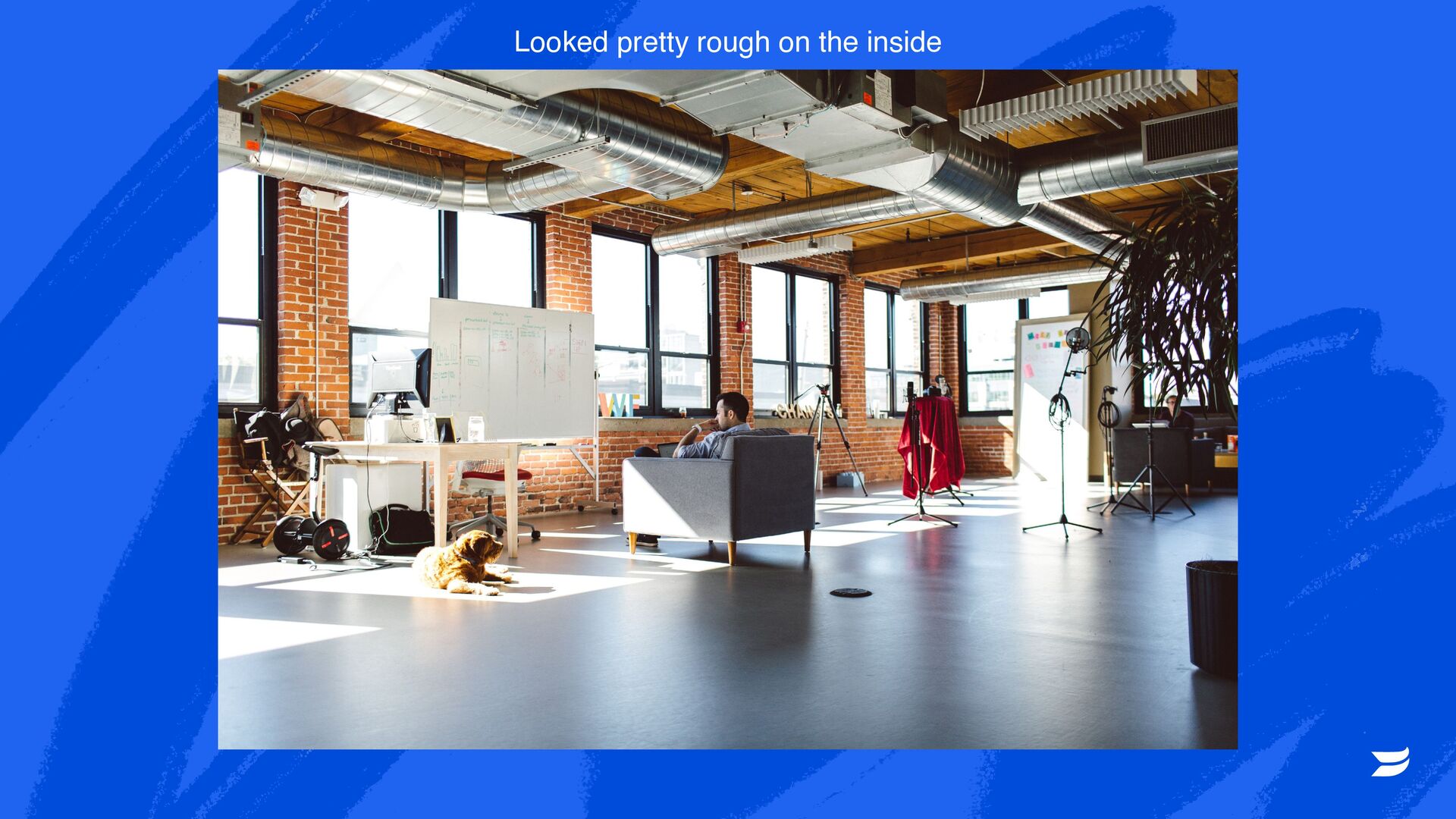
And so what happened internally is that things started to look pretty rough. We had a lot of what I would describe as zombie projects. So really smart people that we hired, and we put them on a project, and then it just kept going.
With reckless abandon in the wrong direction. And there was a lot of this. And it wasn't I say this all because it wasn't an explicit decision. We didn't say, like, hey, we wanna have tons of these projects, and we want them to be zombie projects, we want them to keep going.
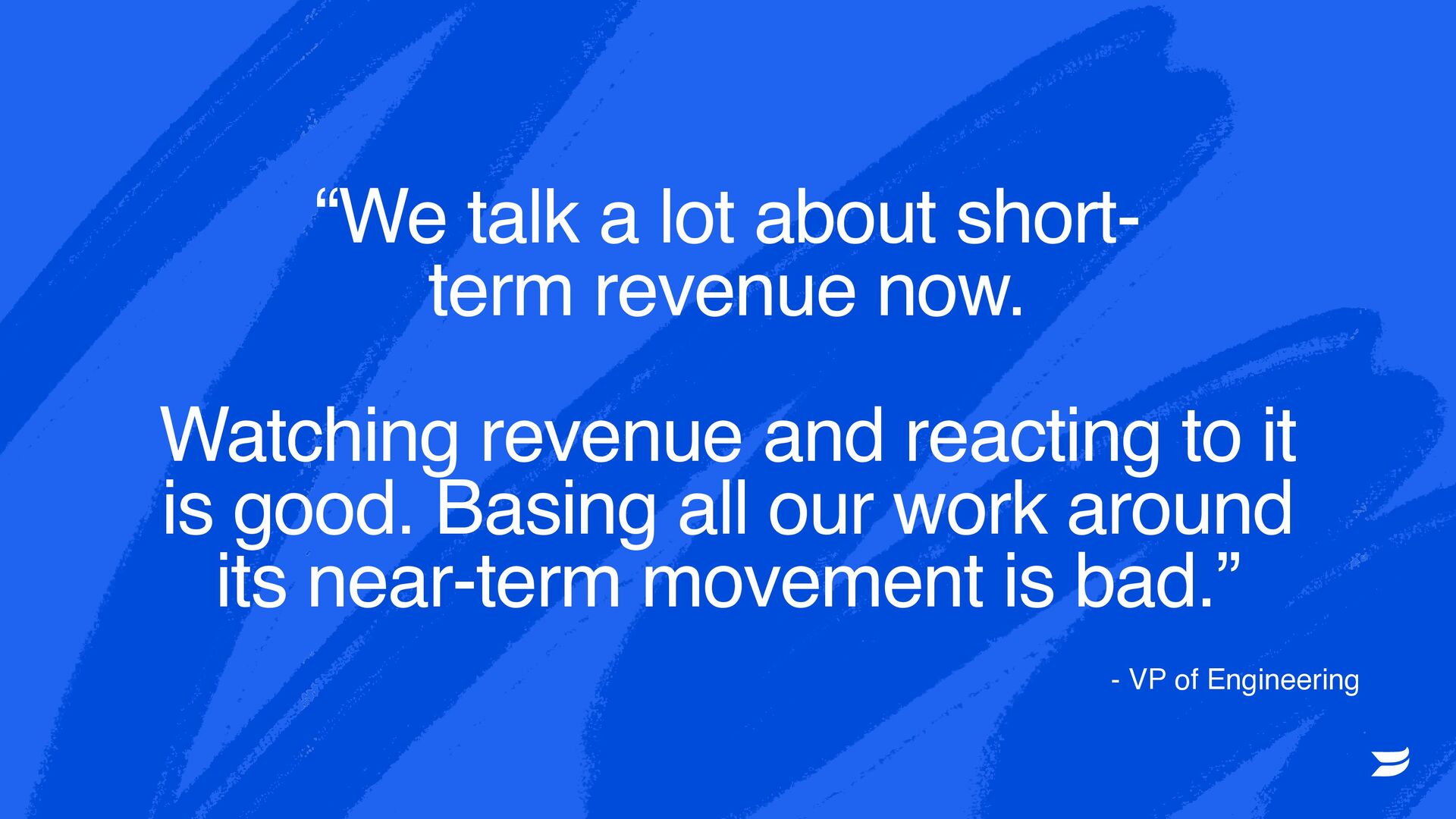
We didn't say we wanted to change even what we were focused on, but something happened naturally. I talked about getting profitable, and then getting long term focused, and then getting really creative. I wanna show you a quote from my VP of engineering. There's an actual quote in an email that he sent to me around this time.
We talk a lot about short term revenue now. Watching revenue and reacting to it is good. Basing all our work around its near term movement is bad. And I think the thing about this is we didn't set out to be short term. Like, that wasn't the we never said that.
We said we're long term, we're creative, but we didn't understand the dynamics of like, the basic financials of a business and what they do to your mindset. So it all comes down to basically missing a forecast, and what it's like to miss a forecast.
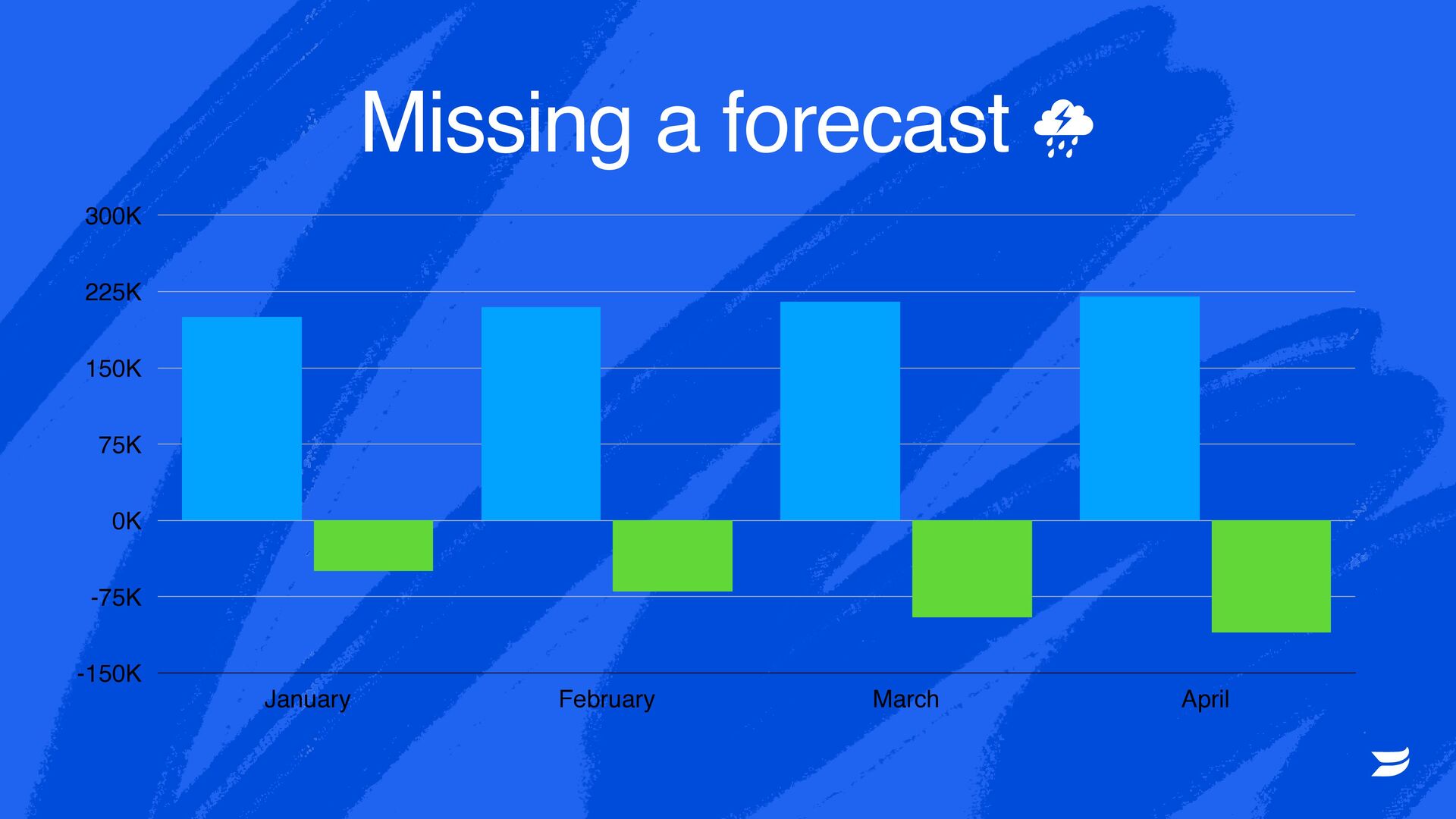
And I just want to walk you through this a little bit. So what happens in this mode when you're trying really hard to grow, you don't know yet how you're going to do, you're going to green light lots of projects. Let's say you're going to make one hundred thousand dollars in January, and you're going lose fifty thousand dollars And that's fine.
You're losing fifty thousand dollars you have a bunch of money in the bank, you're not stressing. But you're expecting revenue to go up in February. And what we did, which a lot of people are like, oh, revenue is going go up in February, we're still just going to lose fifty thousand in February because the revenue went up, right, because we're doing so much great stuff.
Then that's going happen again and again and again. But what ends up happening is and this is very close to what actually happened, except it looked much worse than this we set plans, alright, revenue's going to go up in February. It did go up, like, a tiny bit, but then instead of losing fifty, we lost seventy five.
And then in March, we expected revenue to go up again a lot, and it went up a little bit, and we lost a lot more in March. And so suddenly by April, you're losing one hundred thousand dollars a month. And in our case, what that turned into is losing about three hundred thousand dollars a month.
When you're losing three hundred thousand dollars a month, you don't have a war chest of cash. If you have any cash, you just start doing calculations. How many months do we have left to live? And guess what the solution is? It's short term.
You don't have to say it, just happens. And so what happened to us is we had this intention of being long term focused. We changed how we were running the business, searching for growth, copying other people, not sure why we were doing what we were doing.
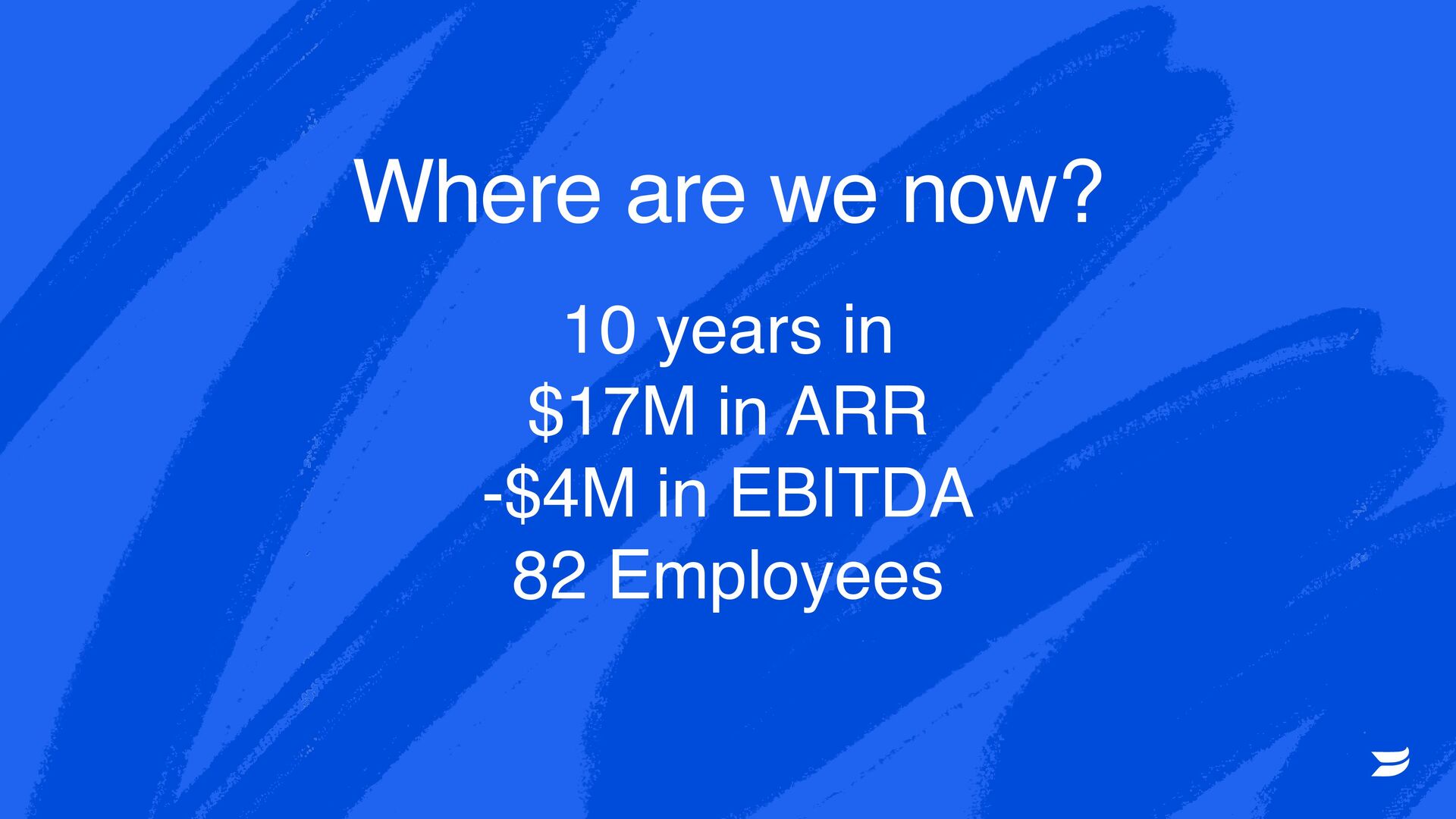
We ended up the losses got bigger, and it got worse. It got stressful. So now let's zoom forward. Where are we? We're ten years in, dollars seventeen million in ARR. We're losing four million dollars a year in EBITDA. We have eighty two employees.
And at this exact moment in the business, we had three offers to sell the company. So three independent companies in the course of like a month and a half all reached out and they said, Hey, would you be interested in selling? Would you want to join forces with us?
And previous to this period of time, we're ten years in, I've been having a great time. Every time someone came and said, Can we buy your company? I'd be like, Hell no. But this time I said, Well, let's have a little conversation, see what we can learn.
So we got into these conversations. We got the offers. We got an offer from a company I really admire whose founders I look up to. They said, life changing amount of money. Do you want to sell your company to us? And my co founder, Brendan, and I were not sure what to do.
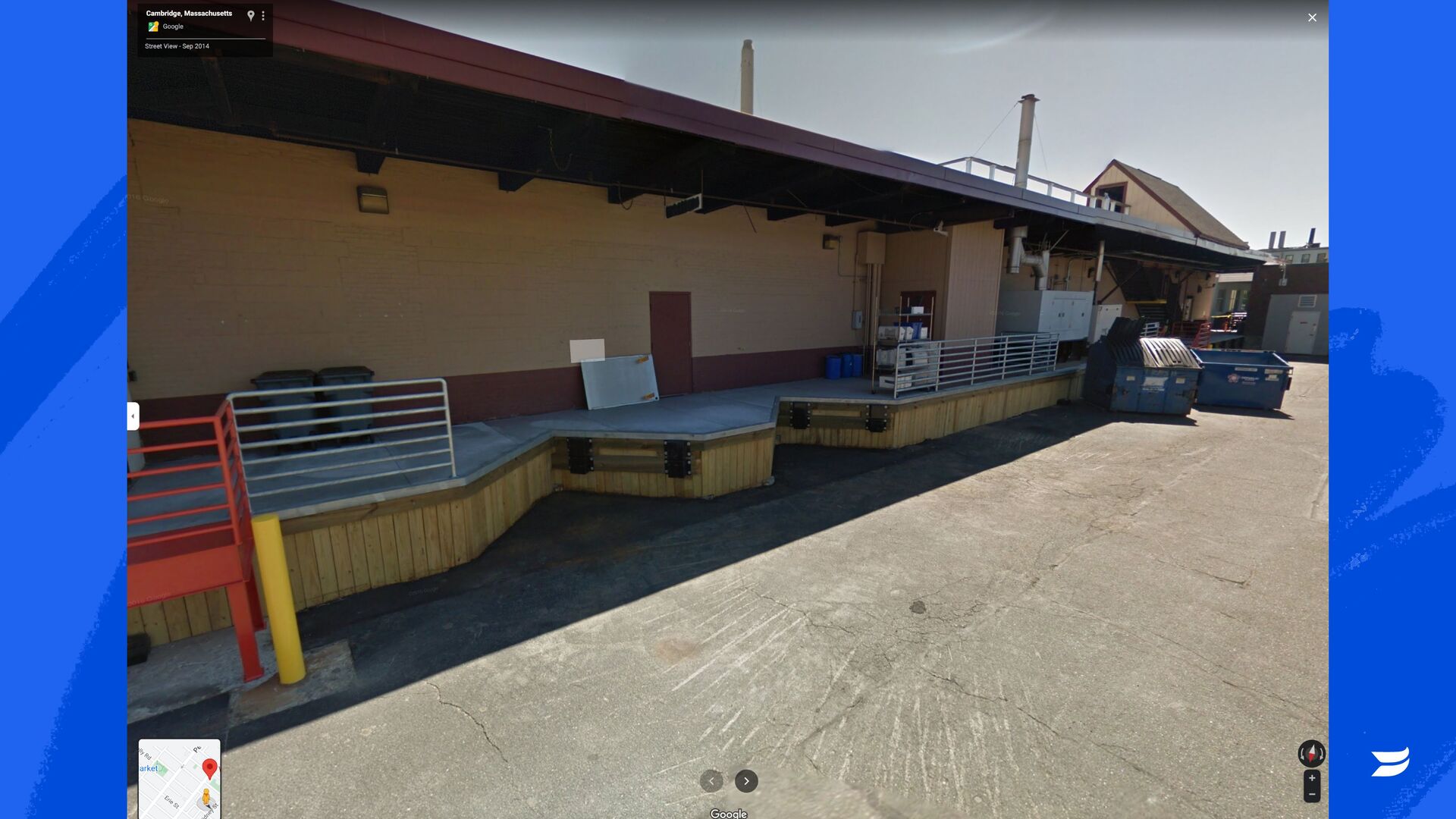
So we went for a walk in our neighborhood, around our office in Cambridge, and we ended up sitting on this loading dock. Shout out to Google Maps for getting parking lots right now. That's really helpful for me. We just started asking ourselves the question, like, what would we do if we sold the business?
What would we do? Well, I talked to the founders of the company that wanted to buy us. They're like, you're gonna be here for two years. Like, you're entrepreneurs. You're not going to want to work for anybody else. Like, you're going to do your two years and you're going to leave.
I'm like, well, that's probably true. So we'll probably leave. So what will we do when we leave? Well, my co founder, Brenna and I, we love working together. We're best friends. We're having a lot of fun before this, like, dark period. Like, we're going start another company.
This time we're not going to screw it up. What space should we get into? Like, well, the video space has been changing a lot, right? Like, when we started, it was like fifty grand for someone to make a marketing video, and then DSLRs came, and that made it cheaper, then the iPhone came.
Like, all this stuff is changing. Like, there's so much exciting stuff in our space. We'll go back in a video. Who will we hire? Well, this person, this person, this one. Where do they work? They work at Wistia. Like, what kind of brand should we build?
We should focus on small and medium sized businesses. Should we be really creative? We be really long term? Look, if we sell the company, we're just gonna try to rebuild Wistia. That seems stupid. Why don't we fix it? And it, honest to God, was like an hour long conversation saying that loading dock, they were like, we're gonna fix it.
We're not gonna sell. Like, our dream is to have this business work to be long term focused, to be really creative, to build a strong brand. Like, let's just fix it. Like, we've gotten lucky. Like, you get lucky in entrepreneurship. Like, we should stay on this.
If enough of this is working, then it's worthwhile. And so it was funny because at this moment, there was so much like, the truth is, like, it into it was like, there's sleepless nights. There's a lot of stress. Actually, when we got the offers, there was a lot of stress.
I will never forget, we were negotiating with one of the companies, and I texted my co founder, I was like, we just heard back. And he was at a movie with his wife, and he's like, my stomach just dropped, what is it? And he was afraid that they were gonna give us such a high offer that we couldn't say no to it.
Which is just a signal that we are connected to our companies when we build them, and like you have to be in touch with that. And so we decided, alright, we're gonna fix this. We're gonna fix this business. But to do this, we have to get a return.
We have to get a return for those angel investors, because they invested, they wanted to get a return. We just turned down selling the company, like, for a life changing amount of money, like, we gotta do something. We had the team. I'd hired this team.
I said, someday we're gonna sell this business, sell it for one hundred million bucks. Like, wow, that's so cool. And now I'm basically turning out an offer that looks a lot like that. Like, that seems like a crazy thing to do. I gotta take care of the team. We're also still losing money.
They're losing about three hundred thousand dollars a month. We can see the amount of time we have left to live in the business. And so we're like, we got to figure this stuff out, but the funny thing was at this moment that I started sleeping super well.
Like, started sleeping like a baby. Like, I knew we were going to fix this. I knew what we were committed to, and a lot of that the other stress seemed temporary. And so what we ended up figuring out is that we could do something called a buyback.
And we could raise money, and we could raise the only kind of money we were really going to be able to raise and make this work was going be debt. And so debt is basically it's taking your future profits you'd make in many future years, pulling it forward to this moment, and using it for something.
So we settled on this idea, we're going to raise debt, we're going to buy out our angel investors, and we're going to get a return for our employees, and then we will reset expectations with everyone, and then it'll be easy breezy, it'll be fantastic, it'll be so fun.
And so we did what's called a tender offer, and just so that you understand what this is, in case you ever are a participant in this, if you ever do this, or you ever are in the receiving end, it's basically you send everybody the exact same set of information.
Send them the financials for how you've done the previous couple years, you send them your projections, you send them an update on the business, and they get to write in how many of their shares they want to sell. They can sell all of it, they can sell some of it, they can sell none of it.
And an important part to note here is our angel investors had what's called preferred shares. Does everyone know what preferred shares are? It's basically a different class of shares. That means they have other controls on the business, And so as a part of this deal, we got rid of the preferred shares.
So it all got converted to common. So if you stayed in the business, which some people did, it would mean that you were completely aligned with me and Brendan. Like, whatever we do, you're on the same page, we have the same thing. So we did that. And we're excited.
And that's why we decided to do the buyback. But then what happened? So the realignment began with the team. And I am very pumped at this moment. I am extremely excited at this moment, because we just did this big thing, I'm so excited about the future.
The next thing we said is we want to realign with the team even deeper, so we're going to introduce profit sharing. So we said, all right, we're going to get this company back to being profitable, we'll take a percentage of the EBITDA, we'll share it amongst everyone based on salary.
So this will be huge. For the team, they all just got a return like we sold the business. And now we're introducing profit sharing. This is going to be epic. They're going to be so committed and so excited. But what happened was another painful reality.
And turnover accelerated, and I don't mean revenue, I mean people started leaving. People got stressed, they got confused. Like debt is scary. And we just raise as much debt as we have in revenue. So it seems even scarier. And some people got checks and left.
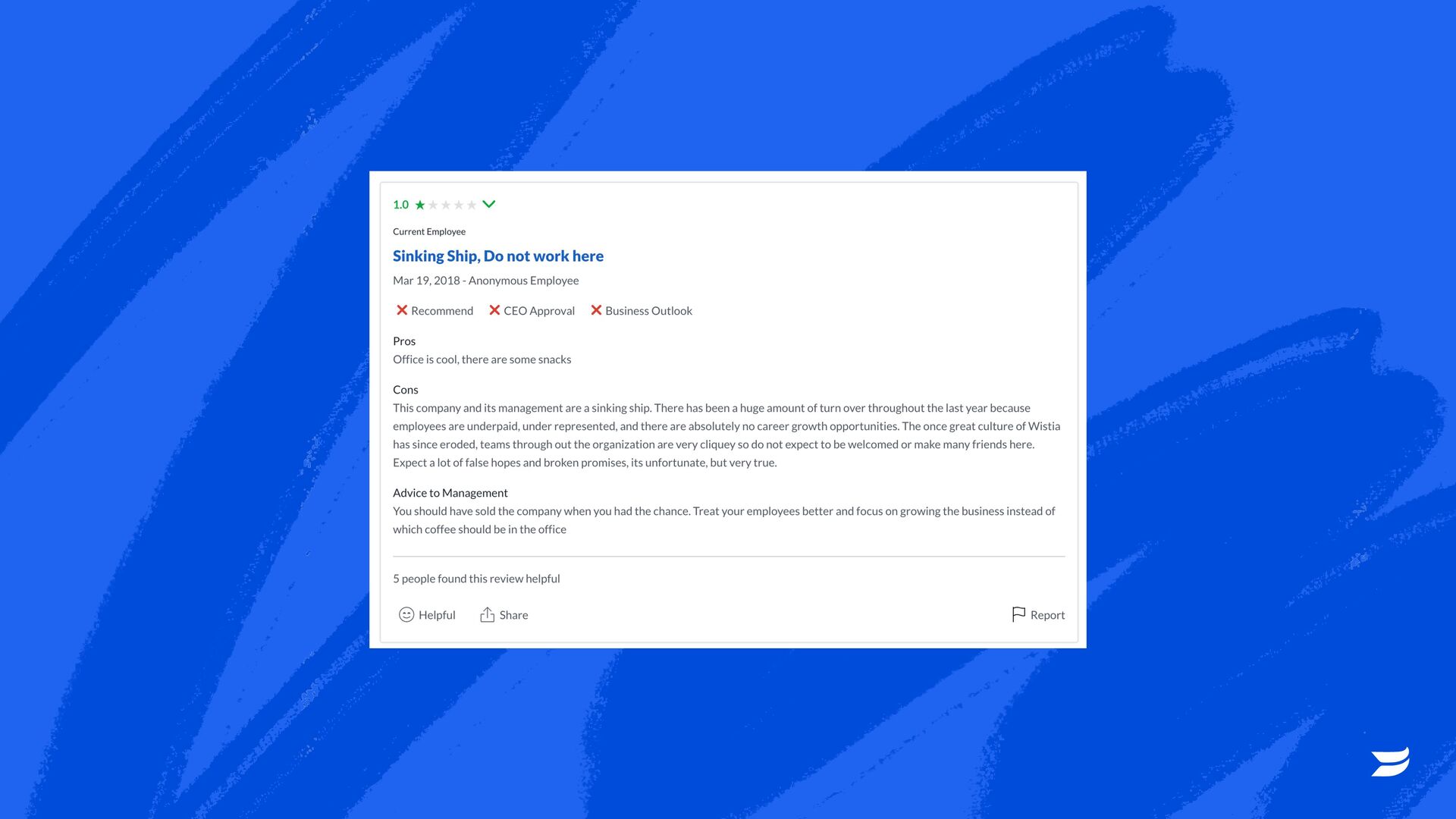
People were just really confused. I want to show you an actual Glassdoor review from right around this time. I'll read it for those in the back. One out of five. Sinking ship. Do not work here. Don't recommend the company. Definitely don't recommend the CEO. Me.
Don't recommend the Business Outlook. Office is cool, and there are some snacks. Now those were true. That's true. Cons. This is a long one, but we're going do it. This company and its management are a sinking ship. There's been a huge amount of turnover throughout the last year because employees are underpaid, underrepresented, and there are absolutely no career growth opportunities.
The once great culture of Wistia has since eroded. Teams throughout the organization are very clicky, so do not expect to be welcomed or make many friends, expect a lot of false hopes and broken promises. It's unfortunate, but very true. That's a hard one to read.
Advice to management. You should have sold the company when you had the chance. Treat your employees better and focus on growing the business, instead of which coffee should be in the office. And here's the thing. I care about what coffee is in the office. Okay?
But the funny thing about this is like, this is kind of hard to read, but I actually think it's emblematic of the confusion at the time. It was just really, really confusing. Like, people didn't know what this meant. And I understand why this person wrote these things.
And there was a lot of truth in it that, like, it seemed scary. We were just talking about fixing all the problems we had, We had a lot of problems. And I just share it because it's like, this stuff is hard. This is what was actually happening on the inside.
But we'll talk about how we got out of it. So we did a simple thing. Brendan and I did one on ones with everyone inside the company. Eighty two people. Went to the same coffee shop, back to back, five days in a row.
I had a coffee every meeting. Don't do that. Okay? You don't have to have a coffee at a coffee meeting. I've since learned this lesson. My heart rate was very high, and I just don't suggest it. But in any case, what we saw was that some people were really excited about this, like they were actually really pumped about the buyback.
They were like, this is sick. We're going to do what Wistia can do. And that was like probably a third of the people. And there was a third that was like, really not sure what to think. They were kind of stressed, they were kind of excited, they were kind of nervous, they didn't really know.
And then there was a third that was really upset. Like, really, really, really mad. They're like, This is not what tech companies do. You're doing it wrong. And the funny thing was that by just literally sitting down and talking with all these people and helping everybody get their feelings out, and having this opportunity to spend more time with them painting the vision, like, things turned around relatively quickly.
Within like six to nine months, we started to get to what we hoped we could get to. And we started to see a lot of positive changes in the business. One example is we care about costs because we're trying to be profitable. We show our financials at every all hands meeting.
And I had somebody who basically just said, like on our infrastructure team, he's like, would it be cool if we tried to improve gross margin? Words I thought I would never hear. And they spent three weeks and they came back and they're like, they announced at the next all hands that they'd gotten three points of gross margin back, and the entire company cheered for them.
Which is pretty crazy. It was a pretty crazy difference from where we were before. People started asking about our benefits, if they were the right benefits, if we should change them, or if everyone just started to have a more balanced view of the business.
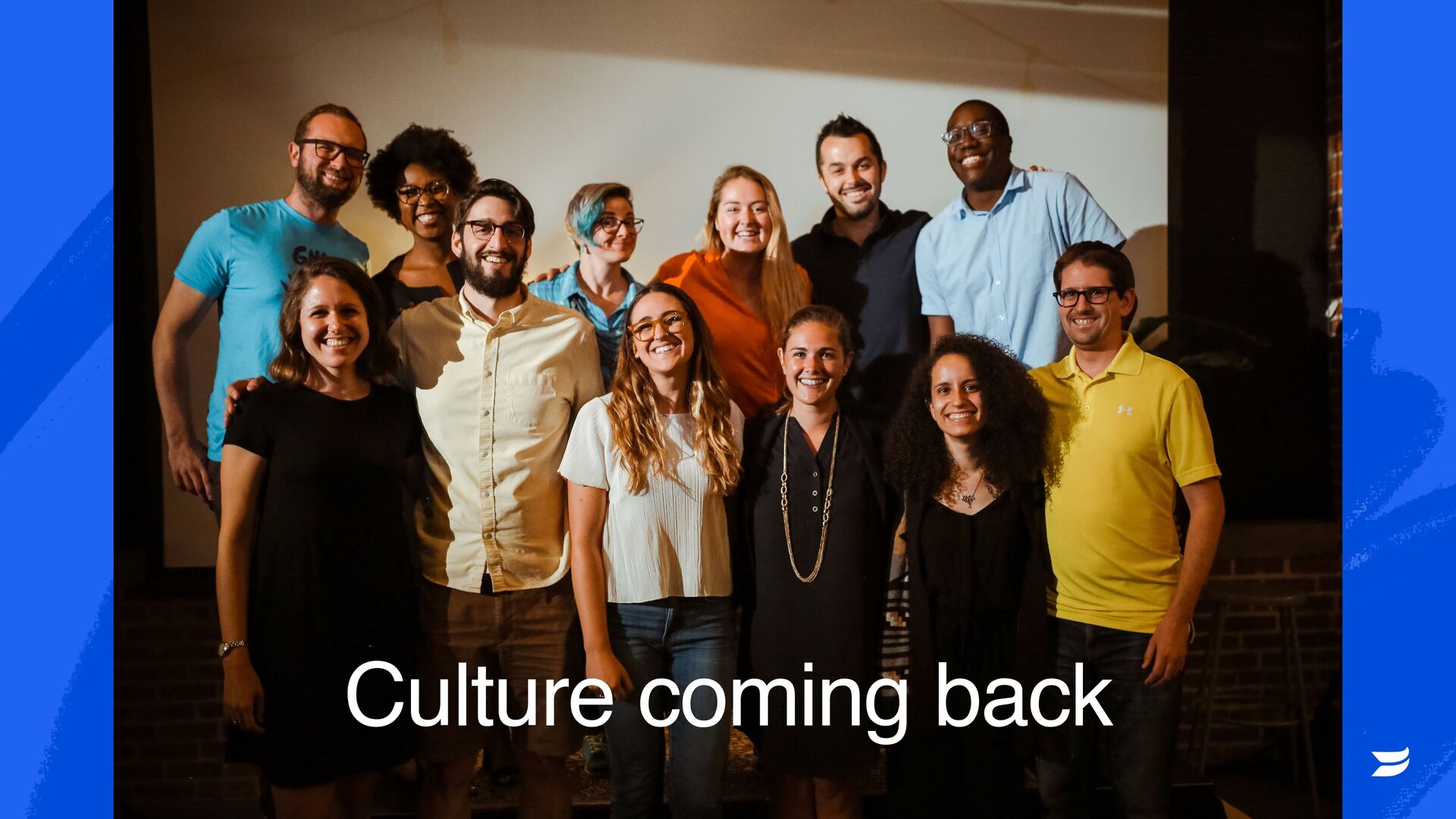
And at the same time, the culture started to come back, and we started investing more in the types of events that had made Wistia so unique than the types of content that had made Wistia unique. So this is a shot from something we do called Storytelling Night.
Anyone can get up and tell a story from their personal life that really helps create more inclusion in the company. It's one of my favorite things. I love it. This came back quickly. The vibe was different. As we got more profitable, we started doing retreats again.
We started doing ski trips and taking everybody camping and really spending a lot of time connecting with each other across departments, and that had huge creative bursts for the business. And we also found our way to making this, which was a feature length documentary.
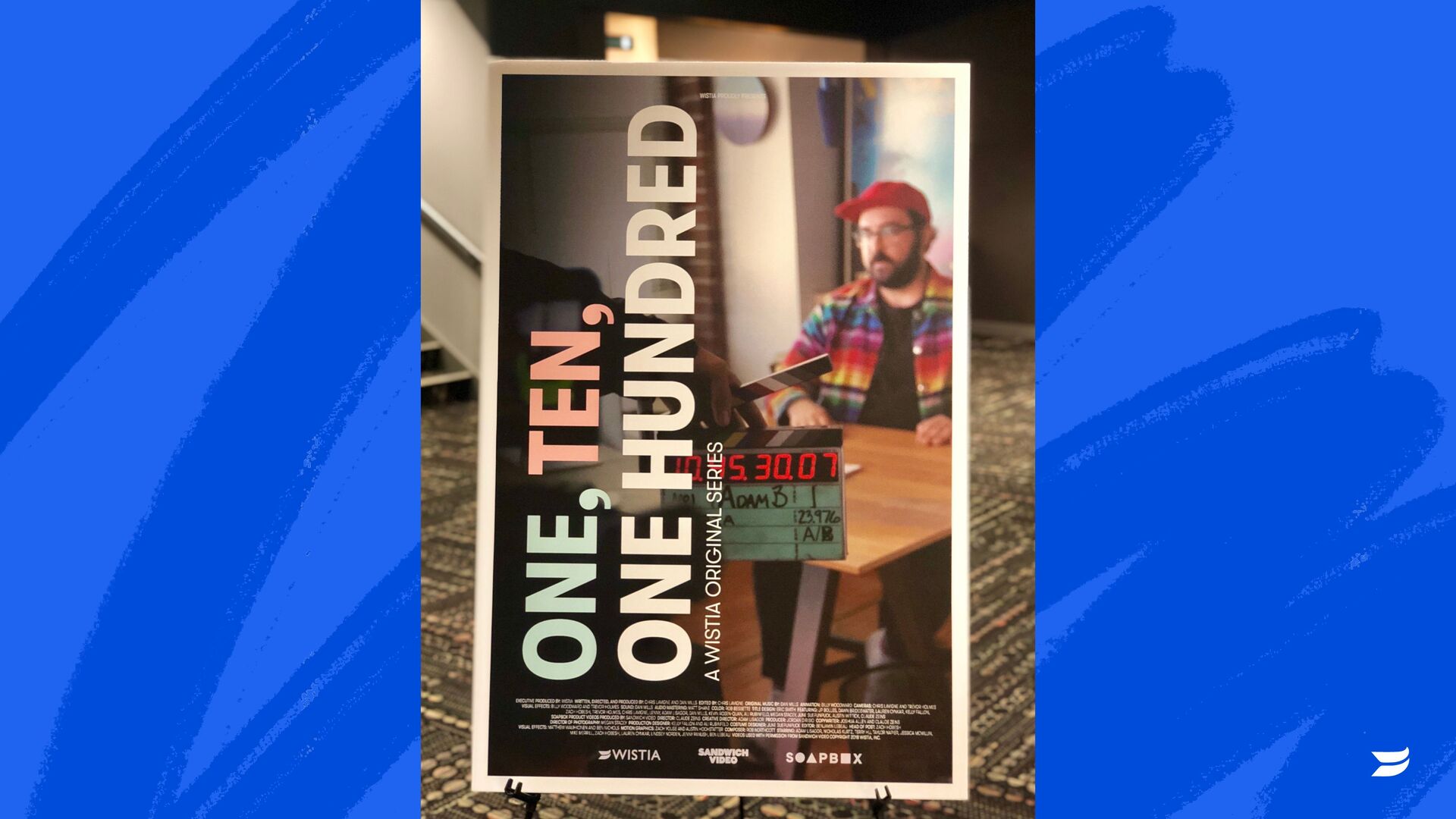
So we ended up making this documentary called one hundred ten thousand one hundred, feature length doc, one hundred Webby, which was really exciting, and it was basically this concept of we gave one hundred and eleven thousand dollars to an LA based production agency, and we asked them to make three ads for us at different budgets.
One with a one thousand dollars budget, one with a ten thousand dollars budget, and one with a one hundred thousand dollars budget, and then we documented their creative process. Does this sound like a thing that a company running at a loss in, like, really short term could do?
No. This would have been absolutely impossible to do, and it's probably the greatest marketing campaign we've ever done because it taught people about our product. We had the three ads. We had this film that had more time spent with our brand in the two months that this came out than every part of our marketing we'd done for the previous year.
The trailer of this was seen millions and millions of times. It still gets mentioned today and still gets traffic and still gets customers, and it was a wild, creative, very different risk. We could never have done that if we were not profitable, but as we got back to being profitable and long term thinking, all this started to work, and shockingly, the growth accelerated.
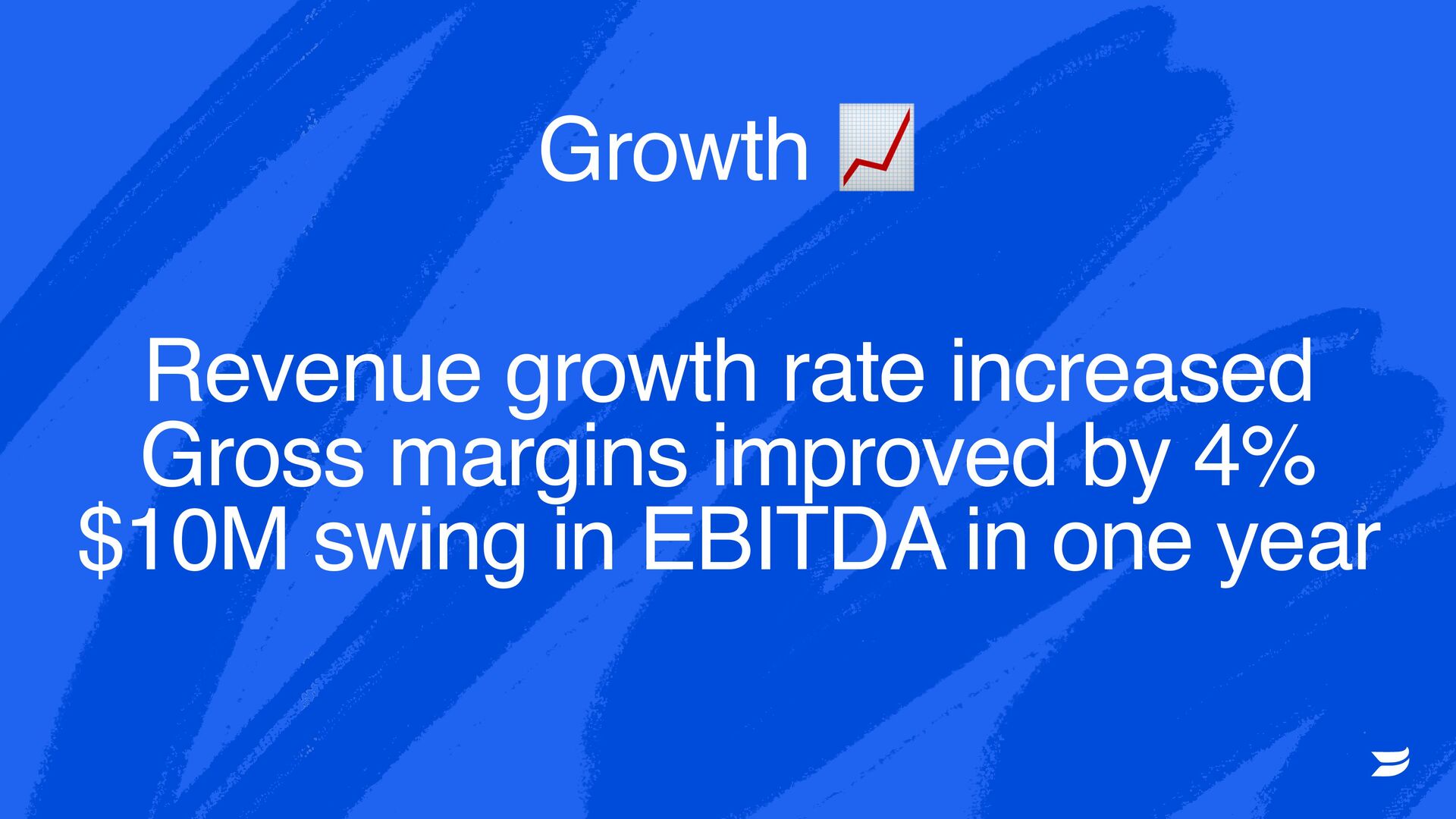
Revenue growth accelerated. So in that following year, the growth rate accelerated, gross margins improved by four percent, and we had a ten million dollars swing in EBITDA in one year, which is way more than we had ever dreamed, honestly. Like, were hoping for, I think, three million positive, so we beat it by so much.
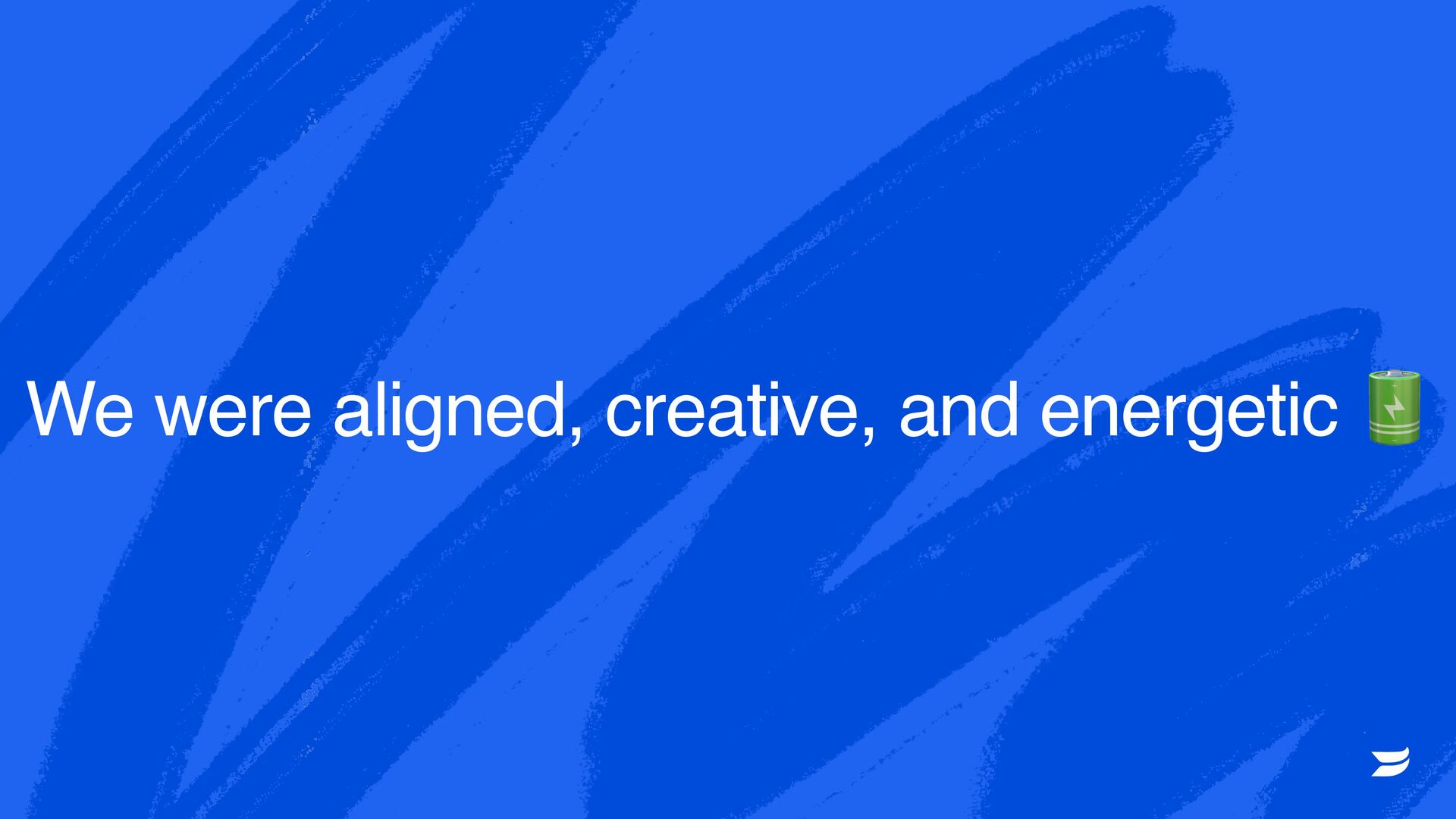
And that gave us more confidence to keep doing this. And so what are my takeaways from this? We basically had figured out how to get everyone crazy aligned. Like, violently aligned. Because we'd said what we were not going to do anymore, and we said what we were going to do.
And I think we underestimate the power of alignment by getting everyone aligned, by getting the corporate structure to a better place. We got everyone much more creative, and there was much more energy inside the business. And there was a lot of other things that happened that were also very surprising.
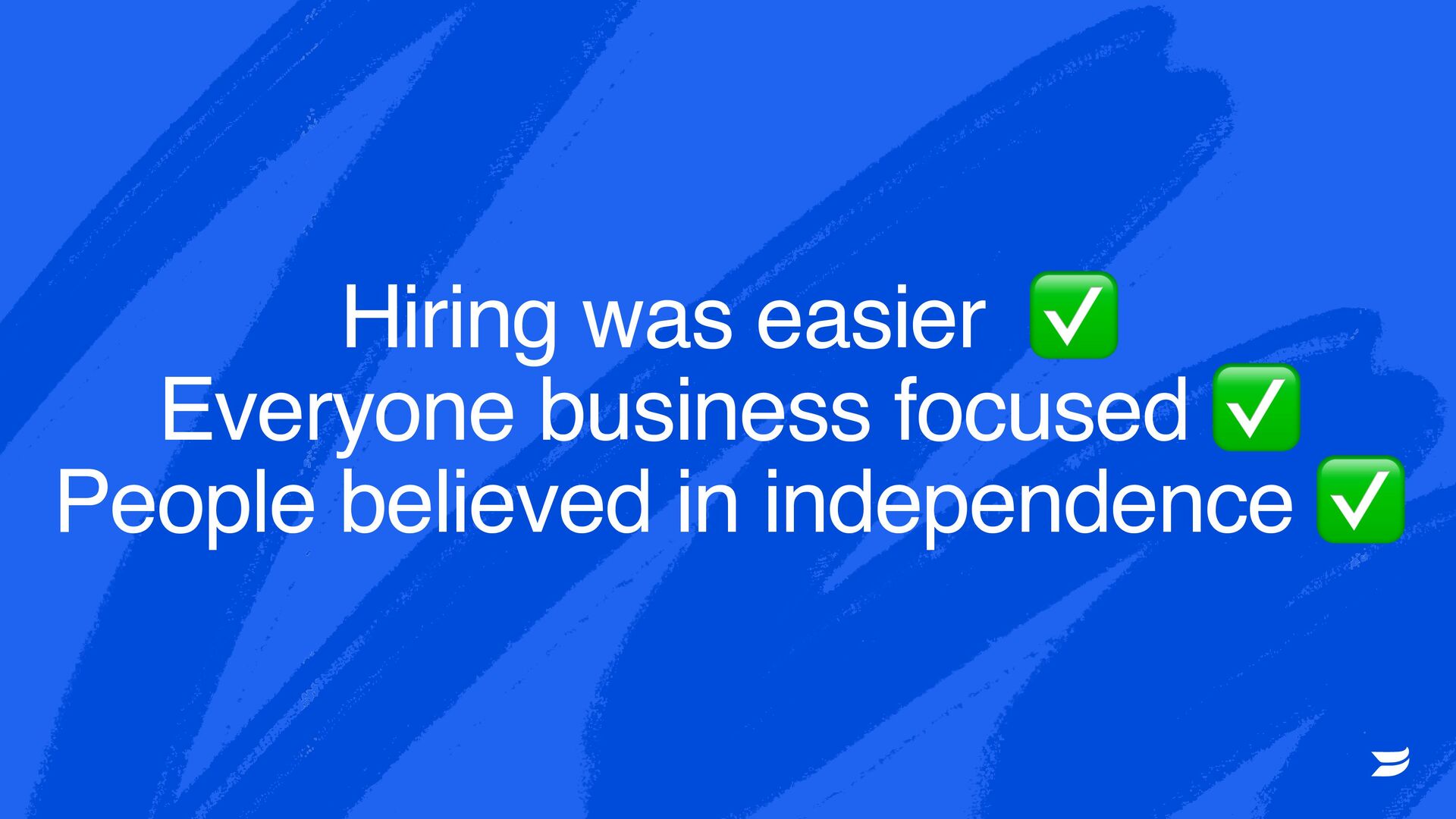
Hiring, once we did this, became much easier. We were not giving out stock options in tech. And hiring got much easier. And people would tell us, I'm just excited to work at a company that actually knows how to make money. It's a simple thing.
I know a lot of us are trying to figure this out right now. The market's changed out there, but this simple thing really changed. And then because we turned down these offers to sell the business, people knew we believed in independence and longevity, so it attracted different people.
And I think we generally underestimate the power of alignment and the power of focus. And you can often get much, much farther with the right focus and alignment than you get by adding tons of new and different things in your business. Sometimes it's about going way harder on the stuff that's working than finding something brand new to add into your company.
So that gets us to a couple years after the buyback. And the truth is, it was like pretty smooth sailing after that. We had an easier time hiring, we built great product, we did great marketing, customer numbers grew, revenue grew, independent, serving the debt the whole time, we refinanced the debt, it's a lower interest rate, all these things.
And we were feeling really good, but I would be remiss if I didn't talk about the last really big change that happened, which was COVID. So COVID was obviously a huge shock to the system. It was a shock to us. And what we saw was, you know, everyone no longer meeting in person, getting on Zoom every day.
People making videos with tools like Loom, Soapbox all the time, and there had been something happening in our market that we didn't totally understand, which was that there had always been a deep fear of getting on camera in the same way that people have a deep fear of stage fright.
And it's pretty easy to justify not making a video. And so for a long time, we'd had this in our market, and suddenly COVID obliterated that. Like, everyone had to get on camera. You had to see yourself every day. I know it was annoying.
I know seeing yourself and looking back and, like, keeping the smiles. I know it's annoying. But the thing about it is it did change our relationship with our computers. And the way I look at it is it made everyone realize that their computer is actually a camera.
And what that did is it changed all our expectations for where we use video. And it's obviously not uncommon today. I could ask anyone here in here, like, hey, can you make me a video that explains this thing or walks you through your product or whatever?
And probably you've done that, or you would feel confident that you could figure it out. It might suck a little bit, but you would try it. And that change was enormous in our market. Like, we have been in the business video space for so long, and I can tell you, it is a space that people looked at and are like, I don't know, like, how big will this thing be?
I don't know. We didn't have that much competition. Once COVID came along, our space became extremely obvious, and the truth is, it made our market early stage. And it really changed everything about how we have to think about what are the products that we build, and how do we help our customers, and how do we price, and what do customers need from us.
And it made our strategy unclear. Which is a funny thing to say, because the market seems way bigger, but now we feel less focused. We're getting pulled in many more directions than we were before. Tradeoffs get really hard. It's just like, should we build this feature or not?
Well, it's good for marketing, it's not good for training, it's good for it's really, really easy to run into trouble when you're making those decisions. And so we had to take what we had learned from the buyback. We said we have to get way more focused, and we have to get way more aligned, and if we do that, we can serve these customers really well, we have to treat it like our market's going to be even bigger.
And so this is like kind of the opposite of what I thought I would be talking about if you were to ask me like ten years ago. I would have thought Wistia would do everything under the sun, but actually we've gotten more and more focused on our target customers.
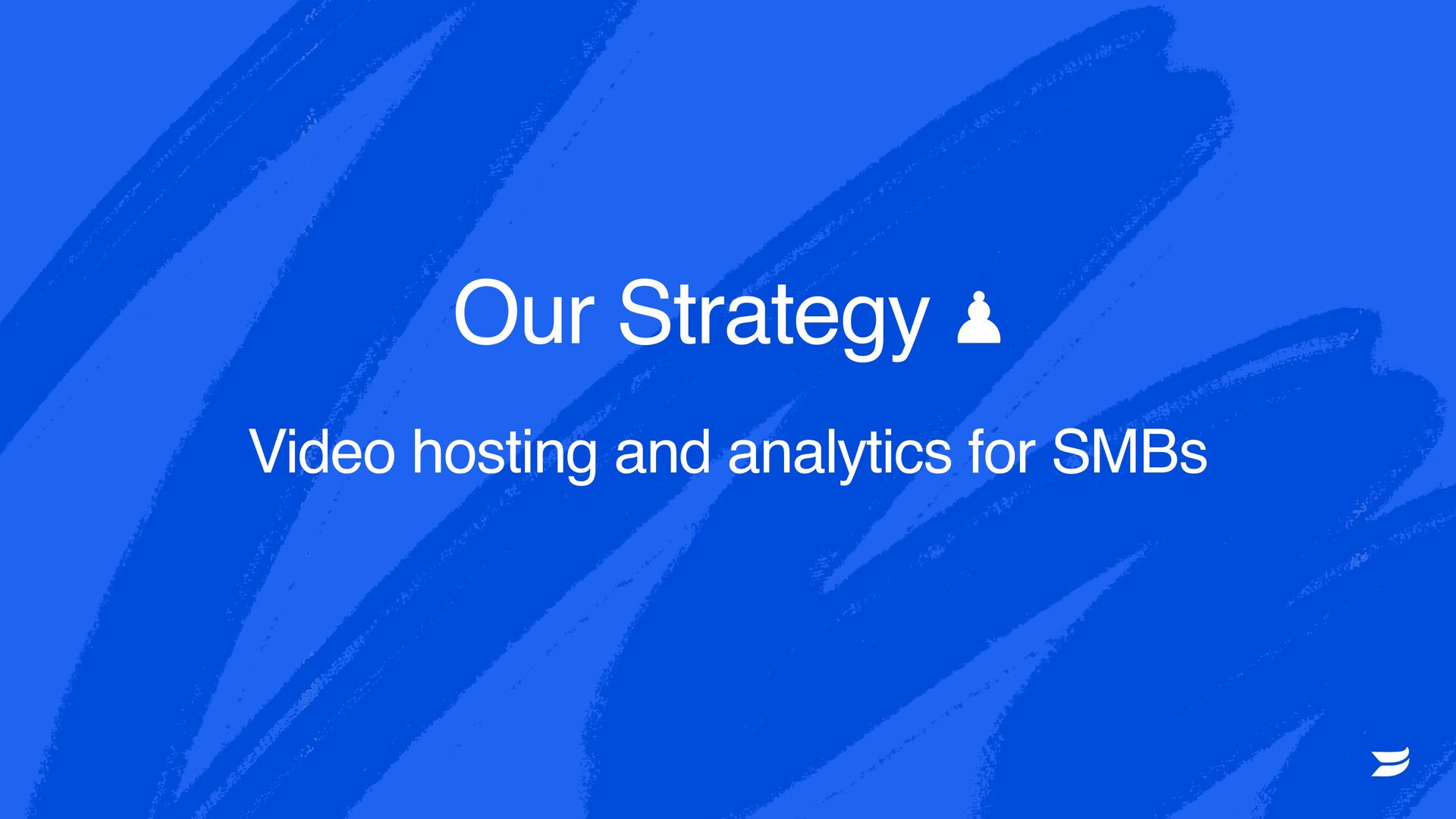
We've gotten bigger. So what was our strategy before COVID? It was basically video hosting and analytics for small and medium sized businesses. And we would integrate with all the other video tools you want. You want us to integrate with editing tools? We'll integrate with editing tools.
You want us to integrate with webinar products? We'll integrate with that. You want us integrate with creation tools? It was very much like, Hey, use the best product, we'll be the best at this, and there'll be all these other products that are the best other categories, and we'll integrate together.
But what we saw, we did hundreds of customer interviews, we talked to hundreds of customers of competitive products, we talked to hundreds of customers who didn't even know that platforms existed, were just trying to muddle their way through this, is basically what they told us, we don't want that anymore.
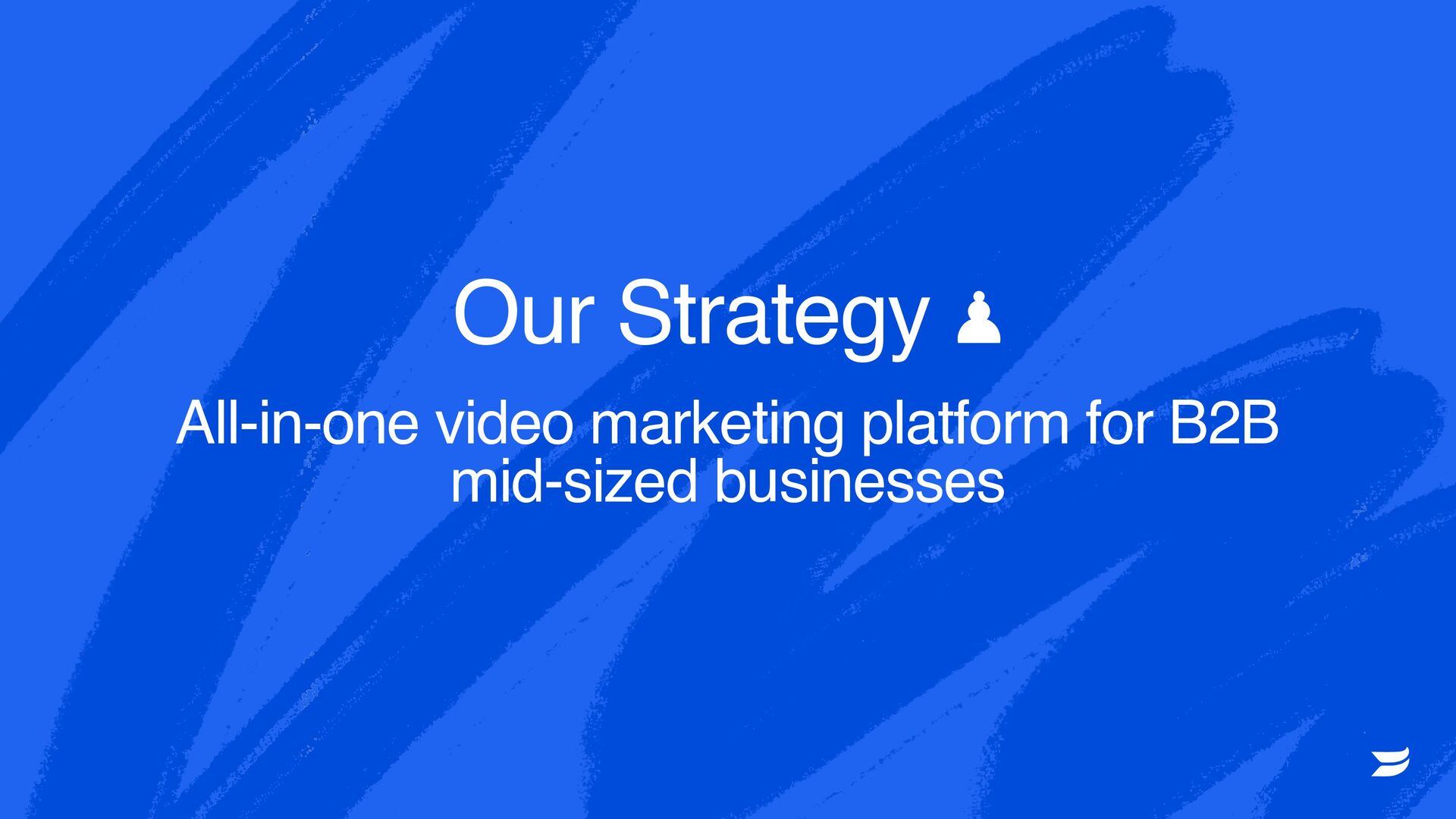
Like, we're marketers, we're busy, and we're in charge of video. So give me a tool that puts it all in one, save me time, and I want a seamless experience. And so we changed our strategy at the beginning of twenty twenty one to be an all in one video marketing platform for B2B midsize businesses.
The thing to notice about this, it might not look like a big change, and there's probably some people in here who thought this was our strategy before, which is great. But internally, this was an enormous change in terms of what we were green lighting for what we should build, for how we should think about it, and for even saying B2B midsize businesses, it feels scary to write that down because you know that's less than all SMBs.
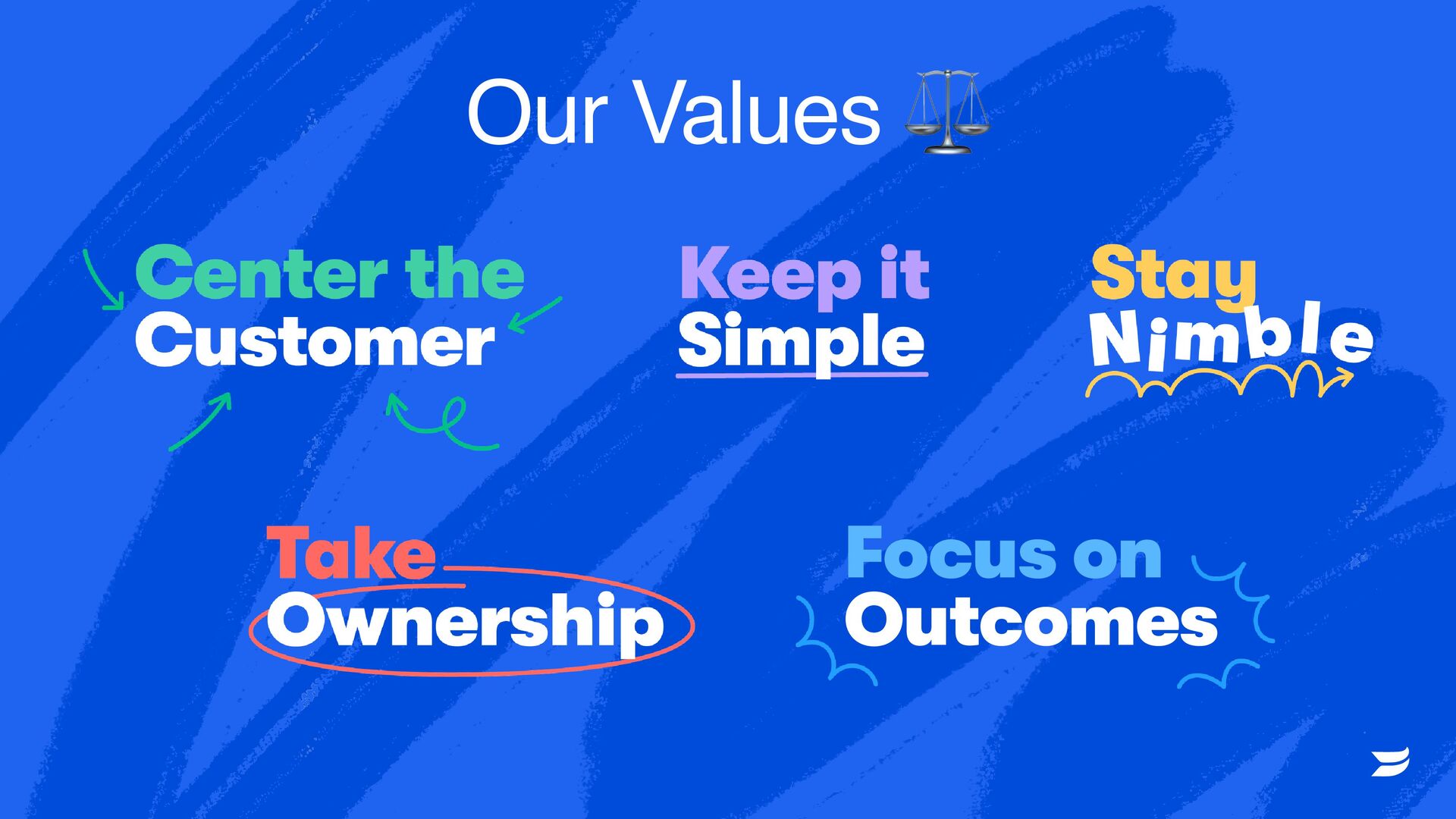
But we felt that the market would be so big, we have to be more focused. And that's going to let us move much faster and build better things. The other thing that we did is we changed our values. You hear you should never change your values?
I disagree with that. Culture and values are how you enact strategy. So if we have a different strategy, we have to look at our values and we have to update them. I look at values not as what we're hiring for when someone comes to Wistia.
Someone comes to Wistia and they're not smart, I'm not going to hire them. That shouldn't be a value. Smartness shouldn't be a value. Integrity, inclusion, there's a bunch of things that should be characteristics. We don't plan on changing them. We're hiring people that have these characteristics.
We expect them to use those characteristics. The way I look at values is value should help you make a decision in a Wistia way. And if they're actually used, and they're used in how we do recognition, they're used in our reviews, they're used in how basically, you know, what is praised and what's punished, if we use the values, then people will live and breathe it, and no one will ever say, What's the Wistia way of doing this?
They'll just be like, We're just doing it. And you remove this factor of tenure, which often factors into decisions. This also meant we're going to dramatically broaden the footprint of our product, because we're not going be hosting analytics anymore. We're going to help you with making videos.
We'll help you with editing videos, we'll help you with streaming, all this stuff, and so we have to invest more. And so we're responding to the moment we're in, so we've gotten quite profitable. We said we're going to hire aggressively. We're still going to be profitable because we think that's important to be focused for the long term.
Profit lets us do that. But we're going have a lot less profit, and we're going to reinvest directly back into the company ourselves. So we did that. We doubled the product and engineering organization in one year to do this. And this is the part that is also surprising, which is that we reintroduced equity.
And the reason I did this, and we did this as a team, is we looked at the situation and said, hey, if our market is early stage again, and there's a lot of variability, there's a lot of upside, we need everyone to share in that.
We need everyone to understand that. How will we get a return for people? We'll probably do more buybacks like we did before. It's not that scary of a thing. Yes, maybe you sell the company someday. That's not our intention. We're trying to build an independent business, but you can still get liquidity for folks if you use tools like debt or you even just build cash on the balance sheet and you do your own buyback.
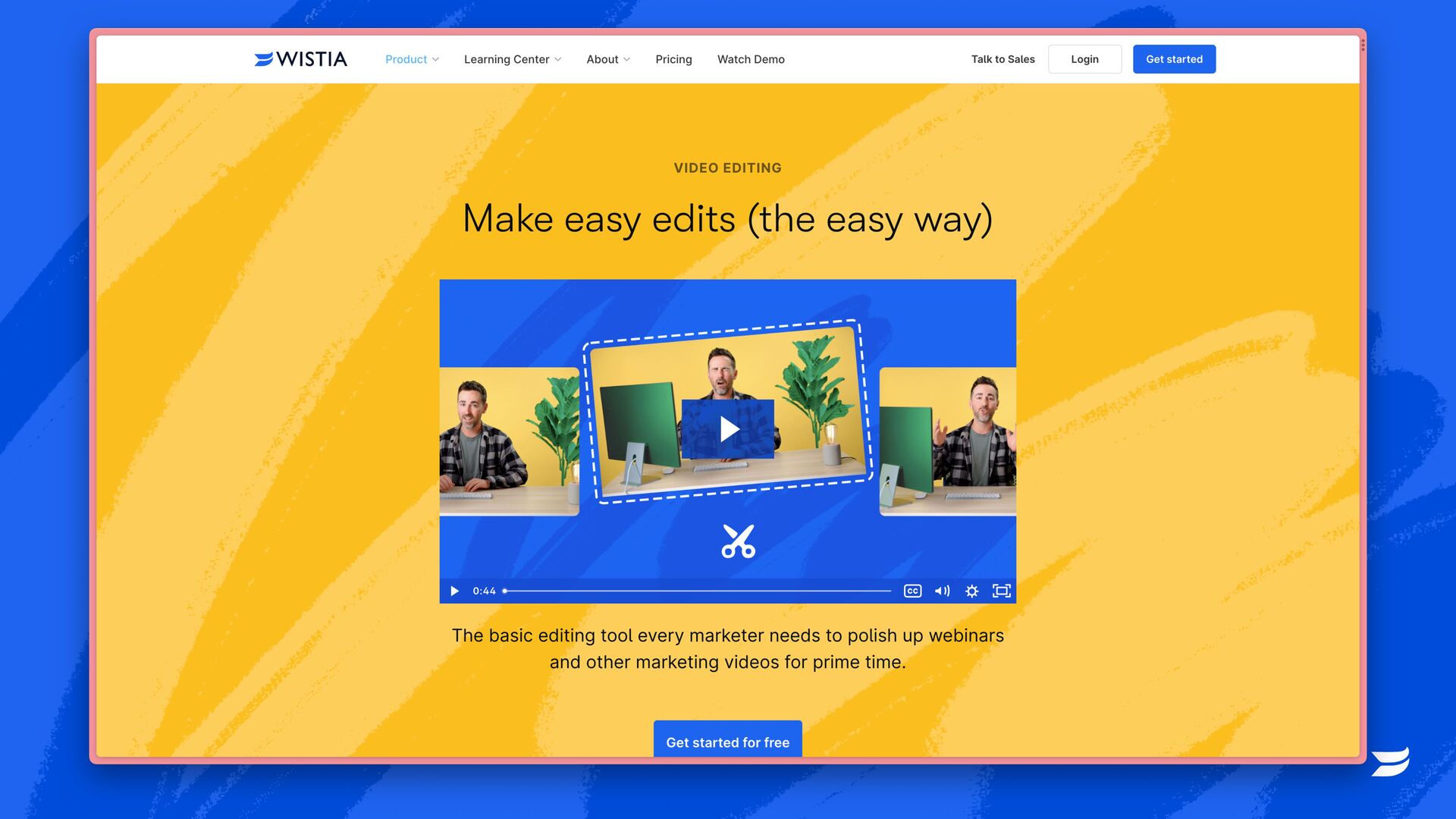
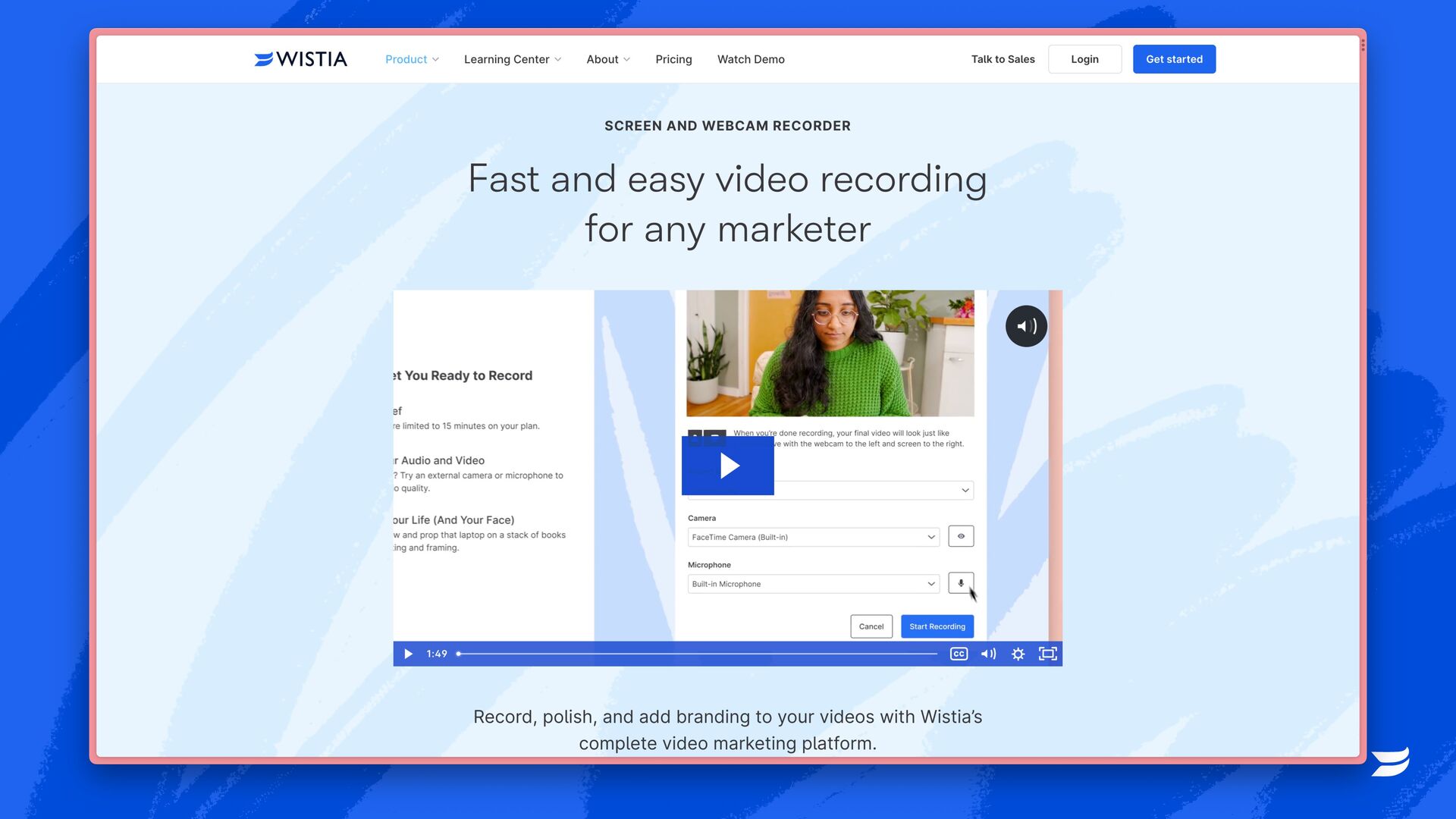
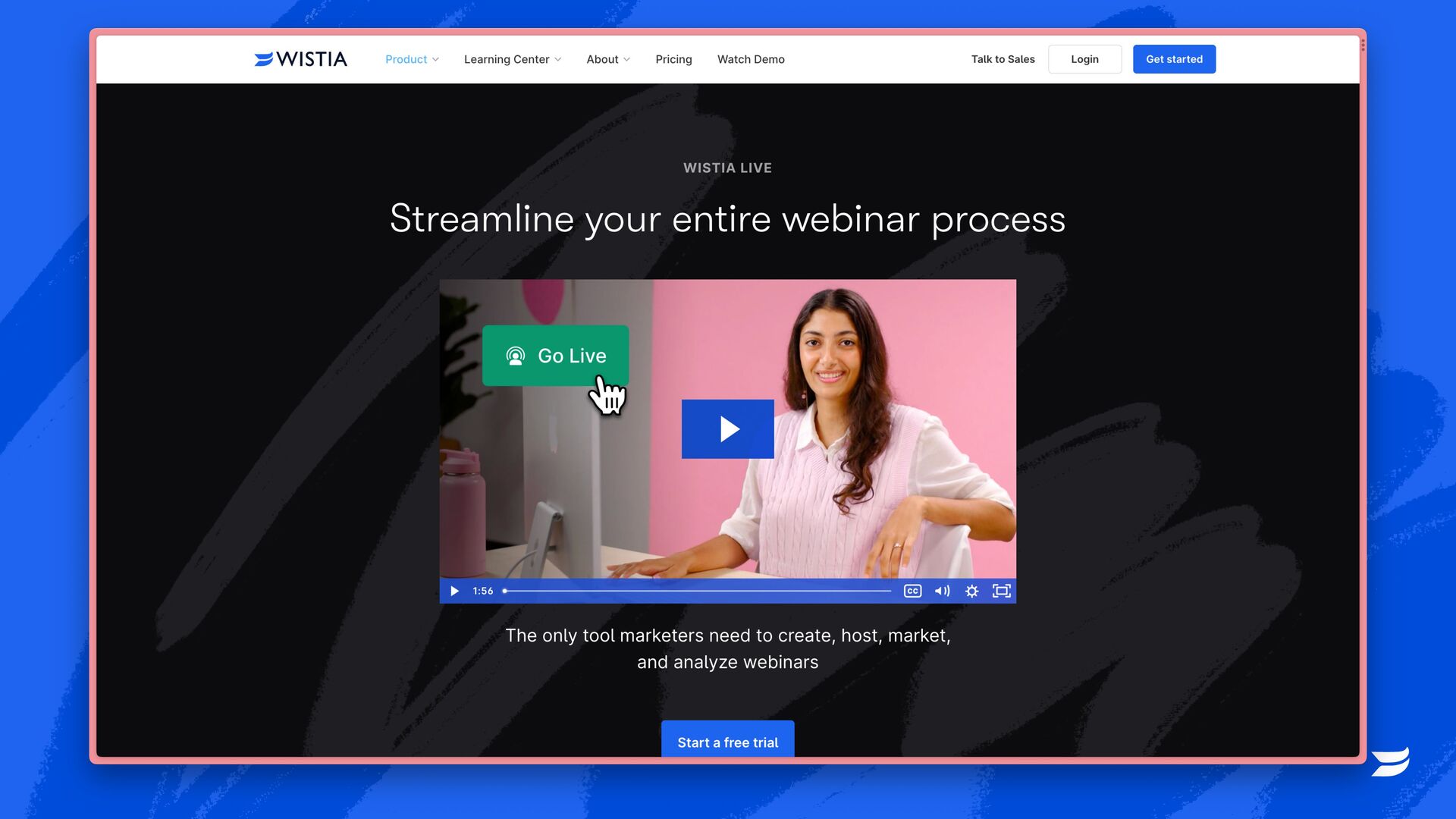
And then we launched, in the last year or so, we've made huge changes to the product, so we launched Editor last summer. We had a product called Soapbox, which we've been bringing into Wistia directly. Allows you to record videos. We launched a webinar platform in October called Wistia Live, and the awesome thing is that all this stuff is working, like, incredibly well.
Like, customers are embracing it, they're using it, and I look at it, I'm like, we have never really been in the video creation game. We changed our strategy, we realigned, we took the lessons we had from the buyback, we put them back into the business, and now we're firing all cylinders.
And the crazy part about this is that the company has more than quadrupled since we initially did that initial round of debt, and we've now paid off all our debt. Thank you. So what have I learned from this? Obviously, I've learned a lot, But I think there's a few big things I would just kind of highlight as takeaways that I think are relevant no matter what type of business you're doing.
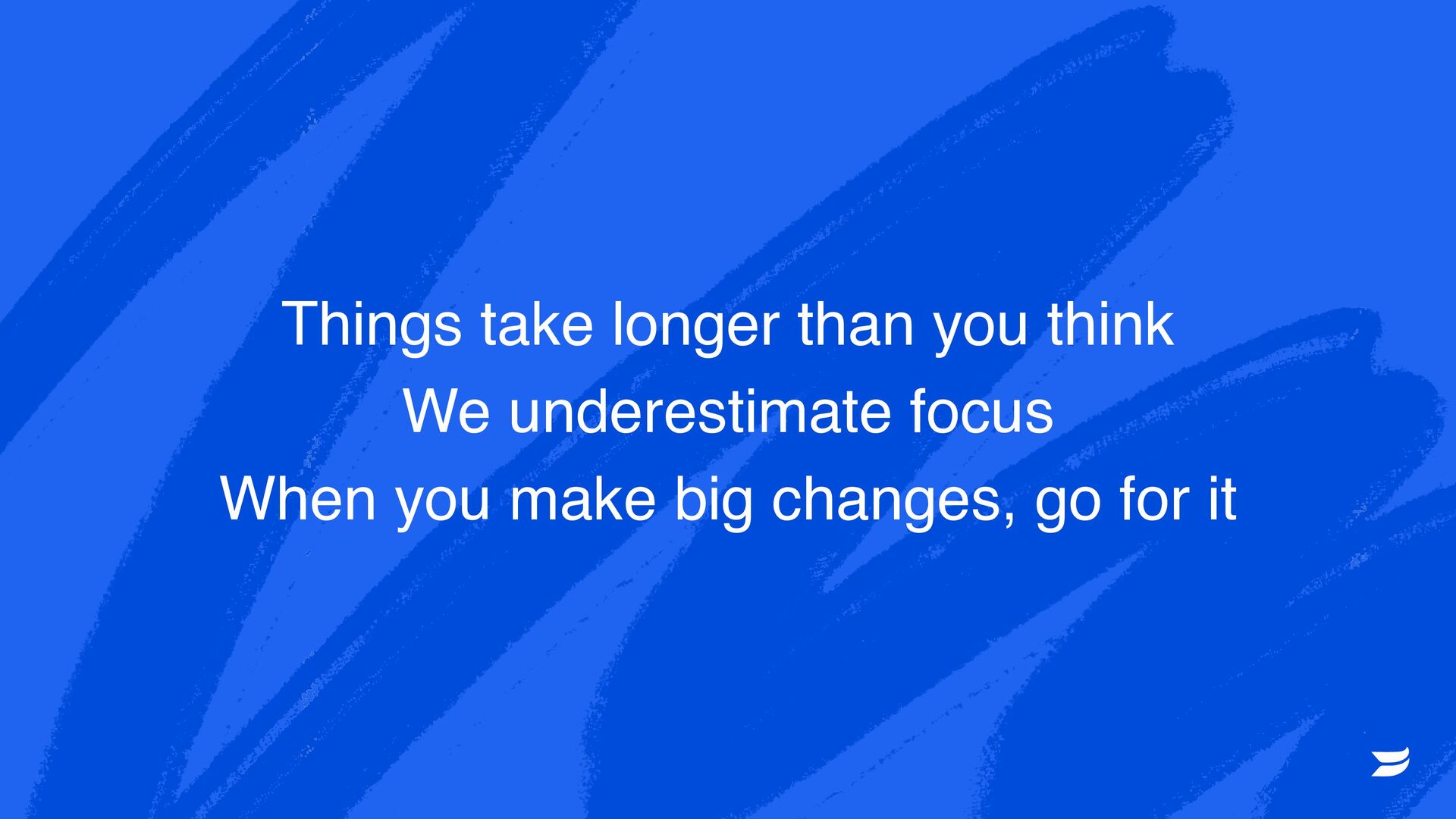
I don't I'm not the guy who says go do a buyback and do it with debt, like you have to figure out what the right thing for your business is. But these are the things that stand out to me. Things could take a lot longer than you think.
Like, I really thought I was gonna do this for six months, it's been seventeen years, and it feels more early stage to me than it ever has. That is crazy. I could never have imagined that. But if things take longer than you think, how you do the work matters.
Managing burnout, all those things, working with people you care about, taking vacation, like actually doing it in a sustainable way, it matters. So things take longer than think, and that is okay. That actually can be a huge advantage if you can figure out how to lean into it.
We underestimate focus. We live in a world of distraction that wants us to do a million different things. We do the same thing in our companies. We do a million different things. If I could go back and solve some of the problems and some of the mistakes I had made, it would have been a simple question.
I would have said, hey, you want to do something new? That's great. Is there something that you're doing that's not working that you should stop doing first? Because lots of times we have great people trying things that they should, and they don't work, and that's great.
And you can decide, do you want to just stop that and take that great person and put them on something new? It's a very, very simple thing, but I think we underestimate. We underestimate focus. We underestimate asking that question. And I'd say the last one is, when you make big changes, you see big changes in your market, you have an insight that you think is going to drive a lot of value, like go for it and go big.
And the reason to do that is if it works, you get the benefits. And if it doesn't work, you usually find out a lot faster. Thank you so much, everybody. Really appreciate you. Good to see you.