At Current Health, we're seeking to help move from a world where we call 999 when we get sick, to a world where healthcare comes to you automatically before you experience symptoms. To do so, we combine complex hardware, software, and core science into a product that is responsible for keeping people alive, safe and healthy in hospital and at home. We've built it here in the UK and we deploy it into an exceedingly difficult US healthcare operating environment.
My goal is to provide an open and honest view of the mistakes we're making and the lessons we're learning building our customer base in the US, from a headquarters in Europe.
Most stories are only told at the end, at the point of success or failure. This won't be a post-mortem but instead, a view right into the maelstrom of what's actually happening today amid the chaos and opportunity we have ahead as we grow into the US.
1 / 42 Use ← → to navigate
Auto-generated transcript - may contain errors.
Tap a timestamp to jump the video.
Thank you. Well, it's a real honor to be on this stage and share some of the many, many, many things I've completely screwed up over the last couple of years. As John has said, I'm the CEO of Current Health. We're based here in Edinburgh.
We employ about fifty people just now. And we're focused on the early detection and prevention of disease. So to make it a little bit personal for a moment, my grandmother had heart failure, she had lung disease, and this might be a familiar story to some people.
She experienced recurrent deteriorations in her health. She was frequently readmitted to hospital as a consequence. And each time, she gets a little bit worse. Because fundamentally, our health care system is broken. We wait until you get sick before we treat you, and that is what we wanted to change.
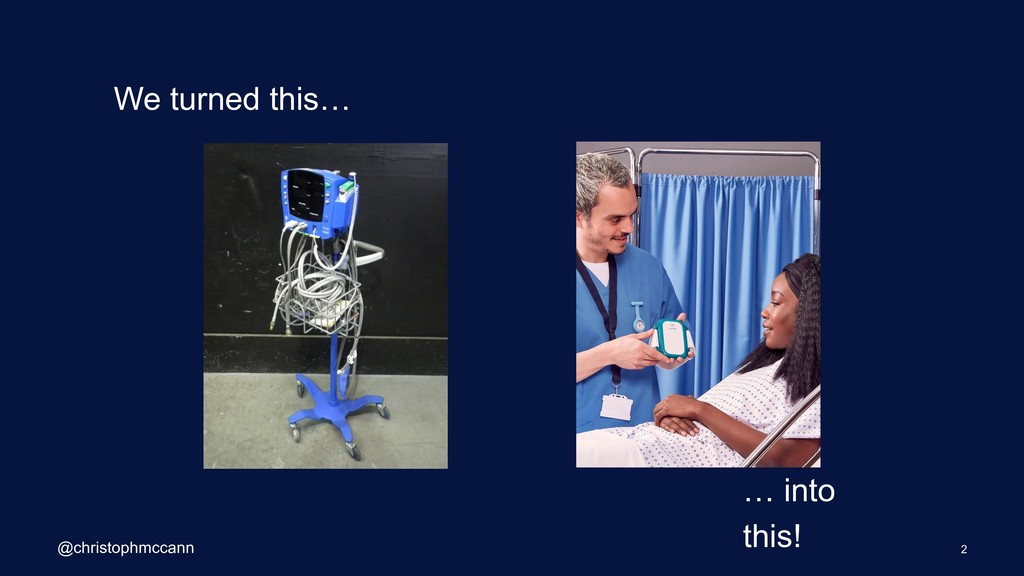
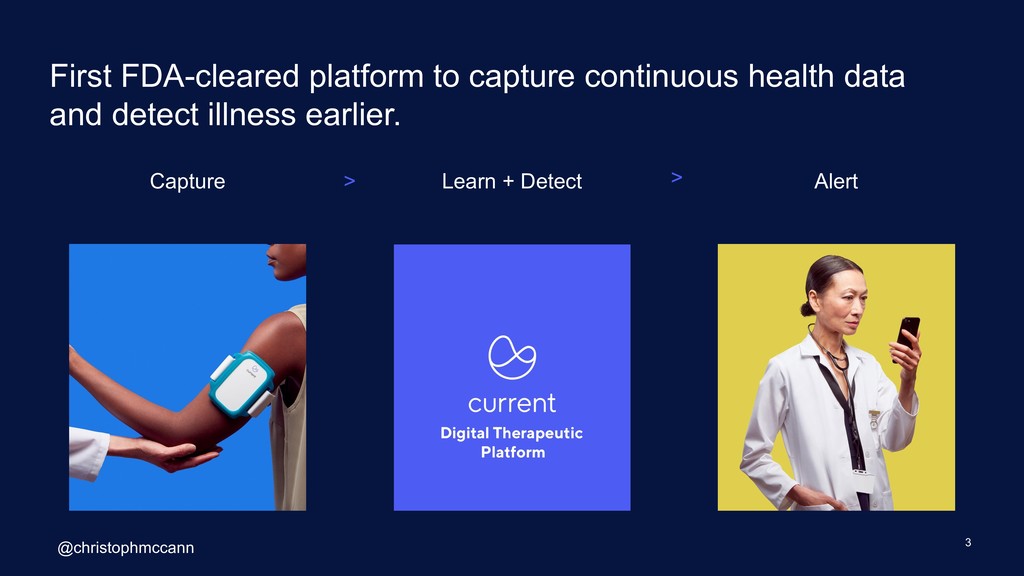
So we turned this wheelie trolley of wiles and doom into a completely wireless device that instruments your body real time, twenty fourseven, with the same accuracy as an ICU monitor. And then we take all of that data and use it to say, This is the patient.
You are the one who needs some kind of health intervention, and get that into the hands of your doctor at a much earlier point than is currently possible, so we can keep you healthy, alive and at home. So I thought what I'd do today is try and take you through our story, how we were founded, and some of the things that happened along the way.
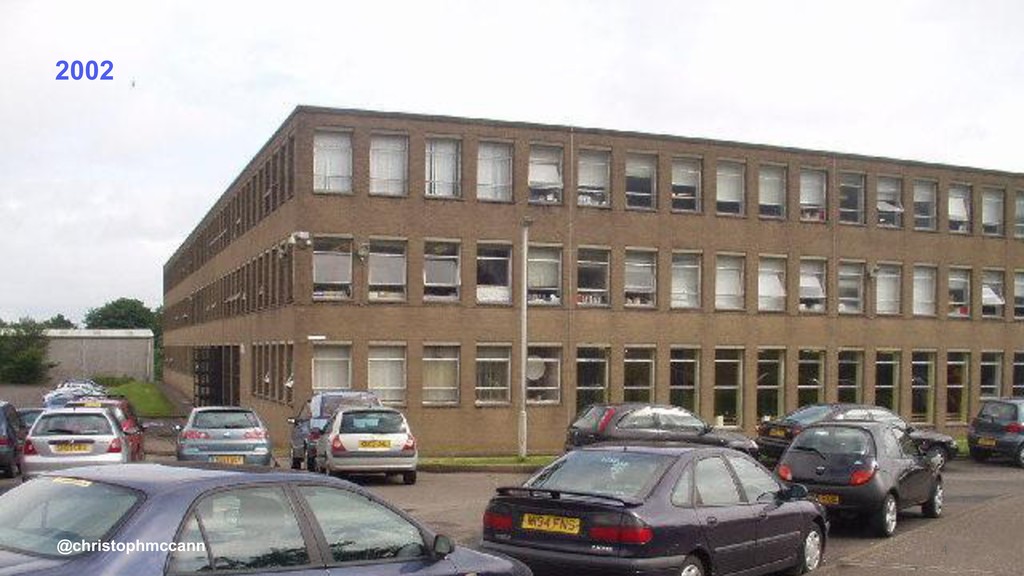
So first, I want to go right back to two thousand two. This is my high school. It looks a bit more like a prison and was demolished just after I left. And really, entrepreneurship, starting a company, was not something that was discussed here.
Just getting to university was a major success. I'm going then fast forward another ten years, added a computer science degree and another start up that we don't ever talk about. Thanks, John. And I came here to Nine Mills Hospital in Dundee to start studying medicine.
And this was really where the inception of current health started. Health care, as MD who's ever been in it, is incredibly analog, and it was just incredibly frustrating, thought, here, we could actually solve something here. So at the end of my third year, dropped out and started Current Health.
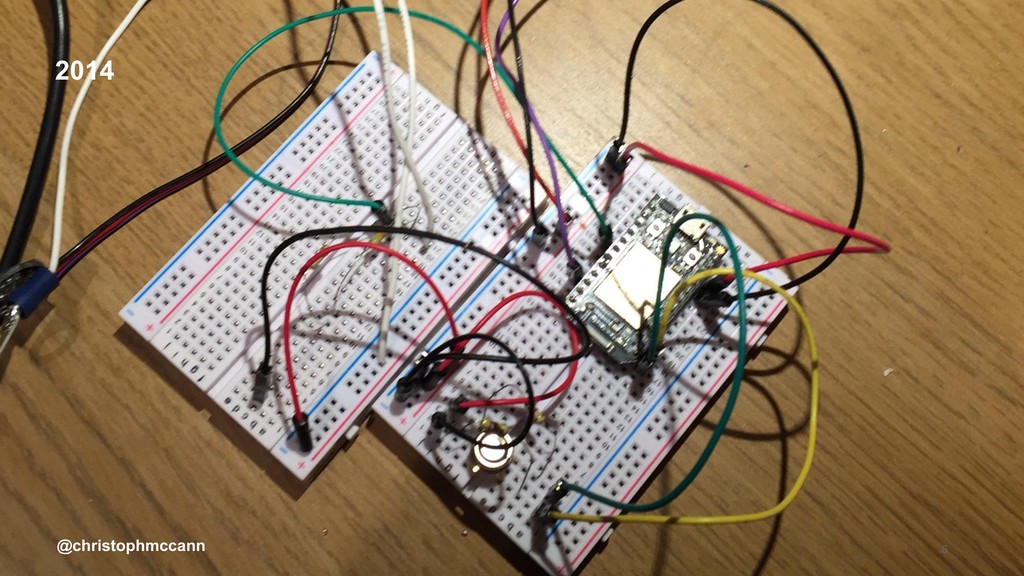
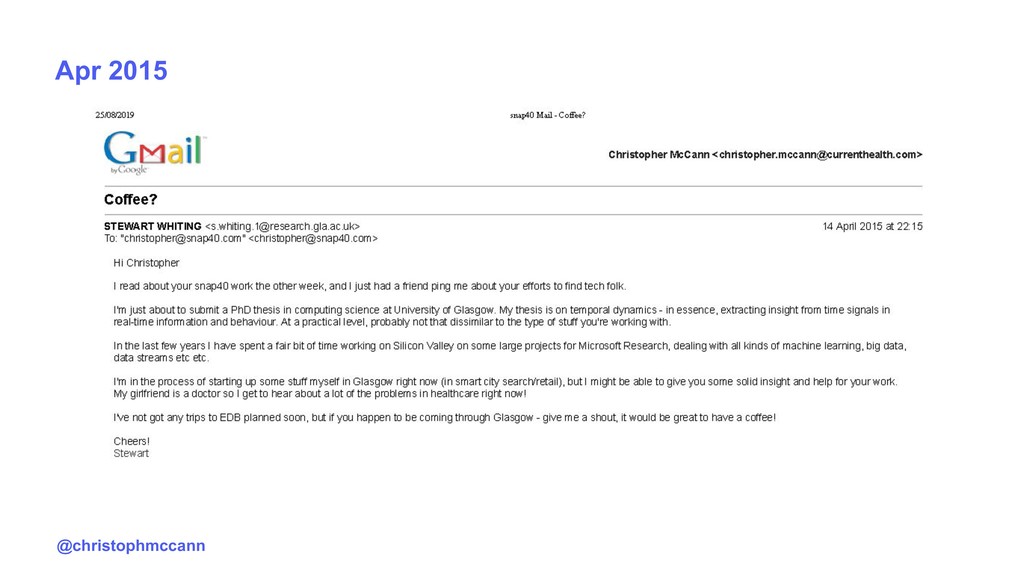
And this was the very, very, very fast Current Health wearable device. It's about twenty dollars' worth of bread bowls and utensils, and remarkably, this worked. And this was our MVP, just to test, could we even get the signals that we wanted? And then I'm going to fast forward to April of twenty fifteen, when Stuart, for better or worse, entered my life.
Stuart is my co founder. If anyone's ever met him, I'm really sorry. Stuart has become my best friend in the whole world and also the bane of my existence. But Stuart reached out to me and said, I'm really interested in getting into the health tech space.
He had just completed a PhD in Glasgow. Let's get together and do something. And that was it. We started Current Health. And the first message I want to leave here is that, speaking personally, I very frequently compare myself to the founders that you would read about in TechCrunch or other outlier founders, and you think, well, I didn't go to Stanford, didn't work at Google as a product manager.
And the truth is, there is no perfect founder, and there is no perfect founding story. Right now, we lead our market. We've built a product that plays with the biggest companies in the world. We work with some of the world's largest health systems, and we're just two guys from Scotland.
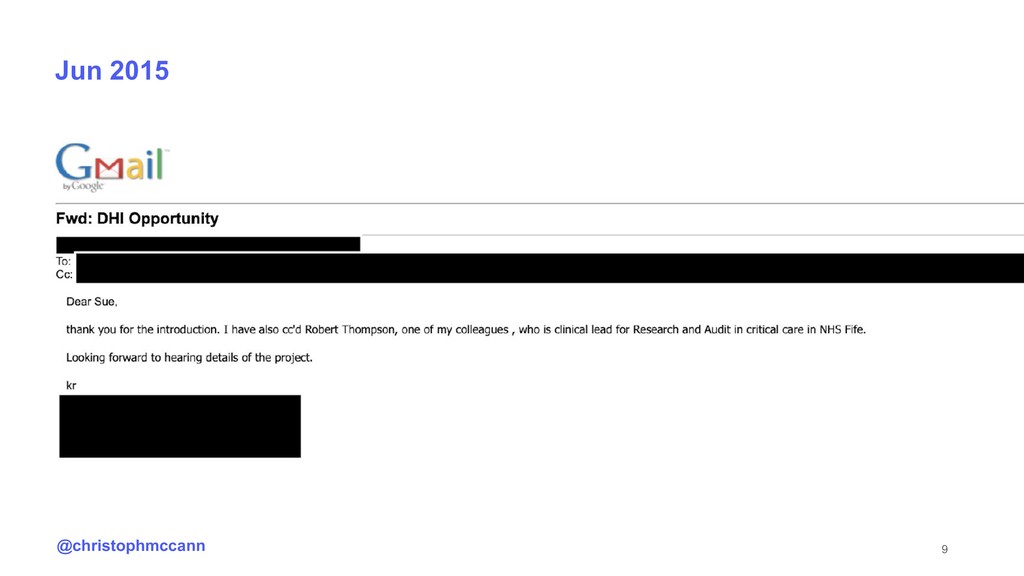
So, you know, anyone can start something that changes the world. So we've now got this idea. We need to start thinking about how are we actually going to test this? Where are we going to get our first clinical input? And I was introduced to this guy, Robert Thompson, who's still an ICU consultant in NHS faith, and he's one of pivotal figures in our story.
Stuart and I drove up to the Victoria Hospital in Kirkcaldy with literally a fabric strap with some sensors attached to it and said, Hey, we're going to take this, and we're going to do something that's never been done before. Will you trial this in the Victoria Hospital?
And you can expect them to be like, basically, **** ***. This is ridiculous. But that's not what he did. He said, This could really change things for us. Absolutely, we'll help you. And a year later, we'd go on to start a clinical trial with NHS five.
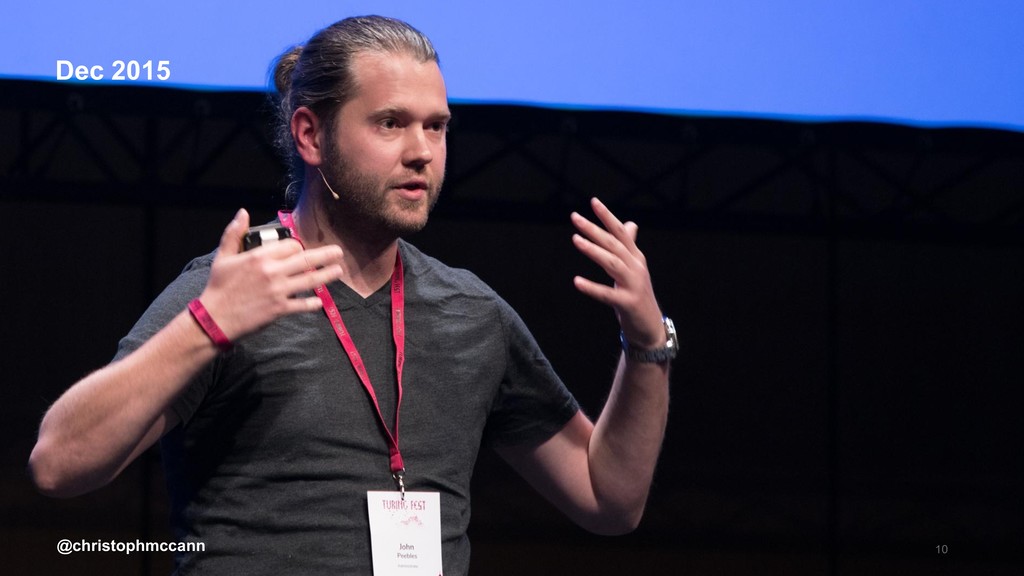
And now enter John, and this will be the one and only time I publicly compliment John. John was introduced to me through a mutual friend, and he has been one of the most important figures in our founding. He has become an incredibly good friend and someone I call on at some of the lowest moments we've had, including in the wee hours of the morning, including this week.
And the message I just want to leave here is that it's really important, in my view, to find a mentor. And I was on a panel on Tuesday at Turing Founders, and topic of mentorship came up. Some people phrased it as adult supervision, and some people phrased it as gray hair, and I think that's nonsense.
A mentor is not someone who tells you what to do, and a mentor is not necessarily someone who says, This is the answer. A mentor is someone who says, this is what I think, very transparently and asks incredibly good questions. And, John, one of the things I respect most about him is his incredible talent for telling you exactly what he thinks, completely unvarnished.
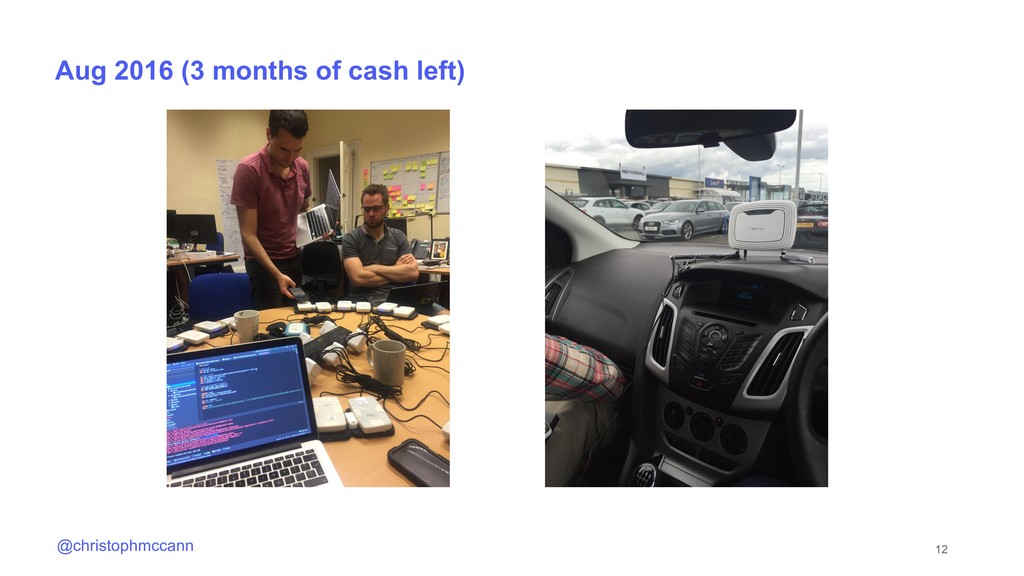
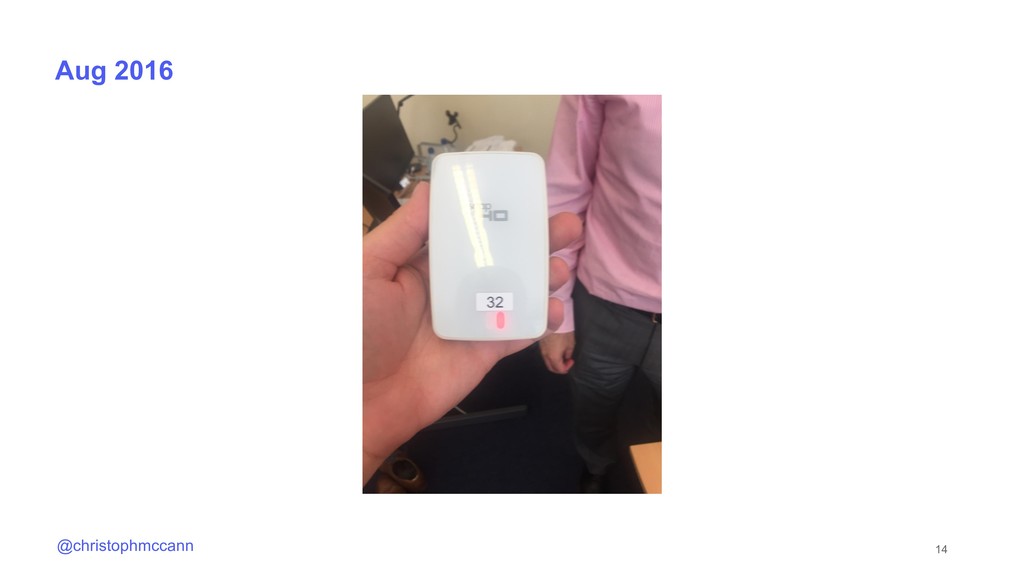
We would not be here if it wasn't for some of the things John has done for us, and I would encourage everyone who's thinking of starting the company to go out and find your own John. So fast forward August of twenty sixteen. We've got about three months of cash left in the bank at this point, and it's really pivotal.
Two weeks after this, we need to start the clinical trial in NHS five. And if we don't, we're not going be able to raise any more capital. You know, we had to show that the product was going to work. And we get the kit. This is our first wearable device.
It's literally delivered two weeks before it starts, and nothing works. They just do not work at all. And this is me and Stuart and Tom, who was our first employee and runs our software engineering team today, at about four in the morning, trying to debug why none of this was working.
They wouldn't connect to the Wi Fi network of the hospital, which is pretty critical when you're trying to monitor patients in a hospital. So on right, this is us sitting in the hospital car park trying to figure out why is this not working and can we get it solved.
And this was when I learned probably the most important lesson I've ever figured out. The universe has a perverse sense of fate. Anything that is possible to go wrong will go wrong, and you just need to accept that. You can try your best to plan for it, but it will just still go wrong, and you just need to be Okay with that and be resilient to it and move on.
And to show this even more, we start the clinical trial and we're on real patients for the first time, and we get this red light of doom. The device just breaks on the wall. And we had done this really quickly. We cut a bunch of condoms, including error logging, which would have been really helpful at this particular moment.
And also helpfully, our firmware engineer at the time, he had been working round the clock to get this ready. He went on holiday to Rome. So we phoned him up, we were like, just, need to come back. Like, we've booked you the next flight.
You need to get back here. And on the way to the airport, his bag, with his passport and his visa, is stolen. And you know, you just can't make this up or plan for this. So we have to FedEx out an entire electronics lab to a hostel in Rome so he can try and debug and solve this issue.
And I think that the biggest thing that I came away from with all of this is a start up is really just about solving problems. It's like, take the highest priority problem you have, solve it as quickly as you can, then take the next one and do the same thing again and again and again and again, and you get there.
Because at the time, I thought these problems were the worst thing in the world. I thought we were done, and I had never felt worse. And now I look back on them and think, that was really funny. Like, what a funny time. And the problems we have now are so much larger than then, but it's just all relative.
So you have to just keep your head down and get on with it. And this was us a couple of months later. The clinical trial was super successful, and we raised our first round of capital. So there is a tomorrow, and all these problems pass, as long as you just keep focused on what the most important ones are.
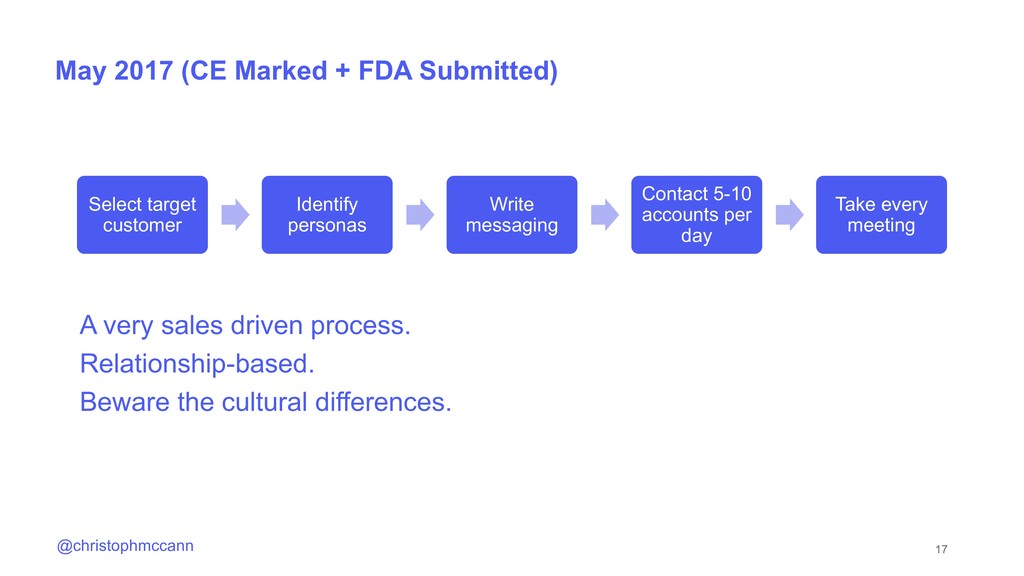
So I'm now going to fast forward to May of twenty seventeen. We've got CE marking, which is European regulatory approval. We've submitted our FDA clearance. And now we're starting to think about how are we building our market, you know, who are we reaching out to?
And from the very beginning, we had been very biased to focus on the United States market. There isn't a good history of innovation in the NHS. It's quite hard to penetrate. It's a difficult organization or organizations to work with. The US is a much larger market.
They are much more, in general, bullish about health care technology. And as we would come to find out, what we were doing aligned very nicely to some of the financial models they were working to. So I thought I'd try and share just the way in which we built some of our early adopters, because I think there's a tendency, when advice is shared on this topic, to go twelve, eighteen months in, when you're talking about how do we set up really complex tools and how do we do lots of different things,
when in reality at this point, we were just trying to figure out who really was our customer and why did they want this. And this is literally what we did. We obtained a database online called Definitive Healthcare, which is just contact details for a bunch of health system executives.
We thought, you know, I think probably the CIO, the CFO, the CEO, they might be interested in this. We'll draft up some emails that we think will be relevant to them, and then we'll just consistently and repeatedly email them until they reply. Because, you know, even if they're so annoyed to just get us to shut up, eventually they'll reply.
And then we'll take every single meeting that we can. And that means we went to some crazy places like South Central LA, a very, very different environment to some of the other health systems we visited. We took every single meeting we could, even when we weren't sure if they were really a viable customer for us.
Because at that point, all we're trying to figure out is, know, who wants our product and why? So let's meet everyone. Every single person is a possible learning opportunity for us. And this was a very, very sales driven process, and it still is within health care.
If you look at the very big guys like Philips and Medtronic, they don't do a lot of marketing. And it's also very, very relationship based. Some of the relationships that I built through this with CEOs, CIOs are still the most important relationship that we have today.
The last point is the one I found hardest to learn. There's a tendency in the UK to assume that because Americans speak English, they are the same as us, and that is not true. It's not even true if you look at the country as a whole.
It's almost like a whole bunch of individual countries. One of the things that I find most interesting is the Americans in general don't do sarcasm, and they like things to be very straight down the line. We launched a customer recently in New York, and nowhere was this more evident.
We had a bug in our software. We had a software engineer on the floor with one of the nurses, and the nurse said and this is basically verbatim word for word why are you guys so ******* ****? Get the **** out of here. Why would you do this?
And for British people, that's quite jarring. We are typically used to a slightly greater level of decorum. But that's just the way you know, there are cultural differences, and you have to accept that if you want to build a company there. And that's just the way it is.
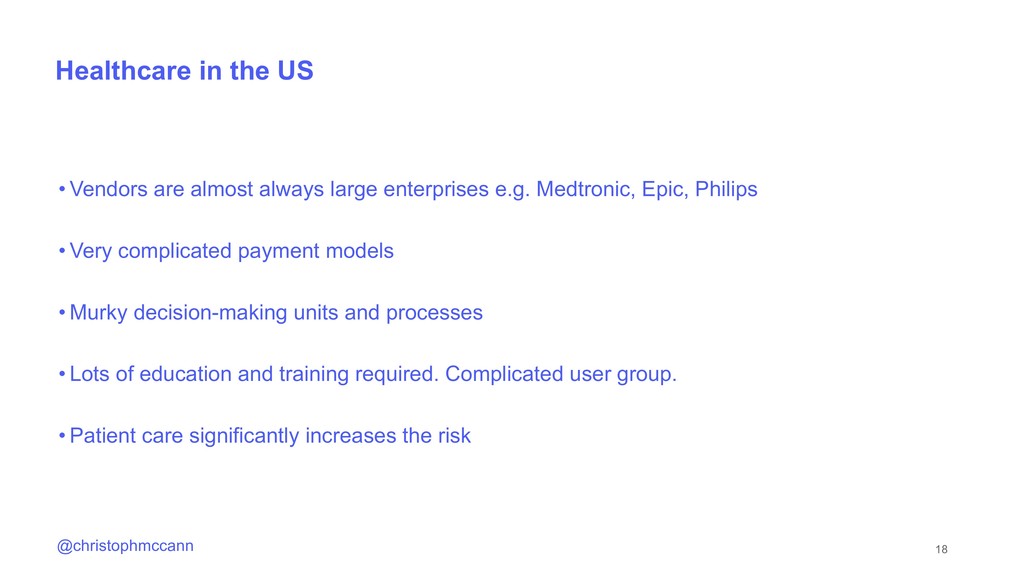
So I know there's a whole lot of people in Edinburgh starting to think about building digital health companies, life sciences companies. And health care in the US is very, very different to health care in the UK. The vendors involved are almost always massive enterprises, so people like Medtronic and Philips.
There's almost no room for start ups. The payment models, things like reimbursement insurance, are incredibly complicated, and you need to take a lot of time to deeply understand them. The decision making unit within the hospitals is unbelievably murky, even to the people within them.
So I sat through a pitch with a CMIO. He was like, great, I love this, I want to buy it, and I don't know how, Because he doesn't know his own internal process. And certainly for us, it's not like we just sell the product, ship it out the door and that's it.
It's a very complicated user group. Our product touches a group of nurses, a group of doctors, it touches the patient, it touches the caregiver. Most of these people aren't always technically native. They may not have the same level of technical sophistication that some start ups are used to.
And at the end of the day, and this is the most important thing for us, our product at the end of the day is taking care of a patient. At the end of the day, we are trying to keep a patient alive, which is a very significant responsibility.
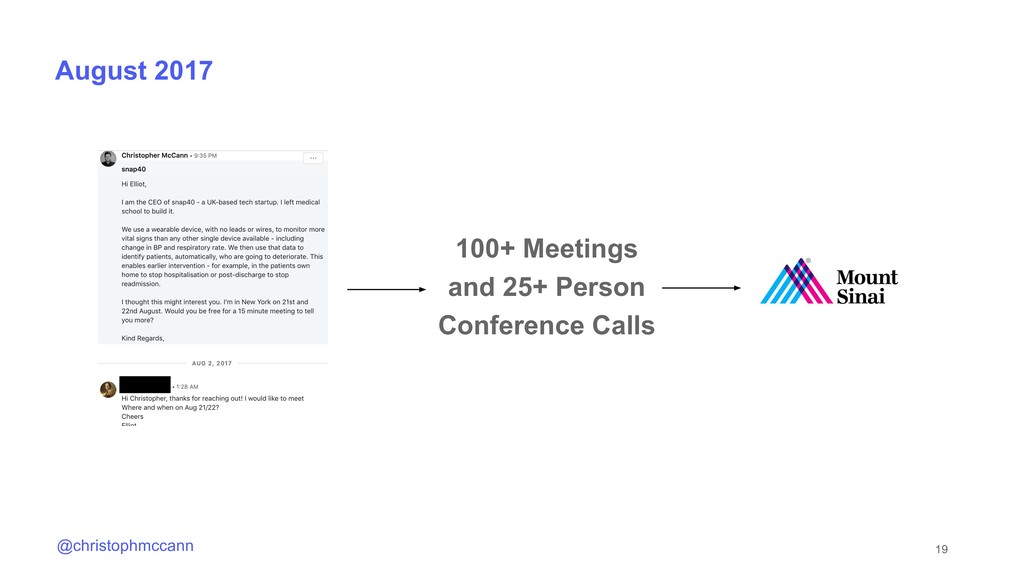
So a few times I've been asked by people, like, how did we get some of our early adopters? And I wanted to just very transparently share this is how. So Mount Sinai, we publicly announced launching with them a few months ago. In August of twenty seventeen, I sent a LinkedIn message here.
LinkedIn, remarkably effective for b to b in the US. This was to one of the head of surgeries. He replied. We met up the next week. And then there was a period of about eighteen months of a hundred plus meetings, conference calls with twenty five plus people talking about very, very low level detail.
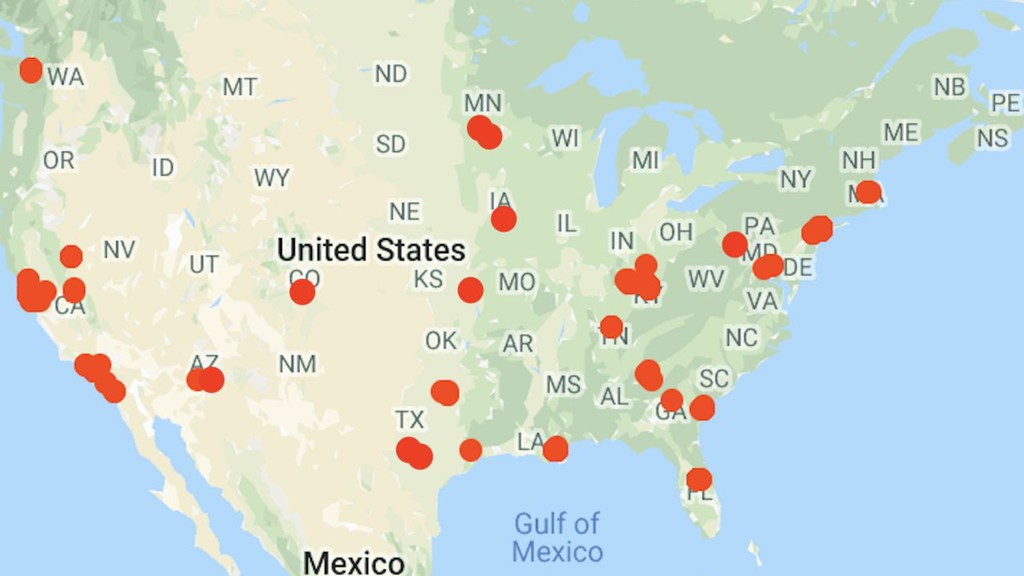
And we launched with Mount Sinai in June. So these people are here. They will respond to start ups. Be prepared for the long haul to actually get them over the line. And this was my travel for the last eighteen months. It was in excess of sixty trips to the US.
And really, messages here are, like, in order to build a business in the US, you have to get out to the US. The executives we pitch to, they are amazed that they are speaking to people coming over from Scotland. It actually buys you points. But you have to be there.
You have to go and sit in their office and be as if you're a US business. Hence, the ridiculous travel. So this is one of the other big lessons I learned. This came from a guy called Gordon Craig, some people might know. He's the co founder and CTO of Craneware.
And we were talking about doing our outbound sales, and I was saying, you know, before I start reaching out to the customer, I've got to get all these things done. You know, like, gotta get our website right and a bunch of other stuff.
And he was like, I think you're creating imaginary barriers in your head. Just start sending emails. And he was completely right. Know, a lot of founders have a tendency to try and want to be perfect, particularly when you're going out into the public domain.
And really what matters is just how quickly can you get out to your customer and find out, you know, why do they even want to speak to you? And everything else gets solved after that. And one of the things that you learn as you start going out is what really is your message.
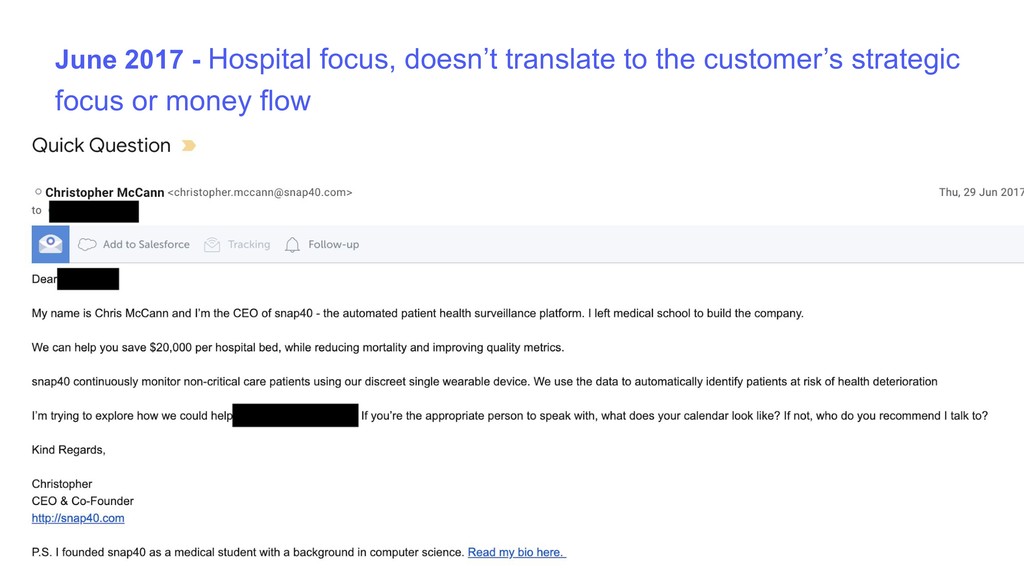
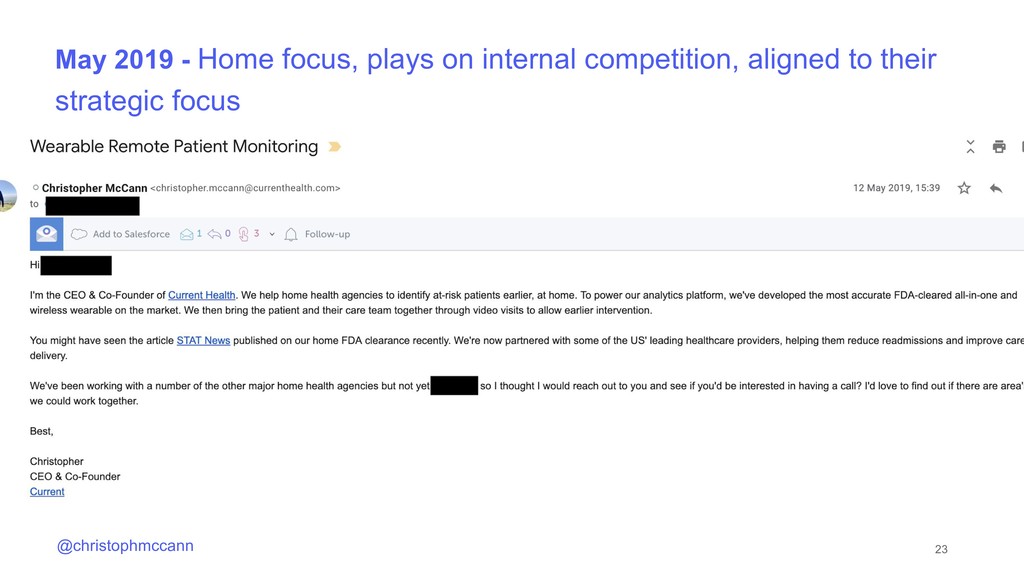
So this is June of twenty seventeen. This is an email we sent to the CFO of a hospital in New York. This email was very focused on the in hospital value proposition. There was this kind of marquee, we can help you save twenty thousand dollars per hospital bed.
But it's not really clear how does that align to how that CFO is paid. And this was fairly poorly converting. We then come to May of twenty nineteen, and this was an email I sent to the CEO of a huge home health agency.
This did convert. They're an active opportunity for us now. And now, because we've out and spent two hundred plus meetings with executives, we know exactly what they're most worried about. The singular value proposition that we know that will convert is reducing readmissions back into the hospital.
We know that they care very deeply about whether or not their competitors have our product before they do. So these are all things we can start to play on, because we've went out and had all these conversations. What we also found is that the typical definition of the MVP might not apply.
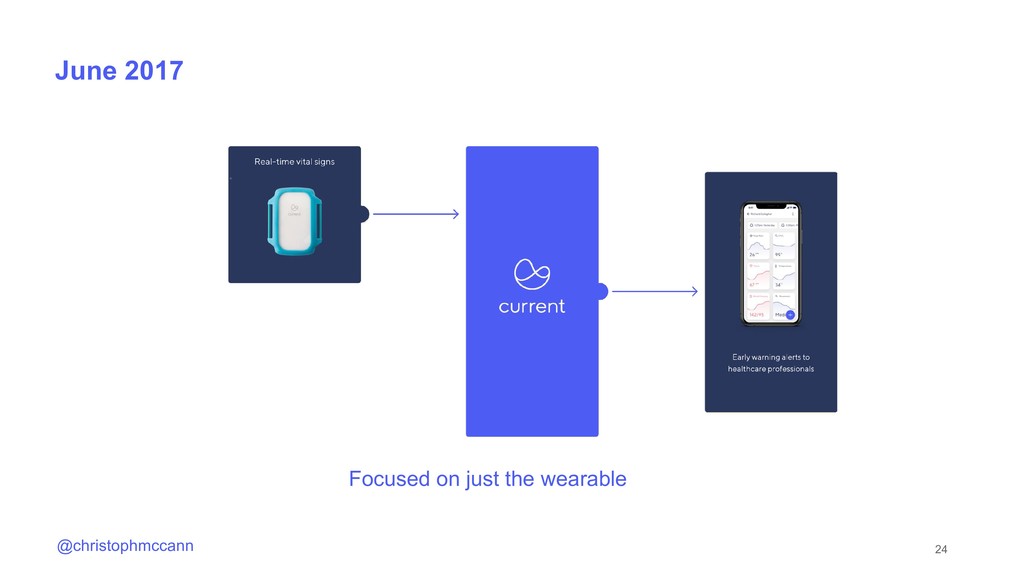
So in June of twenty seventeen, this was our product. It was just the wearable. We transmitted it to the cloud, we generated an alarm, We put it down onto the phone of the physician. And we would get this kind of typical reaction where people would be like, wow, that's super cool.
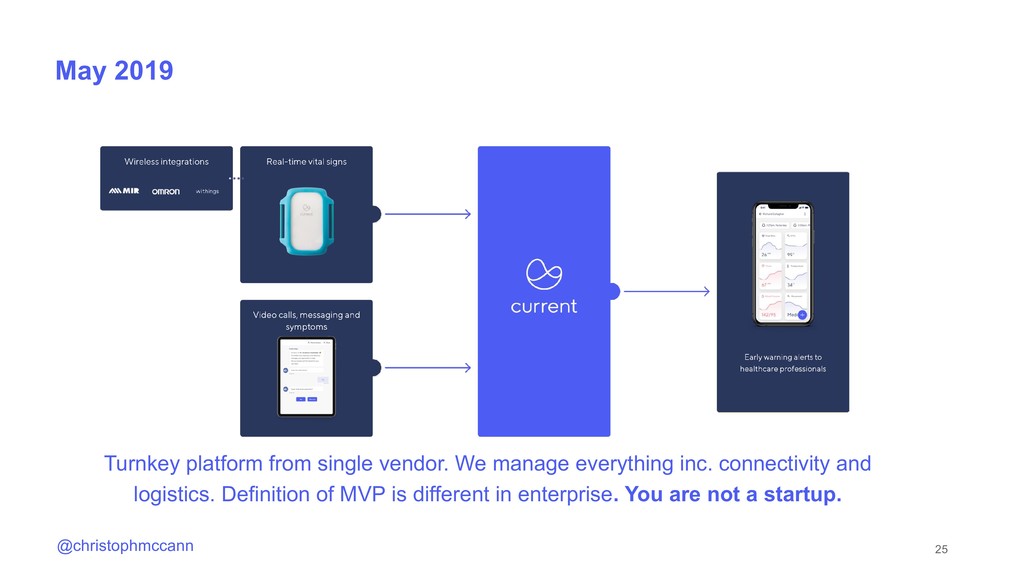
Come back in a year when I'm interested in this. And you're like, how do we figure our way through this? And when we come out to May twenty nineteen now, it's completely different. And what really drove this is that we lost a deal to a company called Philips.
And the reason we lost that deal you know, we've got a much, much, much better monitoring product than Philips. But Philips, they did the logistics, you know, shipping out to the patient. They did video calling with the patient. They managed the whole thing for that hospital.
All that hospital had to say was, hey, Philips, this is the patient I want to monitor, and nothing else needed to be done by that customer. That wasn't true in June twenty seventeen with our product. It now is. Now we are basically a turnkey platform that that New York hospital can say to this patient at this address, we would like you to take care of them, please, and everything can come out in the mail to them.
We do the entire thing end to end. This meant our product was considerably broader. It's a huge amount of product pressure. But ultimately, enterprise, the very large organizations, they don't want to buy from five different vendors. They want to buy from one single vendor.
And the most important point is they don't want to buy from start ups. They might want to buy innovation, but in my experience, and particularly when you're getting to scale, they want to understand that you can deliver this one thousand, two thousand, three thousand beds.
And that's something, say, Philips can give. And you have to think, how do you impute in their mind that we can give that too? And all of these meetings allow us to iterate on this. So my message here, and the biggest thing I've learned and the thing I wish I'd done differently, is get out to the customer earlier and just talk about what you're doing.
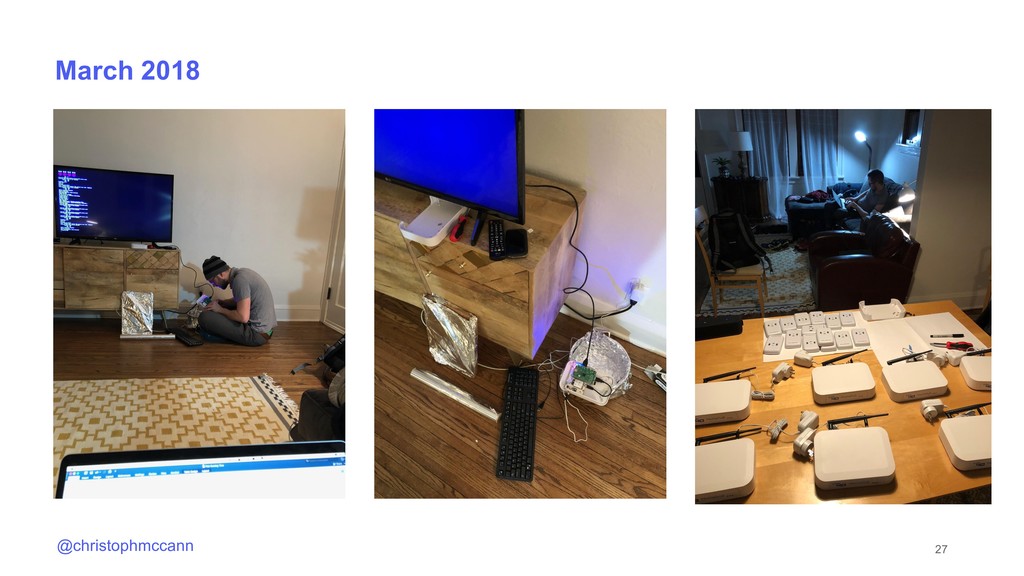
So this is March of twenty eighteen. We're launching our first American health system. We're in Rochester, Minnesota in March. It's minus twenty degrees Celsius. It's a frozen hell on Earth. And Stuart, he's just driven six hours from Chicago airport because the planes are all down because the weather's so bad.
And as always happens, massive new bug that we haven't identified before. And this is us, again at four in the morning, working with the team back here in the UK, trying to figure out why this isn't working with this kind of bastardized Faraday cage, which is a stovepod wrapped in tinfoil.
And we got it working. We launched the next day, or six hours later, in the Mayo Clinic, one of the largest health systems in the world. And then a week later, we went to the FDA. At this point, we're trying to get US FDA clearance.
And the FDA completely tore us apart. In fact, I don't think there was a single part of our submission that they didn't say, this is terrible. And it was one of the lowest moments, I think, I've ever experienced in the company's history, because you're like, you know, ****, we have a long, long way to go here.
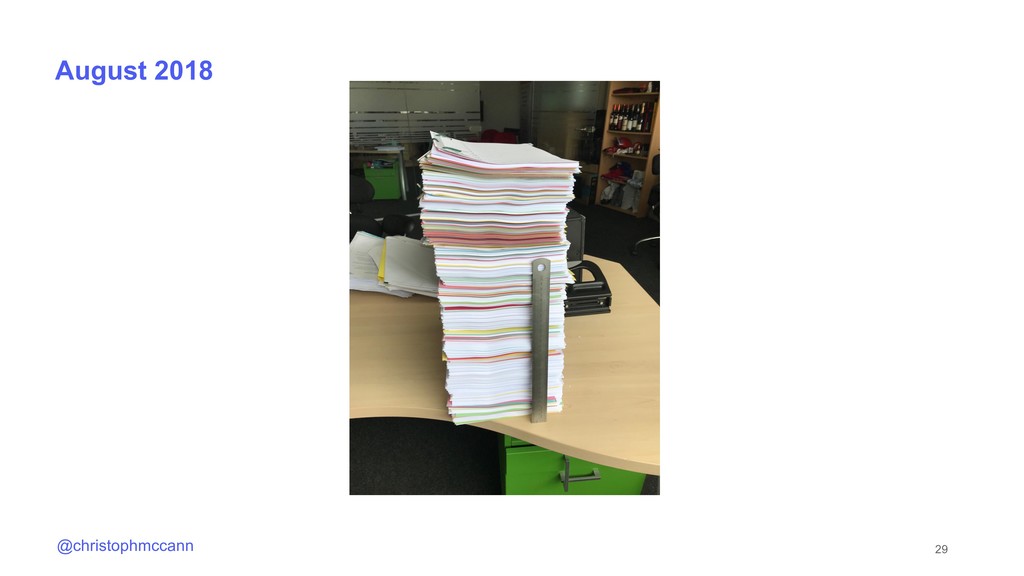
And there was a few moments where we were like, can we really do this? But we went back to first principles. I individually read every single one of the FDA standards myself, cover to cover. And in August of twenty eighteen, this was our FDA submission.
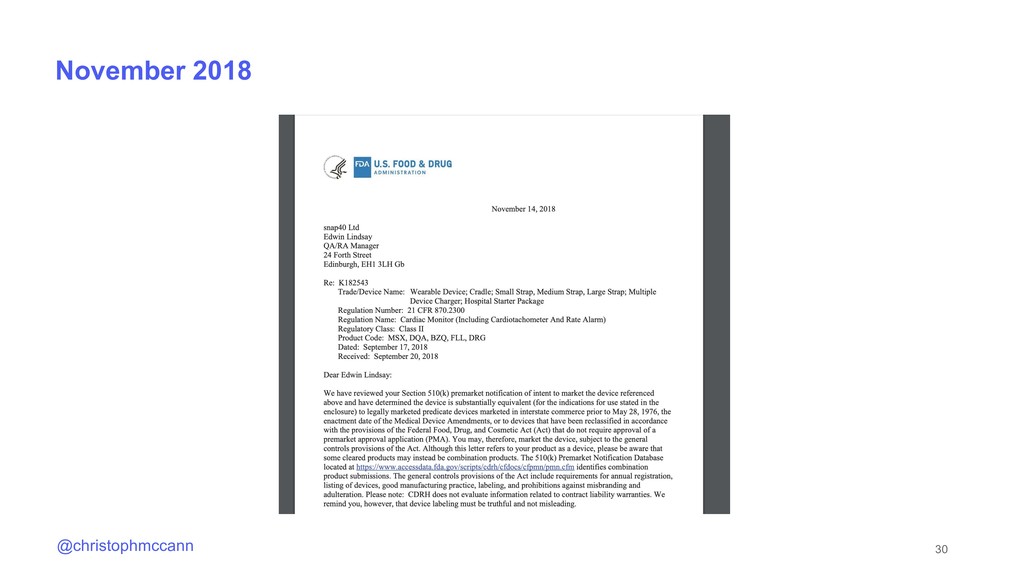
It was the single largest body of work that I've ever been involved in. And in November twenty eighteen, about fifty days later, we got our first FDA clearance through the door. And that was one of the biggest successes we've still ever achieved. And at the same time, we're still trying to build the company.
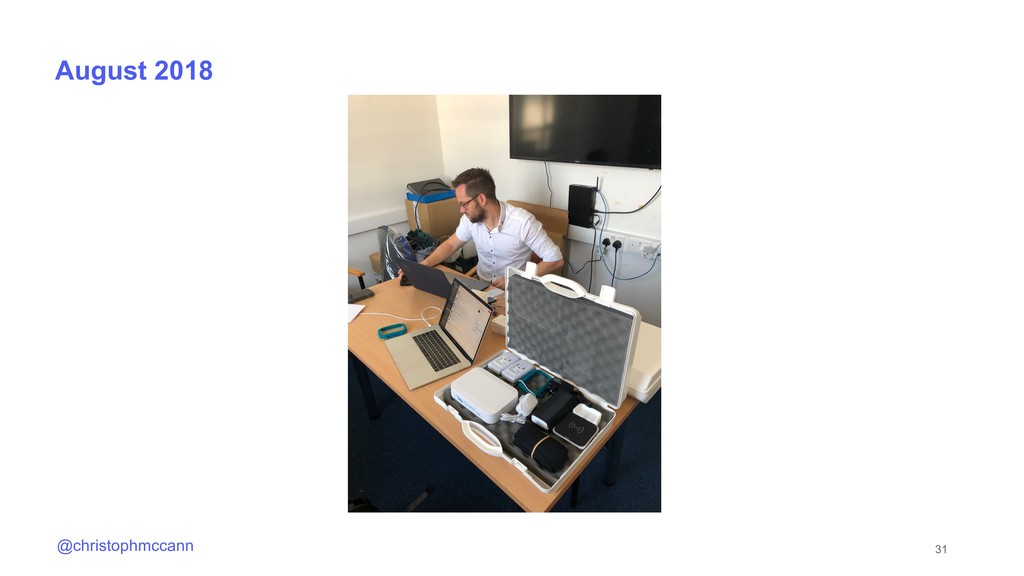
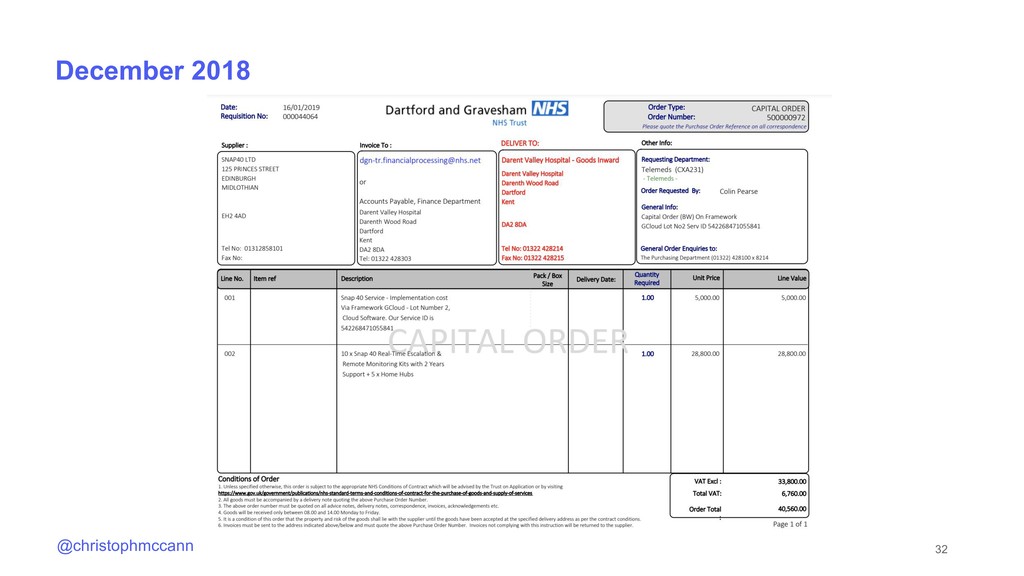
So in August of twenty eighteen, this is us launching at Dartford NHS. This was our first UK commercial pilot. And in December of 'eighteen, they turned into our first paying customer. We now have seven UK paying customers. So yeah, it was a hell of an end to the year.
And I think that the biggest thing that I learned is, you know, I had a few moments where I was like, we can't do this. We're never going to get through this. And then you take a breath, and you get back to the start, and you think, okay, let's just get on with it one step in front of the other at a time.
And we got there, and we made it through, and we did it. And you will completely screw up. I've never felt more embarrassed and small than sitting in that room with the FDA as they look at you like you are an idiot. And the reality is now, we have three FDA clearances.
We have an unbelievably good relationship with the FDA team, because what the FDA saw was us go away, learn the lesson, come back and submit an incredibly good submission that was then approved. So it's completely okay to fail and make mistakes, and I've screwed up so many times, I can't count.
I've made a bunch of them this week. And that's just the way it is. Through all of this, there have been plenty of times where I felt unbelievably low. And, you know, I've called on John, I've called on Stuart, and felt like I just like, this is too much.
Because, you know, building a company is is quite a big assault on the senses. You know, there is no personal professional. It's really, really hard to separate that out. I spend more time with Stuart than I do with my own girlfriend. This is where, coming back to the mentorship, John's been a really important part of this, because you know, in the UK, mental health is still quite a stigmatized topic, or sometimes quite a shame to talk about it.
And John, when we spoke about these things, said, here's Dorothy. You should go and speak to her. She's a counsellor. She now comes in and she's available to our team. And the point I just want to make here is that that's completely okay.
People should not be ashamed to go and seek that out, because it fundamentally helped me at some of the lowest moments that I've had. And then this is why it's all worth it. This is July of twenty nineteen. We launched a customer in Kentucky.
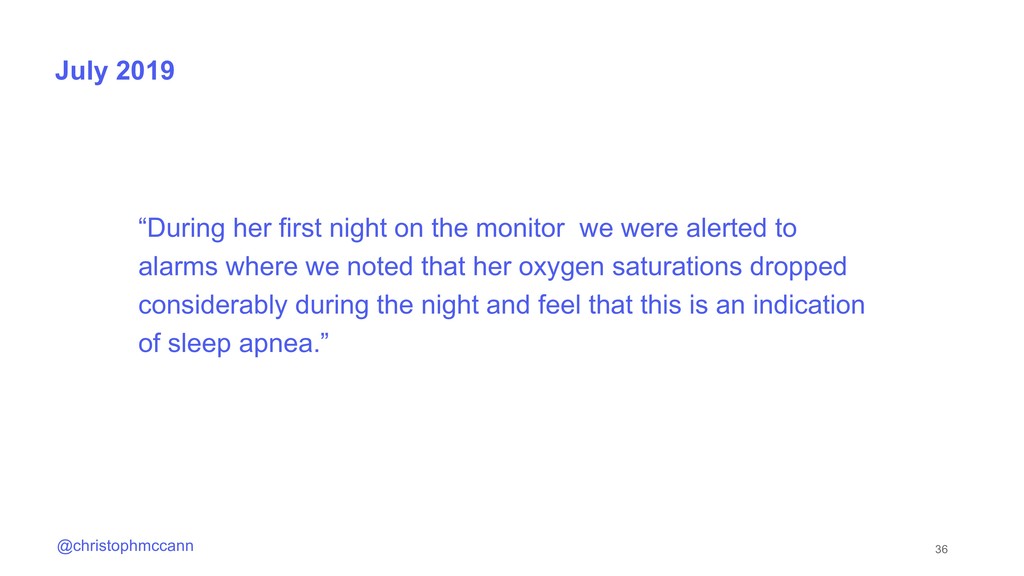
This was the very, very, very first patient that we monitored for them. We identified sleep apnea in the patient, which is a risk factor for sudden death. And ultimately, we're all here at a festival, we're all talking about building tech companies, but for us, this is what really matters.
There's a patient at the end of this that might be alive because of the work that we did, and that is pretty cool. So one of the other things that I'm proudest of as the CEO is the team that we've put together. And, you know, the the reason for that is that our team care more than any people I've ever met about the problem we are trying to solve.
They care so much about our business that, you know, many occasions, they're willing to come into the room and be like, Chris, why is this so ****? We need to fix this. This needs to be fixed. Let's get it sorted. And people are doing that because they actually care, and that's a phenomenally good thing for us, it's something I'm really proud of.
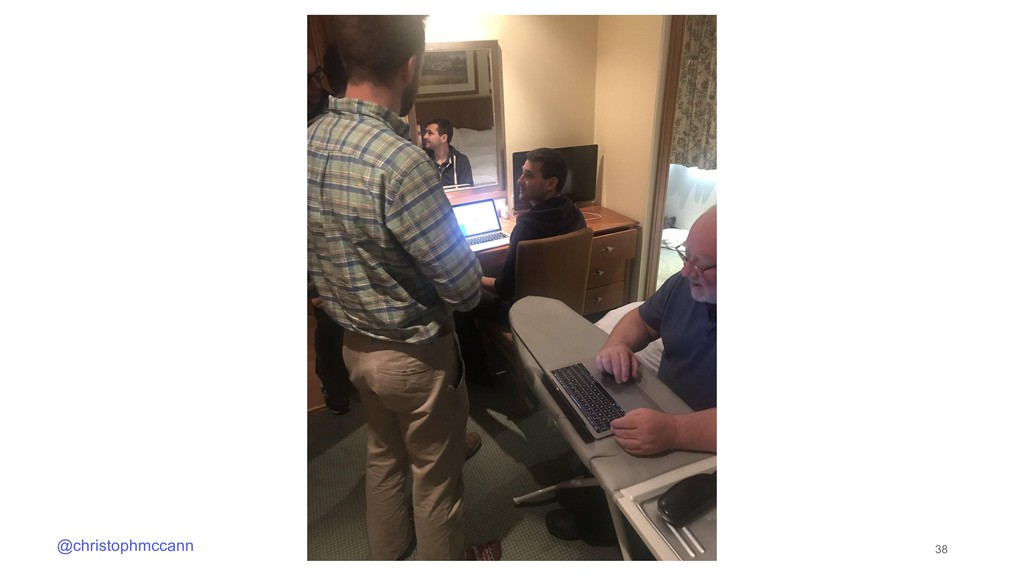
And this was an off-site that we had. We had just launched at Dartford. Major production issue were in Aviemore, where the Wi Fi is almost nonexistent. And this was the team trying to get our system back up and running from an ironing board in the house that we had, and we got there.
But, you know, we would not be here but for the team that we have. And would just anyone who's trying to build a company. You know, the barometer I use for anyone is, would I want to work for this person, and nothing else really matters after that?
And we've also, like, quite significantly grown our leadership team over the last few months. And I wanted to touch on this because start ups get told all the time, including to me, like, you need to go out and build a leadership team. And then they'll usually say something along the lines of, go through your personal network.
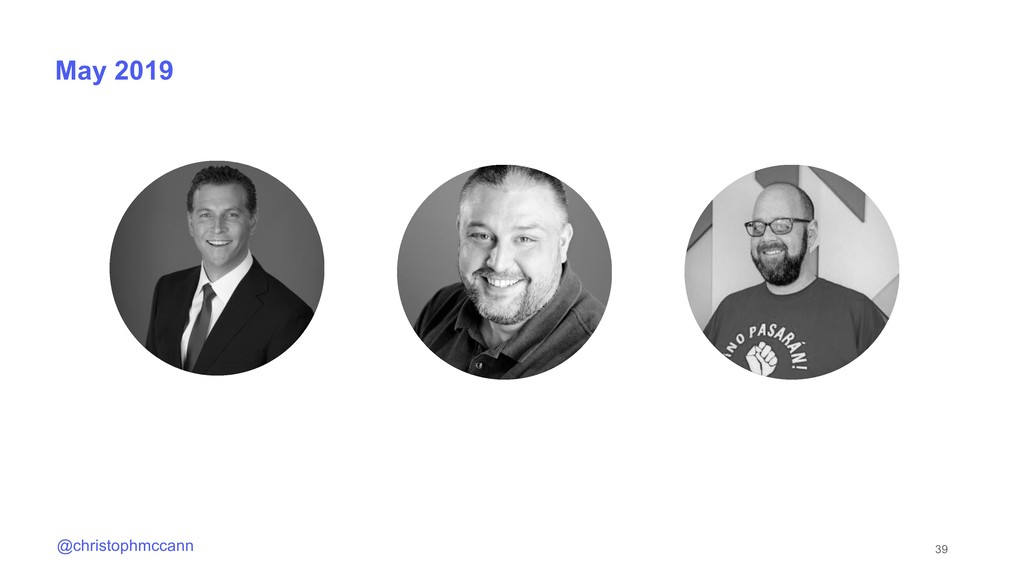
And it's like, okay, how am I going to find these people? So I wanted to just talk through how we found our leadership team. So Sean, the guy in the suit, we need to get a better photo of him. We've just hired him as our VP of sales.
A phenomenally successful sales executive from Medtronic. And he just came through a plain bog standard LinkedIn ad, you know, just straight through LinkedIn. Richard, who's sitting here, Richard was a senior director of engineering at Skyscanner, one of our earliest employees, huge part of Skyscanner's journey.
And Richard did come through personal network. He came through one of our investors. And then, Chuck, on the right, he ran global marketing strategy and customer support for Spotify based out in New York. And he came through his sister. She was post acute care she runs, sorry, post acute care for Banner Health, one of our LA adopters.
And she heard we were hiring and phoned him and said, hey, you've got to leave Spotify and go and see this company, and that's exactly what he did. So the point is, let people know you're hiring, and it's remarkable how these people will come to you.
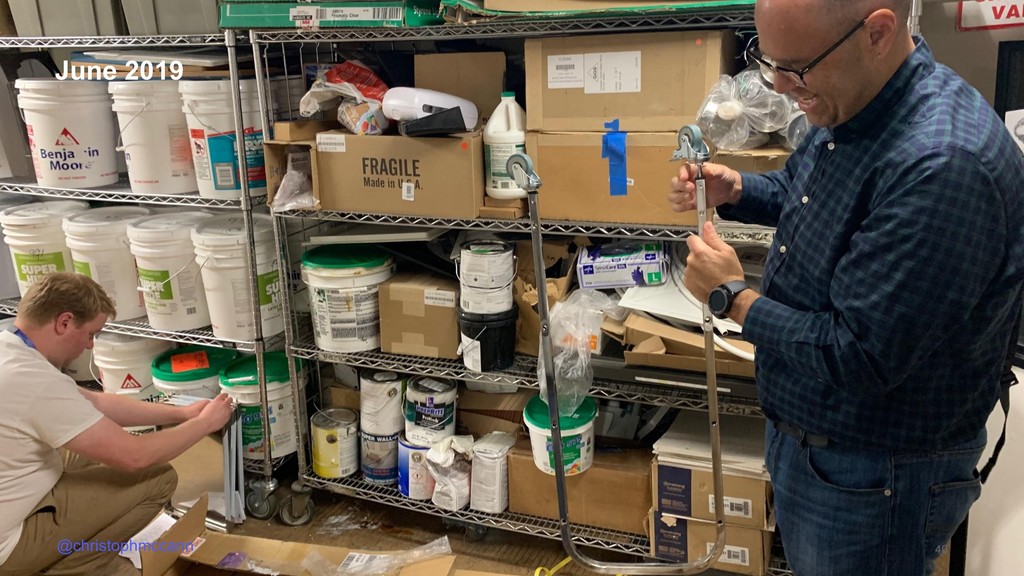
And now we've built you know, a phenomenally good team around me, a phenomenally good team overall in the company. It's one of things I'm proudest of for this year. But it doesn't ever really change. You know, this is Chug in his first week, building carts in the sub basement that's below the basement, just to be clear of Mount Sinai in New York.
The morgue is literally just behind us. And the week prior, he's running global customer support for Spotify, which is like a three thousand person organization. So I'm not really sure if this is what he had in mind, but anyway, we're there. And this is the message I want to leave with, because I think the thing speaking very specifically to the UK audience, we are not good in the UK at believing that success is actually possible.
I look at companies that I admire, like SpaceX or Tesla. I don't mean to be cliche pointing at them. You think, can we actually build a company like that in Scotland or in the UK? Are we, physically as in me, are we capable of doing that?
And in the UK, I don't think we're good at actually believing that that's the case. And even today, you know, people would come to me and they'd say, how's things at current health? And I'd be like, yeah, it's okay. It's fine. And partly that's because I know all the problems we've got.
But, you know, if I was really objective from, like, a ten thousand high you know, ten thousand feet view, We literally compete successfully with some of the largest companies in the world. We have hospitals, pharmaceutical companies coming to us and saying, hey, we can't find this product anywhere else.
We need it from you guys. We have, you know, engineers, scientists, you know, amazing team coming to us globally and saying, you know, let's let's build this company together. You know, success is entirely possible. You can build this kind of company here, but you just have to believe that it's possible.
And this has been the single biggest challenge that I've had to go through, and is a challenge I still go through every single day. But success is possible if we believe in it. And with that, thank you very much. Please reach out to me if you get any questions.