
Bob shares some insights into the new rules for career management and making progress based on a decade of research.
← All talks 

Grow Keynote Turing Fest 2023
Should I Stay or Should I Go: The New Rules For Managing Your Career And Making Progress
Auto-generated transcript - may contain errors. Tap a timestamp to jump the video.
What a conference. What the heck. I miss this so much. Right? Do you guys have fun? How how many people met somebody new? That's part of the reason of being here. The other part is to get educated. And so I'm here. Brian asked me to basically talk about some research I've been doing and some products I'm in the middle of developing.
So it's not done. It's literally me being as curious as I can. And those who know me know I'm very curious. And so I want to share with you the research that I've done. And then one of the products I'm building, I'm building actually four products off of this.
But it's relevant in the sense that it should affect you as well. How many people are founders? This will be relevant in the sense of how you hire. How many people have switched jobs in the last two years? All right. So I want you to remember that.
Think about going from company a to company b, and we're going to talk about why you switched. Because that's the foundation of the research that I did to say, is it time to go? Should I stay or should I go? A little bit of my background.
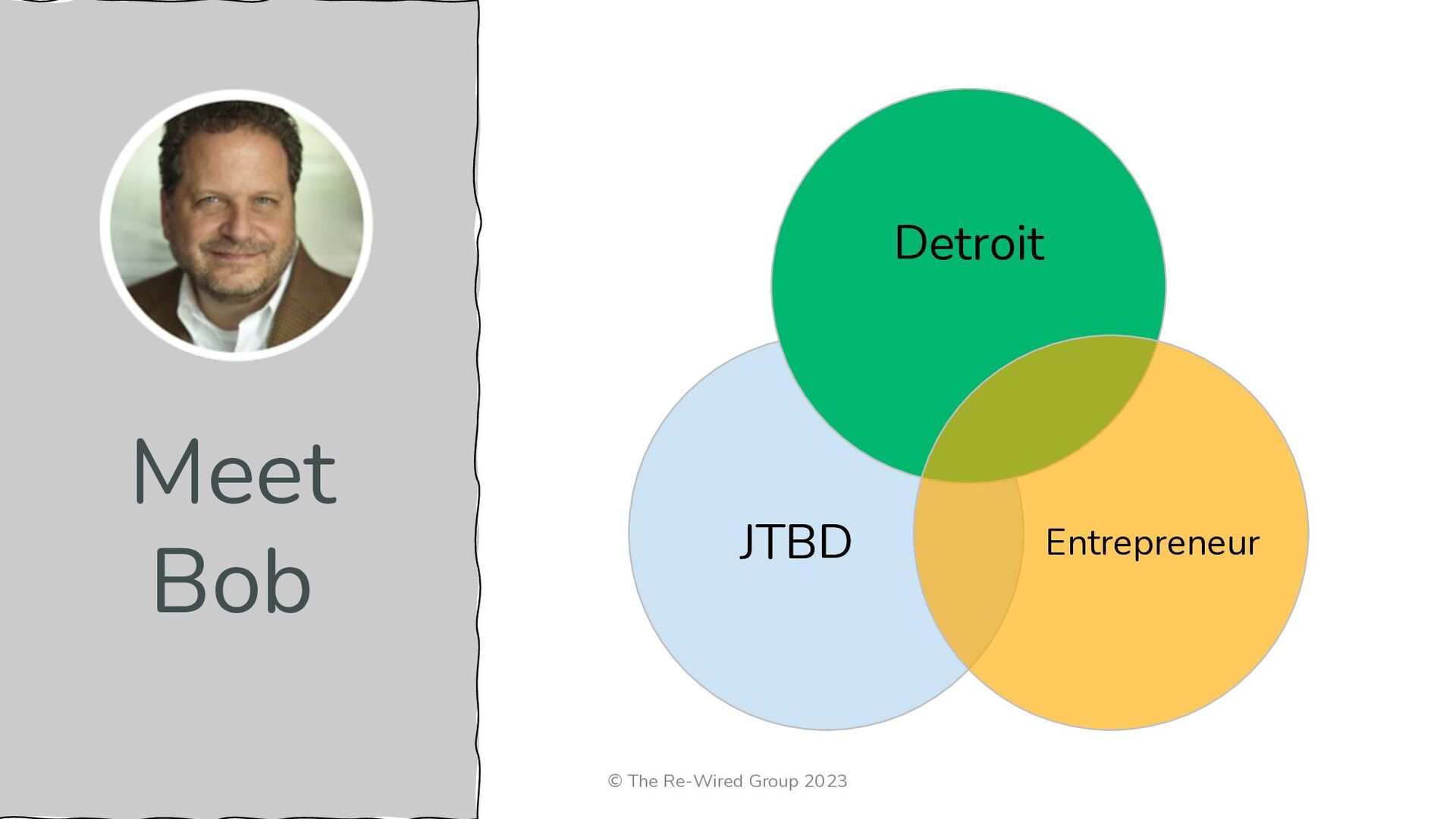
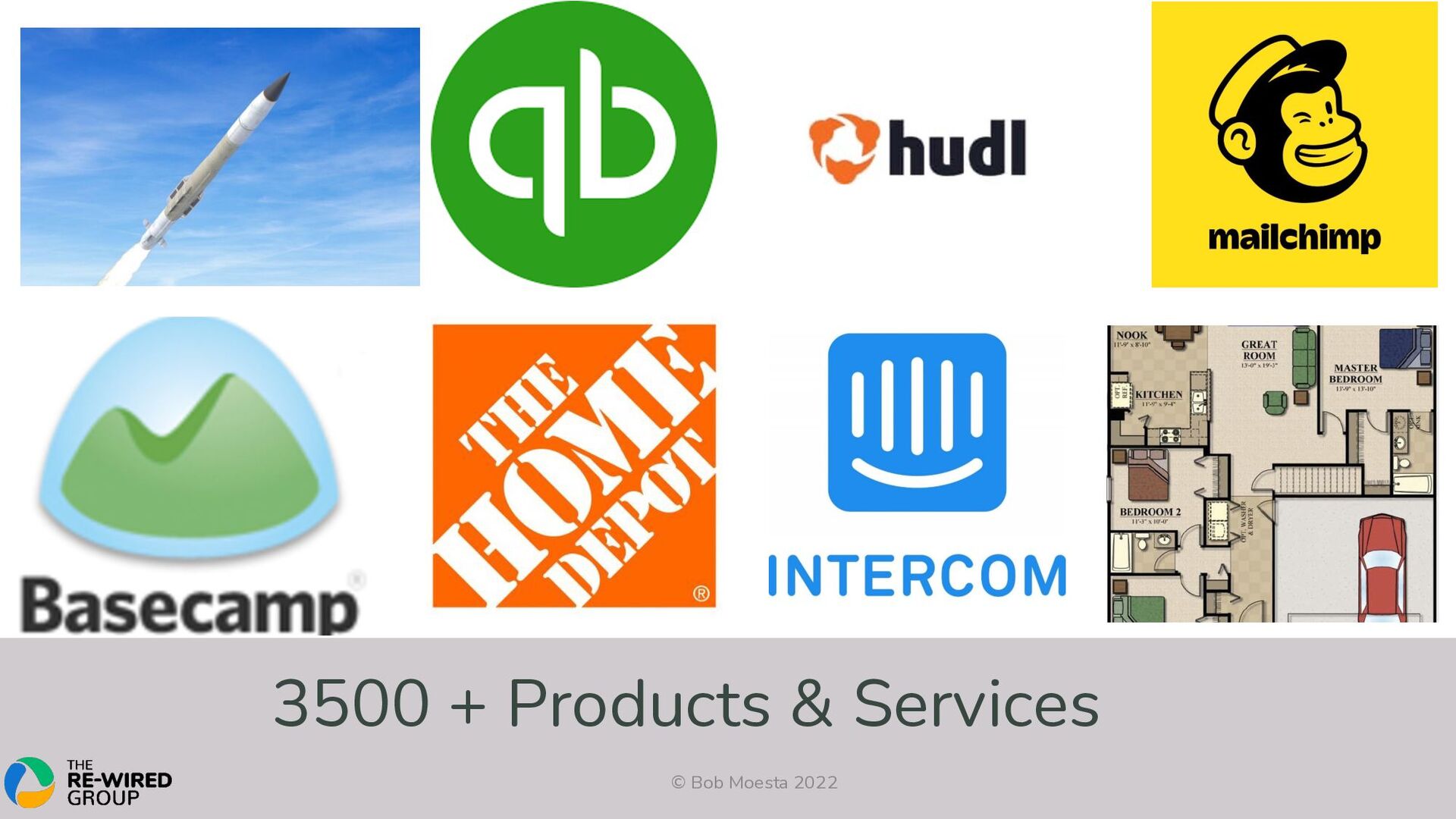
Most this is going to be a stupid question. Who doesn't know who I am? Okay. Perfect. So my name is Bob Mesta. I'm from Detroit, Michigan. I'm a entrepreneur. I've worked and launched over thirty five hundred products. I've worked on things like the Patriot missile and the guidance system.
I've worked on Pokemon Mac and Cheese. I've worked on Snickers, and I've worked at Base Camp. So I've worked at just all these different places and all these products. I'm one of the, what I call, the co architect. There's several many people involved in building things, but I'm one of the key people in helping to build the Jobs to Be Done framework with Clayton Christensen, who is my peer on that.
Right? The other thing you need to know is I'm dyslexic. I can't read. I can't write. I've had three close head brain injuries, and it makes me incredibly curious. But at the same time, I know how I learn, which is through questions. So I'm the annoying little kid who asked ten thousand questions to the point where my mom literally said, if somebody comes within three feet of you, please talk to them.
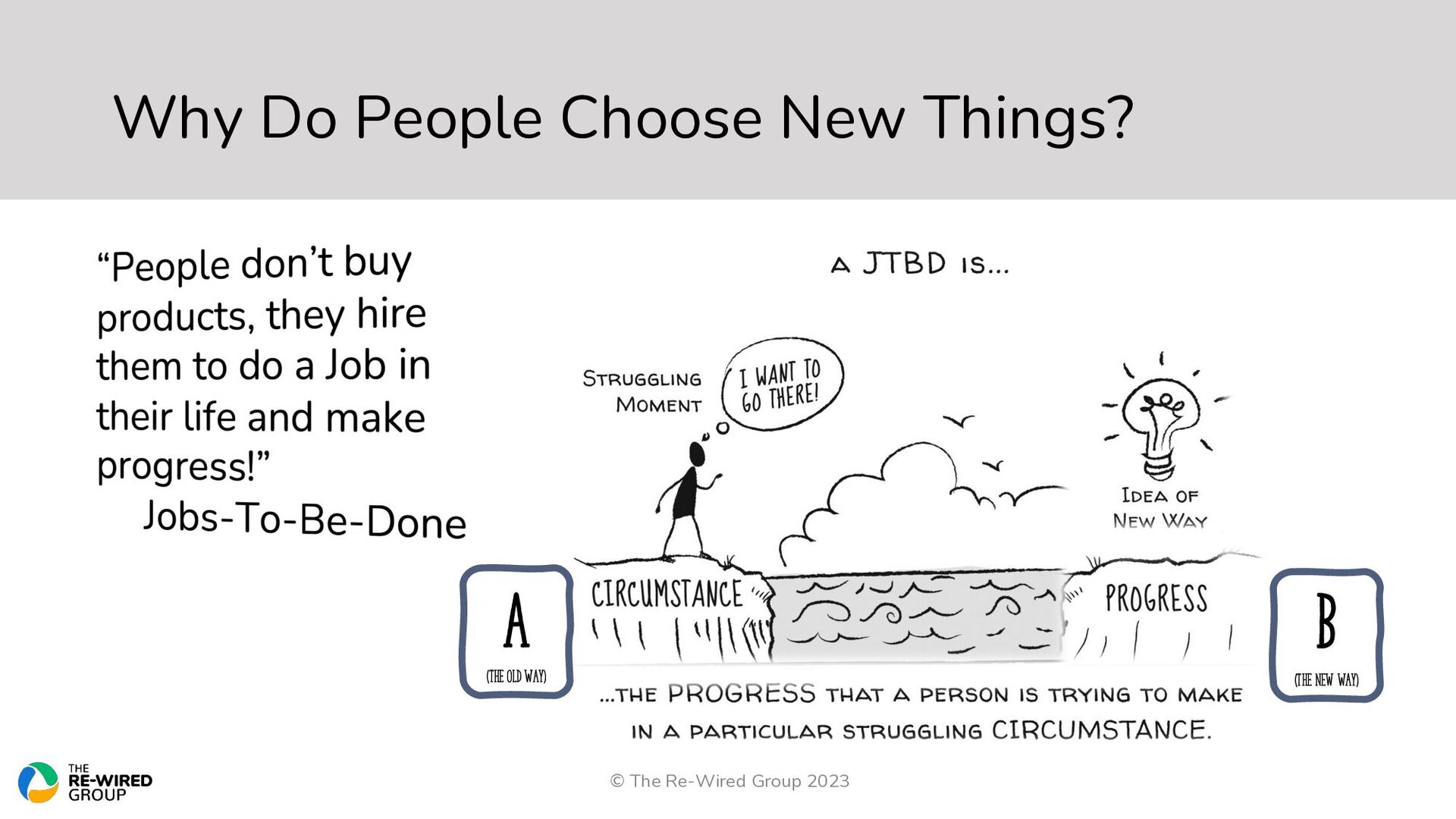
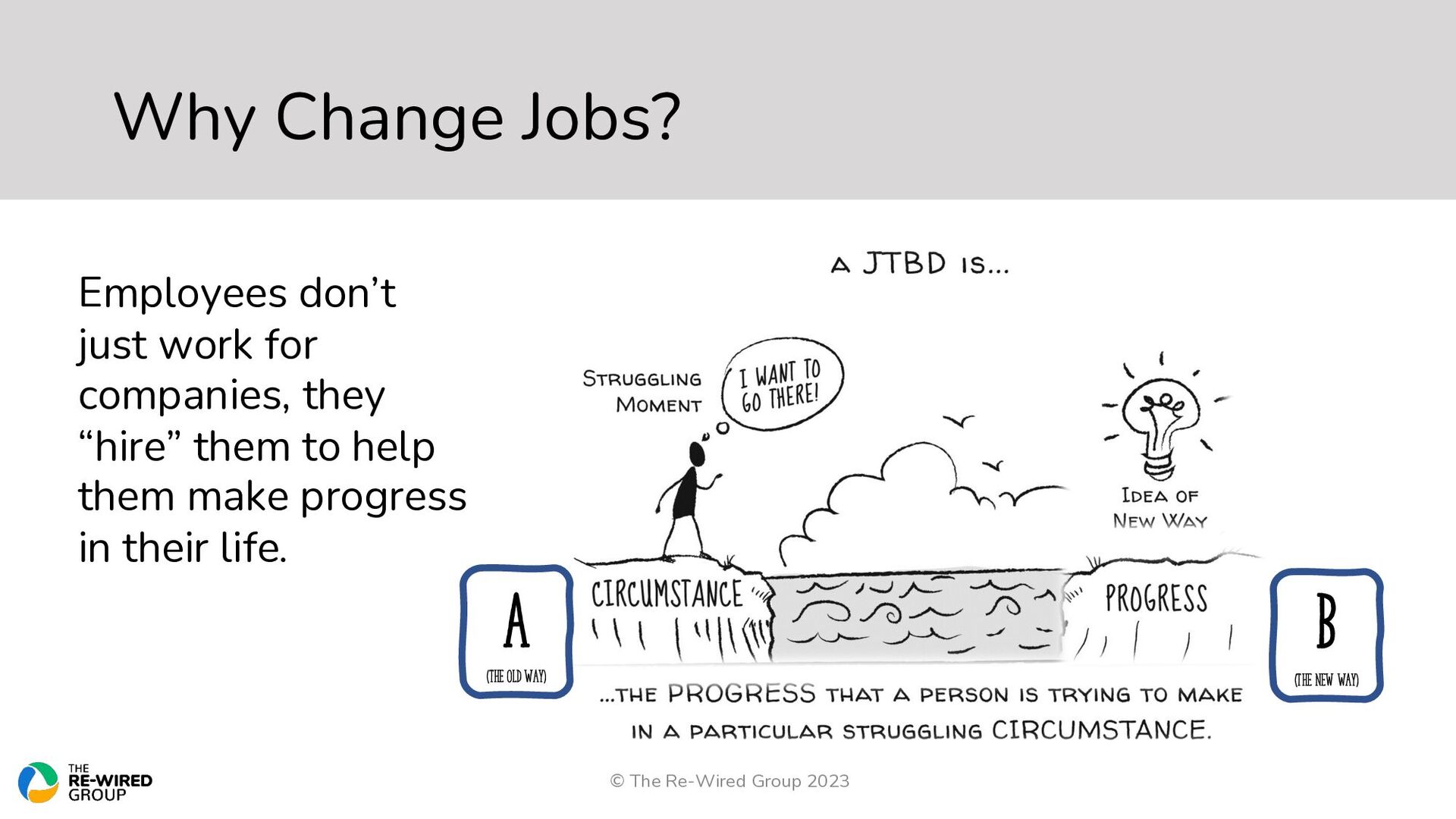
Like, just get away. Right? And so that curiosity has been with me my entire life. My entire life. It's it's it's a blessing and a curse. Right? And so the basic framework of jobs to be done is people don't buy things. They hire them to make progress in their life.
So I've been studying people for forty years. So first of I'm a builder. I'm an engineer. I like to build things. And what I realized is when I built things that I liked, nobody bought it. Right? So the the the lie I was told was build it, and they will Come.
Come. And it's a lie. And so I had to figure out what causes people to buy new things. And it turns out that it's this framework that I built helped me helped me figure this out, and then I've been sharing it. So one of them is this whole aspect of if people don't buy things, they hire them.
There has to be a struggling moment in somebody's life. If they don't struggle, we just keep doing what we've been doing. So the struggling moment is the seed for all innovation. For the for consumers to innovate, for us to innovate, find struggling moments.
But the one thing that's the problem is I can struggle, but if I have no idea what it looks like on the other side, this is where I just complain a whole bunch, and I don't really do any make take any action. So part of the act of change requires you to have a light bulb, an idea of where you want to go.
Right? And then ultimately, the fact is is where you are and where you want to go. So if I think about it, if I know the circumstance you're in, I know the outcome you want, think of that as a river. How many different ways can I get you across that river?
One, ten, a hundred, a million? I can build a bridge. I can dig a tunnel. I can teach them to swim. I can get a dock. I can get a boat. I can go on and on and on. The point is is what I'm finding is the the hole in people's lives that are technology agnostic, so I can figure out what to go build.
Because ultimately, if I know the circumstance and I know the outcome, then I can actually figure out how it fit. Right? So I've taken this and I've applied it over and over and over again. Right? And so I've applied it to all these different kinds of things.
This is the tech slide where all the people are on the tech side that I've worked with. I did build houses, which isn't so tech, but that's all right. But then after doing this for years, Horn, who's in the middle, I wrote a book with him called Choosing College.
And I wrote it primarily to try to help my children in choosing college because it's so hard to choose college. And so we did the jobs of what causes people to say they're gonna go to college. Sounds very obvious, but it turns out it's not. Right?
And so Michael and Ethan, who's at the Harvard Business School in in the organizational, design or organizational capability, part of the school, he basically asked, have you ever applied this to careers and career change? Like, no. For the most part, I'm unemployable. I've never been able to really get a job.
I've always had to kind of go work through networks because I could never get in through the traditional way. He goes, we should we should interview some people and why they switched. And I thought about it. I'm like, you know what? I got four kids.
I'm gonna wanna know how to help them with that, so this will be pretty good. I get a lot of people come to me and say, hey. I'm at a crossroads. I don't know where to go, and I've been helping. I'm like, oh, we could write a book about this.
So I said, you know what? I'm gonna go do some research. This is two thousand and thirteen. So I've been doing this research for ten years. Alright? And so what we what I've been doing is literally so most companies do something like a was an exit interview.
Has anybody done an exit interview? How many people lied at their exit interview? Okay. Not telling everything is still lying. Right? And so what you start to realize is when you talk to people about the moment that they changed, they have a push.
There's **** sorry. There's stuff that goes on, right, between that that causes you to kinda go like, god, it's time. I gotta go. Right? The other thing is is what I realized is this is not for people who wanna be a manager and then a senior manager and then a director.
This is not for the people on the progression, a natural progression. This is when we study people, primarily people who didn't want their boss's job. If you don't want your boss's job, then what do you do, and how do you go about it?
Okay? And so the other part is this is the crazy. There's two really big insights I got from this. One was, if you know about jobs to be done, the first thing is is it gets it's about unpacking the language. And so the the one the one thing that people would say the entire time, everybody would say, so tell me about your new job.
That's how I'd start the conversation. And they would say, oh my god. I was so lucky. The word luck was used literally ninety seven percent of the time. Luck is a four letter word. Luck is one of those things that I hate because at some point, luck can be gratitude, but most people treat luck as if just wait for luck.
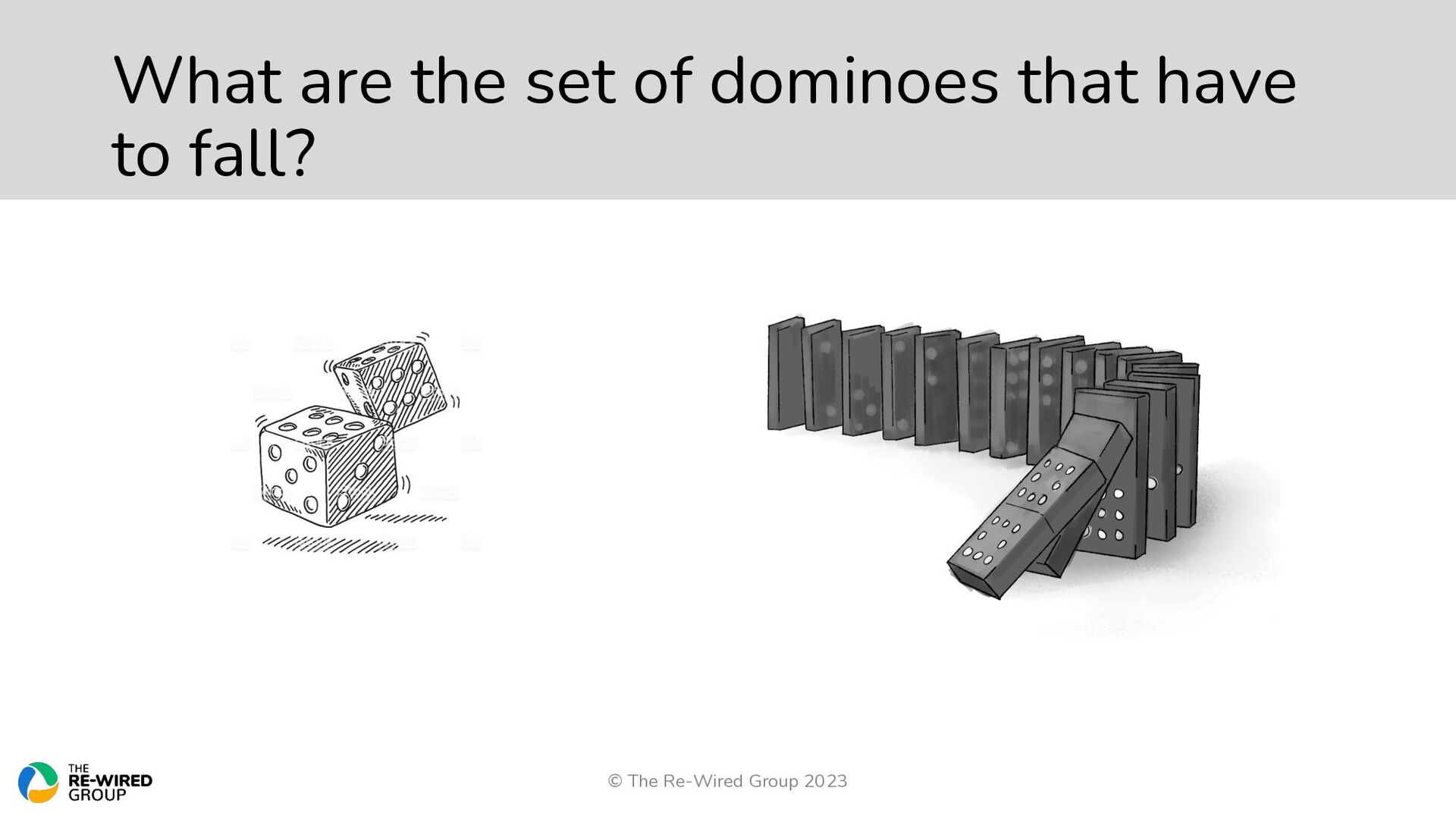
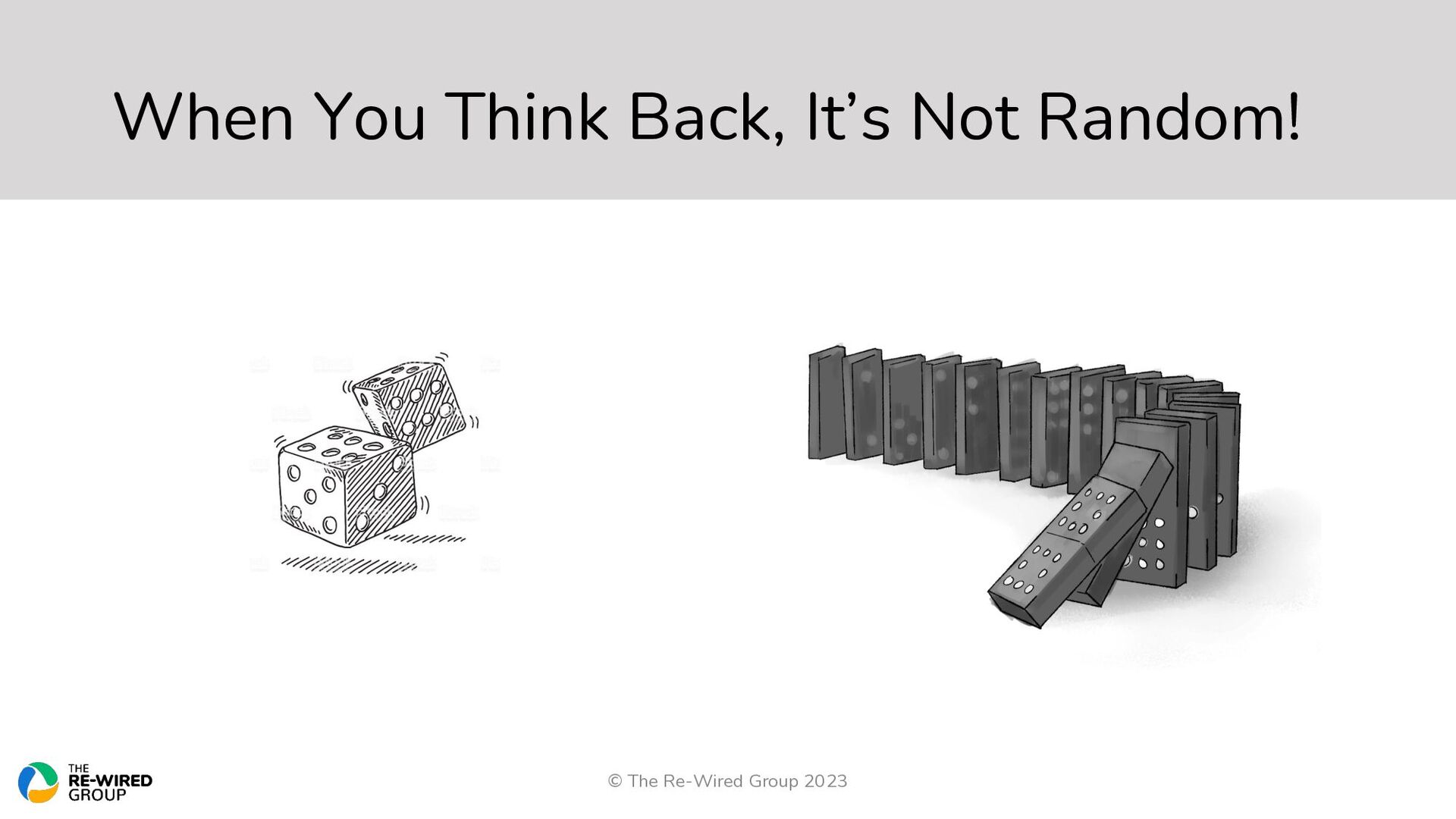
It causes you to wait. And, ultimately, when you interview these people, there was no luck involved. It was all caused. And trying to understand what are the dominoes that have to fall in your life to make you ready to look for another job or to actually be reinvigorated to to to reframe your job.
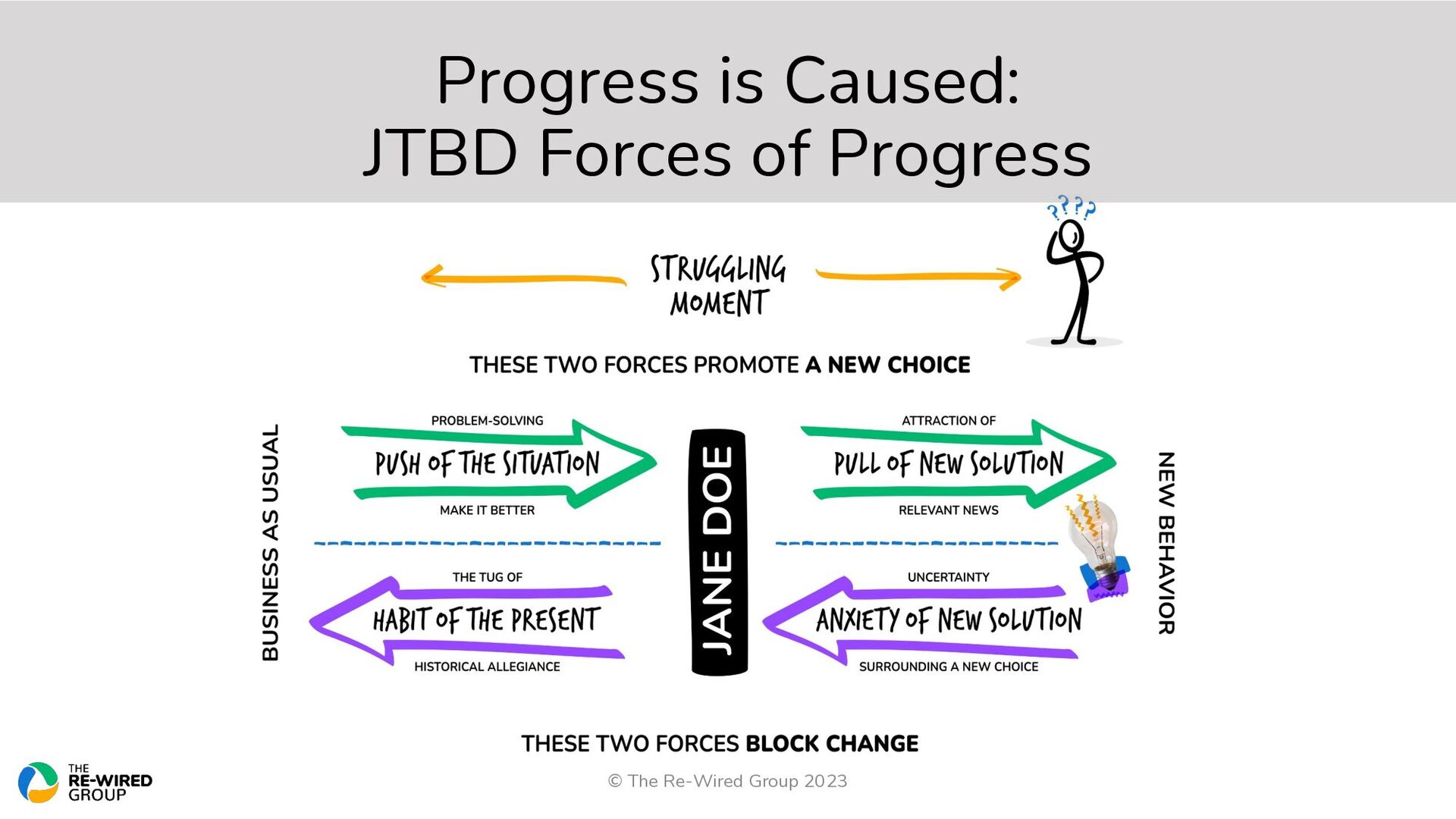
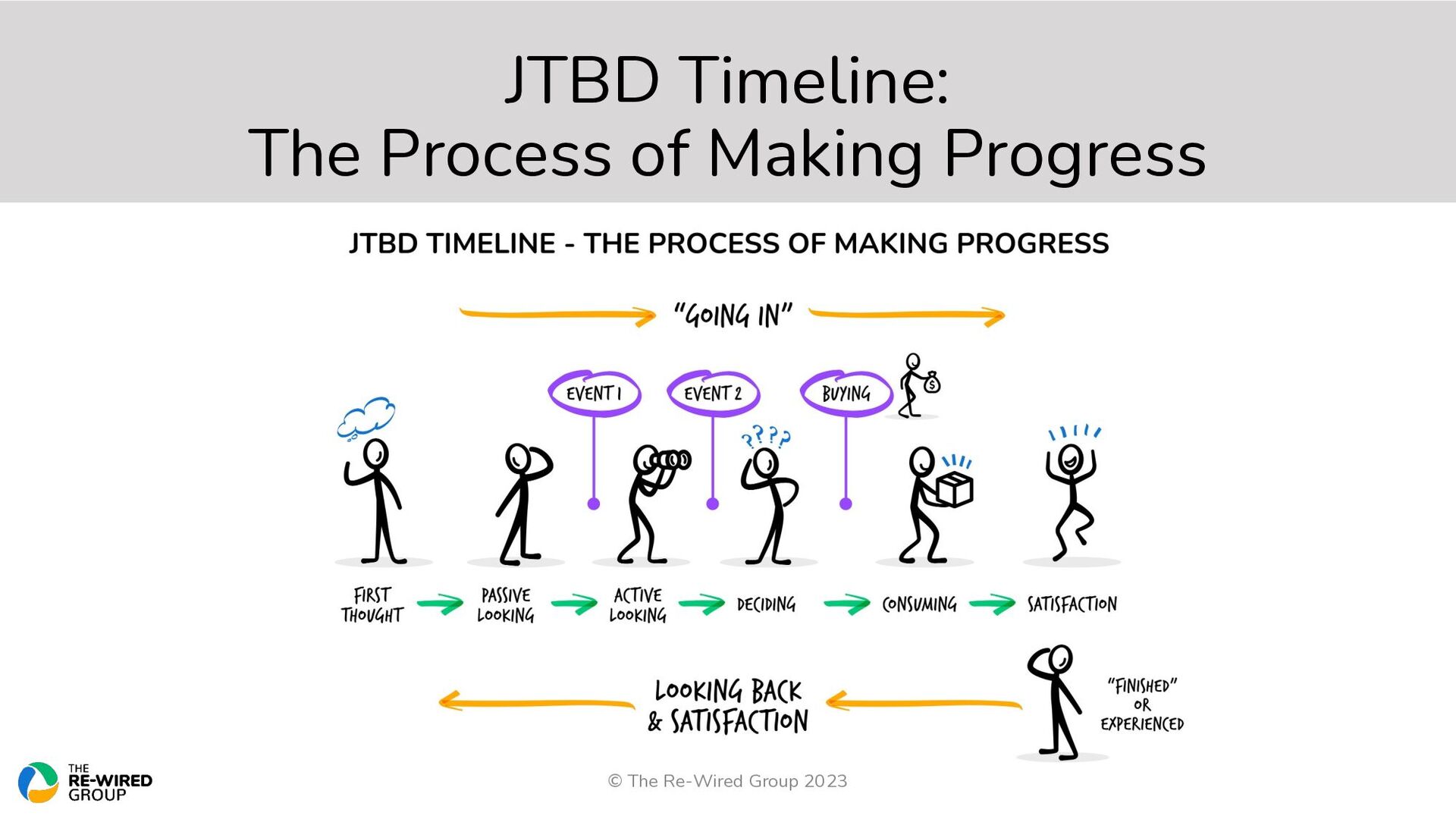
Right? And so part of this is actually realizing the causation behind it. And so when we do jobs we've done interviews, we basically break things down, and we we hear the story of how people go from thinking about it to doing it, and we actually try to understand what we call the fuel and the friction.
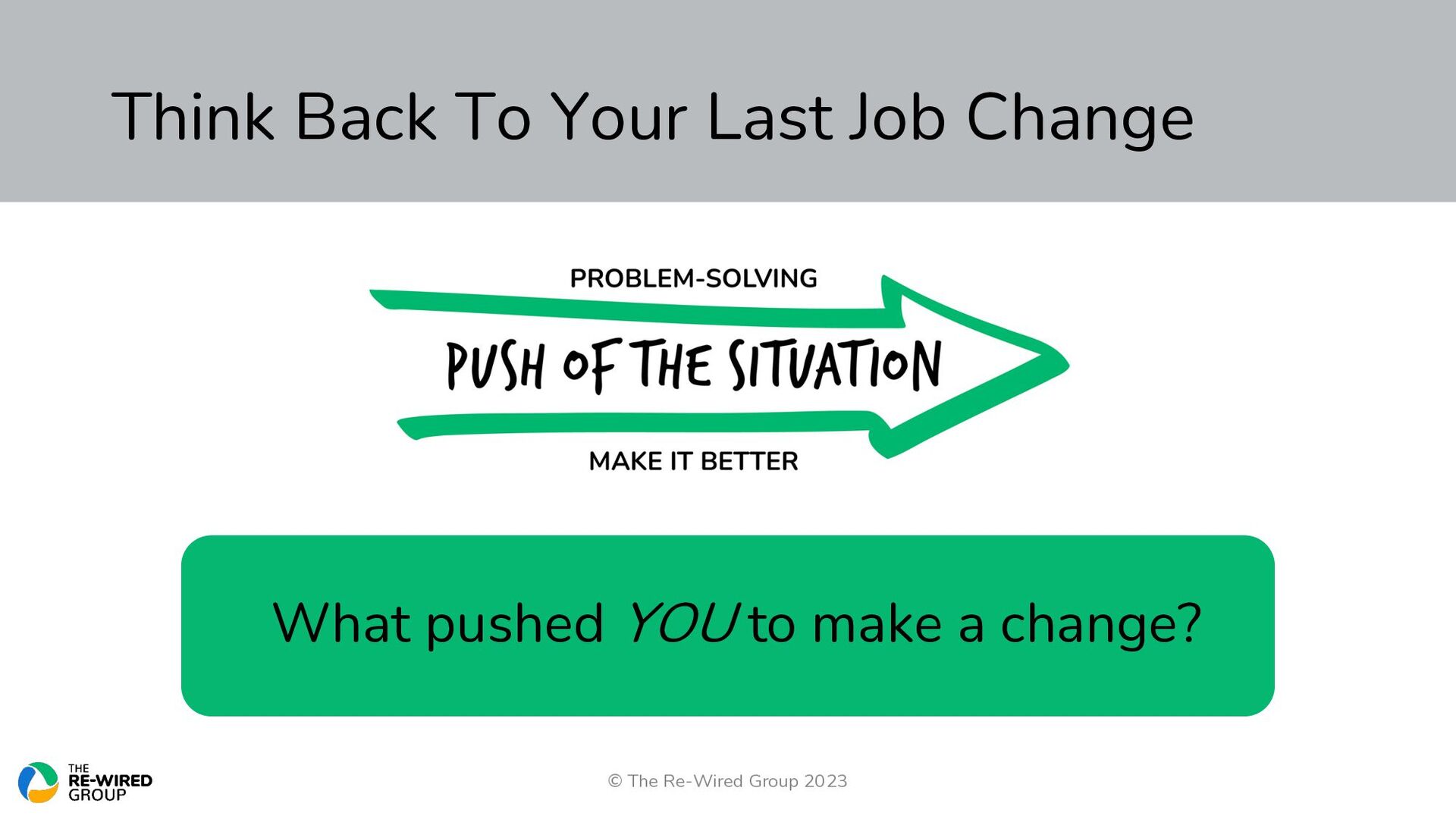
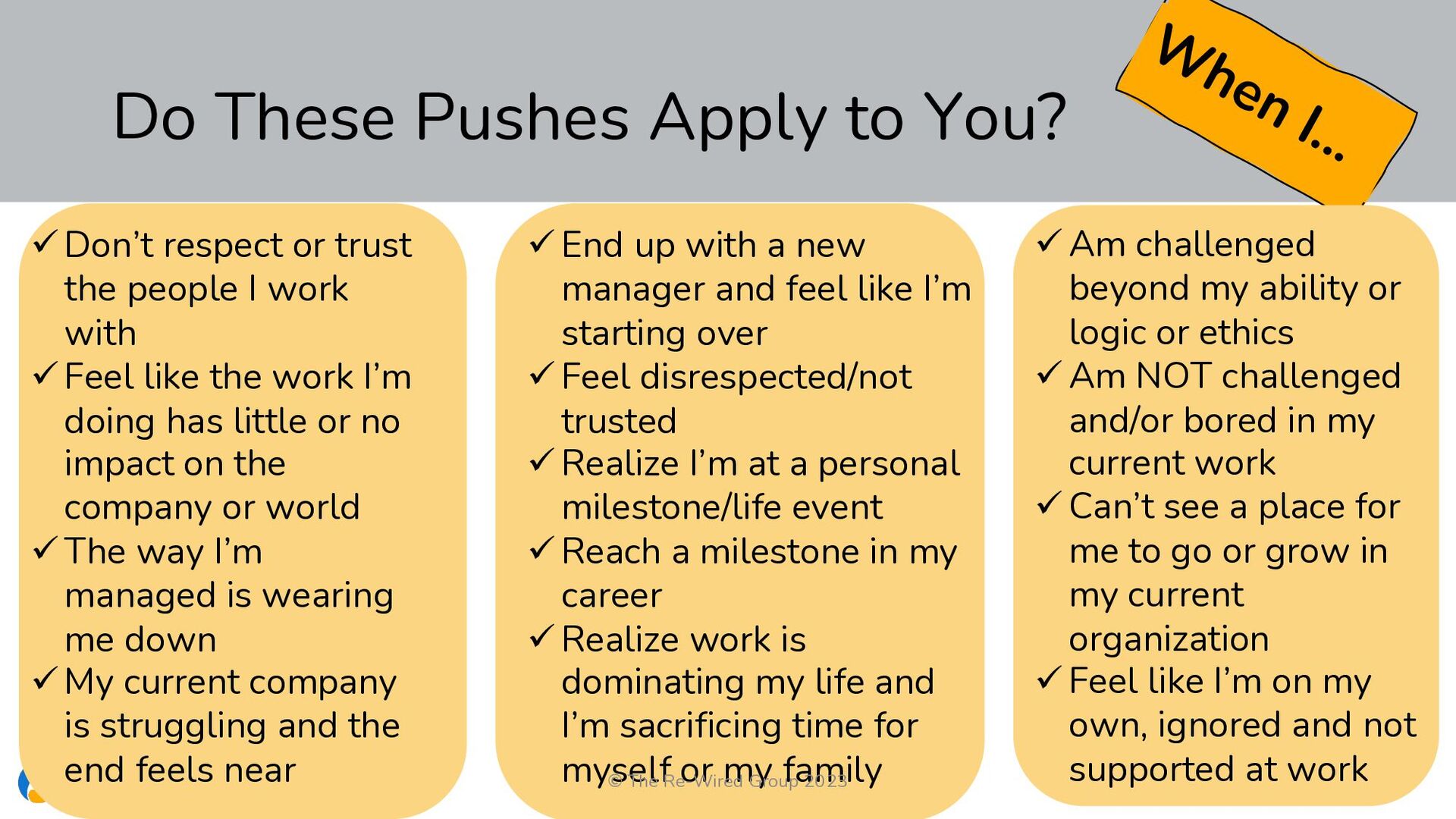
Right? The fuel is there's a push of the situation. There's something going on. Right? You know, I don't know if they have enough cash flow. God, I'm bored out of my mind. Right? God, I'm pushed beyond belief. I'm being micromanaged. There's something that has to cause you to kinda go like, yeah, this isn't working.
Right? If there's no push, you're not looking at all. Right? But the moment that you kind of go, yeah, yeah, then you start to look on the other side and say, well, what could I do? And so as you look at other jobs, you kind of go, oh, that would be good to do.
Oh, I could do this or I could do that. Right? And and that's half of the story because the other half of the story is there's frictional points. There's friction around the whole aspect of anxiety of the new. You who are the people you're working for?
What's my boss gonna be like? Will I make enough money? There's all this anxiety wrapped around it. Right? And then there's the habit, which is the people you love about where you work now. I gotta leave them. And so you start to realize that there's this dynamic that's going on, and, ultimately, it's not random that anybody leaves one job to go to another.
It's caused. So as a founder, you have to understand what are the causes of why people leave. And as as an individual, as an employee, you have to figure out what why you want what progress are you trying to make? And that's what we went and went very, very deep on.
The other part is to realize that there's a process by which you buy a new company. Here's the thing. Here's the big flip. Over the last ten years and what COVID did, combination of COVID and what I would call the the gig economy has emerged.
And and the reality is is that employees hire companies more than companies hire employ, more than employee companies hire employees. You, as an employee, get to choose who you wanna work for. And what happens is what I've realized is that most people are totally unaware of why they when they're willing to change and when they want to change.
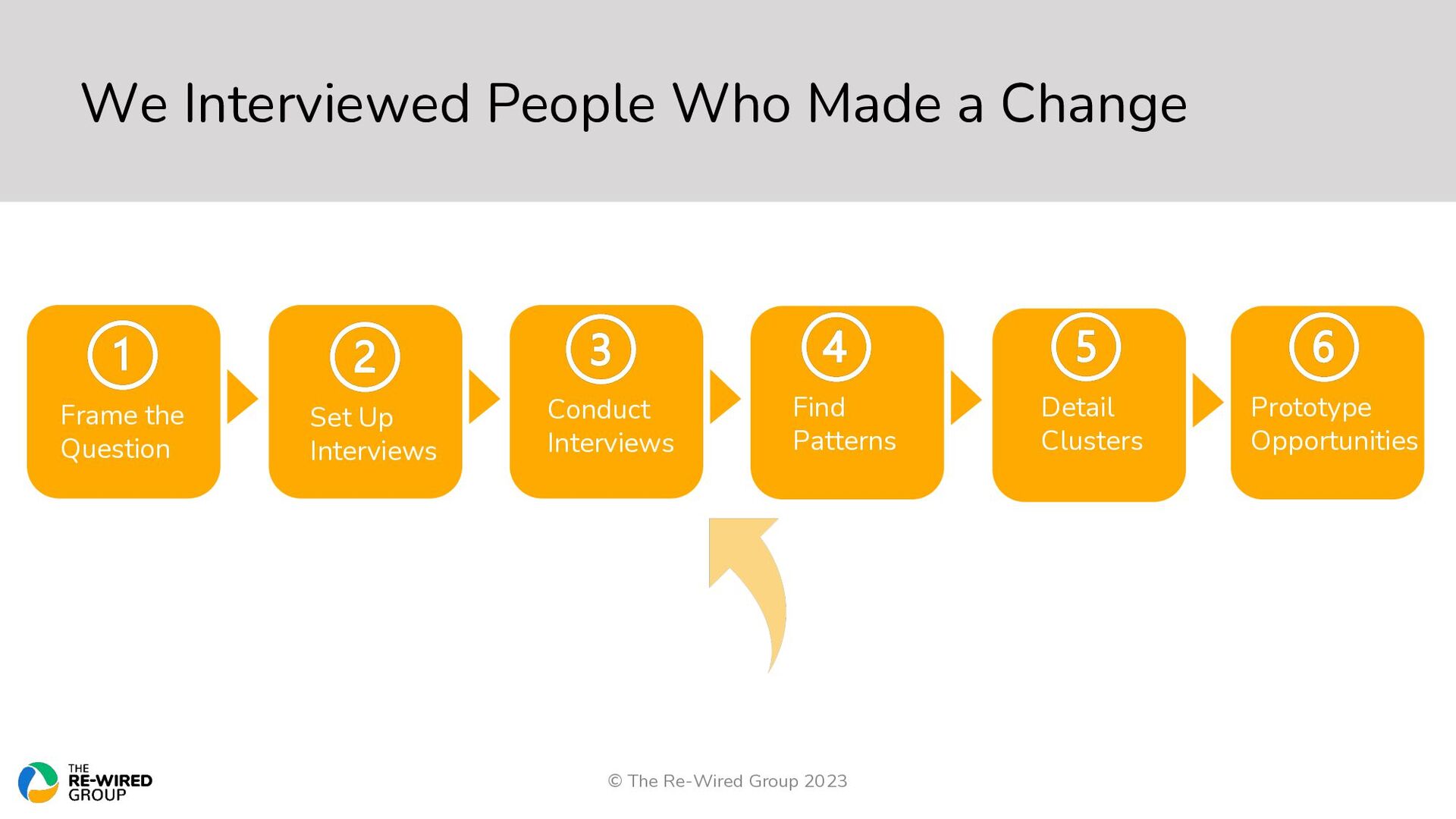
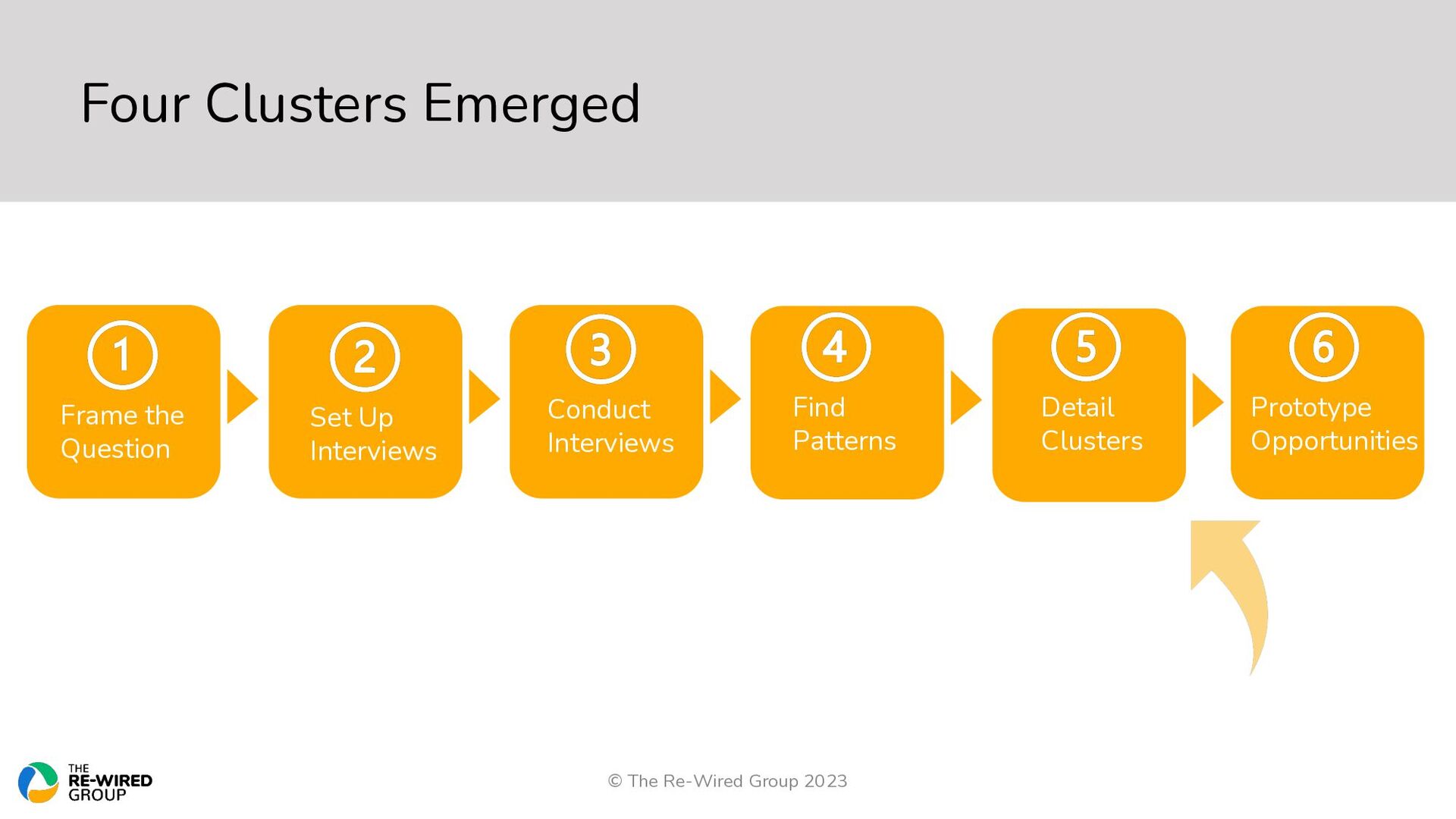
And so this is one of the products that I I started to build, and we'll get to that. So we we go through a process. We frame the question, which is what causes people to leave their job. Let's be very specific. These are not these are people who literally changed companies or literally changed industries or literally had something where it had nothing to do with being promoted inside the company.
It started just leaving. And then we actually looked at people finding other positions in companies, and it moved on. But it was all about setting up the first initial set of interviews and doing those interviews. Right? And and to be honest, we took a very, very broad view of this.
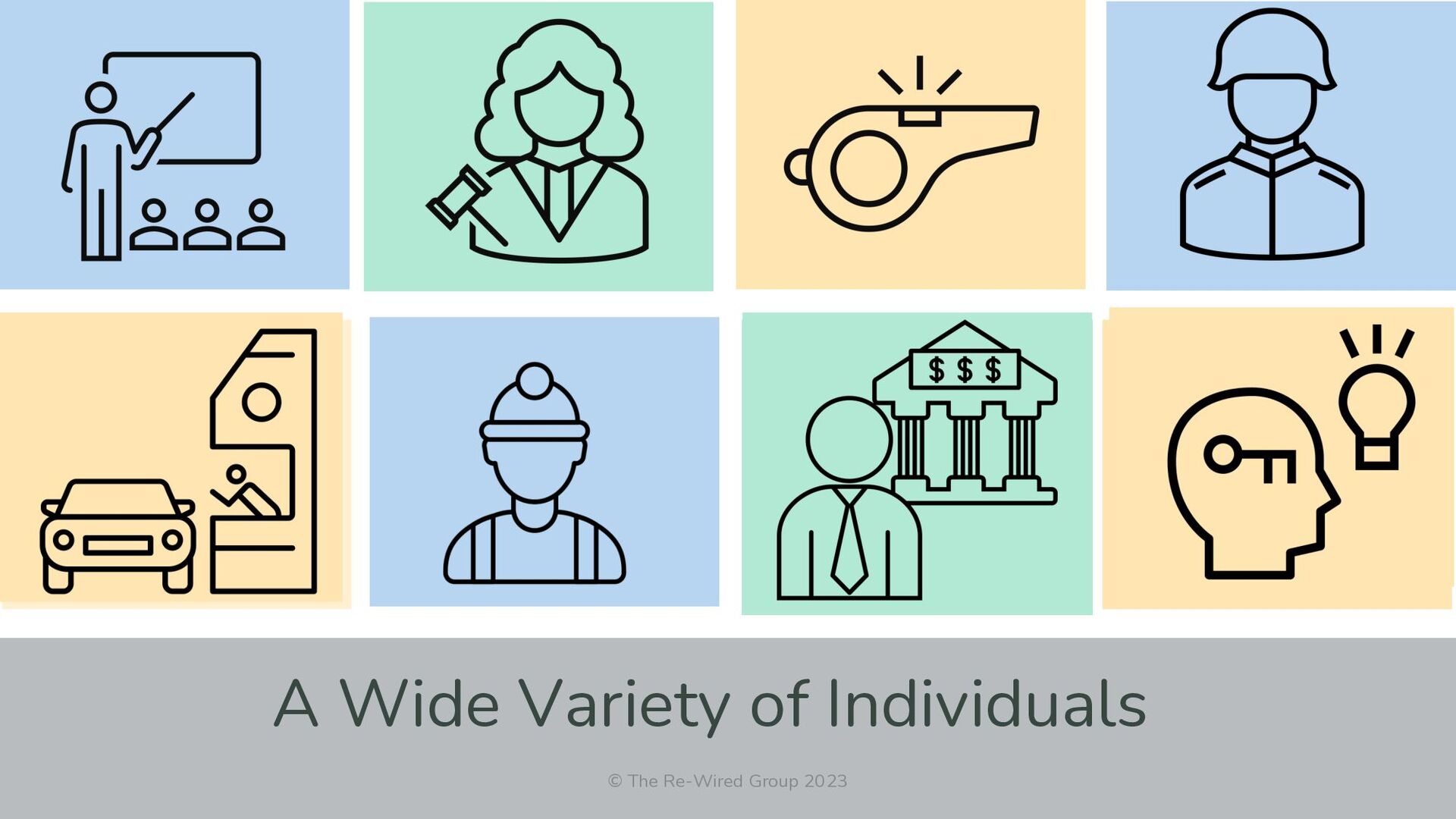
We talked to people who were like teachers and and judges and and and, fast food workers, and what would cause you to move from Chipotle to McDonald's. Like, just, again, not knowing what is going on and what caused it. So we got all this data. Right?
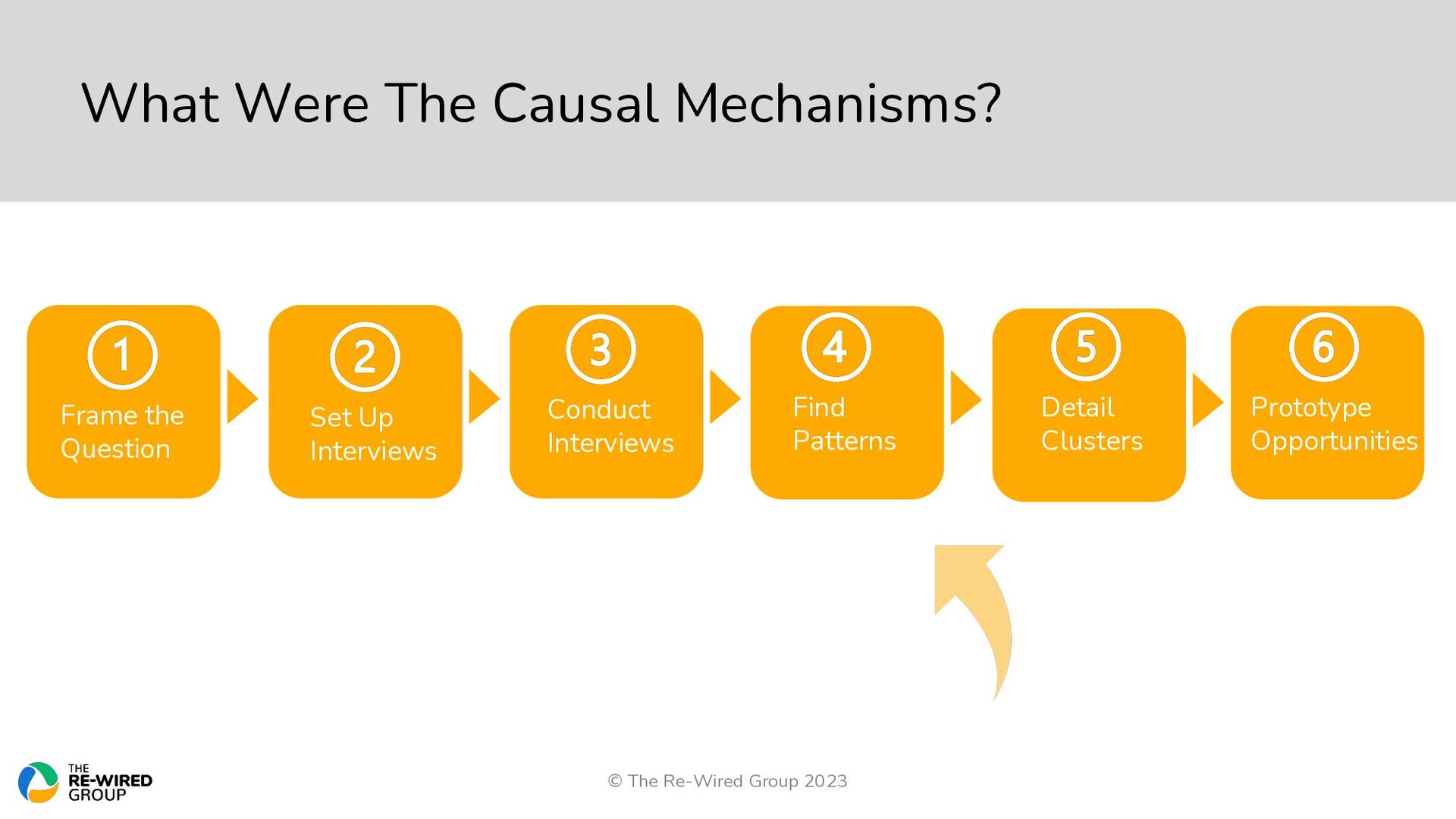
And so ultimately, we go to find patterns. And so patterns are come from what I call dominoes. There's dominoes that happen, and there's sets of dominoes that come together that cause you to be ready to look for something new. And so the next slide is the money slide.
So just get your camera ready. Because this next slide has been used in so many different places, and what I'll tell you is it's very, very powerful. So now I want you to think about your job change, those who have changed in the last two years, and I'm going to show you a list of things.
The problem is is I can't read them very well. I've tried to memorize them, but I'm not sure I can do that while I'm up here, so bear with me. I want you to look at this list of things, and I want you to just tell me how many of those things were part of you deciding to leave your last job.
Okay? Ready? And I want to know how many of them were were part of your, like, your situation. Anybody? Oh, you haven't read. I I don't read, so I don't know how long it takes. How many? Hold up your hand and tell me how many.
Three, four, five. Five, four, three, five, eight, eight, ten. Holy man. So here's the thing is it's not luck. When these things are happening to you, luck actually is created because this is the void that you now start to realize, I gotta do something else.
As a manager of a team, you should be asking these questions because if there is no push, they're not going anywhere. But these are the things that are the other thing that's so interesting is, again, because we unpack the the the language, is money is not on the list.
Though everybody will say I want more like, the easiest answer is, oh, I want more money. But when you actually unpack more money, more money turns into five things. More respect. I want more money because I want respect. I want more money because I have responsibilities.
I want more money because my my peers are this way. I wanna keep up socially. You start to realize that money is the means to get you to the outcome. It's not the money's never the outcome. That's the other interesting part. So that rings a little true.
Does anybody have anything that has zero on there? So here's the thing. It's not any one of them. It's sets of them. So I've I thought I think I told you I have four children. And one of the things I realized is I'd asked my daughter, hey.
How was work today? And I could literally tell by the tone of her voice and what she talked about that if she had mentioned four of them, just four, I knew she was looking. I could predict when people were ready to go. It's kind of crazy. So that's a very powerful list.
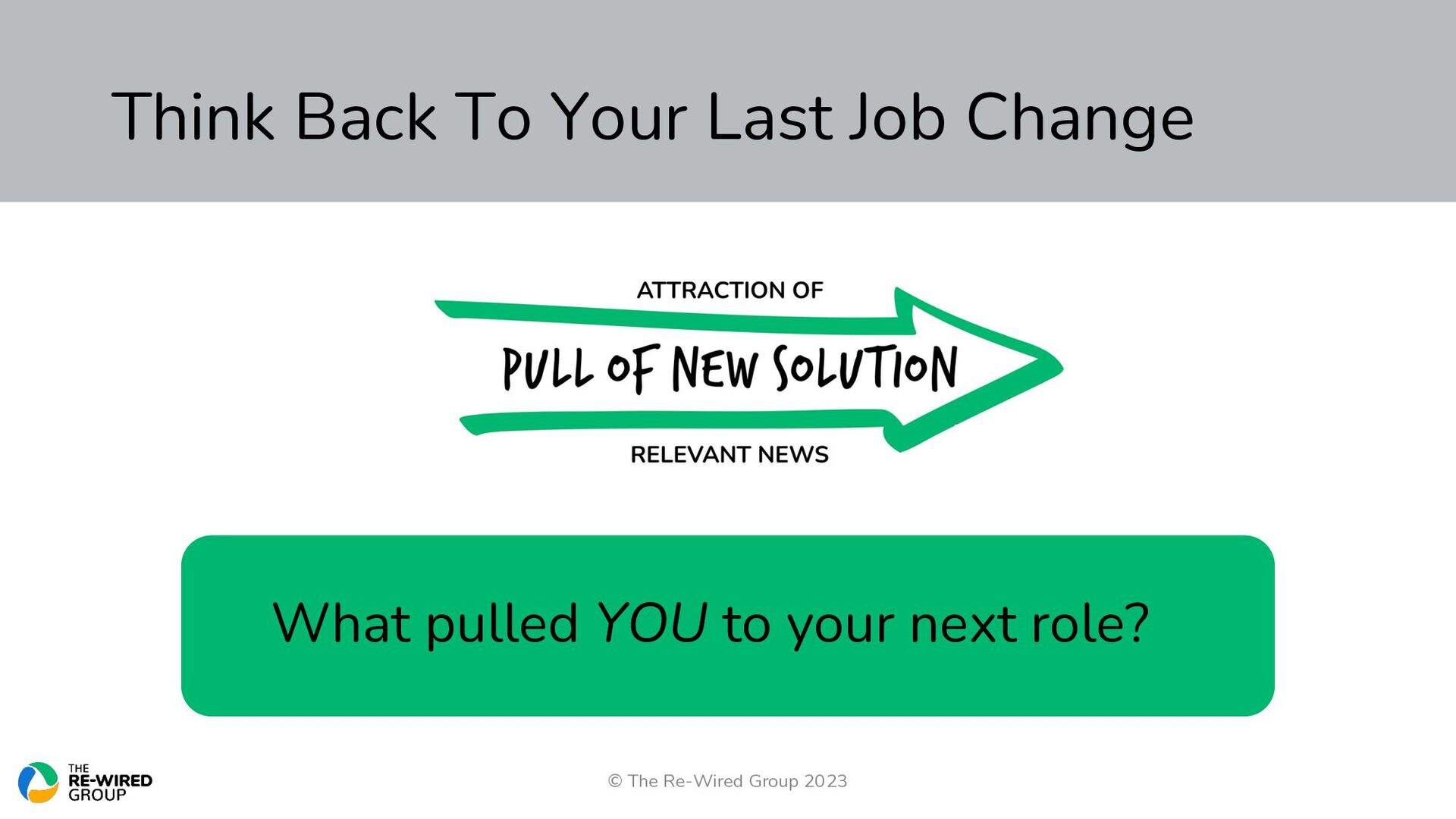
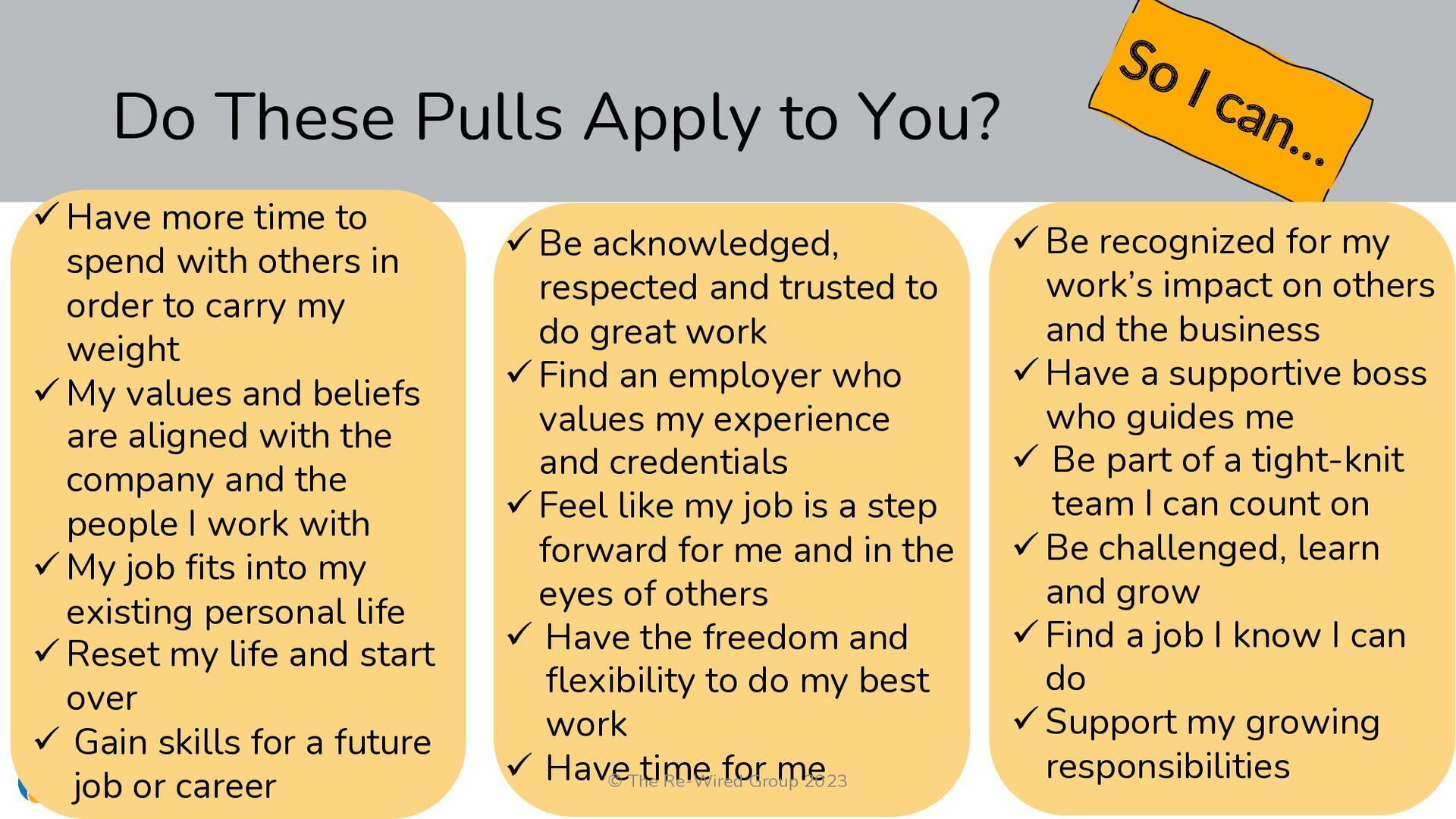
The second part, though, is what were they looking for? So the first thing is you start to realize is most people try to fit to the job that they want. Right? And the job is written by basically a company at a job description.
Now I have to ask, for those who write job descriptions, how are they written? Seriously, how are they written? ChatGBT. ChatGBT. Copy and paste. And here's the best part. It's the way we used to develop product in the eighties. We just built a list of everything we wanted that person to do, do all those things, and go build it.
That didn't work. And it doesn't work for people either. Right? Because, look, we have strengths. We have weaknesses. We have we have things we love to do. We have things that suck the energy out of us, and we try to actually fit a person into a a square peg into a round hole as opposed to how do we morph the job to fit the person.
And so part of it is most people don't know what they're good at. They don't know what they suck at. At the same time, everybody's trying to build something that has a standard, but the fact is that we just try to get more resumes as opposed to better resumes, better people, because we're asking all the wrong questions.
This is so as you look for your new job, I want you to count how many of these this is another money slide. Get the camera ready. Right? How many of these were part of your choice to leave? Count them up and raise your hand.
Five, four, ten, five, five, Eight. That's pretty hard. That was hard for me. Five. Ten. So so again, here's the thing is it's gotta be on both sides. I if I just have the pushes and I don't have anywhere to go, then what happens is I just complain about my job.
Most people on average complain in their job seven months before they even start looking because they it has to build up. But the notion is is that there's so much push that somebody goes like, hey. I'll make you an offer. You jump at that next offer, and you have no idea what you really want.
You're just so desperate to get out of the other place. And what I will tell you is dangerous. And if you if I talk to multiple people about when they actually switch up, they literally run from one job to the next, and usually the second and third job is worse because they didn't do their homework.
And by the time they get to it, they're like, Okay, I got to figure this out because I don't really know. I'm obviously not doing the right things. And so that's one of the opportunities we found was people repeating this over and over again.
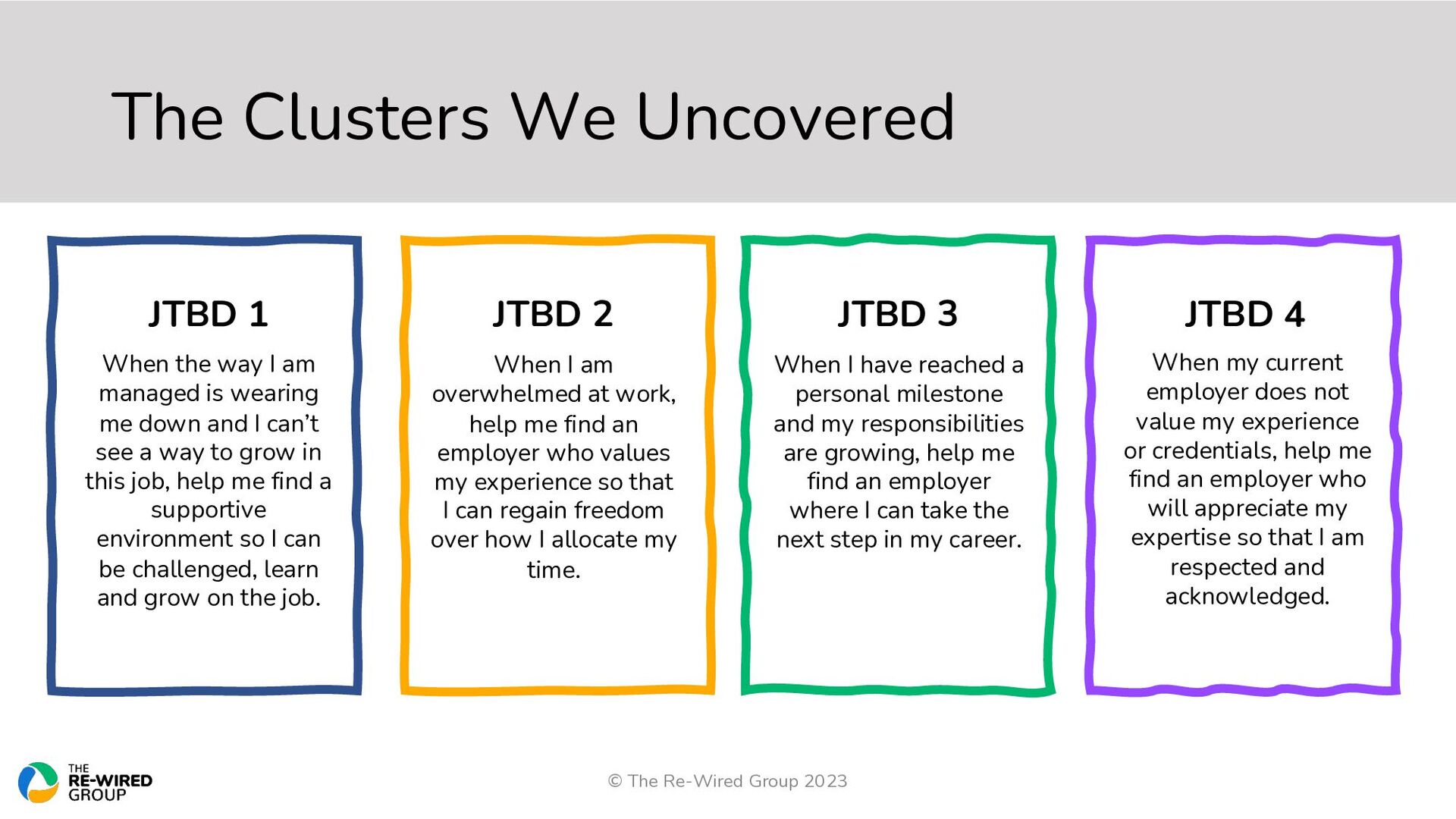
And so ultimately, we found patterns. So it's not any one set. It's not any one push or pull. It's sets of things. Again, I'm a math guy, so it's set theory, which makes me really excited. Right? So four really, really different patterns. Right?
First pattern I gotta sorry. I gotta step back. I think I'll look at this. No. I can't read that. So this is when I'm when I'm managing, it's wearing me down. This is like people are micromanaging me, and I can't see where to go next.
And it's just getting to me. Right? And this is about basically an environment where they want to be challenged. They feel like they're they're challenged in the right way as opposed the wrong way. Right? Help me find a supportive network. They're looking for support. Somebody will have their back.
Right? Second one, when I'm overwhelmed at work, help me find an employer that that values my experience so I can regain the freedom. This is people who are literally overworked to the point where they need time to be with others. They need they want some freedom.
Work has overtaken their lives, and they literally take a step back. By the way, for founders, this is a great opportunity. When somebody finds himself in this situation I I have a friend who basically recruited a Fortune one hundred CFO. He knew he was stressed out of his mind, wrote him a letter, and said, I can't pay you what you're making, but I can give you your life back.
I can pay you one tenth of what you're making now, but I can give you your life back. I can give you stock options out of the future that I don't know, but I can get you your life back. And he he came.
So you go find people who are stressed out of their minds, they need a break, and they're they're they're on the breaking mode. You can actually do it. I did this with hospitals where we had a very remote out in the middle of the Rocky Mountains, a place where hard to get doctors to go there.
We found the same thing. We just basically went and found doctors who were stressed out of their minds. We went to Dallas. We went to LA. We went to Detroit. We went to New York. We went to Atlanta and found doctors who were working eighty, ninety, one hundred hours a week, missing their family.
And we basically just said, don't let your family implode because of your work habits. Come to Bozeman. Filled it up. Simple. Right? Third one, I've reached a personal milestone. This is this is a tough one for employers to actually understand is I'm thirty.
I I can't keep doing this. I wanna be a founder. It's time for me to go because I wanna be a founder. I just got married. I just had my first kid. I just bought my house. These are responsibilities and personal things that make you start to reevaluate what you wanna do.
I don't wanna travel so much. Right? Fourth one. Current current employer doesn't value the experience or credentials. And the big thing they want here is respect. They want to go to a place where they're respected. So in your job change, which one of the four fit the best?
One, two, three, or four? Just hold up a finger. Three, two, four one two four. So here's the thing. It seems like a very small number of patterns, but when you actually look at it, I've been in all four of those jobs my life through my life.
There's a point where I was in job three, and then there's a point where I at job two, and then there's another point where I was in four, and then I went back to two. And so part of this is to realize, like, this is about this is why it's not linear.
This is where it feel like our our path. Everybody would say, like, oh, how'd you get here? Everybody talks about this really crazy ride they got there. It's because context drives when you want to change. Right? So that's the research. Right? So we came up with forty seven different ideas of what to do with this.
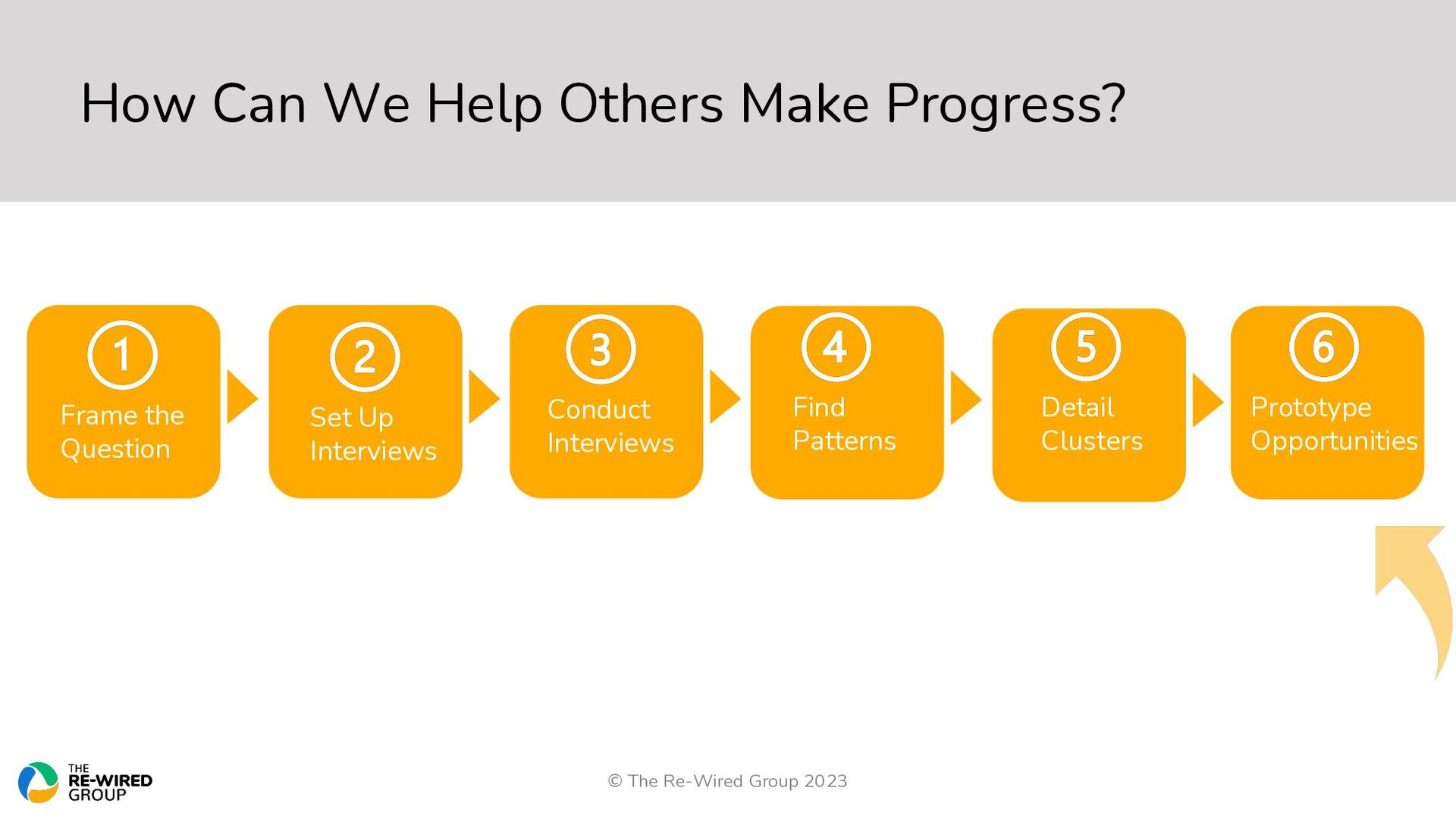
So we have a whole slew of products that we can build from this, and I wanna share with you one product. We're in the middle of building around it. But the two big products are we have to it's a two sided market. We have to help employees know what they really want as progress for themselves.
And employers, we have to actually realize that people are hiring them, and they need to help facilitate progress for employees as opposed to thinking they're just cogs in the wheel. And so that's the two things we're working on. We're going to talk about the employee one.
So how can we use this to help you figure out? And so, again, I want you to realize the product is in very early prototype. I've done about a thousand people. The book I'm working on a book to get the language right. First of all, I'm but it's just a space that's very, very as an engineer, it's a very complicated hard space for me.
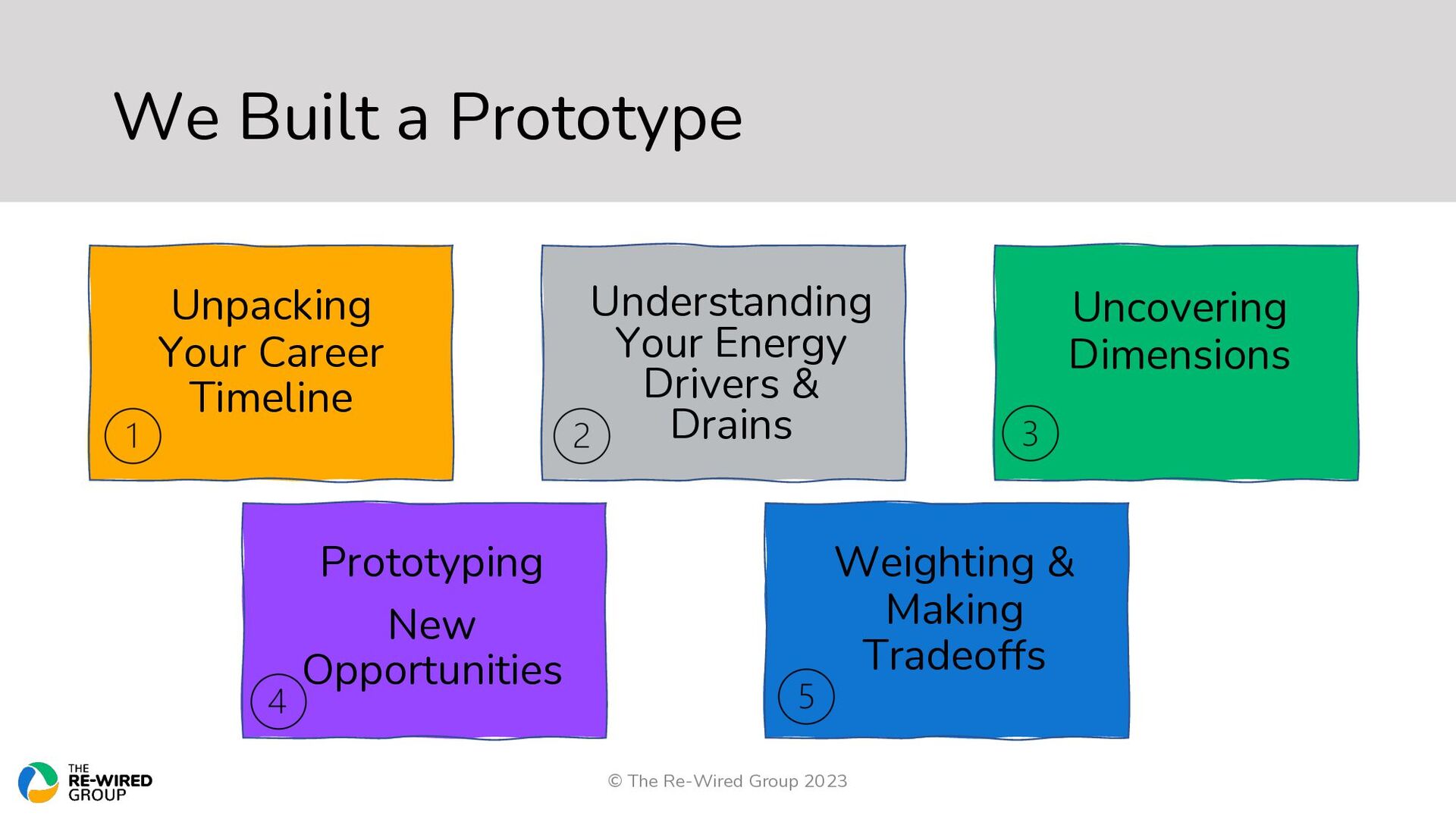
Right? And So the the first place we went is really to help employees. Right? So we built a prototype. So the first thing we did is we just have people look at their career. What jobs have they had? What responsibilities have they had through time?
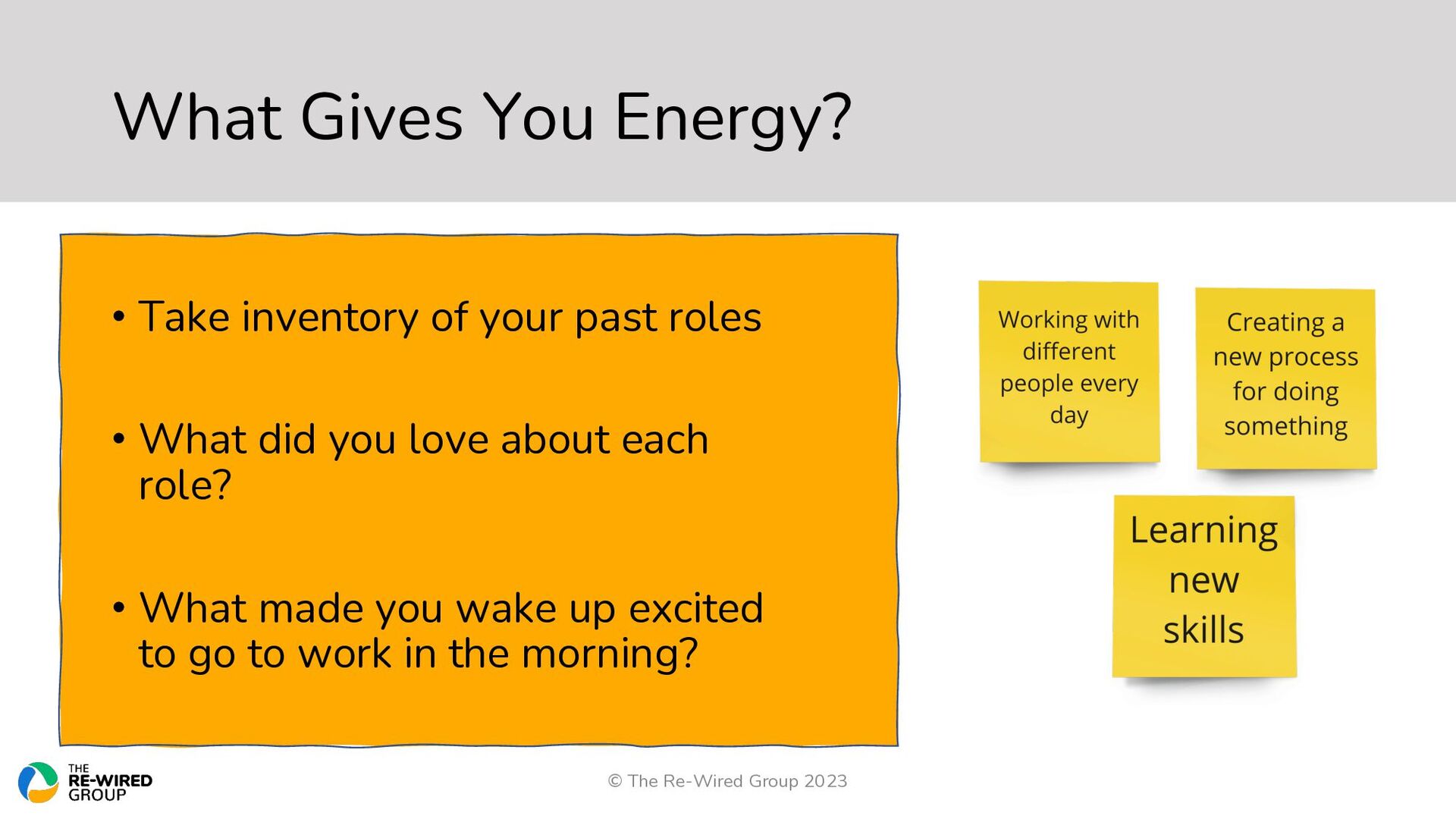
Right? And just think about when it was, what was your responsibilities, and then what we do is is is just to kind of build a backlog. Because what we what we believe is that what you love to do, what gives you energy, and what sucks your energy is true all the way back to when you're very, very little.
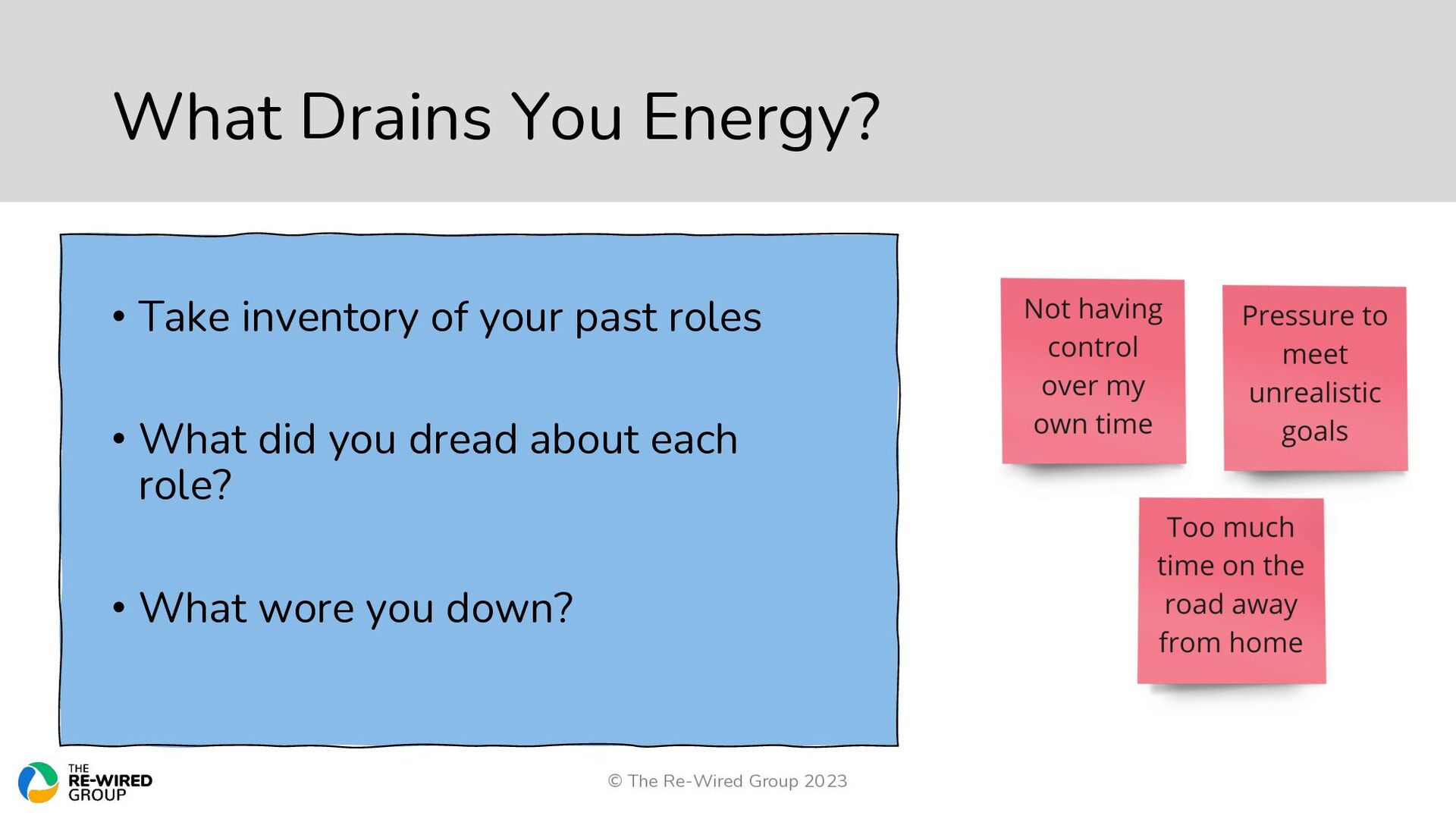
And so part of it is helping you discover what is really what you love to do and what you hate to do. And by the way, you can have a strength that you hate to do, so it's not about strengths. Alright? The second thing is we help people understand the energy drivers and the energy drains.
This is a very interesting concept to me because it gets to the point of, like, there are moments when you're at work and you walk into a meeting and you walk out with more energy than you walked in with. Has anybody had that happen? Yeah. **** ****.
That's awesome. We're trying to actually figure out when do those man moments happen for you because they happen, but they don't usually happen enough. But we need to actually identify them because we want to have more of those things happen to us. Right? The drains are the same thing.
I mean, I I know this one way better than the other one, which is the drain. You walk into a meeting, you literally walk like one of the dementors from, you know, Harry Potter just sucking the life out of you, and you're like, oh my god.
What are we gonna do about that? Right? But part of it is to realize that you know intuitively what gives you energy and sucks your energy, and typically, that's a reflection of what you do. And so the thing is is the moment when you're working in a space where you're getting energy all the time, you're not working anymore.
And most of us pay a tax. I call it a time tax. Ninety five percent of our time is spent doing the **** we hate. The stuff we hate. Sorry. Right? So we can get the five percent of the stuff we love. But the more you can figure out what you love, you can actually start to realize what are those things.
Because guess what? There's somebody out there who loves to do what you hate to do. It's crazy. I know. But the reality is the moment I realized I found somebody who really loved accounting, oh my god. I I couldn't pay them enough money.
They actually charged me. I'm like, I gotta pay you more than that because this is worth way more to me because just get off my plate. Then what we do is we actually analyze those to find dimensions. What are the dimensions? And we have you unpack these dimensions to your language.
So everybody say, oh, who wants to have impact? Oh, I wanna have impact. But the reality is everybody has a different definition of impact. Some people's definition of impact is I wanna see one person one on one help them go from doing one thing to doing something else versus other people.
Impact to me is I've sold a million of these units because, like, having scale is what impact feels like to me. Right? And so there's all these different definitions. So part of this is then taking that those energy drivers and drain it, unpacking them down to what do you really mean by that, and how do you know when it's there or not there?
Right? Then and typically, we map then your current job your past jobs to it. And then what we do is we start to think about prototyping. So I'm bringing the notion of product to HR. Yep. I'm doing it. The aspect here is now what we want to do is think about three or four really different job positions you might have.
Right? Really, really far out. And then we're gonna have you go interview people who already have that job. Because the thing that's missing is most people literally read the job description, read about the company, go to Glassdoor, and they think that's real. And there's no way to understand the crap that you have to do that's gonna drain your energy because nobody advertises that.
And so part of it is understanding what are those things that are going on so you actually know whether I should do this or not. And part of it is just going diverse to say, like, what are the what's the range I can look for?
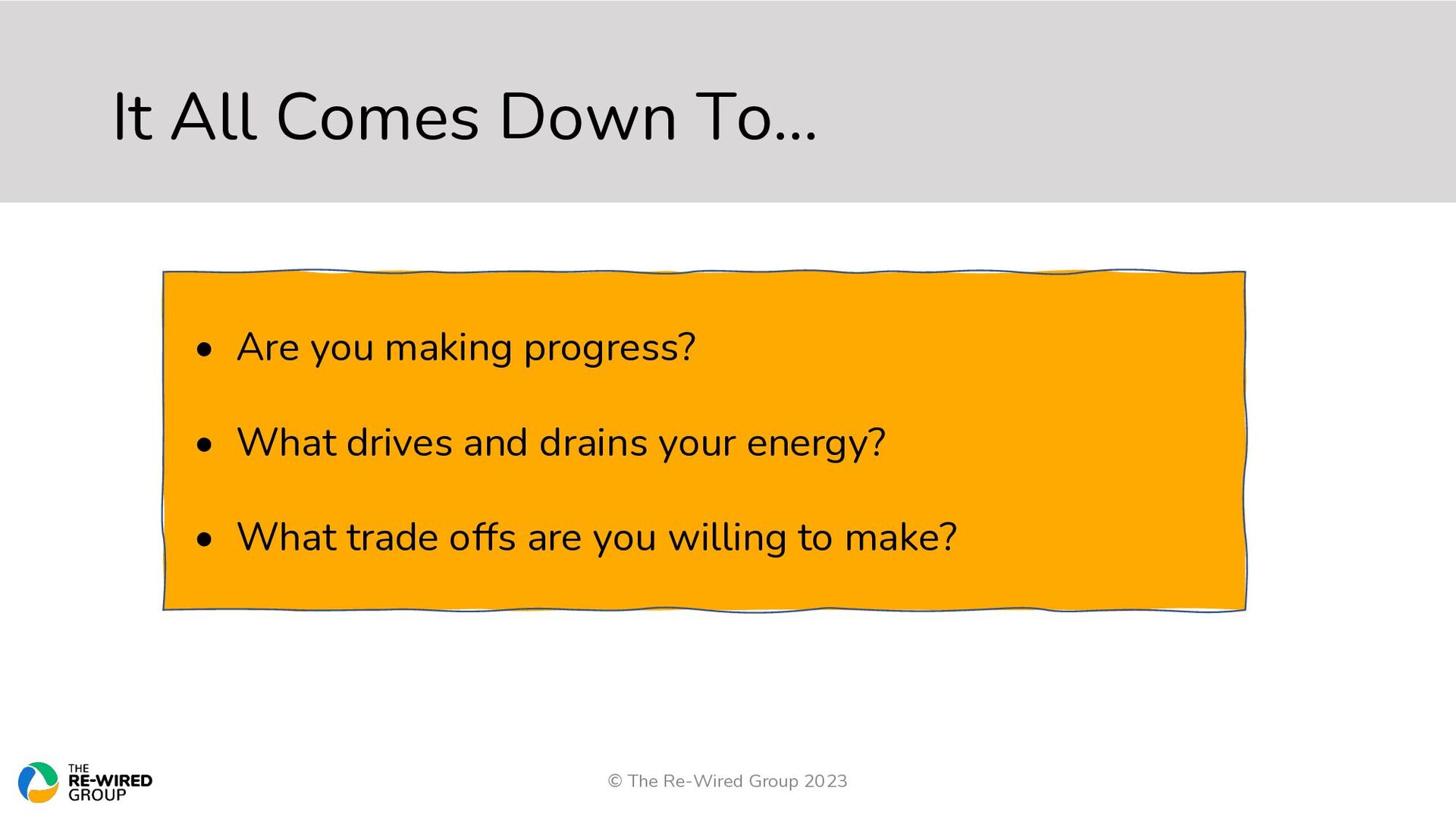
And it's not about picking anyone. It's more about getting oriented to what you want to do. And then ultimately, we build a waiting process to help you make trade offs. Because ultimately, there is no job or new position or actually any purchase without trade offs.
Trade offs are essential, and understanding those trade offs are essential to actually helping you make progress. If you can't make the trade off, you stay at the old company. If you if you can't make the trade off, you can't buy the new car.
Right? You can't do things if you don't make trade offs. So being able to understand the trade offs and the waiting is really important. So we took this prototype, and I helped ten people. Just said, like, can I can I help ten people with what I know with that process?
And it went pretty well. It was very intensive. It was two hours a week for six weeks, and they had homework in between. So was a lot of work for them, a lot of work for me, but at the same time, it was like, does it work?
So it was just feasibility, and it worked. It actually worked really well. They actually everybody in the program, when we asked them to recommend, they wanted to rec I told them they could recommend five people. Everybody had twenty people to recommend it to.
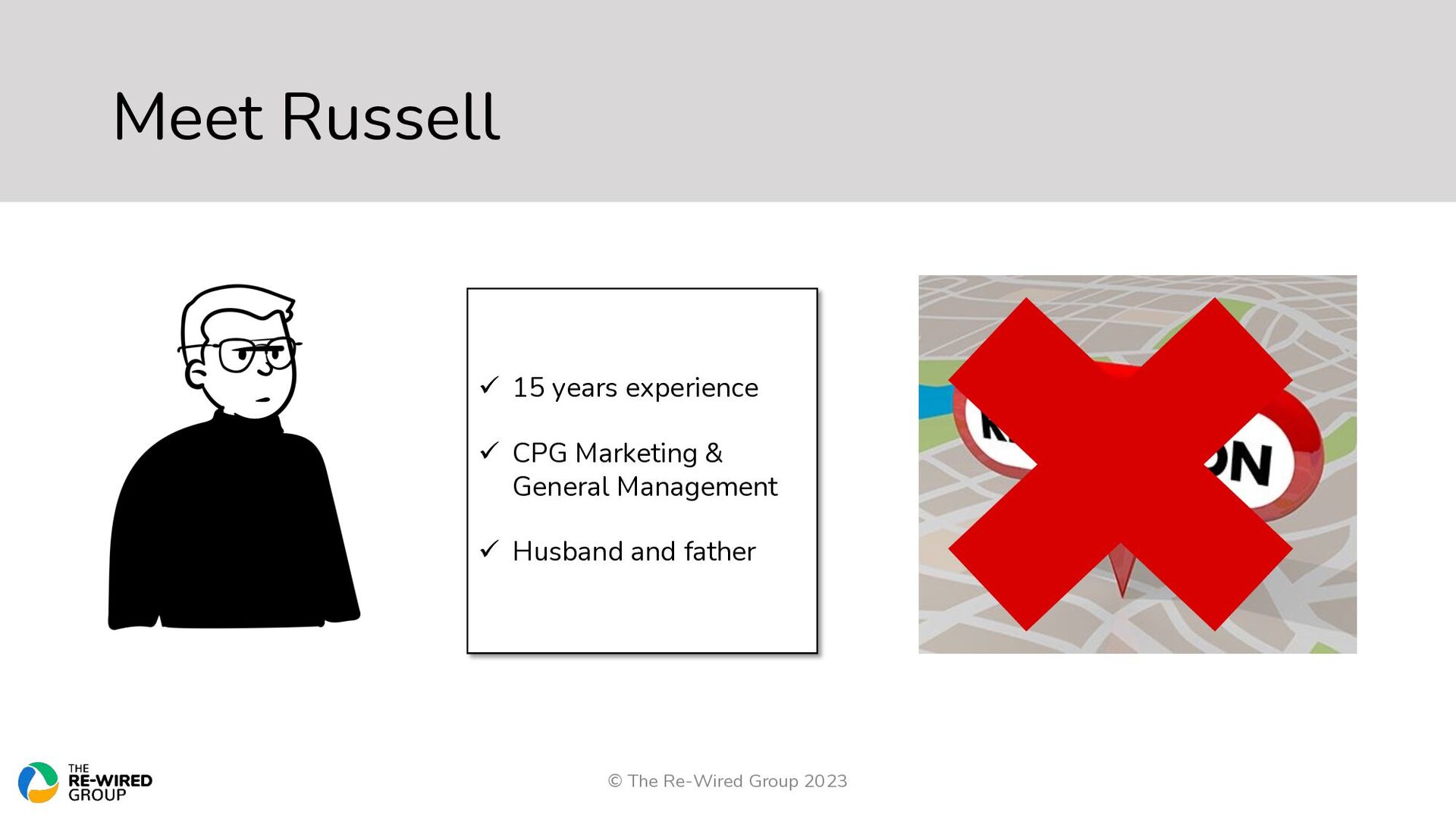
So I'm like, there's something here. Right? And so I wanna talk you through Russ. Rusty is Russell, but I really call him Rusty. Rusty is at a consumer packaged goods company. He's a brand manager. Right? And and he lives up in Appleton, Wisconsin.
And the company basically said, we're moving, and you need to move to Chicago. And he's got small kids, and ultimately, he's like, okay. And they gave him a pretty good severance, and he's like, I'm not gonna go. So he knows he's not going to go, and he has to figure out what he wants to do next.
And so he actually called me and said, hey, I'd love some advice. I don't know how to think about my job next. I'm like, perfect. You're a candidate. Would you do the process? He said, sure. So he does the process. And so first thing we do is we Miro.
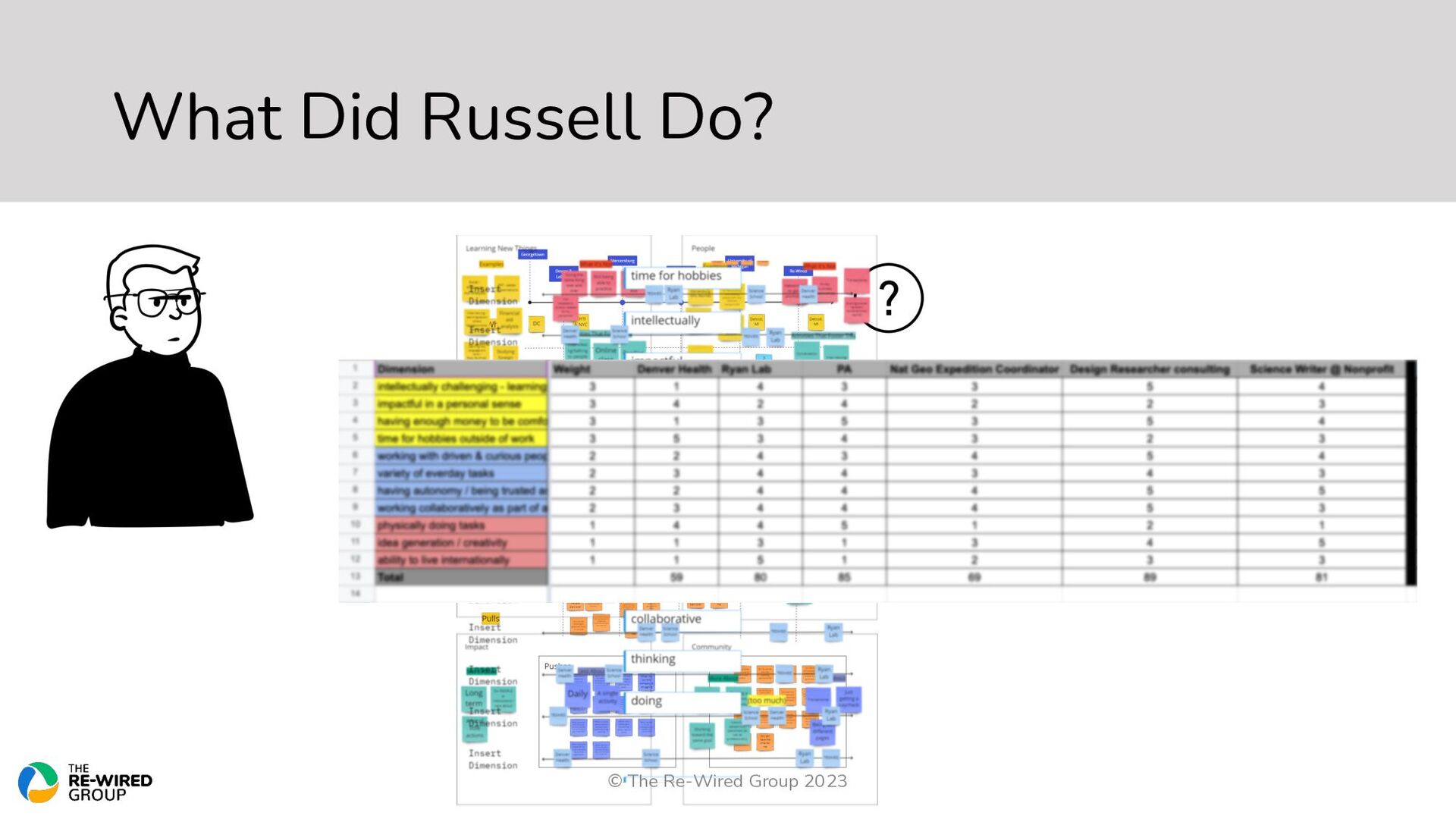
Everybody's got to use Miro. So I'm building the software to go with this, but I always prototype everything in Miro and in Excel, and then ultimately flow things through to then build it to a program. But the first thing we do is we just map his career of where he's at today.
So when we talk about how long he was at that position, and it was in some cases, was the same company, some cases, a different company. But then it's like, what was his roles and responsibilities? What was and then ultimately, we wanna get to what were the moments in that job where you got energy?
And what were the moments in that job where you actually got the life sucked out of you? What do you love to do? What do you hate to do? And so after that, we unpacked those themes and built the dimensions and mapped his current jobs on it.
What that what this mapping does, it helps you understand the trade offs. God, I really like to be challenged, but you know what? I work too much when I'm challenged. Right? And so you all of a sudden you say, like, oh, you know, I need more time with my family.
Oh, I can't have something that's so challenging. So you start to realize you have to actually make these trade offs. And so it starts to let you see some trade offs that you start to have to make. And then what we do is we we actually prototype new jobs and basically put it back on there.
And then ultimately, we end up with a weighting matrix here that allows you to then benchmark as you get job offers that come in to see where they sit. And you can see the progress you want to make. The interesting part is what changes over time is the weighting of what things are important to him.
It's fogged out for a reason because it's his. I can't he he he would say he could we could use the image, but not so clear. Right? But ultimately, this helps them decide what they wanna do. And so what's really interesting, what happened to Russ Rusty is is the fact is is he actually start to get very clear.
Loves to help people, wants to teach, wants it wants to be, loves to coach, loves to have many different things, loves to learn all the time. Right? And so as he was going through this process, he started to share it with his boss to say, like, well, I'm looking for these things. Where do you think I should go?
And eventually, his boss came to him and said, you know what? We need this. We probably need to create a new position for you. And so they went back, and he said, well, why don't you create a job description for what you want to do, and then we'll figure out a place in the organization for you.
And so he end up not leaving at all. He ended up getting a job that was basically an innovation coach, which he loves tremendously. He gets to learn all new methods and tools. He gets to do what teach. He gets to basically facilitate and coach.
He does all these different things. It's kind of amazing. And so the intention when he went into it was, you know, I probably can't stay, so I got to figure out where I'm going to go. And ultimately, by doing this, he stayed at the same company but had a better job.
Of the thousand people we've entered we've taken through the process, fifty two percent got a new job. Forty eight percent learned how to love their current job. They learned the trade offs. They made the explicit trade offs to say, like, yeah. I'm doing this because I don't have that, so stop complaining about that.
See, I'm working on my swearing, so that's good. I caught myself, and I did it. Right? So here's the thing. What I what I really would suggest as you take inventory, and this is a process I've learned it takes days to do, is to figure out what gives you energy.
Where are the moments in the day where you go like, oh my god, I'm so excited. When do you wake up at four in the morning in a good way? We all do. I mean, if you're a founder, you woke it up at four in the morning in a good way.
And if you haven't, then you're not in the right founder. Because it's it's fun to wake up at four in the morning for me at least. Right? The other part and it's about finding these moments and really being clear about what are those moments because how do we make those moments happen more often?
And then what I'll tell you is right now, it's probably ninety five draining to five driving. If you get it to forty driving, you will love work. You will love like, everything balances out. But it's about understanding what you wanna do and knowing how to negotiate.
Right? This is the other one. These are usually more obvious than people know these things, but you should know what what sucks the life out of you. Accounting sucks the life out of me. The life. If it doesn't add to the penny, it means there's something wrong with the math, which means I gotta go figure it out, which is really, really hard and complicated.
And to be honest, I hate it. And and to be honest, I don't worry about pennies. Sometimes I don't even worry about dollars. I might worry about thousands of dollars, but yet when I'm in accounting, have to go down to the penny. And so I just realized, like, that sucks the life out of me, and I should not be I should never put myself in that situation where that's the case because I I I'm wasting my time.
There's somebody else who can do this, who loves to do it, that I can actually who will do it way cheaper than I will do it because it'll take me two hours to do. It'll take them ten minutes. That's the other part. When we suck at something and it drains our energy, it takes us way longer.
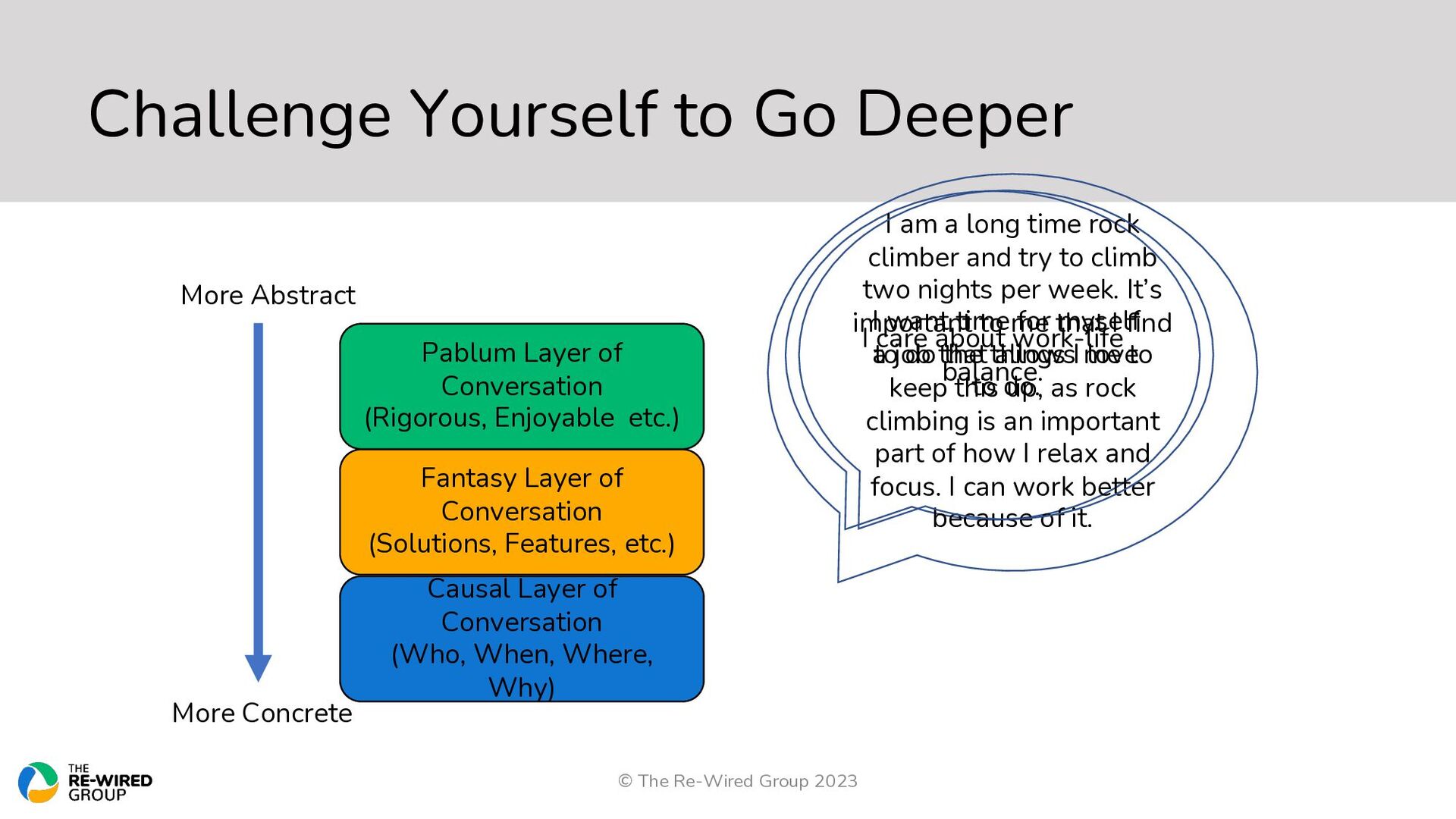
This is how we get crazy productive. So the other part is to realize that you have to go deeper. This is the thing this is the rigor. So the work that I do and jobs to be done is based on criminal and intelligence interrogation methods.
It is not based on traditional market research. And what I mean by that is that this is about hearing people's story from the past. I'm not talking to people about the future of what they want in their next job. This is about understanding what gives you what's what's causing you to get energy now, what's braiding your energy now, and it's about unpacking.
And so what we talk about is there's three layers of language. There's this layer of problem. How's work? Good. That's the standard answer for everybody. Is is work always good when you say good? No. And guess what? If you say good, that actually tells me it's not good.
If you say good, it's like, what's going on that's good? Right? So you have to actually pull it down and say, well, what do you mean the good? And then you start to realize, like, at some point, there's this fantasy layer where you overexaggerate what the hell you mean.
Oh my god. It's so good. It's this. Blah blah blah. And you talk about all the good things, yet there's still some bad things over here. So you overexaggerate. And then ultimately, you need to get down to, what are you talking about? What do you really mean by this?
And so the examples here are like, you know, I care about work life balance. Well, what do you mean by work life balance? Right? It's like, I don't want I want time for myself and for my family. What what does that mean? Right? This is Lydia. Ultimately, it's like, look.
I like to rock climb. Here's what I want to make sure I make time for. I want to be very specific about these things because when you go to make trade offs, it's very hard to make trade offs when it's abstract. Engineers know that.
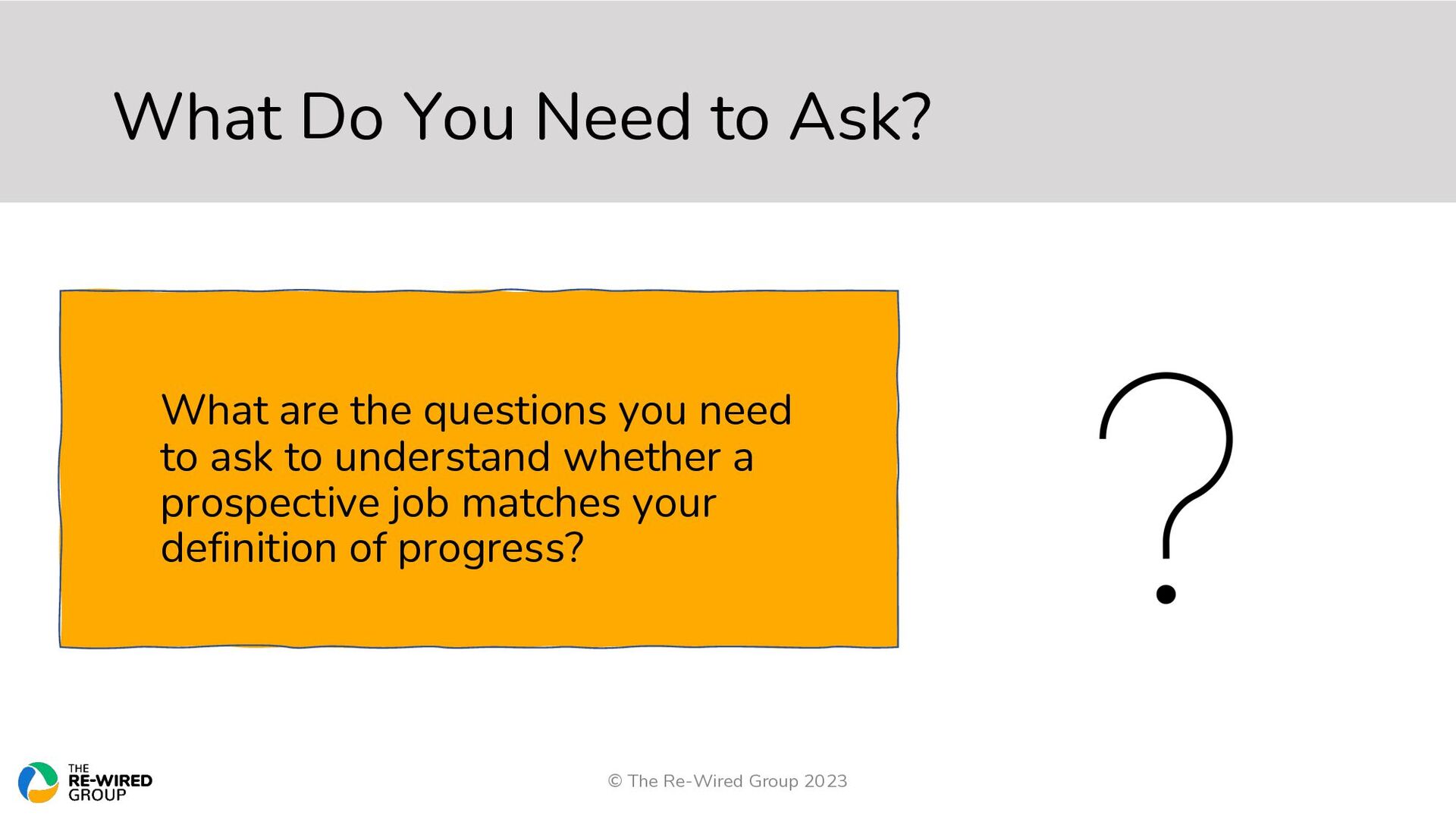
And so the crispiness is really, really important. Right? And so you need to be able to ask these questions and go down deeper and deeper and deeper. What does that say? Yeah. So this this is really about when you start to then find the jobs, I want you to go interview them as opposed to you thinking they're interviewing you.
The other thing you start to realize is most people have fixed money. You get this salary because this is the band. This is what you're supposed to do. This is what it is. But let's be clear. Everything short of benefits and and salary and maybe bonus, everything else is negotiable.
Everything else. And the thing that is even better, if you negotiate, I wanna go learn these things. I wanna go to these conferences as part of your package because you're I want to make progress. I wanna learn these things. Here's what I wanna be better at.
I haven't had one company say no to anybody who's ever asked for training and or the ability to get taught something new. And so my thing is is the more you can be explicit about what you want, they will actually help you get there.
And for you people who run teams, make sure you're including that stuff to ask the progress that people wanna make. Right? So here's the thing. Loyalty is a myth. It's just a myth. It's something people made up, and they think that you're loyal.
But here's the thing is you might be loyal to, British telecom or, like, in the in the States, we say AT and T. But the moment AT and T I've been with AT and T for twenty five years. But the moment AT and T screws me, they're gone.
Because guess what? They don't recognize the twenty five years I've been with them. Only I recognize the twenty five years I've been with them. And so you start to realize like you have to be responsible for your progress. What do you want to go do?
Think about it from a product perspective. If you're the product, who's the target market for you? And that's what we're trying to do. The the the other half of this story which I don't have time for oh, I'm over. I'm almost done. Hey. Hey. Hey.
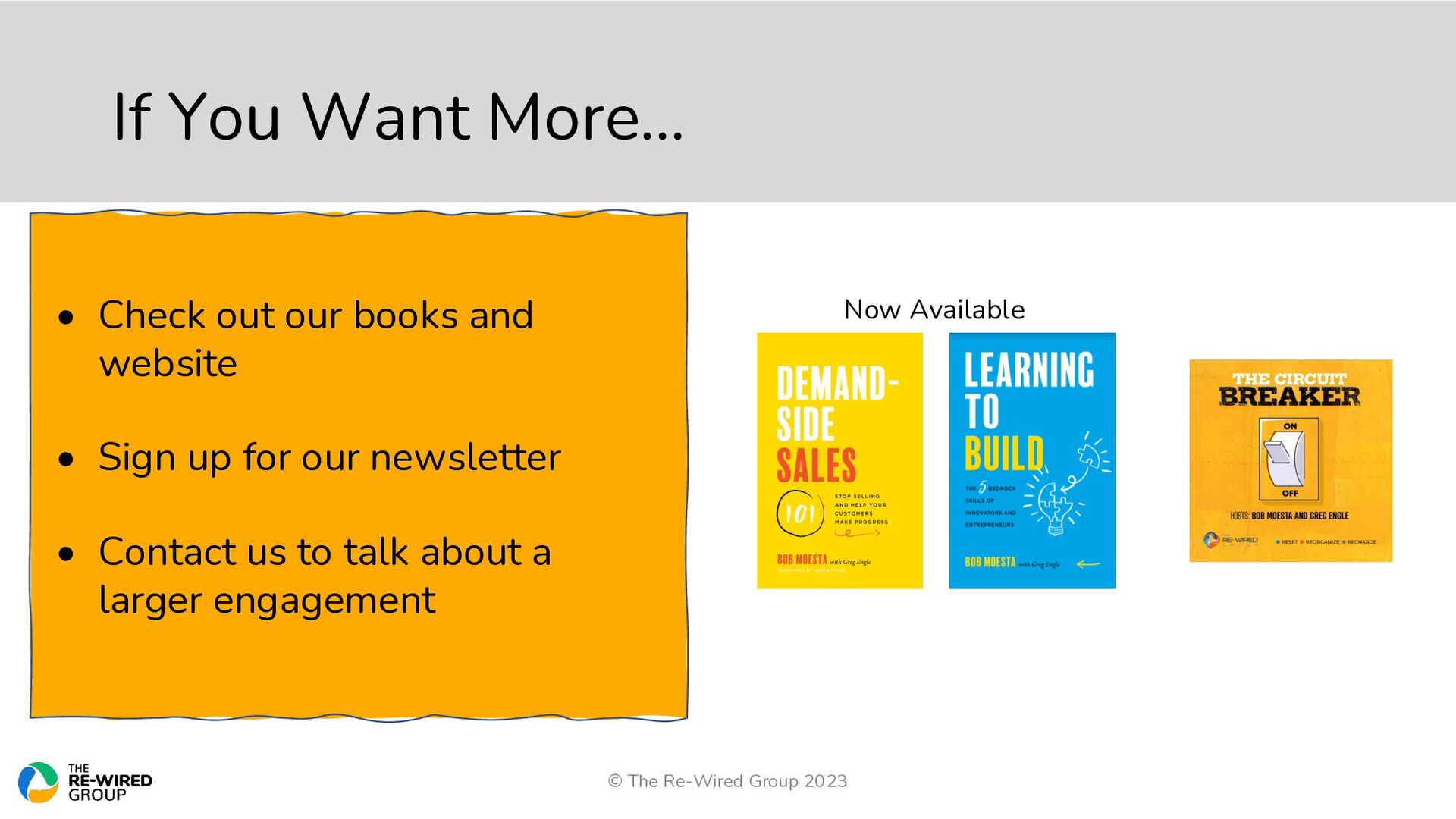
So if you want to follow the story, you want to move with you want hear more, you wanna learn more, basically, I've written those two books, which are okay, but the next one's gonna be way better. And the circuit breaker is literally a twenty minute podcast just to cause you to think.
So if you have a chance to listen to it, and we'd love ideas for topics all around it. But I'm in the middle of kind of building a whole bunch of products off of this thing, and Brian again asked me to to just take a minute to share with you where I'm midstream on this product.
And I hope you learned a lot about it. Thank you.