
Well known UK design-leader-turned-VC Andy Budd outlines some of the common pitfalls which trip up early stage founders (and essentially anybody trying to get a new project off the ground) and what they can do about it. Andy will walk us through the 7 key factors which form the backbone of his equation and guide startup growth. He’ll also share 9 key tactics you can use to help find early customers, build a GTM engine, land your first million in revenue and find Product-Market Fit in the process. This talk is going to be essential listening to startup founders, product leaders and those with an entrepreneurial spirit.
← All talks 


Grow Turing Fest 2024
The Growth Equation: 7 Essential Steps to Finding Product Market Fit
Auto-generated transcript - may contain errors. Tap a timestamp to jump the video.
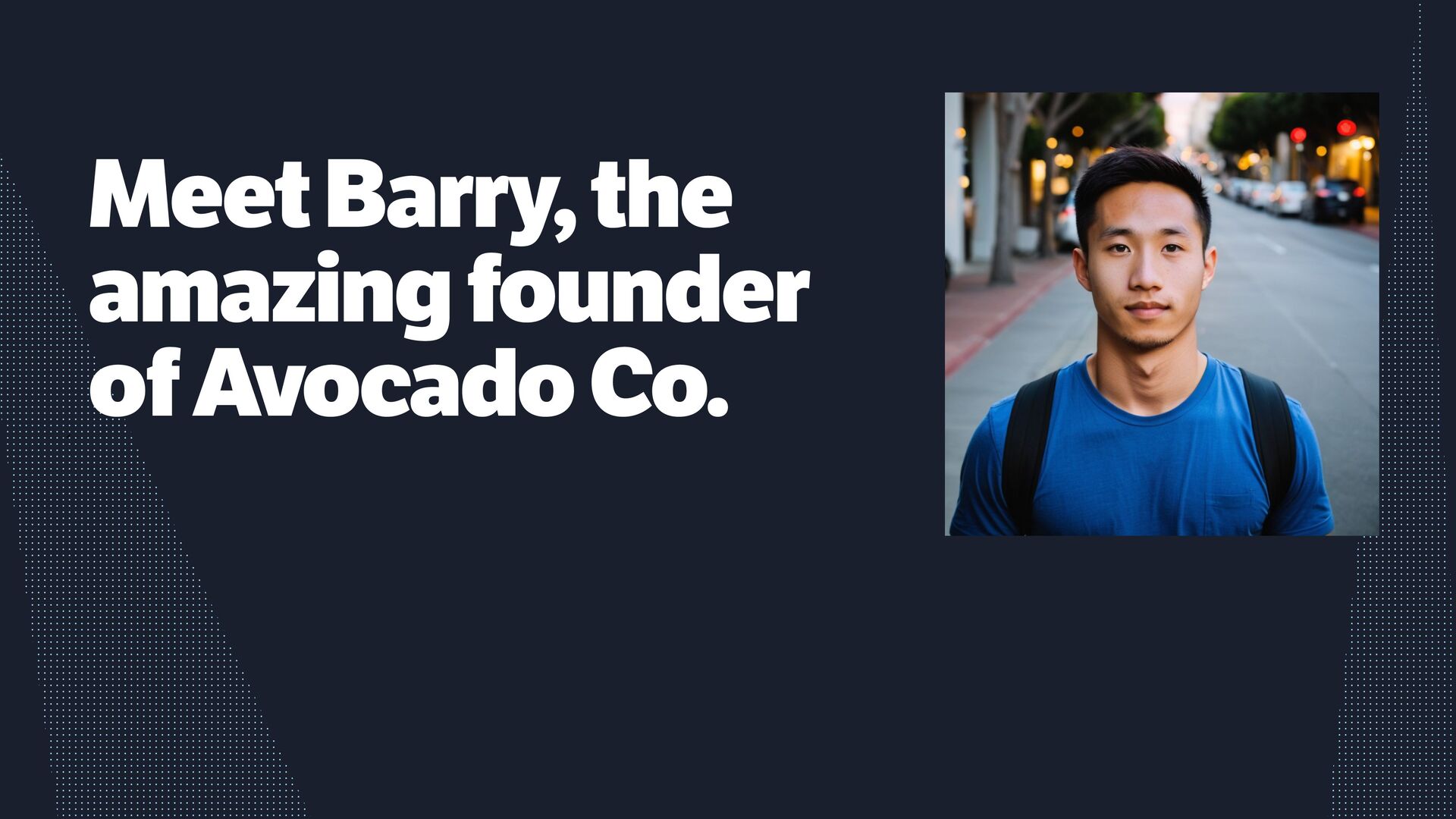
Hello Edinburgh. It's really, really great to be here. Thank you so much. I'm excited to talk to you about my current project. So I'd like to introduce you to Barry. Barry is the amazing co founder of Avocado Co. Barry's come up with a product that he believes is going to revolutionize his industry.
He's pulled together a dozen different point solutions into a single product. It's going to massively streamline people's workflow, it's going be great. One of the reasons Barry knows it's going be great is because he's been talking about this product for ages to all of his friends, and everybody in the industry says, You've got to do it.
Pursue your vision, quit your job, go for it. So he does. He's used with his positivity to go and raise his confidence and raise money from a bunch of high end VCs. And they've given him a million dollars to go out and deliver this vision.
Barry's spent about six months building the product The product's been live now for about six months. However Barry's feeling a bit stuck. He was expecting that when he opened the product, the flood gates would open and people would pour in. But so far it's been a slow trickle.
His industry contacts that told him they loved what he was doing are kind of now on the fence a little bit. They've told him that he needs to really go out and build feature x before they can come on board. So he's gone out and built feature x.
When he goes back to them, they're like, oh no, we need feature y and z. He keeps adding features, but none of them seem to be enough to get people over the line. Barry believes that if people just give his product a try, give it a chance, they'd see all the amazing value that it's got there to deliver.
When he talks to potential customers, they just don't seem to get it. They keep comparing him to incumbents that aren't really the same as what he does. And so he jumps into a litany of features. Well, we do this, we do this, we do billing better, we do account management better.
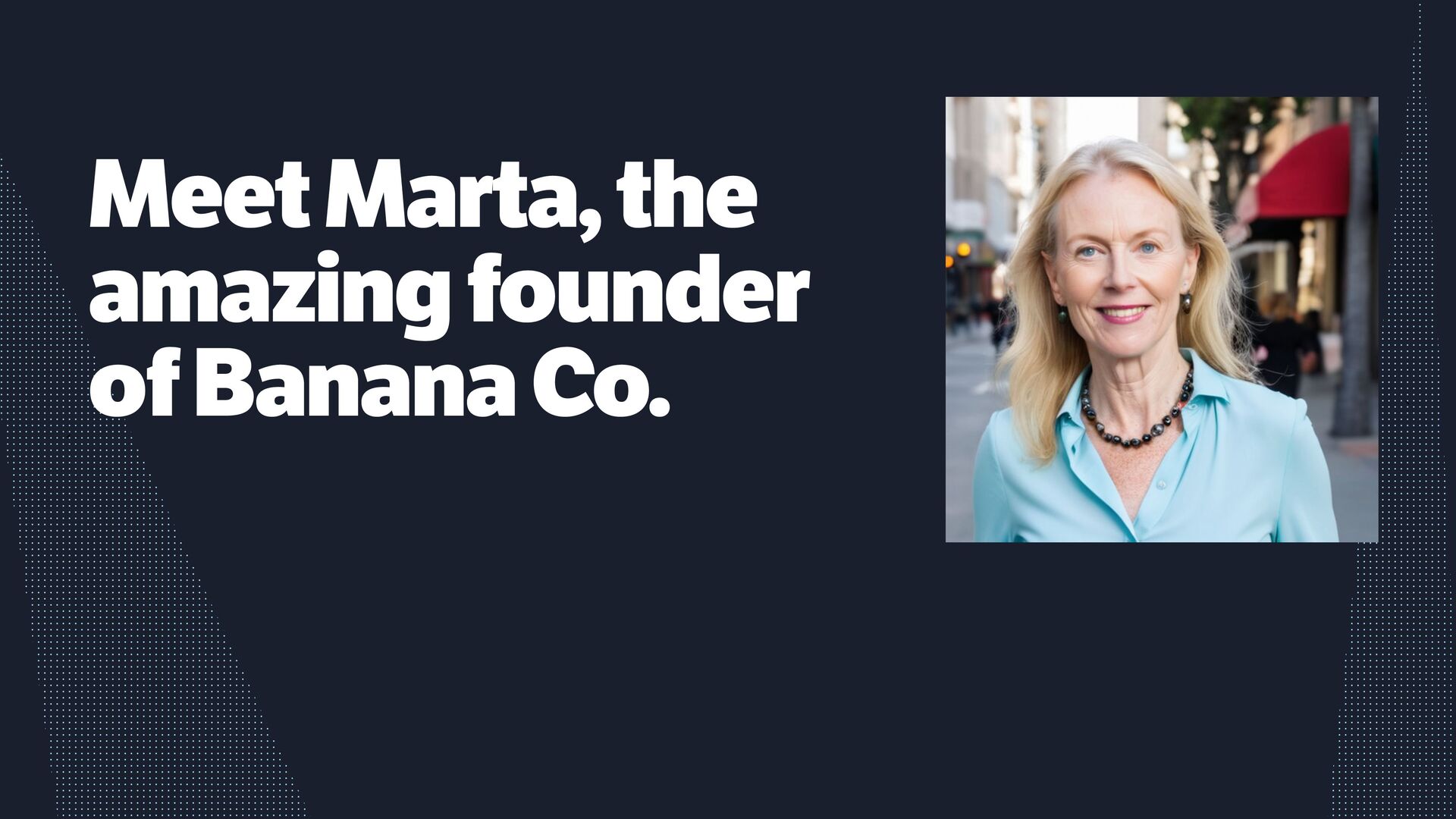
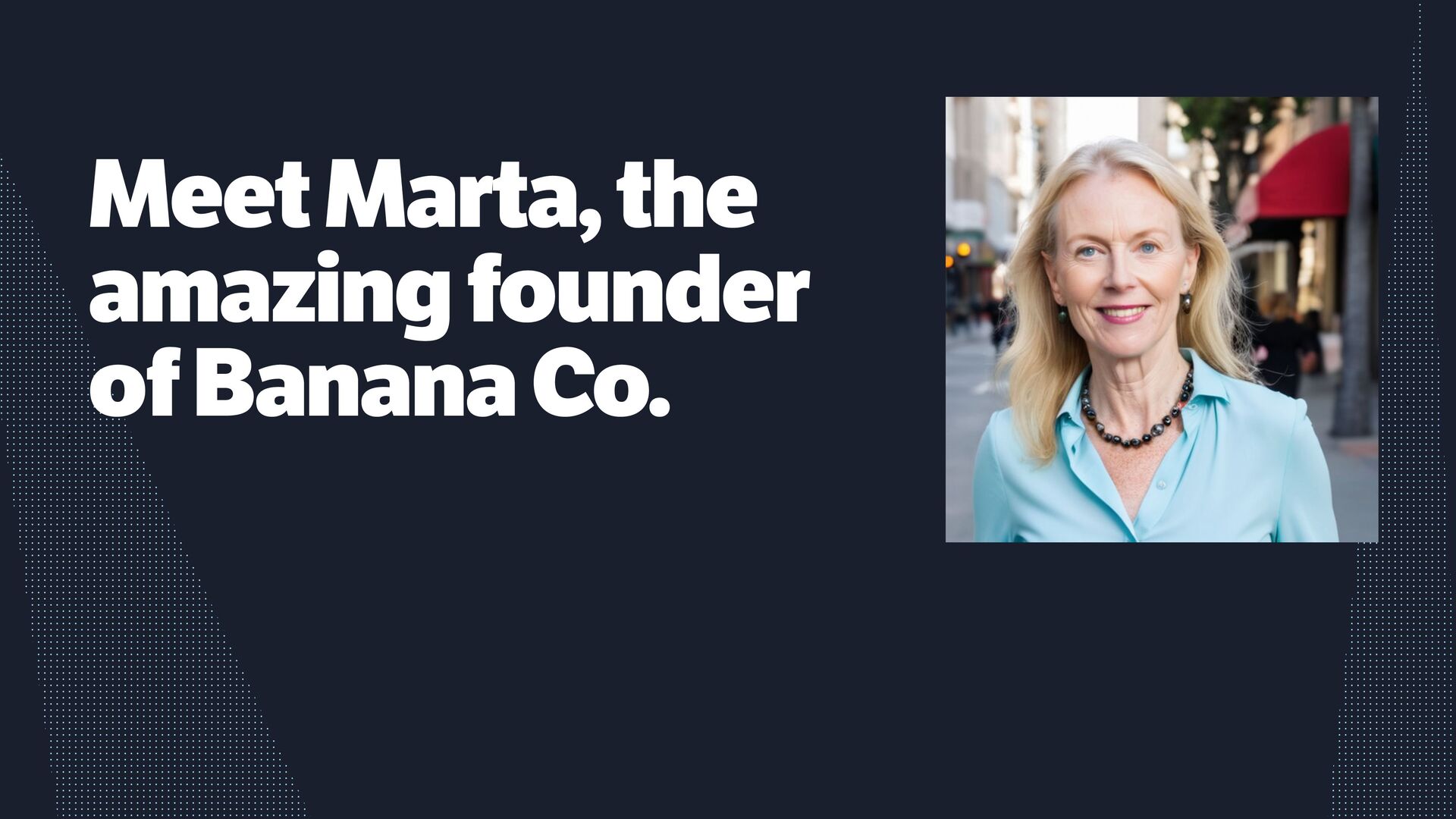
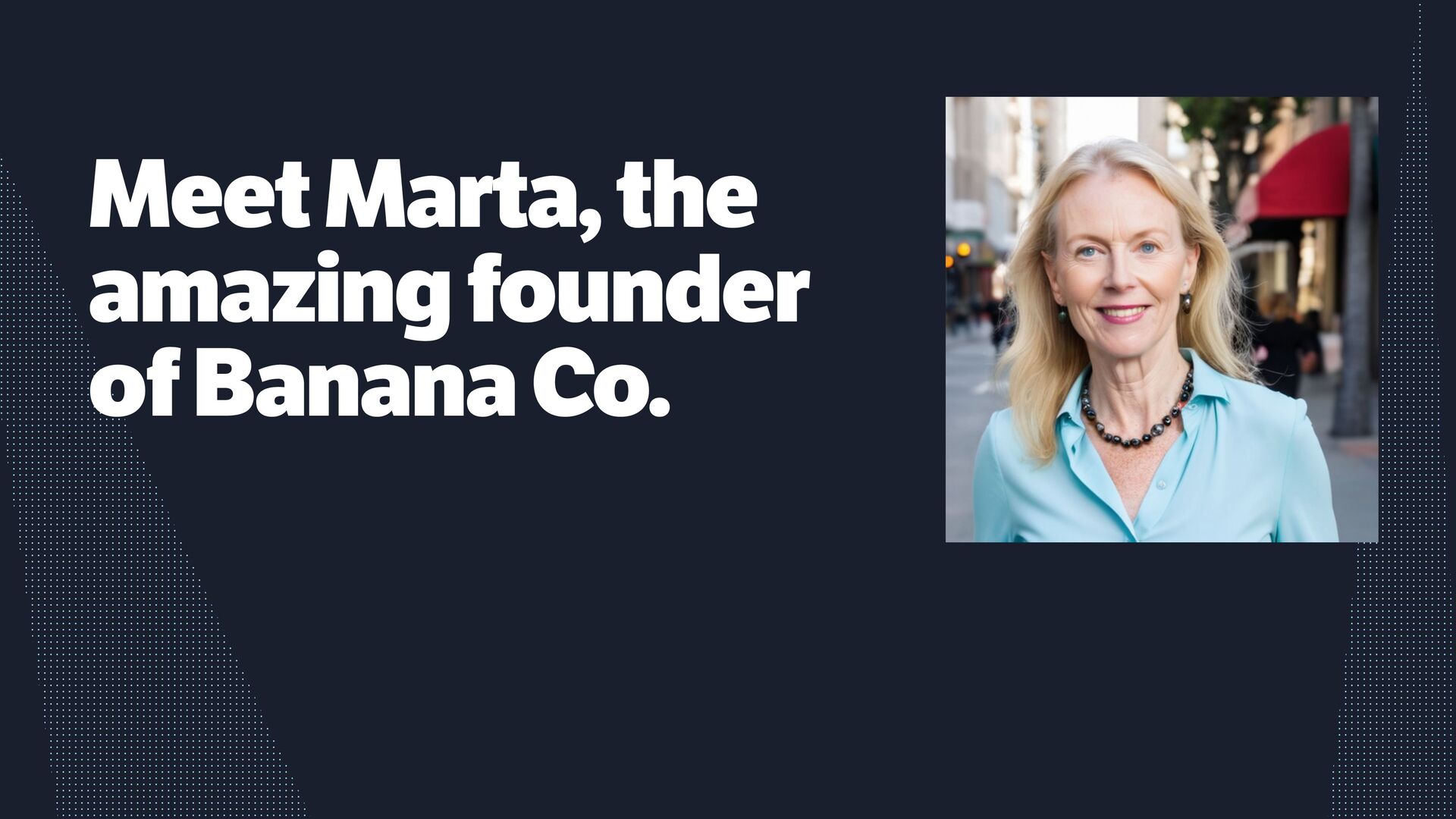
But nothing seems to be landing. Marta is in a different position. Marta is also pretty good at product stuff, but she's a whiz at sales and marketing. So she's been doing really, really good at acquiring new customers to Banana Co. She's spending a good three days a week honing her outbound campaign, hopping on demo calls to potential customers.
She sort of got her email response rate from one point five percent up to five percent in the last few months. And a lot of this is down to really, really good positioning, really good email responses, and clients are already getting what she's offering.
This is leading to three or four demos a day which is closing at least one off. Things are going really well. In fact, things are going too well. She's currently thinking about hiring an SDR or CX person to help with the onboarding because there's just so much stuff going on.
Take the pressure off. However, there's a different problem that Martha's facing. She's got a real activation and churn problem. It turns out that only about a quarter of the people she's talking to are actually finishing their onboarding and activating. Only about five percent of the people she's talking to are active after thirty days, And every month she's losing about ten or fifteen percent of her customers.
So while the marketing message is landing, there's something just not really hitting with the product. People aren't finding value quick enough, they're not baking it into their workflow, they're going back to their old processes, And it's costing her currently more to acquire customers than they're making.
She's dabbled a little bit with tweaking her onboarding. She's put one of those classic wizards in, but that's really only moved the dial by half a percent or so. So she's really stuck and worrying whether she'll be able to raise her next round.
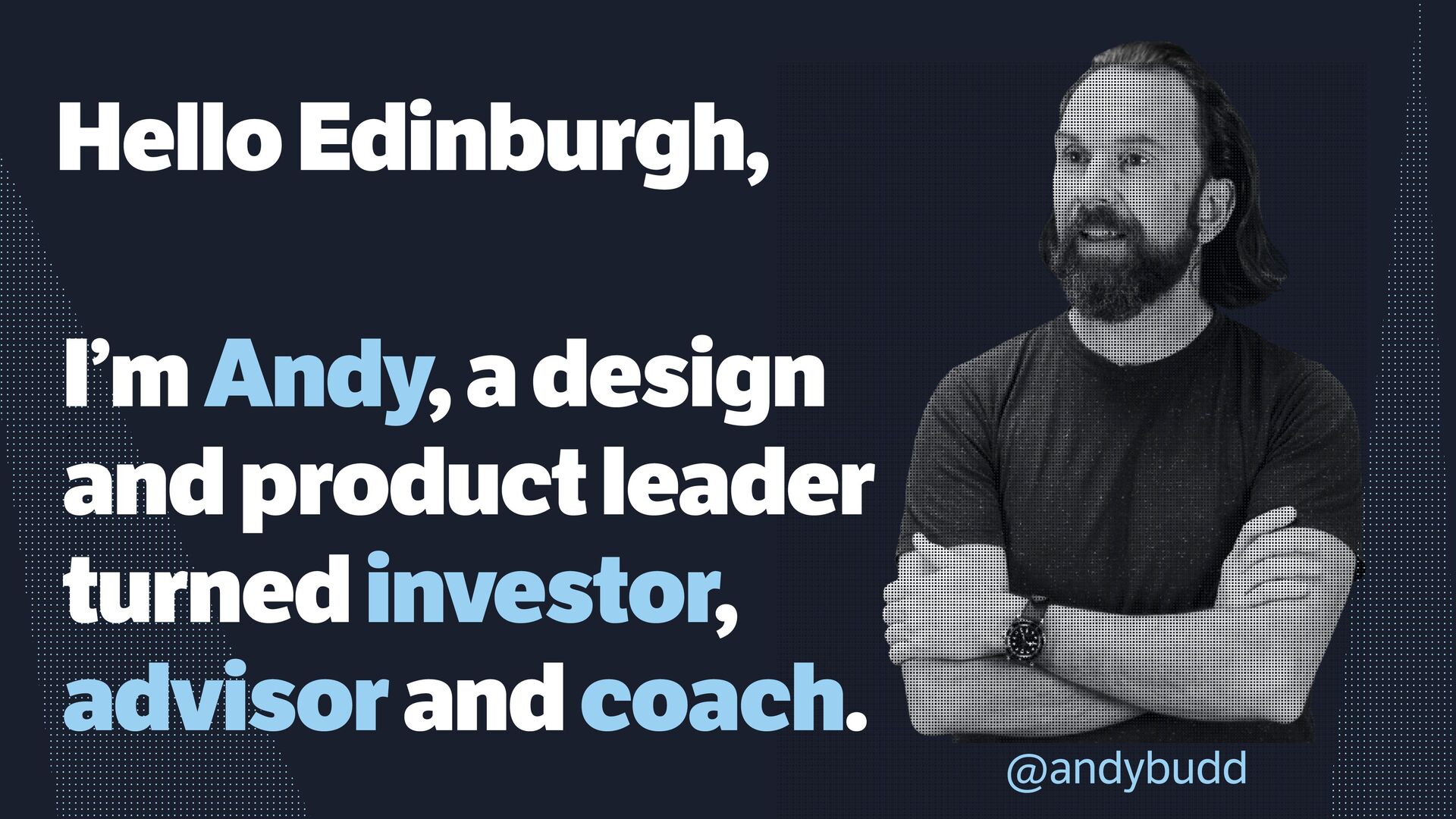
Now while these stories are fictionalized, they're great examples of the challenges that the founders I work with every day face. I'm Andy and as you heard from the intro, I'm a former designer and product leader turned investor, advisor and coach. And I spent part of my week working as a venture partner with Sea Camp, as you heard one of Europe's main pre seed funds where I help about a dozen founders deal with these kind of challenges.
And then the other couple of days a week I work privately with people like Barry and Martha. I primarily help founders figure out how to get their products off the ground and into the hands of their early adopters in order to generate the first million or so of revenue.
This involves giving them early product feedback, helping them figure out their product marketing strategy, their go to market strategy, how to acquire their first ten, one hundred, one thousand users. Then when things really start to take off, figure out how they can hone their product development process, shape their teams, and then figure out business growth.
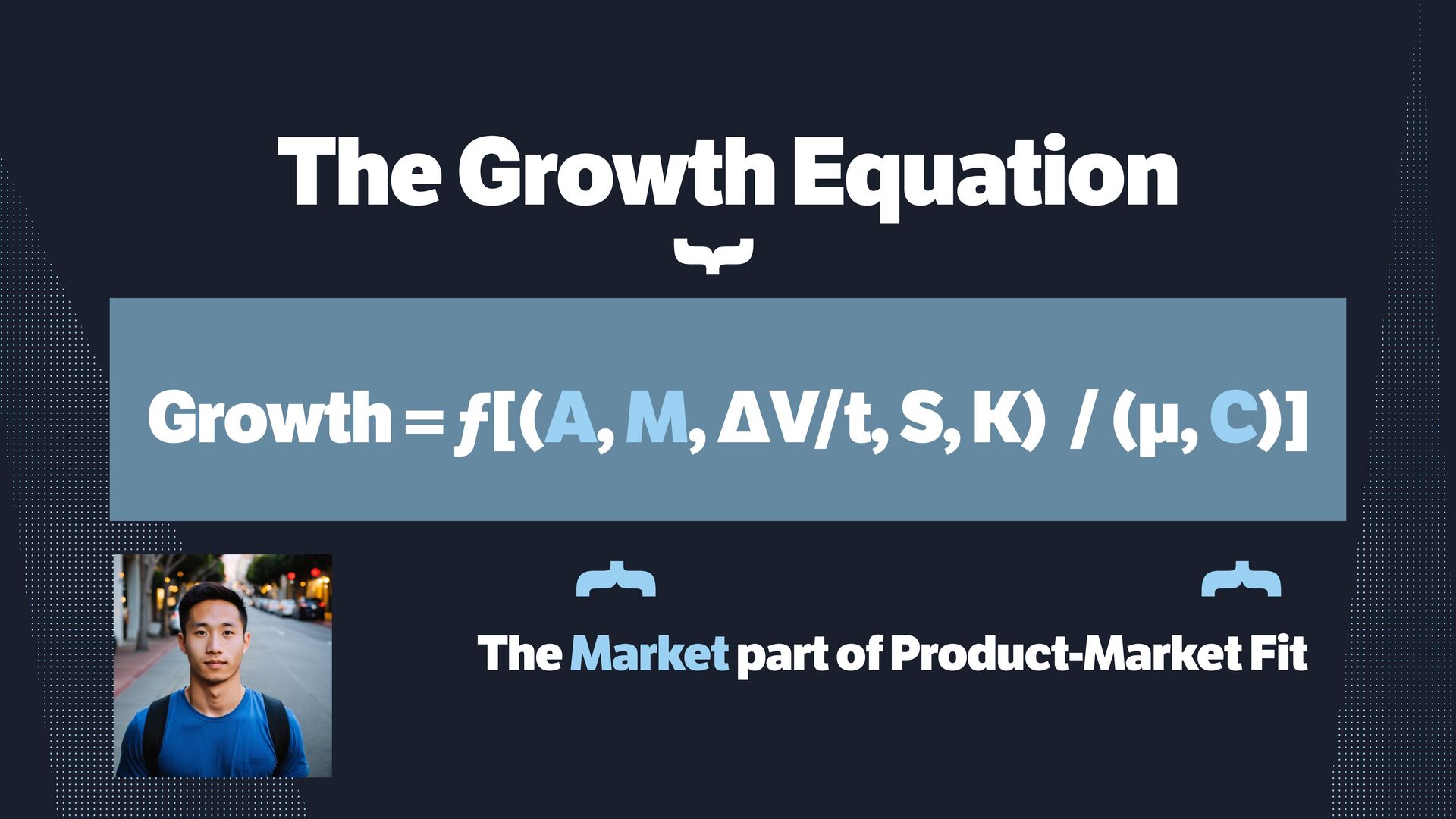
All of this in the pursuit of this holy grail upon market fit. I'm sure most of you are aware of the term, for those of you that aren't into industry buzzwords. Product market fit is that point in your early journey where you've hit upon a version of your product that really solves a clear and meaningful problem to your customers and which is starting to deliver value to your users.
That's the product part. The market part is also a part that your market starts realizing this. You've figured out how to connect with your audience and your audience are really getting what you're doing. They're understanding, they're coming in droves, they're finding that value, and they're giving you a try.
The problem that a lot of people don't realize is in order to get product market fit, you need to first find language market fit. You need to be able to convince people through your framing that your product is going to help them, that they get this moment.
Oh, I get what this product does, I'm going give it a try. We heard a little bit, Aethel Dunford talking about positioning, and language market fit is the first part of that positioning journey. Putting what you do, not in your language, not in the language of your industry, but in the language of your users so they understand.
And this is really what Barry's experiencing. He has a market related problem. He hasn't figured out how to position his products in a way that's landing that people get. So every time he has that conversation, it feels like you're talking a different language.
I don't know if you've ever been at a party where you've been talking to someone and for whatever reason it's just not coming across, you're not vibing with the person, it's going over your head and you just can't wait to step away from the conversation.
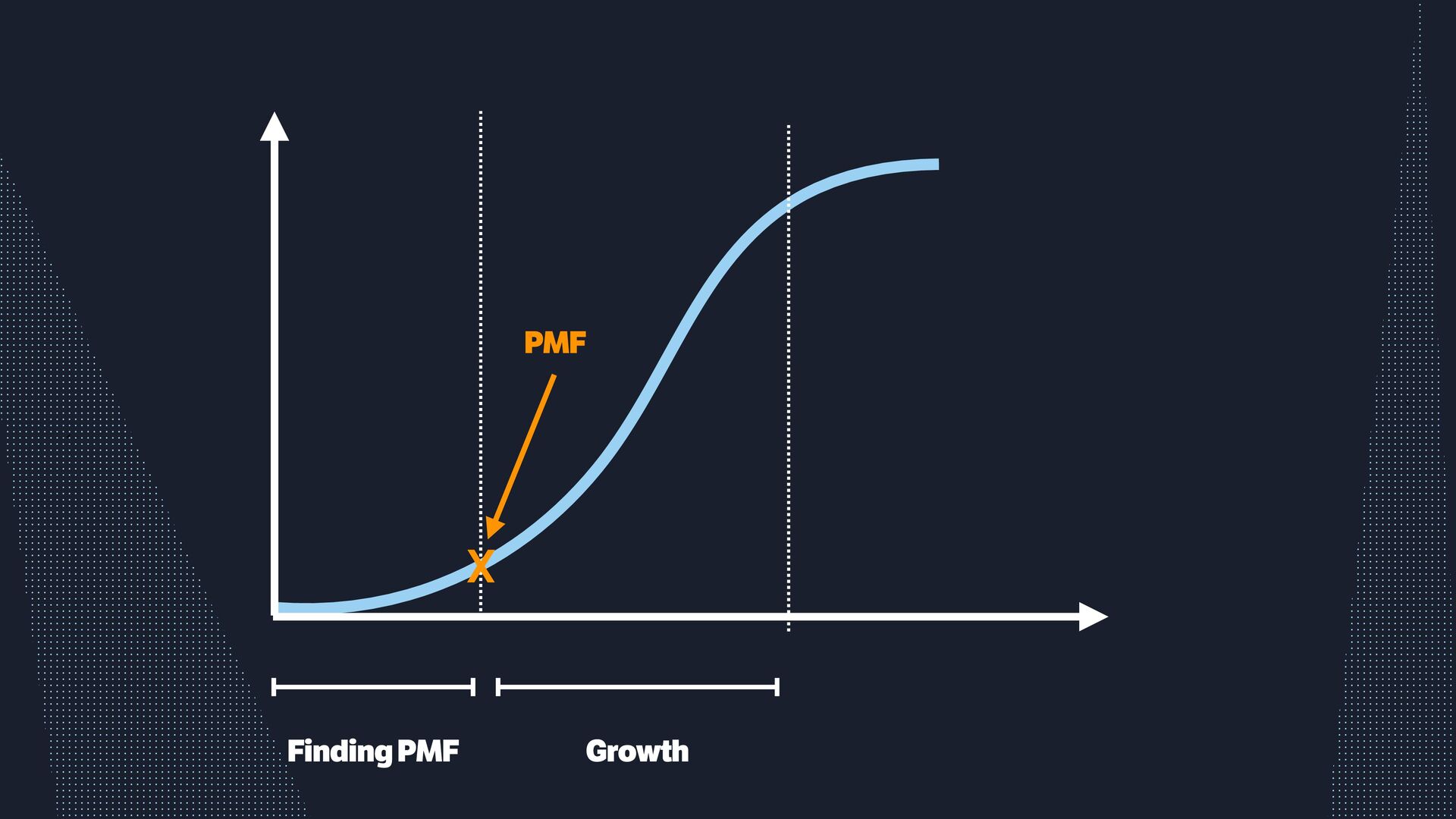
This is where Barry is at the moment with his market. So is in a different place. Marta actually has nailed the positioning but the product isn't working, people aren't sticking around. This is really, really common in startups. The nature of early startups is that you follow this S curve.
Things are really, really slow at the start. Once you reach product market fit things pick up, you feel like the fire's going and there's excitement. And then at some stage things tail off again. And ideally as a founder what you're trying to do is you're trying to chain together a load of S curves so you get this consistent growth.
This really is in the tech industry. We call this the zero to one stage. It's the stage that I enjoy the most. That's why I work in pre seed and seed. It's like helping people get their product off the ground and find that magic.
I should say that just because I work primarily with early stage startups, the concepts I'm going talk about today aren't limited to that sector. In fact, I'd say that they are relevant to anybody starting any new endeavor. Sure, you might be a funded startup or bootstrapped startup, but you could equally be a solo entrepreneur or maybe working in a really, really big company and getting a new offering off the ground.
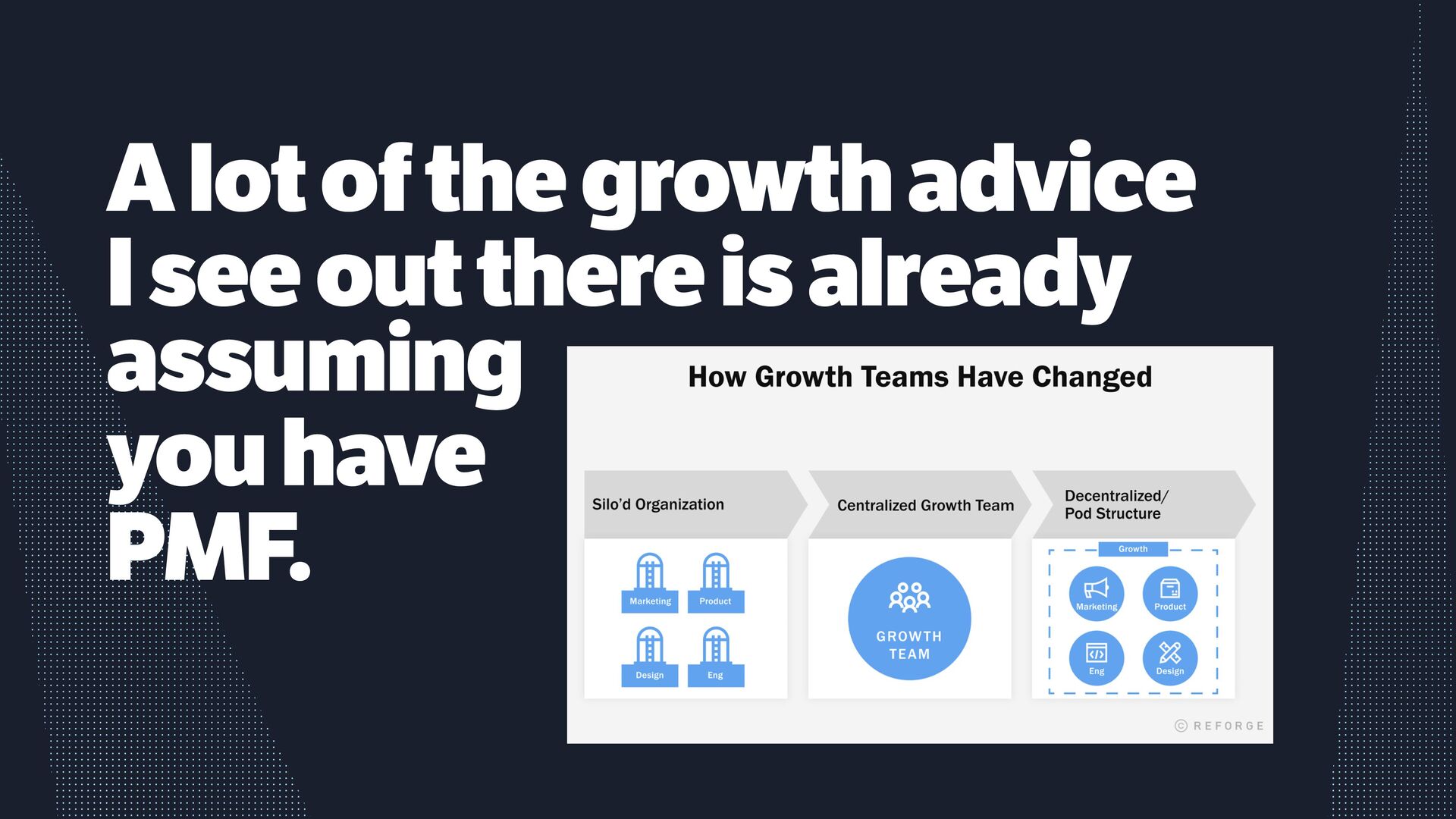
One of the main problems I find when I see a lot of information out there about growth is a lot of it is focused at companies that already found product market fit. They already have something that customers are really understanding and getting. A lot of the advice is very much around spending money effectively.
Like go out there and hire a growth team. Go and hire a growth PM. Go and do all of these sort of things that cost money. The problem is that when you're an early stage founder you don't have those opportunities. You are the person that's doing all these things.
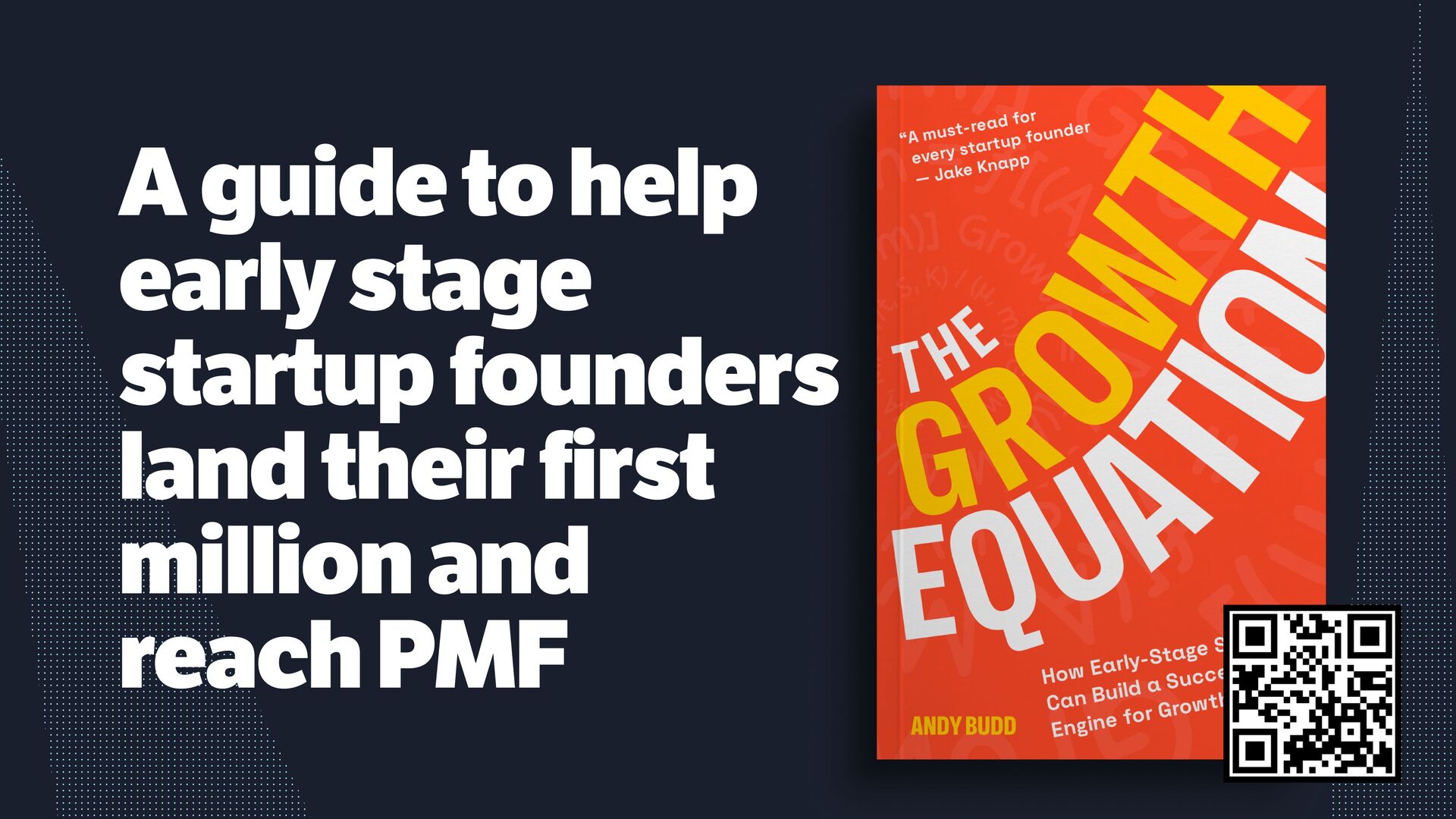
The money you have is really limited. And so that's one of the reasons why I decided to write this book, The Growth Equation. And really it's aimed at these early stage kind of conversations before all of the information around growth. Once you've got product market fit, that kind of well run scaling up process is there.
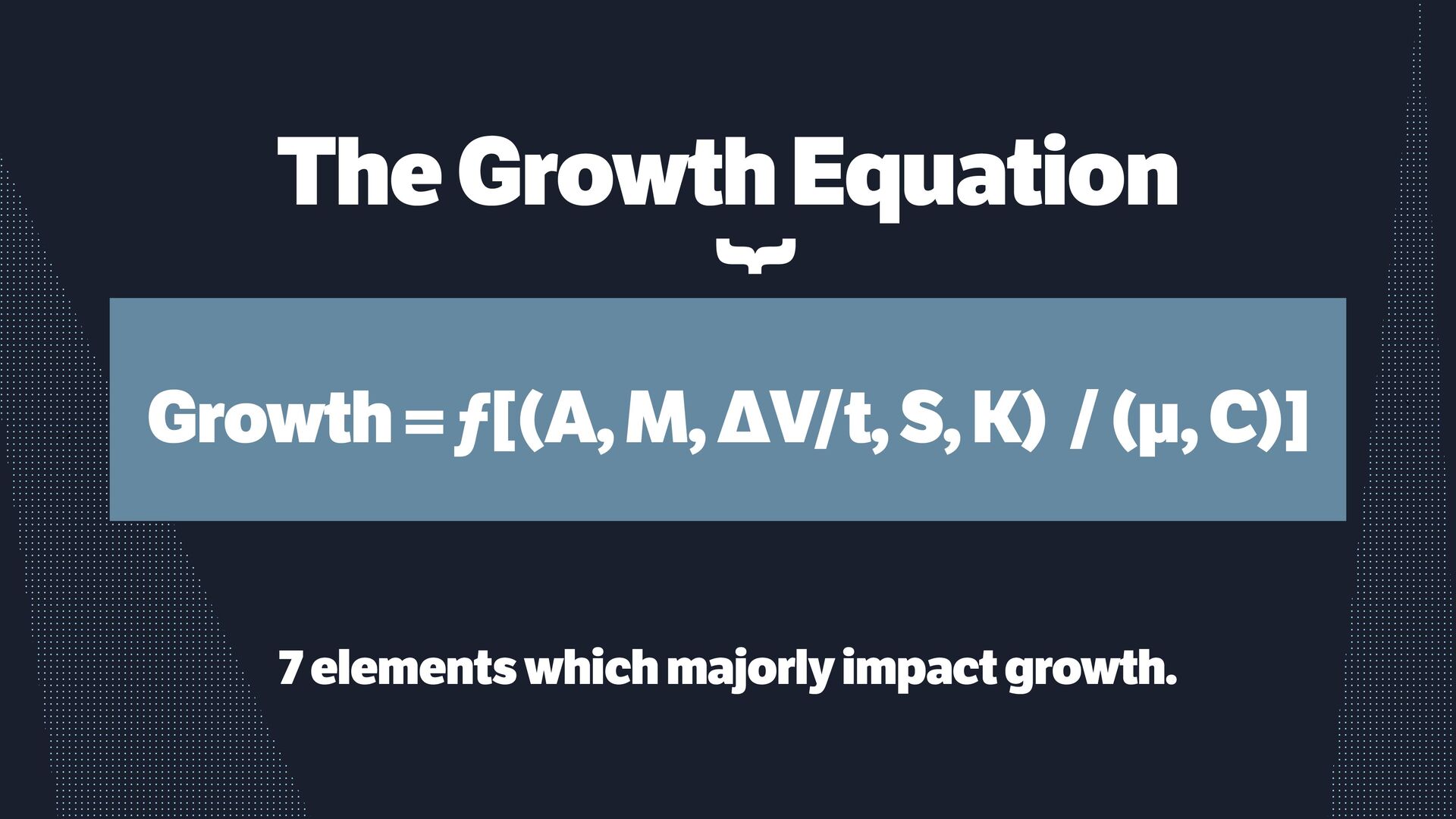
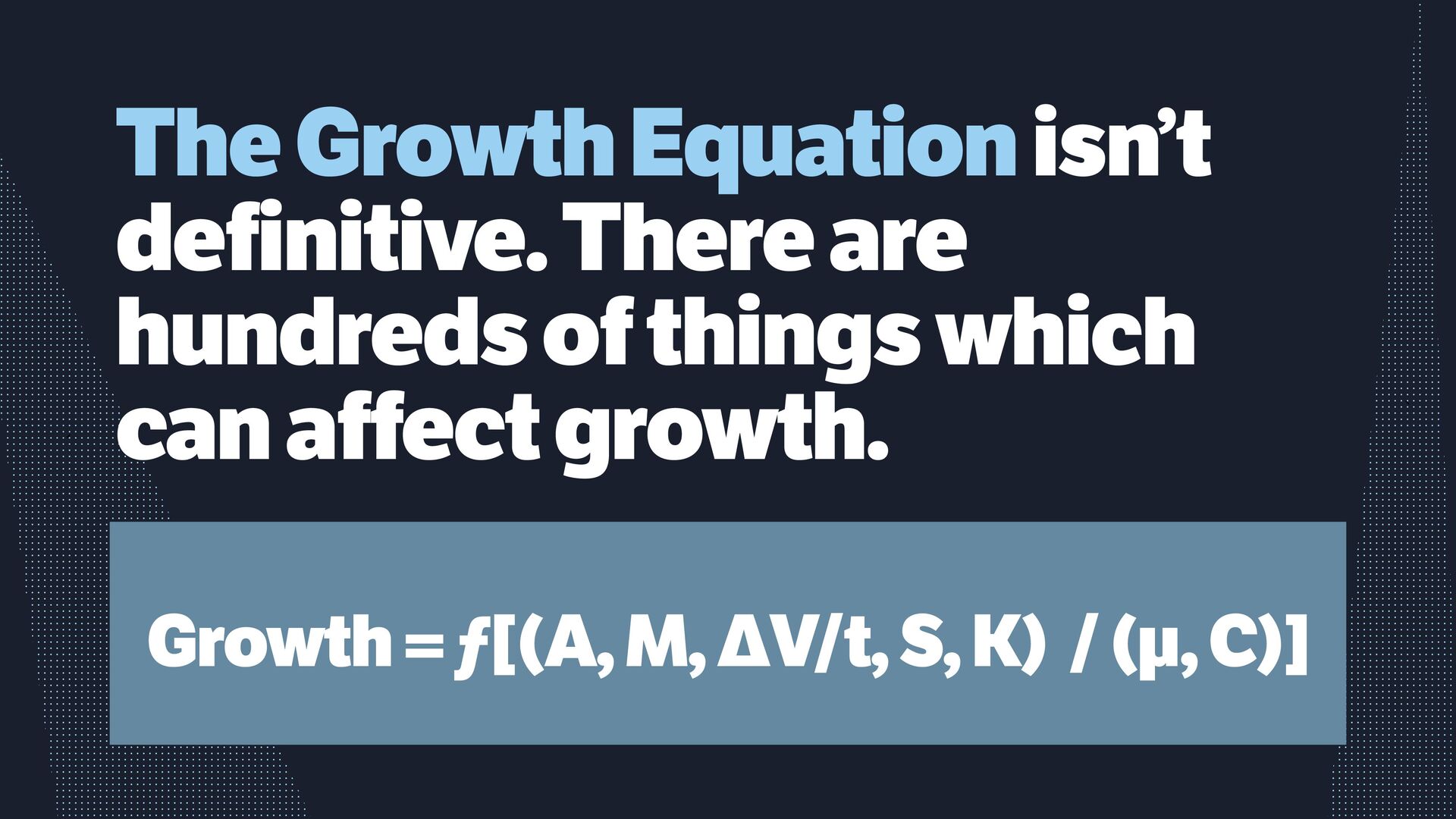
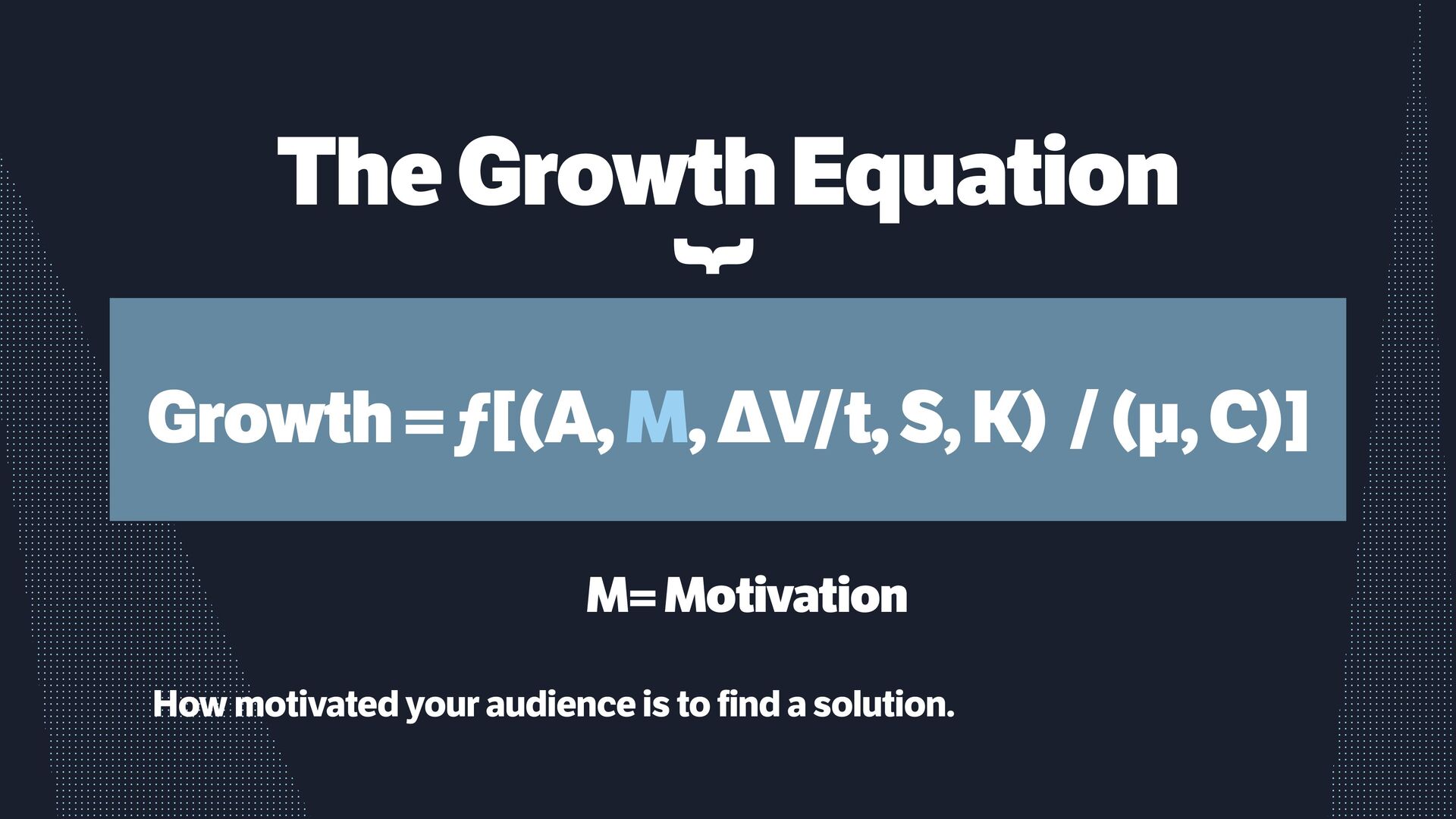
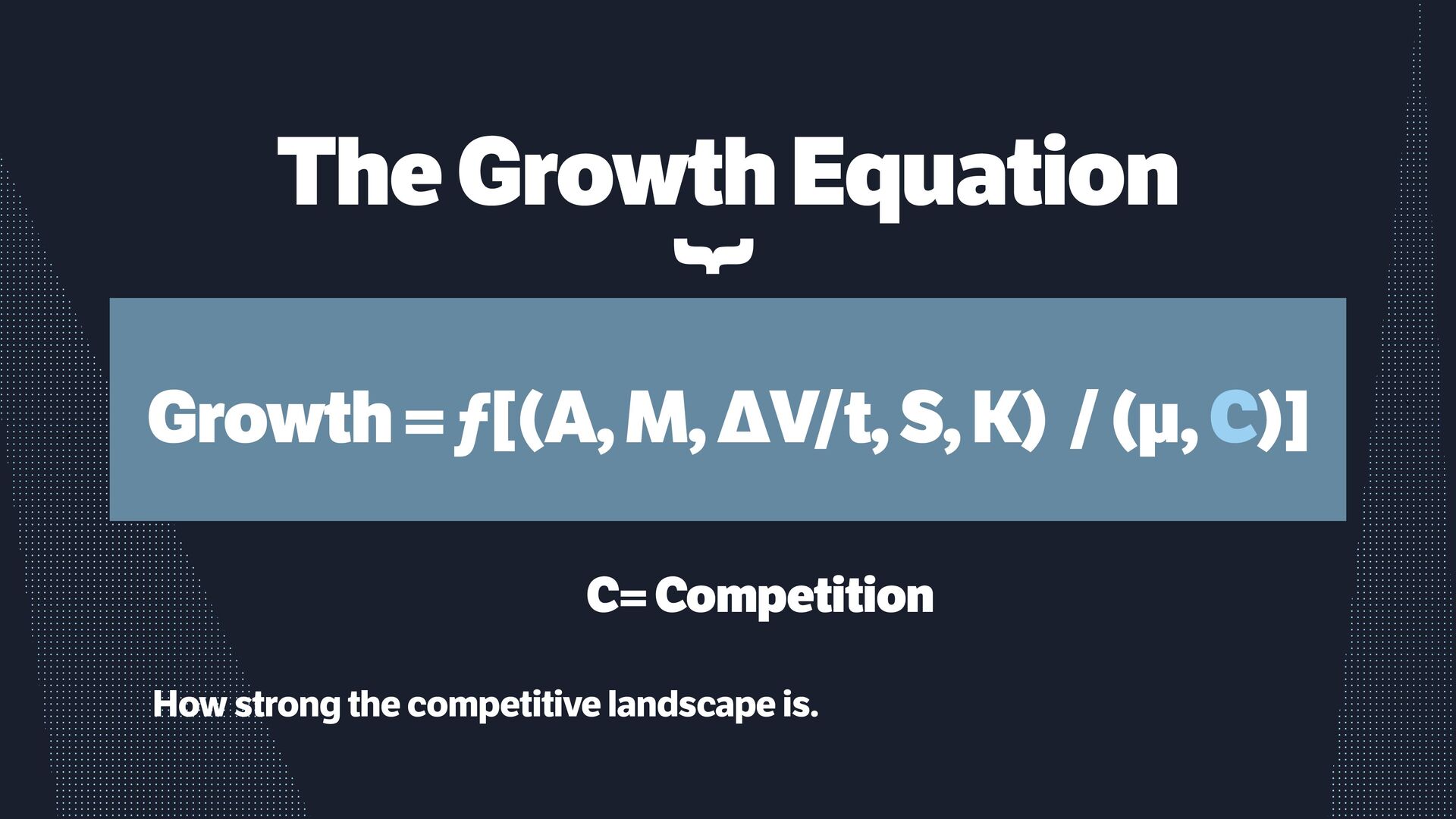
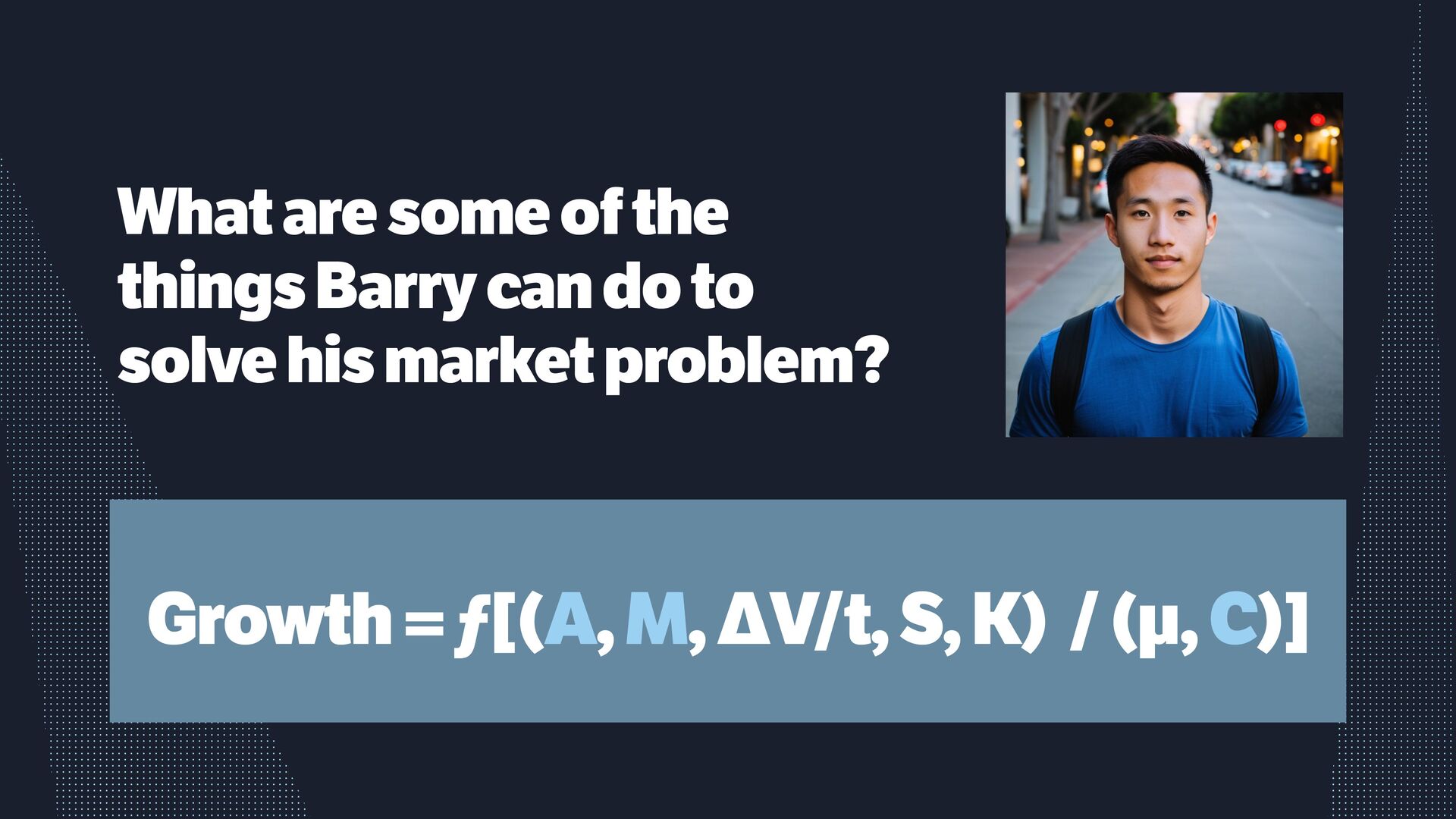
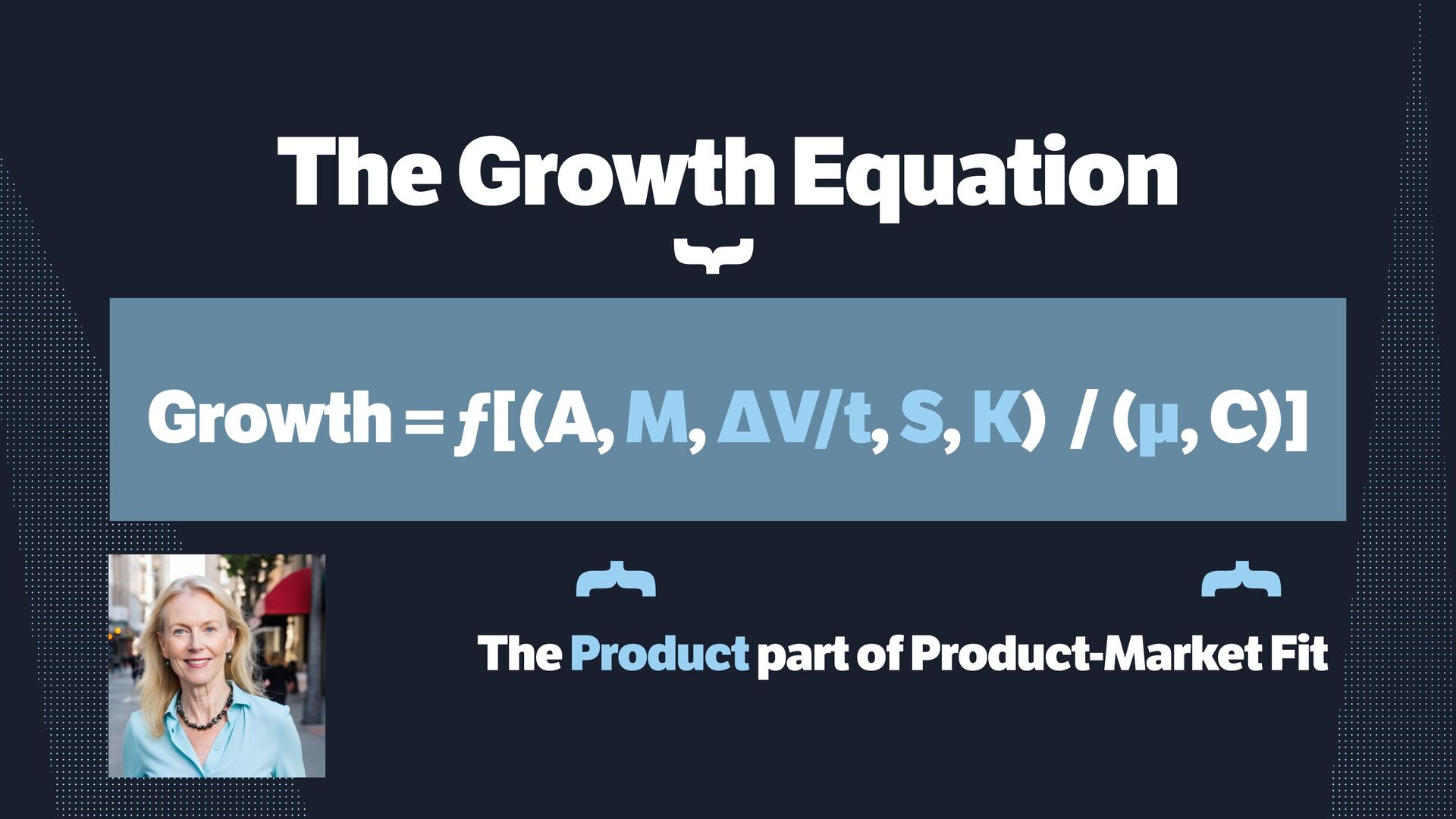
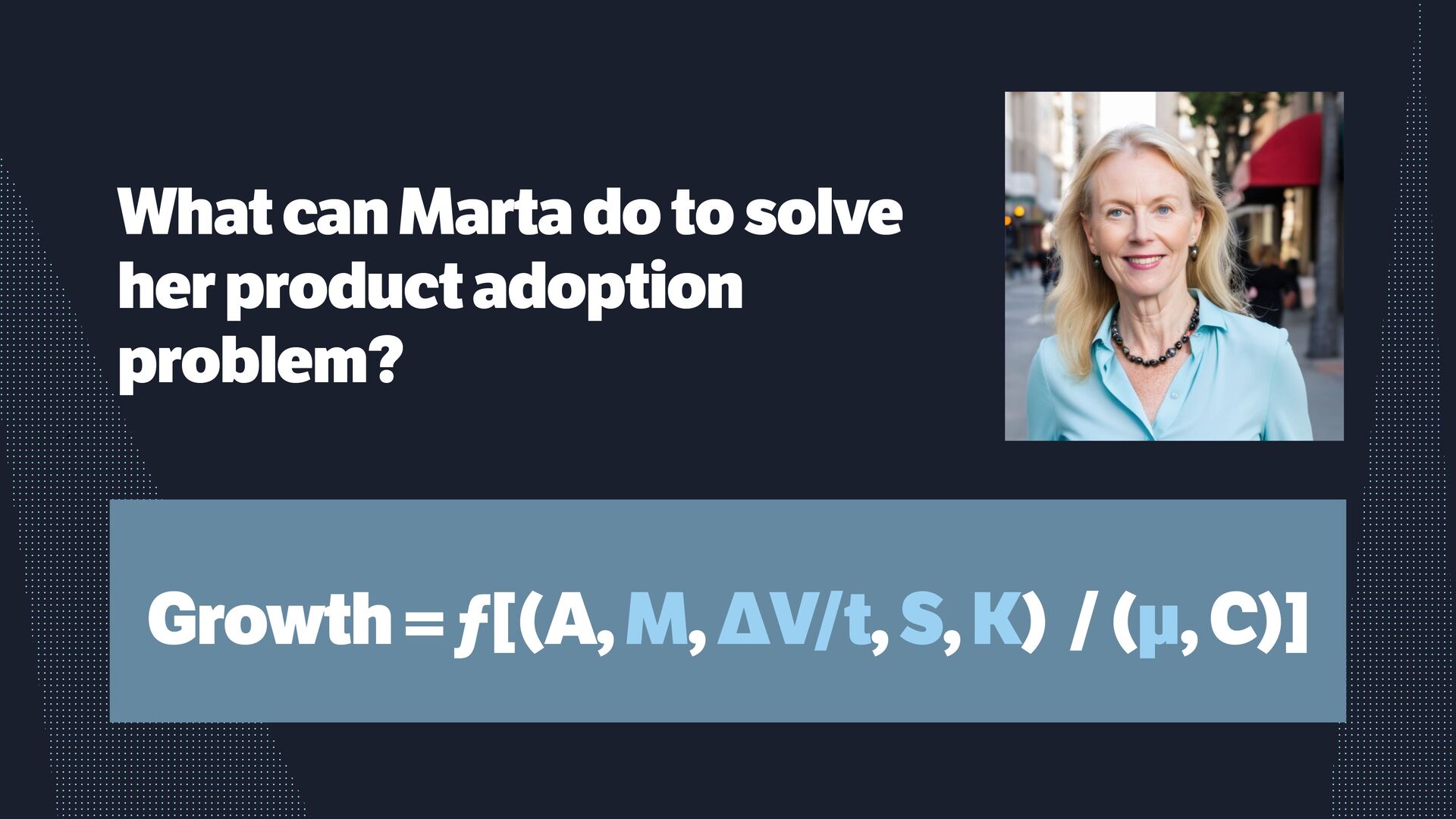
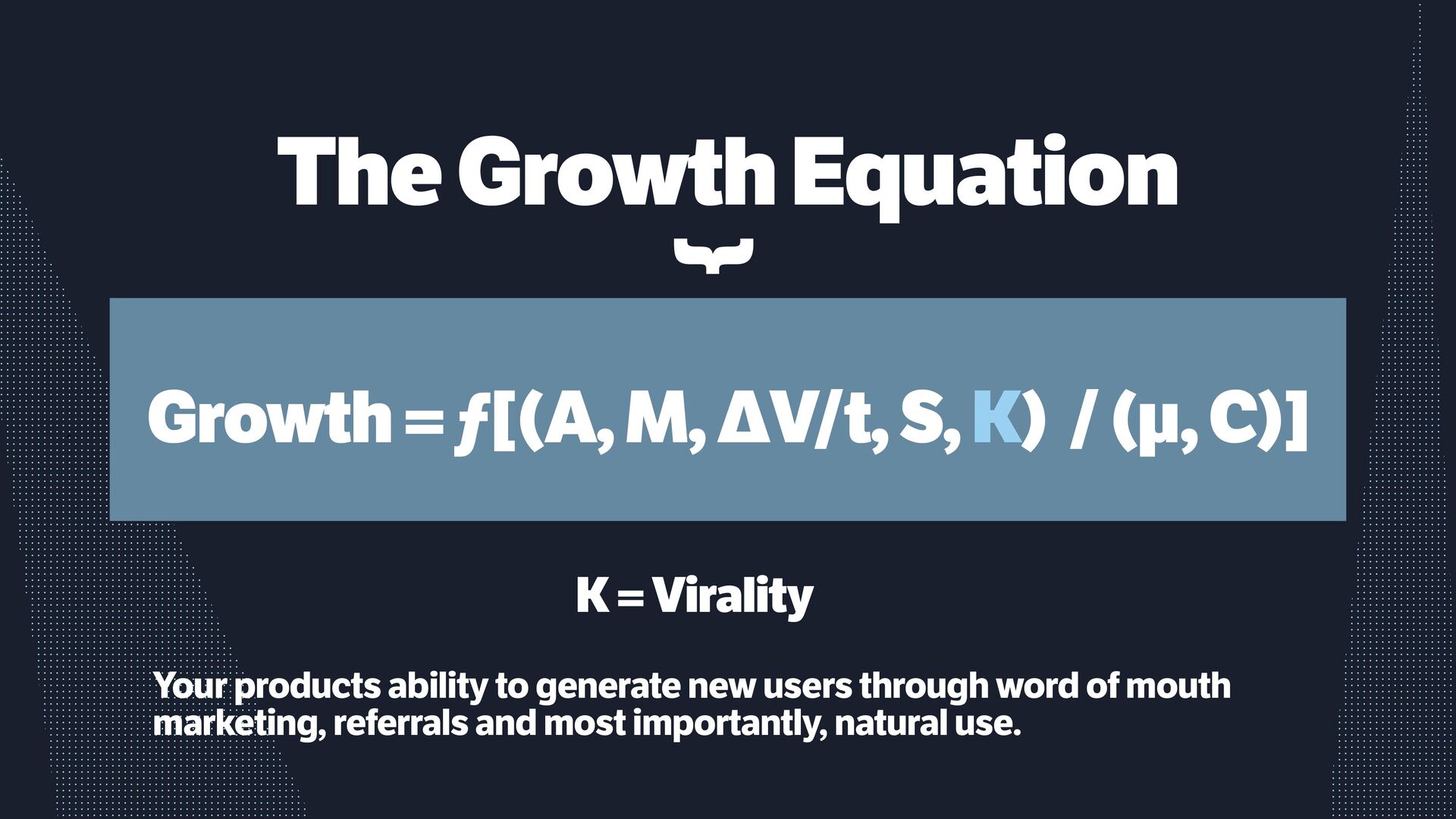
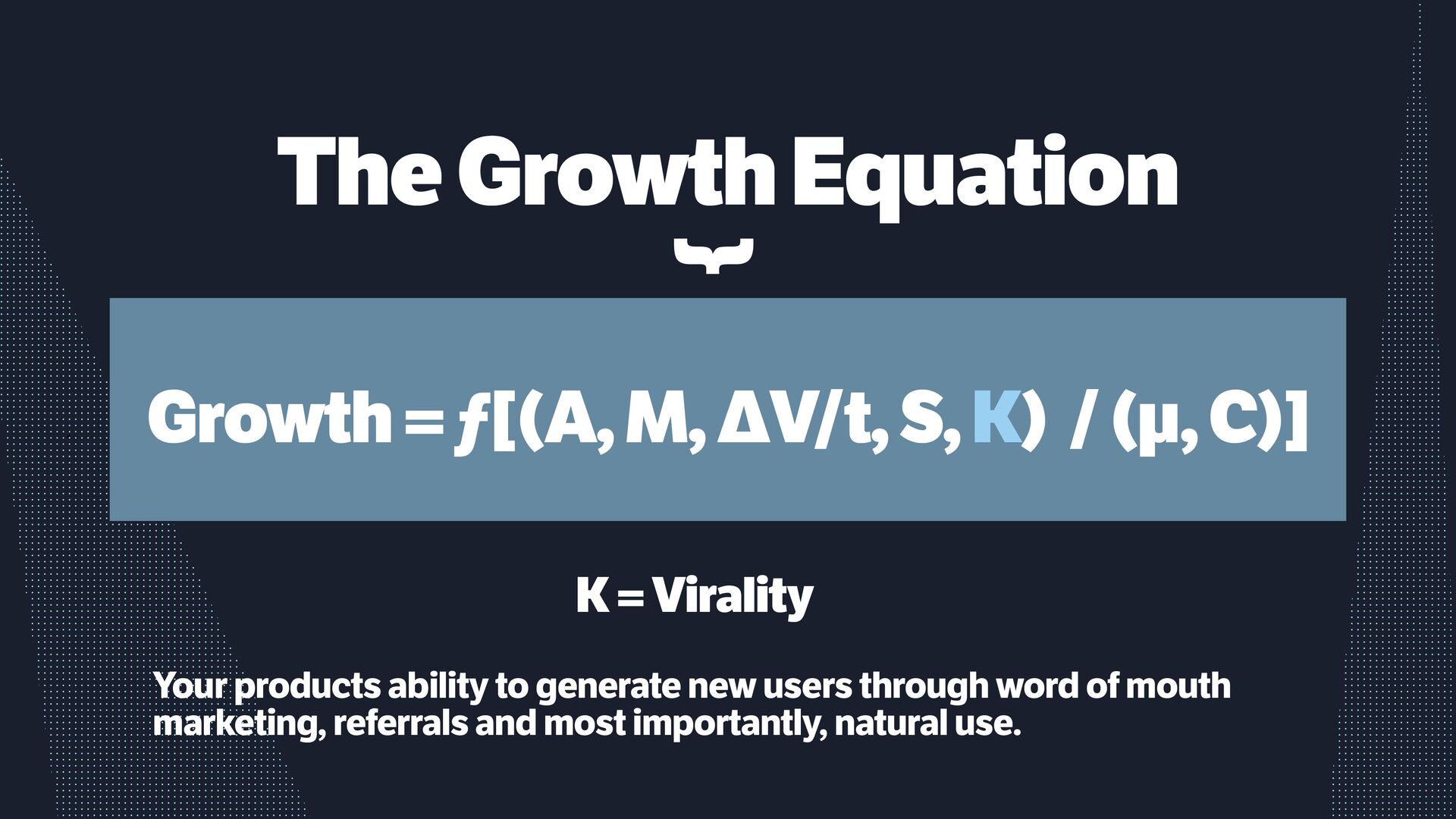
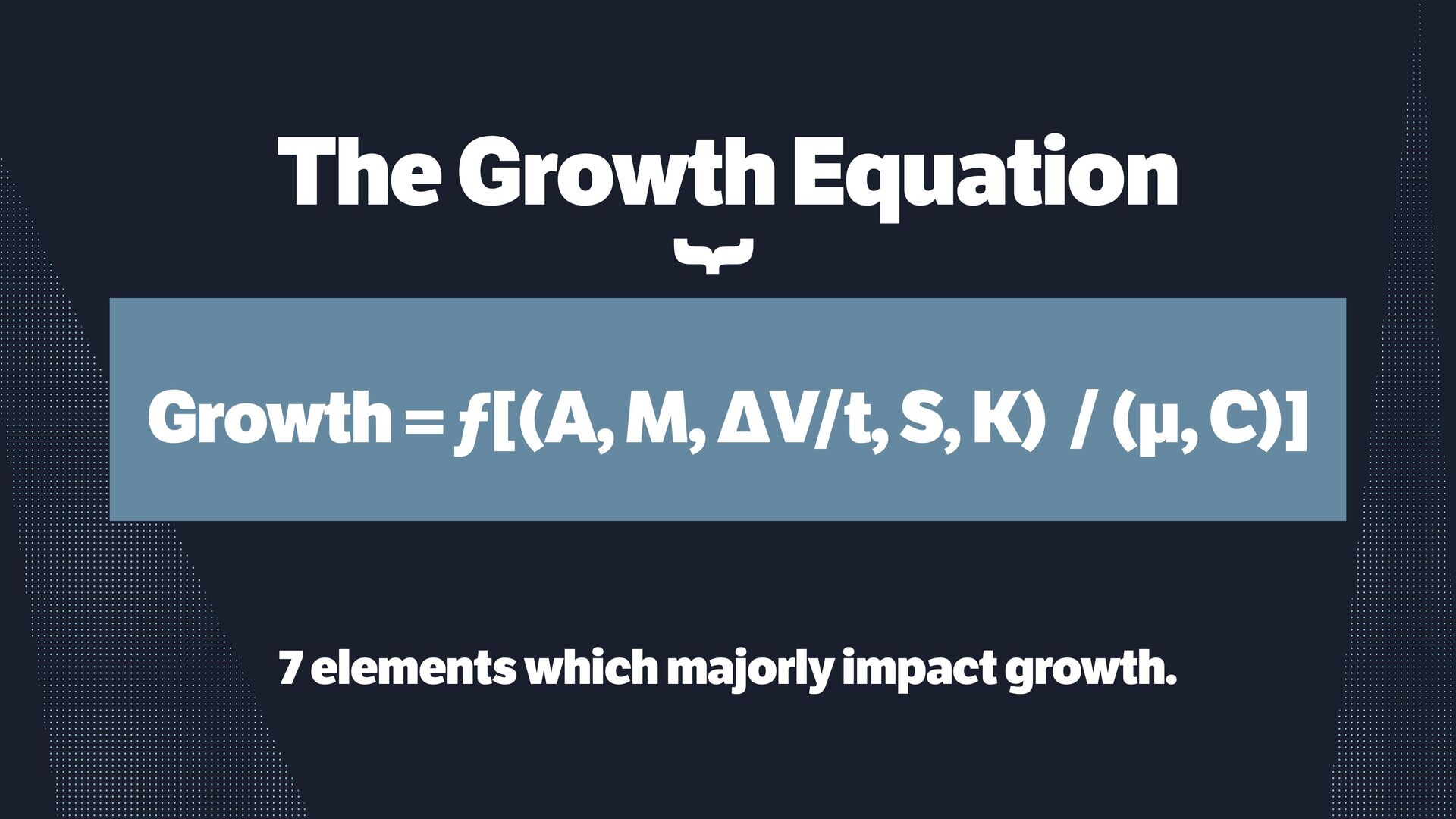
So the book starts by looking at some fairly common patterns that I've seen repeated over and over again. The patterns that effectively Barry and Marta are experiencing. And I've tried to capture these in a simple formula which I've called the growth equation. The formula itself is interesting.
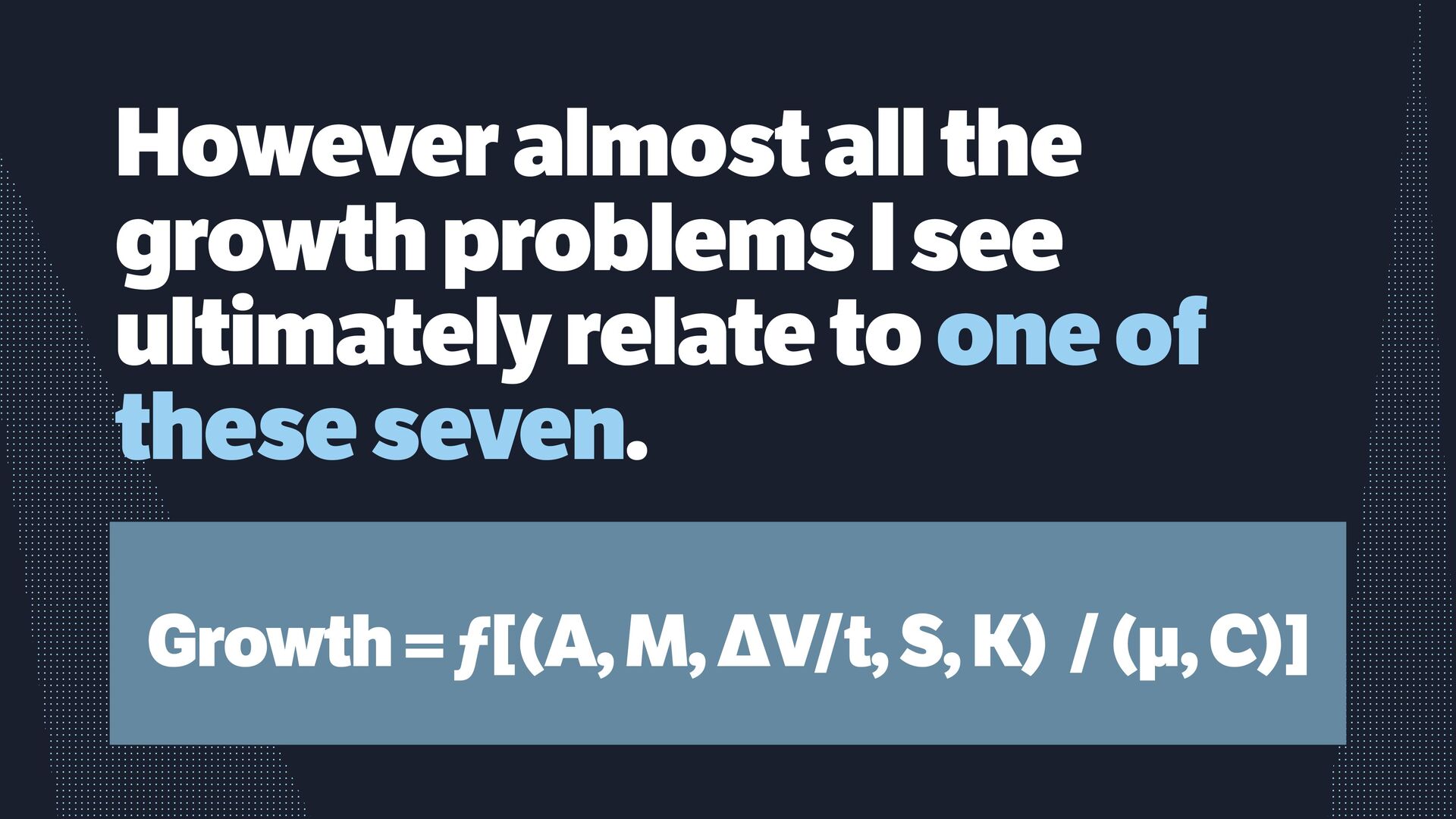
These seven elements that I think have an outside impact on growth. And I'll go into these seven elements in a little bit more detail in a second. However, the equation itself is really just a high level framing. It's a McGuffin that I use explain growth.
The really valuable part is how you use these things in order to kick start your growth. The seven elements I'm going talk about also aren't definitive. There are hundreds and hundreds of ways to grow a product. There are hundreds of things that affect the growth of your product.
But these are the seven that I keep coming back to time and time again. Whenever one of the founders I have a conversation with gets stuck, it's usually the result of one of these seven. The really challenging thing is this stuff is going to be really obvious.
I'm going to tell you all this stuff and you're going go, yeah, Andy, no ****, I knew all that. But this is one of the challenges a lot of founders face. Actually I was having a conversation last night at one of the parties with a founder for about an hour, and was telling me all of his challenges and I was trying to help decode what was going on.
At the end of the conversation he basically said, Look Andy, I feel really stupid because everything you've said in that conversation is so bloody obvious and I don't understand why I didn't realize it before. And this is actually one of the challenges I have because a lot of the time I'm saying really obvious stuff to people.
And really, really smart people. And I'm often making them feel really stupid because they're like, why didn't I do this? I think everyone's looking for a silver bullet. Everyone thinks that they're special. Everyone thinks their product is different from everybody else. And they're looking for a really, really complex answer because the simple answers are often too simple.
The problem is it's not the answers are simple, it's the solutions you put in practice from these answers. So that's really what my book and my talk is about. So these seven, the first three all relate to the market side of the equation, the stuff that Barry's having problems with.
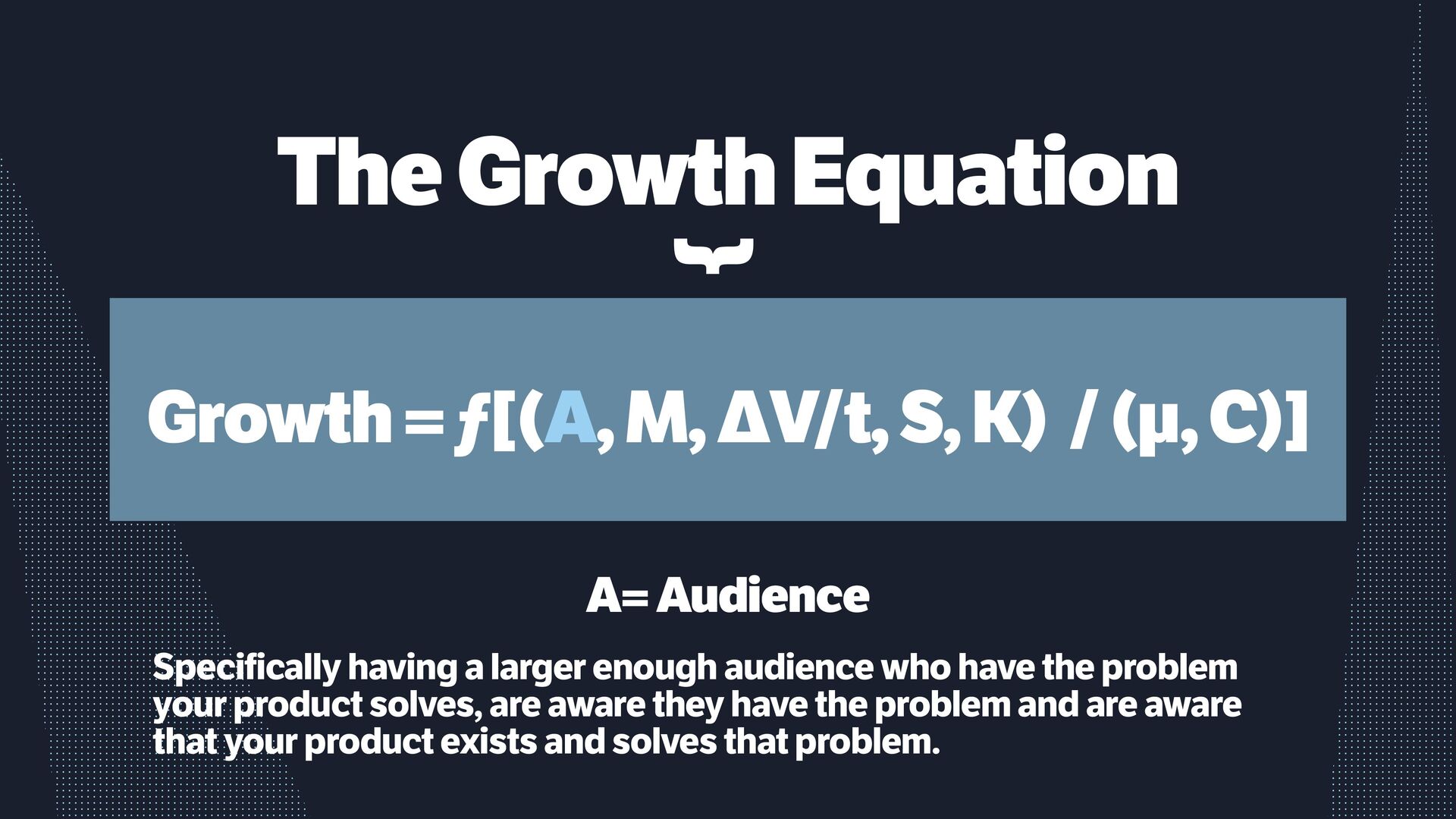
The first one, like I say, blinking obvious, is audience. Now it's not just having an audience, it's having an audience that's large enough full of people who have the problem your product solves, are aware they have the problem your product solves and aware that your product might be a possible solution.
Most founders start thinking that people will come flooding in. And actually the big problem that Barry is facing is he needs to build his audience. He needs to build an audience of people that have the same problem. It's amazing how many people launch a product thinking the audience will miraculously appear.
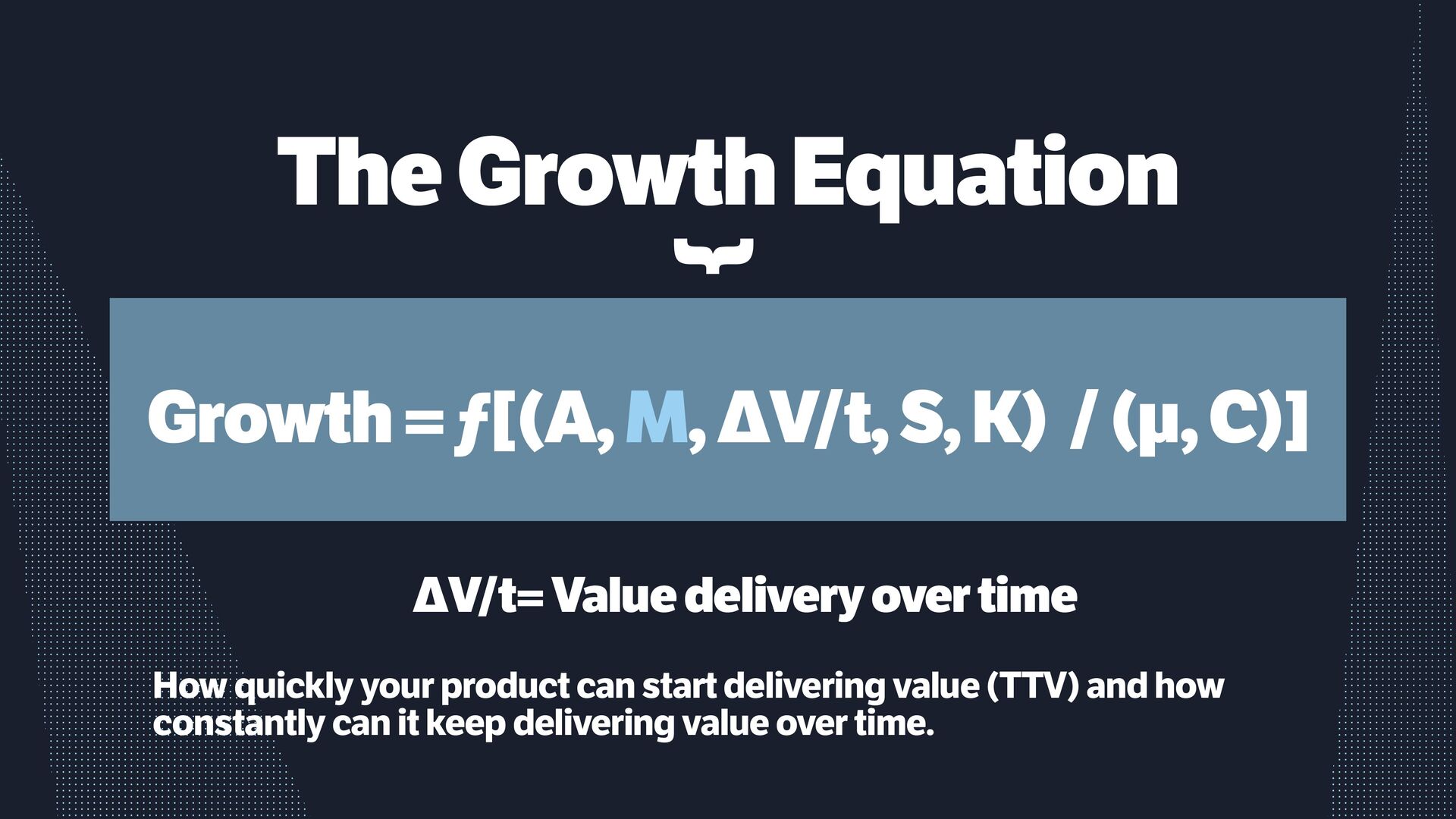
And that's actually really a big part of the challenge these companies are facing. Of course, not all audiences are created equal. You need to have an audience that has a high level of motivation. And either you need to find an audience that has that motivation or you need to spend your time with your marketing and sales activity to build that motivation.
Because that motivation acts as a magnet that draws you through the whole process. So motivation is massively important. I see a lot of people that when the sales team talks to them, the clients go, this is great, I kind of get what the product does, I just don't get why I should care.
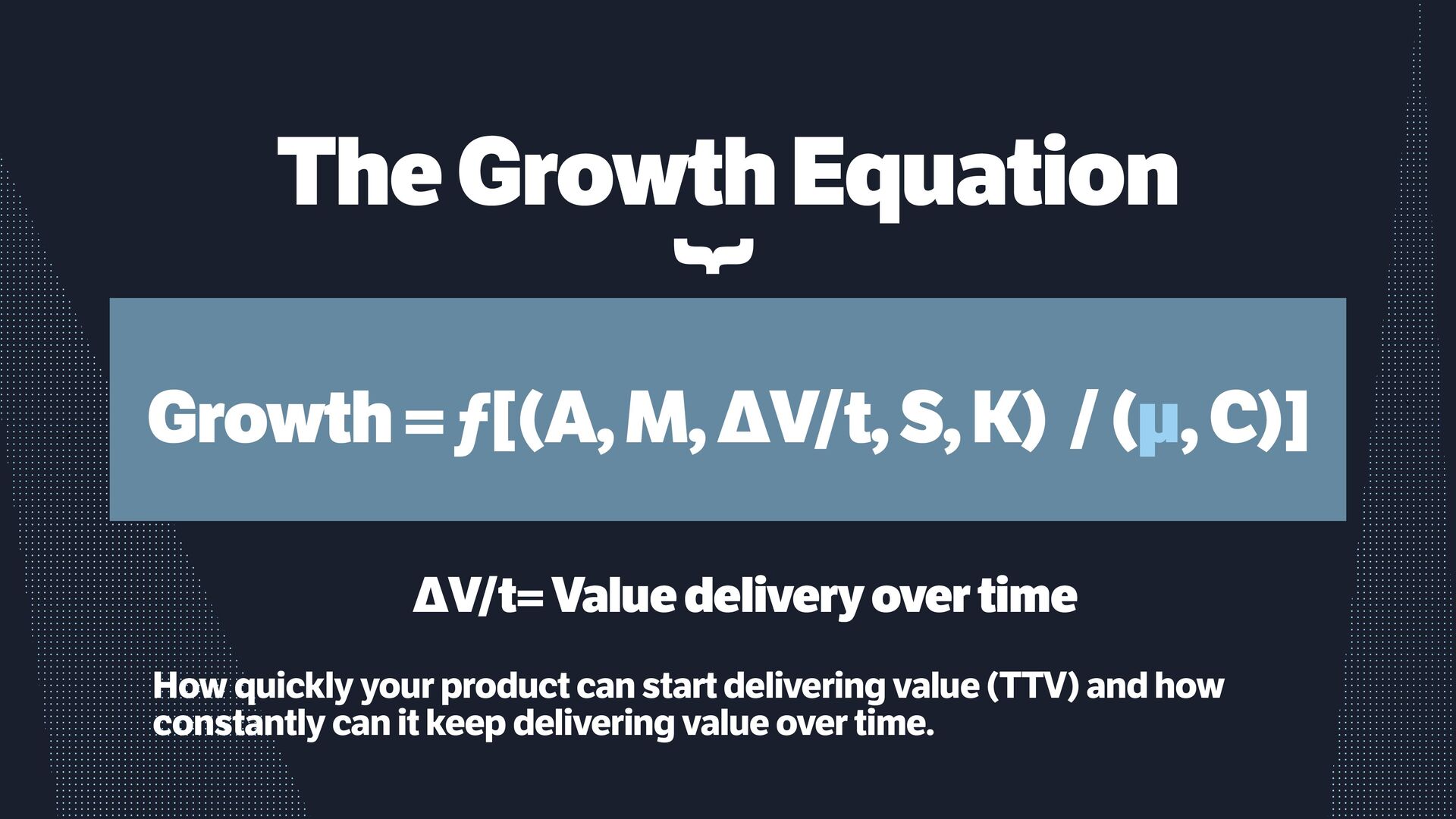
And so being able to frame it and create that motivation in your users is a big draw. And the last thing obviously is competition. If you've got a really, really competitive landscape, that competition is doing all the things in this equation to draw your customers away from you.
But it's not just your active competition. When people think about competition they think about direct competition. But so much of a startup's competition is the old way of doing things. Most SaaS products are effectively a spreadsheet on steroids. And if you can't produce a product that is delivering better than the current way of doing things, even if it has all these whiz bang features, people are going to just revert back to the old way of doing things.
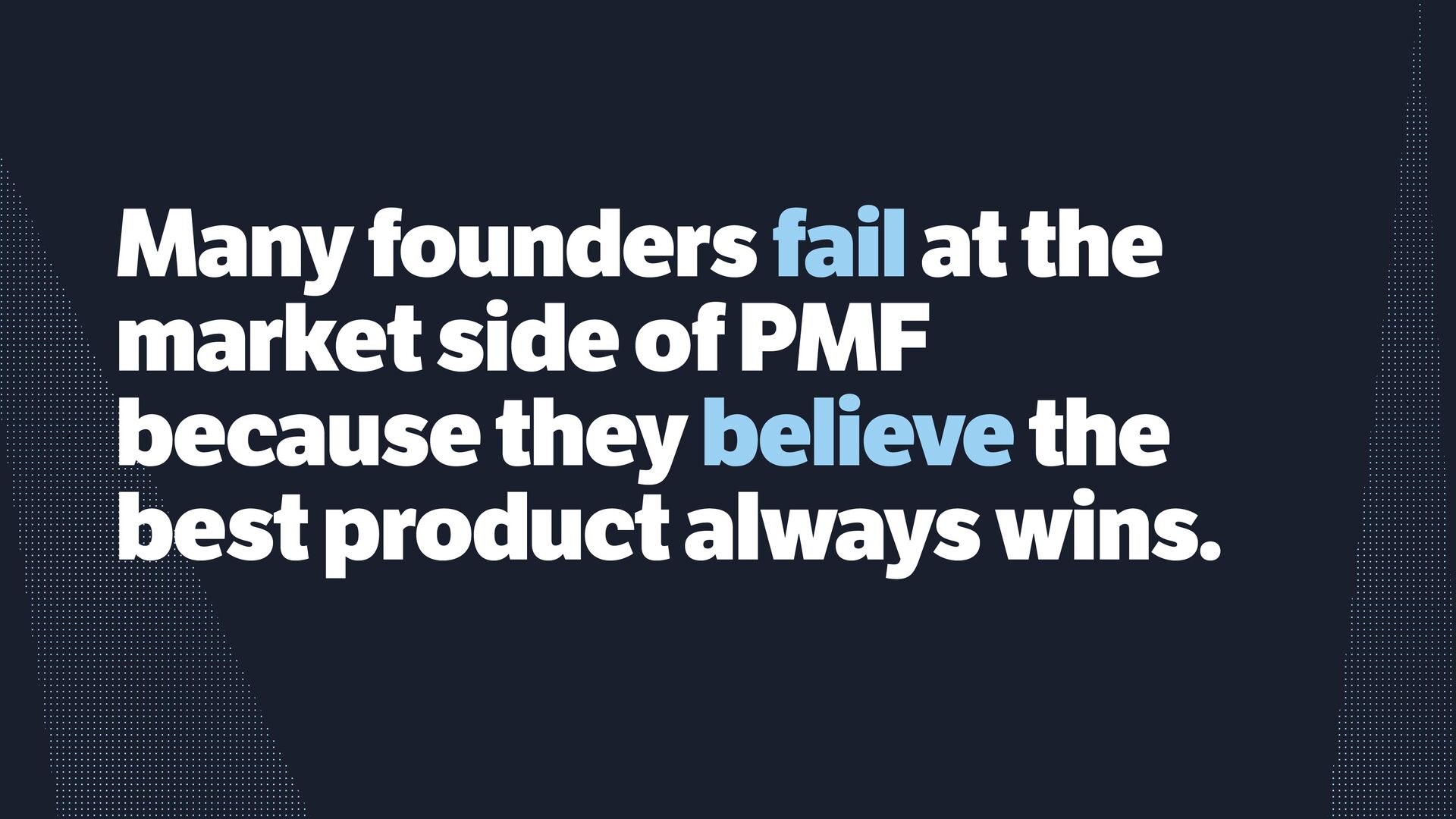
So really being conscious of the competition, both passive and active, I think is really important. Many founders fail at this first hurdle because essentially they're product people rather than sales and marketing people. And product people have a strong mistrust, I find, in sales and marketing.
Instead, they have this belief that the best products sell themselves, and all they have to do is create the product and get it into the marketplace, and suddenly everyone will come along. This is known in our industry as the Field of Dreams fallacy, the idea that if you build it, they will come.
And I know as a product person myself, I've fallen for this far too many times. I've fallen for the own genius, my own genius of the product, thinking people will just discover it, but they don't. So the big first problem most founders have isn't building an amazing product.
It's connecting the value your product delivers to the right audience. Figuring out what motivates them, figuring them out what drives them to change their current behaviors, and give your product a try. So when activation or acquisition falls flat, the natural tendency of these product focused founders is to add more features.
They describe this or this is described as the next feature fallacy. The idea that if all the features we built so far haven't worked, maybe the next one will work. And then the next one, the next one. And we keep going with this fallacy, not realizing more like, if it didn't work last time, why would the next feature be the thing that tips us over?
In most cases, your customers aren't buying a set of features. Some of them are, but most of them are. Most of them are buying a vision, most of them are buying a set of capabilities, a vibe sometimes. So they're not looking at a list of features and going, okay, well it doesn't have this feature, it doesn't have that feature.
Quite often when your sales team are talking to people and they're telling you, oh, it needs to have this feature, it's not because they actually need that, it's because it's a really handy way of getting out of difficult conversation. I'm not quite ready to buy this thing yet.
So I'll just say, oh, well, I'll come back if you do this feature and you come back three months later, and there's a whole list of other questions. So what are some of the things that people like Barry can do to solve this problem?
Well the first thing they can do is find the right beachhead customer. So many founders I work with have this idea of an ideal customer profile. And the ideal customer profile, as the name suggests, is your target ideal customer. Often these people are really big, sophisticated, large companies that have a large number of requirements.
So what do they do? They go about building this me too product, this all encompassing product that includes everything in it. They go to the customers and the customers are, well that's great, we need even more. These sophisticated customers are not usually the best people to start with.
They're the people that you will grow into being your customers, but at the start you need to find a beachhead. You need to find a small segment that really doesn't care about all the bells and whistles. But the one thing that you do and you do better than everything else is the one thing they need.
These beachhead customers are usually working with an existing incumbent but feel somehow that they've been left out, that they keep asking for improvements, they keep asking to be listened to. And the customer that they currently the product they currently have isn't hearing them.
And so they're desperate to find somebody else that will listen to them and build for them. So you've got to find that beachhead customer first and then land and expand. I see so many startups that don't do that, that go for the big, glossy companies and then just really, really struggle and don't understand why.
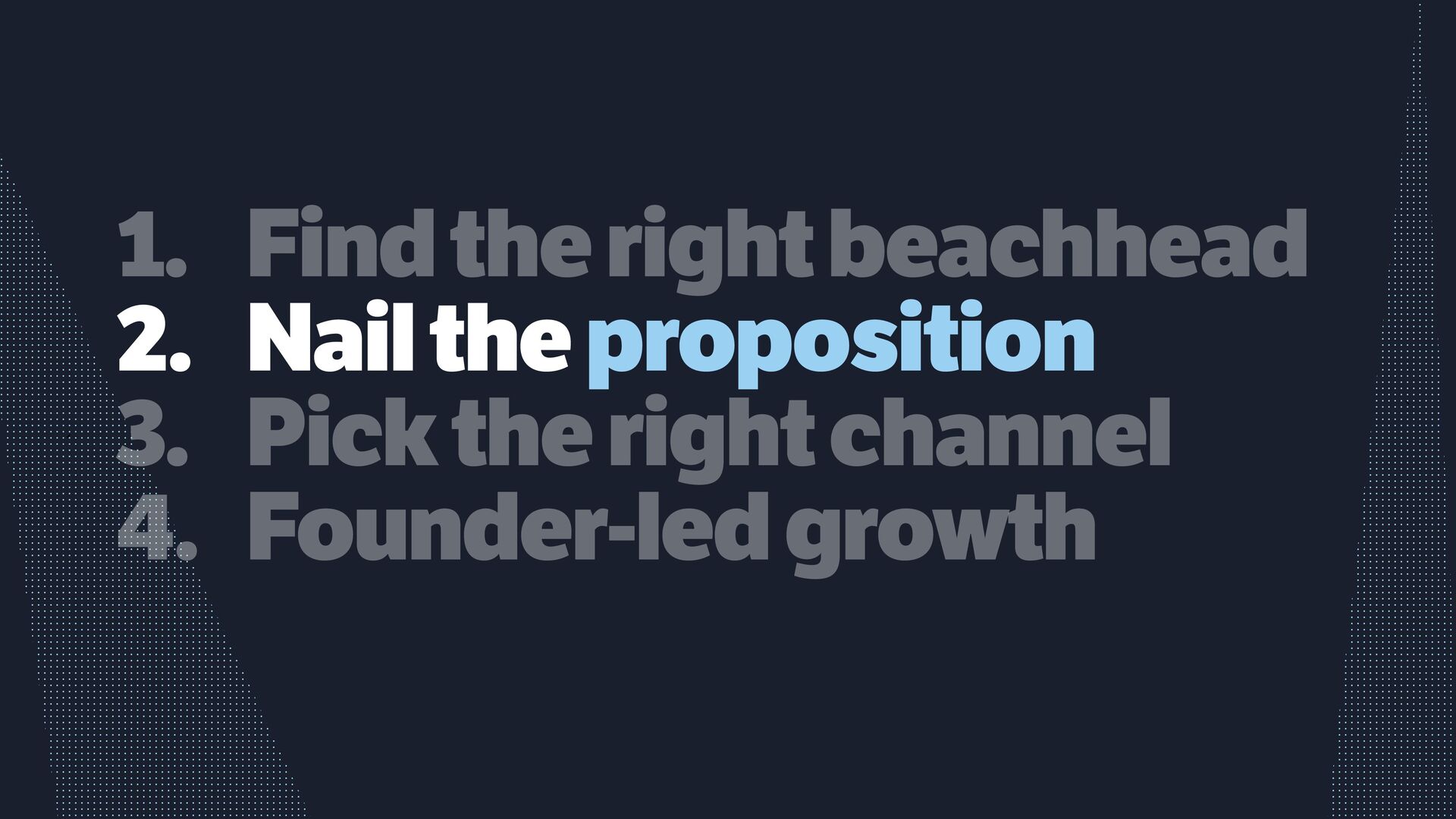
The next thing as we've seen is you need to nail the proposition. You need to understand the messaging, you need to get into the heads of your customers, need to position your product in a way that lands for them, not for you. I see so many startups where you go to the homepage and it's just this word salad, this jumble of, I'm going to leverage the synergies that have come with the b to b environment, yada yada, and your brain just shuts down.
And so often, I talk to really eloquent founders and they explain to me what they're doing in a couple of words. They have a deck that is really clear, but when it translates to their sales deck or their website offering, I'm just wading through mud.
I don't understand what this is you're doing. So nailing the proposition, understanding what users need and making it clear what problem it solves is massively important. Obviously once you know the proposition, a lot of it is around developing the audience. So many people start with this cold start problem.
The cold start problem is that you start on an endeavor and you have no users and you have no audience. And so if you're not building your audience while you're building your product, if you're waiting till the product is finished to build your audience, you're gonna have a massive delay.
You're to spend the next three months, six months, nine months trying to build enough of an audience of your ICPs or your beachhead customers. So there's usually this really, really massive delay. So you need to start building that audience as soon as you can, probably before you've even started building.
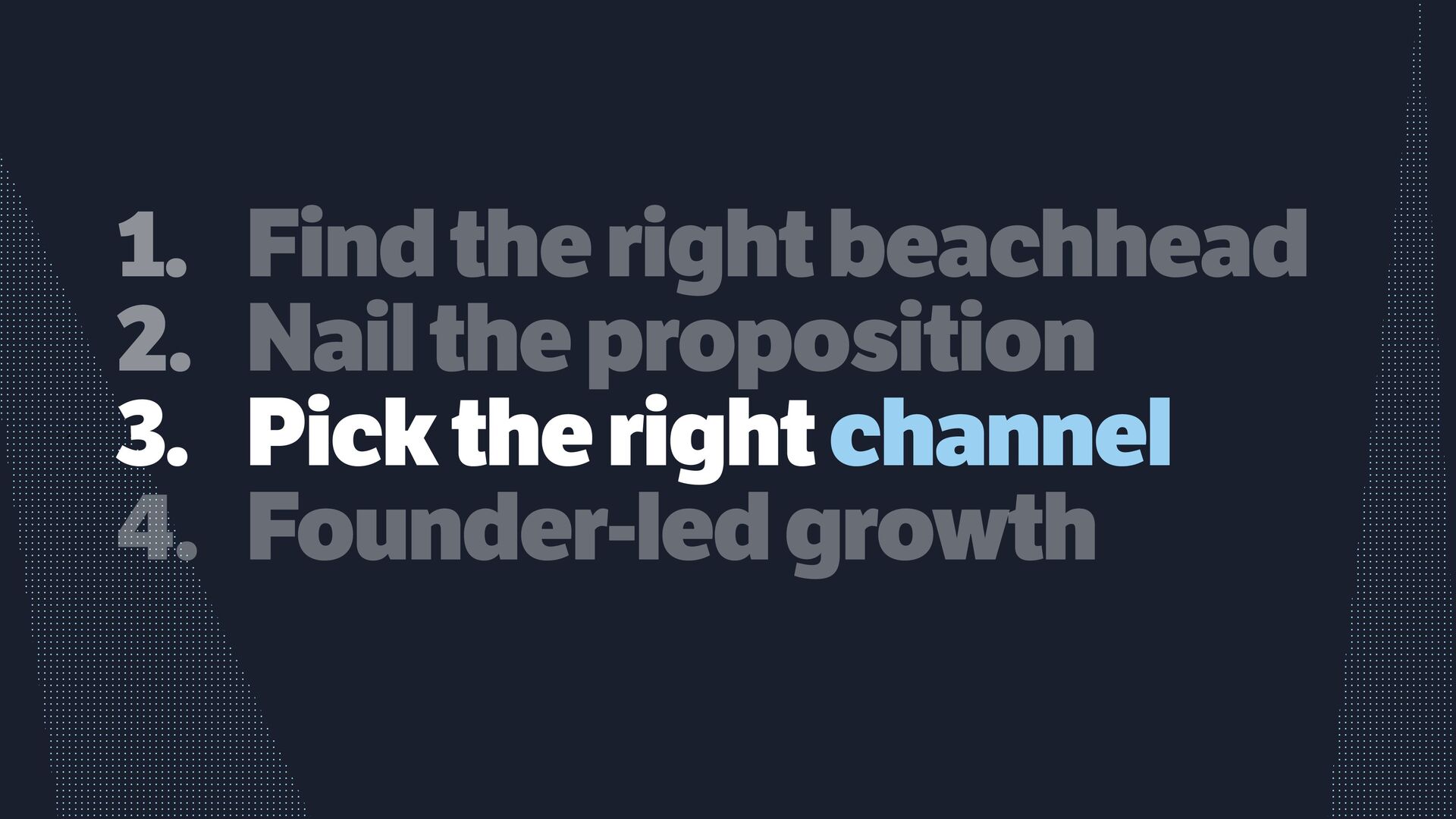
If you have this mentality where if you build it they will come, you won't invest in things like picking the right marketing channel. So you need to identify where your audience is. In the early stages it's usually sales, it's usually outbound, or it's usually using the existing channels that you're already there at.
And over the build process you need to start growing this audience and growing the need and the motivation. Lastly, think particularly with product led leaders, because they love products so much and because they have a natural, healthy disregard for sales and marketing, they usually try and bring somebody else in to solve that problem.
They hire a head of marketing, they hire a head of sales, usually from a much bigger company. They wind them up and set them going, and then the first two months, nothing. And the next two months, nothing. And they're getting increasingly frustrated. Why are these people not performing when they performed at this amazing company?
And usually the reason is when you hire somebody that's senior, they are not building the playbook, the sales and marketing playbook from scratch. They are using a playbook that's already built and managing and optimizing it. And so you can't really hire senior executives until you've built your own playbook.
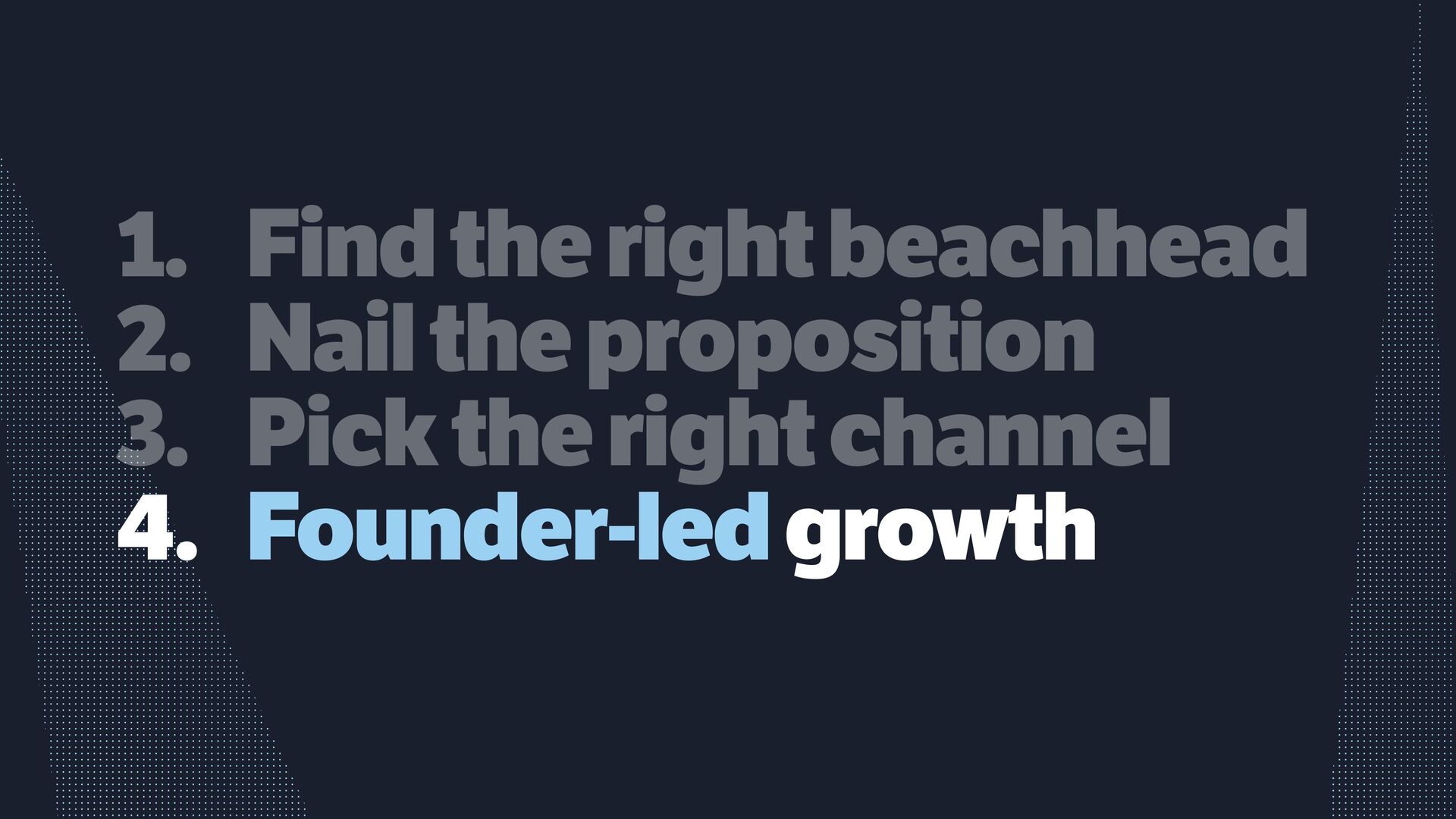
And so much as it's painful for people like Barry, the highest leverage thing you can do at this moment isn't the fun stuff, the product stuff, it's the sales and marketing. So founder led growth is the key thing. And every founder I work with, that is the thing I try and drum into them.
You are have sole responsibility for growth. And if you're not going to do it and you're not going do it well, nobody else will. The first three or four months, if you can nail this, if you can build a playbook, then it's much easier to hire somebody to give you a hand.
This is exactly where Marta is. Marta has already built this playbook, she's doing really well. Actually now she's trying to scale herself. She's trying to hire a salesperson or a CX person to take over, and that's the right place. But like many founders, Marta is really surprised.
She's having all these amazing conversations. But when it actually comes to signing up, only a fraction of the people she's talking to are getting through. And she's really, really struggling to understand why. So this is the second part of the growth equation, the product side of things.
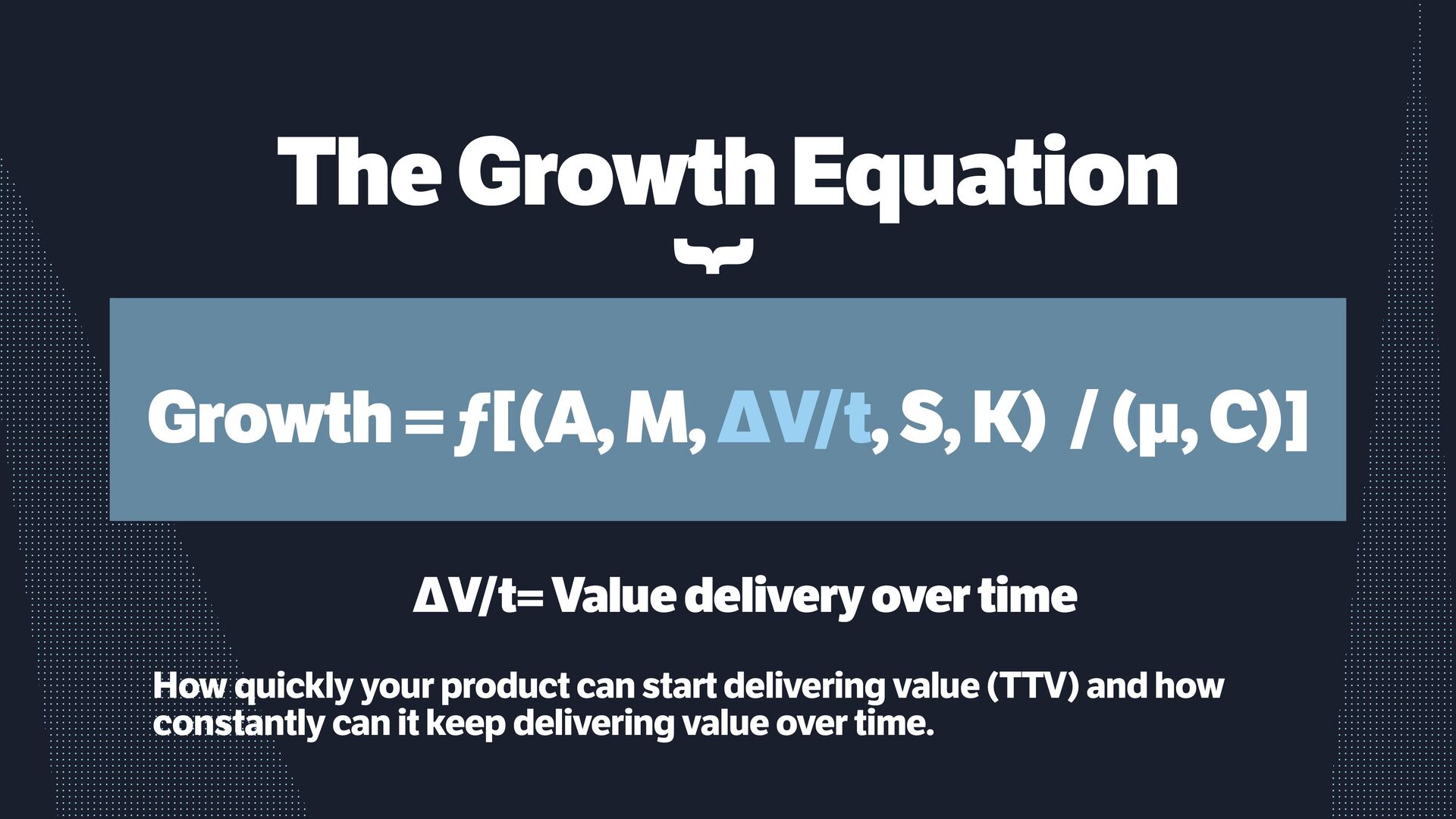
And the first value is value delivery over time. If you're a new user, you need to get your time to value up as quickly as possible. You need to get into the product, you need to experiencing value hopefully in the first run, hopefully in the first five or six minutes.
I meet so many founders that delay that time to value. They tell you, will sign up for this wait list and we'll get back to you in three or four weeks' time. By the time they get back to you, you've forgotten, you've already found a solution or you've moved on.
The reason why you were signing up because you had a little bit of a quiet week and now things have gone crazy. And then they tell you, well, you've got to come along to a demo. And so you begrudgingly go along to a demo and you really just want to use the product, you really want to get that value but the person is giving you through how this works, yada yada yada.
So many people will just bug out at that stage. So anything you can do to get the time to value down as quickly as possible. Self serve, great onboarding. And then once people are in, your job as a product team is to deliver value constantly.
The other reason why people drop out is they get in, they sign up, they do a couple of things and then they don't come back because there's nothing drawing them back. The value isn't there. Once the value's there, you need to keep people.
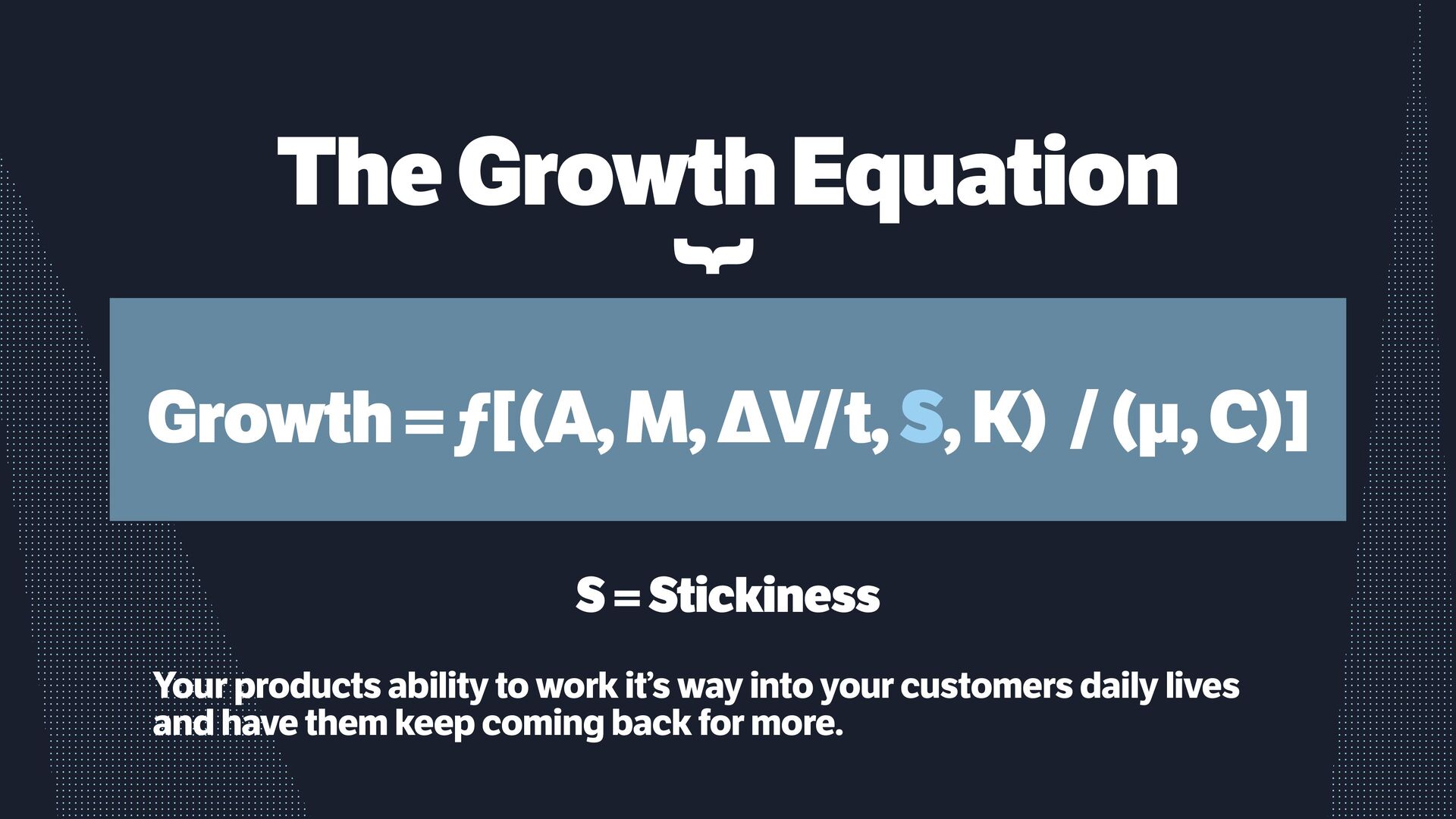
Stickiness. I hate this term stickiness, but I've noodled around with a few different terms and this is the best one. Stickiness is effectively building your product into their workflow. You need to take the current way they do things and you need to insert your product into that and you need to keep them coming back.
Motivation is also a big factor with retaining people because that energy, that enthusiasm is kind of like a momentum that people have. So you need to keep that going. And one of the big challenges I think that most people have is friction. So the early products that we build are full of friction.
There's sign up friction. You ask a whole bunch of marketing questions on sign up, you ask a whole bunch of demographic questions, you have to get people to have a new password, you don't use single sign on. Early say projects are full of friction.
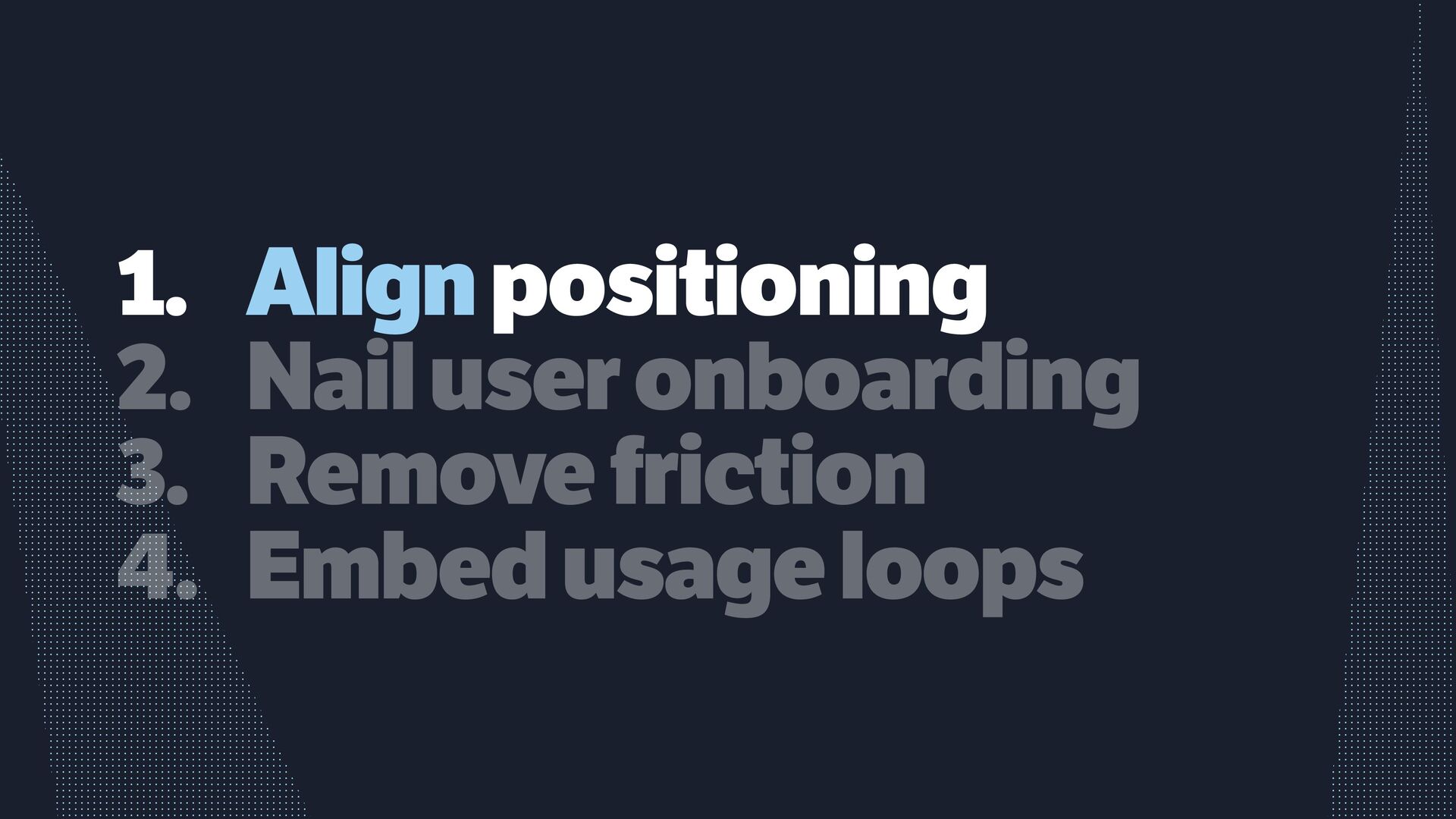
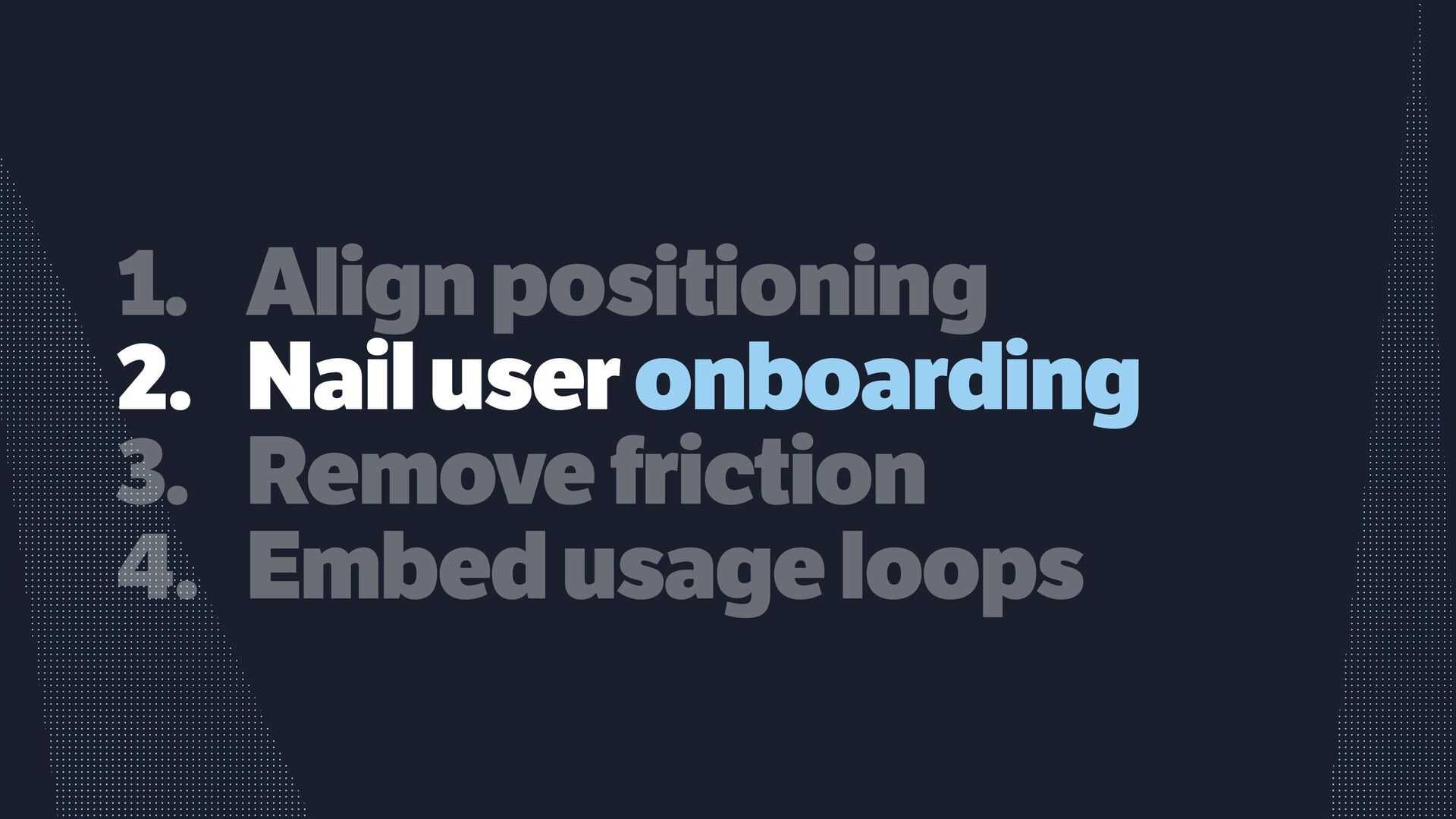
So what can someone like Martha do to solve this problem? Well, the first thing is aligned positioning. So she's got really good positioning. But the positioning she's presenting doesn't actually live up to reality. I meet so many companies that have amazing marketing that sell the world.
You sign up and then suddenly the vision they sold you is not the reality. This gap is one of the big reasons why people churn. People sign up for this kind of holistic amazing solution and then it's not there. Now I think for most companies you have a bit of a grace period.
If you are an amazing salesperson like Marta, you have a couple of months to onboard people and then start adding functionality. And if you are adding functionality and you're delivering more and more value and your customers see that value is growing at a massive rate, then you can capture them.
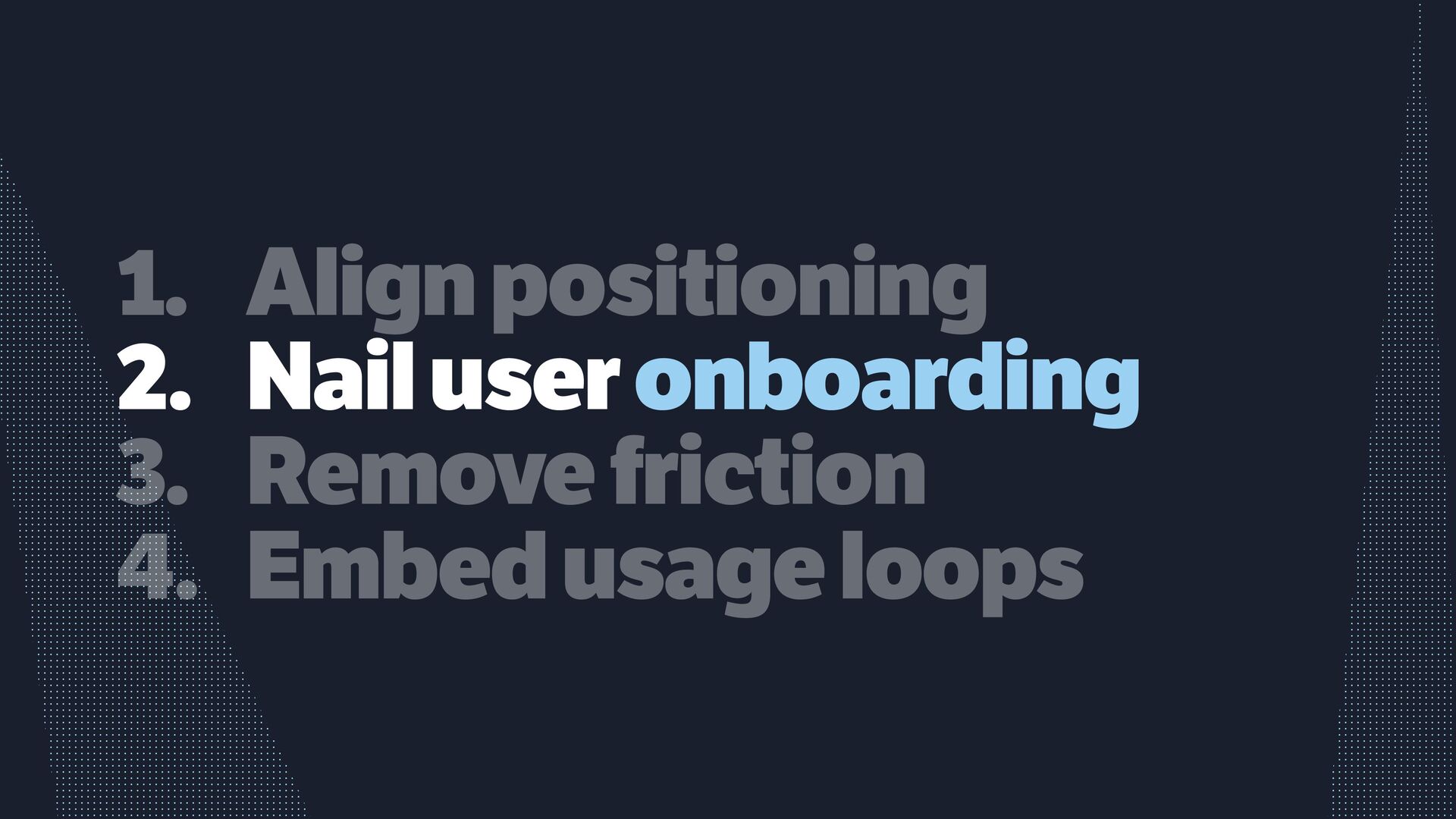
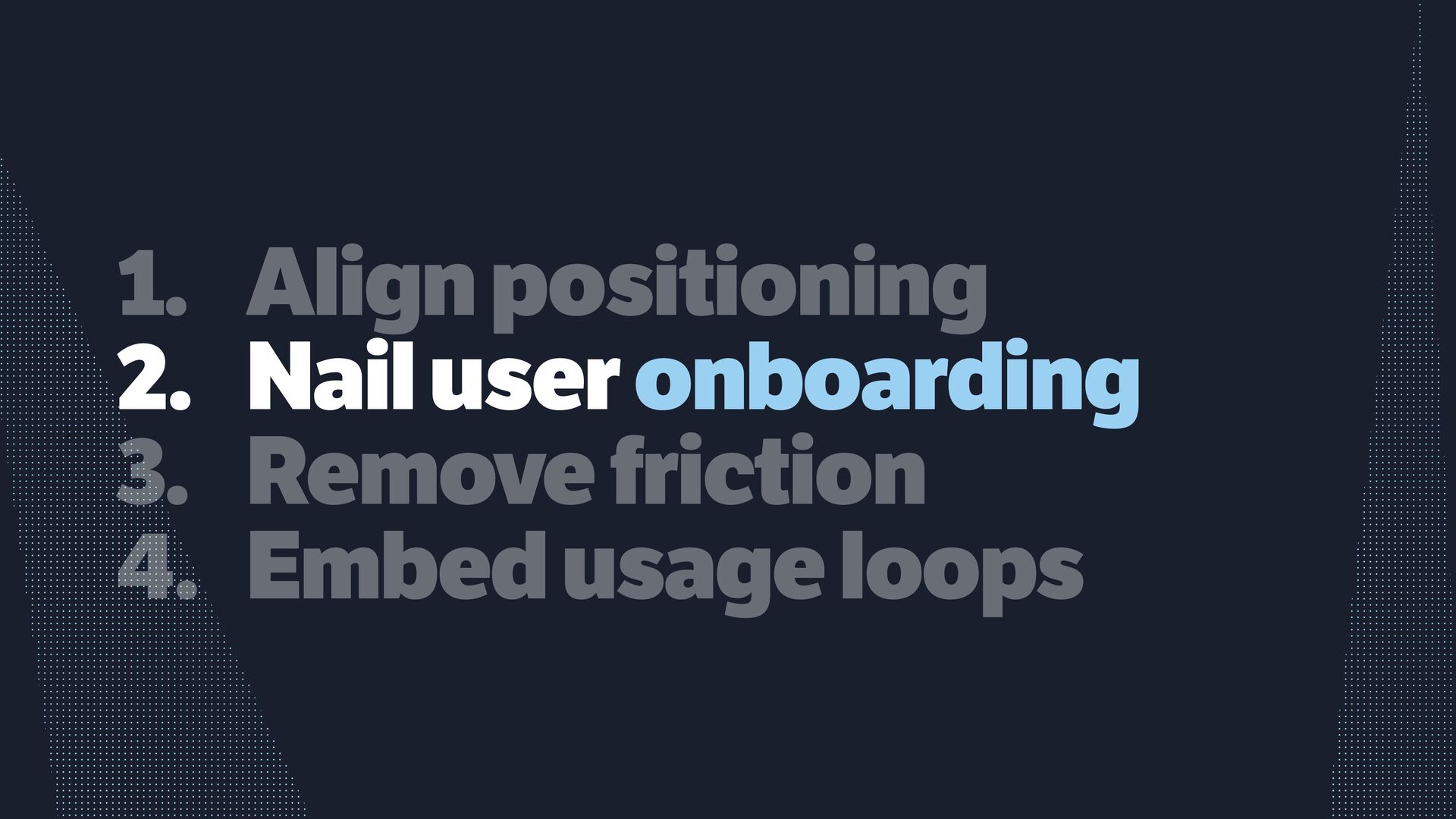
But if you sell this holistic vision and you get there and it's clunky and it's broken, it doesn't do half the things you promised, then people will just drift away. Obviously, one way to keep them is to nail your onboarding. And things like wizards are generally awful.
Don't know if anyone has actually spent much time clicking through a wizard. Most of the time, we believe that software should be so well built that we don't need a wizard. So a wizard pops up, we click it away and we jump into the product.
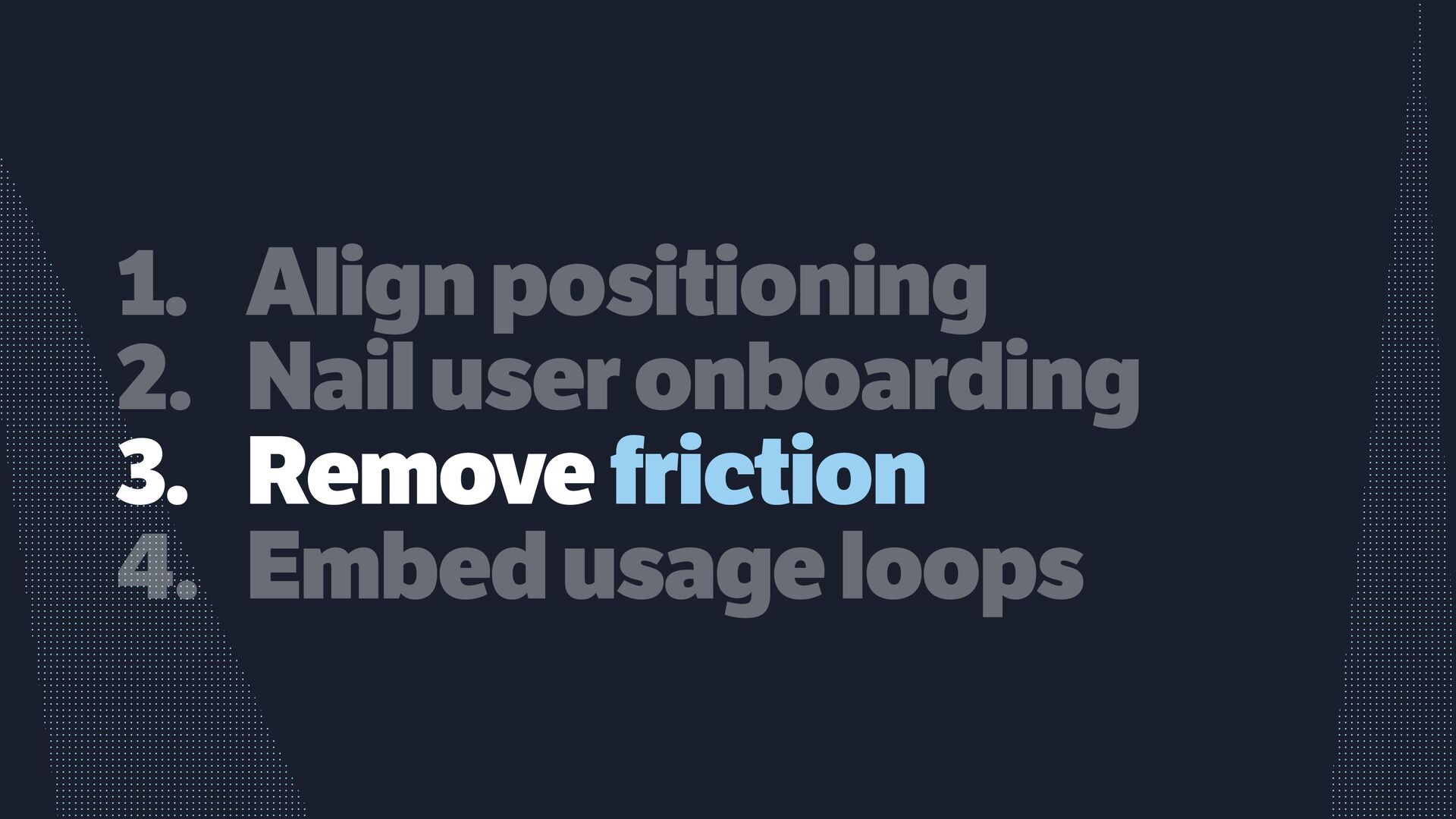
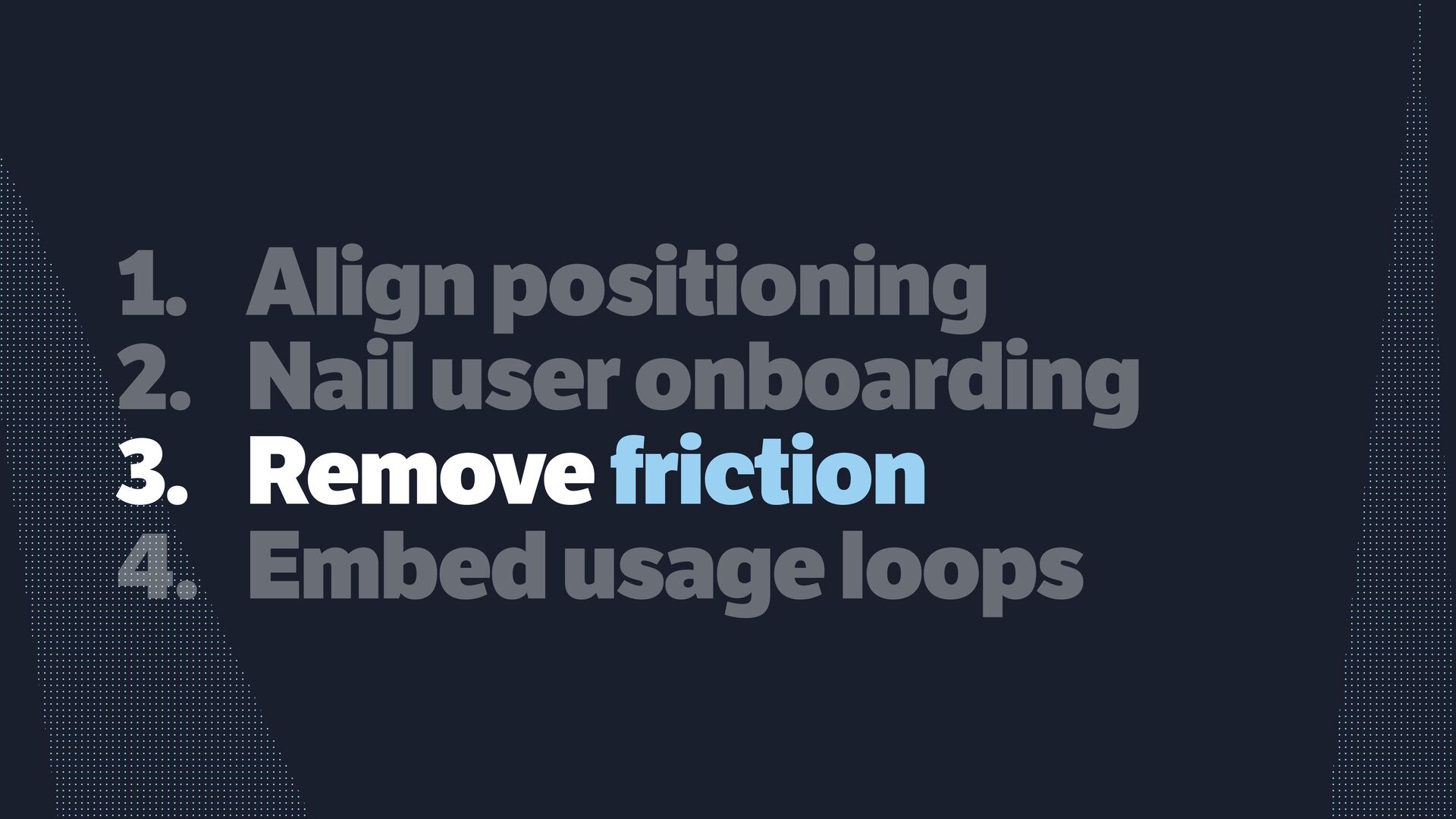
And what are we trying to do? We're trying to find that value. So we're immediately going on a value hunt. And so a big part of the onboarding is making sure that you can connect that value as quickly as humanly possible. A lot of the reason that the value isn't clear is because your product is full of usability, full of issues, it's full of friction.
And a big I'll get on to that in a second. But friction I think is a silent killer. Friction just slows everything down. It gets in the way of the value you're delivering. Things like requesting people to give an email address, sign a captcha, send an email, you then go and wait.
And then two or three minutes later the email hasn't come and so you go off and do a thing and then you forget about it. Most of these people really care about using your product. But anything that gets in the way, suddenly they've got to go to a meeting and they forget and then the email gets pushed down.
So you need to figure out ways to reduce as much friction as possible. And this is from a design background, this is why I'm so fascinated by this stuff. This is all obvious but it's amazing how much friction is based into systems. One of the reasons I think is a lot of the time founders don't actually use their product.
They have this vision of the happy path. They've designed the perfect flow but they're not using it in anger. They're not using it when they've got their boss bruising down their neck or when they've got a meeting or when they've got a thing to deliver.
And it's when you are in these pressurized systems that all these little bugs start to pop up and they get really frustrating. And what happens is you go, I don't have time to use this new product now. I'm going go back to the old way of doing things.
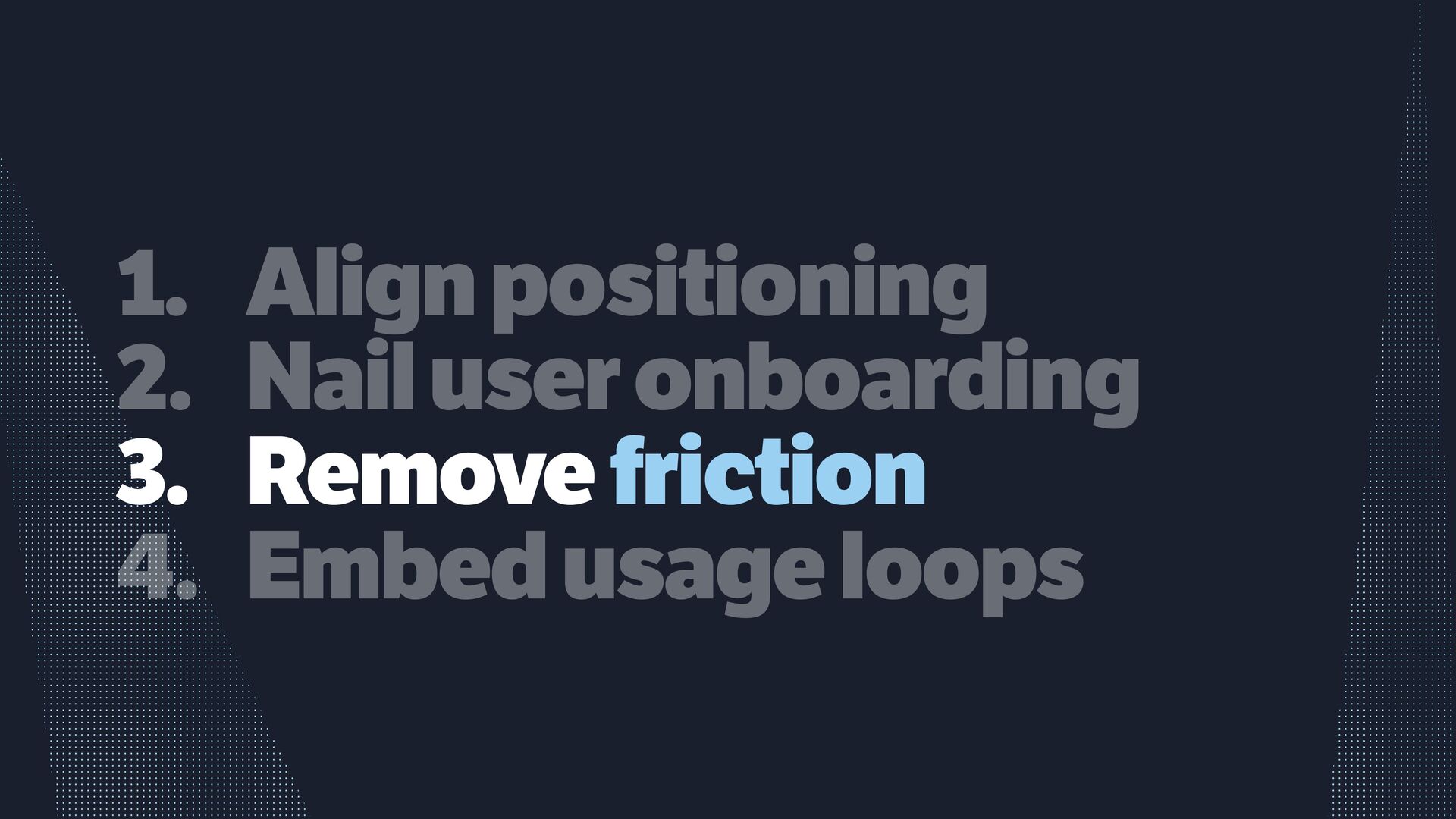
I'm going go back to my spreadsheet. I'm going go back to my old software. The account is still alive, I'm going to do And anything that takes you out of that loop risks losing you for good. And so you need to embed these usage loops into your product.
A big part of product led growth, which I'll come on to in a second, is the idea of finding usage loops. These are things that you can create that draw people back to the system. A really obvious usage loop is messaging. Most of the well known startups out there have some kind of messaging system.
A status change has happened, you get told. You come back to see what's happened on the system. Somebody's left a comment, you come back to engage in that comment. Something interesting has happened on the dashboard, you come back and So embedding usage loops is a massive part of keeping people and keeping that value.
Ideally you want these usage loops to be valuable. If you're sending messaging you don't want it just to be frivolous. You want people to come back to your system, engage value, have ten or fifteen minutes of using the product, go away. A lot of behavior change is around familiarity.
If you come back to a product two or three times a day, over the course of two or three weeks, you're much more likely to embed it in your process, rather than signing up and then never using it again. So usage loops are massively important.
And I think designers play a vital role in this. I would do because I come from a design background, but I actually think designers are crucial to delivering early product market fit. Designers are trained to see through the eyes of their users. They are much better at spotting these frustrations than founders.
I see so many founding teams where the designers are like, we need to fix this usability problem. The founder's like, oh don't worry about that, that's not important. We need to add this new functionality. And a lot of that is because they're talking to customers that say we need functionality.
None of their customers are saying we need usability. But you have this slow silent killer of churn which needs to be solved. So I'm always really disappointed when I see startups that have really, really light or non existent design team. Often I see startups say, we don't need to worry about design, the site's pretty enough, our engineers are using a UI kit, we can figure this out.
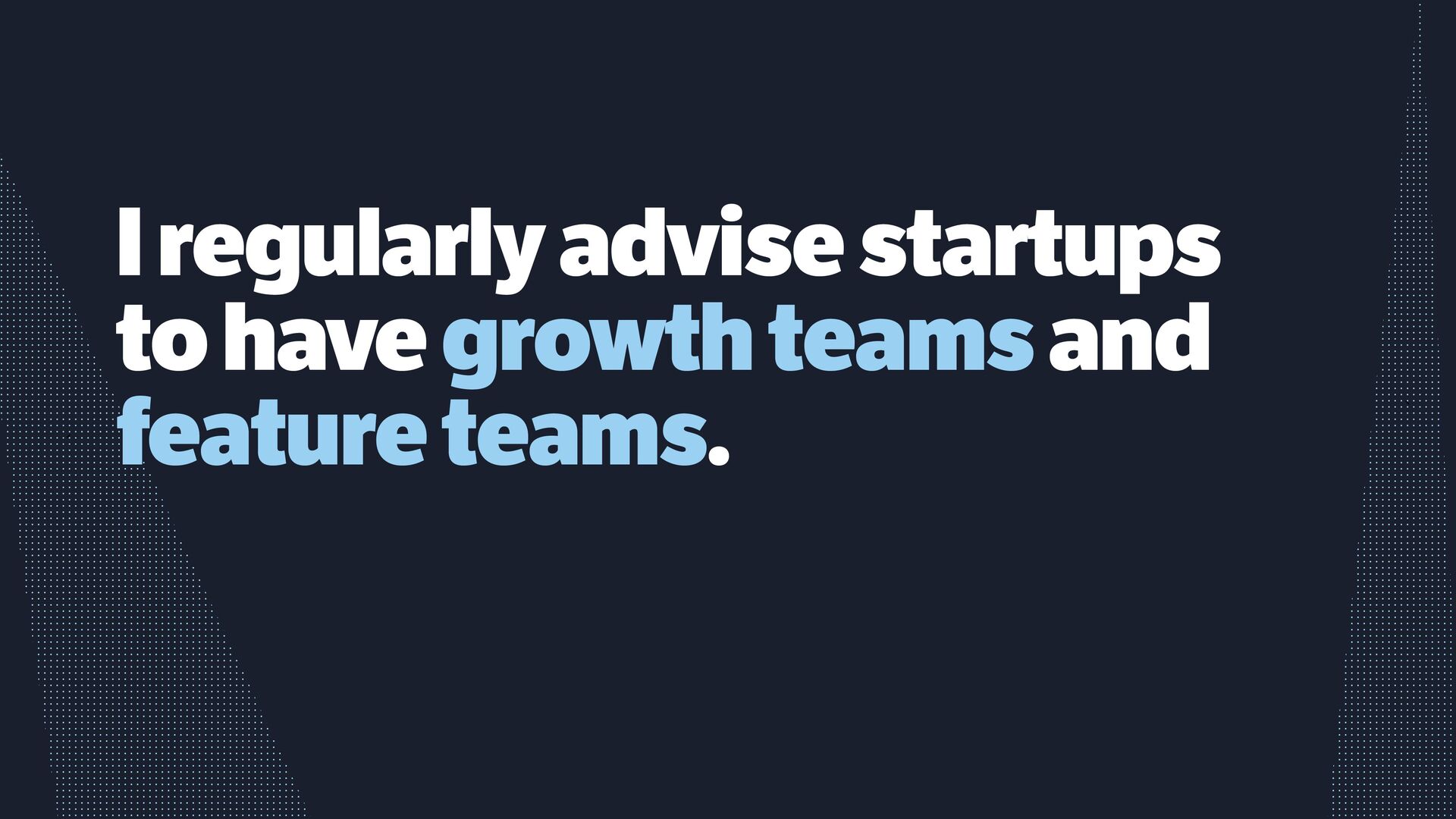
Design isn't obviously, as we know, just about things looking pretty, it's about how the product works, how it feels, what it does, seeing things for the user's eyes. And so I regularly find myself advising startups to have separate teams. Or if not separate teams, least separate swim lanes.
You need to have a function that's delivering you functionality. You need to make sure that the founder is feeling served because every time they have a conversation we need some functionality, you need to add that in. Arguing over functionality is not going to work.
But you need to have a separate team that is also delivering growth. I call them growth themes and feature themes. The growth teams are the ones that are not trying to add new capability but are trying to help your users connect with the existing capability.
There's going to be enough value in your product that currently there should be when you've launched that is delivering value. But people are being blocked by that, by the usability, by the language, by the processes. So you have a separate team, or at least a separate function, saying, okay, we're not adding new functionality, but we're going to help people extract that and get to that quicker.
This brings me to the very, very last argument in the growth equation, is called k factor which is virality. It's your product's natural ability to gain new customers. So with a growth loop, with a usage loop, the loops are bringing your existing customers back.
With an acquisition loop, you're creating ways of bringing new customers in. So you have a product that not only is growing through sales and marketing, but by the actual use of the product, it's growing new customers. The classic canonical example is something like Calendly.
I send a Calendly link to somebody to organize a meeting. Immediately discover Calendly. They look at it, they sign up, they connect their calendar, now they're a Calendly user. Suddenly there's something in the way that Calendly works that constantly attracts new users. You can get a vulnerability coefficient of one or higher, you're in this situation where every user you add adds another user.
I can imagine something like Calendly for the first three or four months is probably adding two or three or four or five users for every user that signed up. So you get this lovely hockey stick growth. Companies like Dropbox, companies like Zoom, companies like Loom, do really, really well.
Even something like Figma. Figma's great usage loop was like, we're not building a product that's just for designers. Designers are the typhoid Mary, the patient zero. But they then send links to all of their product team, they send links to all of their engineers.
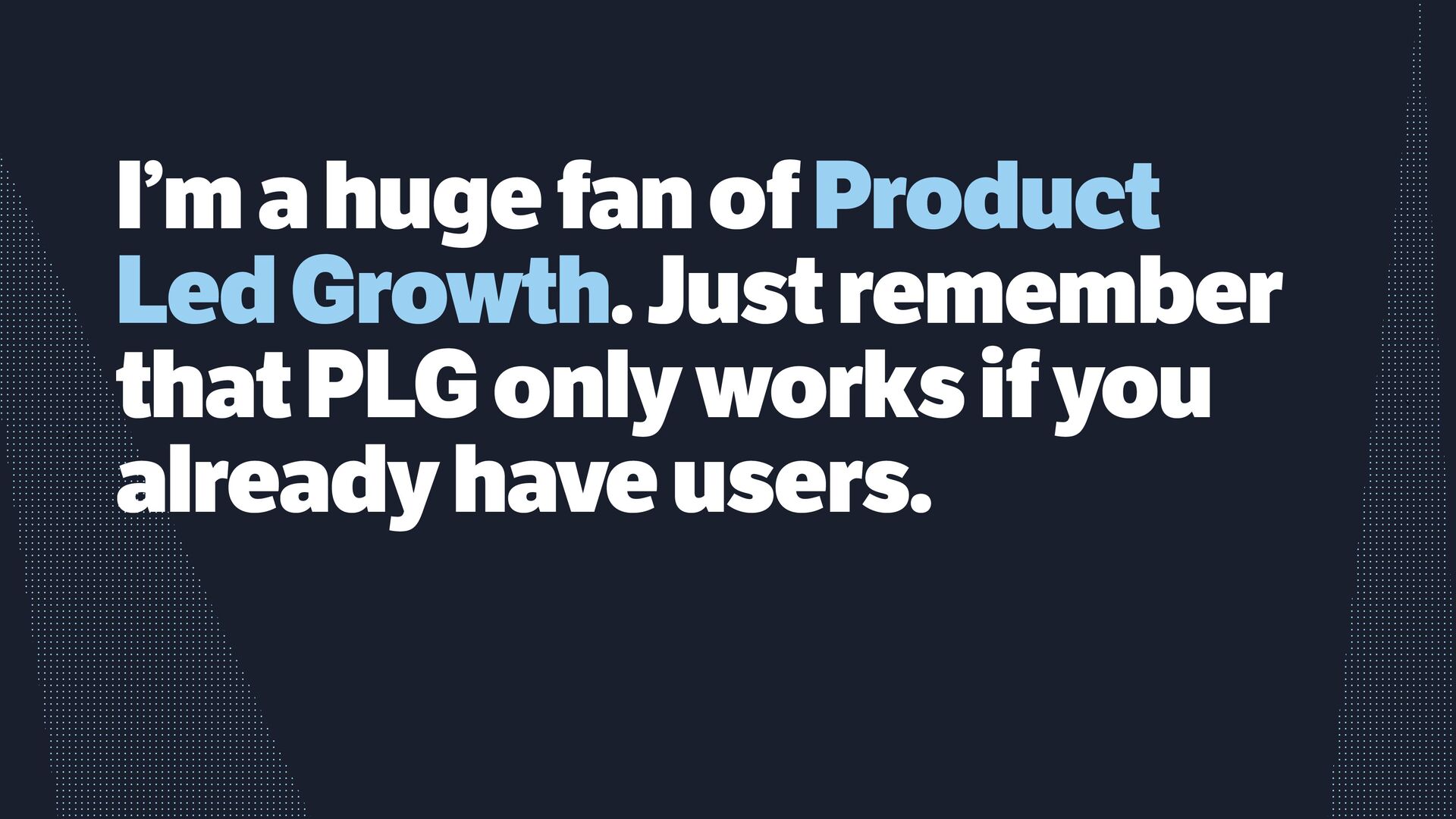
Suddenly from one user, I have a whole company using Figma as communication layer. This brings on to product led growth. I personally am a huge fan of product led growth. However, product led growth or PLG requires you to have a good product already.
It's a specific strategy that requires you to marshal your resources specifically. It's not just like, oh we're going have a lovely product and that's it. It requires you hiring the right people, structuring your team, giving them the right freedom to make hypotheses and tests.
It's very much a scientific approach. And it's really, really difficult for early stage founders to take this more iterative approach because they're very, very feature driven. Also product led growth doesn't really work in the early stages. There's lots of research that shows that product led growth only works once you've got product market fit, which makes sense.
Because in the early stages, if you haven't got a good product, people aren't going to recommend you, they're not going to send that link to somebody else. If you haven't got many customers, they're not going to get you more customers. So what I tend to find is the really, really early stages of that zero to one phase, naught to a million, you as a founder, you as the initiator of the product needs to be the person responsible for landing that first million.
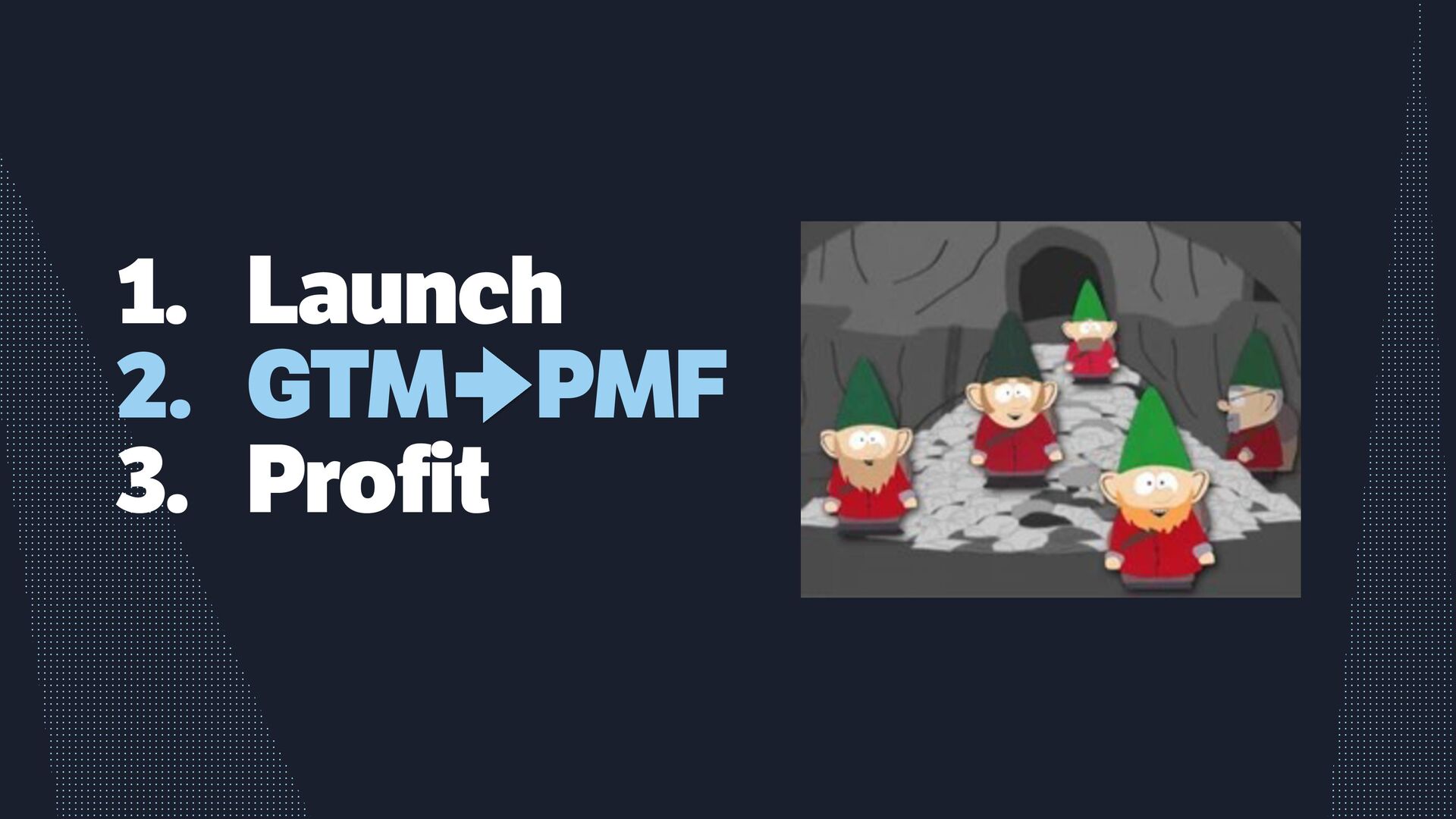
Once you've landed that first million, once you've kick started users, once you've lent into your sales and marketing approach, that's the point when you can start engaging with product led growth more. So what I've essentially been talking about today and what I go into great detail in the book is nailing your go to market strategy.
I think using the traffic you have to improve your product in order to reach product market fit. The growth equation I think highlights the seven key factors which I believe have the biggest outsized impact and growth. A highly motivated audience made up of the right people.
A product which delivers a huge amount of value over time while being sticky enough to keep people on your product and work your way into their workflow. A high level of virality which will help you attract new customers or not having so much friction that blocks existing customers from extracting that value and also not having competition draw people away.
As I said, the equation itself is a bit of a mcguffing, it's mostly a way of framing these conversations. But I think if you lean into some of the advice I've given, that will take you a big way to solving the majority of problems that people like Barry and Marta have.
Where to find your first users, how to get them motivated, how to decide between founder led growth and marketing, how to price and monetize. That's a big problem that people have. A big part of people's motivation can be affected by monetization and pricing.
How to nail your acquisition strategy, how to keep people retained, how to keep people engaged. A big part of what I talk about in the book is also human psychology. Fascinated with coming from a design background, a lot of designers come from a cog science background or a psychology background.
And I talk a lot about the psychology of human behavior and how you can use the knowledge of psychology to embed these loops into people's workflows in ethical ways. This is not a growth hacking book. I hate the world of growth hacking from ten years ago that was very manipulative.
This is all about helping people get the value they've signed up to access and your job is to make that as easy as possible. The book's not quite out yet, so if you want to find out more, can grab this QR code. I just wanted to thank you very much for your time.
So thank you. Thank you so much.